
Inanna the Queen of Heaven and the Rise
- Slides: 11
Inanna the Queen of Heaven and the Rise of Large-Scale Pastoralism in Ancient Mesopotamia Juliana Lutz
Statement of Purpose • To understand what social and economic factors occurred in the Uruk Period for Inanna to seek a marriage with the shepherd over marriage to the agrarian (farmer). How did this myth impact or legitimize the later expansion of Ancient Mesopotamia, if it did at all? Does this strange piece of literature note anything about the changes that occurred in Mesopotamia around the 4 th millennium BCE?
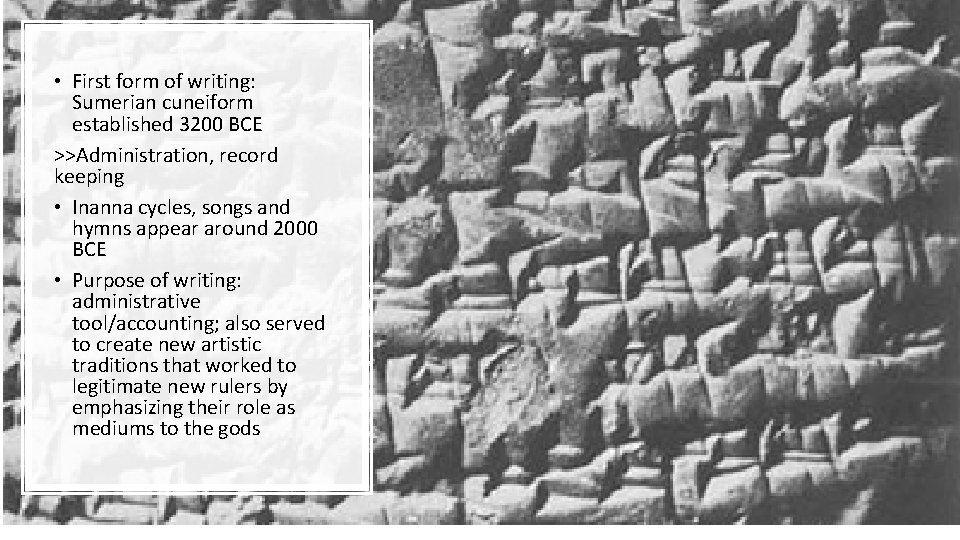
• First form of writing: Sumerian cuneiform established 3200 BCE >>Administration, record keeping • Inanna cycles, songs and hymns appear around 2000 BCE • Purpose of writing: administrative tool/accounting; also served to create new artistic traditions that worked to legitimate new rulers by emphasizing their role as mediums to the gods
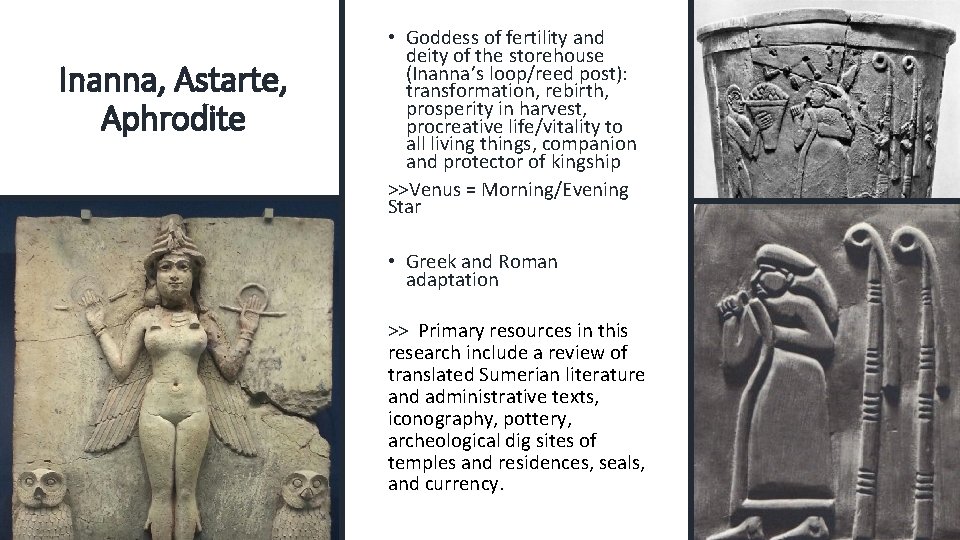
Inanna, Astarte, Aphrodite • Goddess of fertility and deity of the storehouse (Inanna’s loop/reed post): transformation, rebirth, prosperity in harvest, procreative life/vitality to all living things, companion and protector of kingship >>Venus = Morning/Evening Star • Greek and Roman adaptation >> Primary resources in this research include a review of translated Sumerian literature and administrative texts, iconography, pottery, archeological dig sites of temples and residences, seals, and currency.
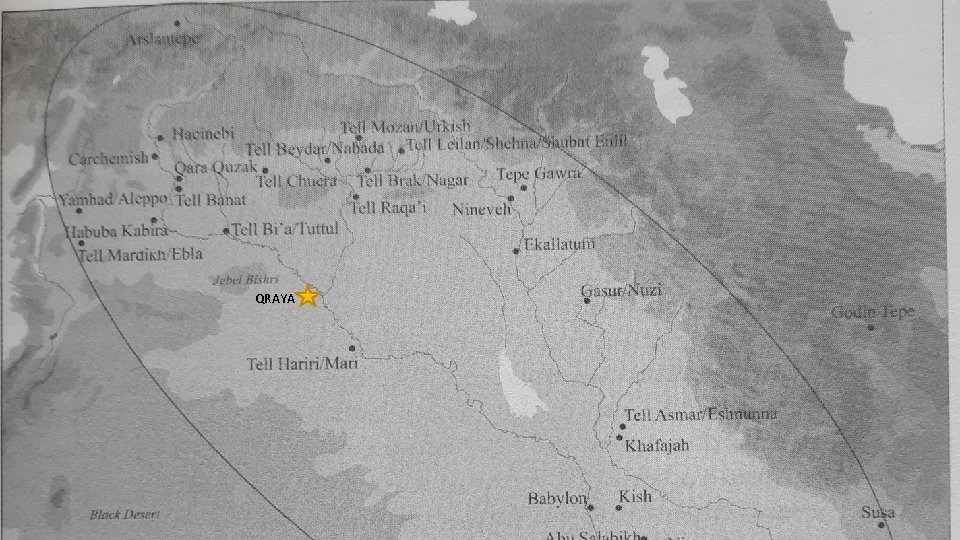
QRAYA
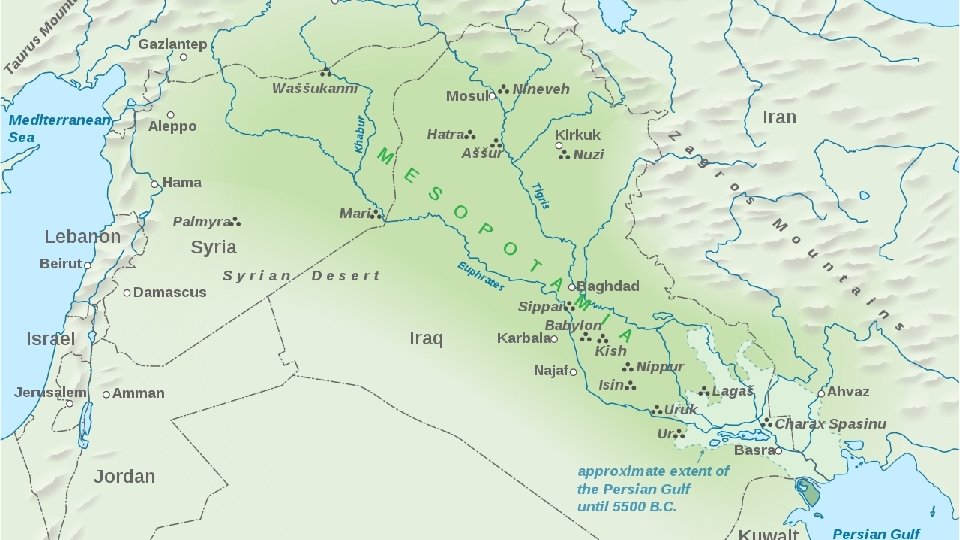
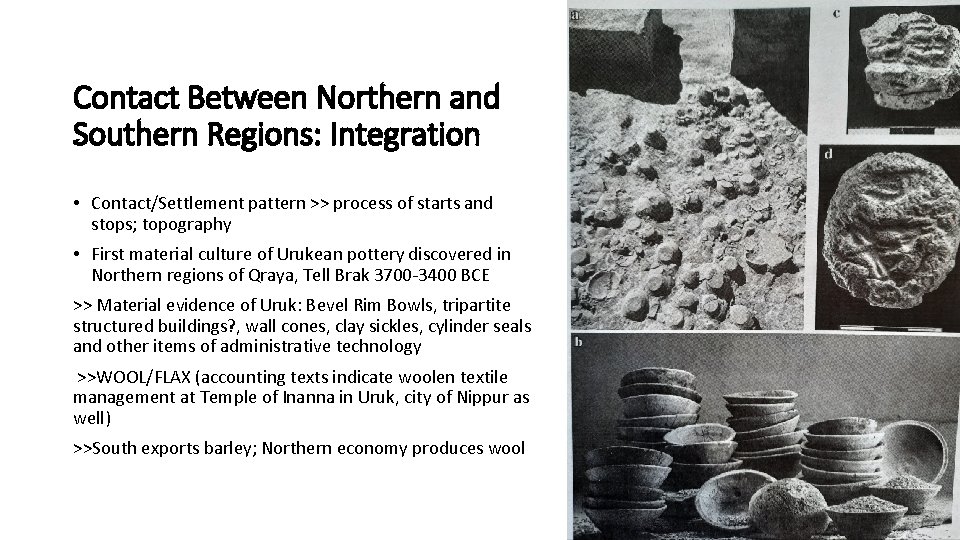
Contact Between Northern and Southern Regions: Integration • Contact/Settlement pattern >> process of starts and stops; topography • First material culture of Urukean pottery discovered in Northern regions of Qraya, Tell Brak 3700 -3400 BCE >> Material evidence of Uruk: Bevel Rim Bowls, tripartite structured buildings? , wall cones, clay sickles, cylinder seals and other items of administrative technology >>WOOL/FLAX (accounting texts indicate woolen textile management at Temple of Inanna in Uruk, city of Nippur as well) >>South exports barley; Northern economy produces wool
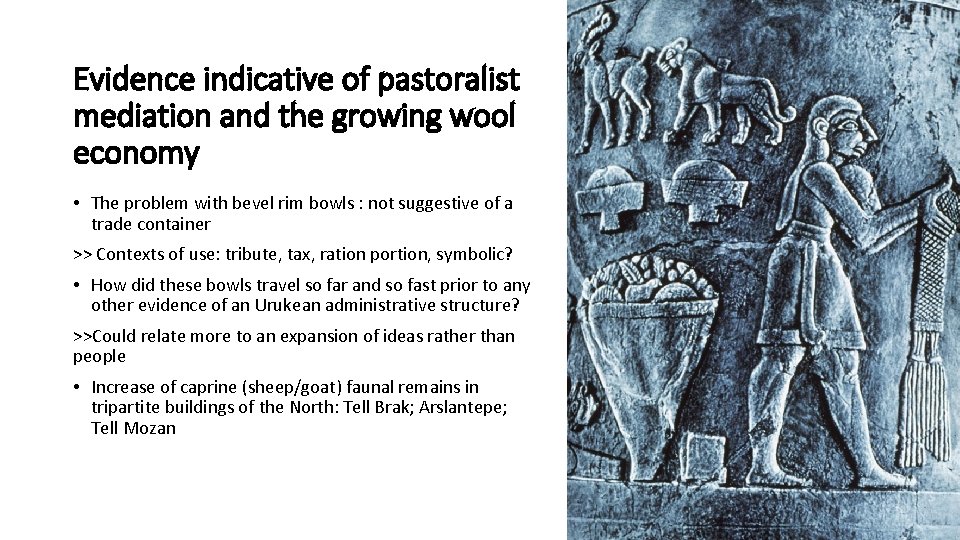
Evidence indicative of pastoralist mediation and the growing wool economy • The problem with bevel rim bowls : not suggestive of a trade container >> Contexts of use: tribute, tax, ration portion, symbolic? • How did these bowls travel so far and so fast prior to any other evidence of an Urukean administrative structure? >>Could relate more to an expansion of ideas rather than people • Increase of caprine (sheep/goat) faunal remains in tripartite buildings of the North: Tell Brak; Arslantepe; Tell Mozan
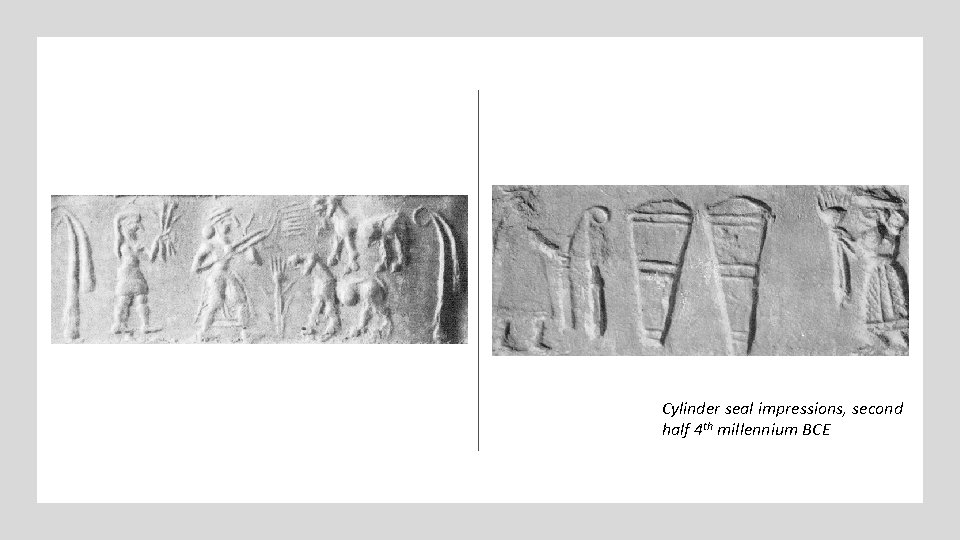
Cylinder seal impressions, second half 4 th millennium BCE
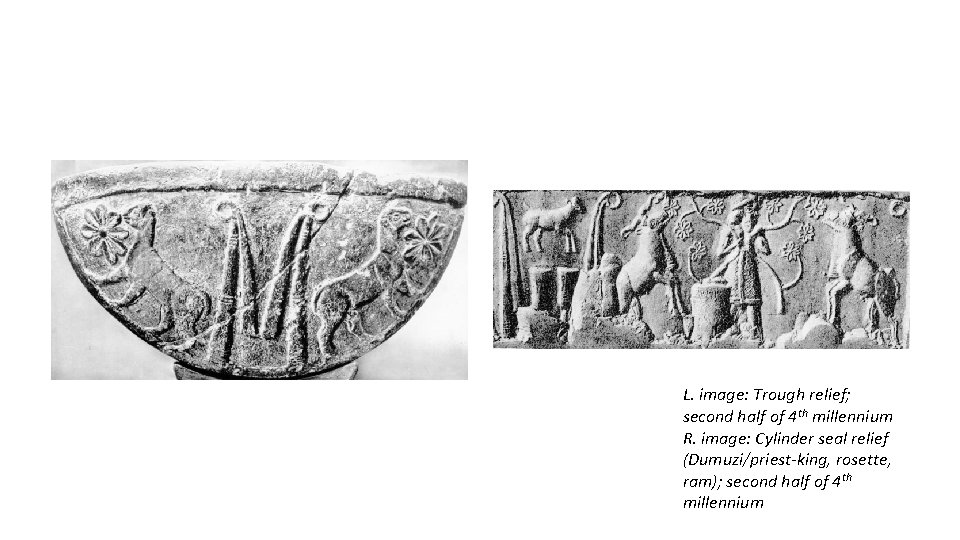
L. image: Trough relief; second half of 4 th millennium R. image: Cylinder seal relief (Dumuzi/priest-king, rosette, ram); second half of 4 th millennium
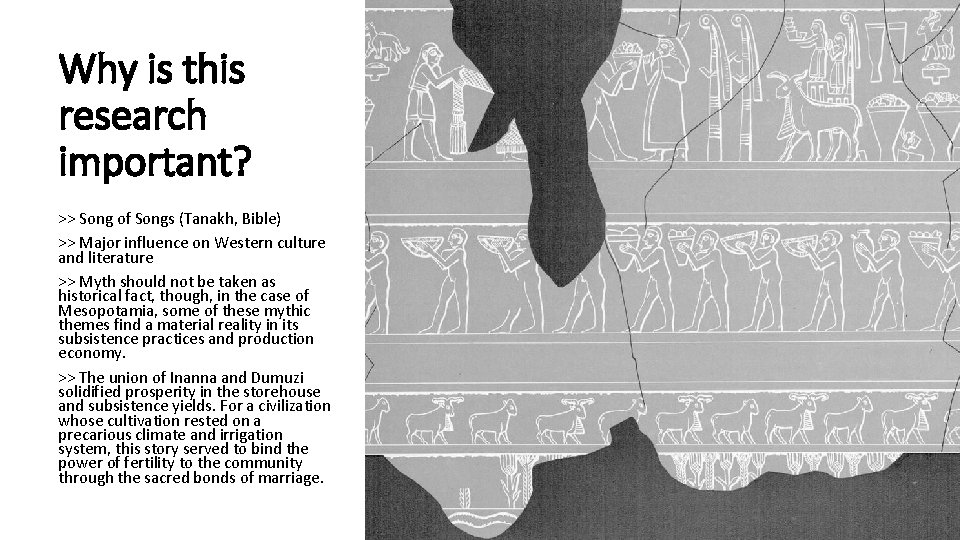
Why is this research important? >> Song of Songs (Tanakh, Bible) >> Major influence on Western culture and literature >> Myth should not be taken as historical fact, though, in the case of Mesopotamia, some of these mythic themes find a material reality in its subsistence practices and production economy. >> The union of Inanna and Dumuzi solidified prosperity in the storehouse and subsistence yields. For a civilization whose cultivation rested on a precarious climate and irrigation system, this story served to bind the power of fertility to the community through the sacred bonds of marriage.