
In years to come your students may forget








- Slides: 82
“In years to come, your students may forget what you taught them. But they will always remember how you made them feel. ”
International Center for Leadership in Education, Inc. STRATEGIES FOR RIGOR AND RELEVANCE
Successful Training… What worked best? What were/are your challenges?
International Center for Leadership in Education, Inc. Rigor/Relevance Framework
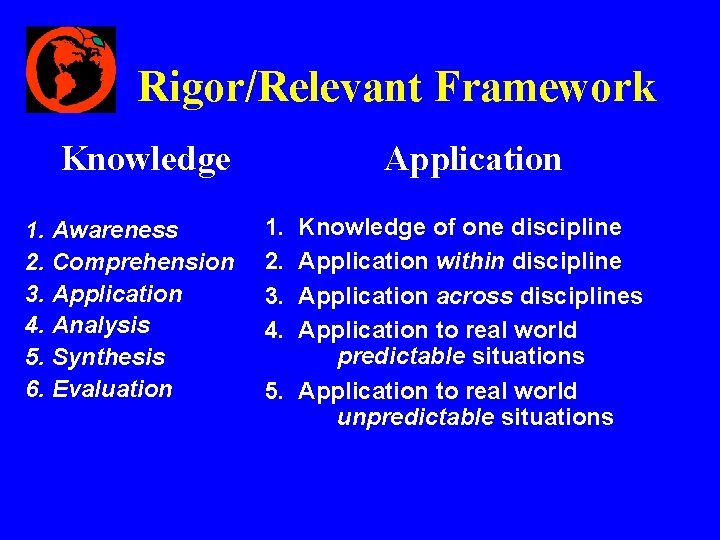
Rigor/Relevant Framework Knowledge 1. Awareness 2. Comprehension 3. Application 4. Analysis 5. Synthesis 6. Evaluation Application 1. 2. 3. 4. Knowledge of one discipline Application within discipline Application across disciplines Application to real world predictable situations 5. Application to real world unpredictable situations
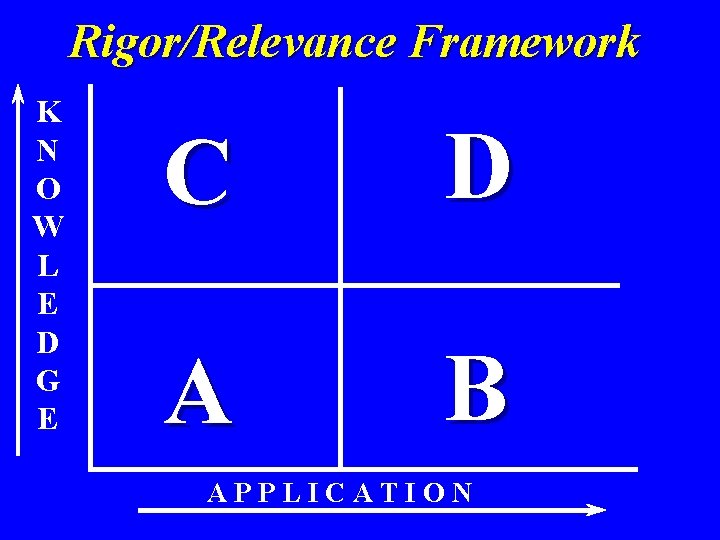
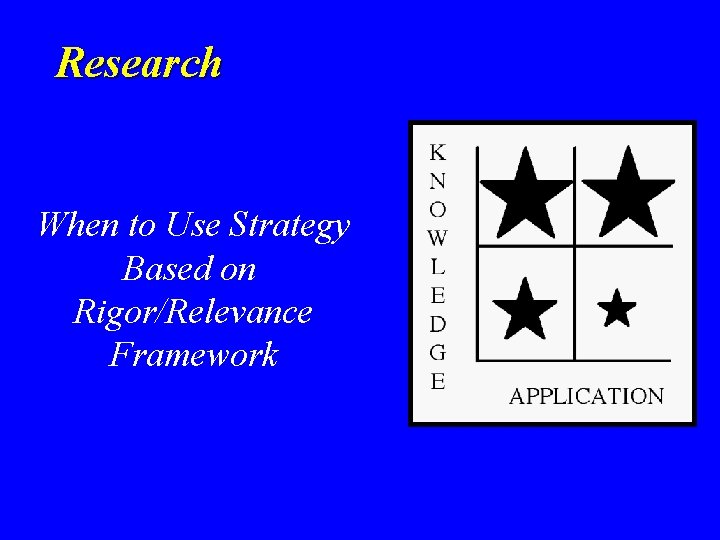
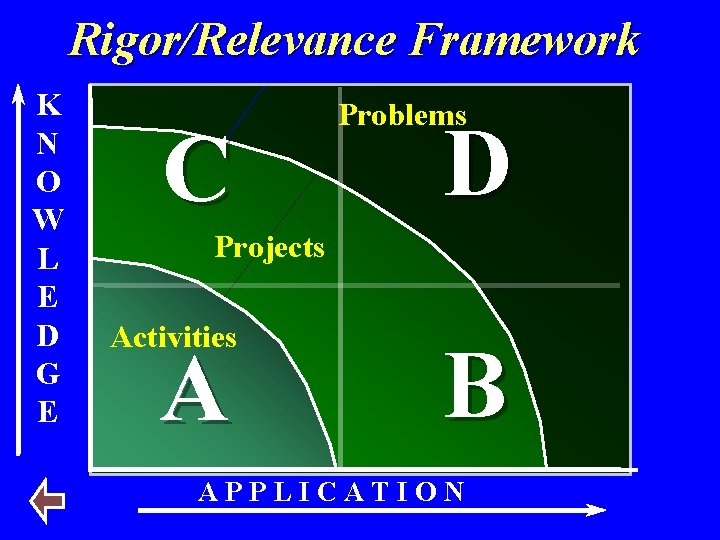
Rigor/Relevance Framework K N O W L E D G E C D A B APPLICATION
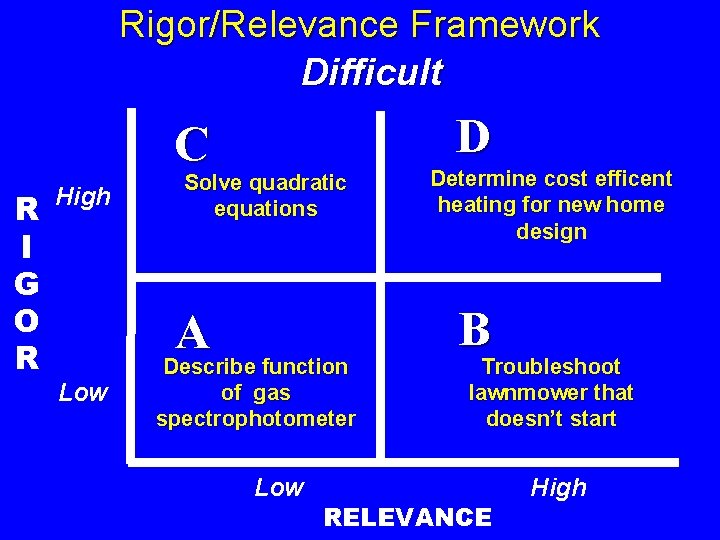
Rigor/Relevance Framework Difficult D C R I G O R High Low Solve quadratic equations A Describe function of gas spectrophotometer Low Determine cost efficent heating for new home design B Troubleshoot lawnmower that doesn’t start RELEVANCE High
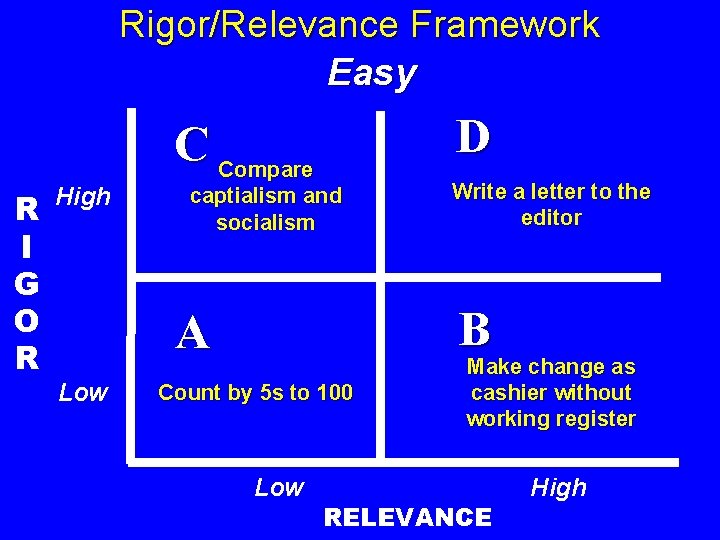
Rigor/Relevance Framework Easy D C Compare R I G O R High captialism and socialism B A Low Write a letter to the editor Count by 5 s to 100 Low Make change as cashier without working register RELEVANCE High
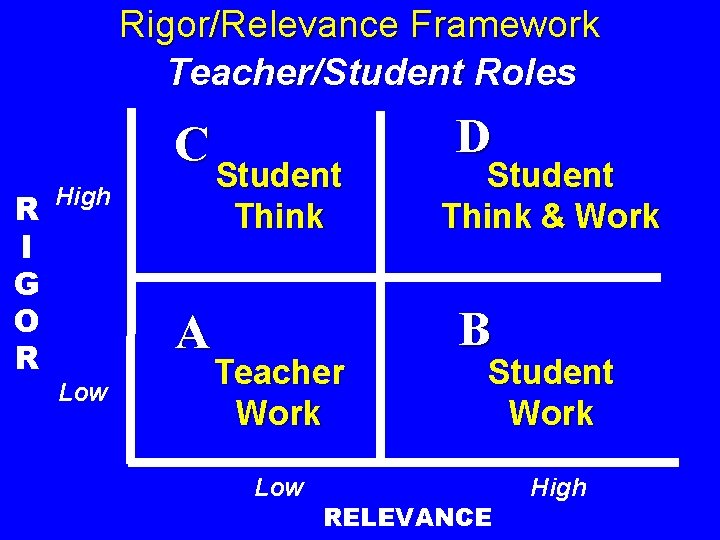
Rigor/Relevance Framework Teacher/Student Roles C R I G O R High A Low Student Think Teacher Work Low D Student Think & Work B Student Work RELEVANCE High
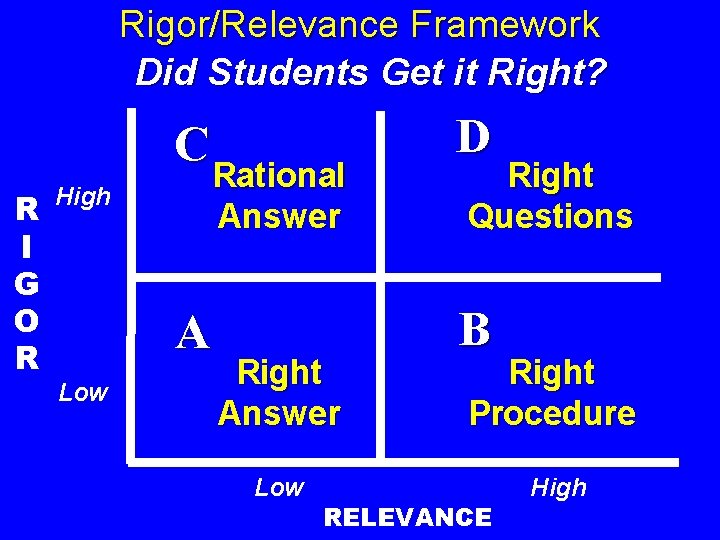
Rigor/Relevance Framework Did Students Get it Right? C R I G O R High Rational Answer A Low Right Answer Low D Right Questions B Right Procedure RELEVANCE High
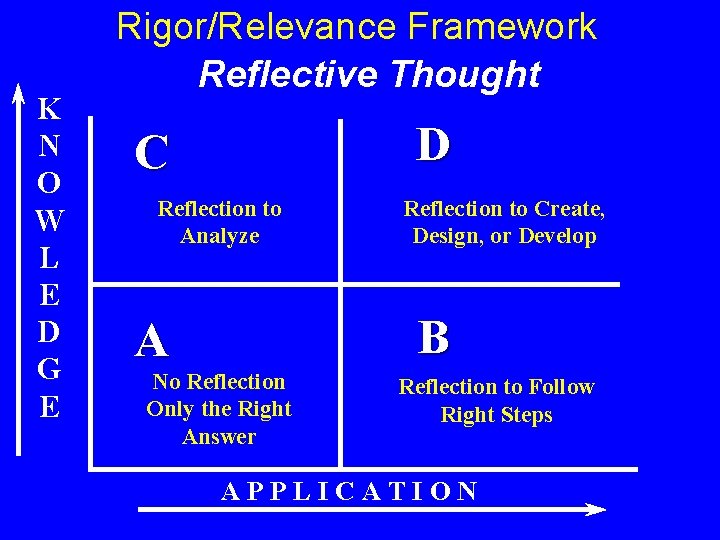
K N O W L E D G E Rigor/Relevance Framework Reflective Thought D C Reflection to Analyze Reflection to Create, Design, or Develop B A No Reflection Only the Right Answer Reflection to Follow Right Steps APPLICATION
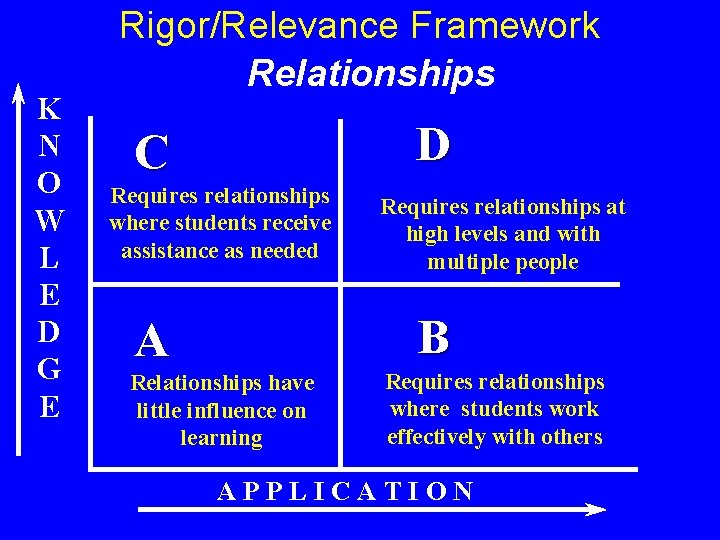
K N O W L E D G E Rigor/Relevance Framework Relationships D C Requires relationships where students receive assistance as needed Requires relationships at high levels and with multiple people B A Relationships have little influence on learning Requires relationships where students work effectively with others APPLICATION
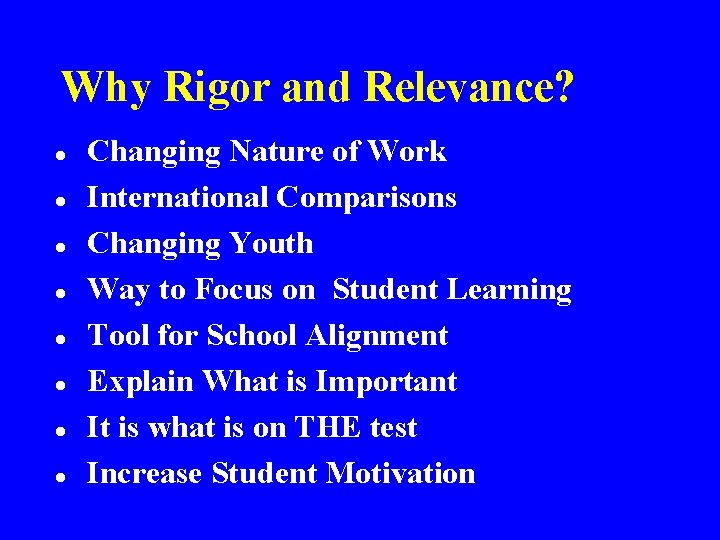
Why Rigor and Relevance? l l l l Changing Nature of Work International Comparisons Changing Youth Way to Focus on Student Learning Tool for School Alignment Explain What is Important It is what is on THE test Increase Student Motivation
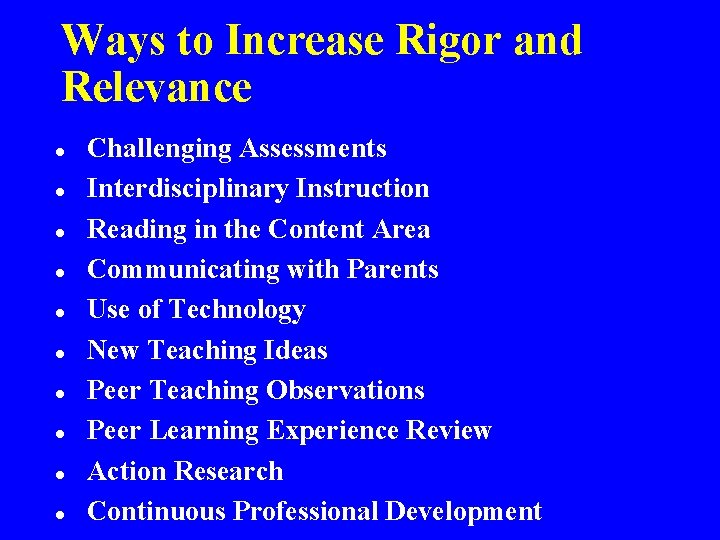
Ways to Increase Rigor and Relevance l l l l l Challenging Assessments Interdisciplinary Instruction Reading in the Content Area Communicating with Parents Use of Technology New Teaching Ideas Peer Teaching Observations Peer Learning Experience Review Action Research Continuous Professional Development
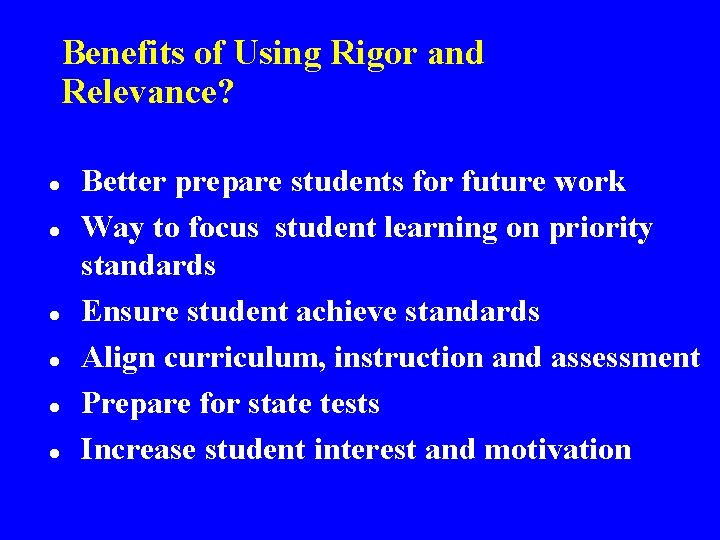
Benefits of Using Rigor and Relevance? l l l Better prepare students for future work Way to focus student learning on priority standards Ensure student achieve standards Align curriculum, instruction and assessment Prepare for state tests Increase student interest and motivation
VIDEO
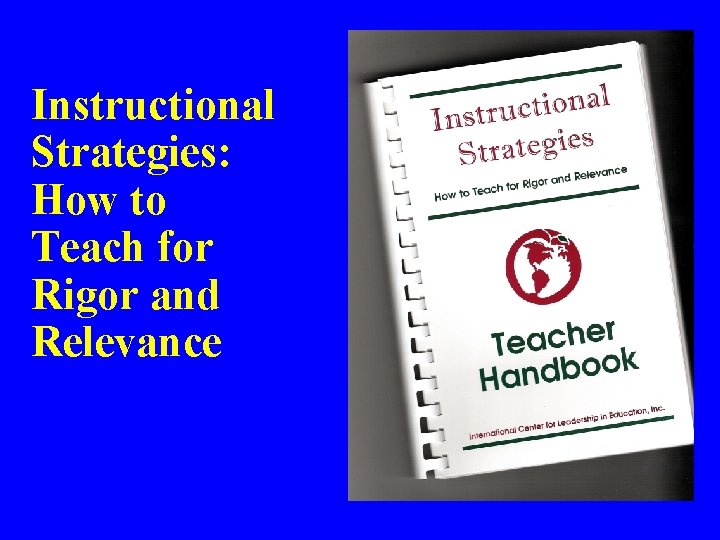
Instructional Strategies: How to Teach for Rigor and Relevance “Teaching is only as good as the learning that takes place. ”
International Center for Leadership in Education, Inc. Instructional Strategies: How to Teach for Rigor and Relevance
ACTIVITY Matching Strategies to R & R Framework
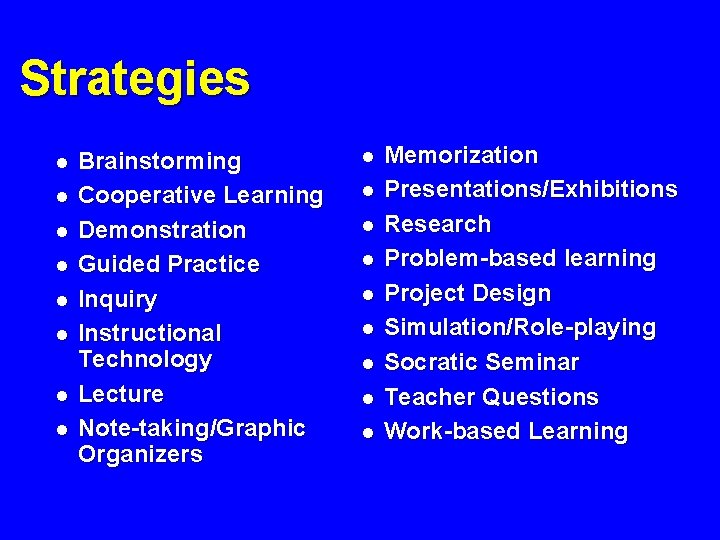
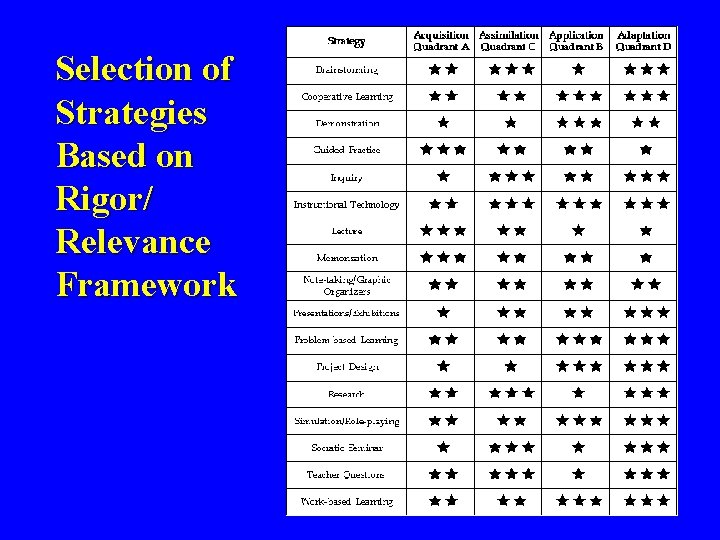
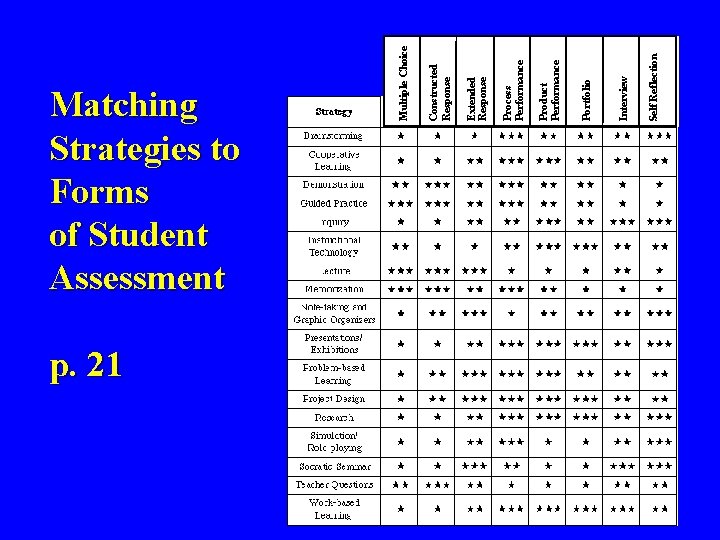
Strategies l l l l Brainstorming Cooperative Learning Demonstration Guided Practice Inquiry Instructional Technology Lecture Note-taking/Graphic Organizers l l l l l Memorization Presentations/Exhibitions Research Problem-based learning Project Design Simulation/Role-playing Socratic Seminar Teacher Questions Work-based Learning
Research When to Use Strategy Based on Rigor/Relevance Framework
Selection of Strategies Based on Rigor/ Relevance Framework
Rigor/Relevance Framework K N O W L E D G E C Problems D Projects Activities A B APPLICATION
Correlation With Assessments
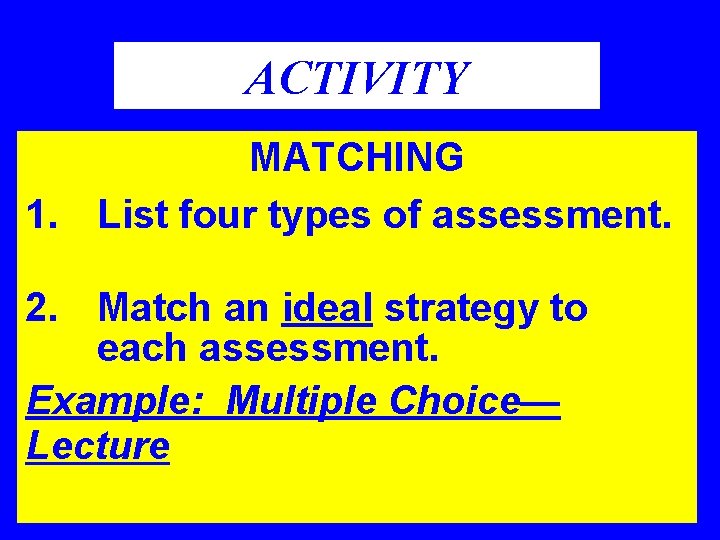
ACTIVITY MATCHING 1. List four types of assessment. 2. Match an ideal strategy to each assessment. Example: Multiple Choice— Lecture
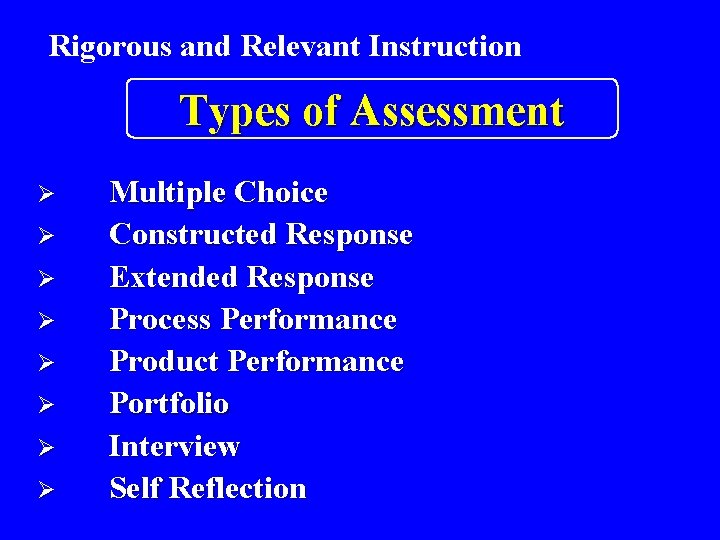
Rigorous and Relevant Instruction Types of Assessment Ø Ø Ø Ø Multiple Choice Constructed Response Extended Response Process Performance Product Performance Portfolio Interview Self Reflection
p. 21 Self Reflection Interview Portfolio Product Performance Process Performance Extended Response Constructed Response Multiple Choice Matching Strategies to Forms of Student Assessment
STRATEGIES & TECHNOLOGY APPLICATIONS pp. 23 -24
CHANGING ROLES Teacher/Student pp. 8 -9 Handout
Instructional Strategies: How to Teach for Rigor and Relevance
STRATEGY WHAT? EXAMPLE(S) FROM PRACTICE
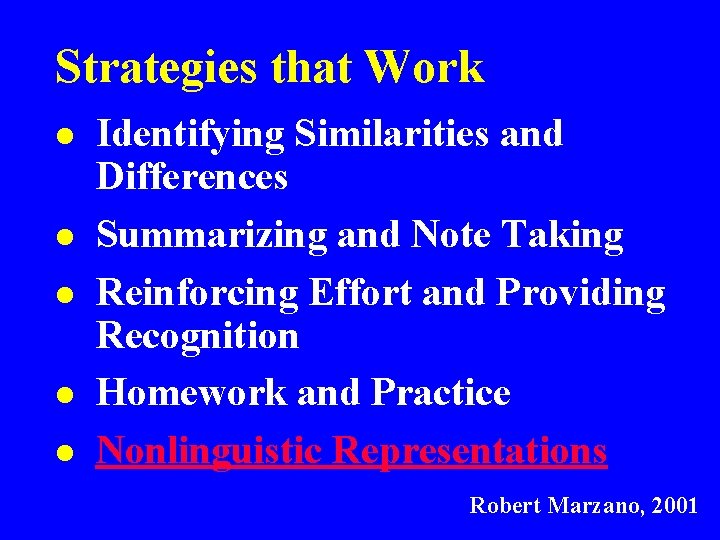
Strategies that Work l l l Identifying Similarities and Differences Summarizing and Note Taking Reinforcing Effort and Providing Recognition Homework and Practice Nonlinguistic Representations Robert Marzano, 2001
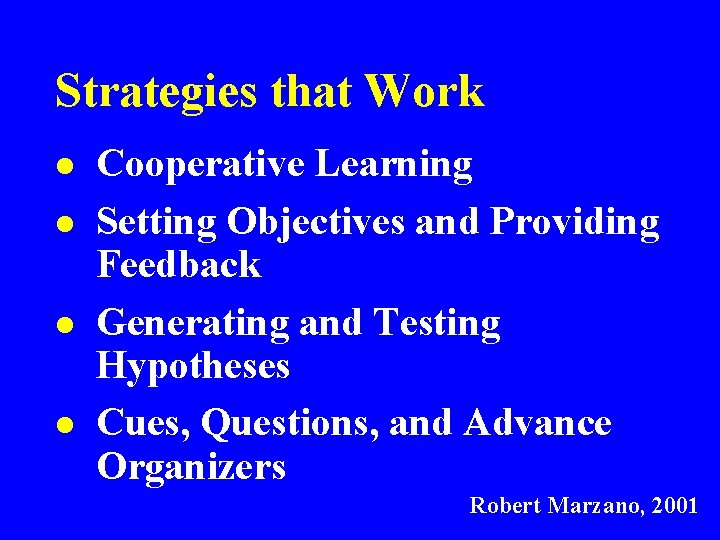
Strategies that Work l l Cooperative Learning Setting Objectives and Providing Feedback Generating and Testing Hypotheses Cues, Questions, and Advance Organizers Robert Marzano, 2001
Learning Style Activity
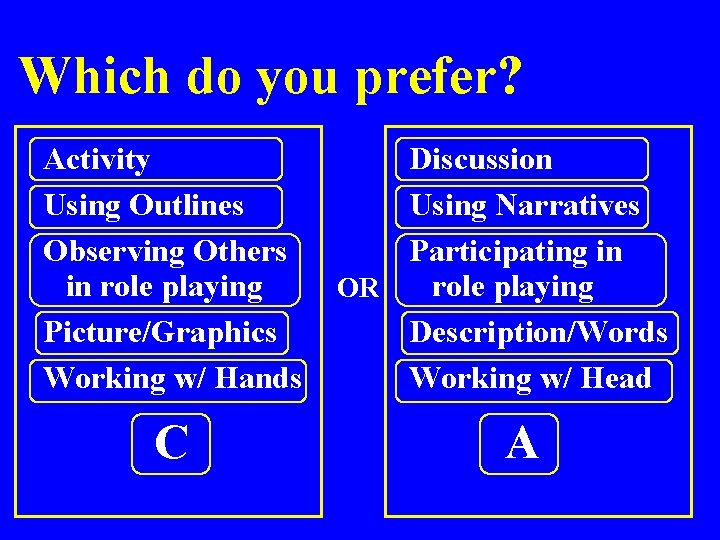
Which do you prefer? Activity Using Outlines Observing Others in role playing Picture/Graphics Working w/ Hands C Discussion Using Narratives Participating in role playing OR Description/Words Working w/ Head A
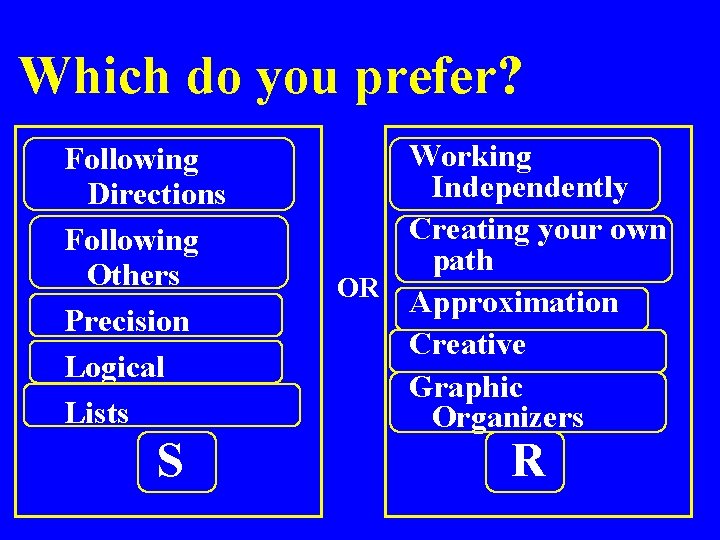
Which do you prefer? Following Directions Following Others Precision Logical Lists S Working Independently Creating your own path OR Approximation Creative Graphic Organizers R
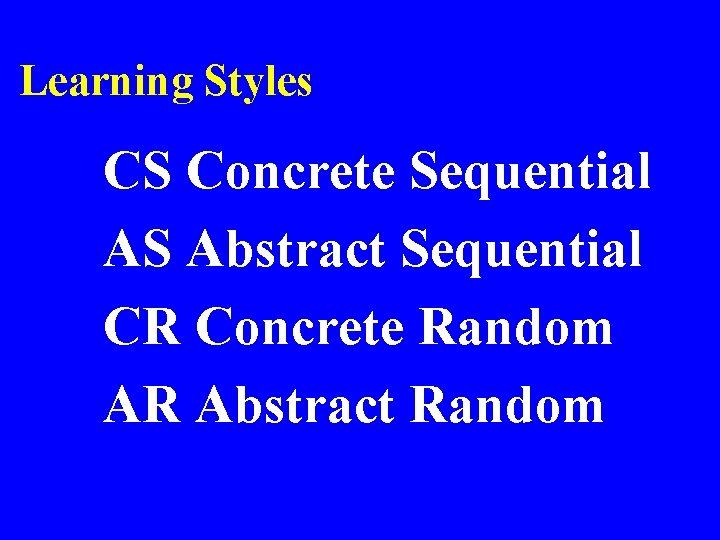
Learning Styles CS Concrete Sequential AS Abstract Sequential CR Concrete Random AR Abstract Random
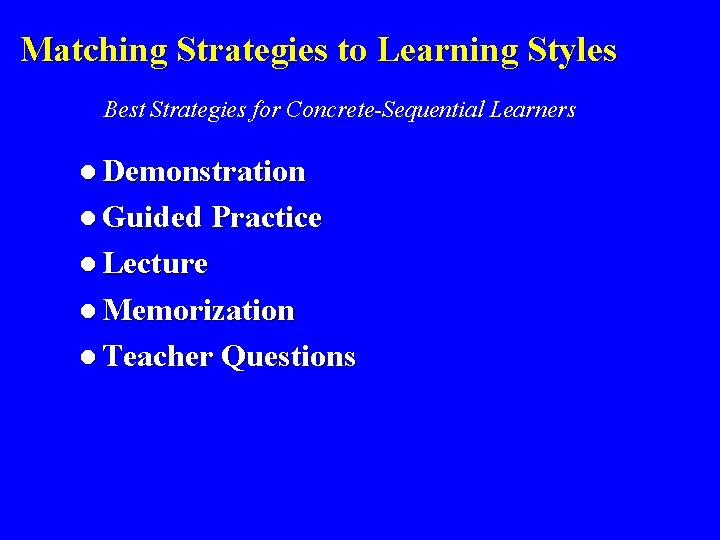
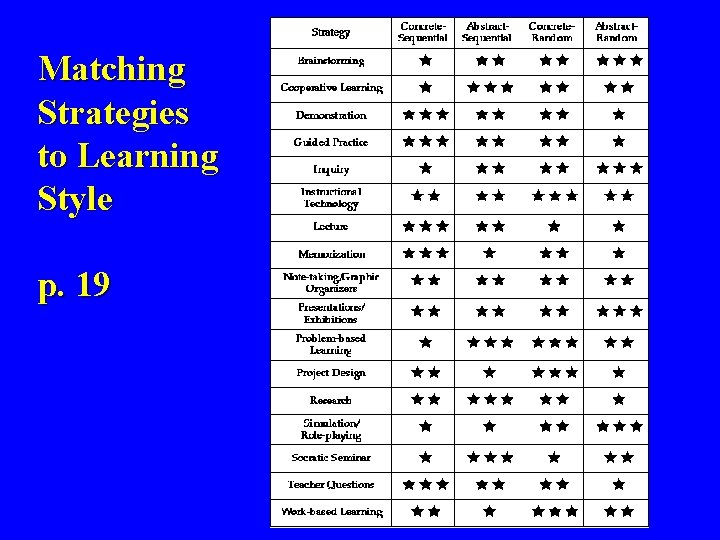
Matching Strategies to Learning Styles Best Strategies for Concrete-Sequential Learners l Demonstration l Guided Practice l Lecture l Memorization l Teacher Questions
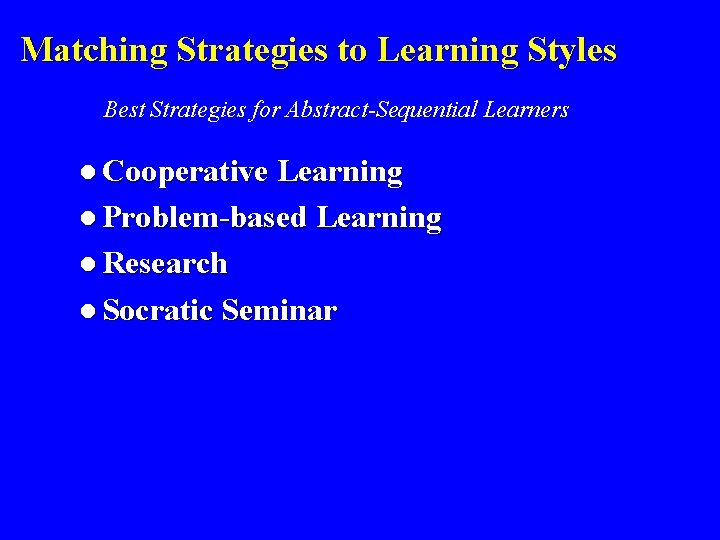
Matching Strategies to Learning Styles Best Strategies for Abstract-Sequential Learners l Cooperative Learning l Problem-based Learning l Research l Socratic Seminar
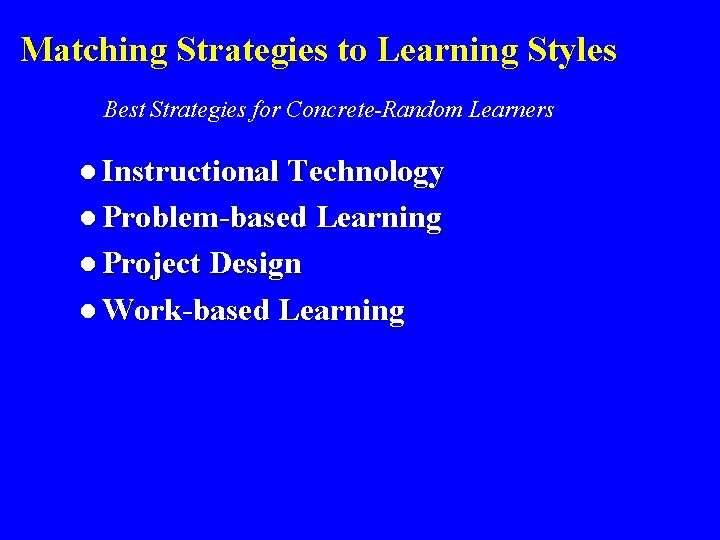
Matching Strategies to Learning Styles Best Strategies for Concrete-Random Learners l Instructional Technology l Problem-based Learning l Project Design l Work-based Learning
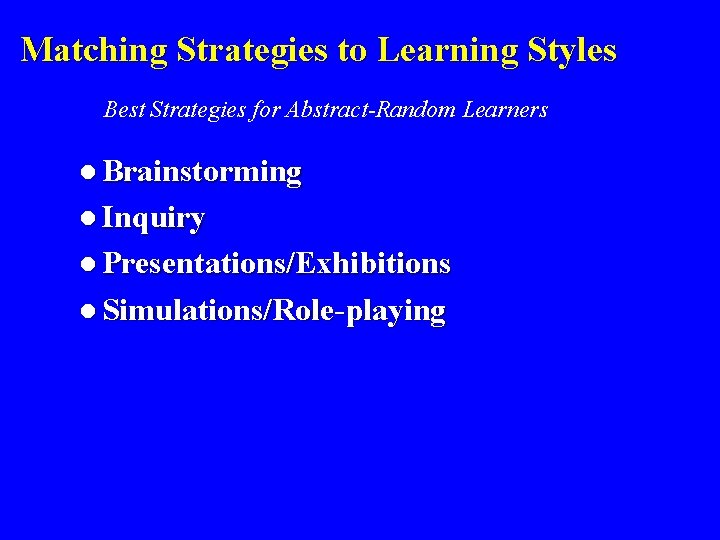
Matching Strategies to Learning Styles Best Strategies for Abstract-Random Learners l Brainstorming l Inquiry l Presentations/Exhibitions l Simulations/Role-playing
Matching Strategies to Learning Style p. 19
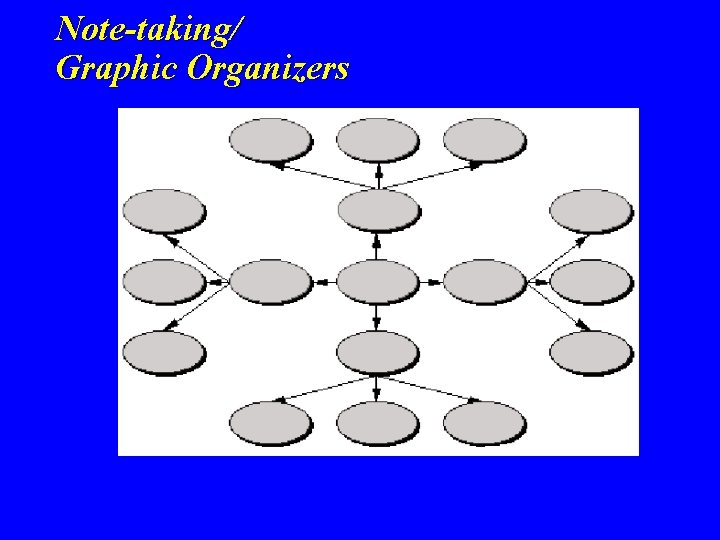
Note-taking/ Graphic Organizers
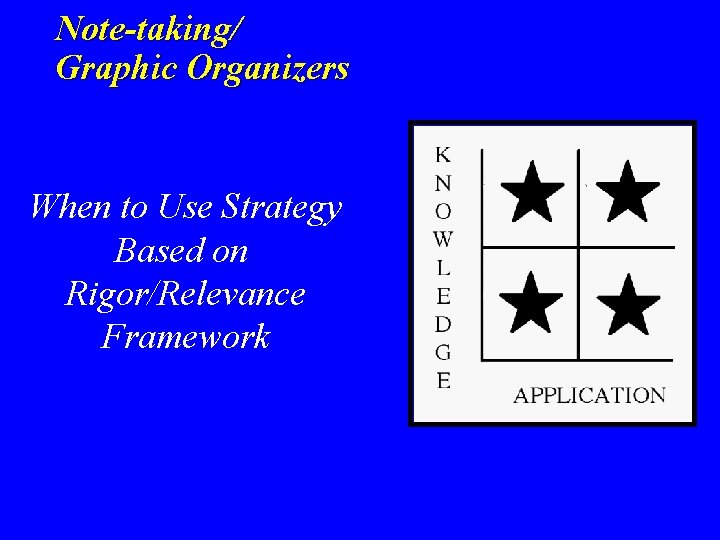
Note-taking/ Graphic Organizers When to Use Strategy Based on Rigor/Relevance Framework
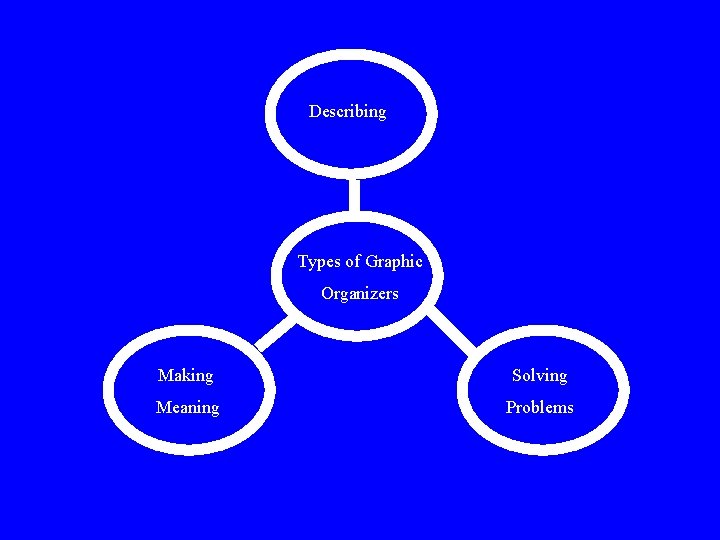
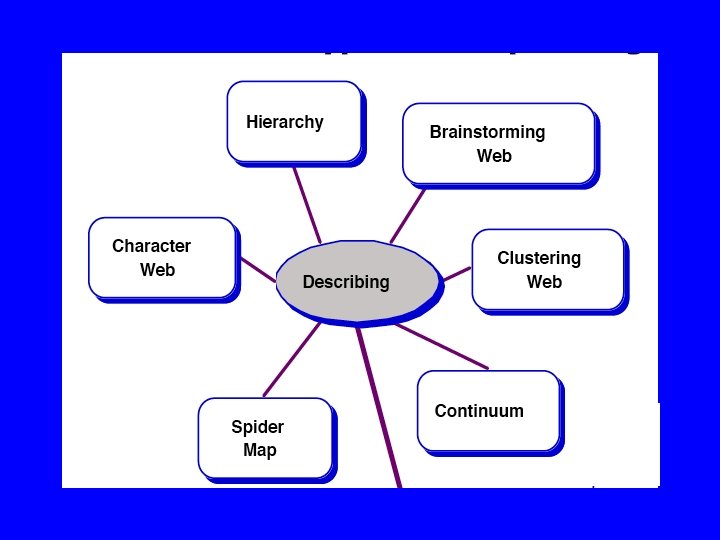
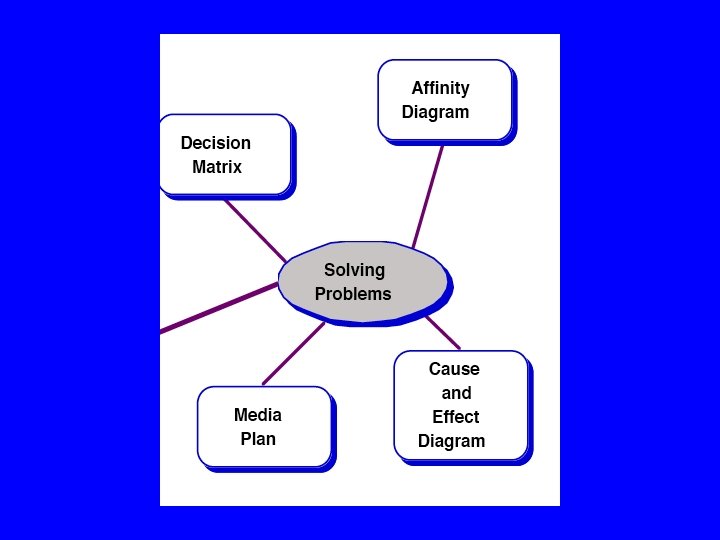
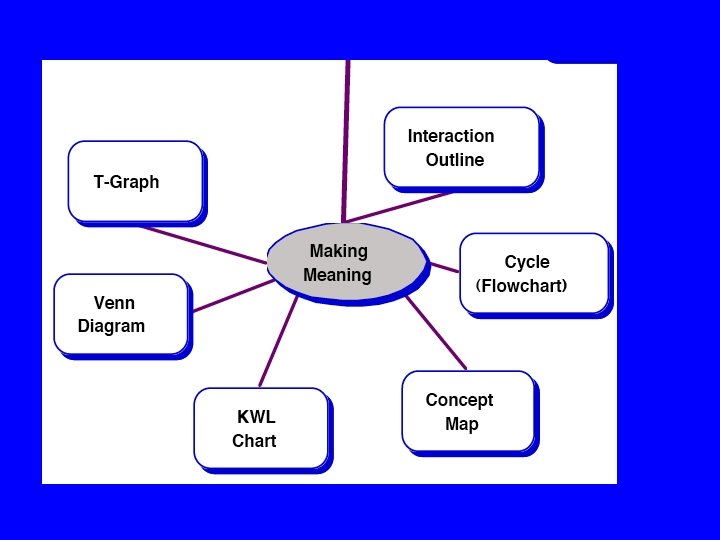
Describing Types of Graphic Organizers Making Solving Meaning Problems
Graphic Organizers Brainstorming Web
Graphic Organizers Clustering Web
Graphic Organizers Character Web
Graphic Organizers Hierarchy
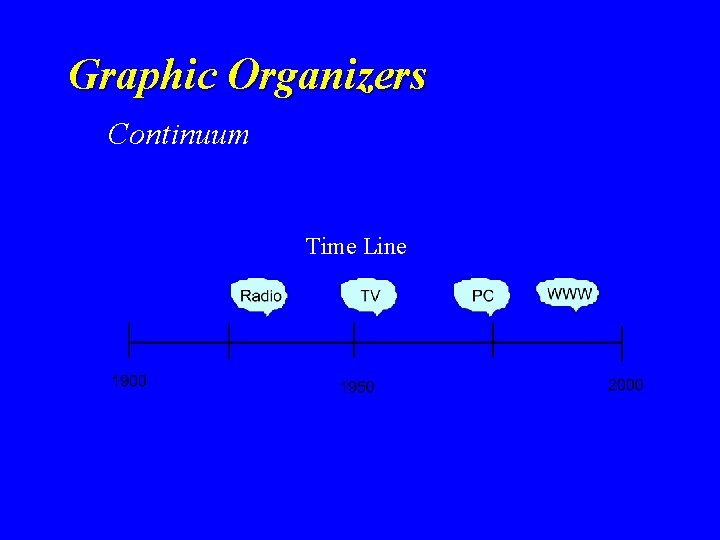
Graphic Organizers Continuum Time Line
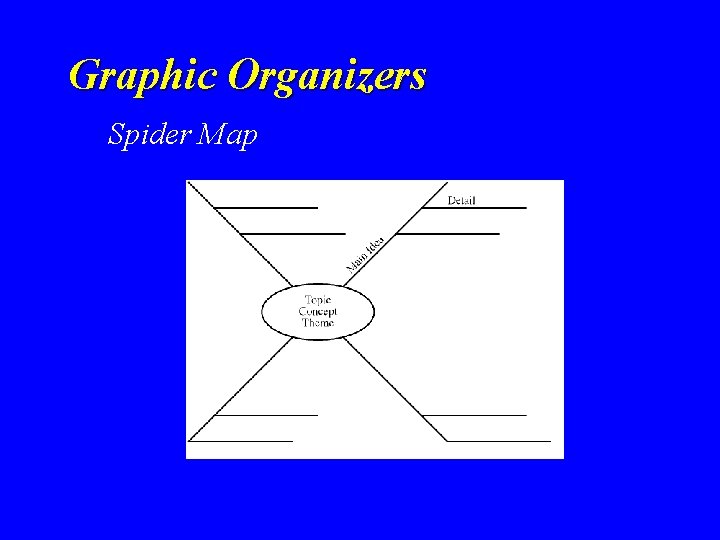
Graphic Organizers Spider Map
Graphic Organizers Affinity Diagram
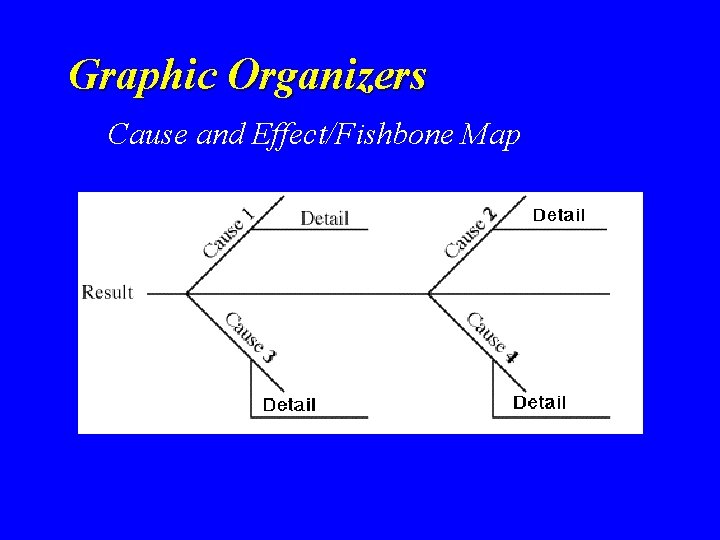
Graphic Organizers Cause and Effect/Fishbone Map
Graphic Organizers Media Plan
Graphic Organizers Decision Matrix
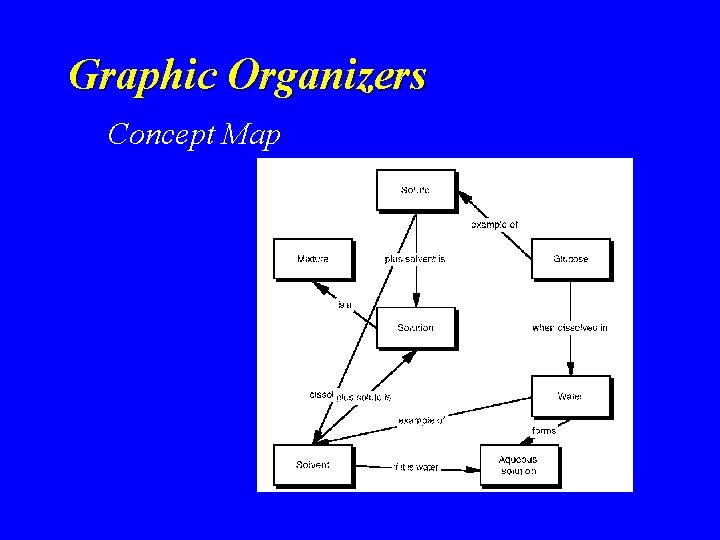
Graphic Organizers Concept Map
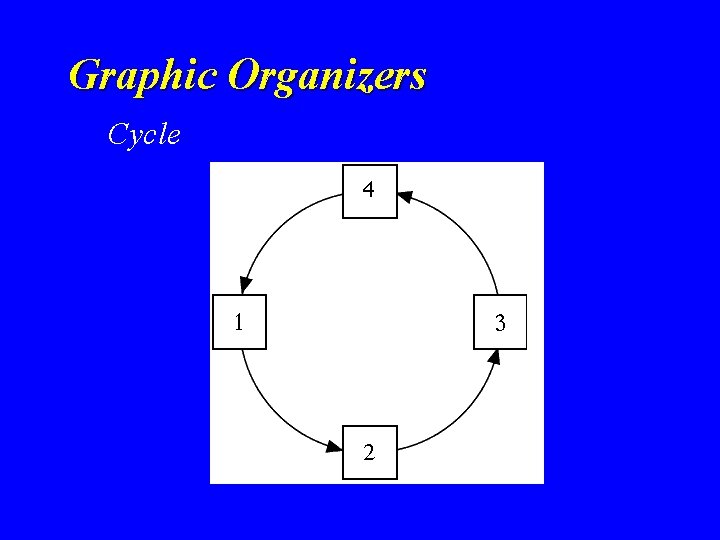
Graphic Organizers Cycle
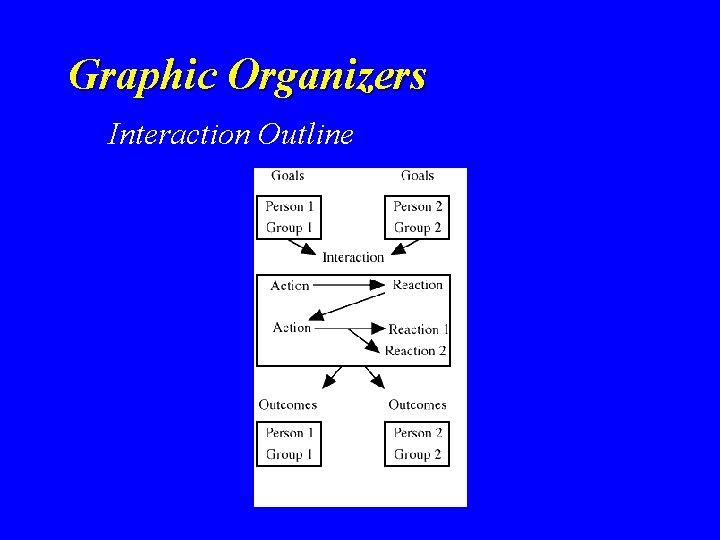
Graphic Organizers Interaction Outline
Graphic Organizers KWL Chart
Graphic Organizers T-Graph
Graphic Organizers Venn Diagram
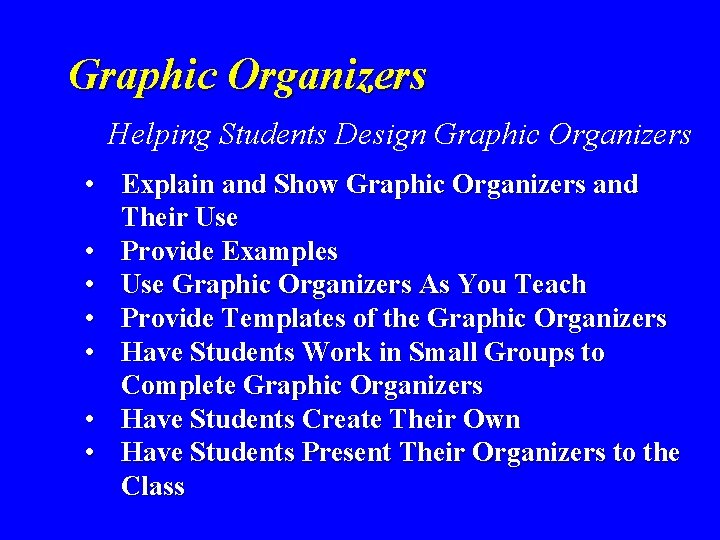
Graphic Organizers Helping Students Design Graphic Organizers • Explain and Show Graphic Organizers and Their Use • Provide Examples • Use Graphic Organizers As You Teach • Provide Templates of the Graphic Organizers • Have Students Work in Small Groups to Complete Graphic Organizers • Have Students Create Their Own • Have Students Present Their Organizers to the Class
READING STRATEGIES
LEXILE
Activity Checklist p. 10 Handout
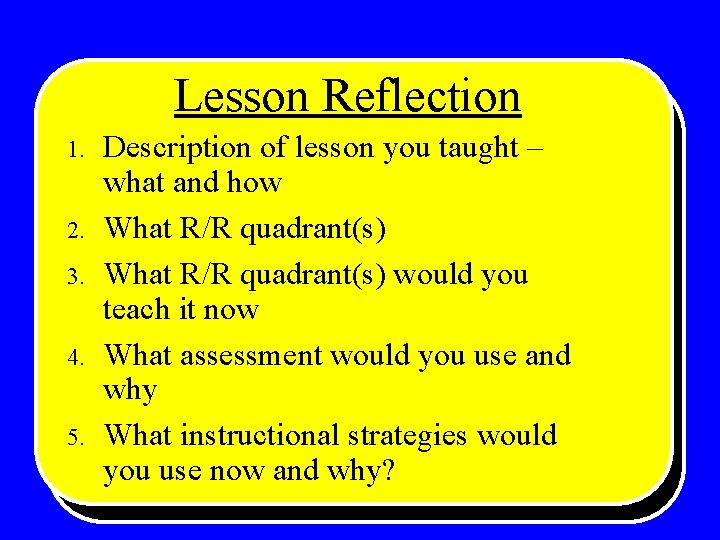
Lesson Reflection 1. 2. 3. 4. 5. Description of lesson you taught – what and how What R/R quadrant(s) would you teach it now What assessment would you use and why What instructional strategies would you use now and why?
Activity RSVP
Activity ACTION PLAN
Staying on the Cutting Edge ü Recognize the need for change
Staying on the Cutting Edge ü ü Recognize the need for change Focus on the real goals
Look into the future through the eyes of a child?
Staying on the Cutting Edge ü ü ü Recognize the need for change Focus on the real goals Keep yourself learning
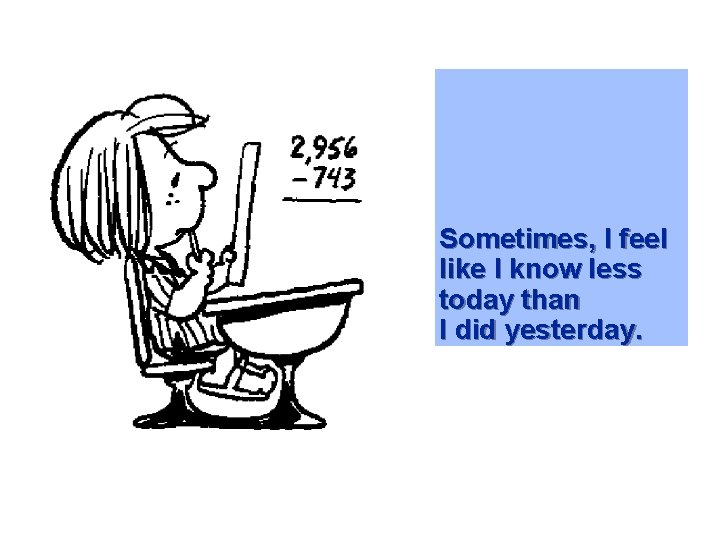
Sometimes, I feel like I know less today than I did yesterday.
Staying on the Cutting Edge ü ü Recognize the need for change Focus on the real goals Keep yourself learning Share with others
Are you still making all of the decisions?
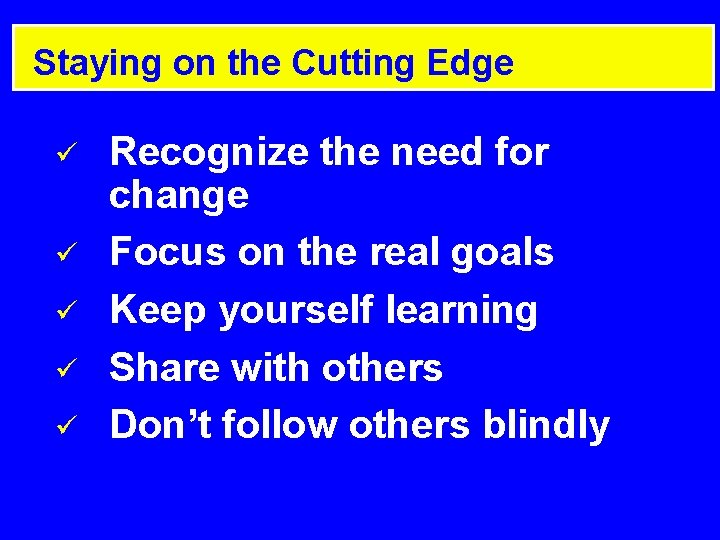
Staying on the Cutting Edge ü ü ü Recognize the need for change Focus on the real goals Keep yourself learning Share with others Don’t follow others blindly
Lovers never send form letters.
Center Web Site http: //www. Leader. Ed. com Conference Web Site /msc 05 handouts. html