
IN What adaptations would you need for flight

- Slides: 16
IN- What adaptations would you need for flight? Out- What are the advantages and or disadvantages of being ENDOTHERMIC?
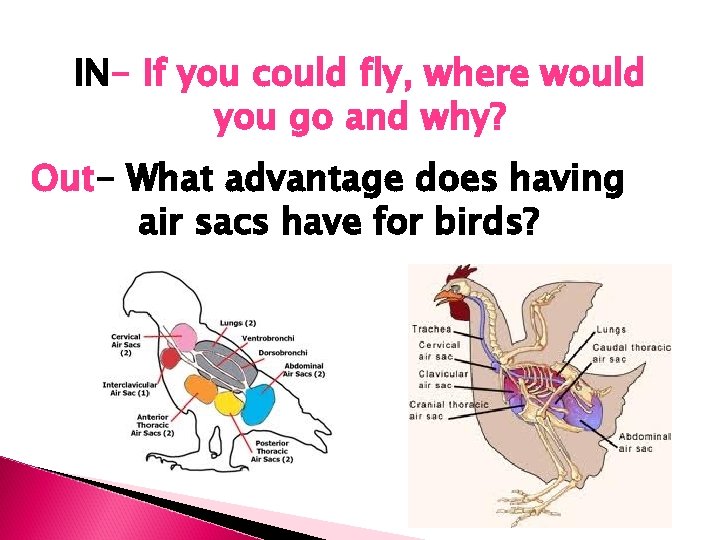
IN- If you could fly, where would you go and why? Out- What advantage does having air sacs have for birds?
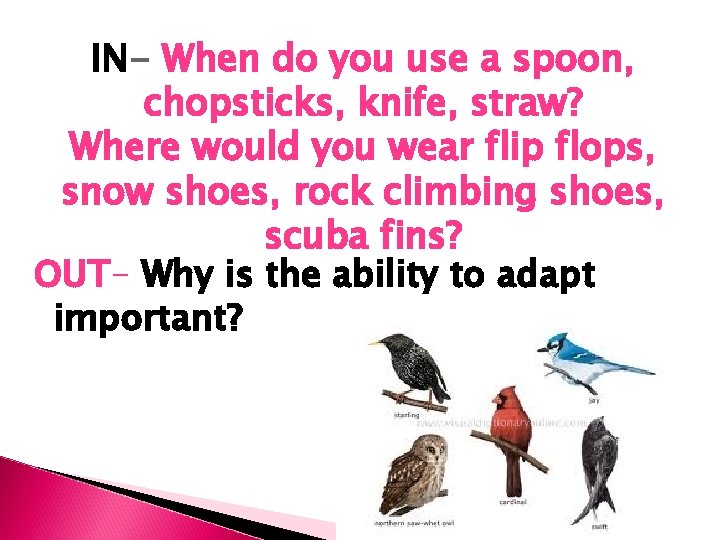
IN- When do you use a spoon, chopsticks, knife, straw? Where would you wear flip flops, snow shoes, rock climbing shoes, scuba fins? OUT- Why is the ability to adapt important?
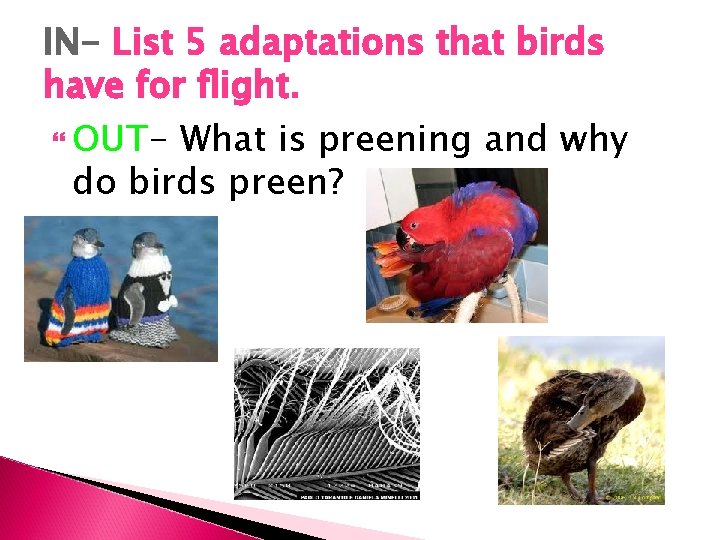
IN- List 5 adaptations that birds have for flight. OUT- What is preening and why do birds preen?
1. Characteristic s of Birds 2. 3.
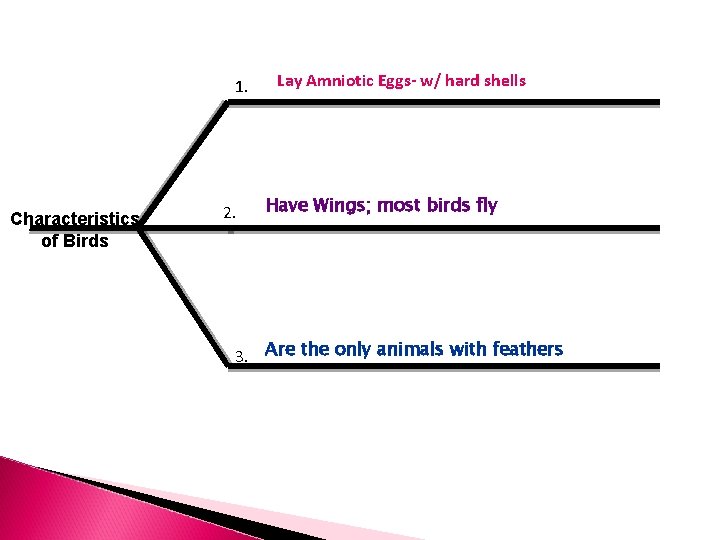
1. Characteristics of Birds 2. Lay Amniotic Eggs- w/ hard shells Have Wings; most birds fly 3. Are the only animals with feathers
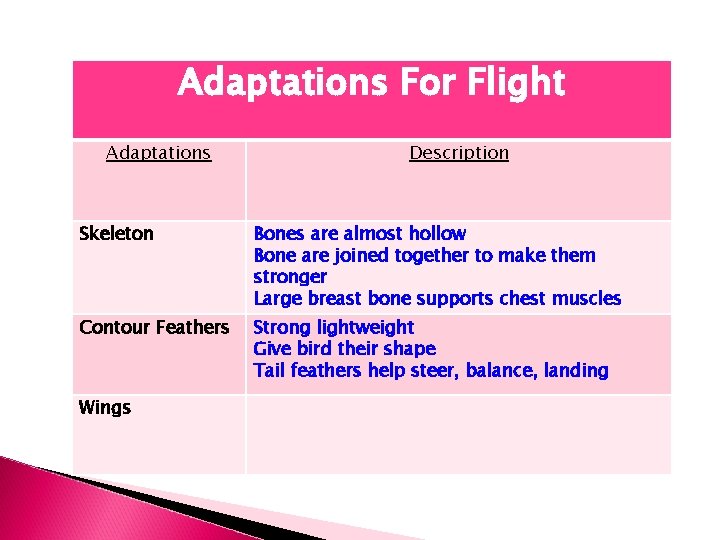
Adaptations For Flight Adaptations Skeleton Contour Feathers Wings Description
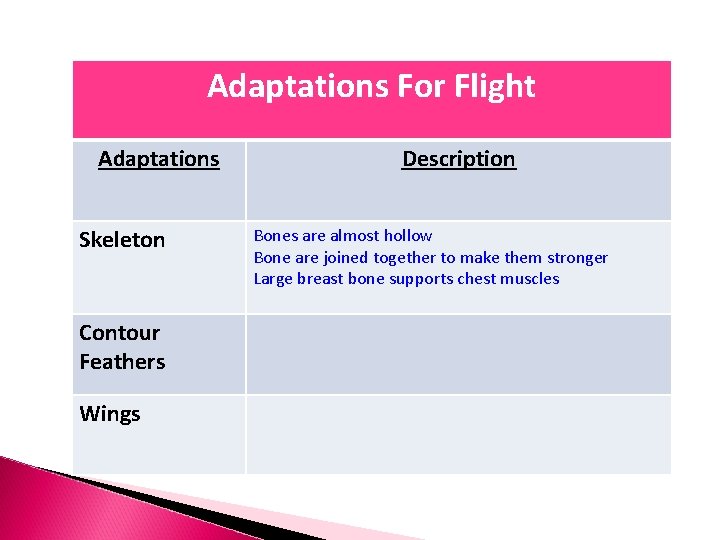
Adaptations For Flight Adaptations Skeleton Contour Feathers Wings Description Bones are almost hollow Bone are joined together to make them stronger Large breast bone supports chest muscles
Adaptations For Flight Adaptations Description Skeleton Bones are almost hollow Bone are joined together to make them stronger Large breast bone supports chest muscles Contour Feathers Strong lightweight Give bird their shape Tail feathers help steer, balance, landing Wings
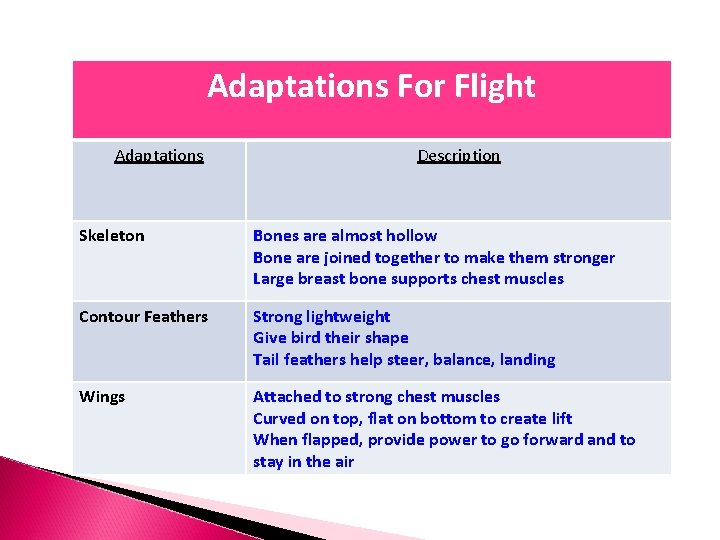
Adaptations For Flight Adaptations Description Skeleton Bones are almost hollow Bone are joined together to make them stronger Large breast bone supports chest muscles Contour Feathers Strong lightweight Give bird their shape Tail feathers help steer, balance, landing Wings Attached to strong chest muscles Curved on top, flat on bottom to create lift When flapped, provide power to go forward and to stay in the air
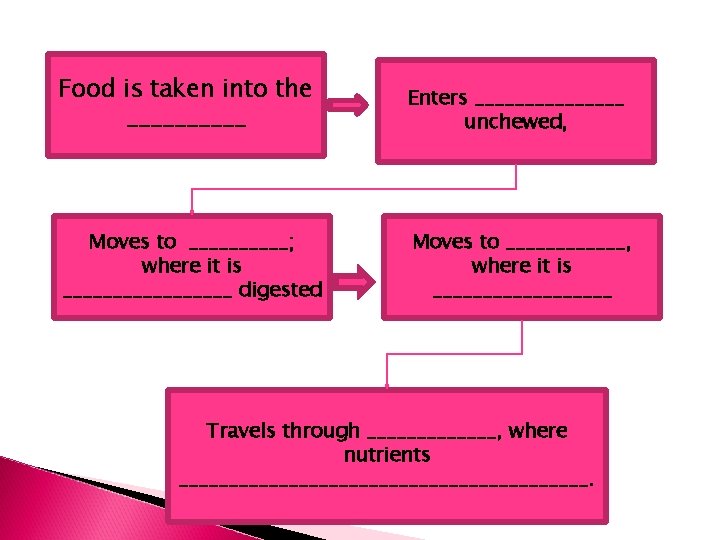
Food is taken into the _____ Enters ________ unchewed, Moves to _____; where it is _________ digested Moves to ______, where it is _________ Travels through _______, where nutrients _____________________.
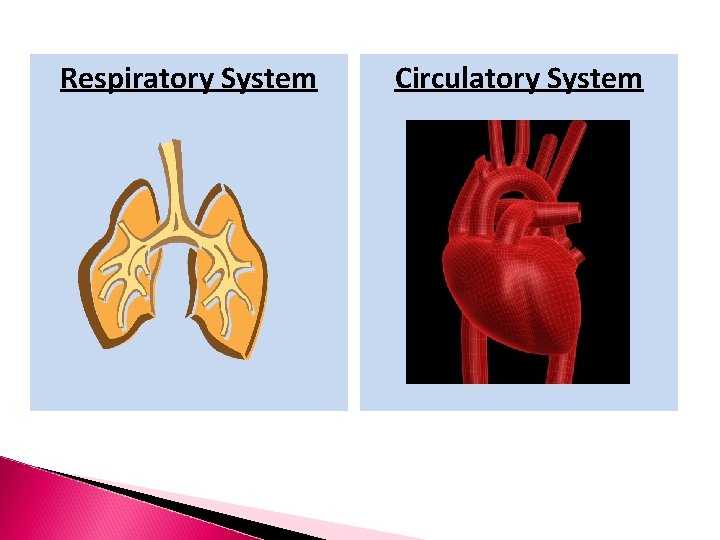
Respiratory System Circulatory System
Respiratory System Inhaled air passes into air sacs When a bird exhales, air passes from air sacs to lungs Air enters lungs when both inhaling and exhaling Circulatory System Heart is large compared to body Heart beats rapidly Blood carrying oxygen is kept separate from blood carrying carbon dioxide
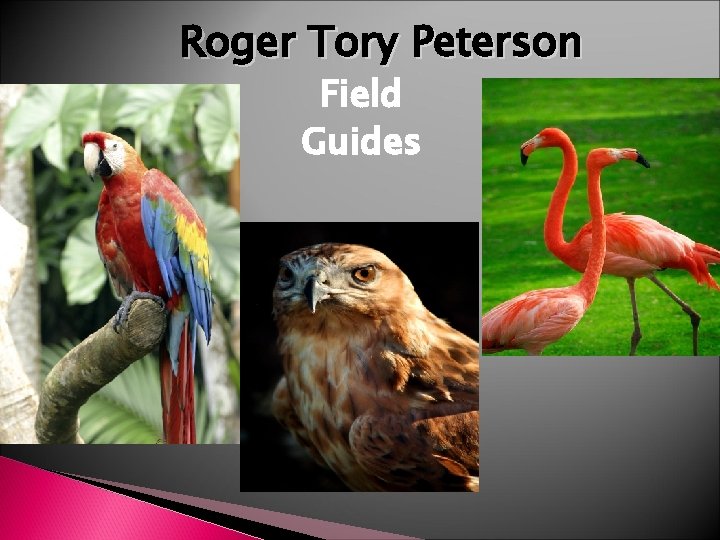
In A bird’s adaptation to his environment and his food is shown most obviously in his beak and feet. Describe and explain these two previous adaptations that are most commonly seen in one of the following birds. (you may draw these parts to help in your explanation, but don’t forget to explain their use)
Roger Tory Peterson Field Guides
Owl Pellet http: //biologycorne r. com/worksheets/ owlpellet. html