
In Vivo Direct Reprogramming of Reactive Glial Cells
- Slides: 23
In Vivo Direct Reprogramming of Reactive Glial Cells into Functional Neurons after Brain Injury and in an Alzheimer’s Disease Model Karen Odin Roberta Maggio 15 th January 2020
Introduction Brain injury gliosis activation of glial cells (proliferation) reactive glial cells (defense system against the invasion of micro-organisms and cytotoxins) secretion of neuroinhibitory factors to prevent neuronal growth glial scar inside the brain Reverse glial scar: Reprogramming adult skin fibroblasts into pluripotent stem cells Transdifferentiation across different cell lineages (can be applied for brain repair? )
Which strategy can be used for brain repair after brain injury or neurodegeneration?
Introduction v Reactive glial cells can be reprogrammed into functional neurons when infected with a retrovirus encoding a single transcription factor v Forced expression of Neuro. D 1 in a mouse model for AD can reprogram reactive glial cells into functional neurons v Neuro. D 1 can reprogram cultured human astrocytes into functional neurons in vivo regeneration of functional neurons from reactive glial cells may provide a potential therapeutic approach to restore lost neuronal function in injured or diseased brain
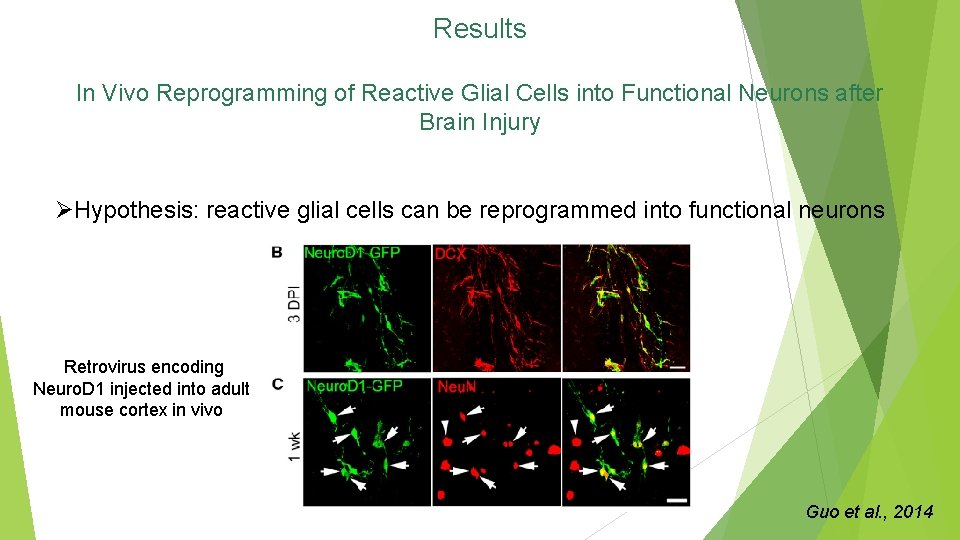
Results In Vivo Reprogramming of Reactive Glial Cells into Functional Neurons after Brain Injury ØHypothesis: reactive glial cells can be reprogrammed into functional neurons Retrovirus encoding Neuro. D 1 injected into adult mouse cortex in vivo Guo et al. , 2014
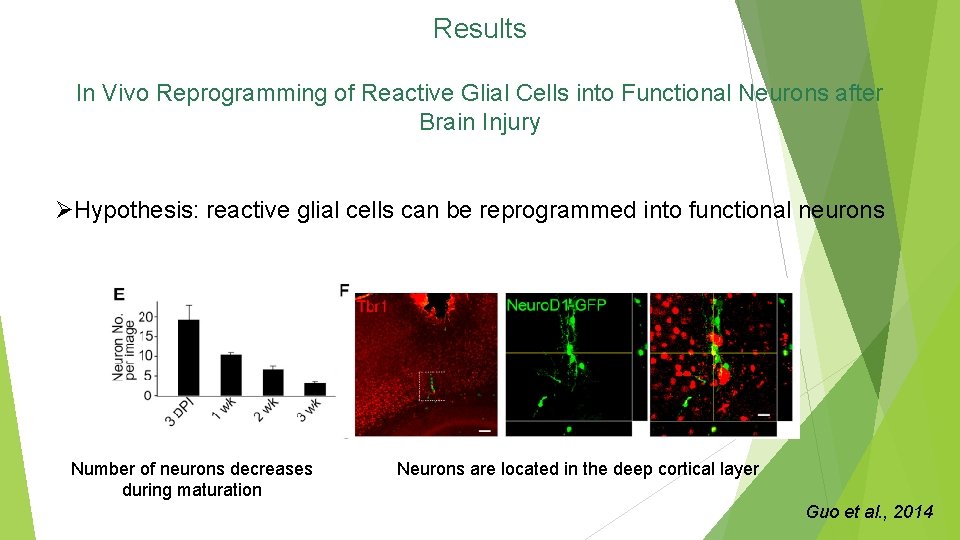
Results In Vivo Reprogramming of Reactive Glial Cells into Functional Neurons after Brain Injury ØHypothesis: reactive glial cells can be reprogrammed into functional neurons Number of neurons decreases during maturation Neurons are located in the deep cortical layer Guo et al. , 2014
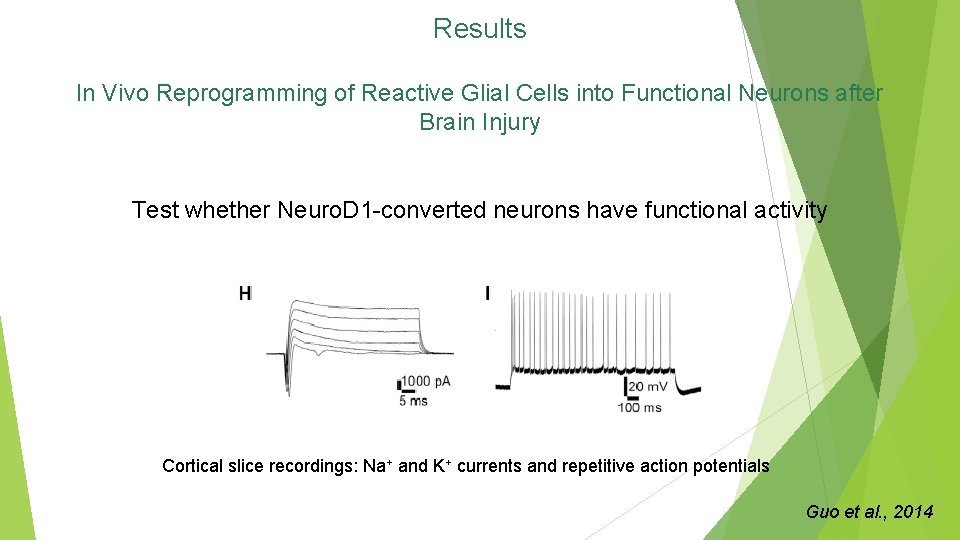
Results In Vivo Reprogramming of Reactive Glial Cells into Functional Neurons after Brain Injury Test whether Neuro. D 1 -converted neurons have functional activity Cortical slice recordings: Na+ and K+ currents and repetitive action potentials Guo et al. , 2014
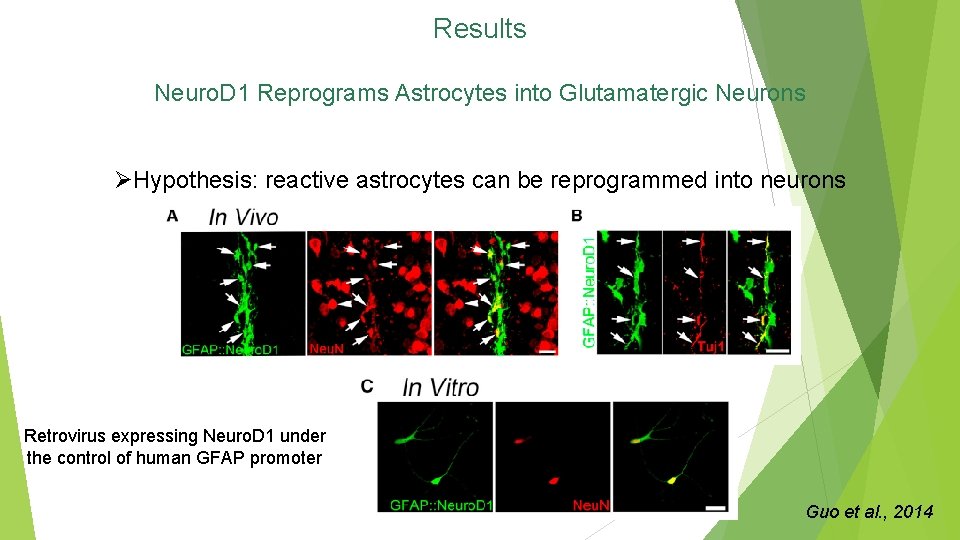
Results Neuro. D 1 Reprograms Astrocytes into Glutamatergic Neurons ØHypothesis: reactive astrocytes can be reprogrammed into neurons Retrovirus expressing Neuro. D 1 under the control of human GFAP promoter Guo et al. , 2014
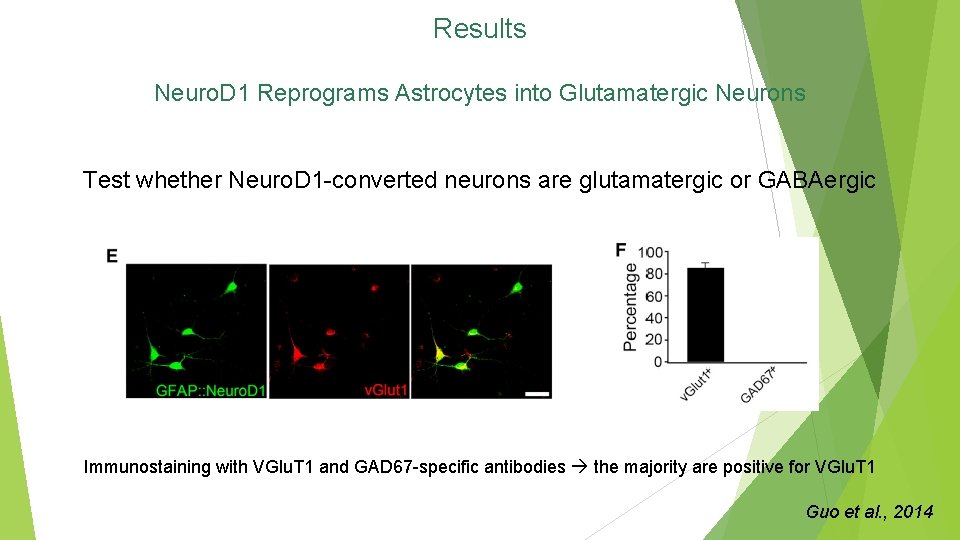
Results Neuro. D 1 Reprograms Astrocytes into Glutamatergic Neurons Test whether Neuro. D 1 -converted neurons are glutamatergic or GABAergic Immunostaining with VGlu. T 1 and GAD 67 -specific antibodies the majority are positive for VGlu. T 1 Guo et al. , 2014
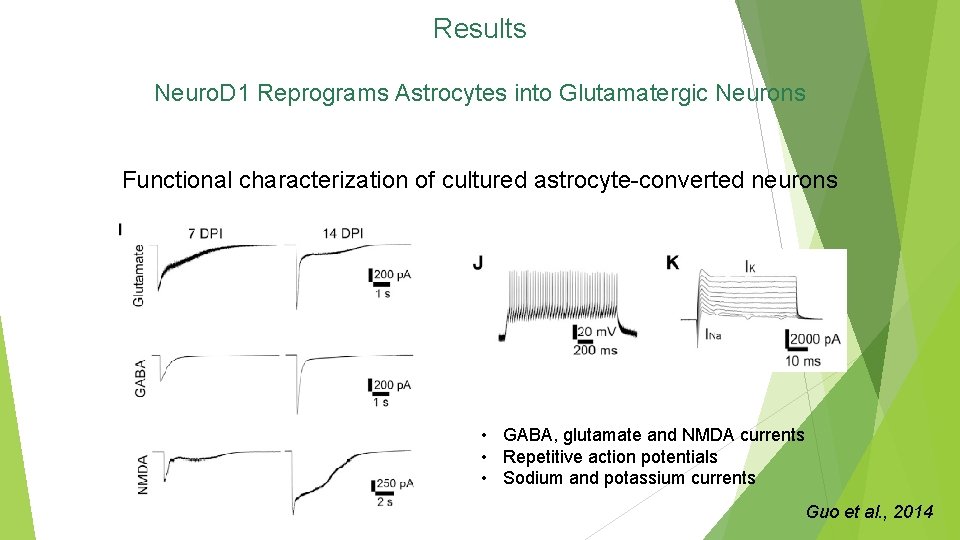
Results Neuro. D 1 Reprograms Astrocytes into Glutamatergic Neurons Functional characterization of cultured astrocyte-converted neurons • GABA, glutamate and NMDA currents • Repetitive action potentials • Sodium and potassium currents Guo et al. , 2014
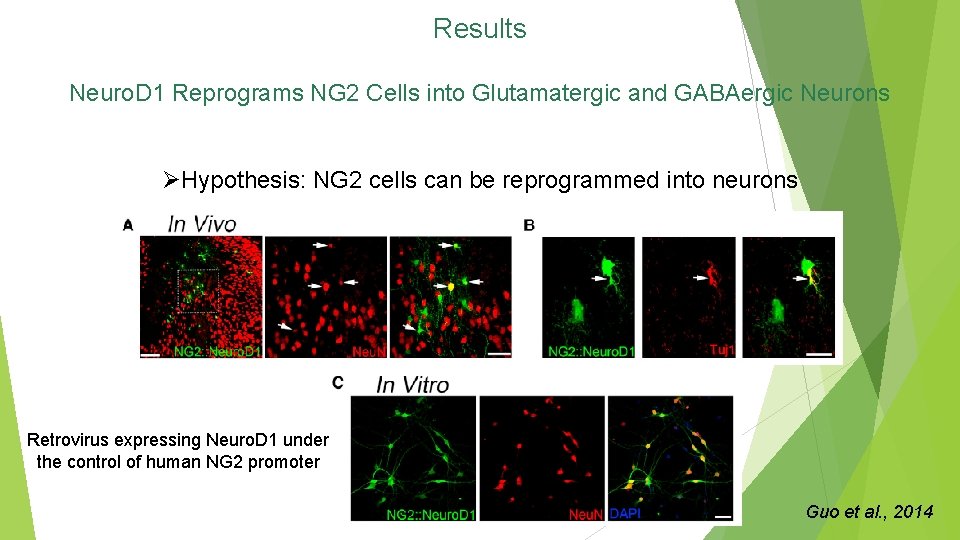
Results Neuro. D 1 Reprograms NG 2 Cells into Glutamatergic and GABAergic Neurons ØHypothesis: NG 2 cells can be reprogrammed into neurons Retrovirus expressing Neuro. D 1 under the control of human NG 2 promoter Guo et al. , 2014
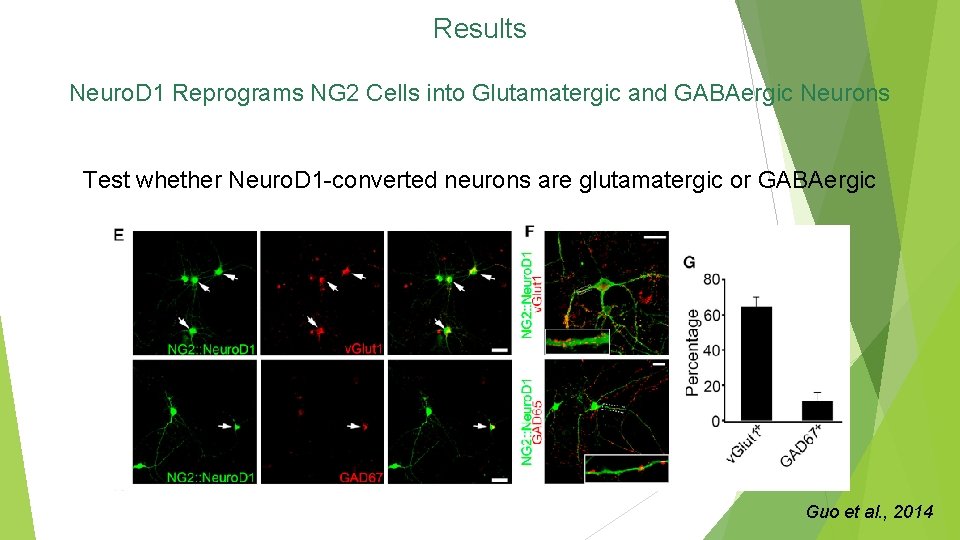
Results Neuro. D 1 Reprograms NG 2 Cells into Glutamatergic and GABAergic Neurons Test whether Neuro. D 1 -converted neurons are glutamatergic or GABAergic Guo et al. , 2014
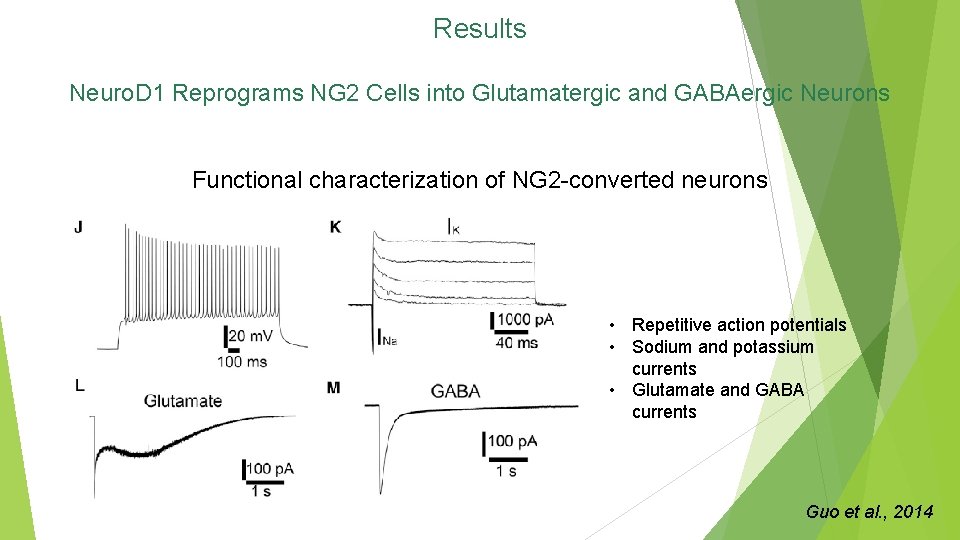
Results Neuro. D 1 Reprograms NG 2 Cells into Glutamatergic and GABAergic Neurons Functional characterization of NG 2 -converted neurons • Repetitive action potentials • Sodium and potassium currents • Glutamate and GABA currents Guo et al. , 2014
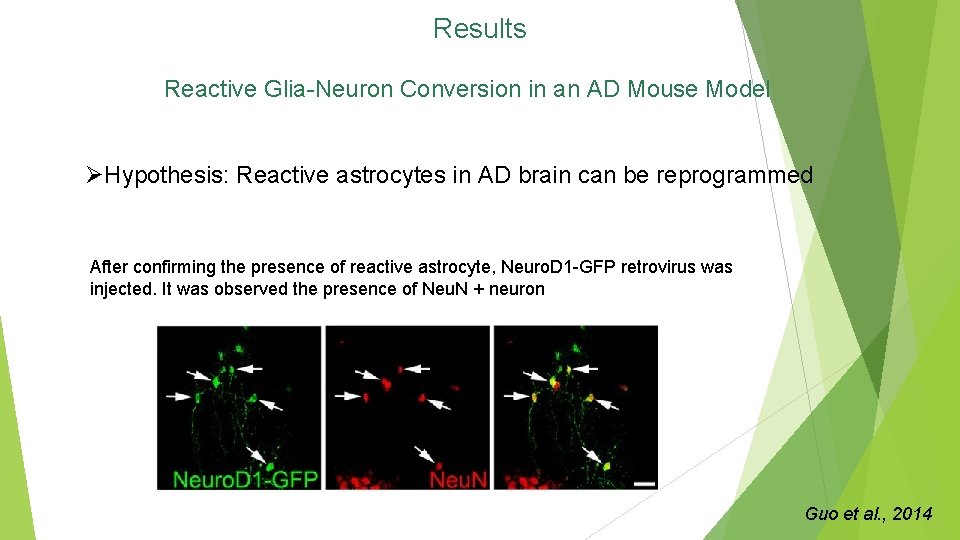
Results Reactive Glia-Neuron Conversion in an AD Mouse Model ØHypothesis: Reactive astrocytes in AD brain can be reprogrammed After confirming the presence of reactive astrocyte, Neuro. D 1 -GFP retrovirus was injected. It was observed the presence of Neu. N + neuron Guo et al. , 2014
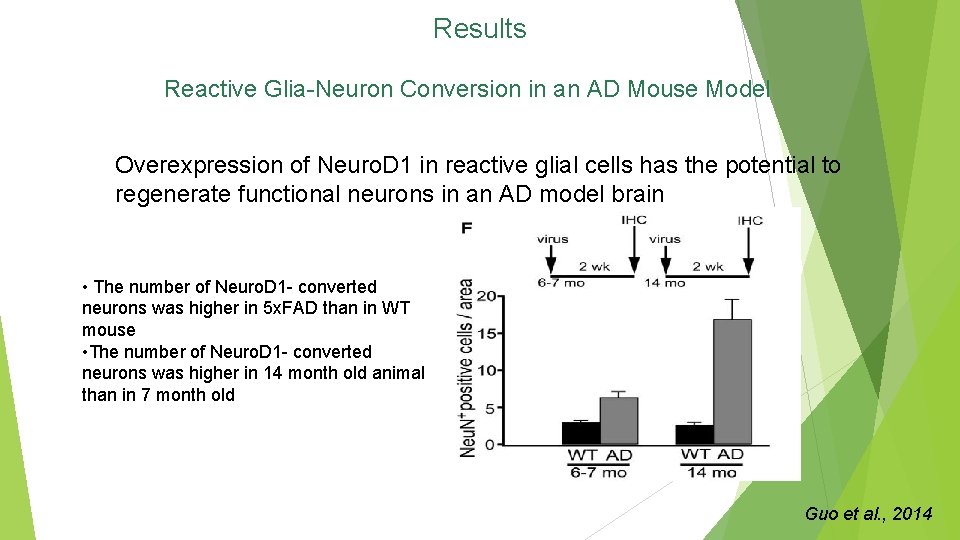
Results Reactive Glia-Neuron Conversion in an AD Mouse Model Overexpression of Neuro. D 1 in reactive glial cells has the potential to regenerate functional neurons in an AD model brain • The number of Neuro. D 1 - converted neurons was higher in 5 x. FAD than in WT mouse • The number of Neuro. D 1 - converted neurons was higher in 14 month old animal than in 7 month old Guo et al. , 2014
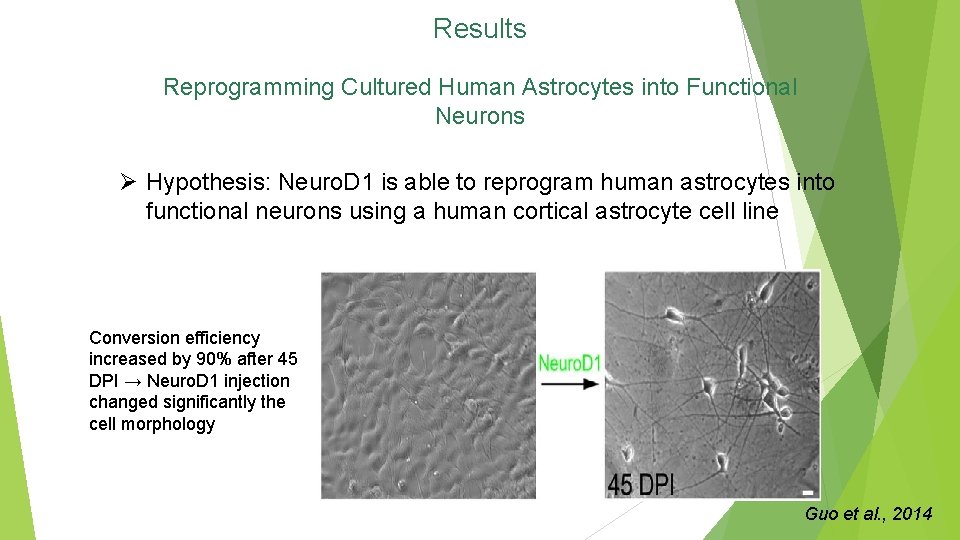
Results Reprogramming Cultured Human Astrocytes into Functional Neurons Ø Hypothesis: Neuro. D 1 is able to reprogram human astrocytes into functional neurons using a human cortical astrocyte cell line Conversion efficiency increased by 90% after 45 DPI → Neuro. D 1 injection changed significantly the cell morphology Guo et al. , 2014
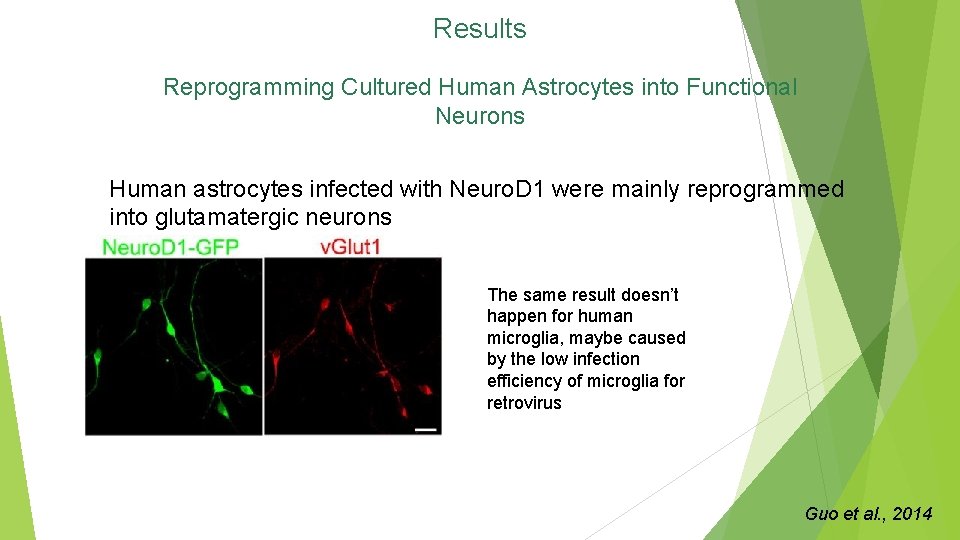
Results Reprogramming Cultured Human Astrocytes into Functional Neurons Human astrocytes infected with Neuro. D 1 were mainly reprogrammed into glutamatergic neurons The same result doesn’t happen for human microglia, maybe caused by the low infection efficiency of microglia for retrovirus Guo et al. , 2014
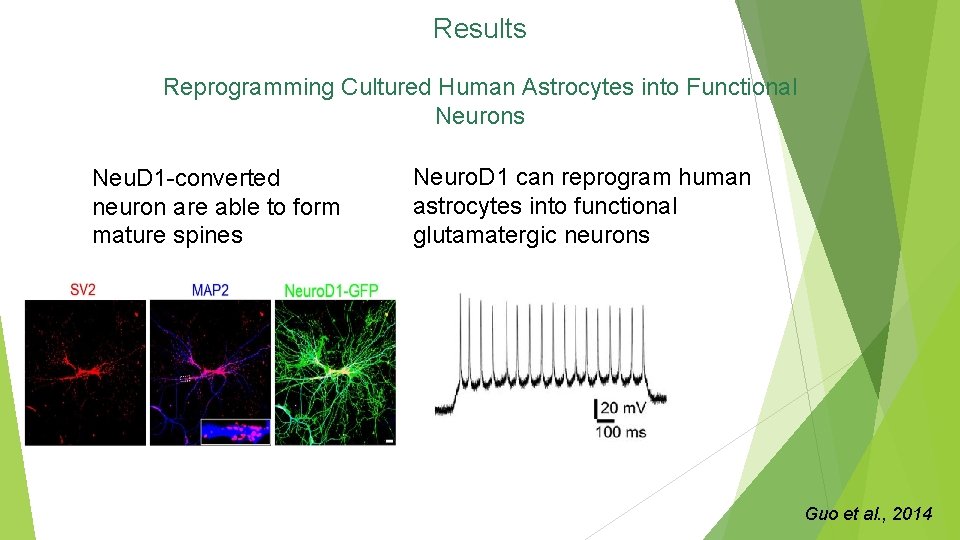
Results Reprogramming Cultured Human Astrocytes into Functional Neurons Neu. D 1 -converted neuron are able to form mature spines Neuro. D 1 can reprogram human astrocytes into functional glutamatergic neurons Guo et al. , 2014
Conclusions 1. Reactive glial cell can be reprogrammed into functional neurons, after expressing Neuro. D 1 → astrocytes: glutamatergic neurons NG 2 cells: glutamatergic and GABAergic neurons Future therapeutic approach for treating reactive gliosis 2. A single transcription factor is enough to change glial fate into neuronal fate both in vitro and in vivo 3. Neuro. D 1 -induced in vivo reactive astrocyte neuron conversion could be potentially useful for regeneration of new neurons in aging brain and even in human patient
Conclusions 4. Neuro. D 1 reprograms both astrocytes and NG 2 cells into functional neurons Astrocyte: glutamatergic neurons NG 2: both glutamatergic and GABAergic neurons It means that different glial cells may be associated with different neuronal fate: the generation of both excitatory and inhibitory neurons could potentially make it possible to balance excitation and inhibition in the cortex after reprogramming
Perspectives Can in vivo reprogramming rescue behavioural deficits, such as cognitive impairment, in diseased brain? Use of neurotrophic agents 1. Improvement of neuronal plasticity 2. Newborn neurons in hippocampus
Thanks for your attention!
Bibliography • Ziyuan Guo, Lei Zhang, Zheng Wu, Yuchen Chen, Fan Wang, and Gong Chen, In Vivo Direct Reprogramming of Reactive Glial Cells into Functional Neurons after Brain Injury and in an Alzheimer’s Disease Model, Cell Stem Cell Article 14, 188– 202, February 6, 2014 • Silvia Bolognin, Julie Blanchard, Xiaochuan Wang, Gustavo Basurto-Islas, Yunn Chyn Tung, Erik Kohlbrenner, Inge Grundke-Iqbal, Khalid Iqbal, An experimental rat model of sporadic Alzheimer’s disease and rescue of cognitive impairment with a neurotrophic peptide, Acta Neuropathologica, January 2012