
In the triangles below a and b have
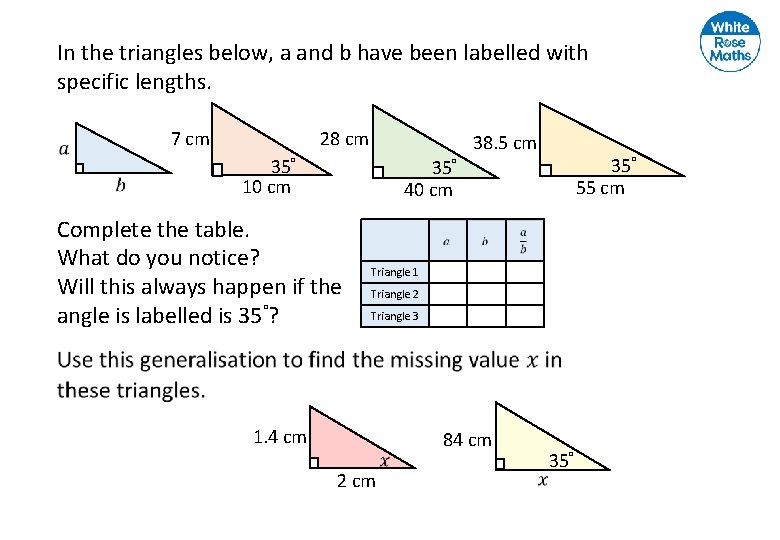
In the triangles below, a and b have been labelled with specific lengths. 28 cm 7 cm 38. 5 cm 35° 10 cm 35° 55 cm 35° 40 cm Complete the table. What do you notice? Will this always happen if the angle is labelled is 35°? Triangle 1 Triangle 2 Triangle 3 1. 4 cm 2 cm 84 cm 35°

1 cm 30° 100 cm 30° 0. 07 cm 30°
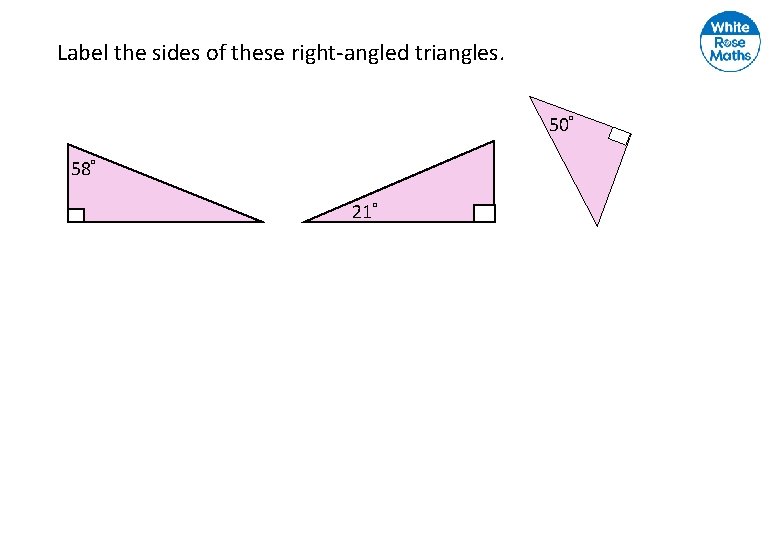
Label the sides of these right-angled triangles. 50° 58° 21°
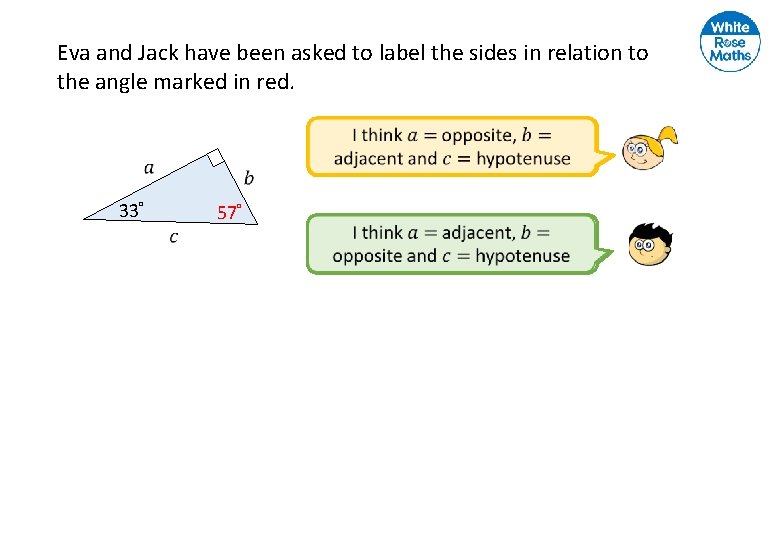
Eva and Jack have been asked to label the sides in relation to the angle marked in red. 33° 57°

Identify a right-angled triangle which incorporates the angle labelled in red and label its sides. 23° 69° 62°
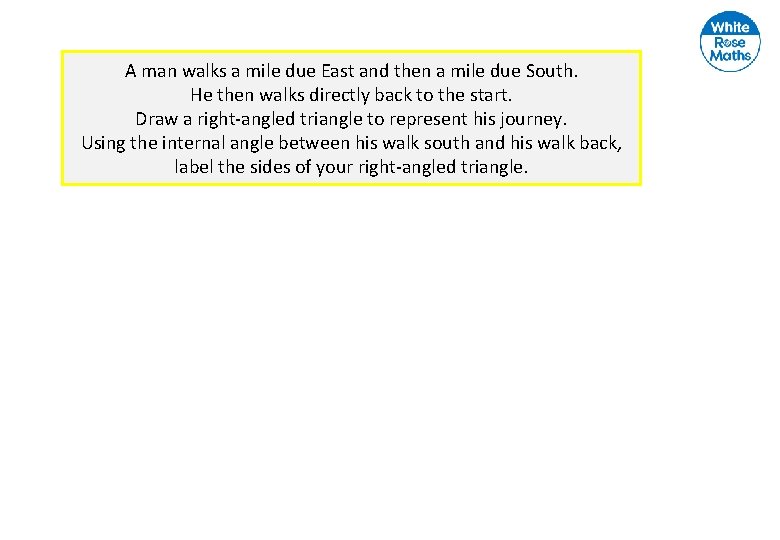
A man walks a mile due East and then a mile due South. He then walks directly back to the start. Draw a right-angled triangle to represent his journey. Using the internal angle between his walk south and his walk back, label the sides of your right-angled triangle.
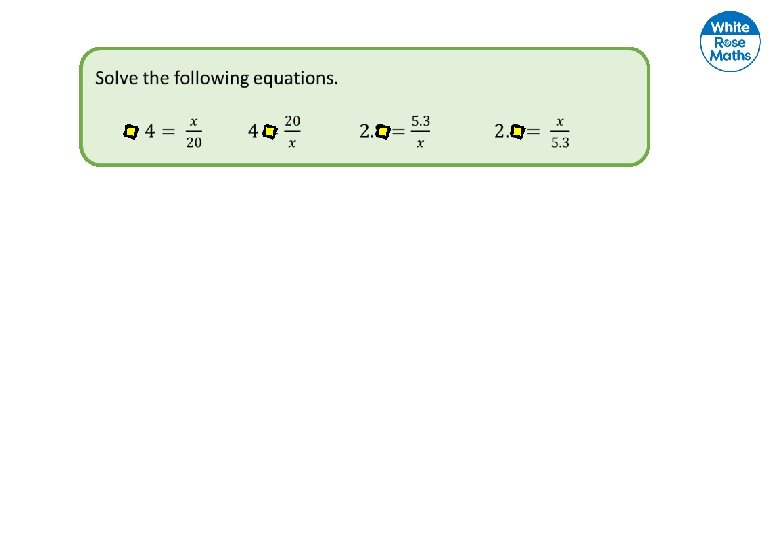
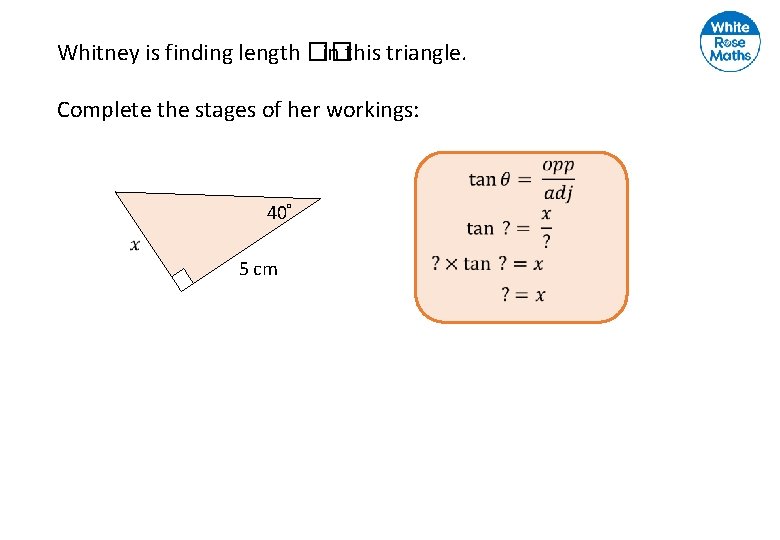
Whitney is finding length �� in this triangle. Complete the stages of her workings: 40° 5 cm
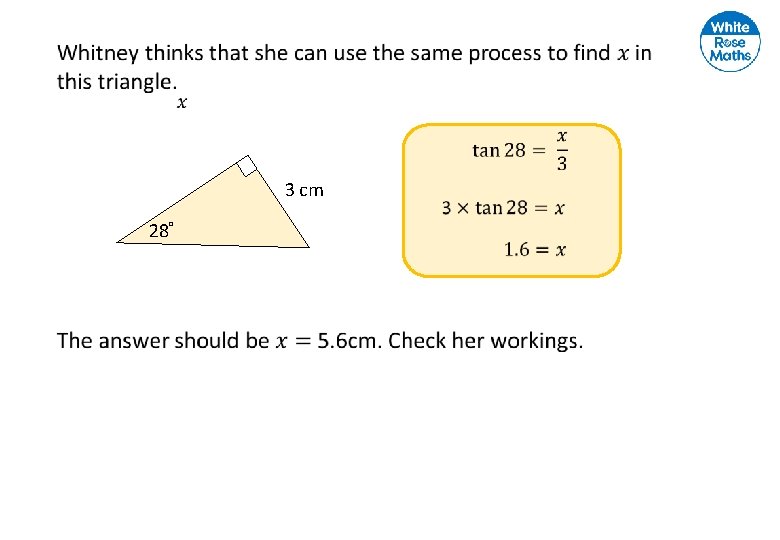
28° 3 cm
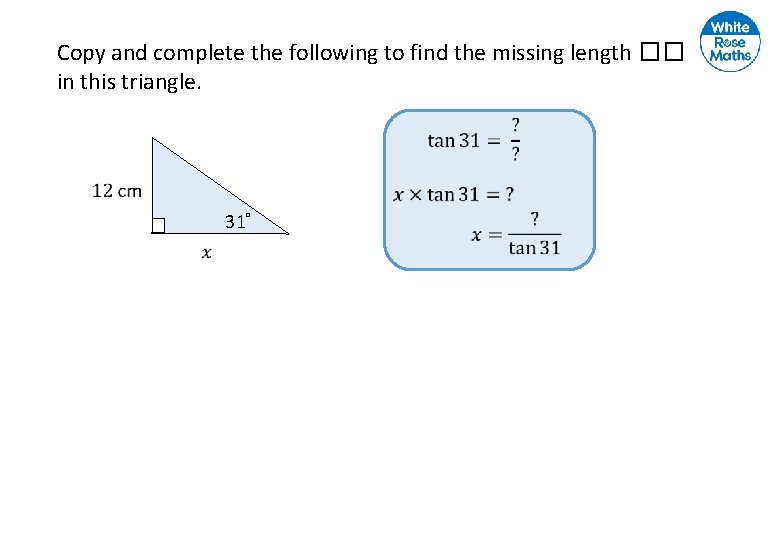
Copy and complete the following to find the missing length �� in this triangle. 31°
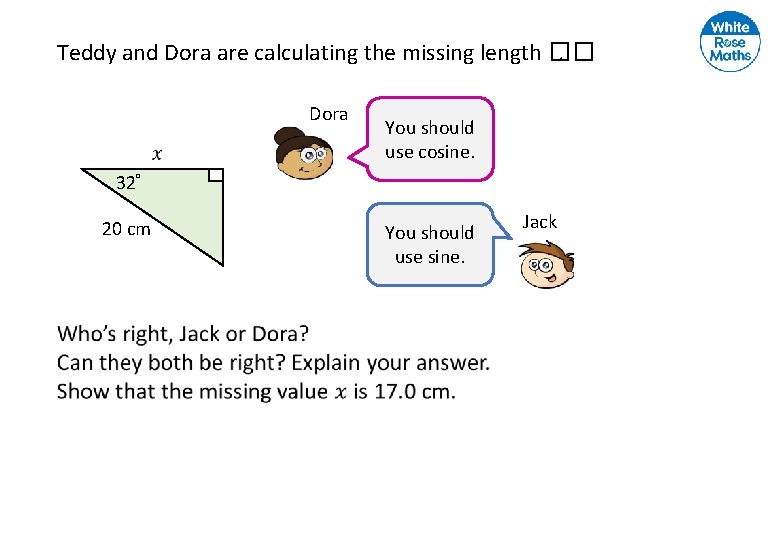
Teddy and Dora are calculating the missing length ��. Dora You should use cosine. 32° 20 cm You should use sine. Jack
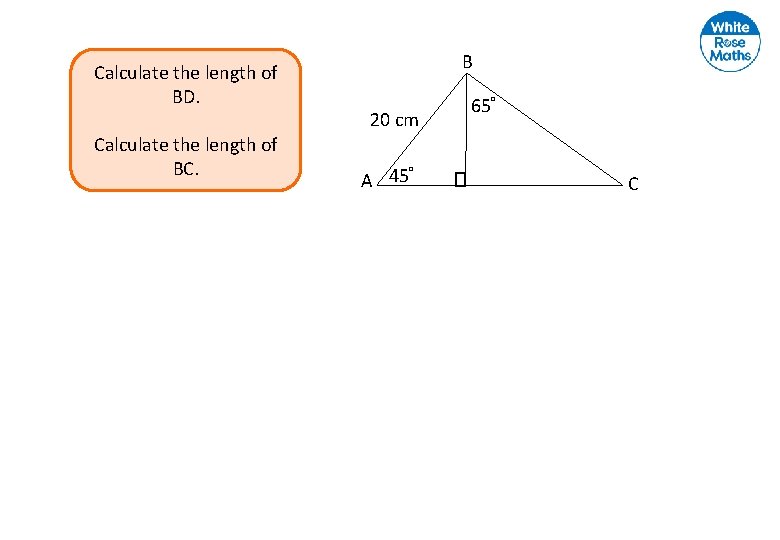
Calculate the length of BD. Calculate the length of BC. B 20 cm ° A 45 65° C
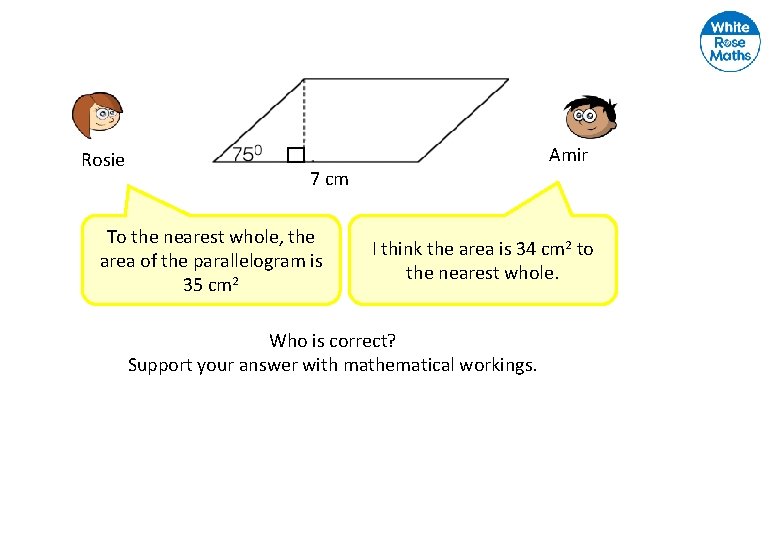
Rosie Amir 7 cm To the nearest whole, the area of the parallelogram is 35 cm 2 I think the area is 34 cm 2 to the nearest whole. Who is correct? Support your answer with mathematical workings.
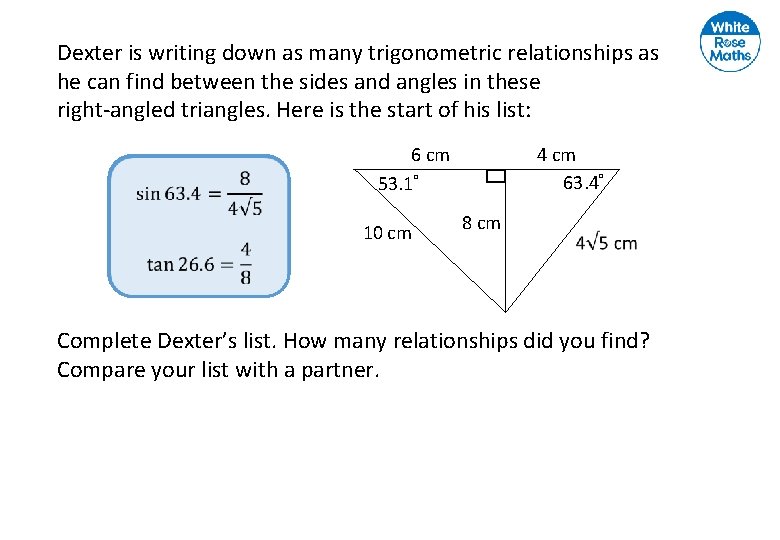
Dexter is writing down as many trigonometric relationships as he can find between the sides and angles in these right-angled triangles. Here is the start of his list: 4 cm 63. 4° 6 cm 53. 1° 10 cm 8 cm Complete Dexter’s list. How many relationships did you find? Compare your list with a partner.
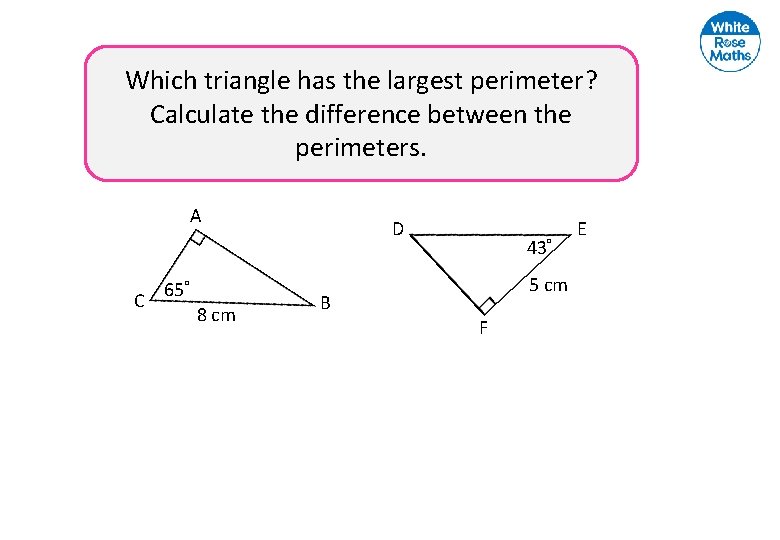
Which triangle has the largest perimeter? Calculate the difference between the perimeters. A C 65° 8 cm D 43° 5 cm B F E
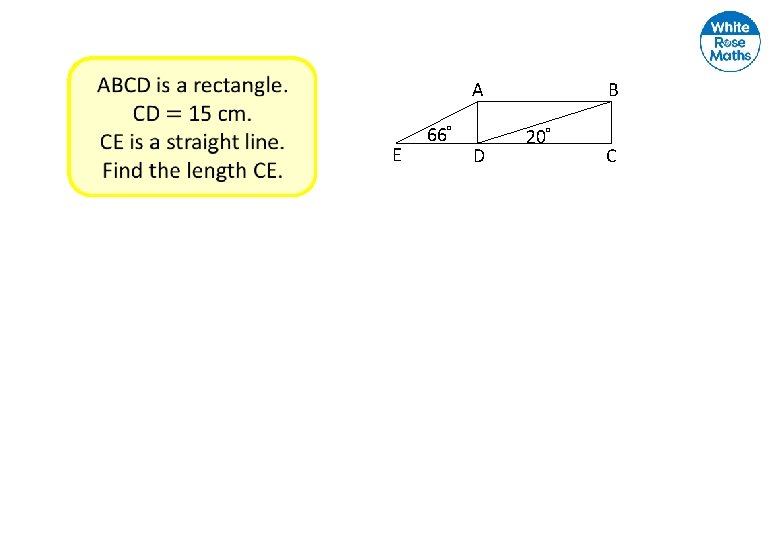
B A E 66° D 20° C
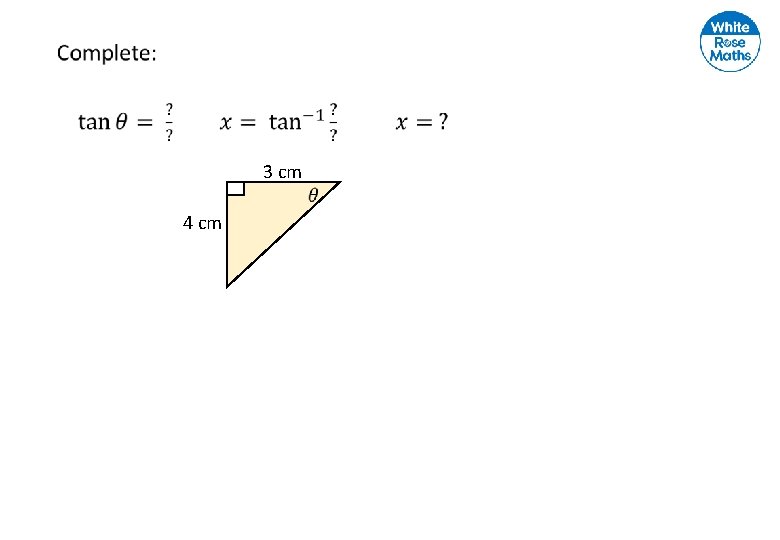
3 cm 4 cm
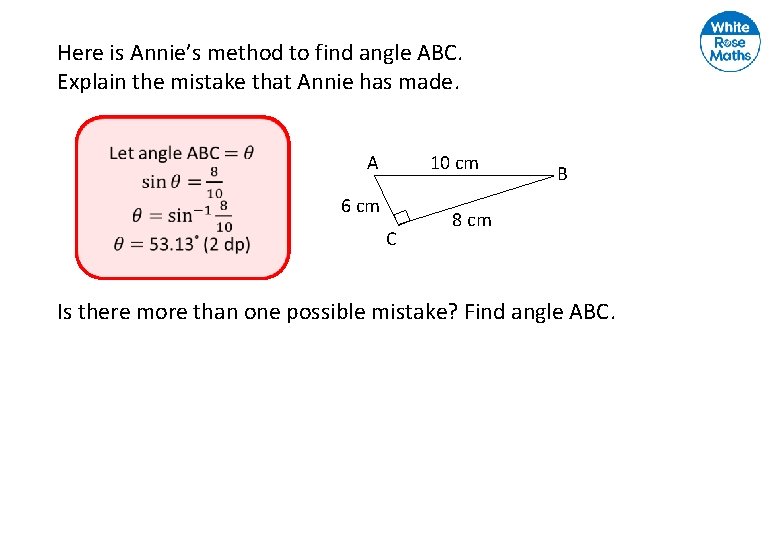
Here is Annie’s method to find angle ABC. Explain the mistake that Annie has made. 10 cm A 6 cm C B 8 cm Is there more than one possible mistake? Find angle ABC.
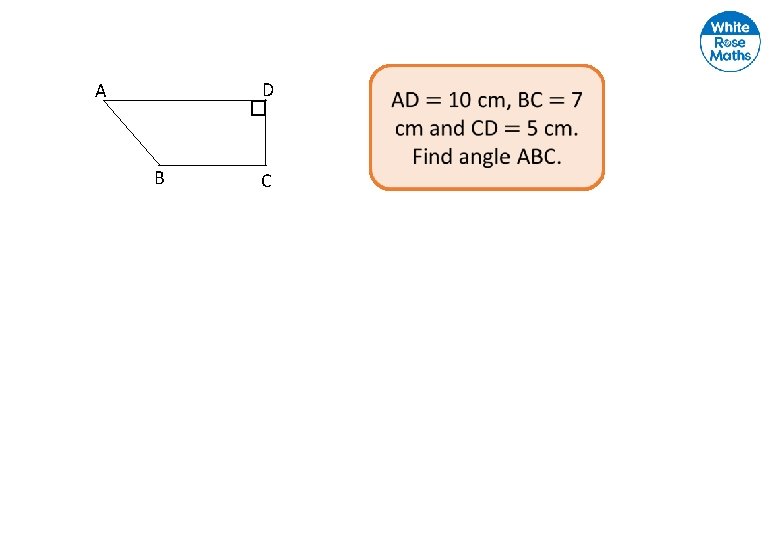
D A B C
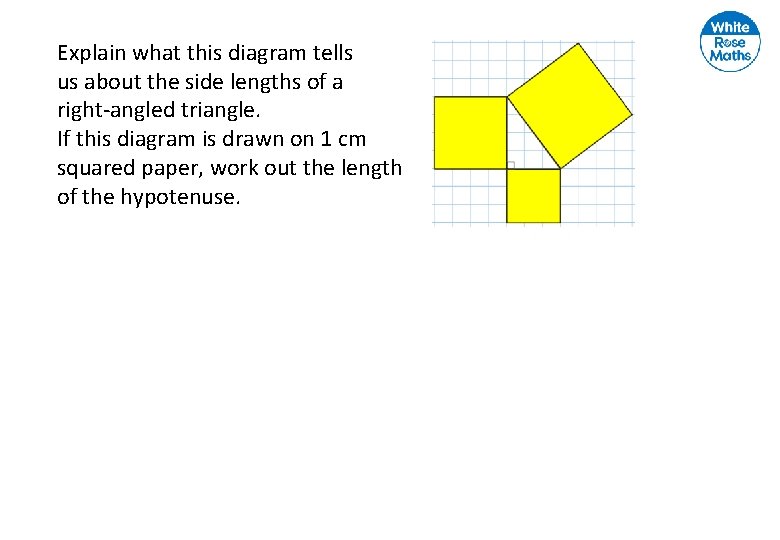
Explain what this diagram tells us about the side lengths of a right-angled triangle. If this diagram is drawn on 1 cm squared paper, work out the length of the hypotenuse.
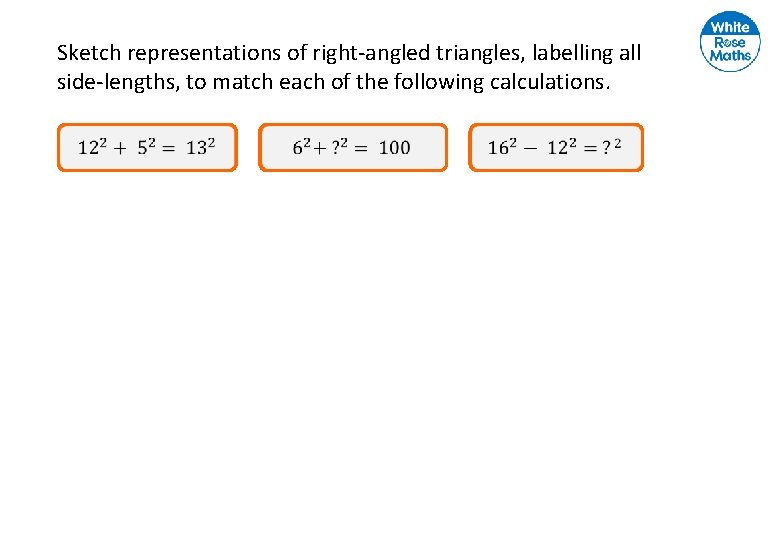
Sketch representations of right-angled triangles, labelling all side-lengths, to match each of the following calculations.
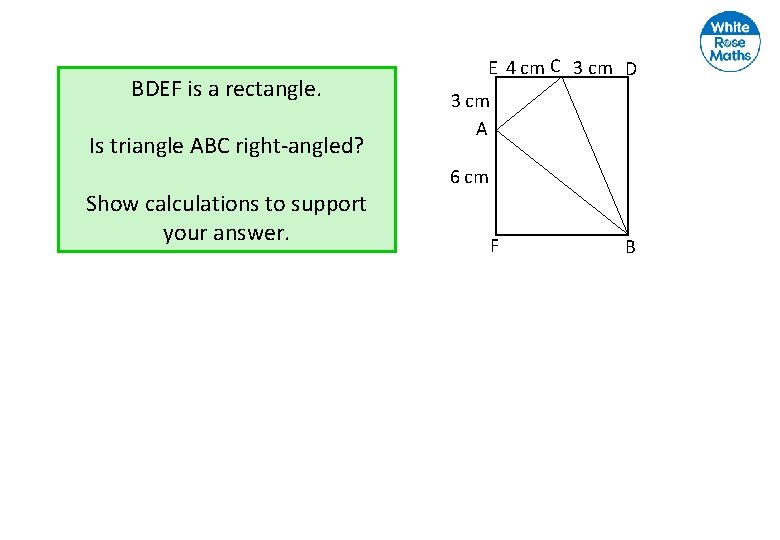
BDEF is a rectangle. Is triangle ABC right-angled? E 4 cm C 3 cm D 3 cm A 6 cm Show calculations to support your answer. F B
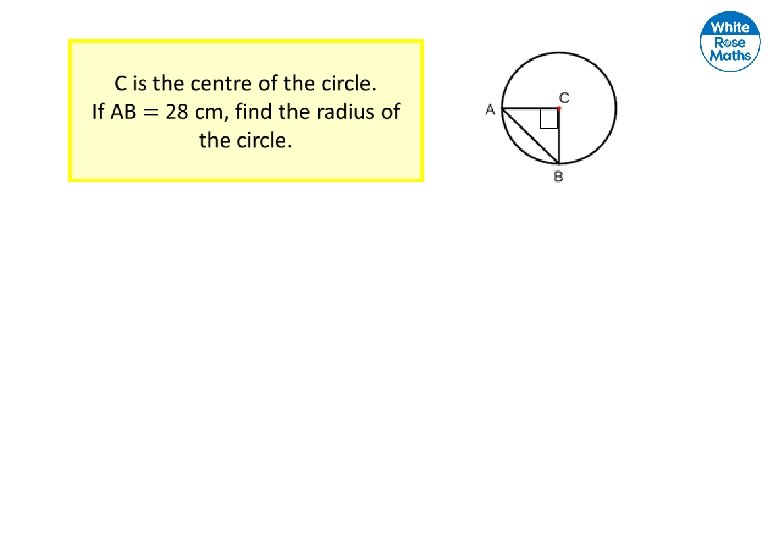
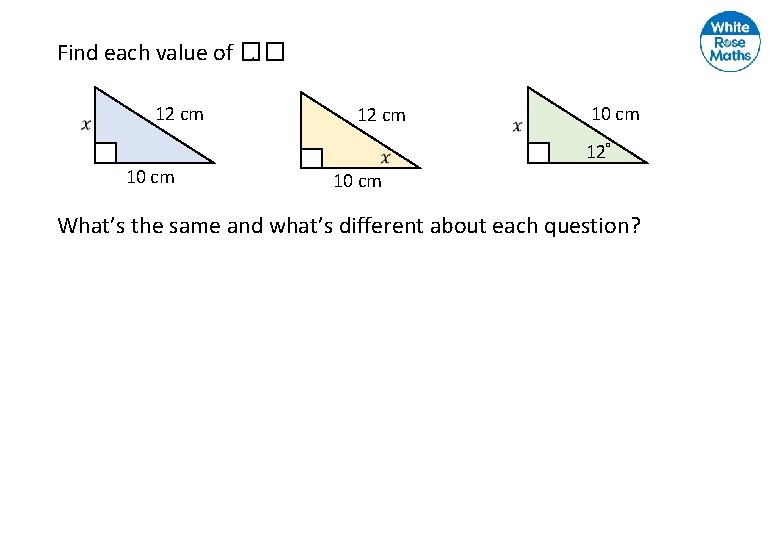
Find each value of ��. 12 cm 10 cm 12° 10 cm What’s the same and what’s different about each question?
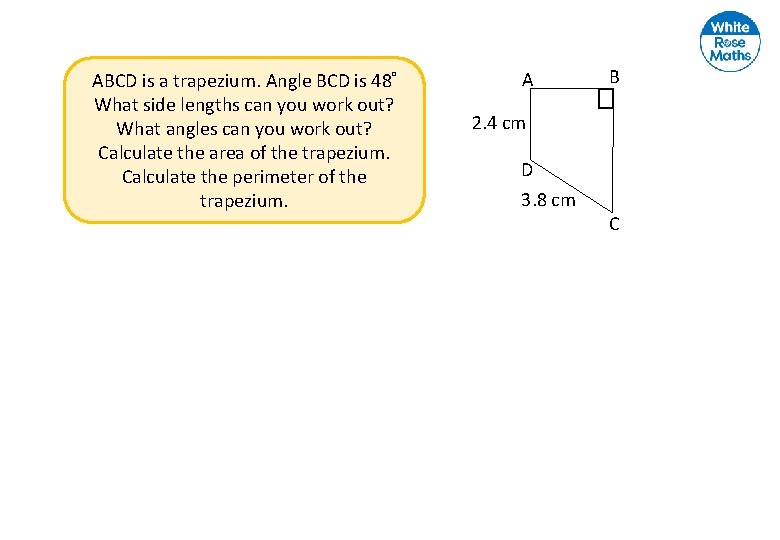
ABCD is a trapezium. Angle BCD is 48° What side lengths can you work out? What angles can you work out? Calculate the area of the trapezium. Calculate the perimeter of the trapezium. A B 2. 4 cm D 3. 8 cm C
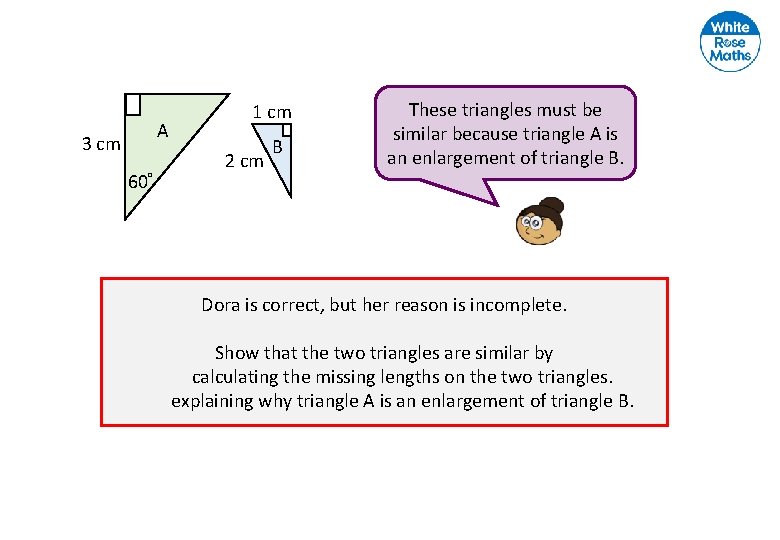
A 3 cm 60° 1 cm 2 cm B These triangles must be similar because triangle A is an enlargement of triangle B. Dora is correct, but her reason is incomplete. Show that the two triangles are similar by calculating the missing lengths on the two triangles. explaining why triangle A is an enlargement of triangle B.
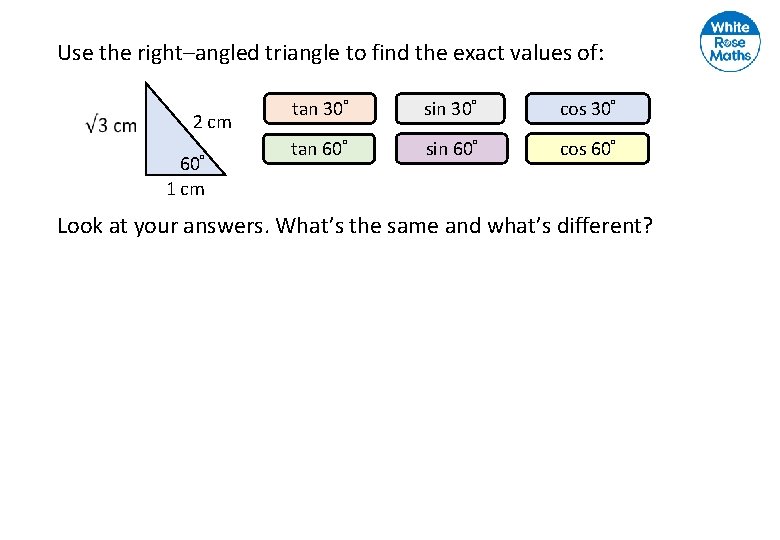
Use the right–angled triangle to find the exact values of: 2 cm 60° 1 cm tan 30° sin 30° cos 30° tan 60° sin 60° cos 60° Look at your answers. What’s the same and what’s different?
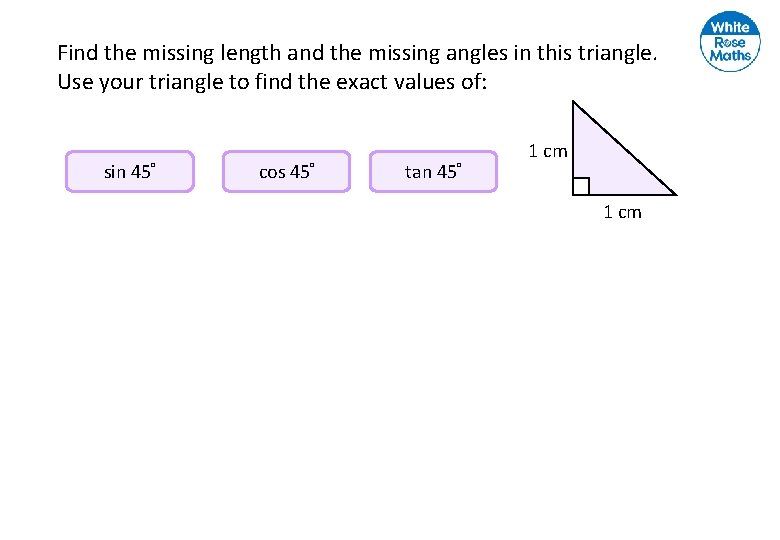
Find the missing length and the missing angles in this triangle. Use your triangle to find the exact values of: sin 45° cos 45° tan 45° 1 cm
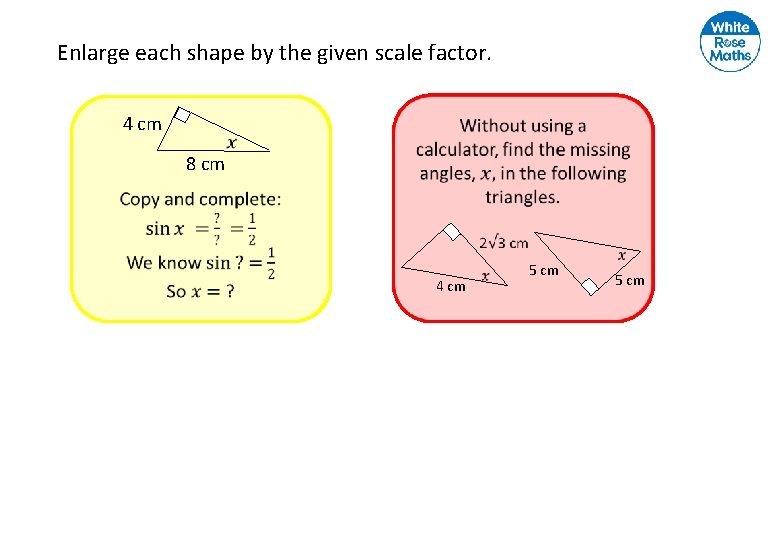
Enlarge each shape by the given scale factor. 4 cm 8 cm 4 cm 5 cm
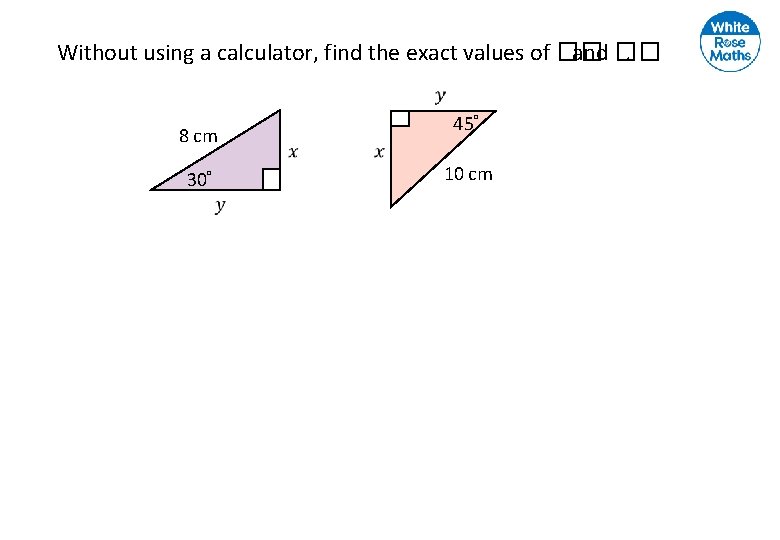
Without using a calculator, find the exact values of �� and ��. 8 cm 30° 45° 10 cm
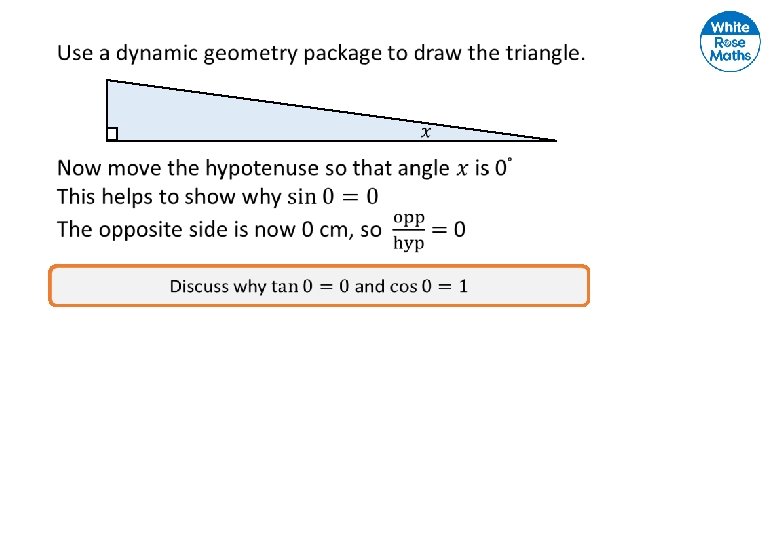
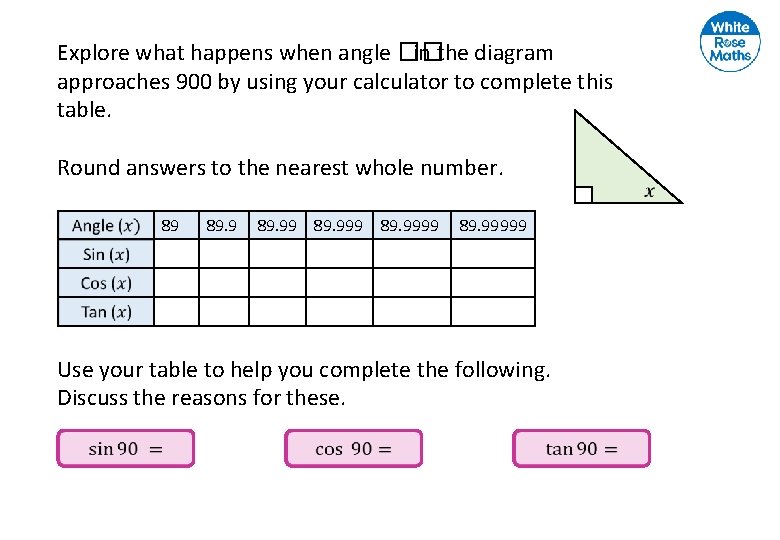
Explore what happens when angle �� in the diagram approaches 900 by using your calculator to complete this table. Round answers to the nearest whole number. 89 89. 9999 89. 99999 Use your table to help you complete the following. Discuss the reasons for these.
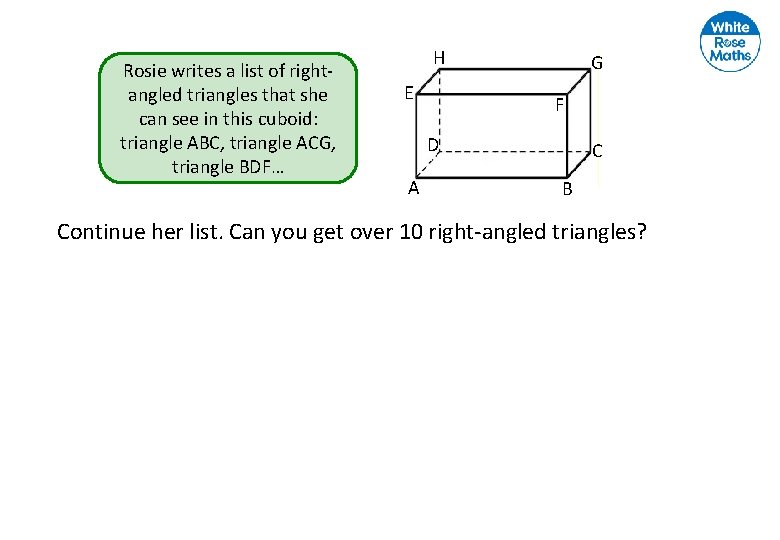
Rosie writes a list of rightangled triangles that she can see in this cuboid: triangle ABC, triangle ACG, triangle BDF… H E G F D A C B Continue her list. Can you get over 10 right-angled triangles?
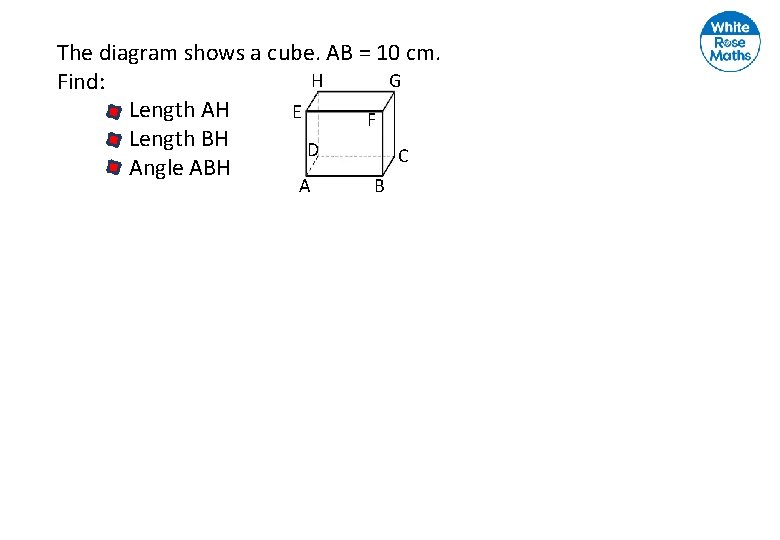
The diagram shows a cube. AB = 10 cm. H G Find: Length AH E F Length BH D C Angle ABH A B
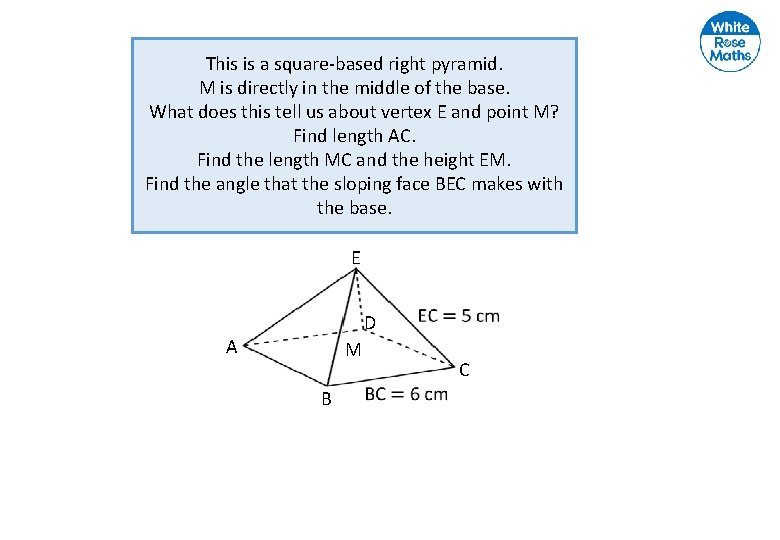
This is a square-based right pyramid. M is directly in the middle of the base. What does this tell us about vertex E and point M? Find length AC. Find the length MC and the height EM. Find the angle that the sloping face BEC makes with the base. E D A M B C
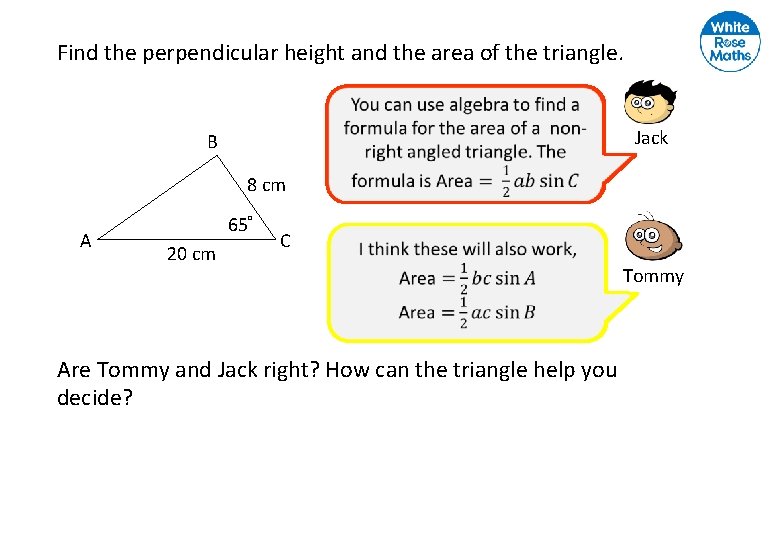
Find the perpendicular height and the area of the triangle. Jack B 8 cm A 65° 20 cm C Are Tommy and Jack right? How can the triangle help you decide? Tommy
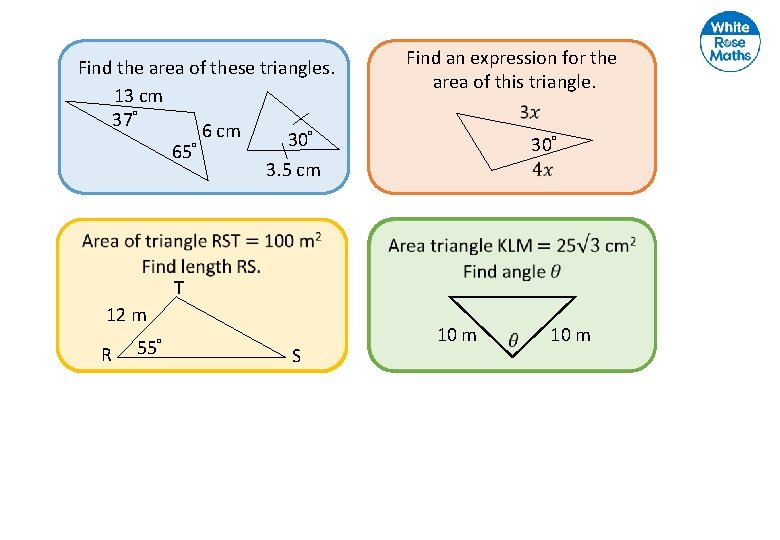
Find an expression for the area of this triangle. Find the area of these triangles. 13 cm 37° 6 cm 30° ° 65 3. 5 cm 30° T 12 m R 55° S 10 m
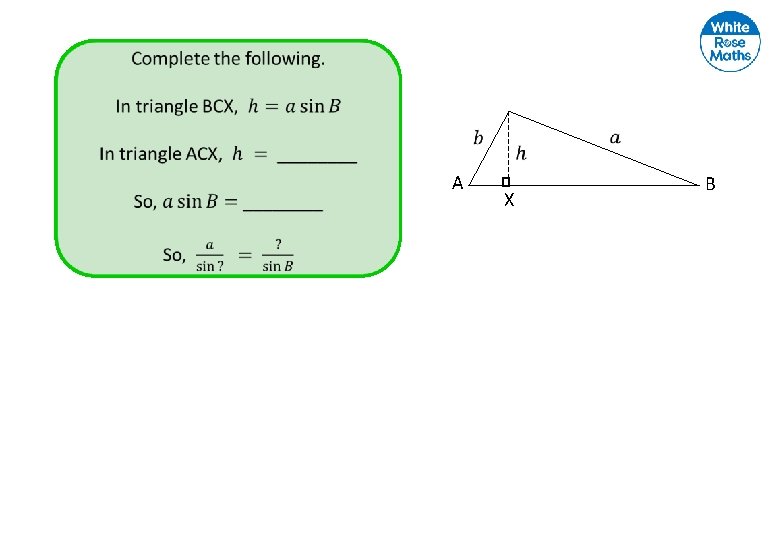
A X B
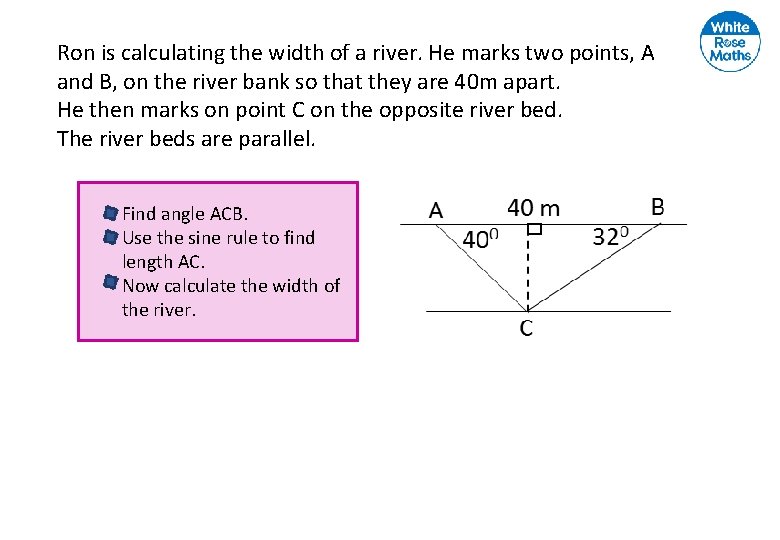
Ron is calculating the width of a river. He marks two points, A and B, on the river bank so that they are 40 m apart. He then marks on point C on the opposite river bed. The river beds are parallel. Find angle ACB. Use the sine rule to find length AC. Now calculate the width of the river.
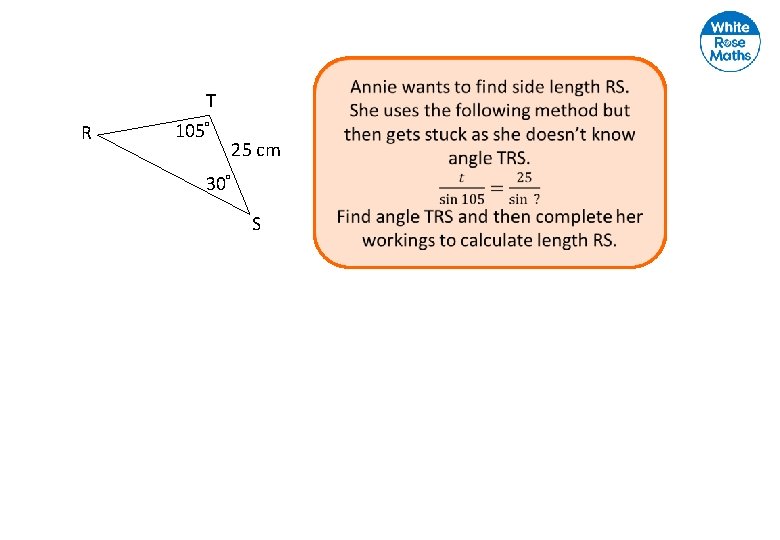
T R 105° 25 cm 30° S
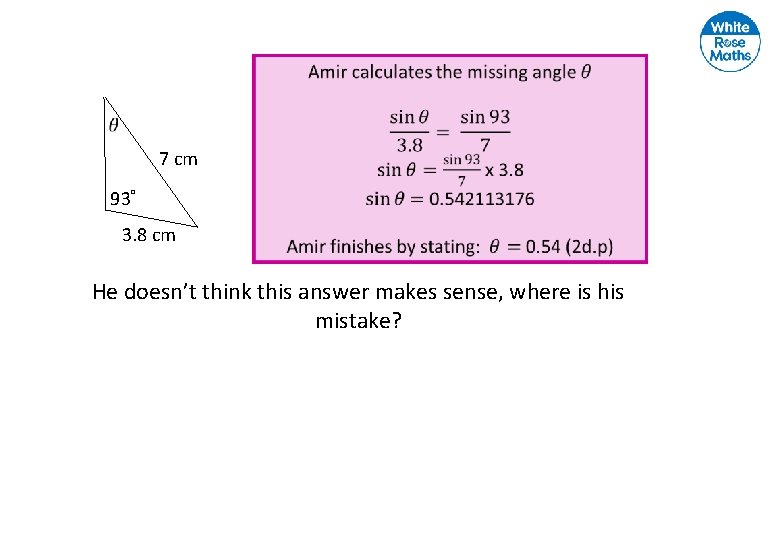
7 cm 93° 3. 8 cm He doesn’t think this answer makes sense, where is his mistake?
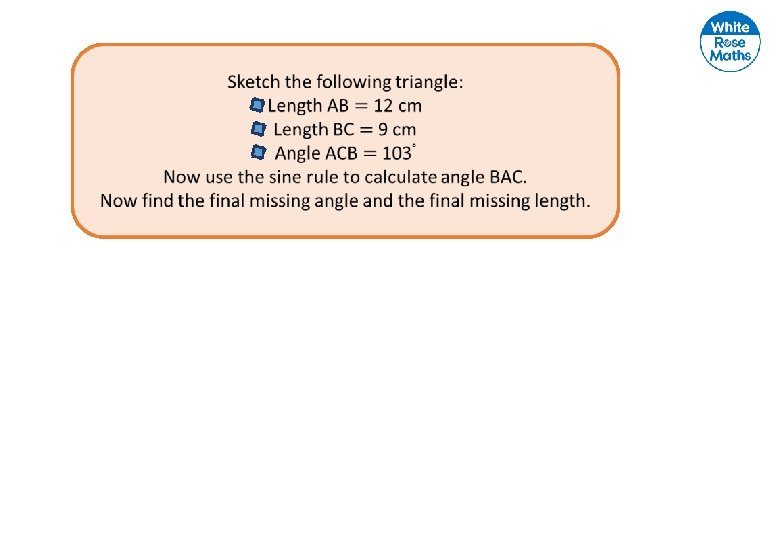
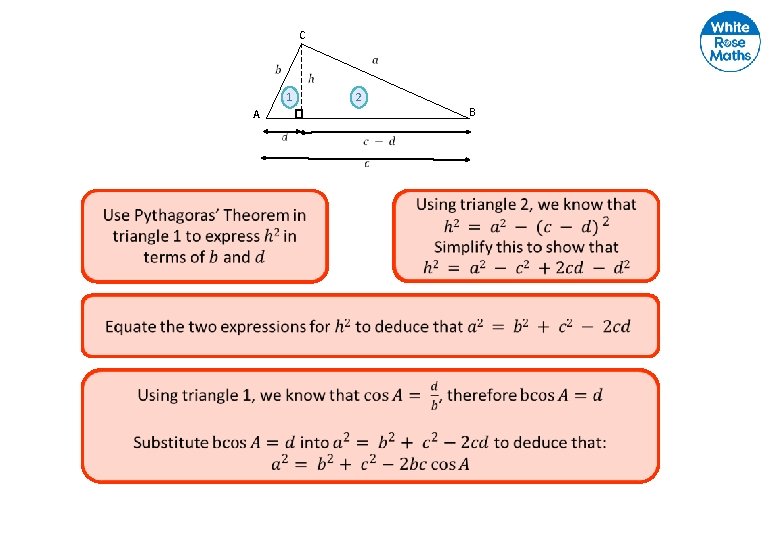
C 1 2 B A
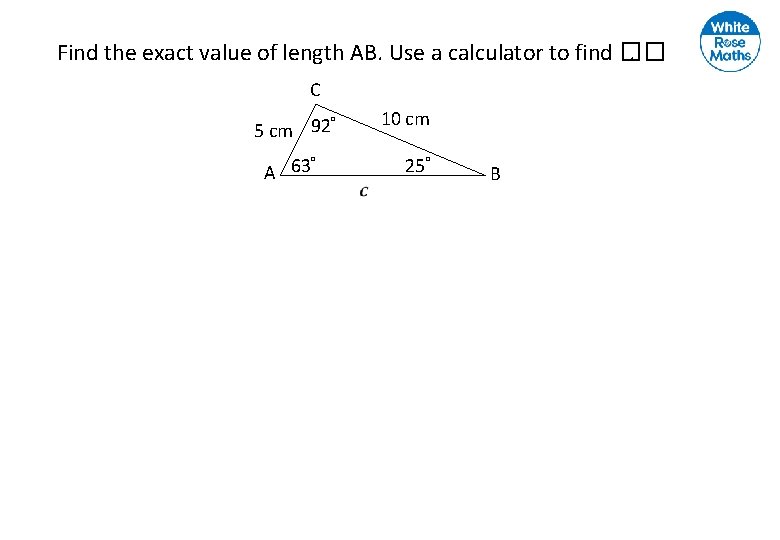
Find the exact value of length AB. Use a calculator to find ��. C 10 cm ° 5 cm 92 ° A 63 25° B
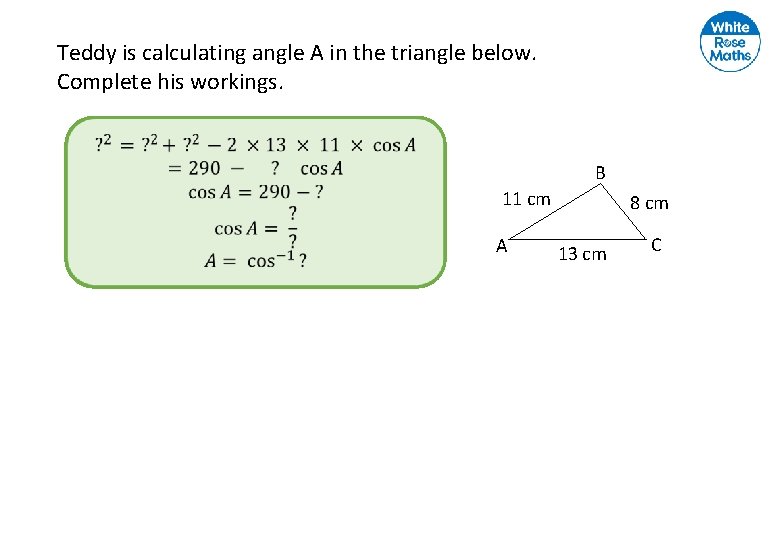
Teddy is calculating angle A in the triangle below. Complete his workings. B 11 cm A 8 cm 13 cm C
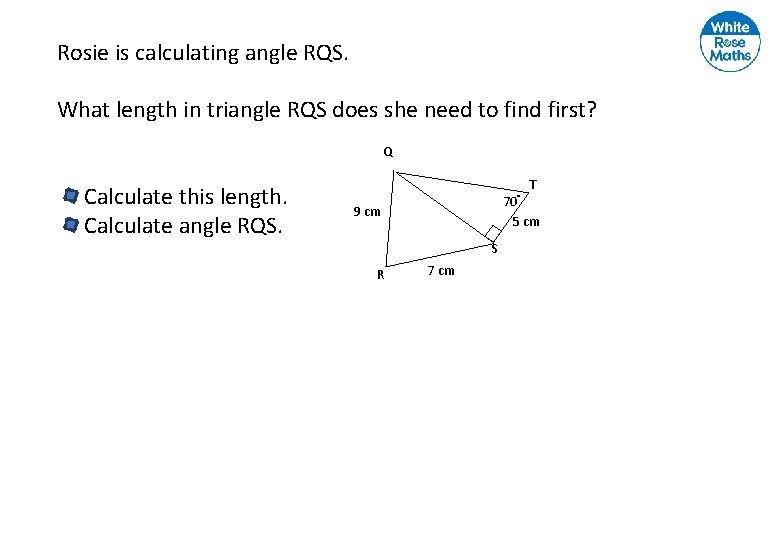
Rosie is calculating angle RQS. What length in triangle RQS does she need to find first? Q Calculate this length. Calculate angle RQS. 70° 9 cm 5 cm S R T 7 cm
Sketch a triangle with side lengths 15 cm, 10 cm and 20 cm. Use the cosine rule to work out the largest angle in the triangle.
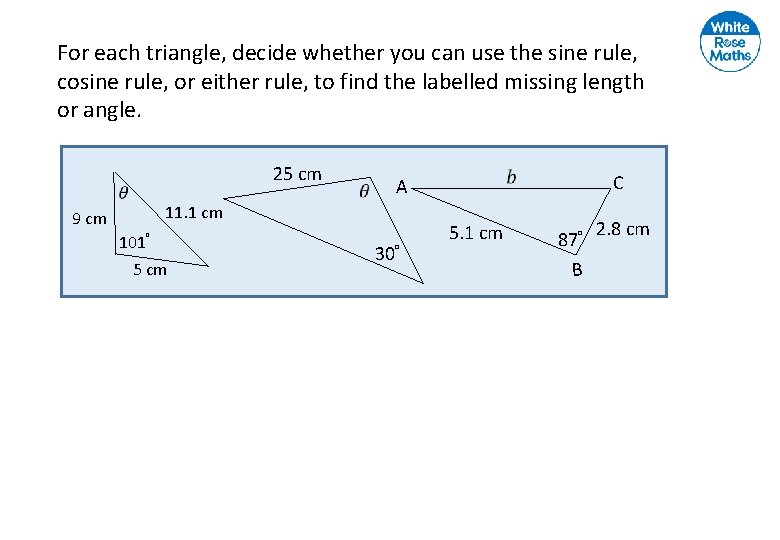
For each triangle, decide whether you can use the sine rule, cosine rule, or either rule, to find the labelled missing length or angle. 25 cm 9 cm A 11. 1 cm 101° 5 cm 30° 5. 1 cm C 87° B 2. 8 cm
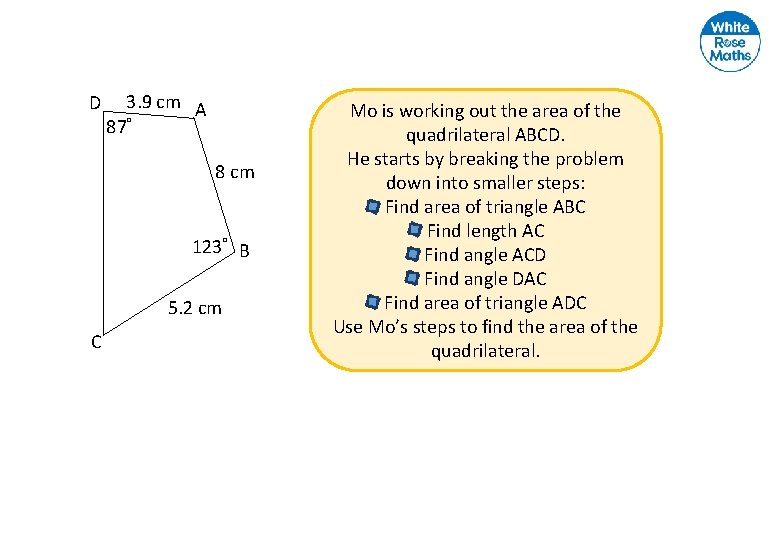
D 3. 9 cm A 87° 8 cm 123° B 5. 2 cm C Mo is working out the area of the quadrilateral ABCD. He starts by breaking the problem down into smaller steps: Find area of triangle ABC Find length AC Find angle ACD Find angle DAC Find area of triangle ADC Use Mo’s steps to find the area of the quadrilateral.
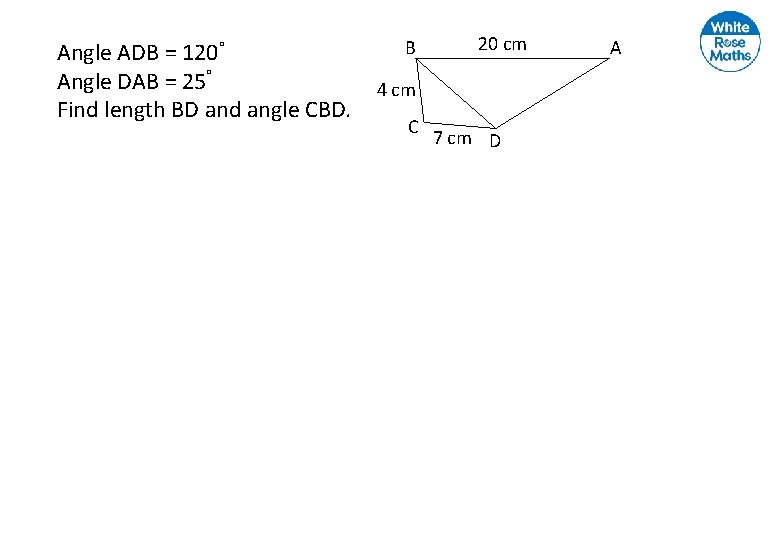
Angle ADB = 120° Angle DAB = 25° Find length BD and angle CBD. B 20 cm 4 cm C 7 cm D A
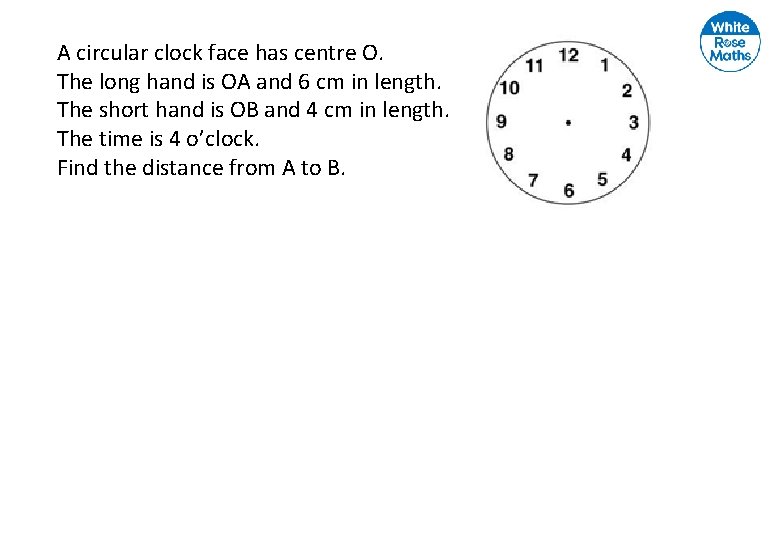
A circular clock face has centre O. The long hand is OA and 6 cm in length. The short hand is OB and 4 cm in length. The time is 4 o’clock. Find the distance from A to B.
In a triangle, angle A : angle B : angle C are in the ratio 3 : 5 : 10 Find the length of side AC if side AB is 8 cm.
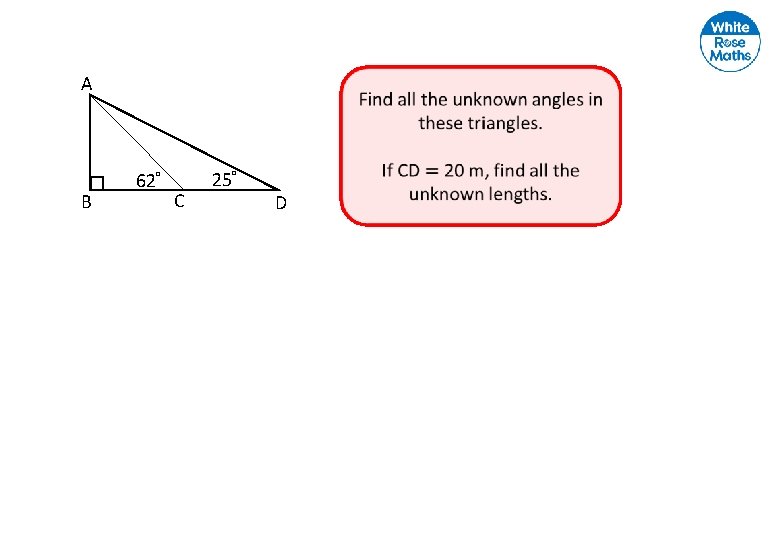
A B 62° C 25° D
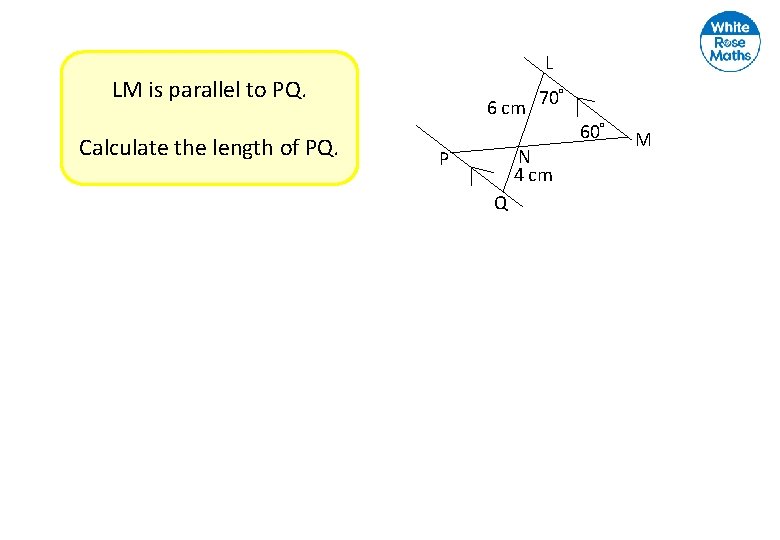
L LM is parallel to PQ. Calculate the length of PQ. ° 70 6 cm N 4 cm P Q 60° M
- Slides: 58