
IN THE NAME OF GOD SINUSITIS Sinusitis is


- Slides: 30
IN THE NAME OF GOD
SINUSITIS
• Sinusitis is defined as an inflammatory disorder of the paranasal sinuses • This condition is one of the most common reasons for a patient to seek care from a primary care physician and is responsible for more than 20 million antibiotic prescriptions per year in the United States
Types: Acute rhinosinusitis: up to 4 weeks Subacute: lasting between 4 weeks and 3 months Chronic rhinosinusitis: at least 12 weeks
MICROBIOLOGY • S. pneumoniae is the most frequently isolated organism, followed by nontypeable H. influenzae and M. catarrhalis • Streptococci, Staphylococcus aureus, and anaerobes are isolated much less frequently • Although S. aureus is an infrequent cause of acute bacterial sinusitis in children, it is a frequent etiologic agent when complications (intracranial and/or orbital) occur • Despite their prominent role in the pathogenesis of acute community-acquired bacterial sinusitis, viruses have been infrequently isolated from patients with acute sinusitis
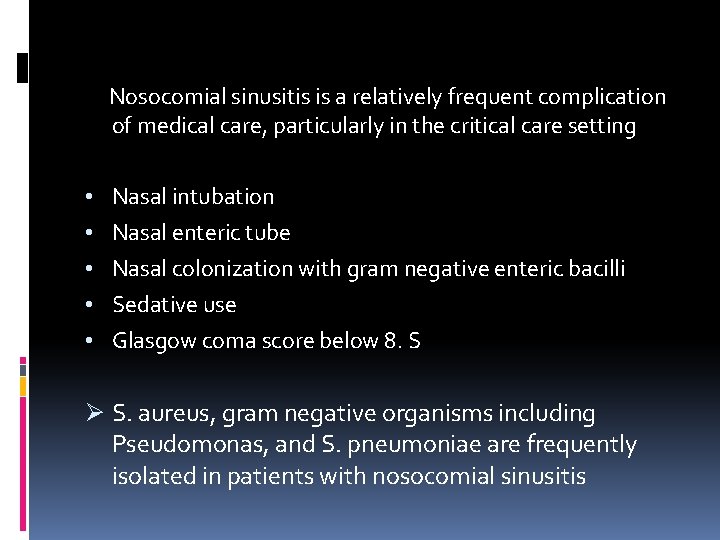
Nosocomial sinusitis is a relatively frequent complication of medical care, particularly in the critical care setting • Nasal intubation • Nasal enteric tube • Nasal colonization with gram negative enteric bacilli • Sedative use • Glasgow coma score below 8. S Ø S. aureus, gram negative organisms including Pseudomonas, and S. pneumoniae are frequently isolated in patients with nosocomial sinusitis
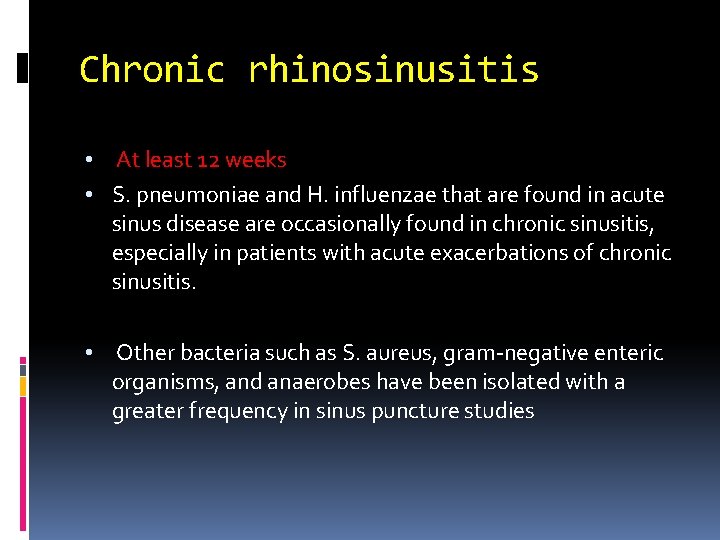
Chronic rhinosinusitis At least 12 weeks • S. pneumoniae and H. influenzae that are found in acute sinus disease are occasionally found in chronic sinusitis, especially in patients with acute exacerbations of chronic sinusitis. • • Other bacteria such as S. aureus, gram-negative enteric organisms, and anaerobes have been isolated with a greater frequency in sinus puncture studies
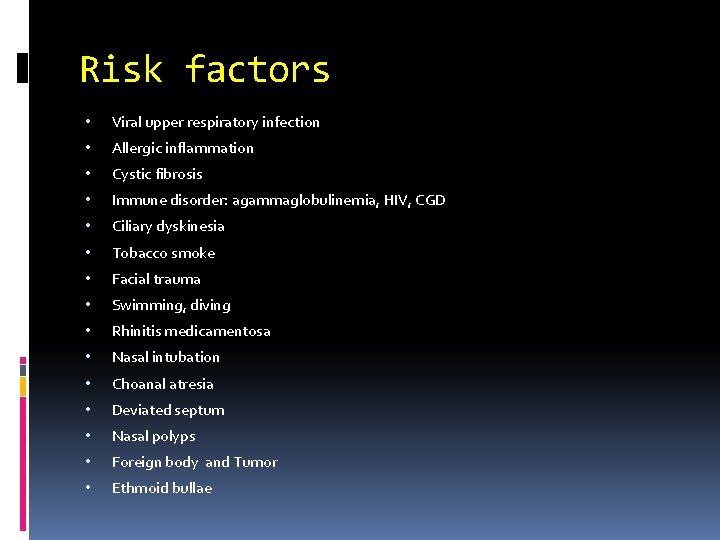
Risk factors • Viral upper respiratory infection • Allergic inflammation • Cystic fibrosis • Immune disorder: agammaglobulinemia, HIV, CGD • Ciliary dyskinesia • Tobacco smoke • Facial trauma • Swimming, diving • Rhinitis medicamentosa • Nasal intubation • Choanal atresia • Deviated septum • Nasal polyps • Foreign body and Tumor • Ethmoid bullae
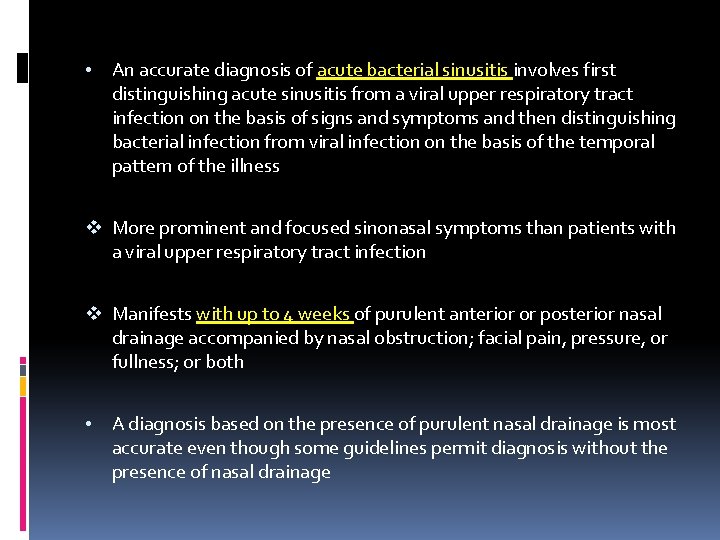
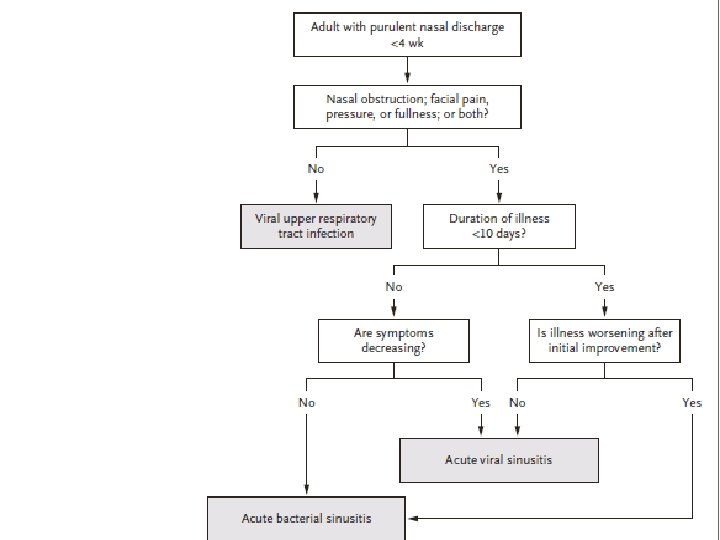
• An accurate diagnosis of acute bacterial sinusitis involves first distinguishing acute sinusitis from a viral upper respiratory tract infection on the basis of signs and symptoms and then distinguishing bacterial infection from viral infection on the basis of the temporal pattern of the illness v More prominent and focused sinonasal symptoms than patients with a viral upper respiratory tract infection v Manifests with up to 4 weeks of purulent anterior or posterior nasal drainage accompanied by nasal obstruction; facial pain, pressure, or fullness; or both • A diagnosis based on the presence of purulent nasal drainage is most accurate even though some guidelines permit diagnosis without the presence of nasal drainage
Acute bacterial rhinosinusitis • The first pattern is that of persistent symptoms characterized by nasal discharge and/or cough that last more than 10 days without improvement • The second presentation is characterized by the onset of severe symptoms. Fever will accompany purulent nasal discharge that is present over a 3 - to 4 -day period • Worsening symptoms, referred to as “double sickening” : an initial regression of symptoms of cough, nasal discharge, and congestion but then worsen again within the first 10 days of illness
chronic rhinosinusitis • Patients with chronic rhinosinusitis have symptoms for at least 12 weeks • The presentation of such patients is characterized by anterior or posterior mucopurulent drainage and nasal obstruction. Facial pain or pressure, as well as hyposmia, are frequently present in patients with chronic sinus disease
PH/EX • The physical examination is of limited utility in the diagnosis of acute sinusitis • • Facial tenderness: an unreliable finding Periorbital edema and mild discoloration of the skin below the eyelids • Malodorous breath in the absence of dental disease or exudative pharyngitis may accompany acute sinusitis. • Chronic sinusitis is characterized by facial discomfort and the presence of mucopurulent discharge in the middle meatus. Polyps may be present in the nasal cavity or the middle meatus
DX • The duration of symptoms is the single most useful factor in discerning which patients have probable acute bacterial sinusitis. At least 10 days with no improvement The diagnosis of acute sinusitis should be made on clinical grounds in most patients v Imaging: no longer recommended and reserved for patients with suspected orbital or intracranial complications • Ø CT of the sinuses: evaluation of patients with intraorbital or intracranial complications • evaluation of patients in whom sinus surgery is being considered • an important role in the diagnosis and management of chronic rhinosinusitis Ø MRI: • The diagnosis of fungal sinusitis • The diagnosis of the intracranial complications of sinusitis •
Antibiotic Therapy versus Watchful Waiting The potential benefits of antibiotic therapy must be balanced against adverse effects, which may include allergic reactions and the emergence of drug-resistant bacteria
Antibiotics for Acute Bacterial Sinusitis in Adults
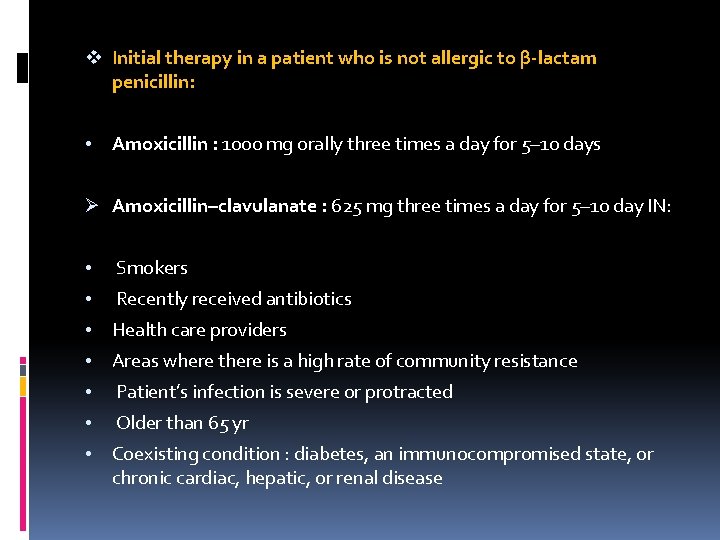
v Initial therapy in a patient who is not allergic to β-lactam penicillin: • Amoxicillin : 1000 mg orally three times a day for 5– 10 days Ø Amoxicillin–clavulanate : 625 mg three times a day for 5– 10 day IN: • Smokers • Recently received antibiotics • Health care providers • Areas where there is a high rate of community resistance • Patient’s infection is severe or protracted • Older than 65 yr • Coexisting condition : diabetes, an immunocompromised state, or chronic cardiac, hepatic, or renal disease
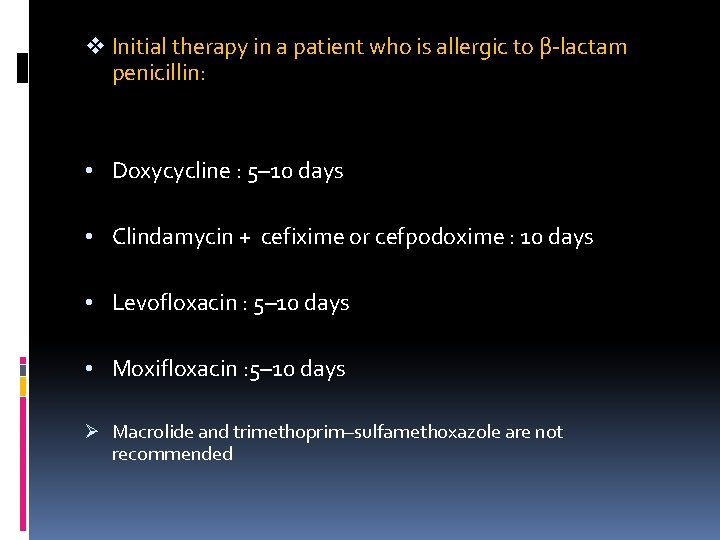
v Initial therapy in a patient who is allergic to β-lactam penicillin: • Doxycycline : 5– 10 days • Clindamycin + cefixime or cefpodoxime : 10 days • Levofloxacin : 5– 10 days • Moxifloxacin : 5– 10 days Ø Macrolide and trimethoprim–sulfamethoxazole are not recommended
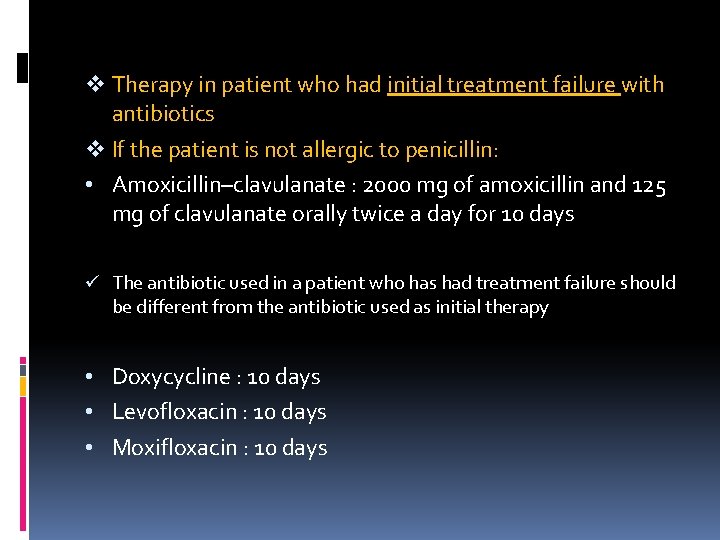
v Therapy in patient who had initial treatment failure with antibiotics v If the patient is not allergic to penicillin: • Amoxicillin–clavulanate : 2000 mg of amoxicillin and 125 mg of clavulanate orally twice a day for 10 days ü The antibiotic used in a patient who has had treatment failure should be different from the antibiotic used as initial therapy • Doxycycline : 10 days • Levofloxacin : 10 days • Moxifloxacin : 10 days
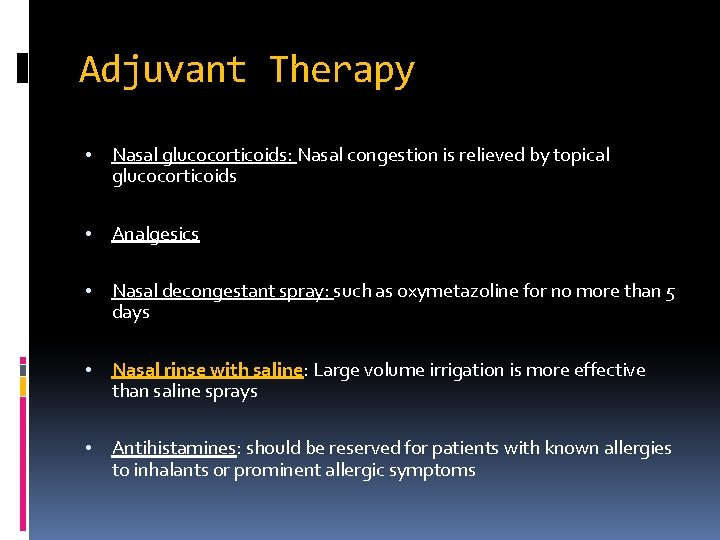
Adjuvant Therapy • Nasal glucocorticoids: Nasal congestion is relieved by topical glucocorticoids • Analgesics • Nasal decongestant spray: such as oxymetazoline for no more than 5 days • Nasal rinse with saline: Large volume irrigation is more effective than saline sprays • Antihistamines: should be reserved for patients with known allergies to inhalants or prominent allergic symptoms
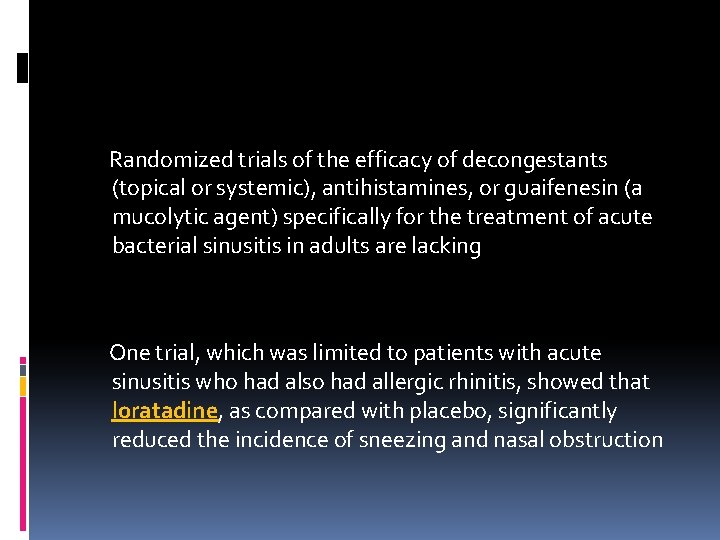
Randomized trials of the efficacy of decongestants (topical or systemic), antihistamines, or guaifenesin (a mucolytic agent) specifically for the treatment of acute bacterial sinusitis in adults are lacking One trial, which was limited to patients with acute sinusitis who had also had allergic rhinitis, showed that loratadine, as compared with placebo, significantly reduced the incidence of sneezing and nasal obstruction
Pregnant women may have nasal vascular engorgement (rhinitis of pregnancy) that can mimic acute sinusitisthis v Acceptable antibiotics for the treatment of sinusitis in pregnant women include: • Amoxicillin, amoxicillin–clavulanate v Allergic to penicillin : if the hypersensitivity to penicillin is not immediate [type I] • Clindamycin plus cefixime or cefpodoxime
v Patients with diabetes or other conditions that compromise the immune system are more likely than patients without these conditions to harbor resistant bacteria, and they should receive amoxicillin–clavulanate v If the symptoms do not decrease within 72 hours, a nasal culture for atypical or resistant organisms should be performed v A high temperature (>39°C), nasal crusting, or severe facial pain should arouse suspicion for invasive fungal sinusitis, a medical emergency
Referral to an otolaryngologist • Patients with refractory illness • Recurrent acute bacterial sinusitis (three or more episodes in 6 months) • Other causes of sinonasal symptoms e. g. , tumors and structural abnormalities are suspected
• Patients treated with an antimicrobial may be expected to improve within 48 to 72 hours of starting therapy. • If the patient fails to improve during this time frame, either the diagnosis of sinusitis should be suspect or a broader spectrum agent should be used
Sinus Surgery v Intracranial or orbital complications v Patient with severe acute infection refractory to antimicrobial therapy v Chronic sinusitis unresponsive to medical therapy
Complications • Intracranial complications include subdural empyema, epidural abscess, intraparenchymal brain abscess, meningitis, and venous sinus thrombosis • Orbital cellulitis, orbital abscess, and subperiosteal abscess • The Pott puffy tumor : a subperiosteal abscess of the frontal bone
Empiric antibiotic • Intracranial infections: Vancomycin, ceftriaxone or cefotaxime, and metronidazole • Orbital infections: Ampicillin/ sulbactam or the combination of ceftriaxone or cefotaxime plus clindamycin or vancomycin
Prevention v The prevention of rhinosinusitis is dependent on diagnosing and treating underlying conditions that predispose patients to recurrent or ongoing infection v Vaccination has not played a major role in the prevention of sinusitis