
In the name of God Case Presentation Myelodysplastic

- Slides: 54
In the name of God Case Presentation Myelodysplastic Syndrome (MDS & HSCT) Bibi Shahin Shamsian. MD
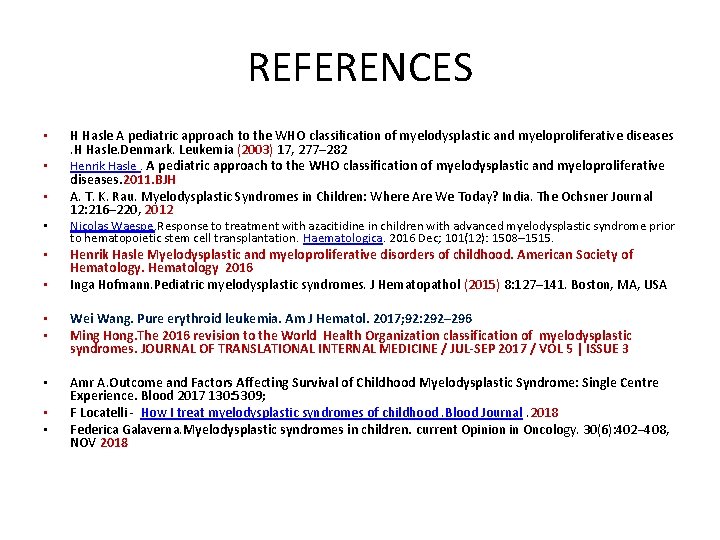
REFERENCES • • • H Hasle A pediatric approach to the WHO classification of myelodysplastic and myeloproliferative diseases . H Hasle. Denmark. Leukemia (2003) 17, 277– 282 Henrik Hasle. A pediatric approach to the WHO classification of myelodysplastic and myeloproliferative diseases. 2011. BJH A. T. K. Rau. Myelodysplastic Syndromes in Children: Where Are We Today? India. The Ochsner Journal 12: 216– 220, 2012 Nicolas Waespe. Response to treatment with azacitidine in children with advanced myelodysplastic syndrome prior to hematopoietic stem cell transplantation. Haematologica. 2016 Dec; 101(12): 1508– 1515. Henrik Hasle Myelodysplastic and myeloproliferative disorders of childhood. American Society of Hematology 2016 Inga Hofmann. Pediatric myelodysplastic syndromes. J Hematopathol (2015) 8: 127– 141. Boston, MA, USA • • Wei Wang. Pure erythroid leukemia. Am J Hematol. 2017; 92: 292– 296 Ming Hong. The 2016 revision to the World Health Organization classification of myelodysplastic syndromes. JOURNAL OF TRANSLATIONAL INTERNAL MEDICINE / JUL‐SEP 2017 / VOL 5 | ISSUE 3 • Amr A. Outcome and Factors Affecting Survival of Childhood Myelodysplastic Syndrome: Single Centre Experience. Blood 2017 130: 5309; F Locatelli - How I treat myelodysplastic syndromes of childhood. Blood Journal. 2018 Federica Galaverna. Myelodysplastic syndromes in children. current Opinion in Oncology. 30(6): 402– 408, NOV 2018 • •
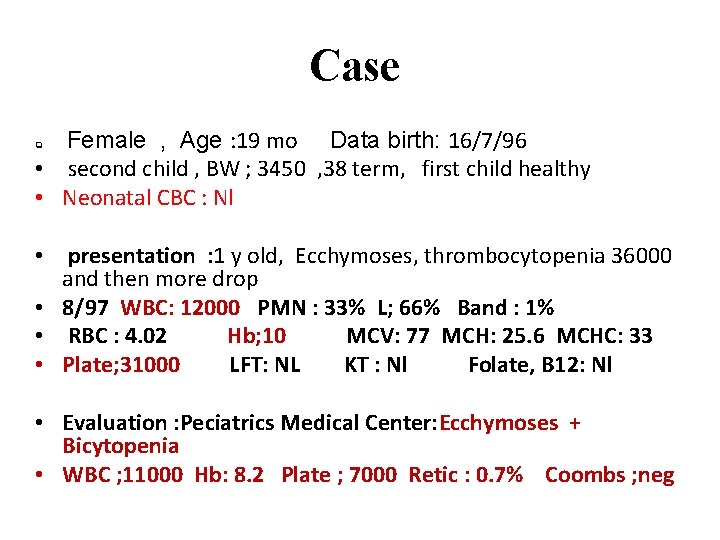
Case Female , Age : 19 mo Data birth: 16/7/96 • second child , BW ; 3450 , 38 term, first child healthy • Neonatal CBC : Nl q • presentation : 1 y old, Ecchymoses, thrombocytopenia 36000 and then more drop • 8/97 WBC: 12000 PMN : 33% L; 66% Band : 1% • RBC : 4. 02 Hb; 10 MCV: 77 MCH: 25. 6 MCHC: 33 • Plate; 31000 LFT: NL KT : Nl Folate, B 12: Nl • Evaluation : Peciatrics Medical Center: Ecchymoses + Bicytopenia • WBC ; 11000 Hb: 8. 2 Plate ; 7000 Retic : 0. 7% Coombs ; neg
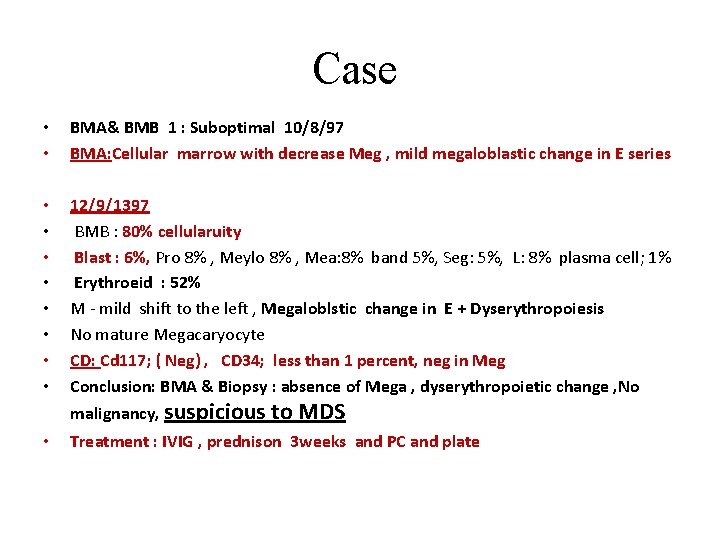
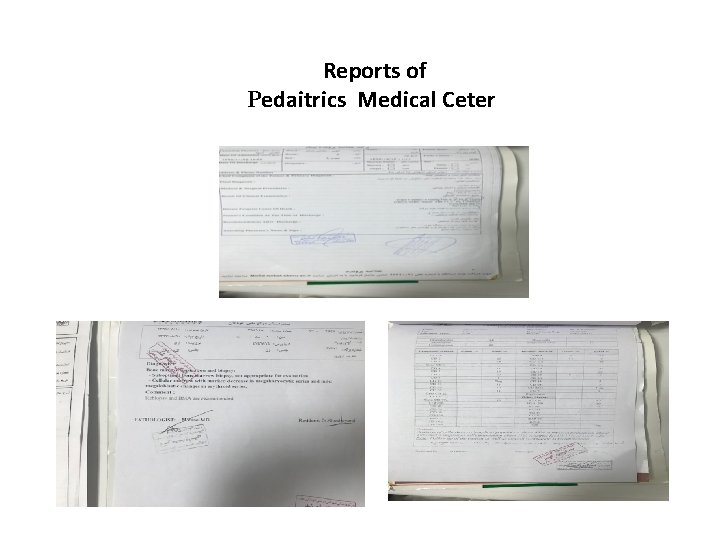
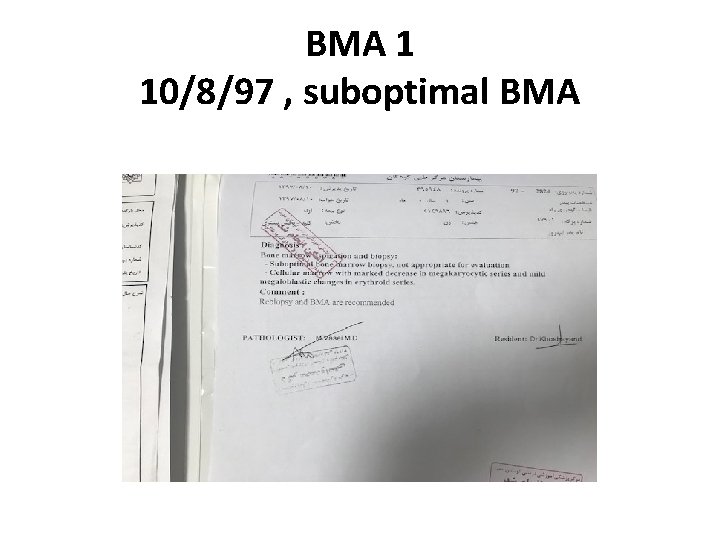
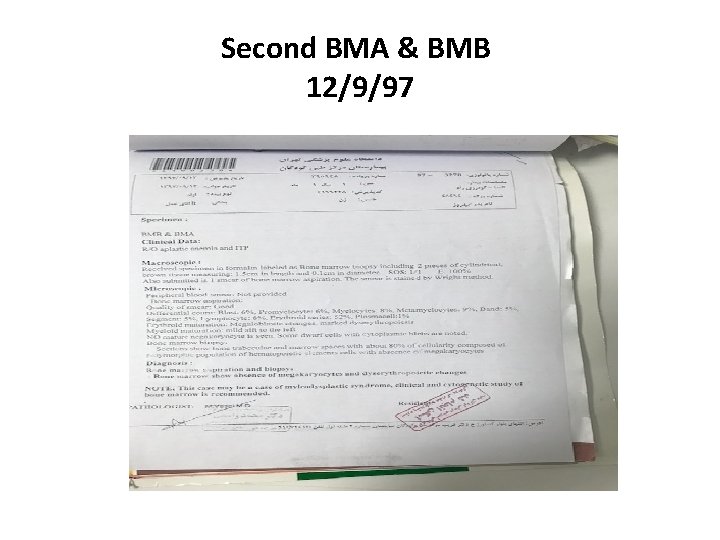
Case • • BMA& BMB 1 : Suboptimal 10/8/97 BMA: Cellular marrow with decrease Meg , mild megaloblastic change in E series • • 12/9/1397 BMB : 80% cellularuity Blast : 6%, Pro 8% , Meylo 8% , Mea: 8% band 5%, Seg: 5%, L: 8% plasma cell; 1% Erythroeid : 52% M - mild shift to the left , Megaloblstic change in E + Dyserythropoiesis No mature Megacaryocyte CD: Cd 117; ( Neg) , CD 34; less than 1 percent, neg in Meg Conclusion: BMA & Biopsy : absence of Mega , dyserythropoietic change , No malignancy, suspicious • to MDS Treatment : IVIG , prednison 3 weeks and PC and plate
Reports of Pedaitrics Medical Ceter
BMA 1 10/8/97 , suboptimal BMA
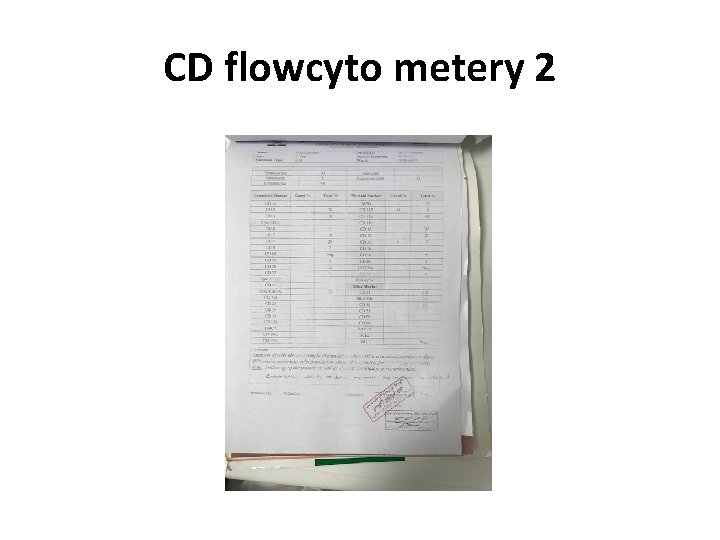
CD flowcyto metery 2
Second BMA & BMB 12/9/97
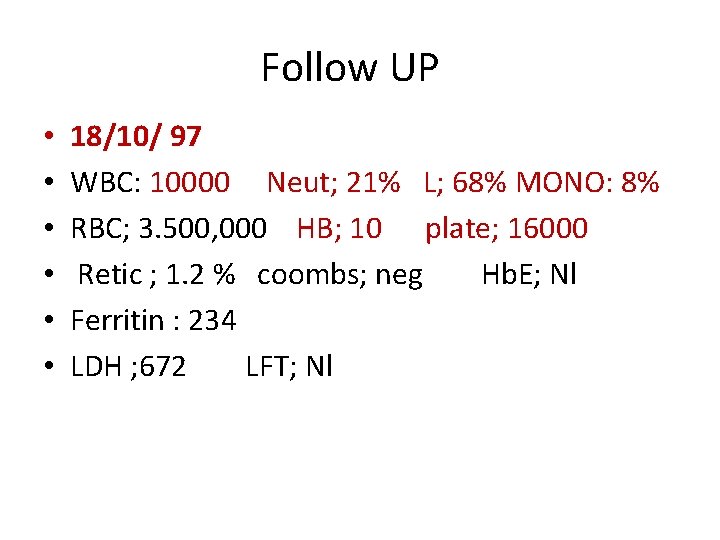
Follow UP • • • 18/10/ 97 WBC: 10000 Neut; 21% L; 68% MONO: 8% RBC; 3. 500, 000 HB; 10 plate; 16000 Retic ; 1. 2 % coombs; neg Hb. E; Nl Ferritin : 234 LDH ; 672 LFT; Nl
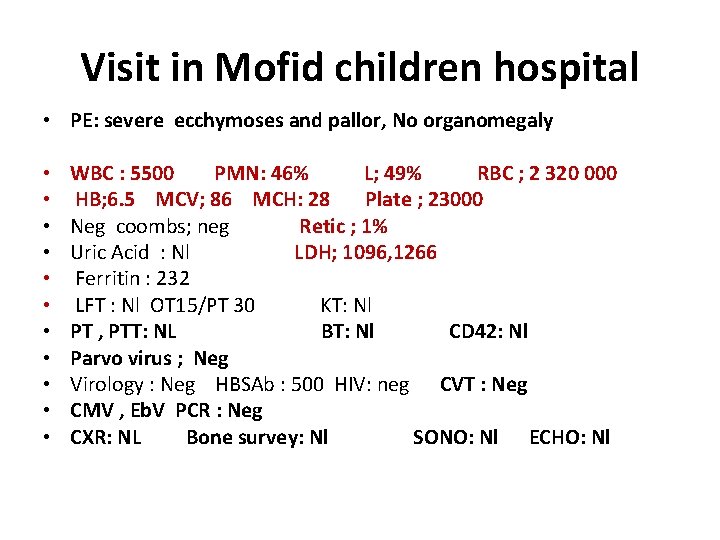
Visit in Mofid children hospital • PE: severe ecchymoses and pallor, No organomegaly • • • WBC : 5500 PMN: 46% L; 49% RBC ; 2 320 000 HB; 6. 5 MCV; 86 MCH: 28 Plate ; 23000 Neg coombs; neg Retic ; 1% Uric Acid : Nl LDH; 1096, 1266 Ferritin : 232 LFT : Nl OT 15/PT 30 KT: Nl PT , PTT: NL BT: Nl CD 42: Nl Parvo virus ; Neg Virology : Neg HBSAb : 500 HIV: neg CVT : Neg CMV , Eb. V PCR : Neg CXR: NL Bone survey: Nl SONO: Nl ECHO: Nl
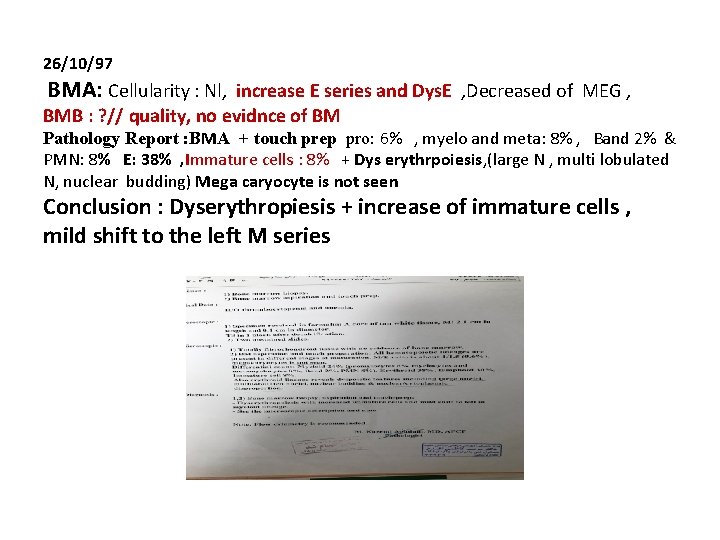
26/10/97 BMA: Cellularity : Nl, increase E series and Dys. E , Decreased of MEG , BMB : ? // quality, no evidnce of BM Pathology Report : BMA + touch prep pro: 6% , myelo and meta: 8% , Band 2% & PMN: 8% E: 38% , Immature cells : 8% + Dys erythrpoiesis, (large N , multi lobulated N, nuclear budding) Mega caryocyte is not seen Conclusion : Dyserythropiesis + increase of immature cells , mild shift to the left M series
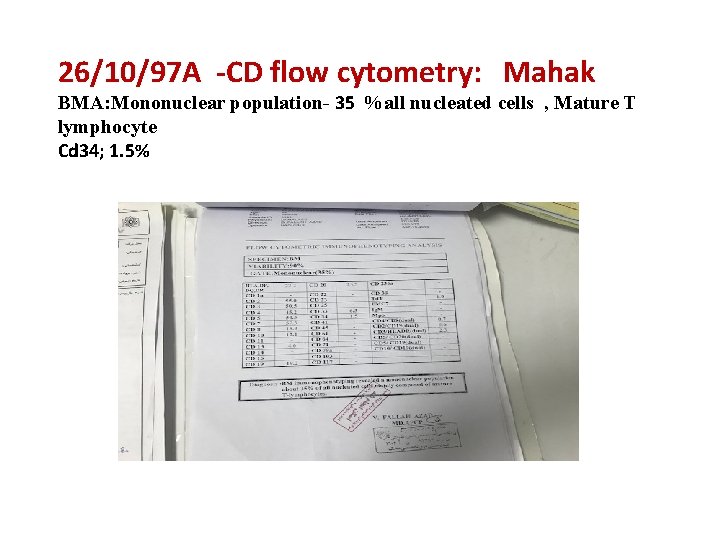
26/10/97 A ‐CD flow cytometry: Mahak BMA: Mononuclear population- 35 %all nucleated cells , Mature T lymphocyte Cd 34; 1. 5%
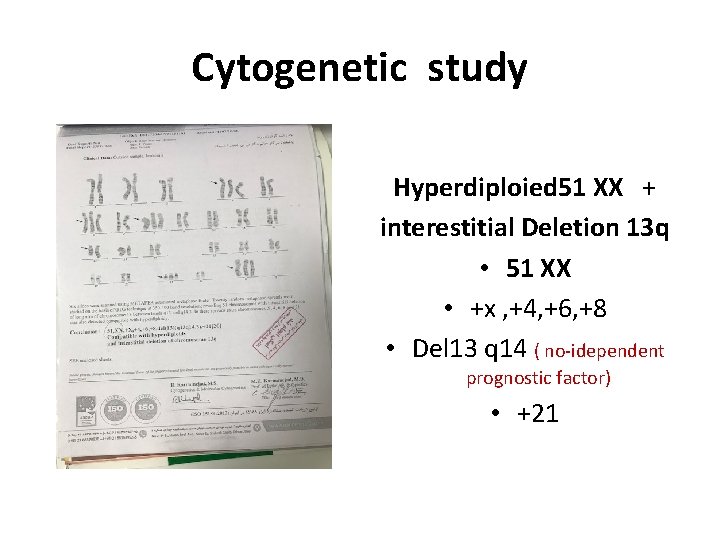
Cytogenetic study Hyperdiploied 51 XX + interestitial Deletion 13 q • 51 XX • +x , +4, +6, +8 • Del 13 q 14 ( no-idependent prognostic factor) • +21
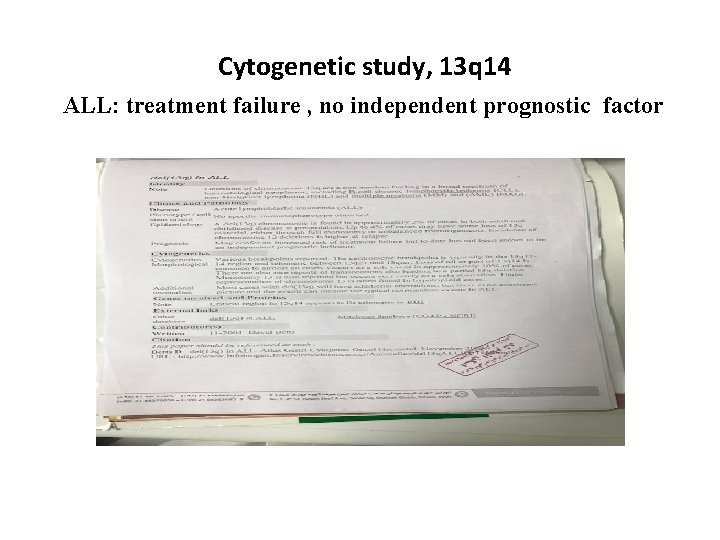
Cytogenetic study, 13 q 14 ALL: treatment failure , no independent prognostic factor
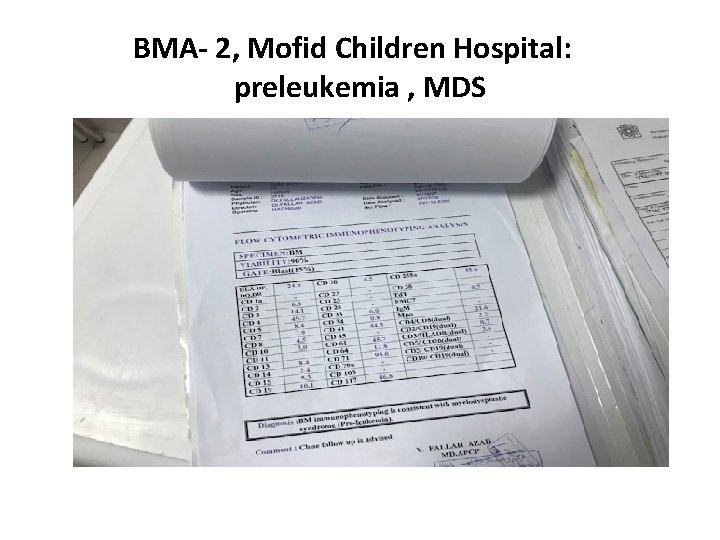
follow Up of case • Supportive therapy ; PC & plate infusion • Start evaluation for HSCT • 28/12/97 CBC: Immature cells in CBC + Low Hb + Low plate • Second BMA in Mofid hospital 28/12/97 • BMA cellularity Nl , 8 -10 %immature cells (myeloblast) • CD Flowcytometry ; preleukemia , MDS • Blast ; 15%
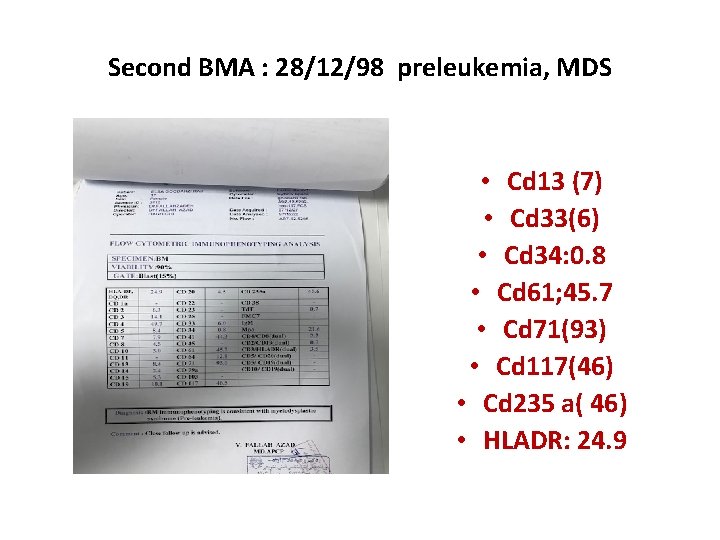
Second BMA : 28/12/98 preleukemia, MDS • Cd 13 (7) • Cd 33(6) • Cd 34: 0. 8 • Cd 61; 45. 7 • Cd 71(93) • Cd 117(46) • Cd 235 a( 46) • HLADR: 24. 9
BMA‐ 2, Mofid Children Hospital: preleukemia , MDS
Evaluation • • • Donor , MSD sister , Full match , 5 years old During HSCT Consults : 19/2/98 WBC ; 14000 Hb: 5. 6 MCV: 83 plate; 11000 Neut: 19% band ; 2% L; 58% Mono: 1% NRBC: 10% Blast : 20% CSF: NL WBC : 0 LDH ; 10000 UA; 5. 4 KT & LFT : Nl Ferritin : 321 BMA: increase blast about 25‐ 30 %, suspicious AML
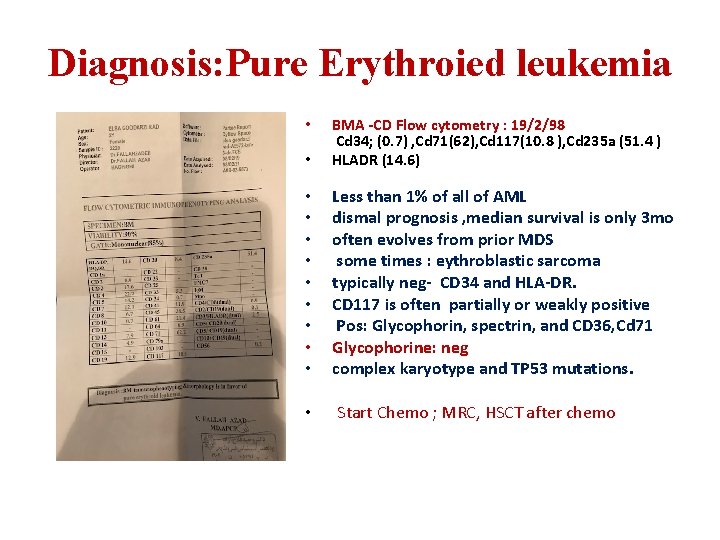
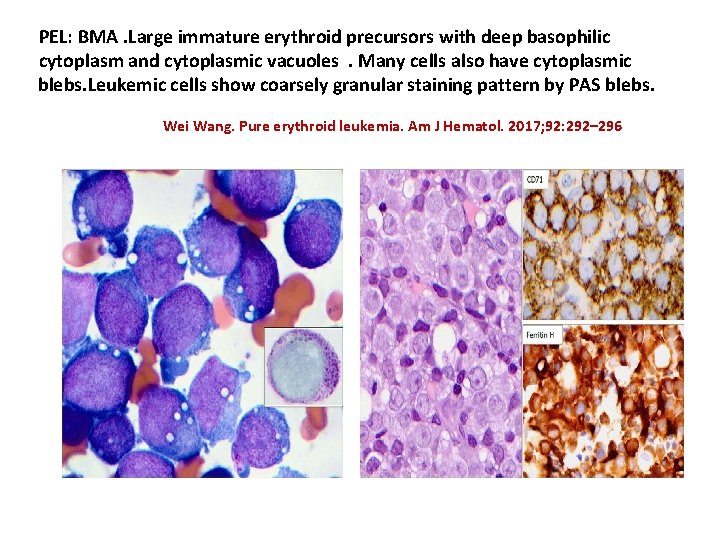
Diagnosis: Pure Erythroied leukemia • BMA ‐CD Flow cytometry : 19/2/98 Cd 34; (0. 7) , Cd 71(62), Cd 117(10. 8 ), Cd 235 a (51. 4 ) HLADR (14. 6) • • • Less than 1% of all of AML dismal prognosis , median survival is only 3 mo often evolves from prior MDS some times : eythroblastic sarcoma typically neg‐ CD 34 and HLA‐DR. CD 117 is often partially or weakly positive Pos: Glycophorin, spectrin, and CD 36, Cd 71 Glycophorine: neg complex karyotype and TP 53 mutations. • Start Chemo ; MRC, HSCT after chemo •
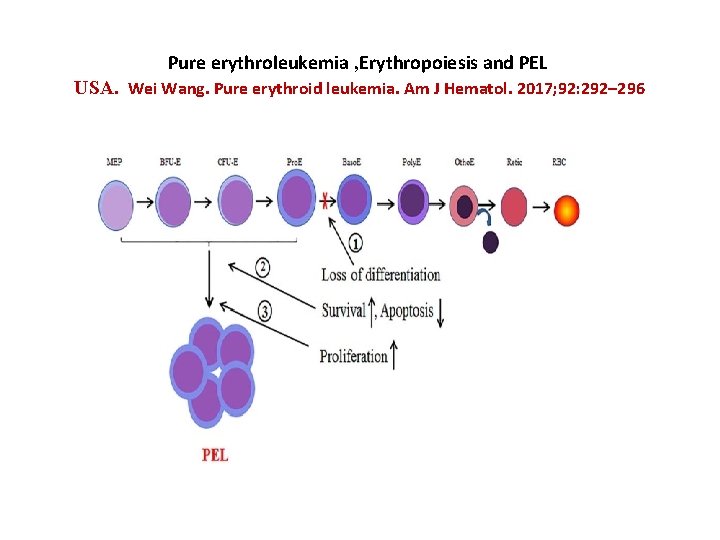
Pure erythroleukemia , Erythropoiesis and PEL USA. Wei Wang. Pure erythroid leukemia. Am J Hematol. 2017; 92: 292– 296
PEL: BMA. Large immature erythroid precursors with deep basophilic cytoplasm and cytoplasmic vacuoles. Many cells also have cytoplasmic blebs. Leukemic cells show coarsely granular staining pattern by PAS blebs. Wei Wang. Pure erythroid leukemia. Am J Hematol. 2017; 92: 292– 296
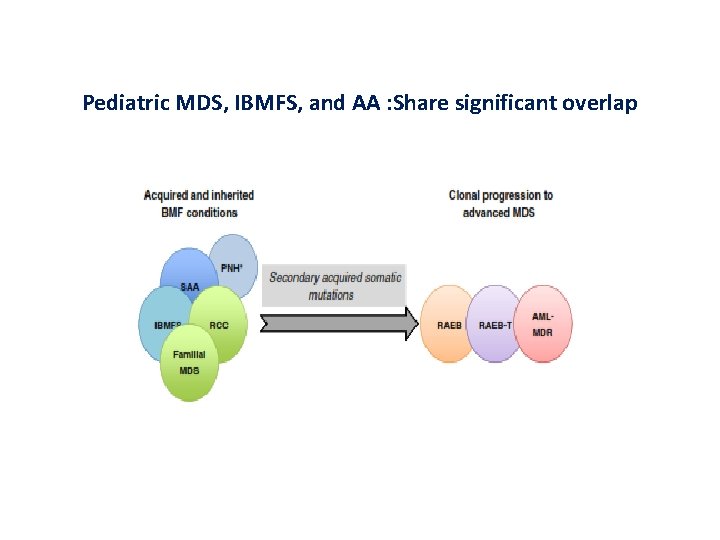
MDS in Pediatric • Group of rare clonal hematopoietic stem cell disorders; o Varying degree of cytopenias o Ineffective and dysplastic Hematopoiesis o Risk of leukemic transformation. • Significant overlap with other inherited & acquired bone marrow failure (BMF) disorders
Pediatric MDS • 4% of all pediatric hematologic malignancies • Annual incidence : 1. 8– 4 cases / million children. • Median age of diagnosis is 6. 8 years(any age group) • Male /Female: equal • Ped MDs: De novo (primary MDS) or/ Secondary
Inherited and acquired conditions associated with pediatric (MDS) ‐‐secondary MDS q Inherited conditions o Fanconi anemia, Shwachman-Diamond syndrome, Severe congenital neutropenia, Dyskeratosis congenita, Diamond-Blackfan anemia Ø GATA 2 haploinsufficiency (Mono Mac syndrome, Emberger syndrome, Familial MDS/AML) • Other familial non-syndromic MDS (ETV 6, RUNX 1/AML 1, CEBPA) • Familial MDS (at least one first degree relative with MDS/AML)without identified genetic cause • Trisomy 8 mosaicism q o ü ü Acquired conditions: Prior chemotherapy, Prior radiation therapy, Acquired aplastic anemia Therapy‐related MDS more often presents as advanced MDS Changes Ch 7, 5, and 11 q 23: >90 %
MDS ‐ pathophysiology q Underlying Genetics and pathophysiology of pediatric MDS are still poorly understood. q Because of the heterogeneity of MDS, different mechanisms of initiation and progression of the disease are likely to exist.
Pediatric MDS, IBMFS, and AA : Share significant overlap
Pathophysiology • Genetic damage in a pluripotent hematopoietic progenitor cell ; Genetic instability with subsequent acquisition of numerous molecular abnormalities. • About 30% of children with MDS have a known constitutional disorder • GATA 2 mutation , mutations in proto-oncogenes like RAS, TP 53, or WT 1, and karyotypic changes such as monosomy 7
Germ line mutation / GATA 2 Transcription Factor, Nuclear protein : regulate, Gene expression o Familial MDS/AML o 15% of advanced MDS o 7% of all patients with primary MDS o Absent in MDS secondary to therapy or acquired aplastic anemia o Older age & Monozomy 7 o Timely HSCT, no Immuno suppresive therapys
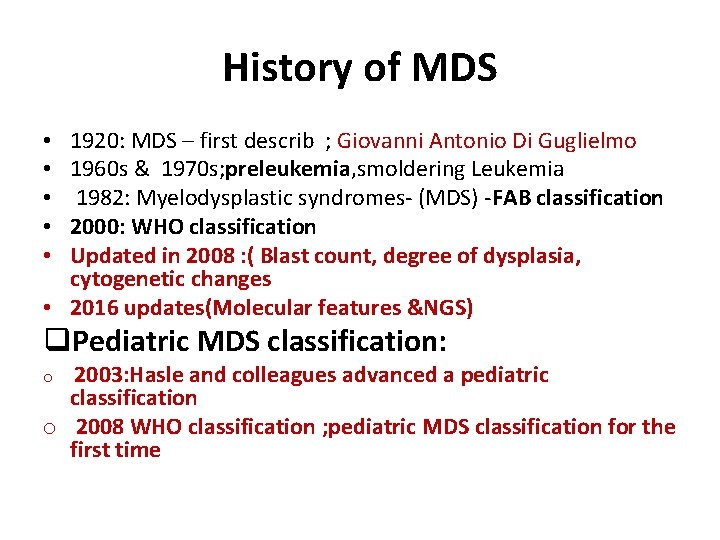
History of MDS 1920: MDS – first describ ; Giovanni Antonio Di Guglielmo 1960 s & 1970 s; preleukemia, smoldering Leukemia 1982: Myelodysplastic syndromes- (MDS) -FAB classification 2000: WHO classification Updated in 2008 : ( Blast count, degree of dysplasia, cytogenetic changes • 2016 updates(Molecular features &NGS) • • • q. Pediatric MDS classification: 2003: Hasle and colleagues advanced a pediatric classification o 2008 WHO classification ; pediatric MDS classification for the first time o
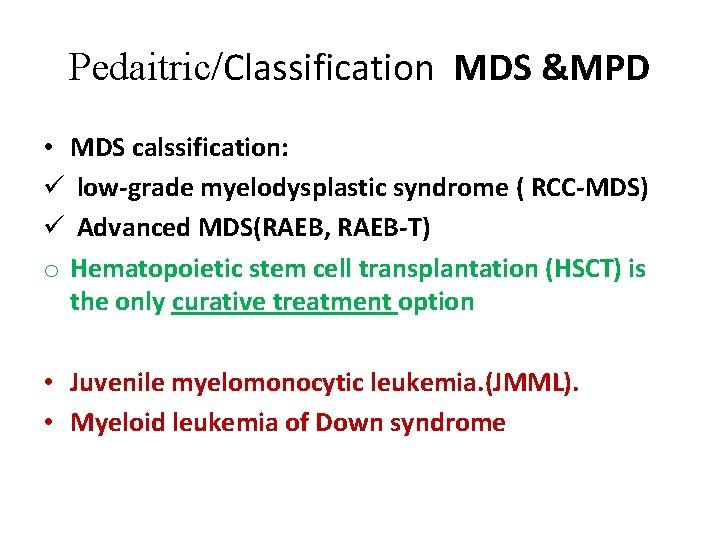
Pedaitric/Classification MDS &MPD • MDS calssification: ü low‐grade myelodysplastic syndrome ( RCC‐MDS) ü Advanced MDS(RAEB, RAEB‐T) o Hematopoietic stem cell transplantation (HSCT) is the only curative treatment option • Juvenile myelomonocytic leukemia. (JMML). • Myeloid leukemia of Down syndrome
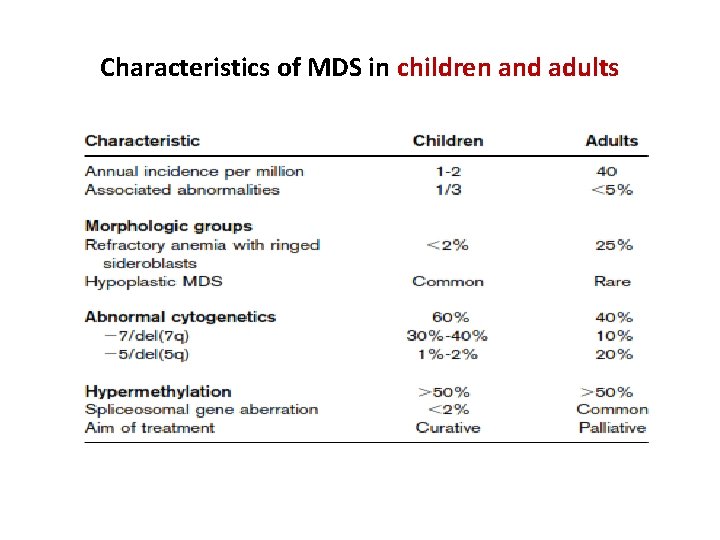
Characteristics of MDS in children and adults
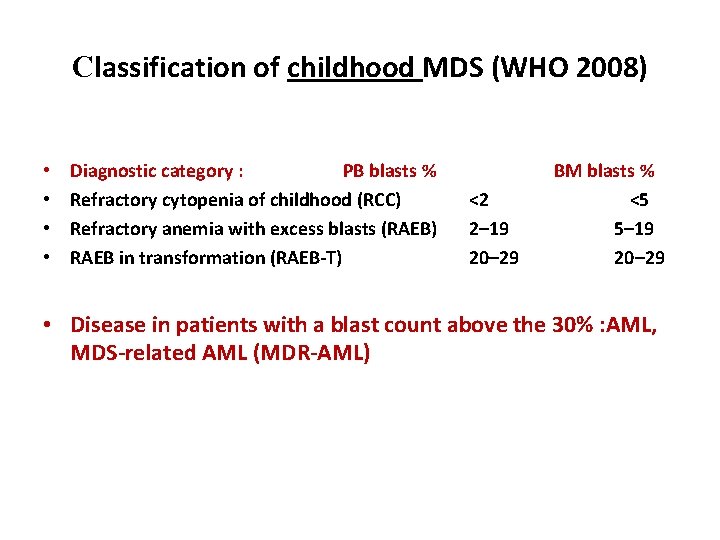
Classification of childhood MDS (WHO 2008) • • Diagnostic category : PB blasts % Refractory cytopenia of childhood (RCC) Refractory anemia with excess blasts (RAEB) RAEB in transformation (RAEB‐T) <2 2– 19 20– 29 BM blasts % <5 5– 19 20– 29 • Disease in patients with a blast count above the 30% : AML, MDS‐related AML (MDR‐AML)
Refractory cytopenia of childhood low grade MDS • 50 % of cases • < 2% blasts (PB) or less than 5% blasts in the (BM) • Clonal cytogenetic marker can confirm the diagnosis; but 61– 67 % normal cytogenetics • ( DD: AA and IBMFS? ) • Most BM: Hypocellular • unilineage dysplasia to overt multilineage dysplasia. • RCC ‐ multilineage dysplasia RCMD: higher incidence of disease progression
Advanced ped MDS WHO classification • RAEB‐ 1 (5– 10 %) or RAEB‐ 2 (11– 19 % ) blasts • RAEB‐T : 20– 29 % blasts
Clinical and laboratory features • • Variable, Incidental finding of cytopenia, Single‐lineage cytopenia or macrocytosis Isolated anemia is less frequently seen in children (Hb. F) is frequently moderately increase (WBC) count is low to normal Leukocytosis is generally not a feature of MDS Most no organomegaly. Macrocytic Erythropoiesis, small or unusually large megakaryocytes, and dysgranulopoiesis • Karyotype: Structural complex abnormalities defined as > 3 chromosomal aberrations including at least 1 structural aberration are associated with a very poor outcome
Diagnostic work up Think about DD • • • Vitamin & Mineral deficiencies Viral infections & Toxin / Drug exposure Rheumatologic disorders (JRA) Mitochondrial disorders (Pearson syndrome) Metabolic disorder Inherited Anemias (CDA), and IBMF
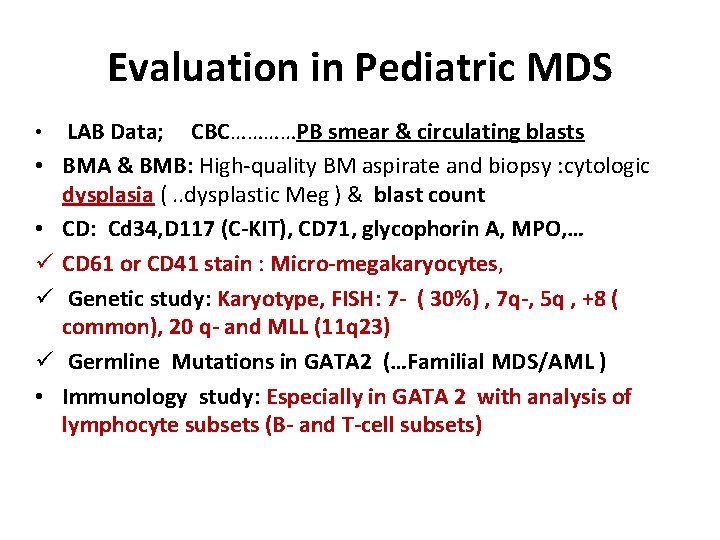
Evaluation in Pediatric MDS • LAB Data; • • ü ü ü • CBC…………PB smear & circulating blasts BMA & BMB: High-quality BM aspirate and biopsy : cytologic dysplasia (. . dysplastic Meg ) & blast count CD: Cd 34, D 117 (C‐KIT), CD 71, glycophorin A, MPO, … CD 61 or CD 41 stain : Micro‐megakaryocytes, Genetic study: Karyotype, FISH: 7‐ ( 30%) , 7 q‐, 5 q , +8 ( common), 20 q‐ and MLL (11 q 23) Germline Mutations in GATA 2 (…Familial MDS/AML ) Immunology study: Especially in GATA 2 with analysis of lymphocyte subsets (B‐ and T‐cell subsets)
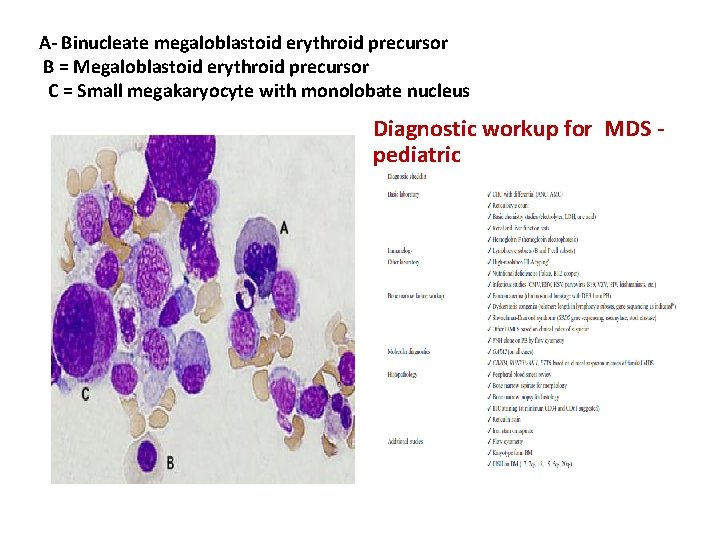
A‐ Binucleate megaloblastoid erythroid precursor B = Megaloblastoid erythroid precursor C = Small megakaryocyte with monolobate nucleus Diagnostic workup for MDS ‐ pediatric
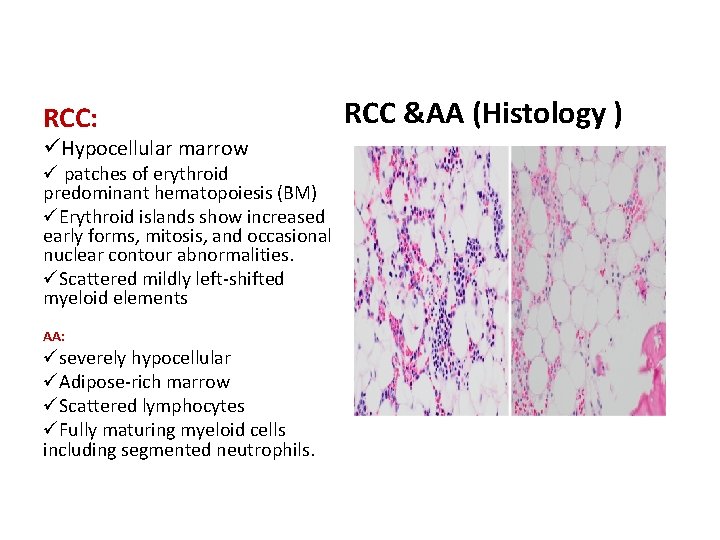
RCC: üHypocellular marrow ü patches of erythroid predominant hematopoiesis (BM) üErythroid islands show increased early forms, mitosis, and occasional nuclear contour abnormalities. üScattered mildly left-shifted myeloid elements AA: üseverely hypocellular üAdipose-rich marrow üScattered lymphocytes üFully maturing myeloid cells including segmented neutrophils. RCC &AA (Histology )
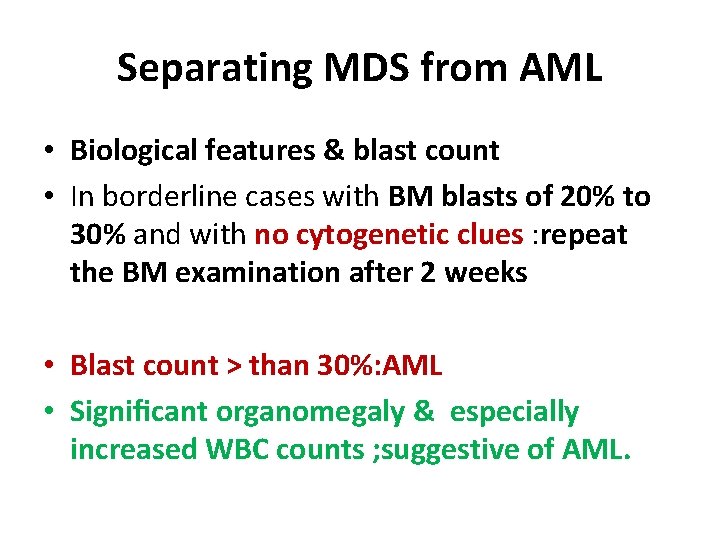
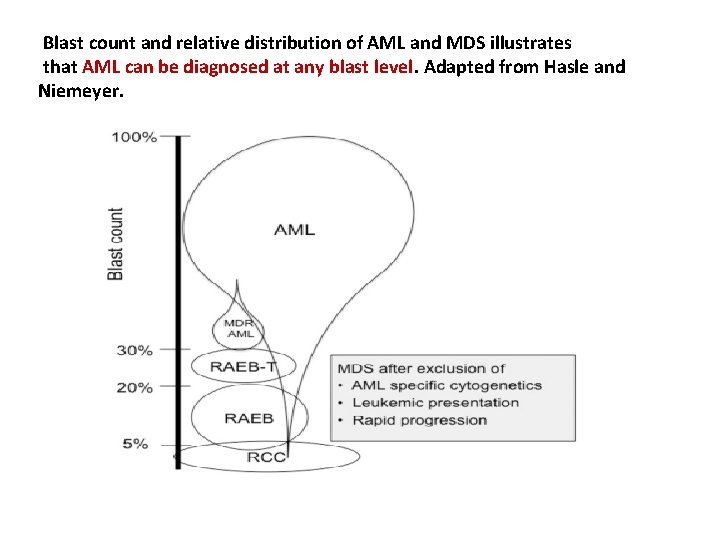
Separating MDS from AML • Biological features & blast count • In borderline cases with BM blasts of 20% to 30% and with no cytogenetic clues : repeat the BM examination after 2 weeks • Blast count > than 30%: AML • Significant organomegaly & especially increased WBC counts ; suggestive of AML.
Blast count and relative distribution of AML and MDS illustrates that AML can be diagnosed at any blast level. Adapted from Hasle and Niemeyer.
Treatment options in pediatric MDS • HSCT remains the only curative therapy for pediatric MDS (cure rates of around 60) • Guidelines on the optimal timing for HSCT & need for upfront chemotherapy in advanced MDS do not currently exist • In Matched related donor(MRD): CBC, BMA, BMB , Cytogenetic and Fish(GATA 2 mutations and IBMFS)
Henrik Hasle. A pediatric approach to the WHO classification of myelodysplastic and myeloproliferative diseases. 2011. BJH • Intensive chemotherapy prior to HSCT provides no survival benefit for children with RAEB and RAEB‐T and can generally not be recommended • Intensive chemotherapy before HSCT should be considered in patients with myelodysplasia‐related‐AML (MDR‐AML).
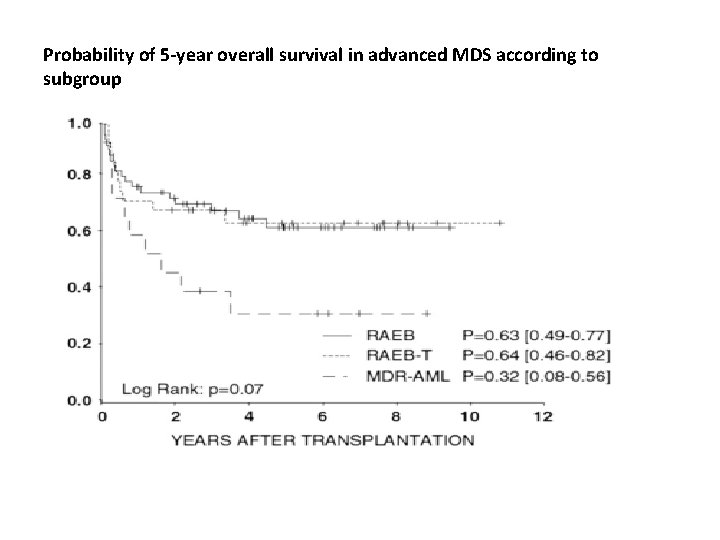
HSCT, Pediatric MDS o Myeloablative therapy - busulfan, cyclophosphamide, melphalan( MRD &MUD): cure 50% o Other drugs: Thiotepa, treosulfan, and fludarabine o TBI can generally : no superior antileukemic efficacy & is associated with more long‐term o Outcome HSCT ; similar in RAEB or RAEB‐T but significantly lower in MDR‐AML o Whether AML‐type induction chemotherapy before HSCT for advanced MDS can reduce relapse and improve outcome is Controversial
Probability of 5‐year overall survival in advanced MDS according to subgroup
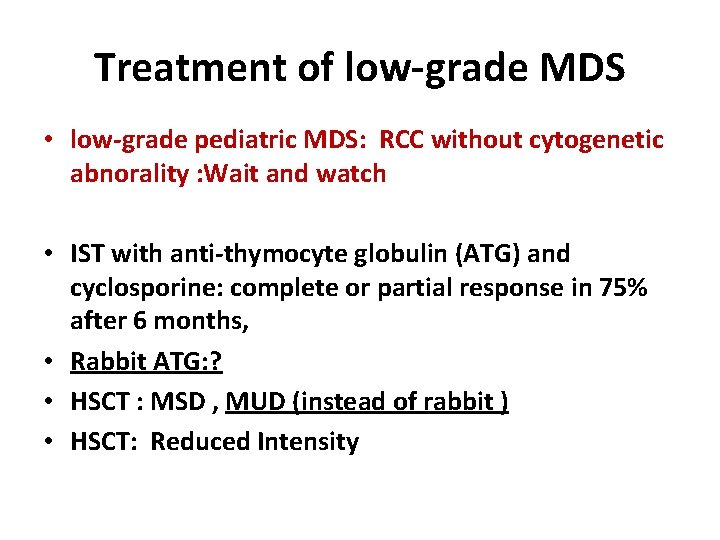
Treatment of low‐grade MDS • low‐grade pediatric MDS: RCC without cytogenetic abnorality : Wait and watch • IST with anti‐thymocyte globulin (ATG) and cyclosporine: complete or partial response in 75% after 6 months, • Rabbit ATG: ? • HSCT : MSD , MUD (instead of rabbit ) • HSCT: Reduced Intensity
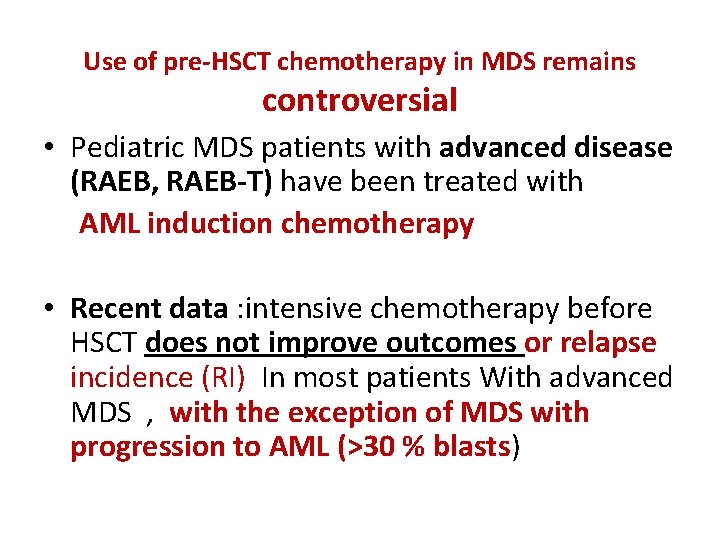
Use of pre‐HSCT chemotherapy in MDS remains controversial • Pediatric MDS patients with advanced disease (RAEB, RAEB‐T) have been treated with AML induction chemotherapy • Recent data : intensive chemotherapy before HSCT does not improve outcomes or relapse incidence (RI) In most patients With advanced MDS , with the exception of MDS with progression to AML (>30 % blasts)
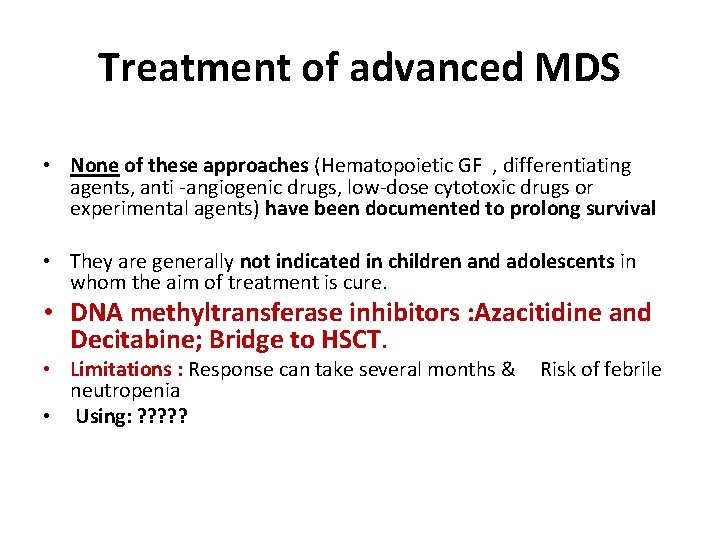
Treatment of advanced MDS • None of these approaches (Hematopoietic GF , differentiating agents, anti -angiogenic drugs, low-dose cytotoxic drugs or experimental agents) have been documented to prolong survival • They are generally not indicated in children and adolescents in whom the aim of treatment is cure. • DNA methyltransferase inhibitors : Azacitidine and Decitabine; Bridge to HSCT. • Limitations : Response can take several months & Risk of febrile neutropenia • Using: ? ? ?
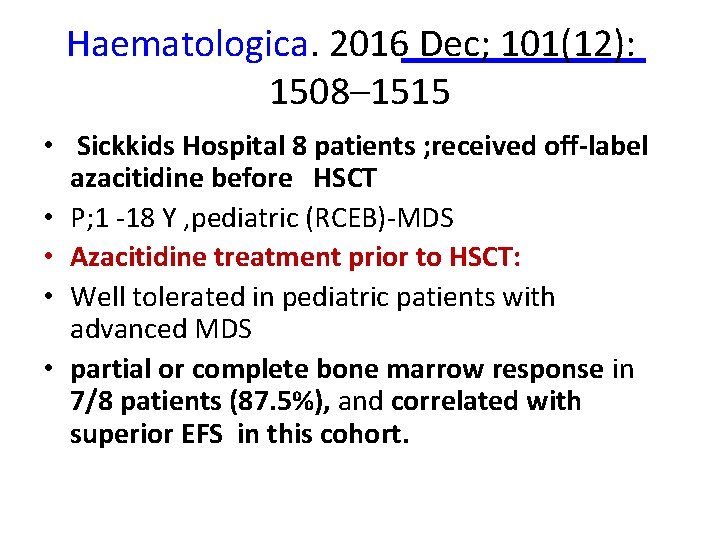
Haematologica. 2016 Dec; 101(12): 1508– 1515 • Sickkids Hospital 8 patients ; received off‐label azacitidine before HSCT • P; 1 -18 Y , pediatric (RCEB)-MDS • Azacitidine treatment prior to HSCT: • Well tolerated in pediatric patients with advanced MDS • partial or complete bone marrow response in 7/8 patients (87. 5%), and correlated with superior EFS in this cohort.
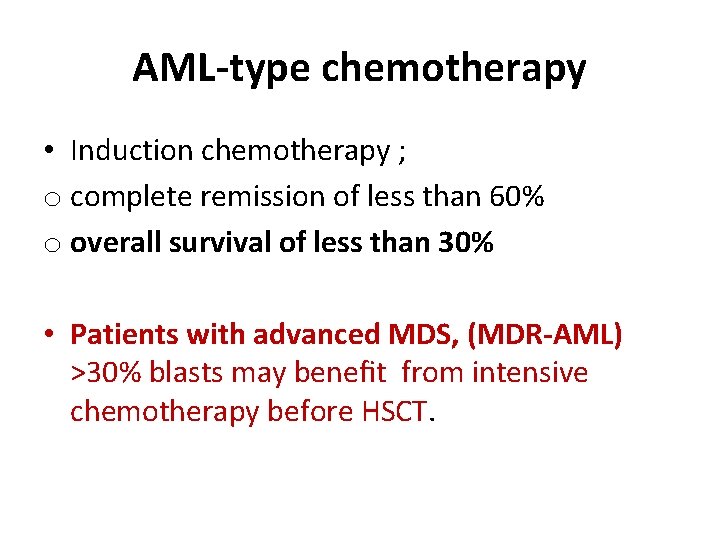
AML‐type chemotherapy • Induction chemotherapy ; o complete remission of less than 60% o overall survival of less than 30% • Patients with advanced MDS, (MDR‐AML) >30% blasts may benefit from intensive chemotherapy before HSCT.
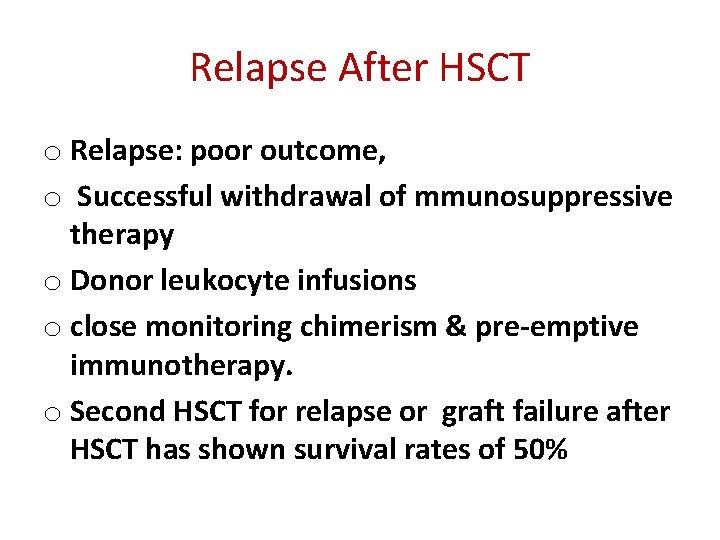
Relapse After HSCT o Relapse: poor outcome, o Successful withdrawal of mmunosuppressive therapy o Donor leukocyte infusions o close monitoring chimerism & pre‐emptive immunotherapy. o Second HSCT for relapse or graft failure after HSCT has shown survival rates of 50%
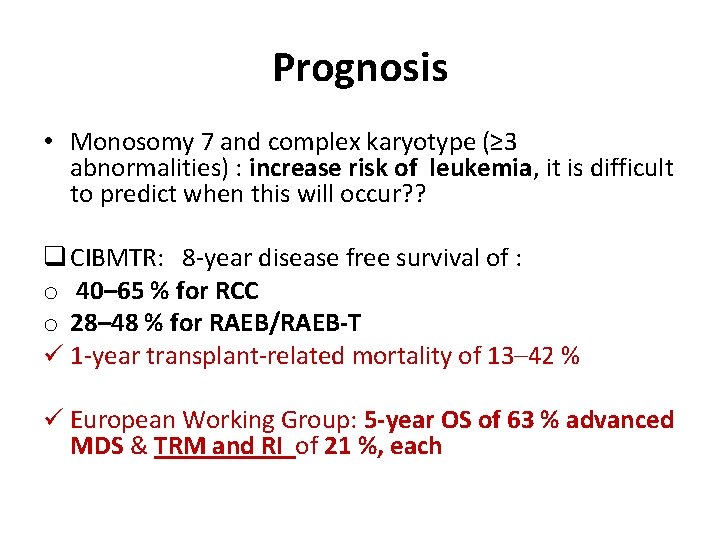
Prognosis • Monosomy 7 and complex karyotype (≥ 3 abnormalities) : increase risk of leukemia, it is difficult to predict when this will occur? ? q CIBMTR: 8 -year disease free survival of : o 40– 65 % for RCC o 28– 48 % for RAEB/RAEB‐T ü 1 -year transplant-related mortality of 13– 42 % ü European Working Group: 5‐year OS of 63 % advanced MDS & TRM and RI of 21 %, each
REFERENCESS • • • H Hasle A pediatric approach to the WHO classification of myelodysplastic and myeloproliferative diseases . H Hasle. Denmark. Leukemia (2003) 17, 277– 282 Henrik Hasle. A pediatric approach to the WHO classification of myelodysplastic and myeloproliferative diseases. 2011. BJH A. T. K. Rau. Myelodysplastic Syndromes in Children: Where Are We Today? India. The Ochsner Journal 12: 216– 220, 2012 Nicolas Waespe. Response to treatment with azacitidine in children with advanced myelodysplastic syndrome prior to hematopoietic stem cell transplantation. Haematologica. 2016 Dec; 101(12): 1508– 1515. Henrik Hasle Myelodysplastic and myeloproliferative disorders of childhood. American Society of Hematology 2016 Inga Hofmann. Pediatric myelodysplastic syndromes. J Hematopathol (2015) 8: 127– 141. Boston, MA, USA • • Wei Wang. Pure erythroid leukemia. Am J Hematol. 2017; 92: 292– 296 Ming Hong. The 2016 revision to the World Health Organization classification of myelodysplastic syndromes. JOURNAL OF TRANSLATIONAL INTERNAL MEDICINE / JUL‐SEP 2017 / VOL 5 | ISSUE 3 • Amr A. Outcome and Factors Affecting Survival of Childhood Myelodysplastic Syndrome: Single Centre Experience. Blood 2017 130: 5309; F Locatelli - How I treat myelodysplastic syndromes of childhood. Blood Journal. 2018 Federica Galaverna. Myelodysplastic syndromes in children. current Opinion in Oncology. 30(6): 402– 408, NOV 2018 • •
Thank You