
In the name of god Benign cutaneous and

In the name of god
Benign cutaneous and soft-tissue tumors S. Shahrokh, MD
Skin structure The skin consists of three layers: The epidermis The hypodermis There also some skin appendages such as hair follicule, sebaceous glands, and also soft tissues that are associated with skin, such as fat, muscles, and blood vessels (all of which have a mesenchymal lineage) and nerves (derived from neural crest cells).
Skin lesions variations: • Epithelial origion • Mesenchymal origion • Appendage origion • Neural cell origion
Diagnosis - Inspection and palpation - Dermoscopy - Ultrasound and Doppler imaging , X-ray, CT, MRI, angiography, scintigraphy, and positron emission tomography (PET) - pathologic diagnosis
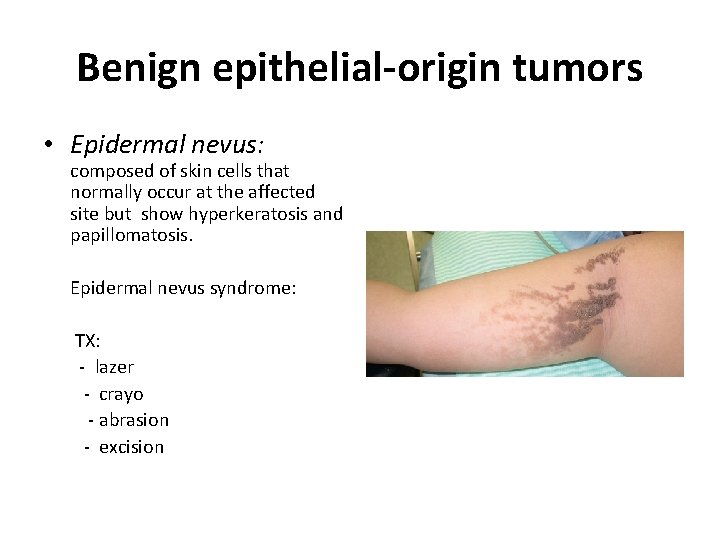
Benign epithelial-origin tumors • Epidermal nevus: composed of skin cells that normally occur at the affected site but show hyperkeratosis and papillomatosis. Epidermal nevus syndrome: TX: - lazer - crayo - abrasion - excision
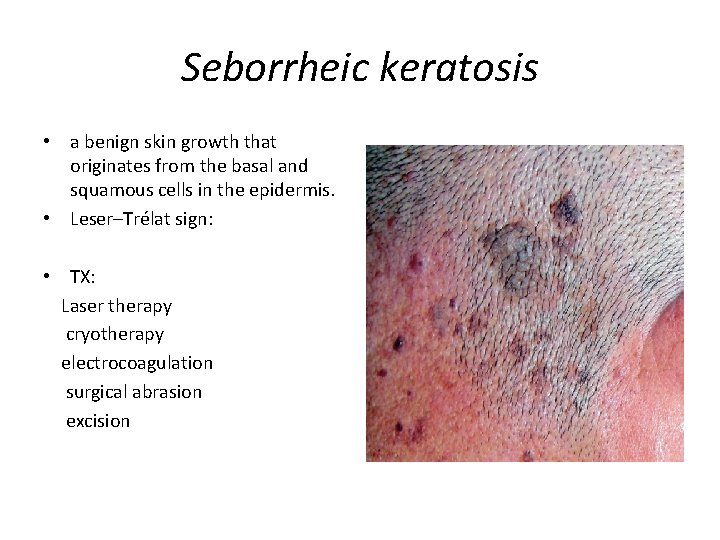
Seborrheic keratosis • a benign skin growth that originates from the basal and squamous cells in the epidermis. • Leser–Trélat sign: • TX: Laser therapy cryotherapy electrocoagulation surgical abrasion excision
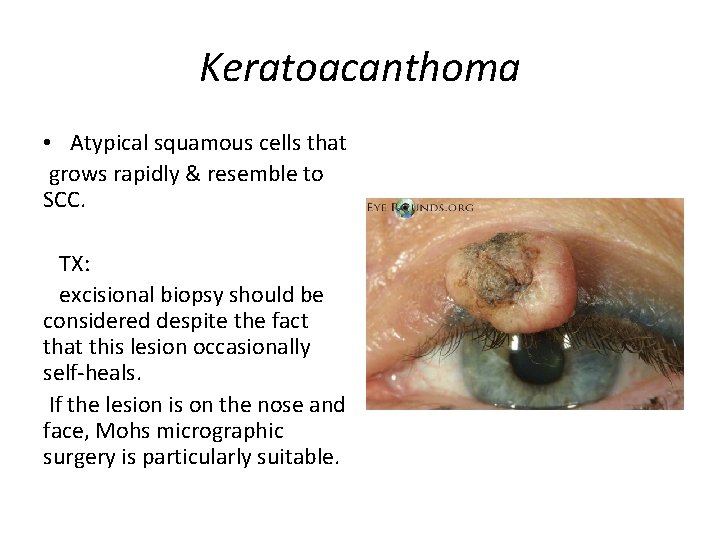
Keratoacanthoma • Atypical squamous cells that grows rapidly & resemble to SCC. TX: excisional biopsy should be considered despite the fact that this lesion occasionally self-heals. If the lesion is on the nose and face, Mohs micrographic surgery is particularly suitable.
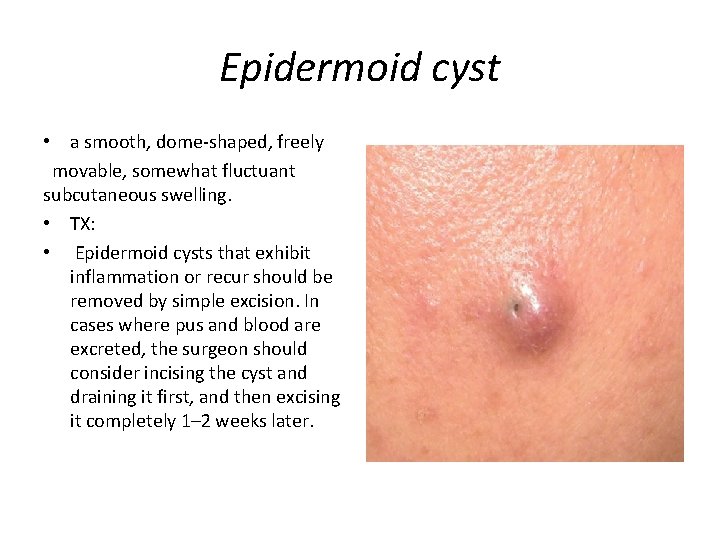
Epidermoid cyst • a smooth, dome-shaped, freely movable, somewhat fluctuant subcutaneous swelling. • TX: • Epidermoid cysts that exhibit inflammation or recur should be removed by simple excision. In cases where pus and blood are excreted, the surgeon should consider incising the cyst and draining it first, and then excising it completely 1– 2 weeks later.
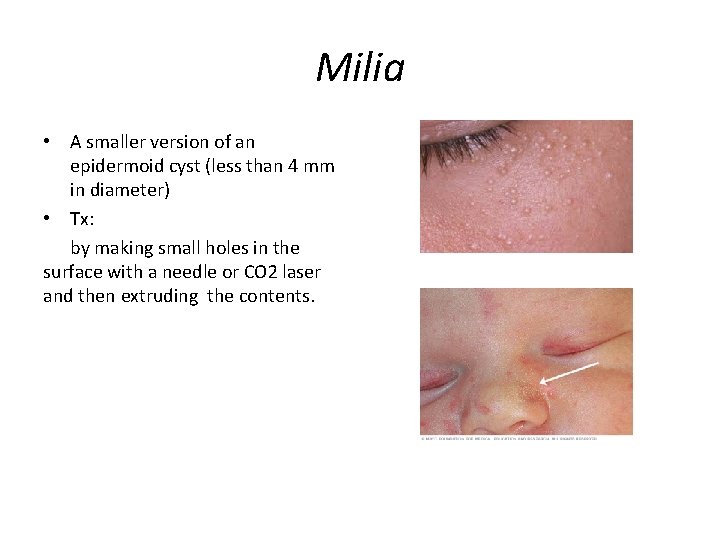
Milia • A smaller version of an epidermoid cyst (less than 4 mm in diameter) • Tx: by making small holes in the surface with a needle or CO 2 laser and then extruding the contents.

Dermoid cyst • a congenital subcutaneous cyst that develops along the embryonic lines of closure. • The most common sites are the supraorbital region, brow, upper eyelid, glabella, and scalp. • TX: Surgical excision
The rare types • • Clear cell acanthoma large cell acanthoma acantholytic acanthoma warty dyskeratoma traumatic inclusion cyst human papillomavirus-associated cyst proliferating epidermal cyst cutaneous keratocyst

Benign appendage-origin tumors • Nevus sebaceous
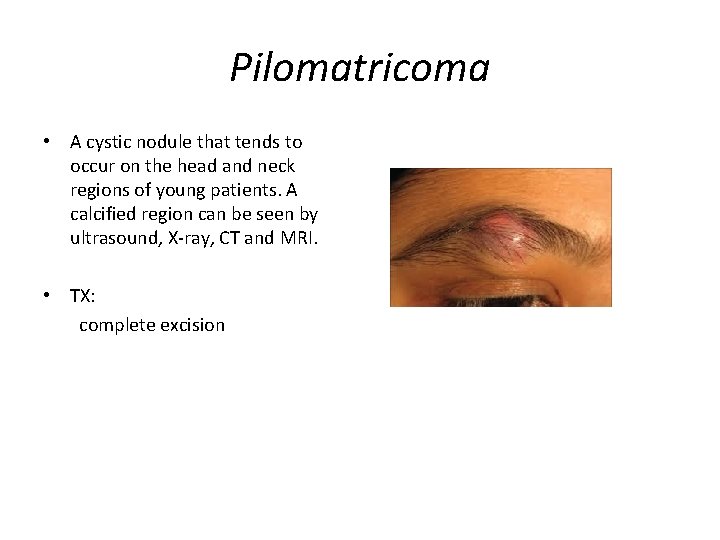
Pilomatricoma • A cystic nodule that tends to occur on the head and neck regions of young patients. A calcified region can be seen by ultrasound, X-ray, CT and MRI. • TX: complete excision

Trichilemoma • A subcutaneous cyst that is derived from the outer root sheath of the hair follicle and arises most frequently on the hairy region on the head. • TX: a small punch biopsy of the cyst & then pull out the cyst. s wall.
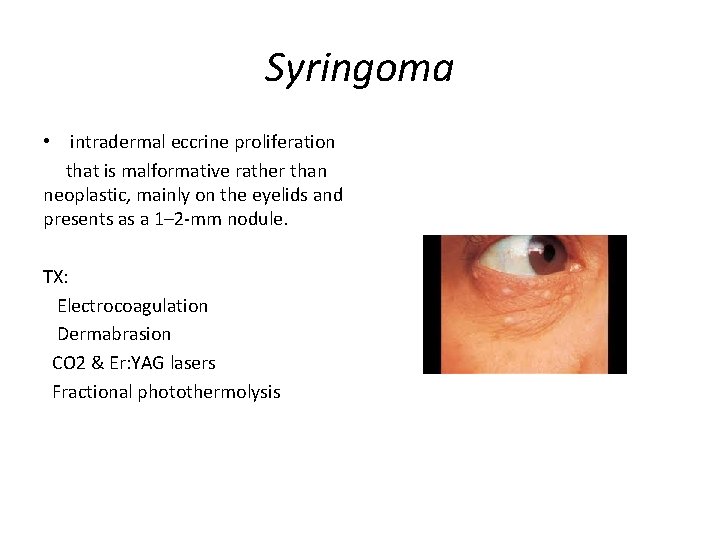
Syringoma • intradermal eccrine proliferation that is malformative rather than neoplastic, mainly on the eyelids and presents as a 1– 2 -mm nodule. TX: Electrocoagulation Dermabrasion CO 2 & Er: YAG lasers Fractional photothermolysis
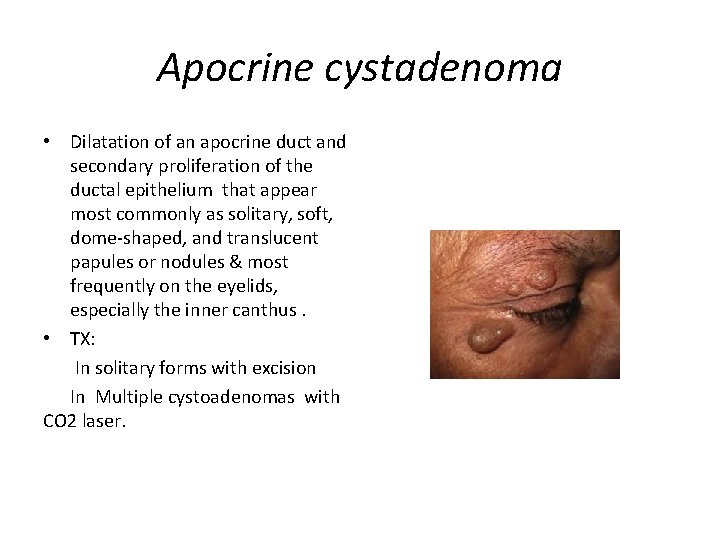
Apocrine cystadenoma • Dilatation of an apocrine duct and secondary proliferation of the ductal epithelium that appear most commonly as solitary, soft, dome-shaped, and translucent papules or nodules & most frequently on the eyelids, especially the inner canthus. • TX: In solitary forms with excision In Multiple cystoadenomas with CO 2 laser.
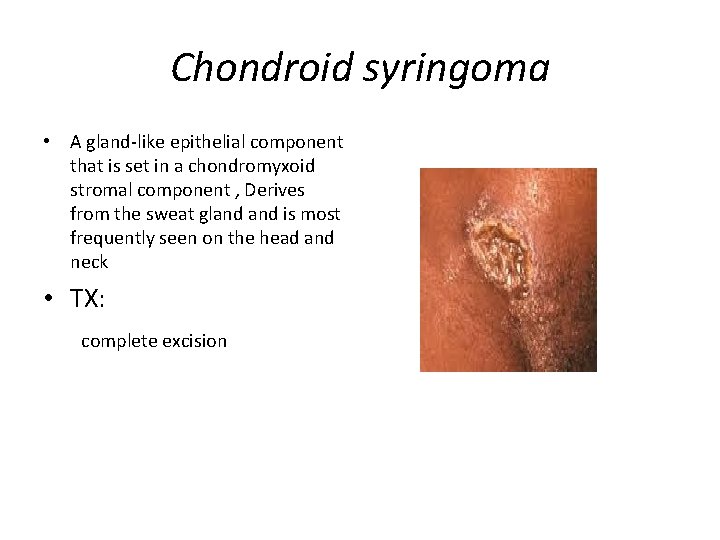
Chondroid syringoma • A gland-like epithelial component that is set in a chondromyxoid stromal component , Derives from the sweat gland is most frequently seen on the head and neck • TX: complete excision
The rare forms Steatocystoma multiplex trichofolliculoma Trichoepithelioma trichilemmoma sebaceous adenoma eccrine nevus apocrine nevus. Moreover, hair follicles, sebaceous glands, and sweat glands (apocrine and eccrine glands) can undergo hyperplasia that results in a hamartoma; • these skin appendages can also develop adenomas, benign epitheliomas, and primordial epitheliomas. • •
Benign neural crest-origin tumors Pigment cell nevus They are five types: Lentigo simplex Aquired pigment cell nevus Congenital pigmentcell nevus Dysplastic nevus Spitz nevus

Spitz nevus
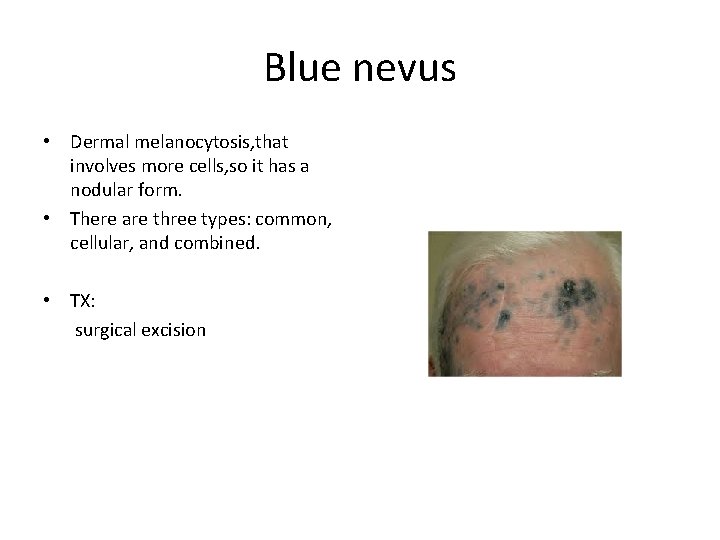
Blue nevus • Dermal melanocytosis, that involves more cells, so it has a nodular form. • There are three types: common, cellular, and combined. • TX: surgical excision
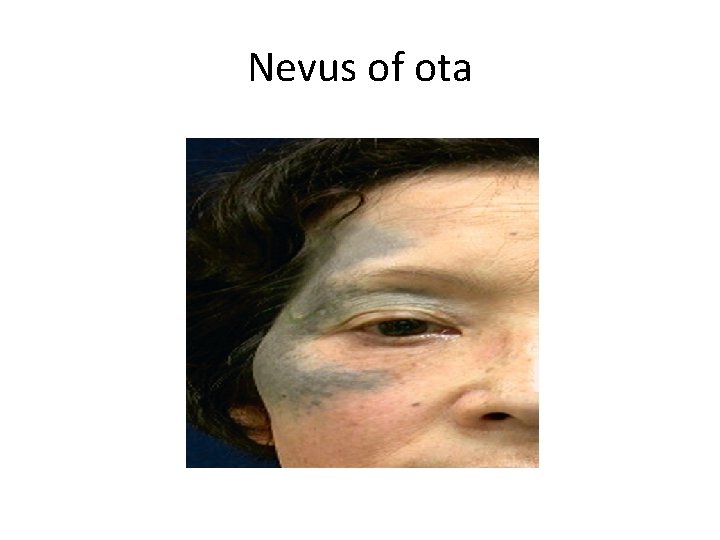
Nevus of ota
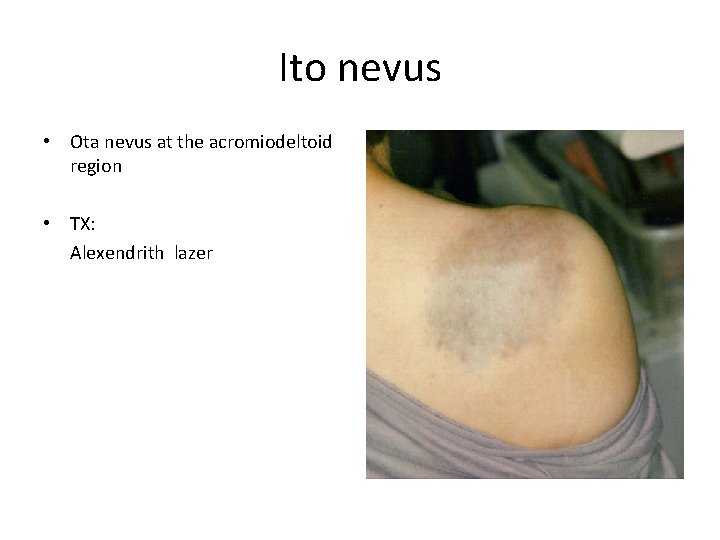
Ito nevus • Ota nevus at the acromiodeltoid region • TX: Alexendrith lazer
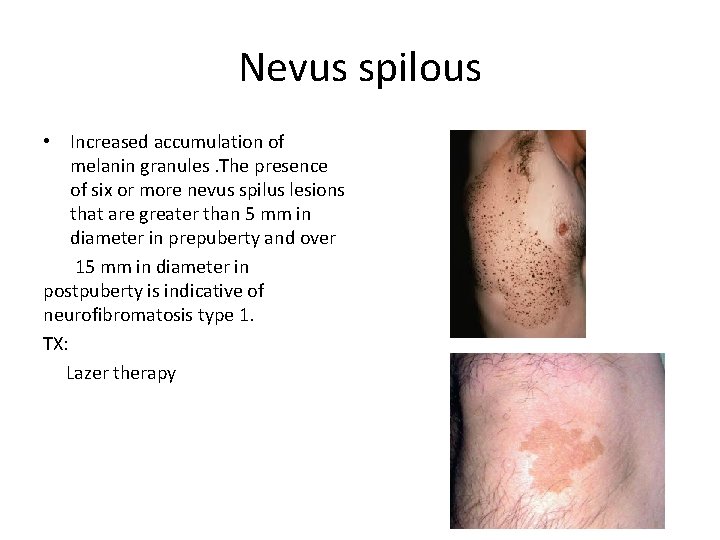
Nevus spilous • Increased accumulation of melanin granules. The presence of six or more nevus spilus lesions that are greater than 5 mm in diameter in prepuberty and over 15 mm in diameter in postpuberty is indicative of neurofibromatosis type 1. TX: Lazer therapy
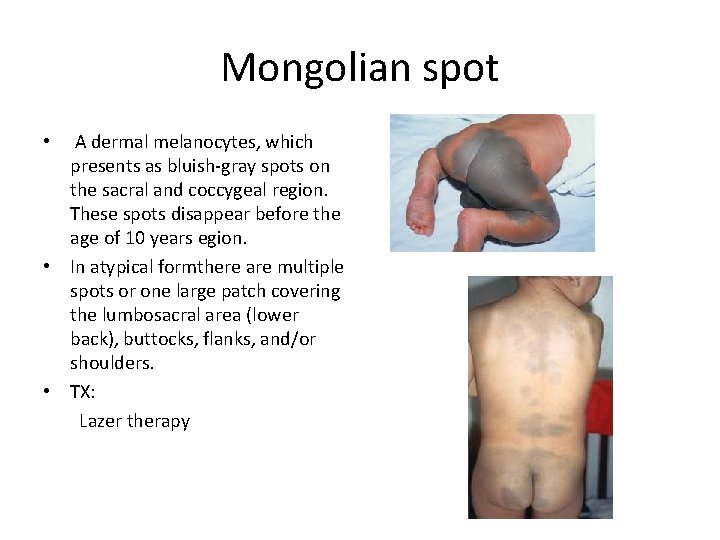
Mongolian spot A dermal melanocytes, which presents as bluish-gray spots on the sacral and coccygeal region. These spots disappear before the age of 10 years egion. • In atypical formthere are multiple spots or one large patch covering the lumbosacral area (lower back), buttocks, flanks, and/or shoulders. • TX: Lazer therapy •
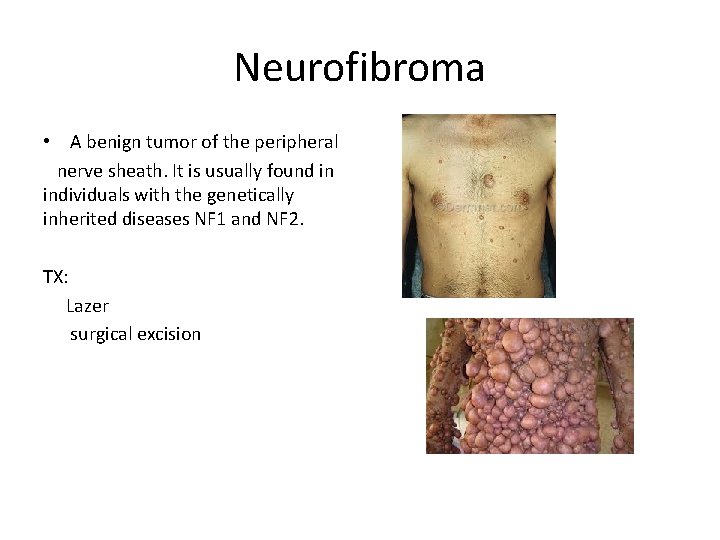
Neurofibroma • A benign tumor of the peripheral nerve sheath. It is usually found in individuals with the genetically inherited diseases NF 1 and NF 2. TX: Lazer surgical excision
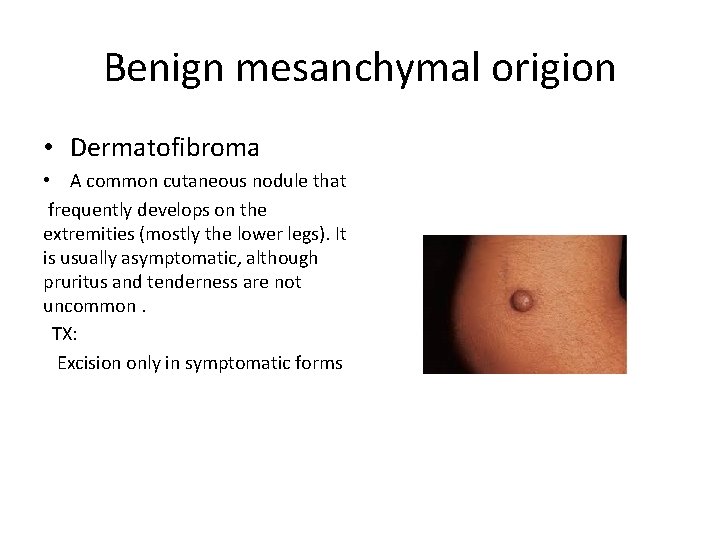
Benign mesanchymal origion • Dermatofibroma • A common cutaneous nodule that frequently develops on the extremities (mostly the lower legs). It is usually asymptomatic, although pruritus and tenderness are not uncommon. TX: Excision only in symptomatic forms
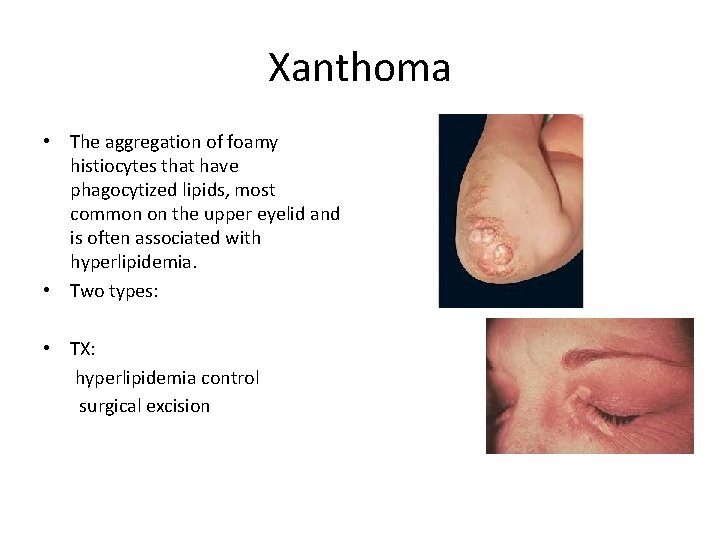
Xanthoma • The aggregation of foamy histiocytes that have phagocytized lipids, most common on the upper eyelid and is often associated with hyperlipidemia. • Two types: • TX: hyperlipidemia control surgical excision
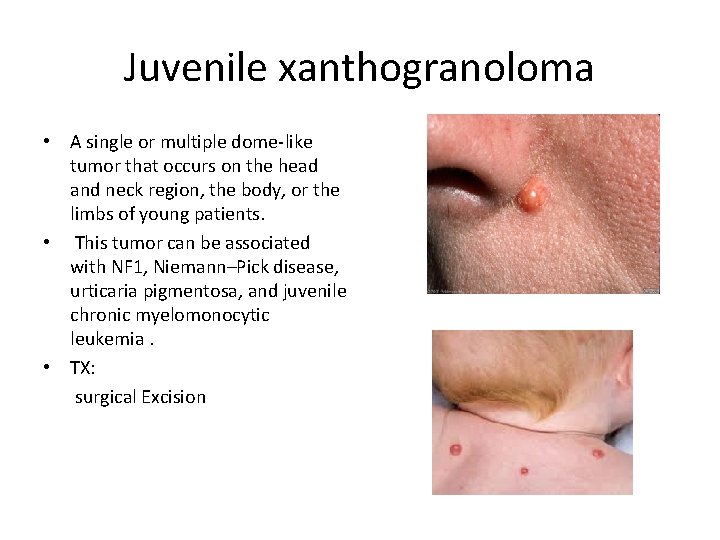
Juvenile xanthogranoloma • A single or multiple dome-like tumor that occurs on the head and neck region, the body, or the limbs of young patients. • This tumor can be associated with NF 1, Niemann–Pick disease, urticaria pigmentosa, and juvenile chronic myelomonocytic leukemia. • TX: surgical Excision
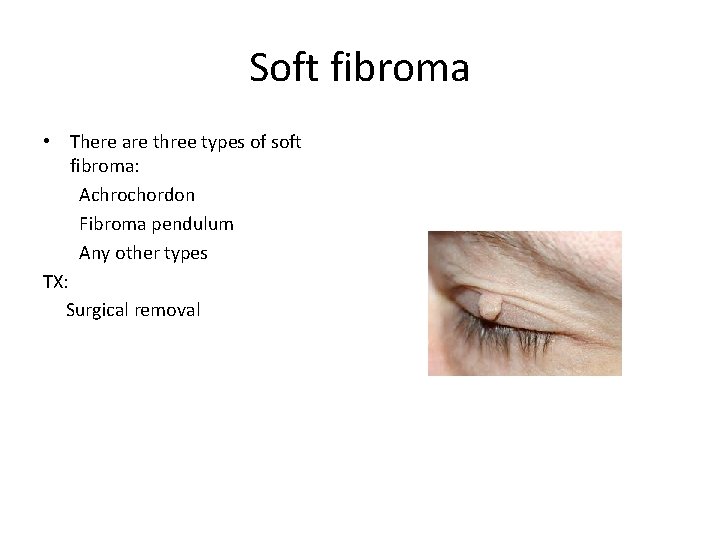
Soft fibroma • There are three types of soft fibroma: Achrochordon Fibroma pendulum Any other types TX: Surgical removal
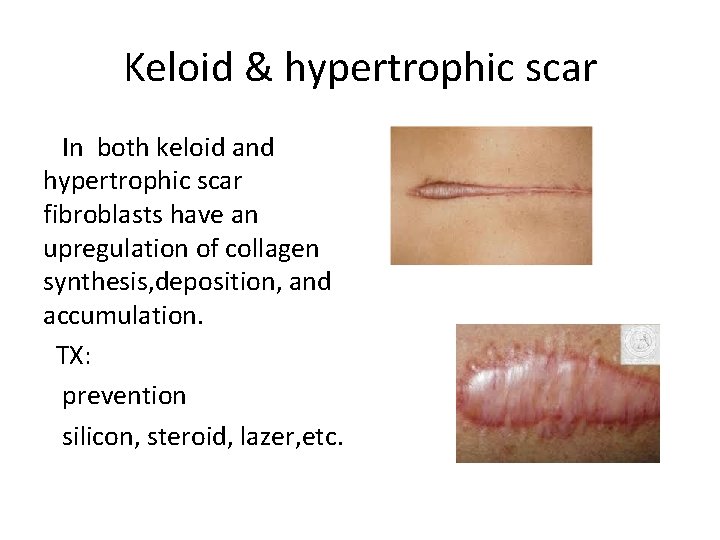
Keloid & hypertrophic scar In both keloid and hypertrophic scar fibroblasts have an upregulation of collagen synthesis, deposition, and accumulation. TX: prevention silicon, steroid, lazer, etc.
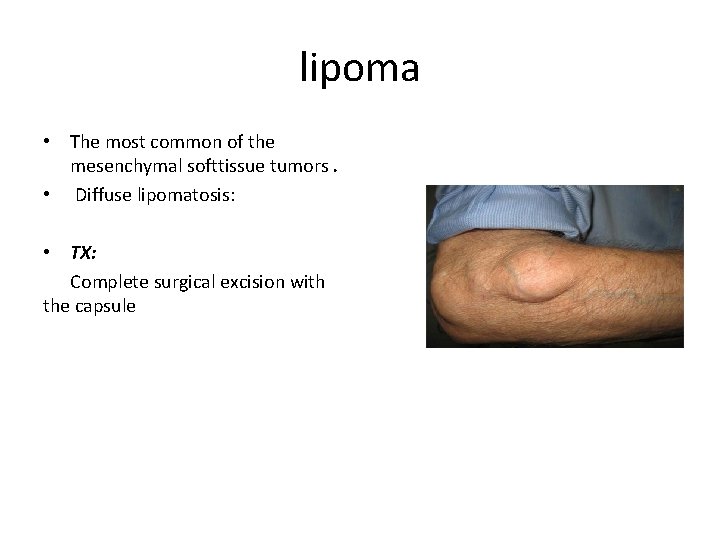
lipoma • The most common of the mesenchymal softtissue tumors. • Diffuse lipomatosis: • TX: Complete surgical excision with the capsule
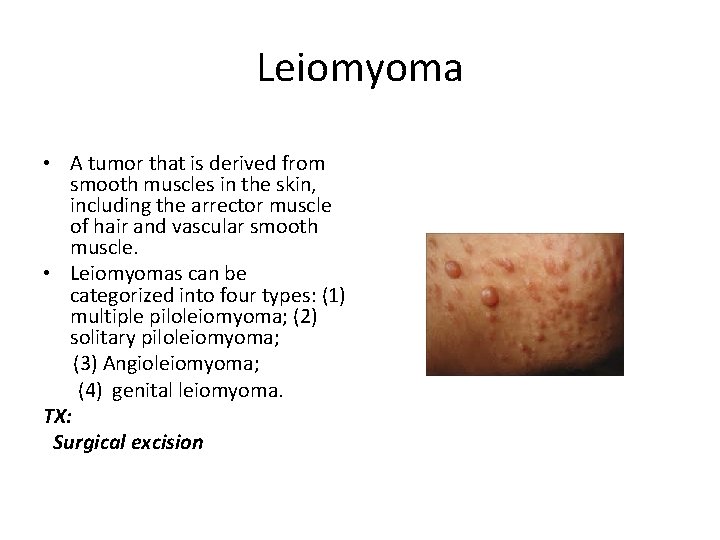
Leiomyoma • A tumor that is derived from smooth muscles in the skin, including the arrector muscle of hair and vascular smooth muscle. • Leiomyomas can be categorized into four types: (1) multiple piloleiomyoma; (2) solitary piloleiomyoma; (3) Angioleiomyoma; (4) genital leiomyoma. TX: Surgical excision
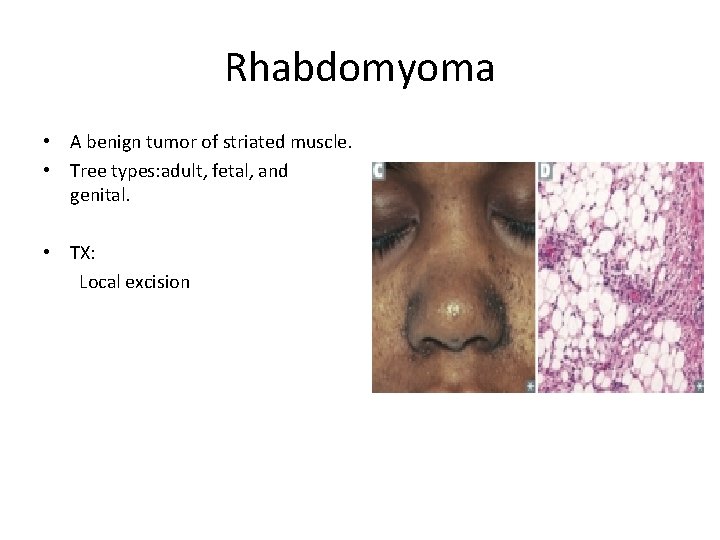
Rhabdomyoma • A benign tumor of striated muscle. • Tree types: adult, fetal, and genital. • TX: Local excision
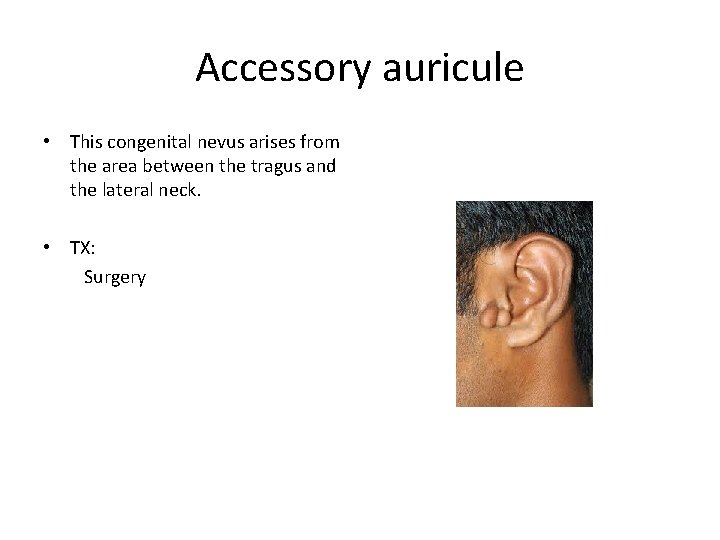
Accessory auricule • This congenital nevus arises from the area between the tragus and the lateral neck. • TX: Surgery
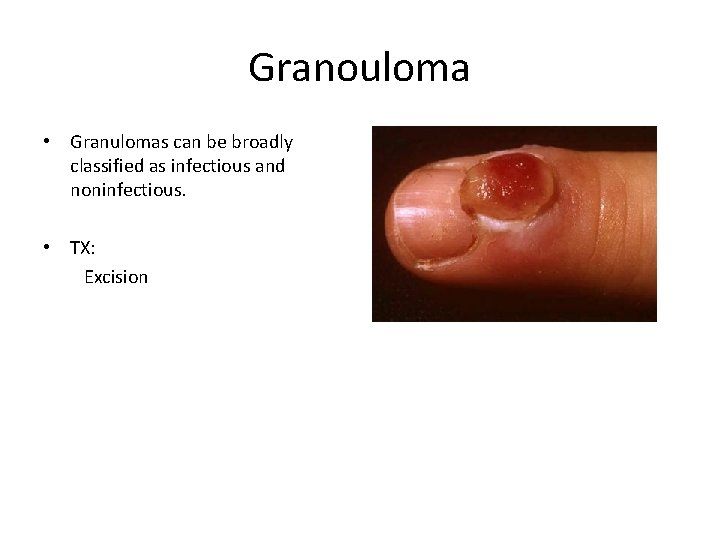
Granouloma • Granulomas can be broadly classified as infectious and noninfectious. • TX: Excision
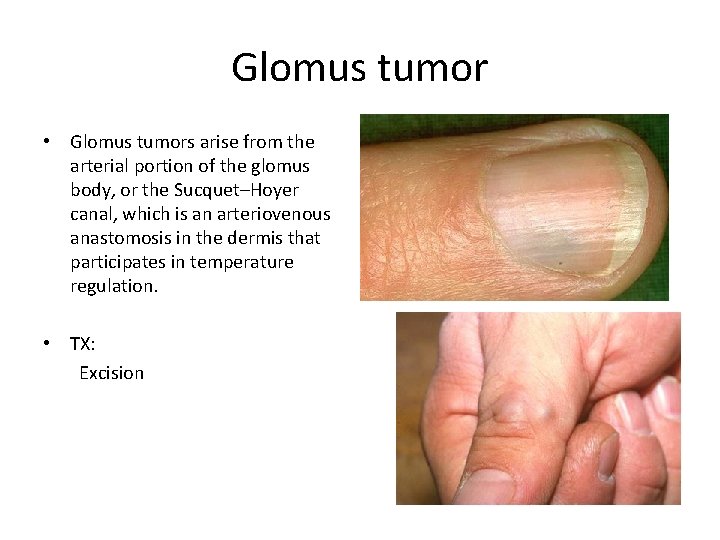
Glomus tumor • Glomus tumors arise from the arterial portion of the glomus body, or the Sucquet–Hoyer canal, which is an arteriovenous anastomosis in the dermis that participates in temperature regulation. • TX: Excision
Treatment modalities • • Lazer Cryotherapy Direct excision Skin abrasion

Thanks for your time
- Slides: 40