
In the bloody Civil War Union forces devastate
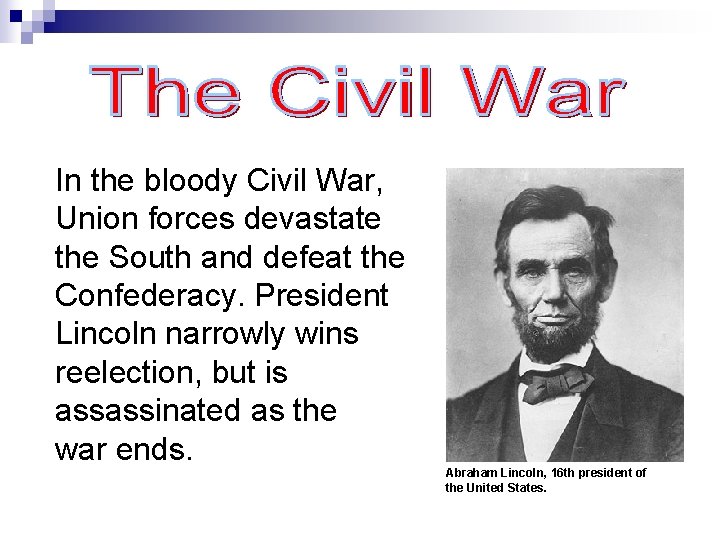
In the bloody Civil War, Union forces devastate the South and defeat the Confederacy. President Lincoln narrowly wins reelection, but is assassinated as the war ends. Abraham Lincoln, 16 th president of the United States.
Confederates Fire on Fort Sumter The Confederacy Takes Control • Confederate soldiers take over government, military installations • Fort Sumter—Union outpost in Charleston harbor • Confederates demand surrender of Fort Sumter Lincoln’s Dilemma • Evacuating fort would legitimize Confederacy, endanger Union
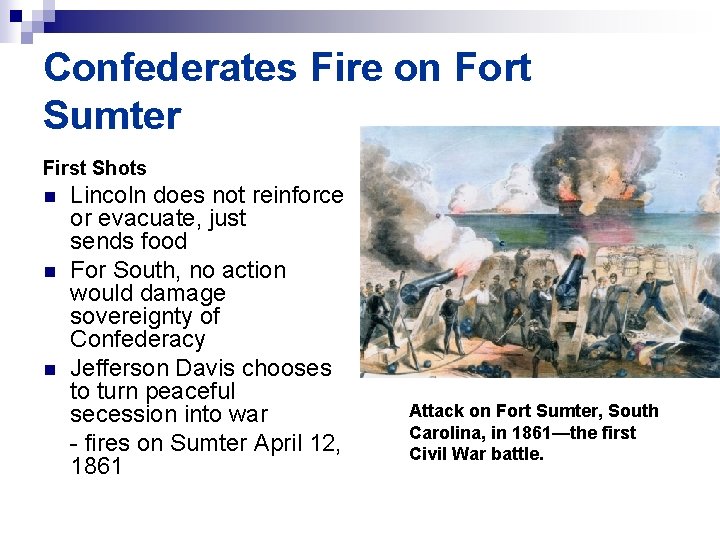
Confederates Fire on Fort Sumter First Shots n n n Lincoln does not reinforce or evacuate, just sends food For South, no action would damage sovereignty of Confederacy Jefferson Davis chooses to turn peaceful secession into war - fires on Sumter April 12, 1861 Attack on Fort Sumter, South Carolina, in 1861—the first Civil War battle.
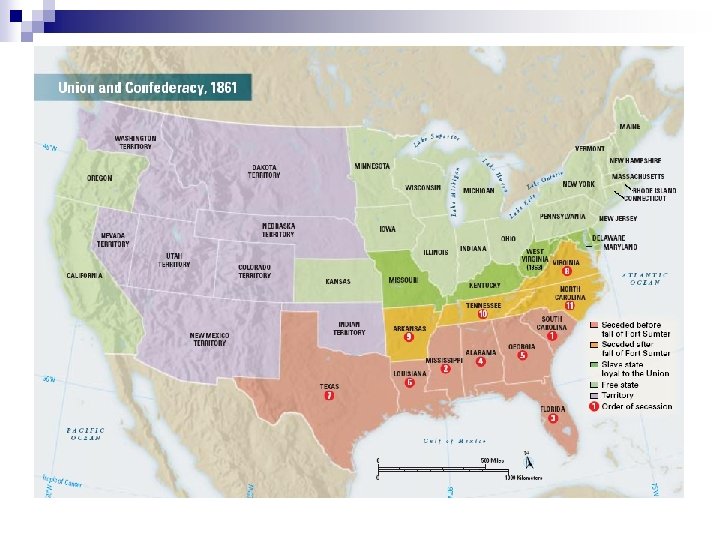
Virginia Secedes n n n Fall of Fort Sumter unites North; volunteers rush to enlist Virginia unwilling to fight South; secedes from Union - antislavery western counties secede from VA Three more states secede; border states remain in Union
Bell. Ringer Explain why Lincoln felt he had to hold on to Fort Sumter and Davis felt he had to take it.
Union and Confederate Strategies • Union advantages: soldiers, factories, food, railroads • Confederate advantages: cotton profits, generals, motivation • Anaconda plan: Union strategy to conquer South - blockade Southern ports - divide Confederacy in two in west - capture Richmond, Confederate capital • Confederate strategy: defense, invade North if opportunity arises

Bull Run—first battle, near Washington; Confederate victory • Thomas J. Jackson called Stonewall Jackson for firm stand in battle
Union Armies in the West Protecting Washington, D. C. n After Bull Run, Lincoln calls for 1 million additional soldiers n Appoints General George Mc. Clellan to lead Army of the Potomac
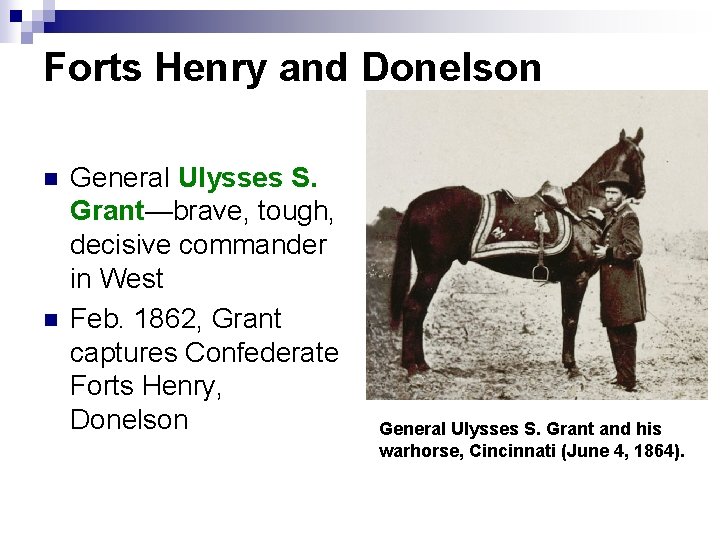
Forts Henry and Donelson n n General Ulysses S. Grant—brave, tough, decisive commander in West Feb. 1862, Grant captures Confederate Forts Henry, Donelson General Ulysses S. Grant and his warhorse, Cincinnati (June 4, 1864).
Union Armies in the West Shiloh • March 1862, Confederate troops surprise Union soldiers at Shiloh • Grant counterattacks; Confederates retreat; thousands dead, wounded • Shiloh teaches preparation needed, Confederacy vulnerable in West Farragut on the Lower Mississippi • David G. Farragut commands fleet that takes New Orleans, April 1862 - takes Baton Rouge, Natchez. map
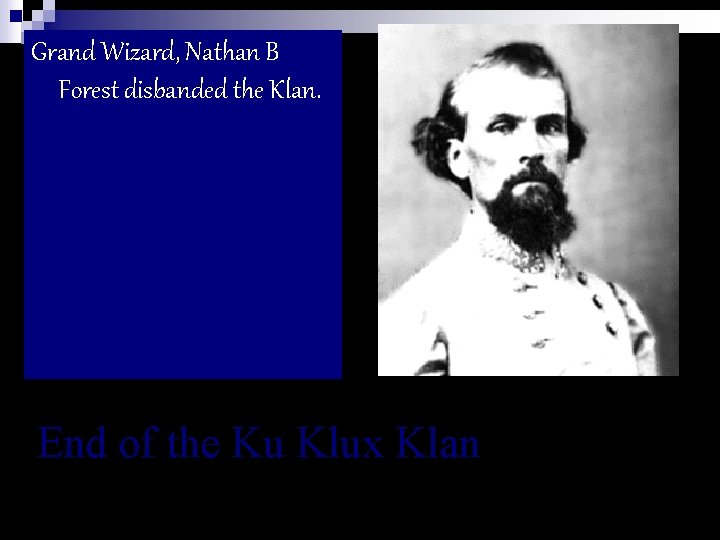
Grand Wizard, Nathan B Forest disbanded the Klan. End of the Ku Klux Klan
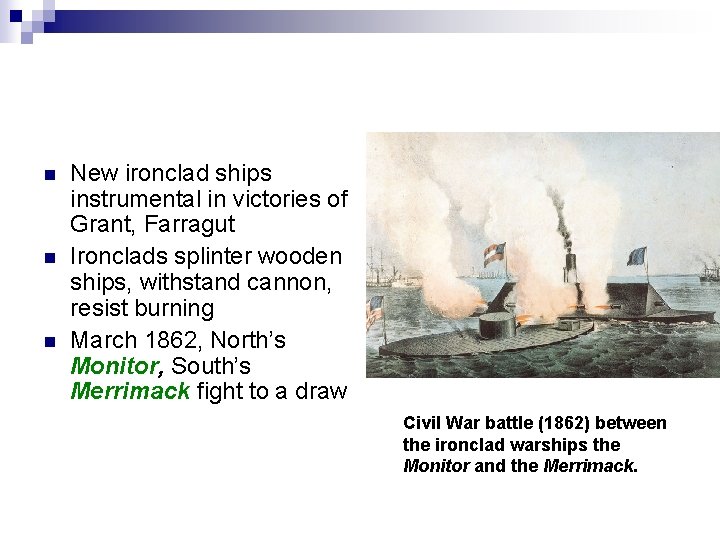
n n n New ironclad ships instrumental in victories of Grant, Farragut Ironclads splinter wooden ships, withstand cannon, resist burning March 1862, North’s Monitor, South’s Merrimack fight to a draw Civil War battle (1862) between the ironclad warships the Monitor and the Merrimack.
Rifles more accurate, faster loading, fire more rounds than muskets n Minié ball (more destructive bullet), grenades, land mines are used n Fighting from trenches, barricades new advantage in infantry attacks n
The War for the Capitals “On to Richmond” n Mc. Clellan waits to attack Richmond; drills troops for 5 months n Spring 1862, Robert E. Lee takes command of Southern army n Lee, Mc. Clellan fight Seven Days’ Battle; Union leaves Richmond area
Antietam Lee wins Second Battle of Bull Run; marches into Maryland n Lee, Mc. Clellan clash at Antietam— bloodiest single-day battle n Battle a standoff; Confederates retreat; Mc. Clellan does not pursue - Lincoln fires Mc. Clellan n
The Politics of War By issuing the Emancipation Proclamation, President Lincoln makes slavery the focus of the war.
Britain Remains Neutral Britain Pursues Its Own Interests • Britain has cotton inventory, new sources; does not need South • Needs Northern wheat, corn; chooses neutrality The Trent Affair • Confederate diplomats travel on Trent to get British, French support • U. S. Navy arrests them; Lincoln frees them, averts war with Britain
- Slides: 24