
IN THE BELLY OF THE WHALE WHY DO
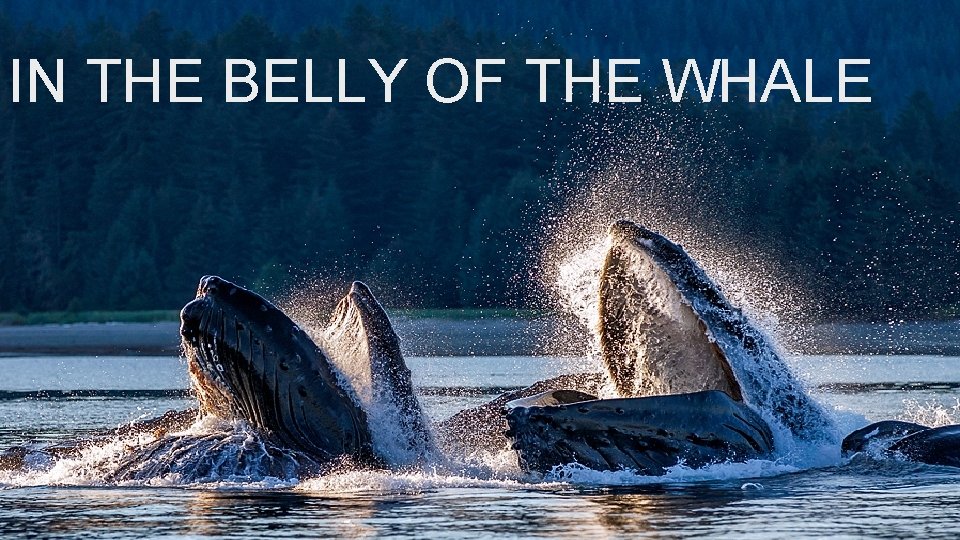
IN THE BELLY OF THE WHALE
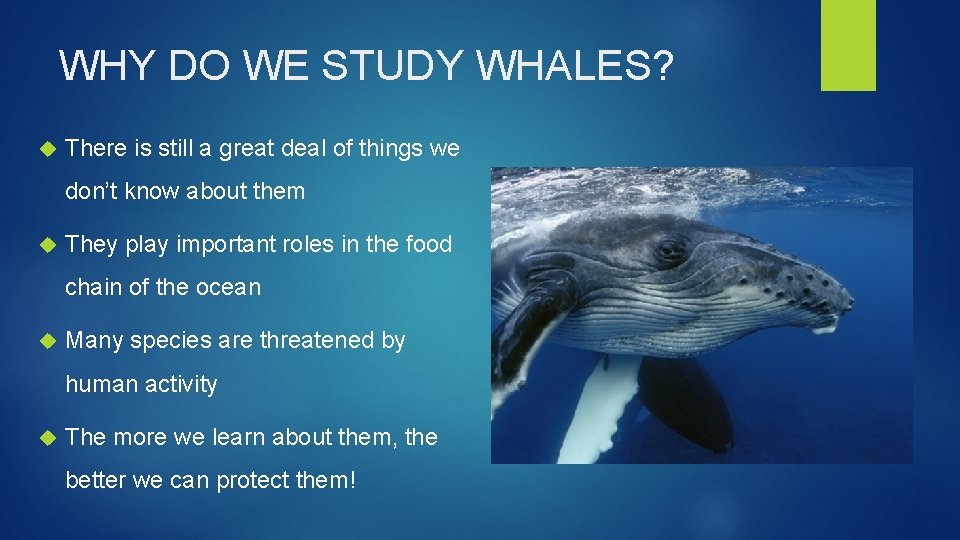
WHY DO WE STUDY WHALES? There is still a great deal of things we don’t know about them They play important roles in the food chain of the ocean Many species are threatened by human activity The more we learn about them, the better we can protect them!
WHAT ARE CETACEANS? Whales are known as Cetaceans – which means they are classified in the order “Cetacea. ” Cetacea also includes all dolphins and porpoises as well. There approximately 80 species of cetaceans currently identified. We have 10 species that live off the coast of Oregon There are two suborders of cetaceans – Odontoceti and Mysticeti
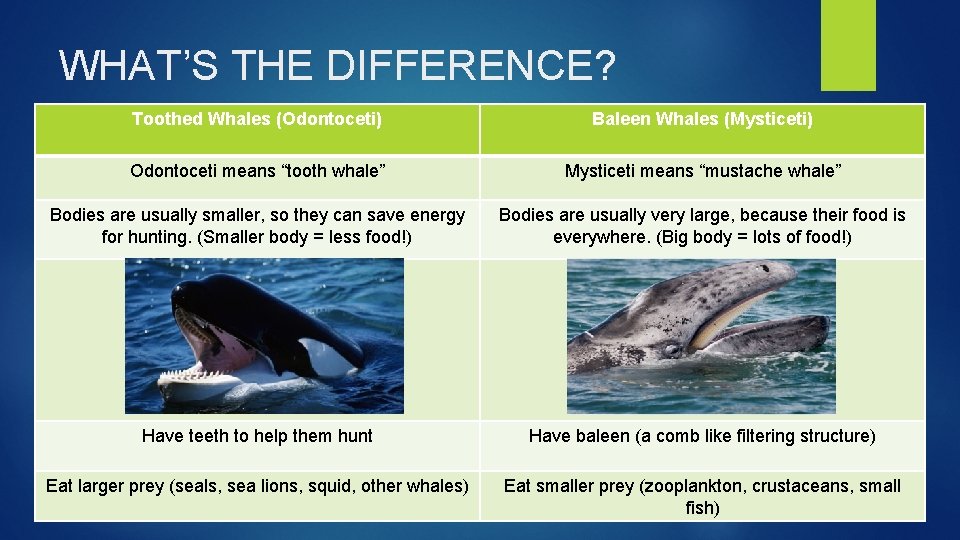
WHAT’S THE DIFFERENCE? Toothed Whales (Odontoceti) Baleen Whales (Mysticeti) Odontoceti means “tooth whale” Mysticeti means “mustache whale” Bodies are usually smaller, so they can save energy for hunting. (Smaller body = less food!) Bodies are usually very large, because their food is everywhere. (Big body = lots of food!) Have teeth to help them hunt Have baleen (a comb like filtering structure) Eat larger prey (seals, sea lions, squid, other whales) Eat smaller prey (zooplankton, crustaceans, small fish)

BALEEN FEEDING Filtering Systems in their Jaw (Baleen) All baleen is not the same! Do you see the differences? Right Whale Gray Whale Humpback Whale
DIFFERENT BALEEN FOR DIFFERENT FEEDING A whales baleen corresponds to it’s feeding mechanism. For these whales, that means they can be – Gulper Feeders : take large gulps of water and push it through the baleen to filter. Humpback Whales fall into this category. Sucker Feeders: roll on their sides to scoop up large mouthfuls of sediment from the seafloor, then filter the mud for it’s food! This includes the Gray whales. Skimming Feeders: stay near the surface of the water with their mouths open, to pick up any food that may be there. The skimmers include the Right whale!
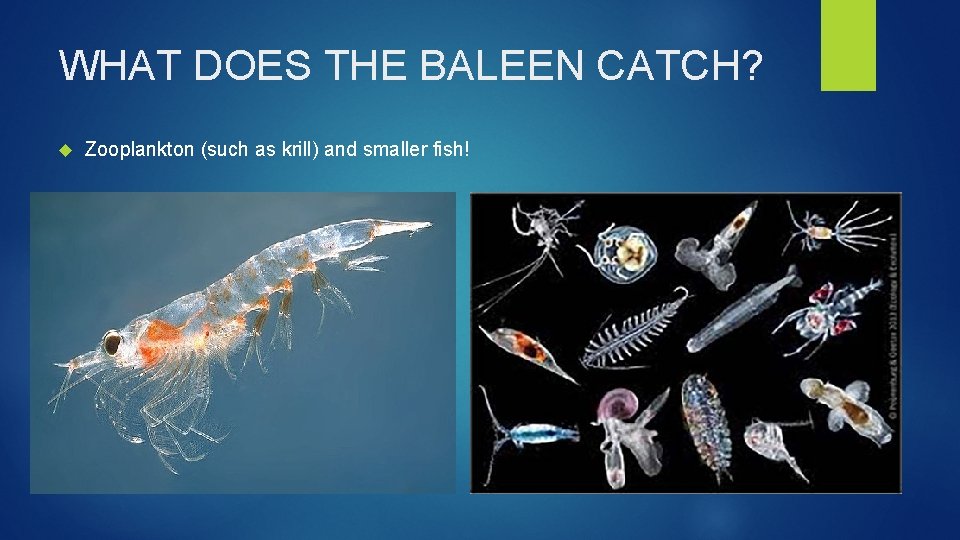
WHAT DOES THE BALEEN CATCH? Zooplankton (such as krill) and smaller fish!
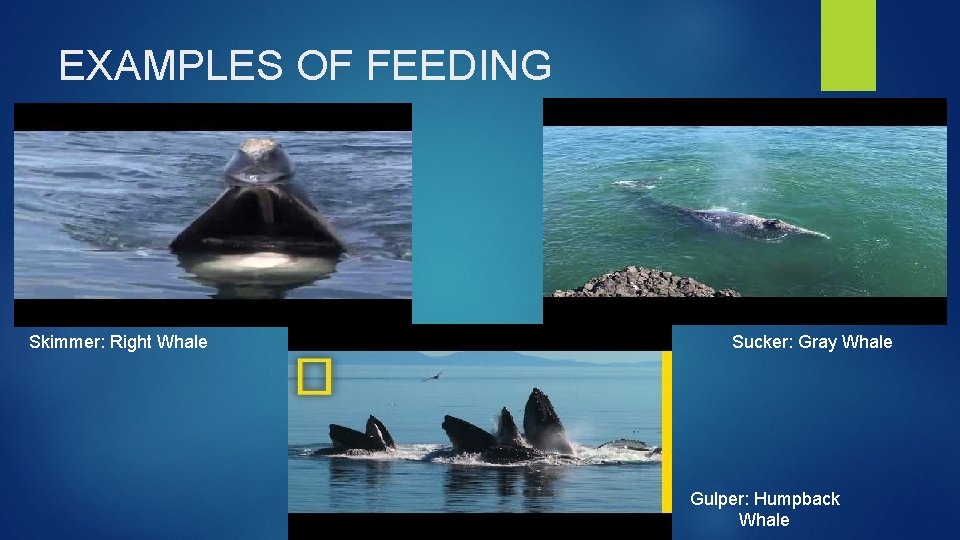
EXAMPLES OF FEEDING Skimmer: Right Whale Sucker: Gray Whale Gulper: Humpback Whale
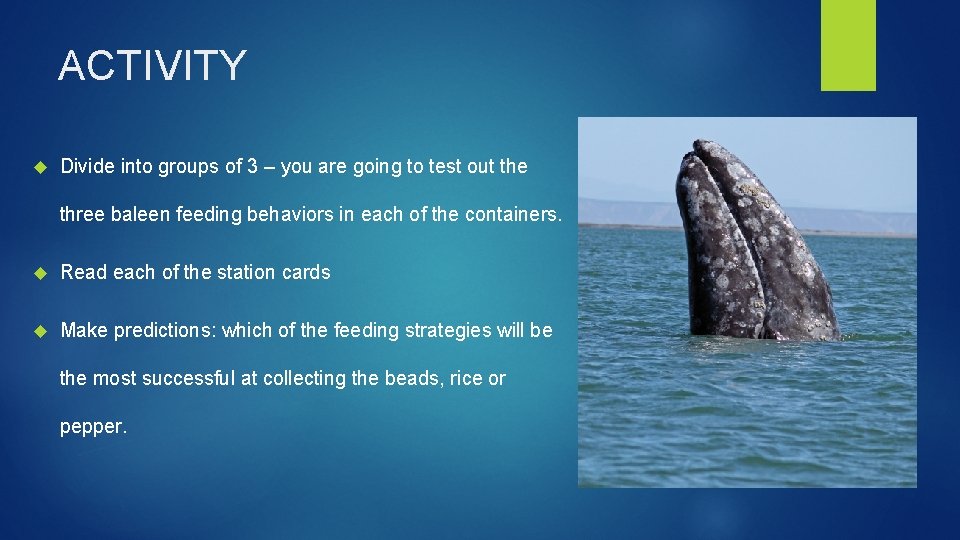
ACTIVITY Divide into groups of 3 – you are going to test out the three baleen feeding behaviors in each of the containers. Read each of the station cards Make predictions: which of the feeding strategies will be the most successful at collecting the beads, rice or pepper.
ACTIVITY Collect each of the food items using the different utensils. You will have 15 seconds per utensil! Which utensils worked the best for which food? Which whale do you think would use each method? Save your paper towels with food on them!
ACTIVITY Lay your paper towels down next to each other. What differences do you see? Count the food items on each of your paper towels and add it to the table. Make a graph of what you find! Share with the class: which method was most successful for you and which whale does it represent? How accurate was your prediction?
DISCUSSION Which feeding style captured the most prey? Can you explain why? Which feeding style captured the least prey? Can you explain why? What Why was realistic and not realistic about this simulation? might whales have different feeding strategies? Is one strategy “better” than another?
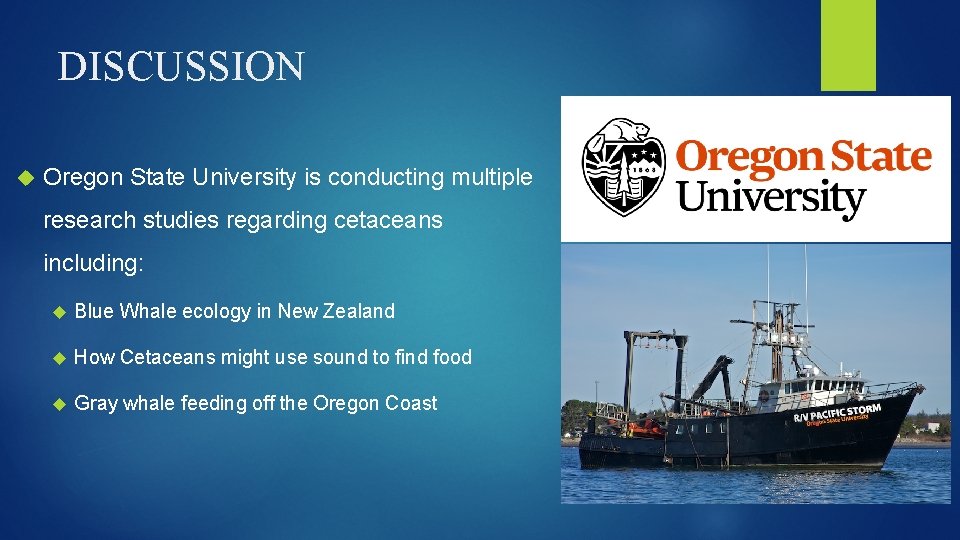
DISCUSSION Oregon State University is conducting multiple research studies regarding cetaceans including: Blue Whale ecology in New Zealand How Cetaceans might use sound to find food Gray whale feeding off the Oregon Coast
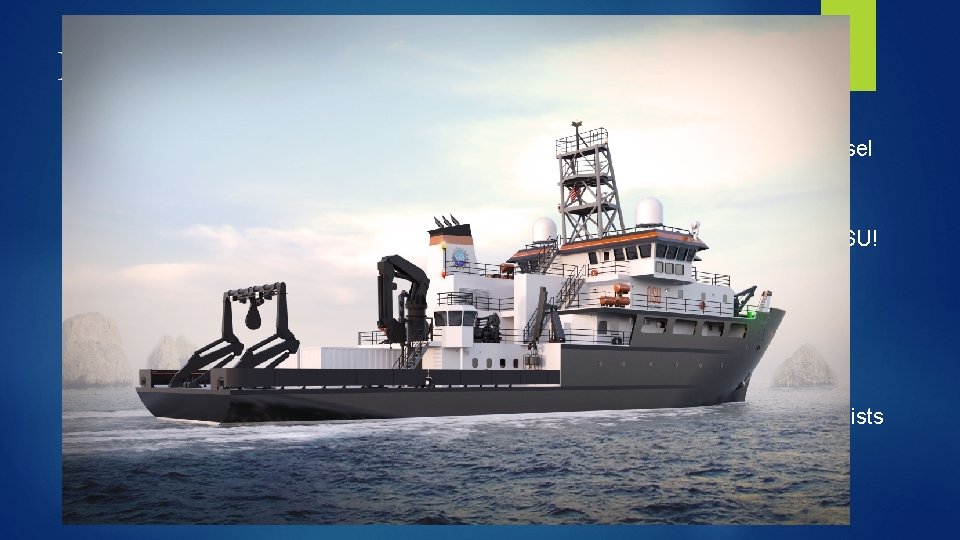
DISCUSSION Oregon State University is also working on the Regional Class Research Vessel (RCRV) Project. This will be a new, state of the art research vessel owned and operated by OSU! Building should be completed in 2021. In addition, OSU is also in charge of overseeing the creation of two additional RCRV’s, for the Gulf and East Coast. These vessels will have many instruments on board, so that all kinds of scientists can conduct their research – including on whales!
- Slides: 14