
In seeking knowledge the first step is silence






- Slides: 30
“In seeking knowledge, the first step is silence, the second listening, the third remembering, the fourth practicing, and the fifth teaching others” - Solomon Ibn Gabirol
Galanza, Jefferson S. , Camcam, Jewel An Mischelle R. , Co, Alyssa Karryl C. , De Guzman, Stephanie P. , Domingo, Kojin Q. , Dongui-is, Jet K. , Frias, Rodolfo Dane C. , Jueco, Ovelle C. , Matbagan, Harvey L. , Rillon, Victoria Luzette T. , Saruca, Christelle Romyna H. , Villasper, Jeanette Roma M.
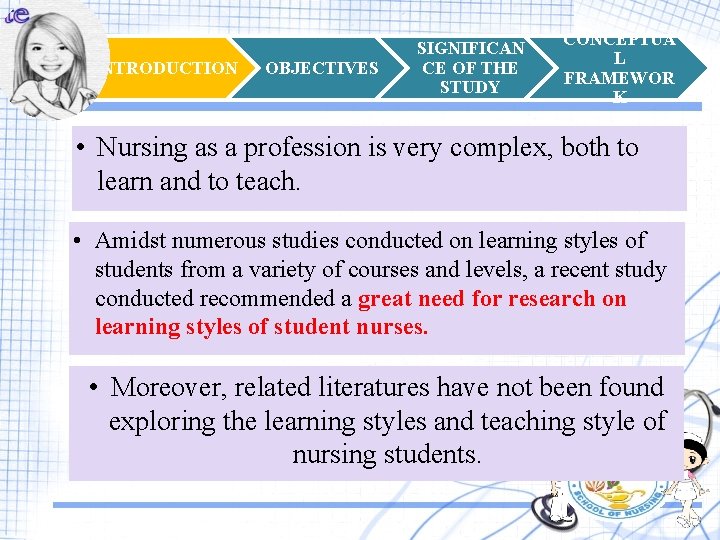
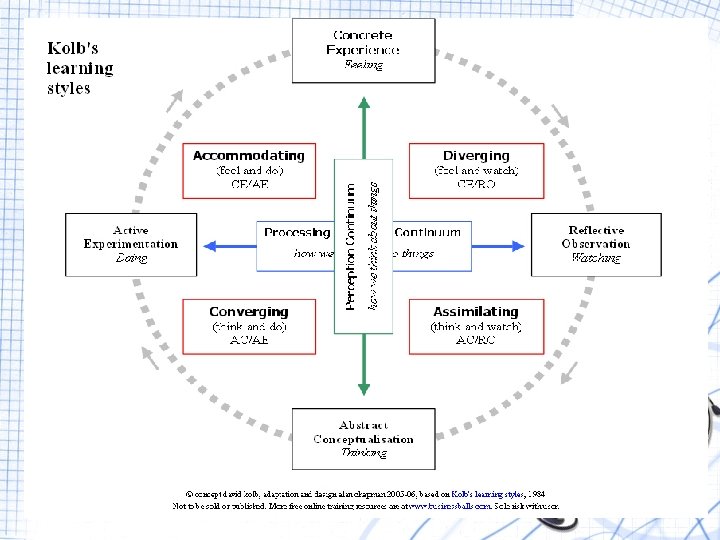
INTRODUCTION OBJECTIVES SIGNIFICAN CE OF THE STUDY CONCEPTUA L FRAMEWOR K • Nursing as a profession is very complex, both to learn and to teach. • Amidst numerous studies conducted on learning styles of students from a variety of courses and levels, a recent study conducted recommended a great need for research on learning styles of student nurses. • Moreover, related literatures have not been found exploring the learning styles and teaching style of nursing students.
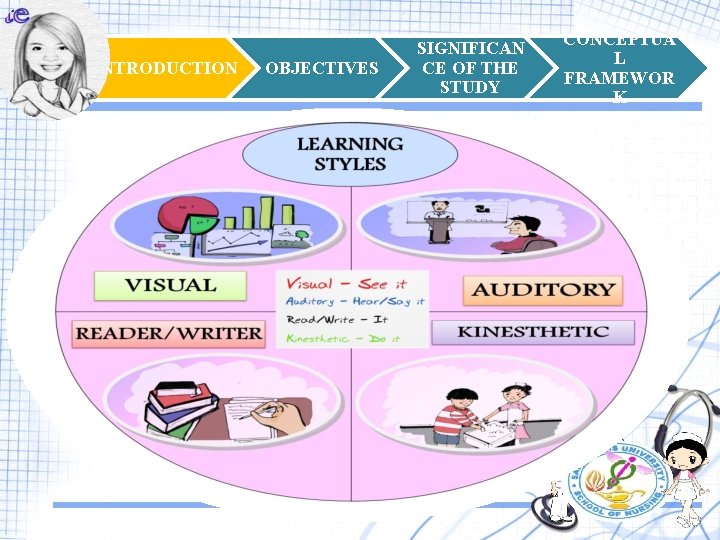
INTRODUCTION OBJECTIVES SIGNIFICAN CE OF THE STUDY CONCEPTUA L FRAMEWOR K
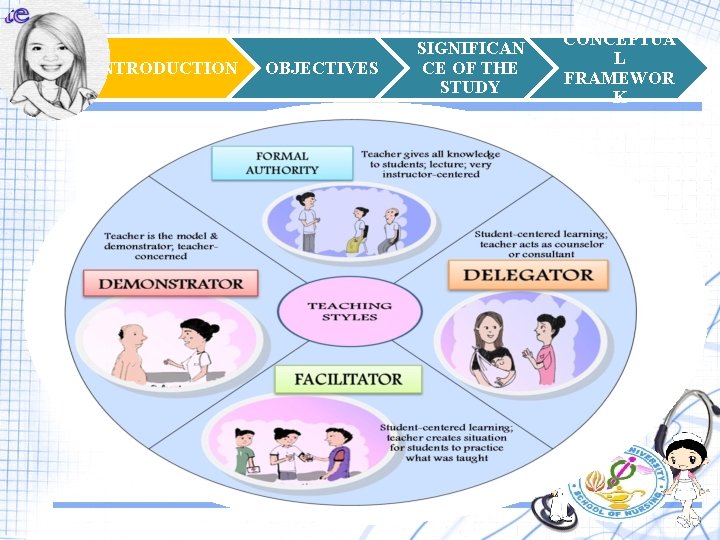
INTRODUCTION OBJECTIVES SIGNIFICAN CE OF THE STUDY CONCEPTUA L FRAMEWOR K
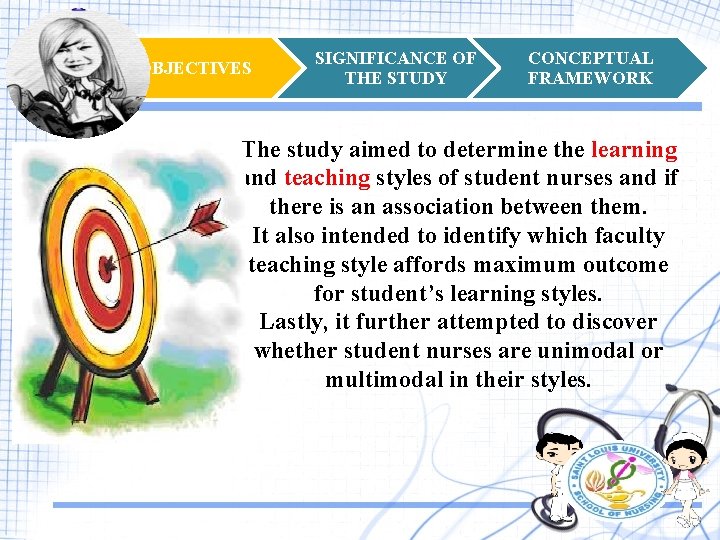
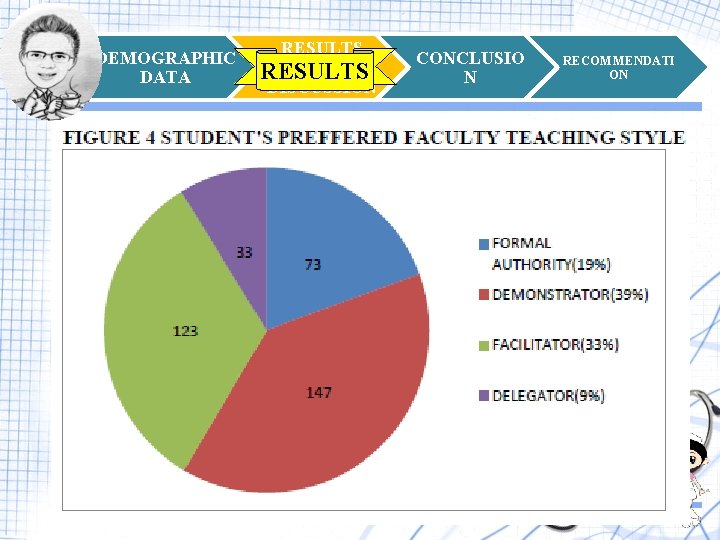
OBJECTIVES SIGNIFICANCE OF THE STUDY CONCEPTUAL FRAMEWORK The study aimed to determine the learning and teaching styles of student nurses and if there is an association between them. It also intended to identify which faculty teaching style affords maximum outcome for student’s learning styles. Lastly, it further attempted to discover whether student nurses are unimodal or multimodal in their styles.
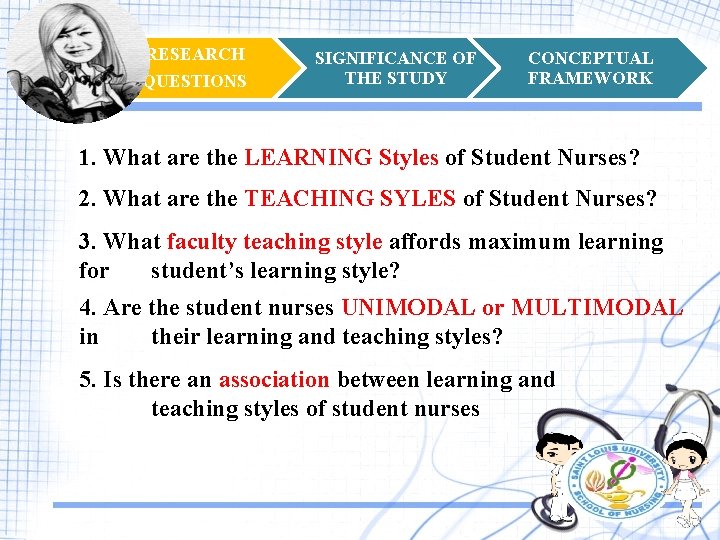
RESEARCH QUESTIONS SIGNIFICANCE OF THE STUDY CONCEPTUAL FRAMEWORK 1. What are the LEARNING Styles of Student Nurses? 2. What are the TEACHING SYLES of Student Nurses? 3. What faculty teaching style affords maximum learning for student’s learning style? 4. Are the student nurses UNIMODAL or MULTIMODAL in their learning and teaching styles? 5. Is there an association between learning and teaching styles of student nurses
SIGNIFICANCE OF THE STUDY CONCEPTUA L FRAMEWOR K DESIGN PARTICIPANTS üBeing aware of individual learning style is already achieving the first step in maximizing the learning outcome of every learner üServe as a basis for training students to utilize appropriate learning strategies, which can help them better deal with academic tasks and may even reduce stress
SIGNIFICANCE OF THE STUDY CONCEPTUA L FRAMEWOR K DESIGN PARTICIPANTS üFaculty can adjust their learning methods and evaluation too to best match the different needs of their students üUnderstanding how students learn will help improve the quality of instruction üMay empower their learning experiences of student nurses, which could be the ultimate goal. üWill increase academic achievement when there is congruency of learning and teaching styles
INTRODUCTION OBJECTIVES SIGNIFICAN CE OF THE STUDY v Individual learning styles emerges through: Genetics, life experiences, and demands of our current environment v There is a symbiotic relationship among our personal qualities, the instructional processes we employ to convey the content of our disciplines, and the styles our learners display. CONCEPTUA L FRAMEWOR K
DESIGN PARTICIPA NTS PROCEDUR E ETHICAL CONSIDERATIO N DESCRIPTIVE-CORRELATIONAL QUANTITATIVE RESEARCH
DESIGN PARTICIPANTS PROCEDURE ETHICAL CONSIDERATION INCLUSION CRITERIA üLevel 2, 3, & 4 Student Nurses of So. N “X” üEnrolled for 2 nd Semester SY 2013 -12014 üExposed in the clinical and community rotations §Locale: Baguio City, Philippines
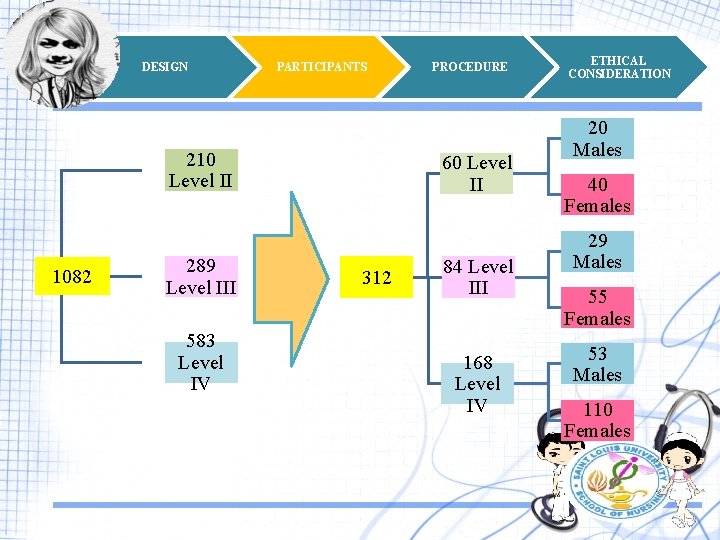
DESIGN PARTICIPANTS 210 Level II 1082 289 Level III 583 Level IV PROCEDURE 60 Level II 312 84 Level III 168 Level IV ETHICAL CONSIDERATION 20 Males 40 Females 29 Males 55 Females 53 Males 110 Females
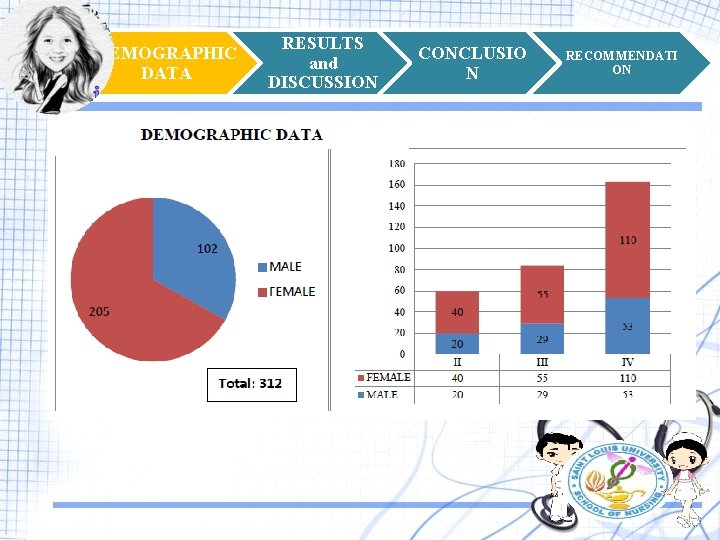
DEMOGRAPHIC DATA RESULTS and DISCUSSION CONCLUSIO N RECOMMENDATI ON
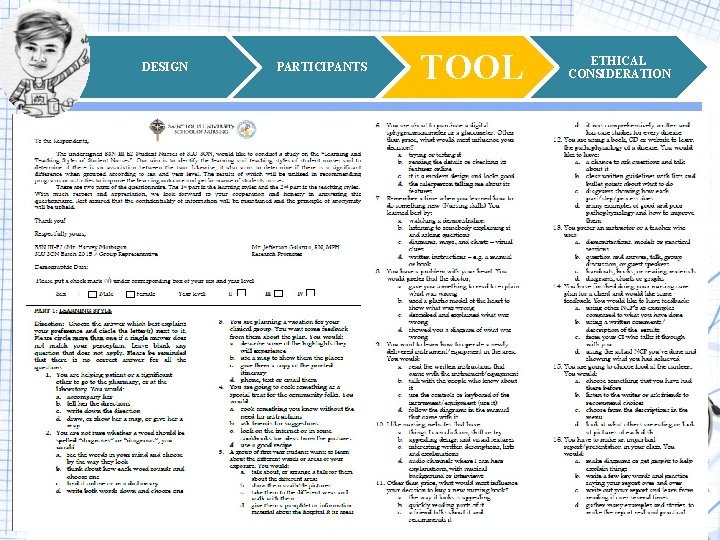
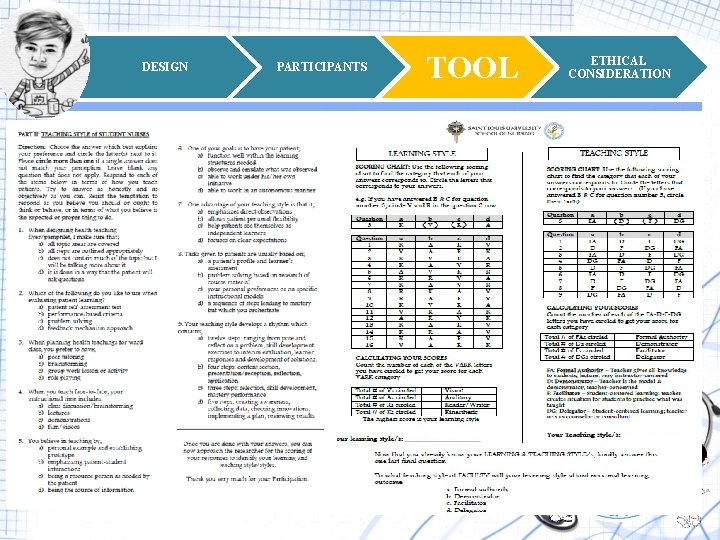
DESIGN PARTICIPANTS TOOL ETHICAL CONSIDERATION
DESIGN PARTICIPANTS TOOL ETHICAL CONSIDERATION
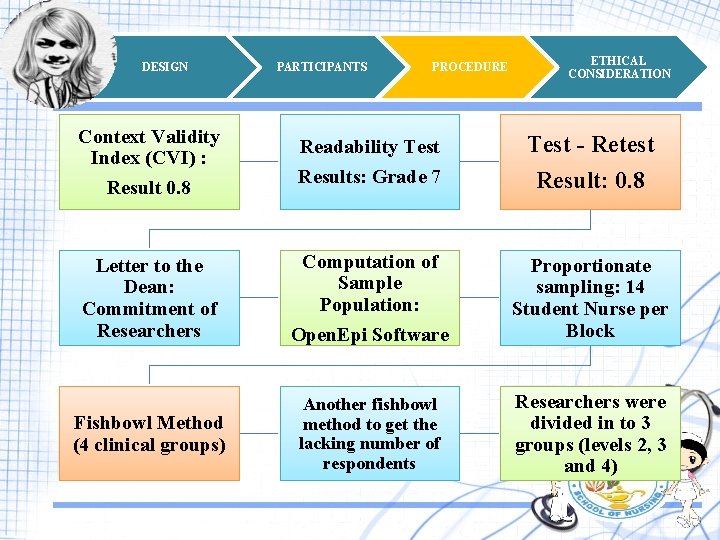
DESIGN Context Validity Index (CVI) : PARTICIPANTS PROCEDURE ETHICAL CONSIDERATION Readability Test Results: Grade 7 Test - Retest Letter to the Dean: Commitment of Researchers Computation of Sample Population: Open. Epi Software Proportionate sampling: 14 Student Nurse per Block Fishbowl Method (4 clinical groups) Another fishbowl method to get the lacking number of respondents Researchers were divided in to 3 groups (levels 2, 3 and 4) Result 0. 8 Result: 0. 8
DESIGN PARTICIPANTS PROCEDURE ETHICAL CONSIDERATION
DESIGN PARTICIPANTS PROCEDURE ETHICAL CONSIDERATION
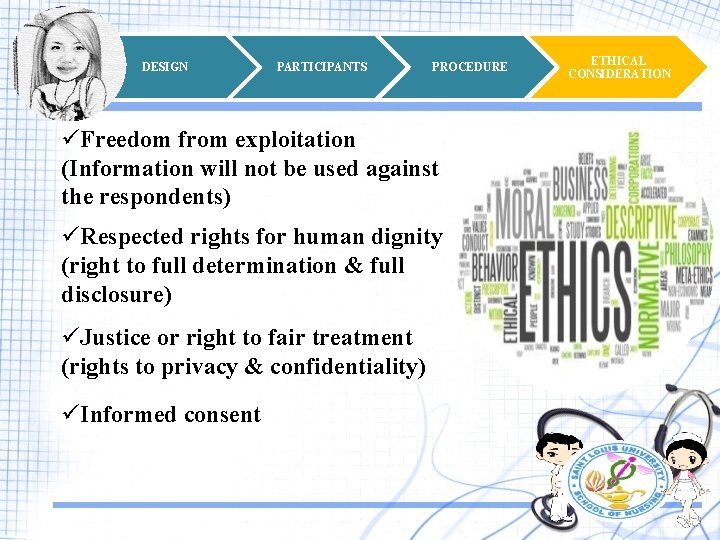
DESIGN PARTICIPANTS PROCEDURE üFreedom from exploitation (Information will not be used against the respondents) üRespected rights for human dignity (right to full determination & full disclosure) üJustice or right to fair treatment (rights to privacy & confidentiality) üInformed consent ETHICAL CONSIDERATION
RESULTS DEMOGRAPHIC DATA RESULTS and DISCUSSION CONCLUSIO N RECOMMENDATI ON
RESULTS DEMOGRAPHIC DATA RESULTS and DISCUSSION CONCLUSIO N RECOMMENDATI ON
DEMOGRAPHIC DATA RESULTS and RESULTS DISCUSSION CONCLUSIO N RECOMMENDATI ON
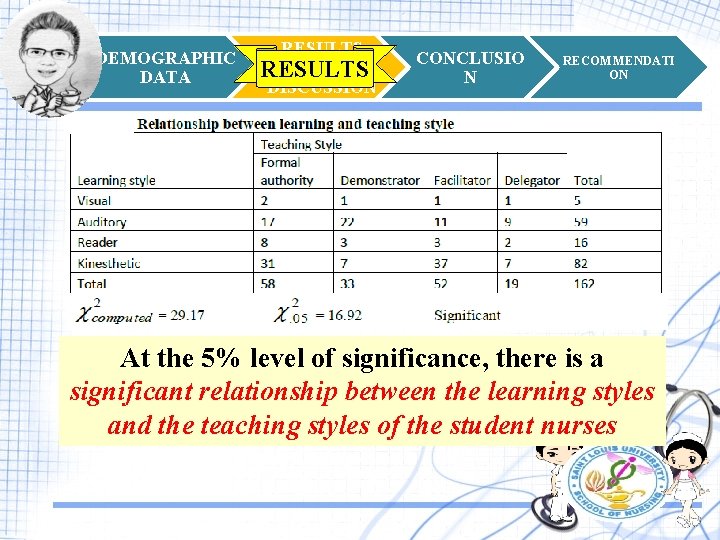
DEMOGRAPHIC DATA RESULTS and RESULTS DISCUSSION CONCLUSIO N RECOMMENDATI ON At the 5% level of significance, there is a significant relationship between the learning styles and the teaching styles of the student nurses
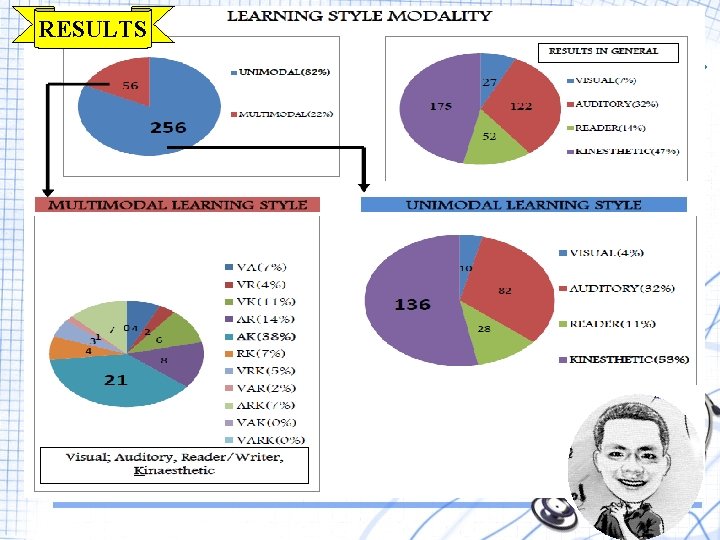
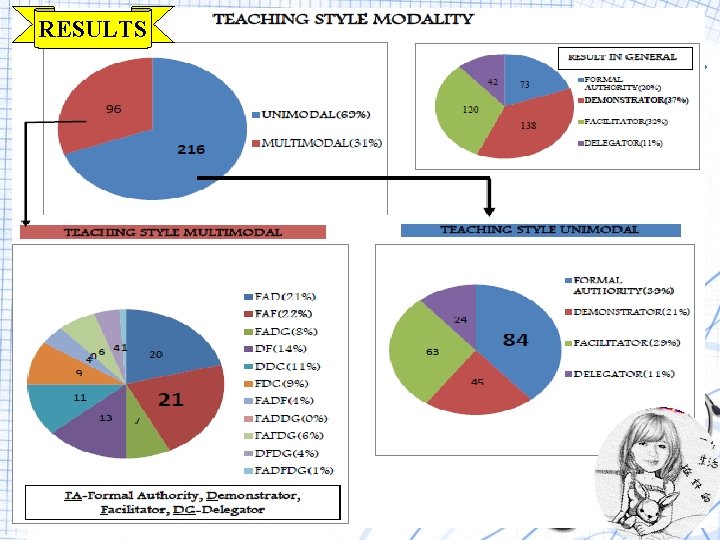
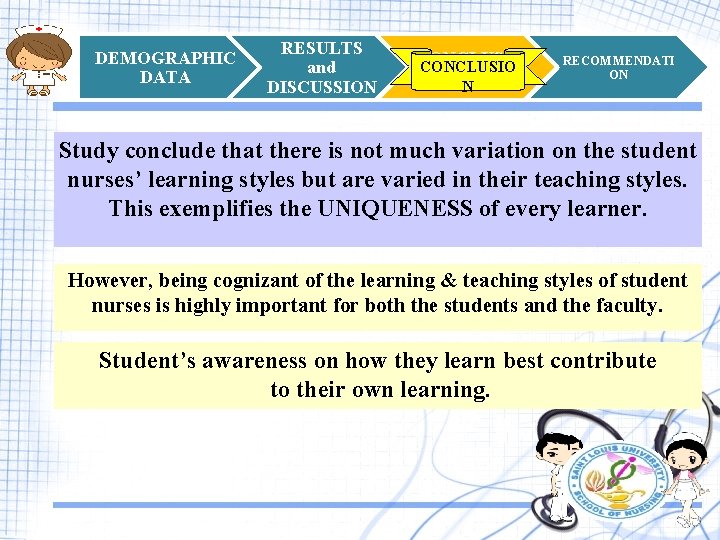
DEMOGRAPHIC DATA RESULTS and DISCUSSION CONCLUSIO N N RECOMMENDATI ON Study conclude that there is not much variation on the student nurses’ learning styles but are varied in their teaching styles. This exemplifies the UNIQUENESS of every learner. However, being cognizant of the learning & teaching styles of student nurses is highly important for both the students and the faculty. Student’s awareness on how they learn best contribute to their own learning.
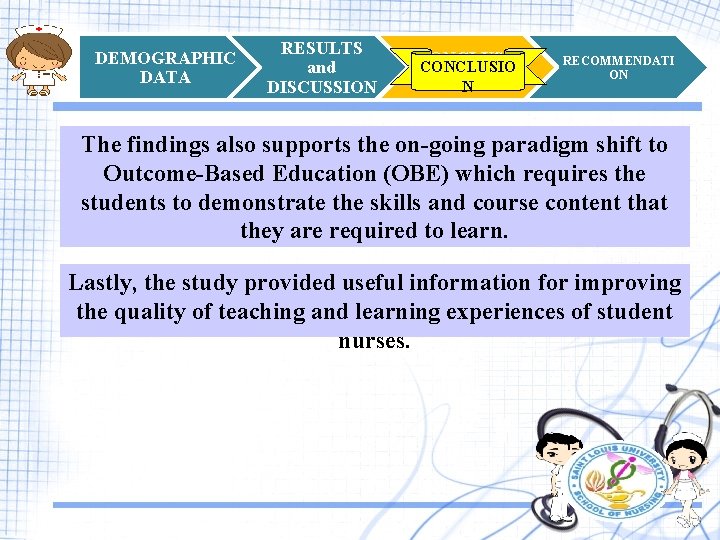
DEMOGRAPHIC DATA RESULTS and DISCUSSION CONCLUSIO N N RECOMMENDATI ON The findings also supports the on-going paradigm shift to Outcome-Based Education (OBE) which requires the students to demonstrate the skills and course content that they are required to learn. Lastly, the study provided useful information for improving the quality of teaching and learning experiences of student nurses.
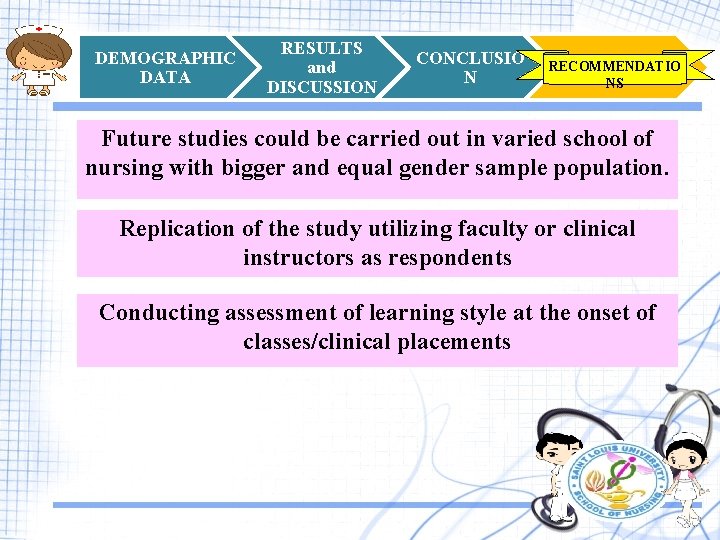
DEMOGRAPHIC DATA RESULTS and DISCUSSION CONCLUSIO N RECOMMENDATIO ON NS Future studies could be carried out in varied school of nursing with bigger and equal gender sample population. Replication of the study utilizing faculty or clinical instructors as respondents Conducting assessment of learning style at the onset of classes/clinical placements