
In search of Hypercalcemia cause Based on a
In search of Hypercalcemia cause…!! Based on a patient with malignant hypercalcemia with unknown etiology A. H. Ghanooni M. D Fellow of Endocrinology in SBMU May 2017

Main Questions ?
n the most common causes of hypercalcemia: – primary hyperparathyroidism – malignancy n accounting cases. for greater than 90 percent of
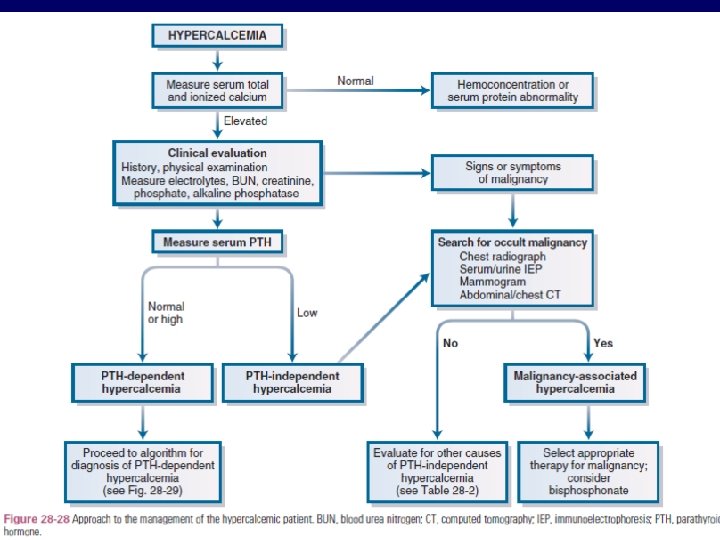
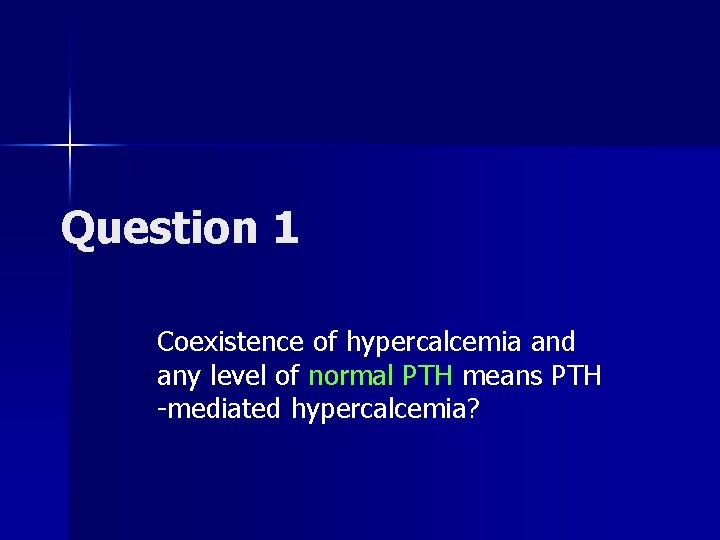
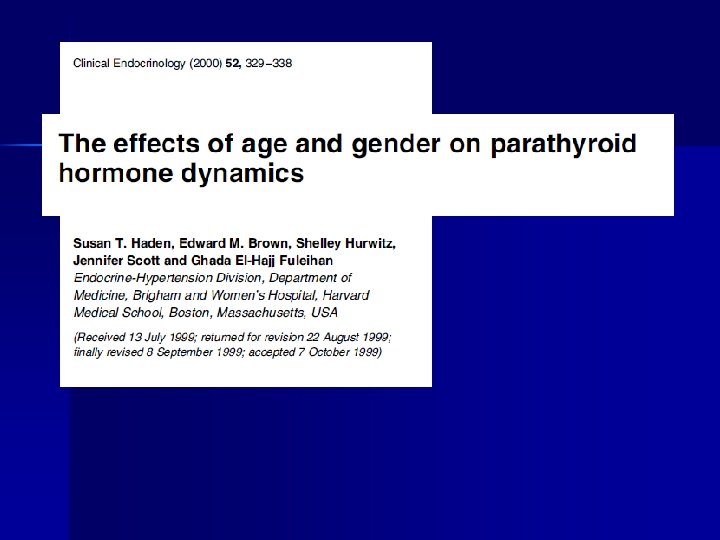
Question 1 Coexistence of hypercalcemia and any level of normal PTH means PTH -mediated hypercalcemia?
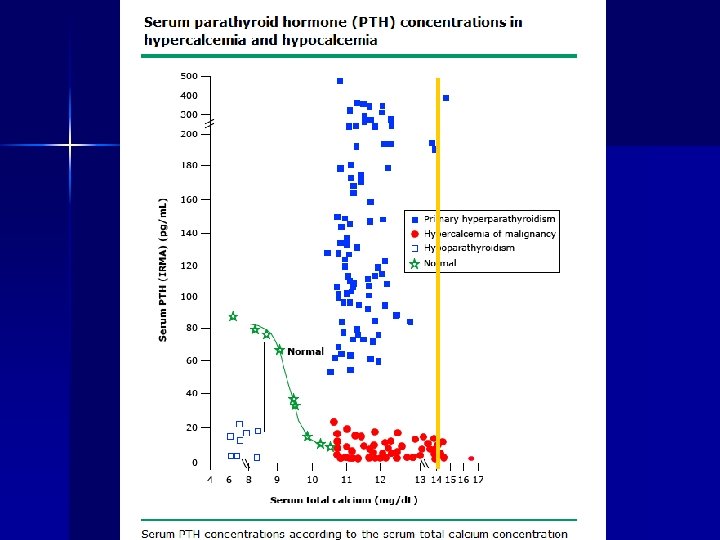
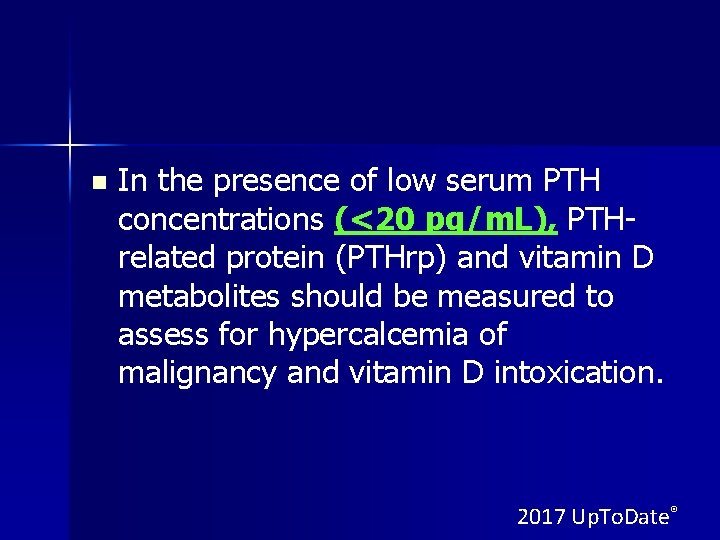
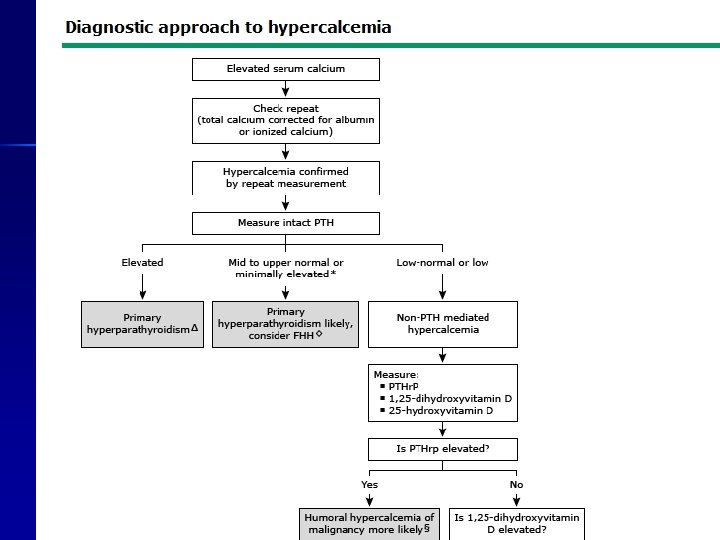
n In the presence of low serum PTH concentrations (<20 pg/m. L), PTHrelated protein (PTHrp) and vitamin D metabolites should be measured to assess for hypercalcemia of malignancy and vitamin D intoxication. 2017 Up. To. Date®
Question 2 Is it reasonable to assay PTH as part of the routine evaluation for hypercalcemia even in a patient with known malignant disease?
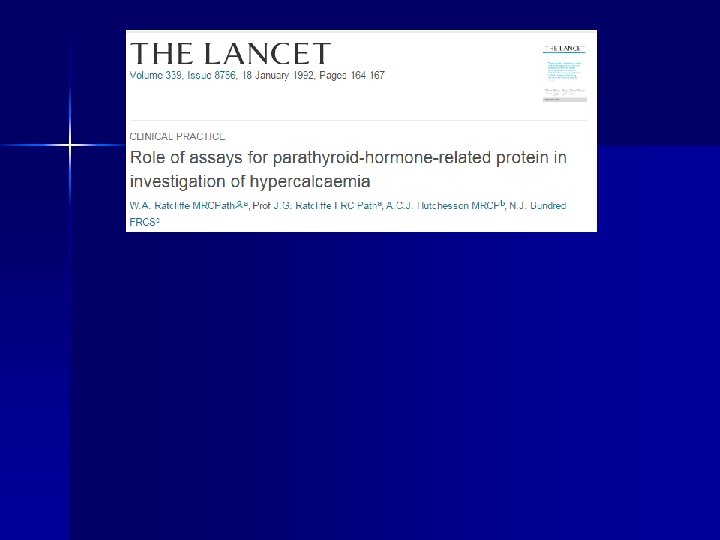
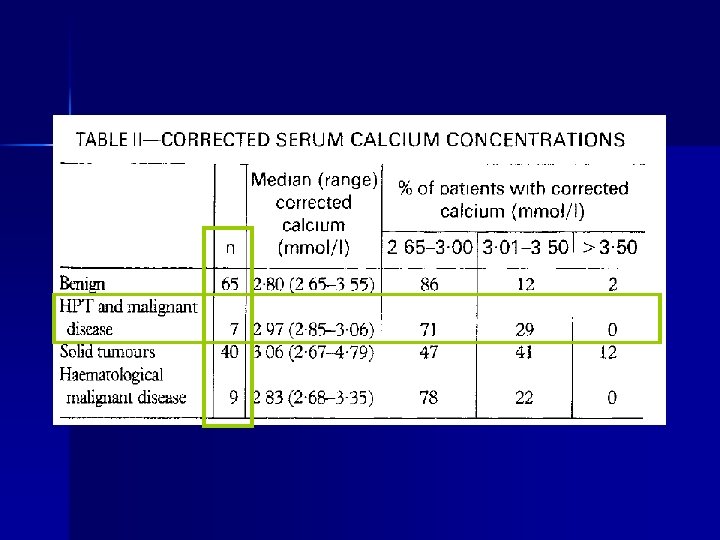
Key Message n There appears to be a higher incidence of primary hyperparathyroidism in patients with malignancy than in the general population. n Thus, despite the increased cost, it is reasonable to order an intact PTH assay as part of the routine evaluation for hypercalcemia even in a patient with known malignant disease. 2017 Up. To. Date®
Key Message n Because malignancy is a common cause of hypercalcemia and may occur concomitantly with primary hyperparathyroidism, clinical findings strongly suggestive of malignancy should be acted upon by proceeding directly to a search for an underlying tumor, regardless of serum PTH. Williams 2016
Hypercalcemia of malignancy 20 to 30 percent of cases n both solid tumors and hematologic malignancies n The most common cancers associated with hypercalcemia are breast and lung cancer and multiple myeloma. n poor prognosis n
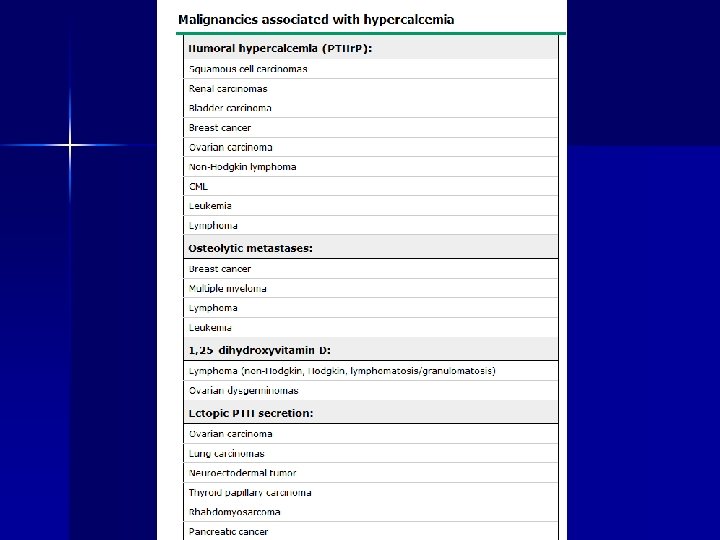
Hypercalcemia of malignancy n Mechanisms : – Tumor secretion of parathyroid hormone-related protein (PTHr. P) – Osteolytic metastases with local release of cytokines (including osteoclast activating factors) – Tumor production of 1, 25 -dihydroxyvitamin D (calcitriol) – Ectopic tumoral secretion of parathyroid hormone (PTH) can also cause hypercalcemia, but it is rare.
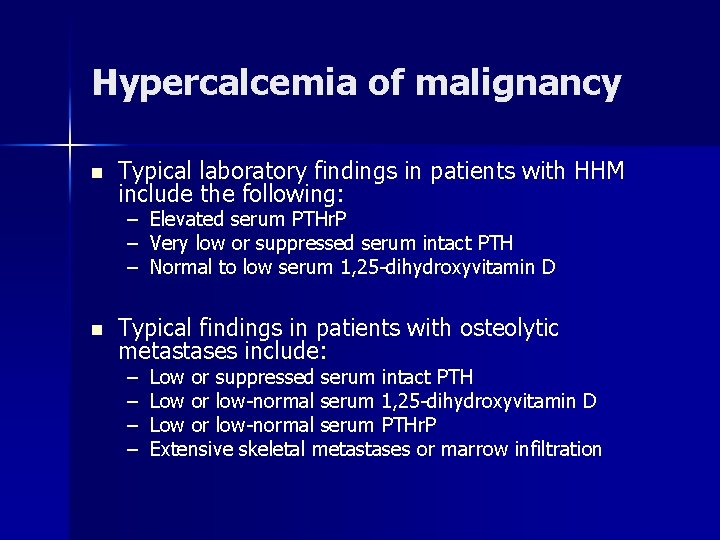
Hypercalcemia of malignancy n Typical laboratory findings in patients with HHM include the following: – Elevated serum PTHr. P – Very low or suppressed serum intact PTH – Normal to low serum 1, 25 -dihydroxyvitamin D n Typical findings in patients with osteolytic metastases include: – – Low or suppressed serum intact PTH Low or low-normal serum 1, 25 -dihydroxyvitamin D Low or low-normal serum PTHr. P Extensive skeletal metastases or marrow infiltration
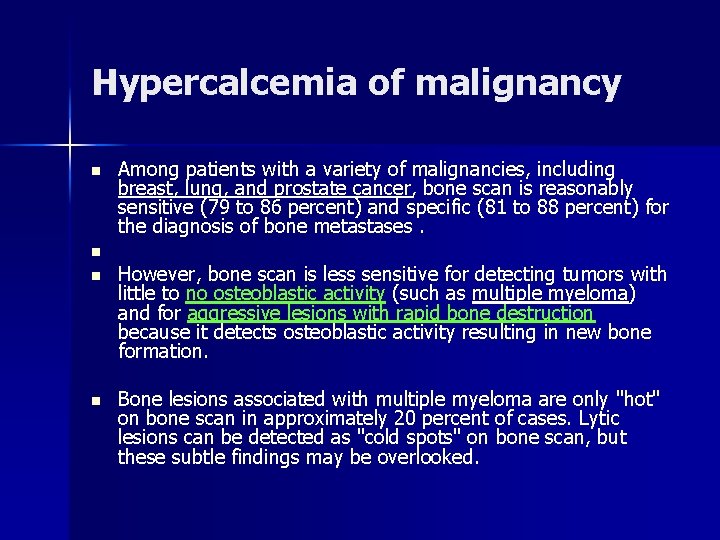
Hypercalcemia of malignancy n Among patients with a variety of malignancies, including breast, lung, and prostate cancer, bone scan is reasonably sensitive (79 to 86 percent) and specific (81 to 88 percent) for the diagnosis of bone metastases. n n However, bone scan is less sensitive for detecting tumors with little to no osteoblastic activity (such as multiple myeloma) and for aggressive lesions with rapid bone destruction because it detects osteoblastic activity resulting in new bone formation. n Bone lesions associated with multiple myeloma are only "hot" on bone scan in approximately 20 percent of cases. Lytic lesions can be detected as "cold spots" on bone scan, but these subtle findings may be overlooked.
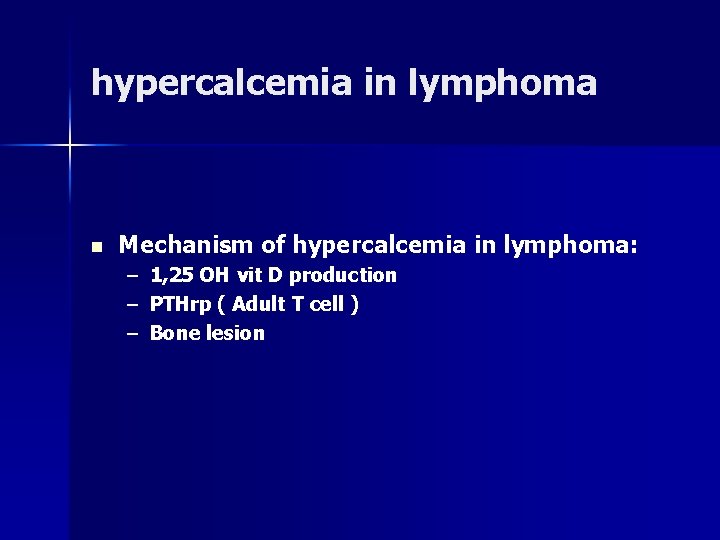
hypercalcemia in lymphoma n Mechanism of hypercalcemia in lymphoma: – – – 1, 25 OH vit D production PTHrp ( Adult T cell ) Bone lesion
Adult T cell leukemialymphoma n n NHL Highly aggressive associated with infection by the human Tlymphotropic virus, type I (HTLV-I) CLINICAL FEATURES — generalized lymphadenopathy, hepatosplenomegaly, immunosuppression, hypercalcemia, lytic bone lesions, and skin lesions.
Adult T cell leukemialymphomas n More frequent hypercalcemia and more severe n Mechanism of hypercalcemia: – Constitutive production of parathyroid hormone related protein (PTH-RP) – Tumor necrosis factor-beta or interleukin-1 – Increased expression of the receptor activator of nuclear factor k. B (RANK) ligand gene n In the acute variant, approximately 70 percent of patients with ATL will have hypercalcemia at some point in their disease course while 40 percent will have lytic bone lesions
- Slides: 23