
In Humans Animals Importance of Thermoregulation Thermoregulation is
- Slides: 12
In Humans & Animals
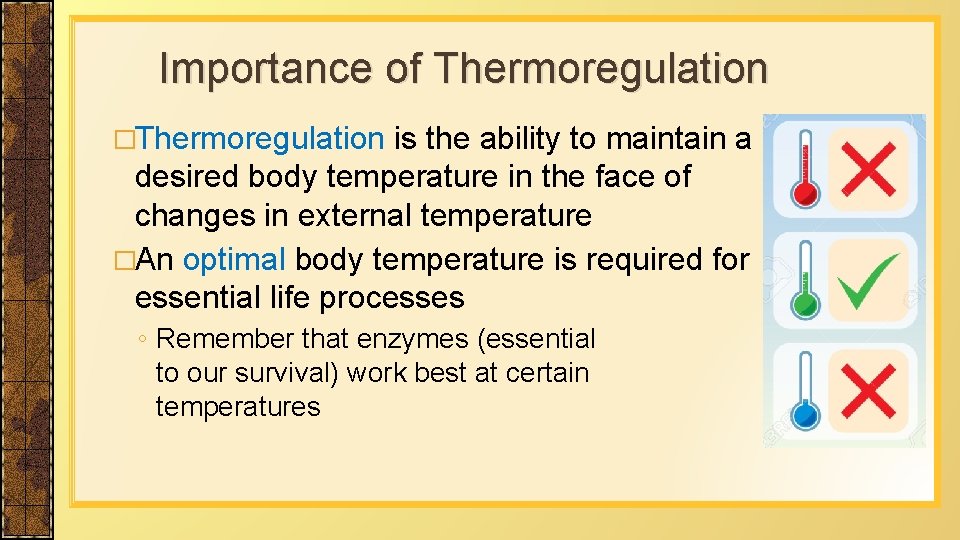
Importance of Thermoregulation �Thermoregulation is the ability to maintain a desired body temperature in the face of changes in external temperature �An optimal body temperature is required for essential life processes ◦ Remember that enzymes (essential to our survival) work best at certain temperatures
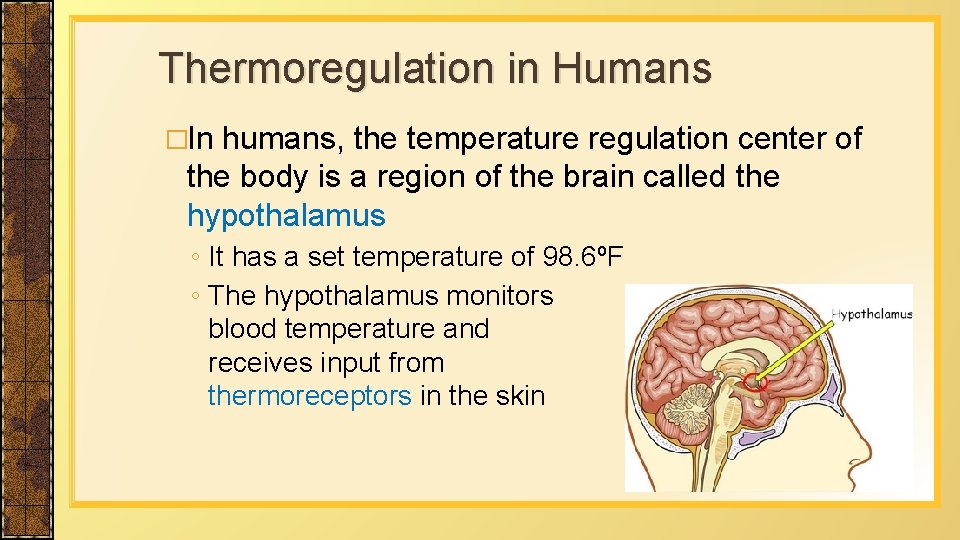
Thermoregulation in Humans �In humans, the temperature regulation center of the body is a region of the brain called the hypothalamus ◦ It has a set temperature of 98. 6ºF ◦ The hypothalamus monitors blood temperature and receives input from thermoreceptors in the skin
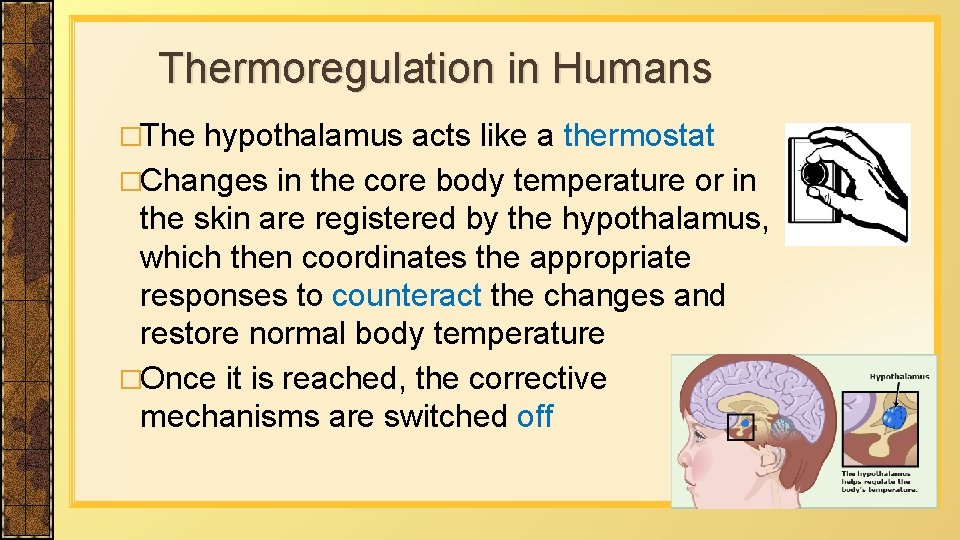
Thermoregulation in Humans �The hypothalamus acts like a thermostat �Changes in the core body temperature or in the skin are registered by the hypothalamus, which then coordinates the appropriate responses to counteract the changes and restore normal body temperature �Once it is reached, the corrective mechanisms are switched off
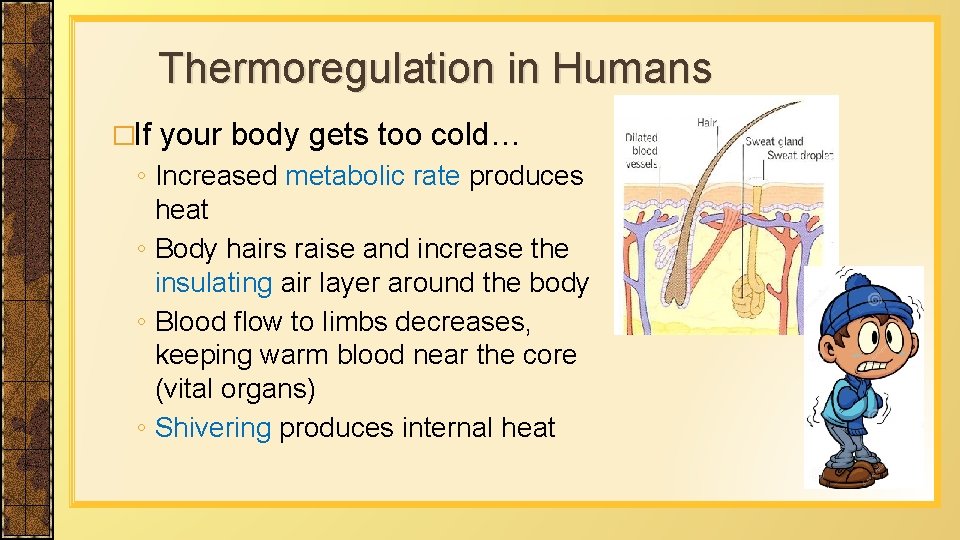
Thermoregulation in Humans �If your body gets too cold… ◦ Increased metabolic rate produces heat ◦ Body hairs raise and increase the insulating air layer around the body ◦ Blood flow to limbs decreases, keeping warm blood near the core (vital organs) ◦ Shivering produces internal heat
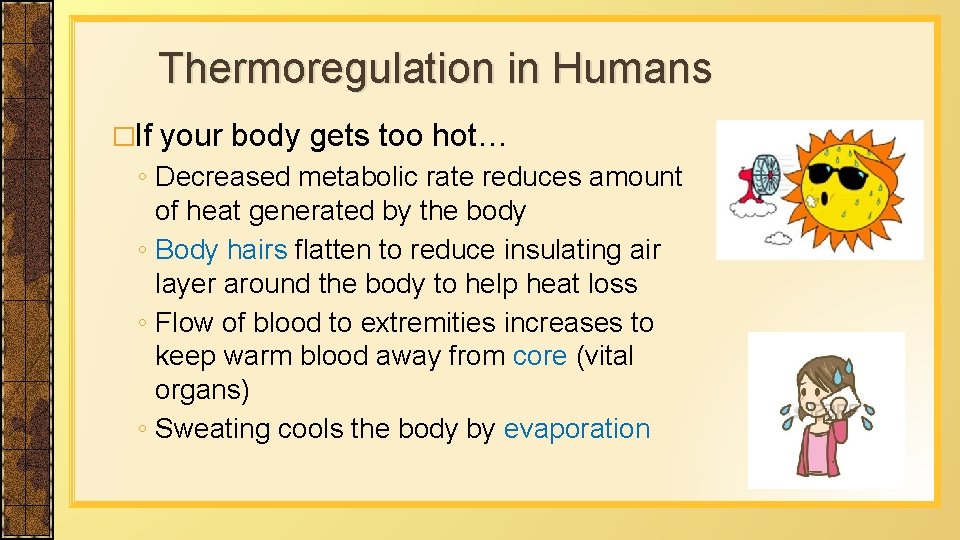
Thermoregulation in Humans �If your body gets too hot… ◦ Decreased metabolic rate reduces amount of heat generated by the body ◦ Body hairs flatten to reduce insulating air layer around the body to help heat loss ◦ Flow of blood to extremities increases to keep warm blood away from core (vital organs) ◦ Sweating cools the body by evaporation
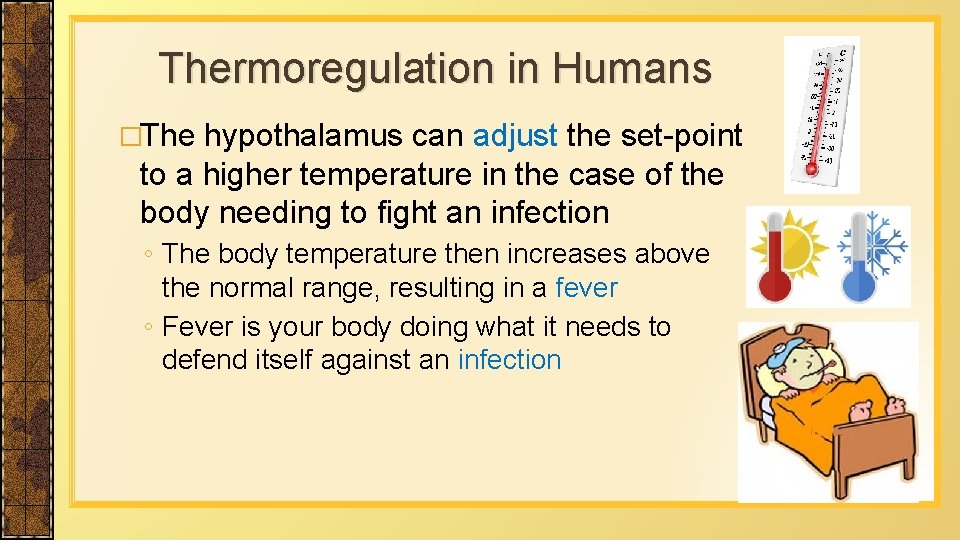
Thermoregulation in Humans �The hypothalamus can adjust the set-point to a higher temperature in the case of the body needing to fight an infection ◦ The body temperature then increases above the normal range, resulting in a fever ◦ Fever is your body doing what it needs to defend itself against an infection
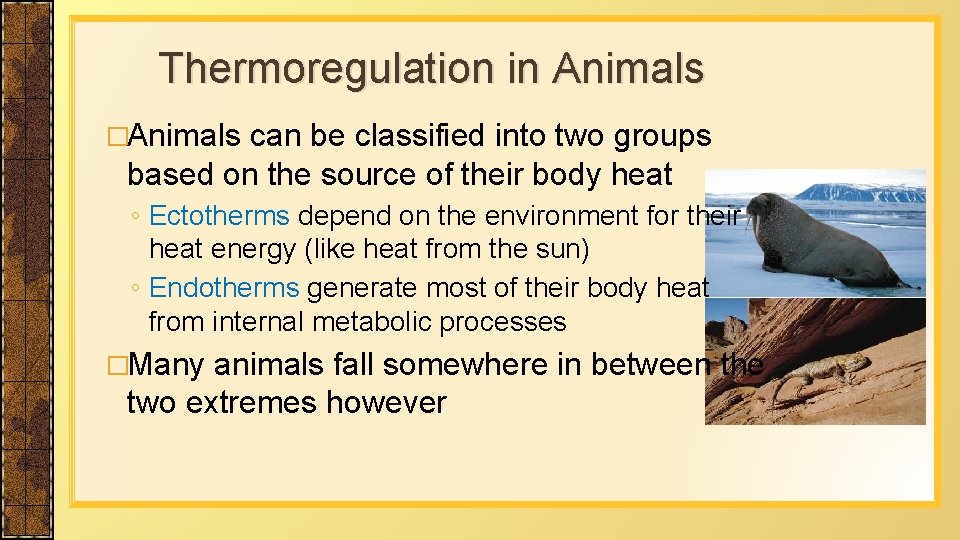
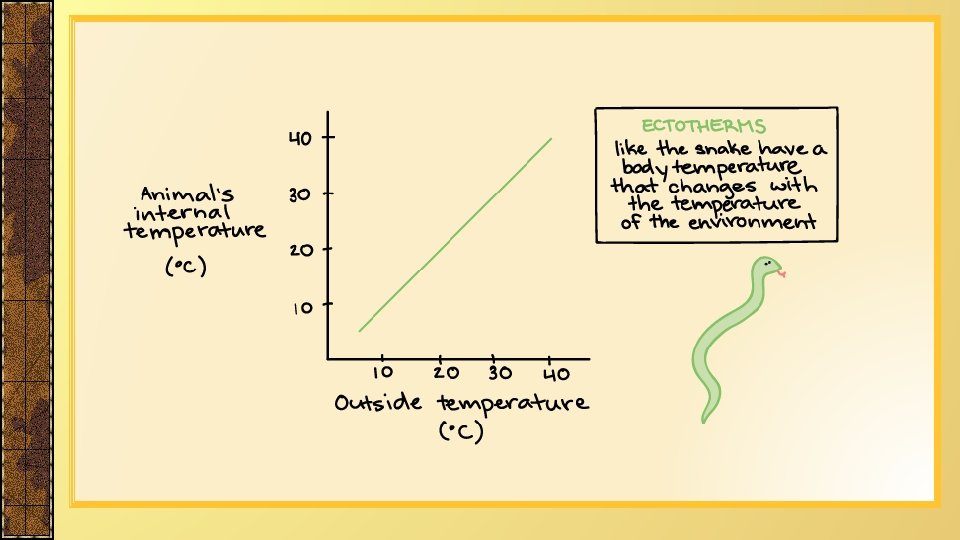
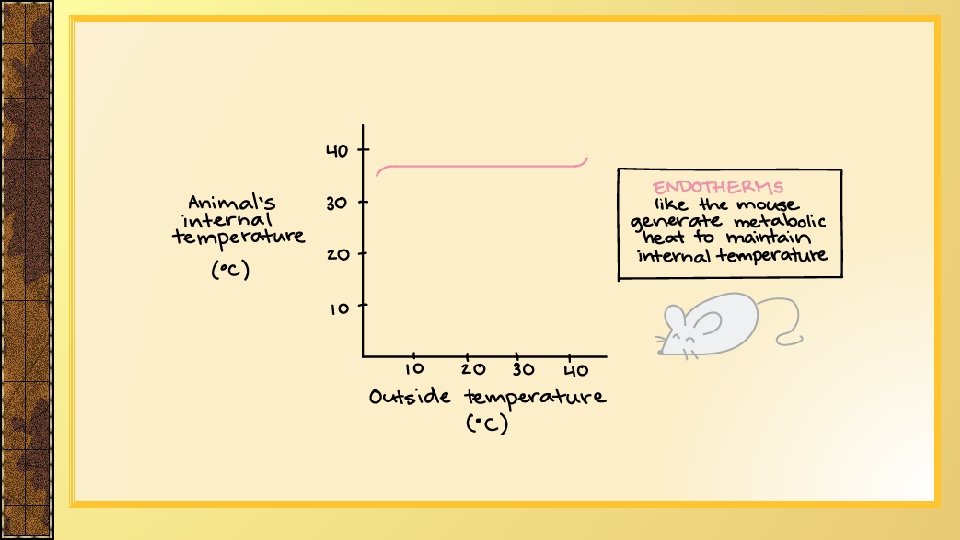
Thermoregulation in Animals �Animals can be classified into two groups based on the source of their body heat ◦ Ectotherms depend on the environment for their heat energy (like heat from the sun) ◦ Endotherms generate most of their body heat from internal metabolic processes �Many animals fall somewhere in between the two extremes however
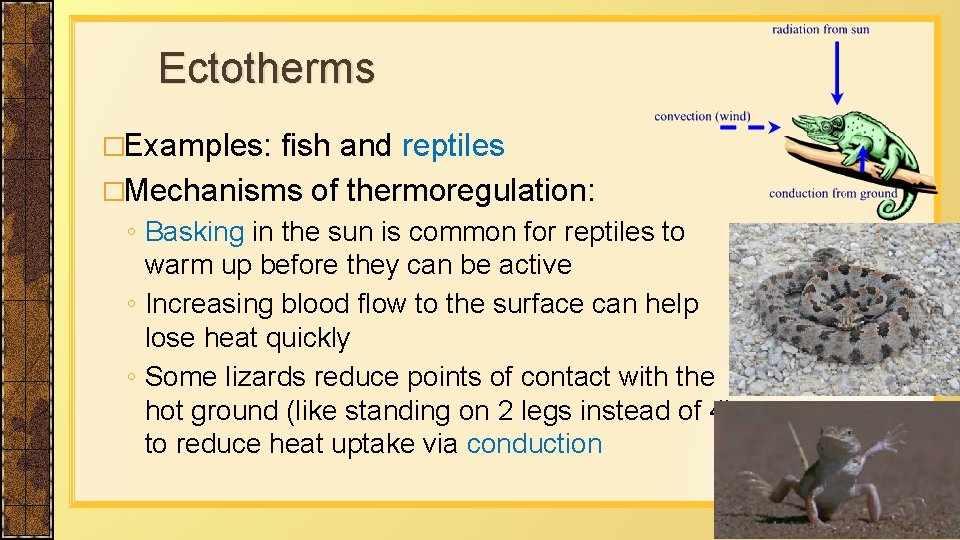
Ectotherms �Examples: fish and reptiles �Mechanisms of thermoregulation: ◦ Basking in the sun is common for reptiles to warm up before they can be active ◦ Increasing blood flow to the surface can help lose heat quickly ◦ Some lizards reduce points of contact with the hot ground (like standing on 2 legs instead of 4) to reduce heat uptake via conduction
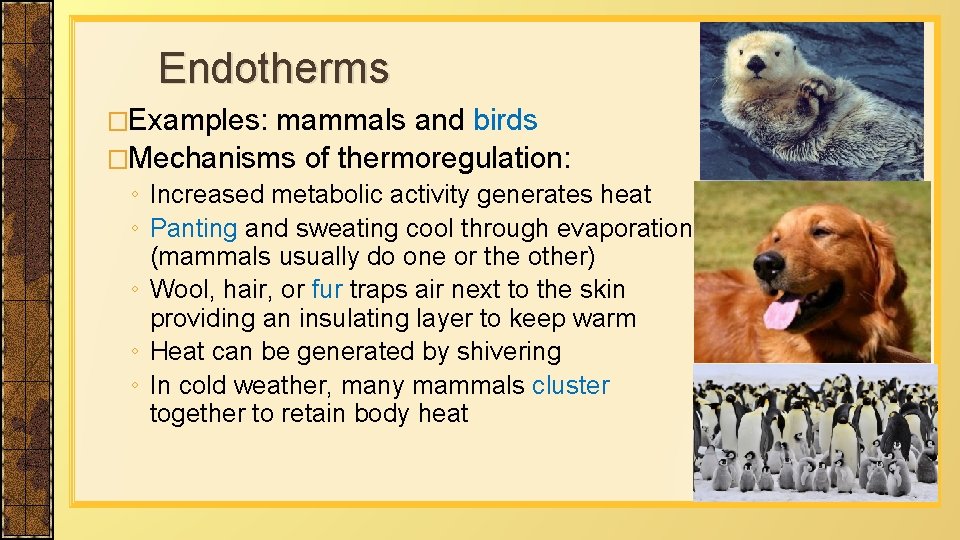
Endotherms �Examples: mammals and birds �Mechanisms of thermoregulation: ◦ Increased metabolic activity generates heat ◦ Panting and sweating cool through evaporation (mammals usually do one or the other) ◦ Wool, hair, or fur traps air next to the skin providing an insulating layer to keep warm ◦ Heat can be generated by shivering ◦ In cold weather, many mammals cluster together to retain body heat