
In Comparison Classification vs Density Based Costing Presented
In Comparison: Classification vs. Density Based Costing
Presented by Don Newell Member, Commodity Classification Standards Board, NMFTA
What’s the Difference? LTL Costing: Density Based? Classification Based?

Density Based Costing:

Density Based Costing:
Pricing Options with Density Based Costing: 1. Minimum density required for shipments. 2. Dimensional Weight, rate at calculated weight for the agreed minimum density or the actual weight, whichever is greater. 3. Straight density, assign rate or class based on density of shipment.
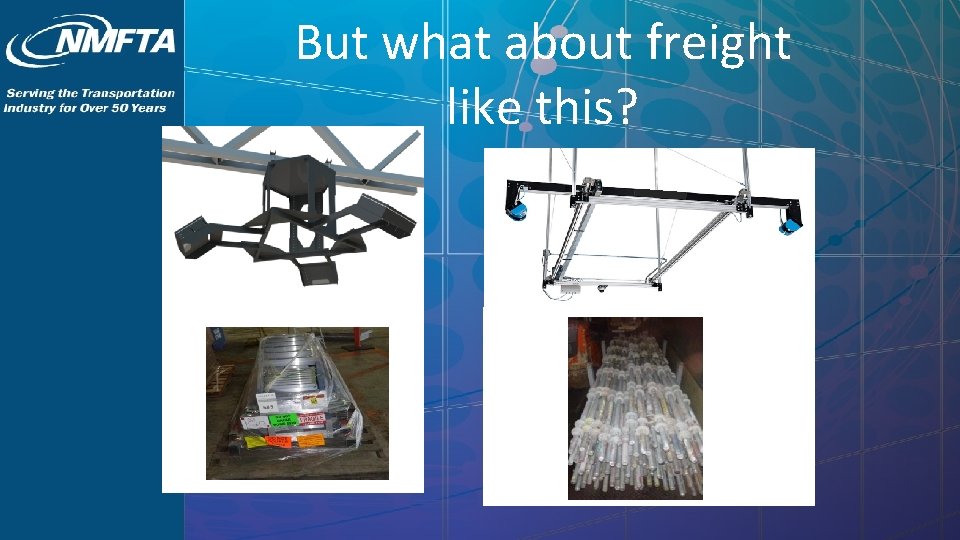
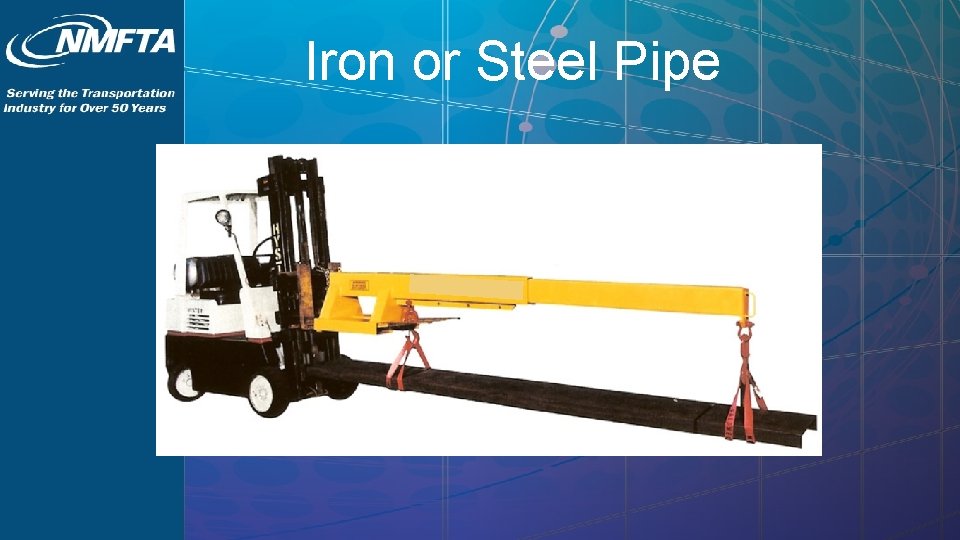
But what about freight like this?
So how do carriers price this kind of freight? 1. Over length rules in carrier tariffs 2. Non-stackable package minimum height rules (84”-96”) used to account for lost cube 3. Other rules to address costs not dependent on density. (Stowability/Handling/Liability) 4. Not all carrier rules will be the same, a proliferation of different provisions for shippers to check.

The LTL Environment
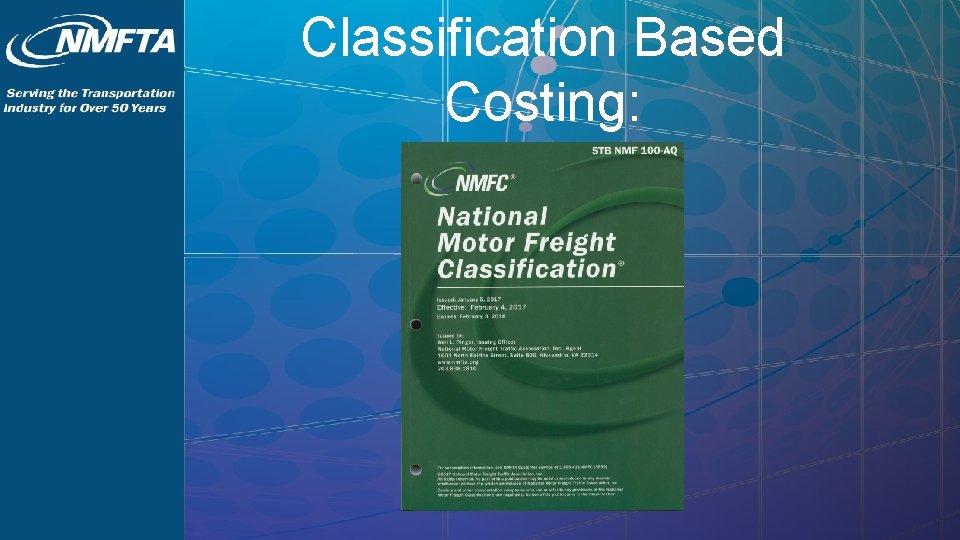
Classification Based Costing:
Transportation Characteristics • • Density Handling Stowability Liability
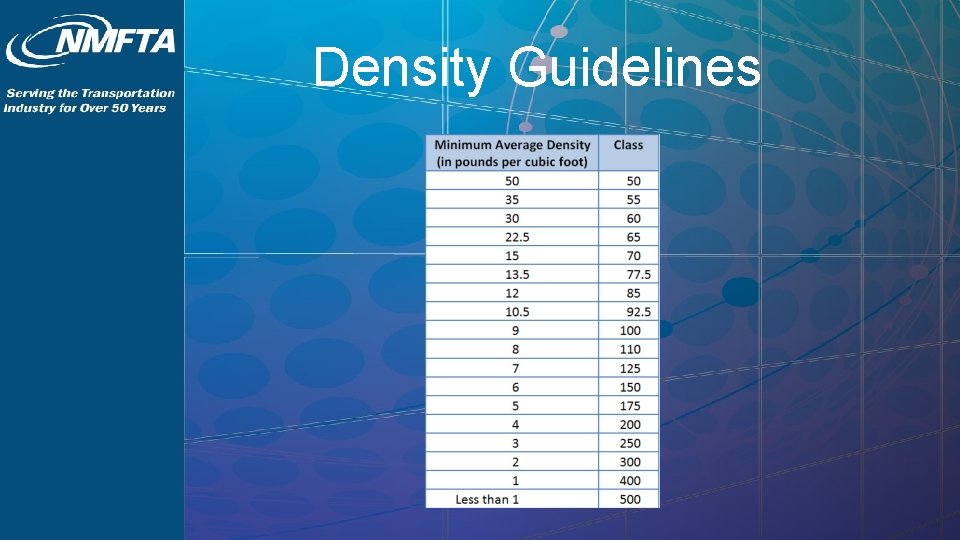
Density Guidelines
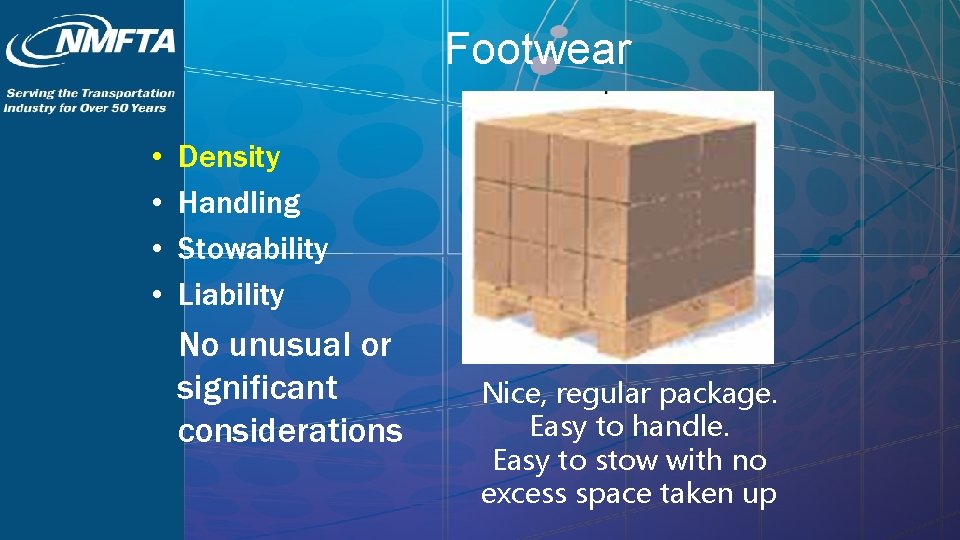
Footwear • • Density Handling Stowability Liability No unusual or significant considerations Nice, regular package. Easy to handle. Easy to stow with no excess space taken up
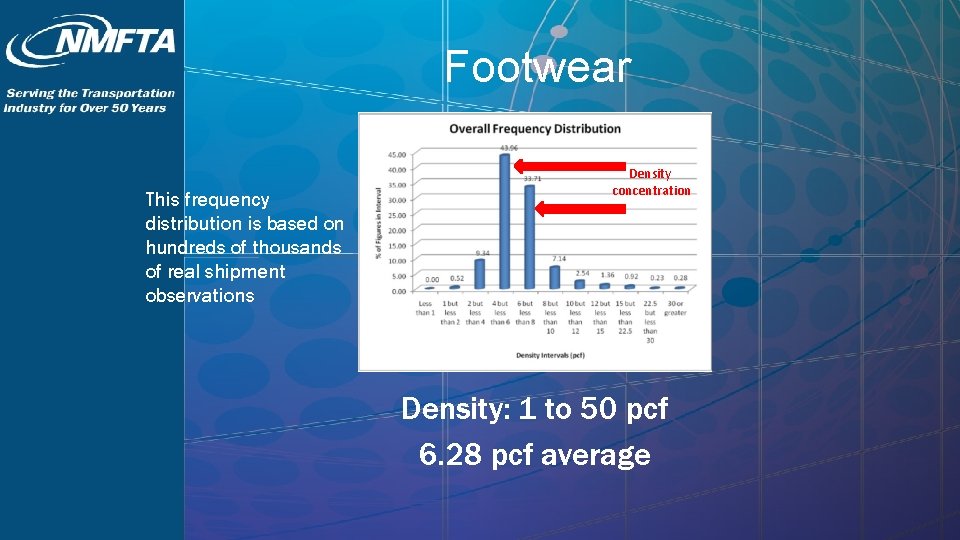
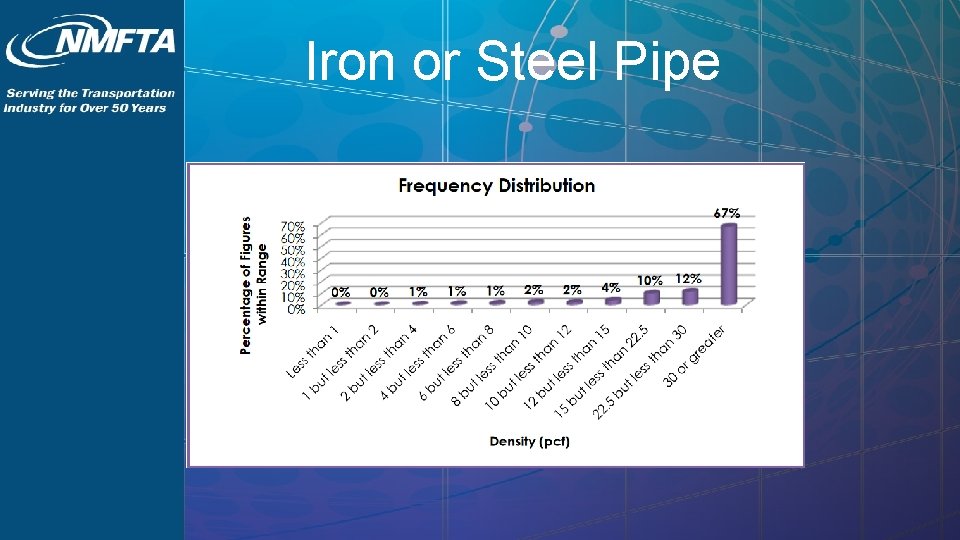
Footwear This frequency distribution is based on hundreds of thousands of real shipment observations Density concentration Density: 1 to 50 pcf 6. 28 pcf average
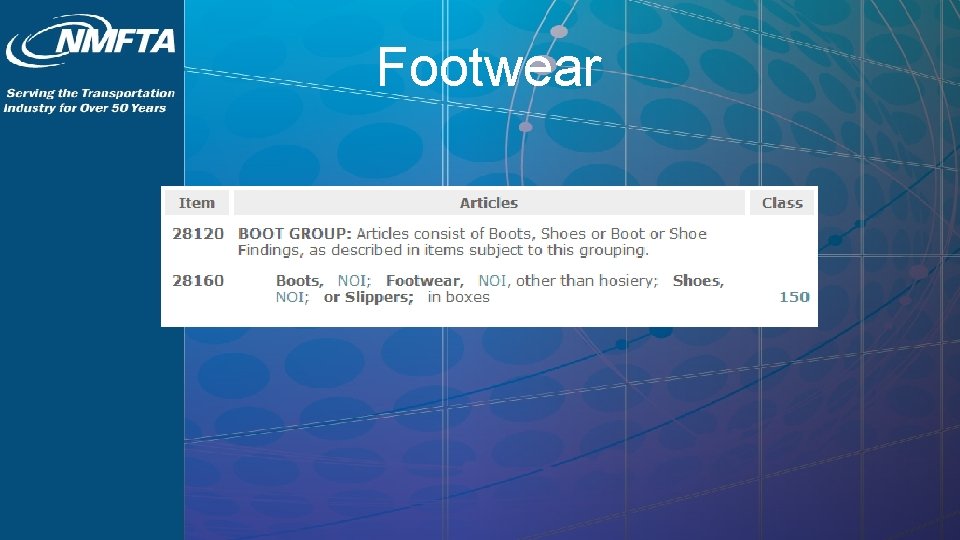
Footwear
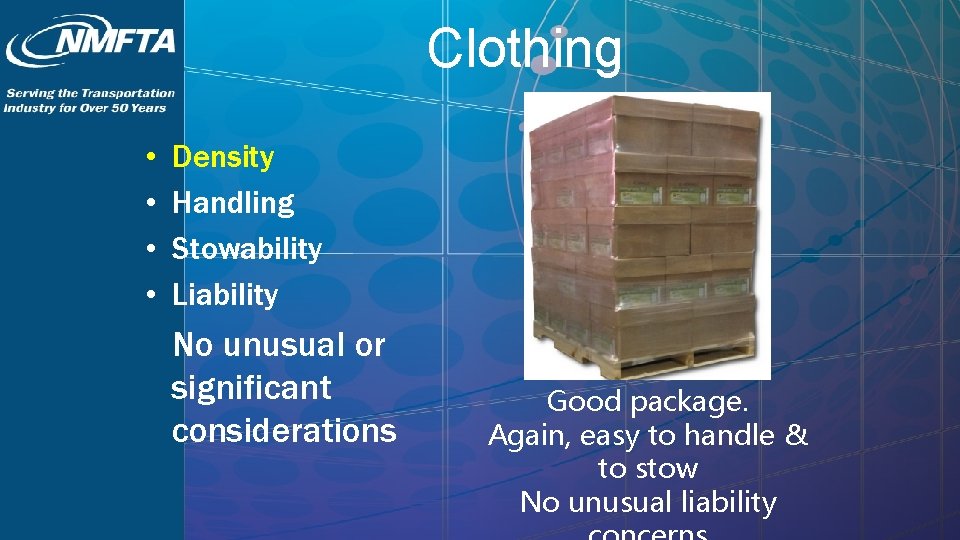
Clothing • • Density Handling Stowability Liability No unusual or significant considerations Good package. Again, easy to handle & to stow No unusual liability
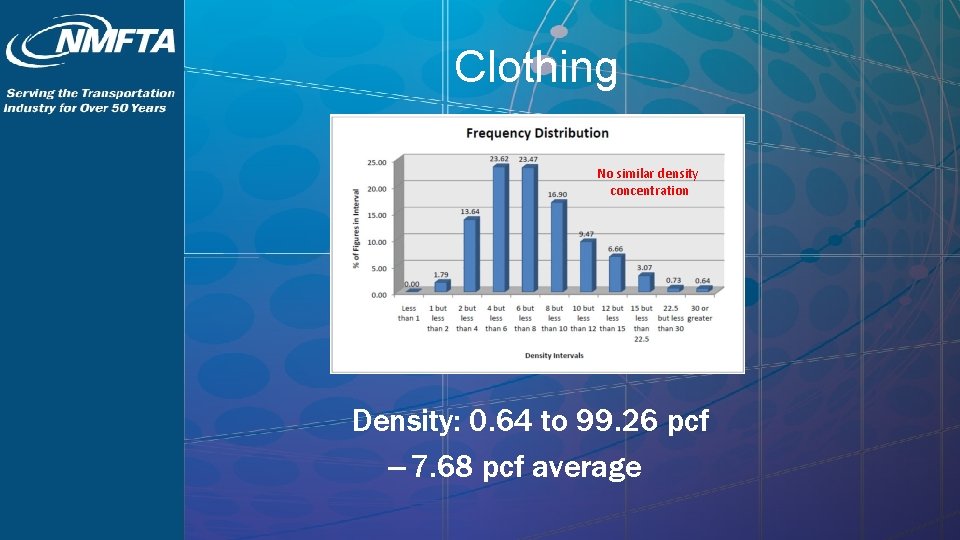
Clothing No similar density concentration Density: 0. 64 to 99. 26 pcf – 7. 68 pcf average
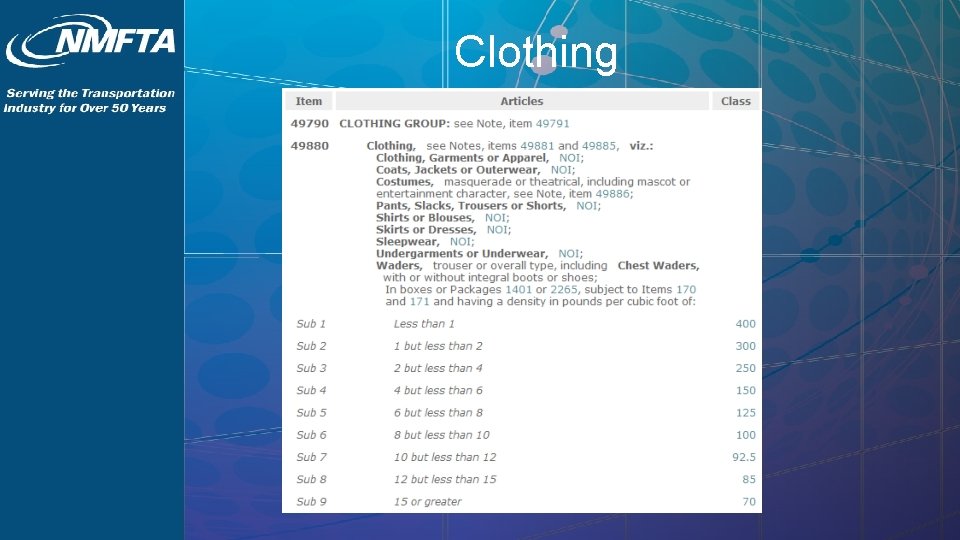
Clothing
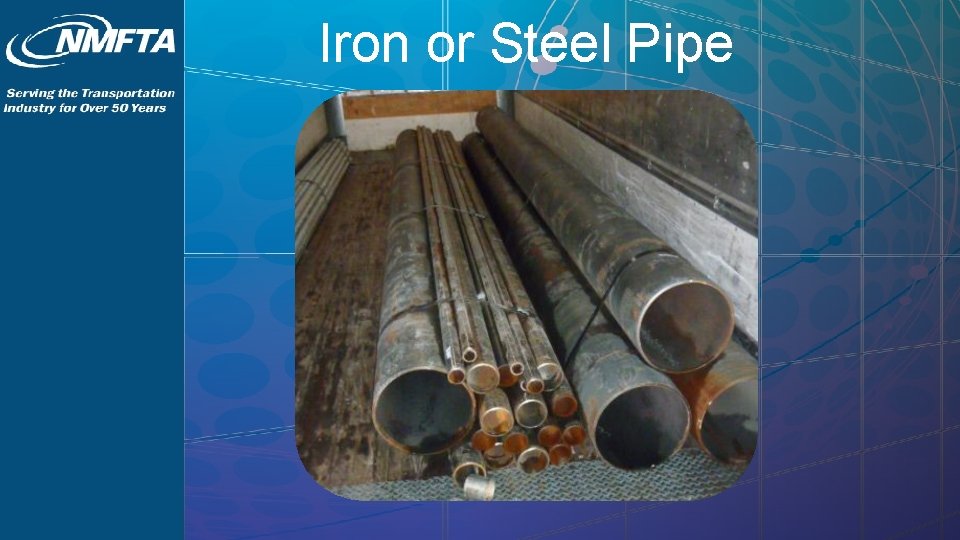
Iron or Steel Pipe
Iron or Steel Pipe
Iron or Steel Pipe
Iron or Steel Pipe
Iron or Steel Pipe
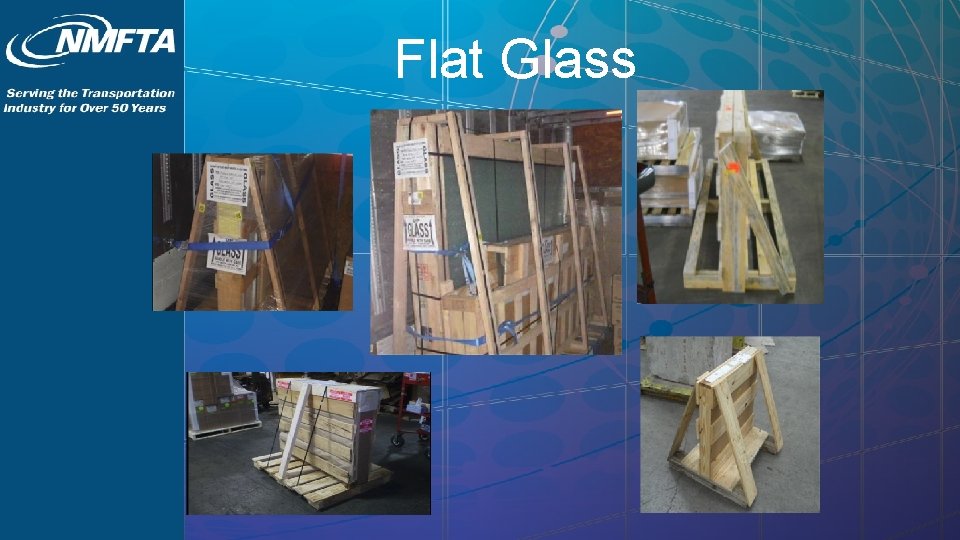
Flat Glass
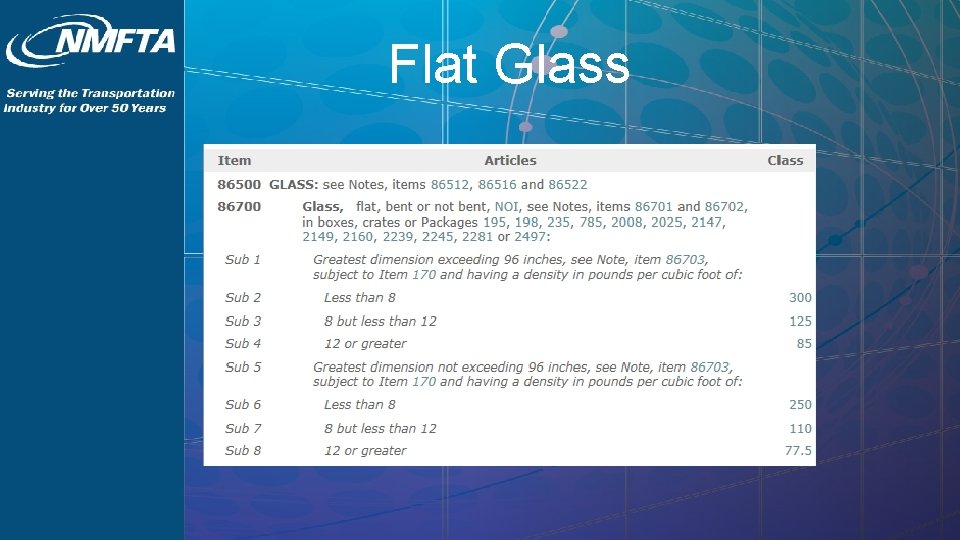
Flat Glass
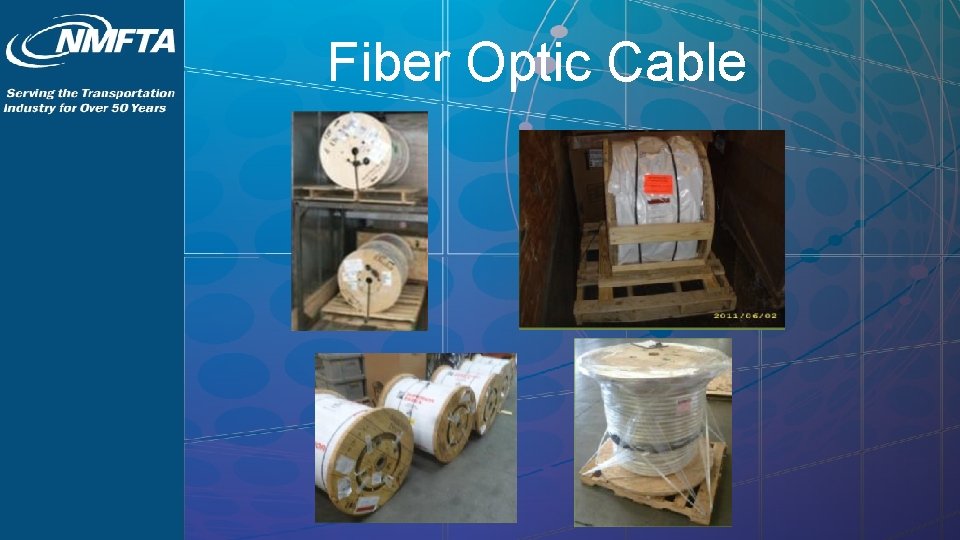
Fiber Optic Cable
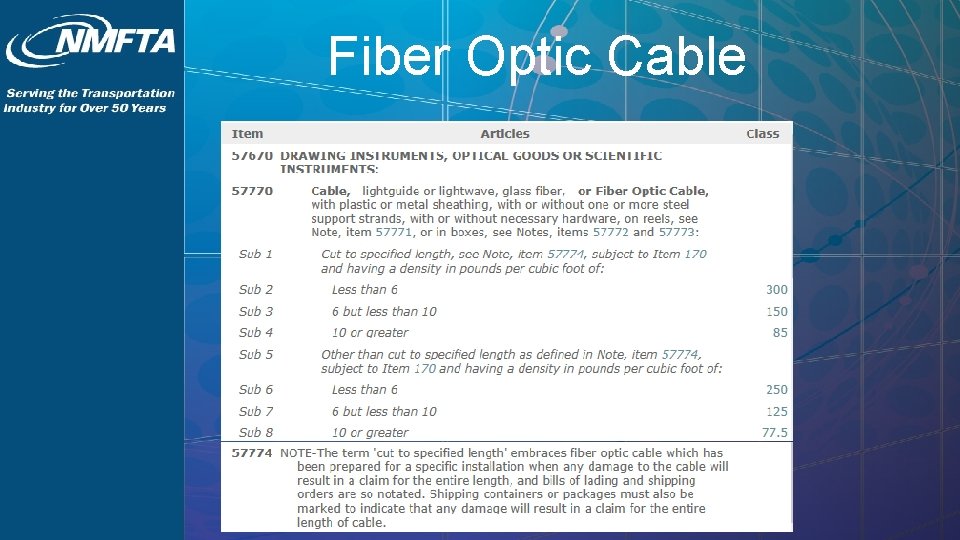
Fiber Optic Cable
Pricing with Classification Based Costing: 1. Class Rates: Carrier knows the relative costs based on one number, the freight class. 500 lbs of class 70 freight will cost less to transport than 500 lbs of class 150 freight. Might be differences in space, handling or it might be liability. 2. Contract Rates: Exactly the same, know the class and know the relative costs. 3. Knowing the applicable freight class allows the carriers to judge their pricing.
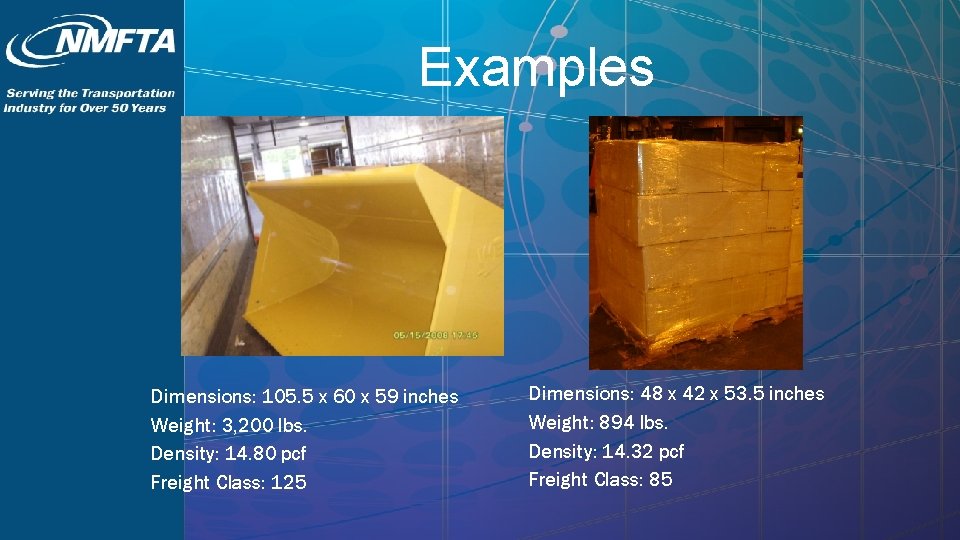
Examples Dimensions: 105. 5 x 60 x 59 inches Weight: 3, 200 lbs. Density: 14. 80 pcf Freight Class: 125 Dimensions: 48 x 42 x 53. 5 inches Weight: 894 lbs. Density: 14. 32 pcf Freight Class: 85
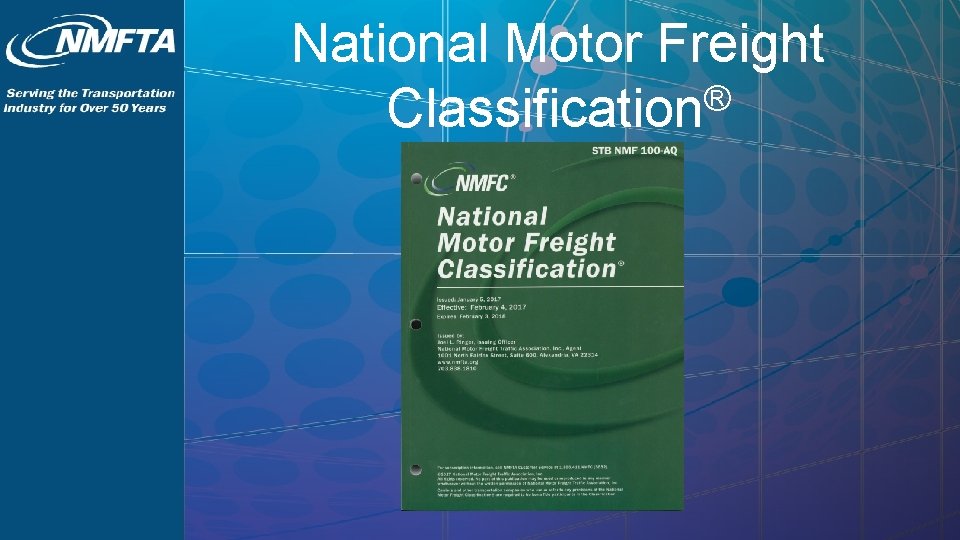
National Motor Freight ® Classification
- Slides: 30