
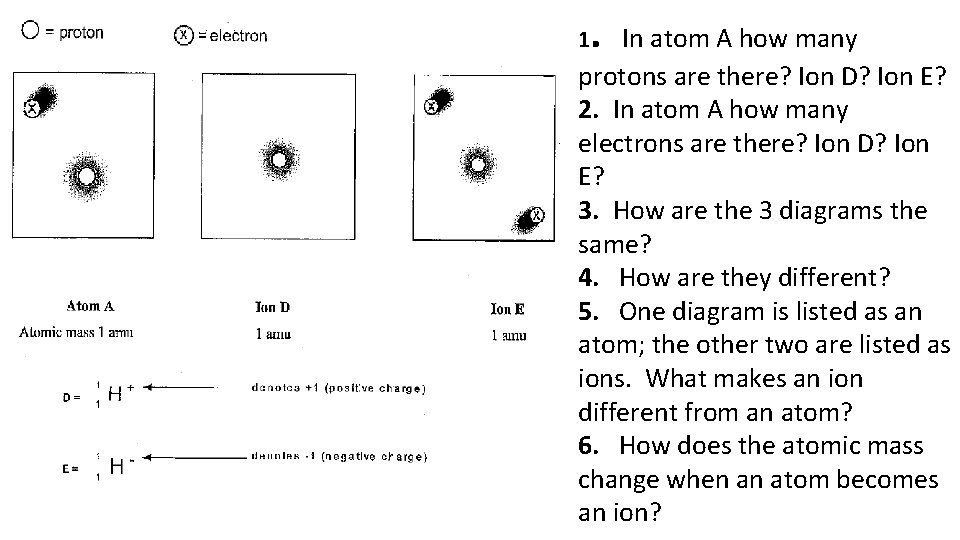
In atom A how many protons are there
- Slides: 10
. In atom A how many protons are there? Ion D? Ion E? 2. In atom A how many electrons are there? Ion D? Ion E? 3. How are the 3 diagrams the same? 4. How are they different? 5. One diagram is listed as an atom; the other two are listed as ions. What makes an ion different from an atom? 6. How does the atomic mass change when an atom becomes an ion? 1
Building on the Atom: Thursday, September 17 th, 2015 Ions
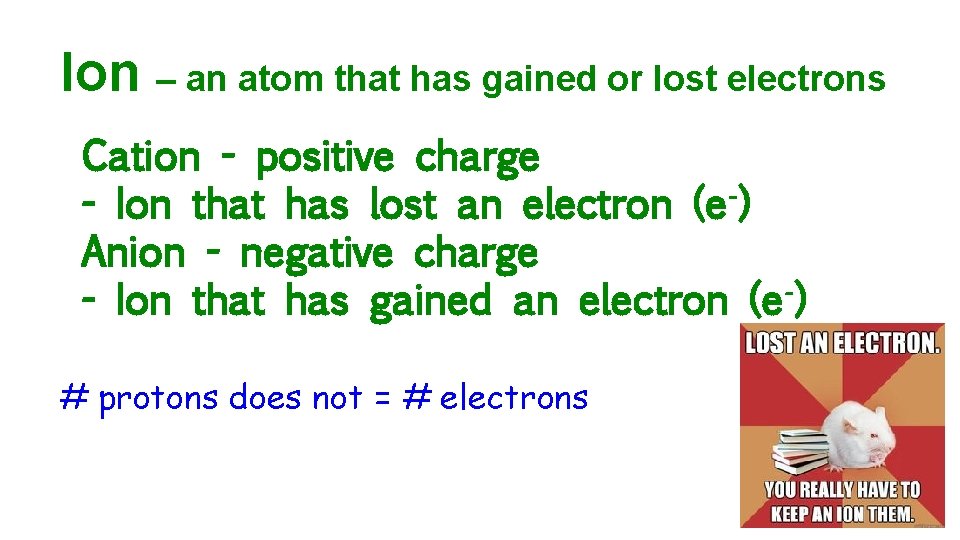
Ion – an atom that has gained or lost electrons Cation - positive charge - Ion that has lost an electron (e-) Anion - negative charge - Ion that has gained an electron (e-) # protons does not = # electrons
Ion – an atom that has gained or lost electrons
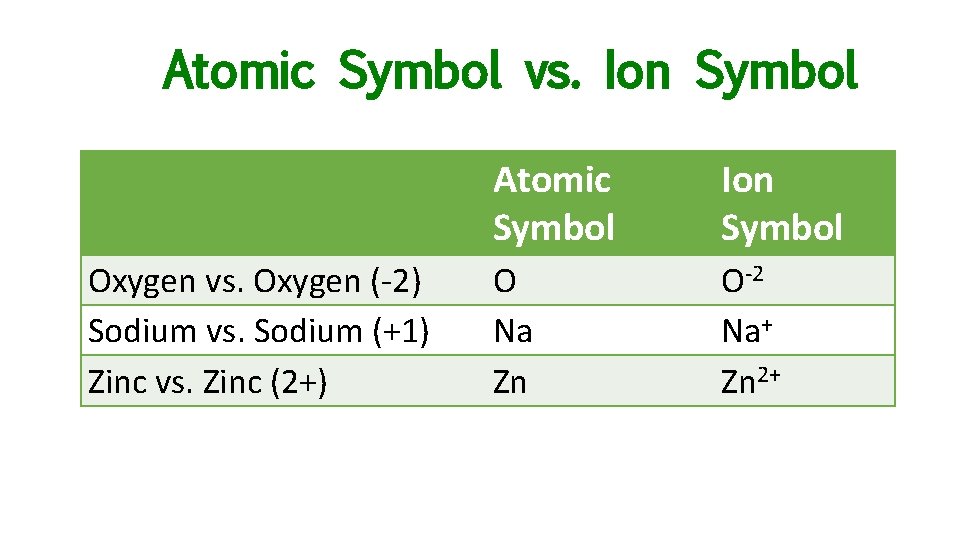
Atomic Symbol vs. Ion Symbol Oxygen vs. Oxygen (-2) Sodium vs. Sodium (+1) Zinc vs. Zinc (2+) Atomic Symbol Ion Symbol O Na Zn O-2 Na+ Zn 2+
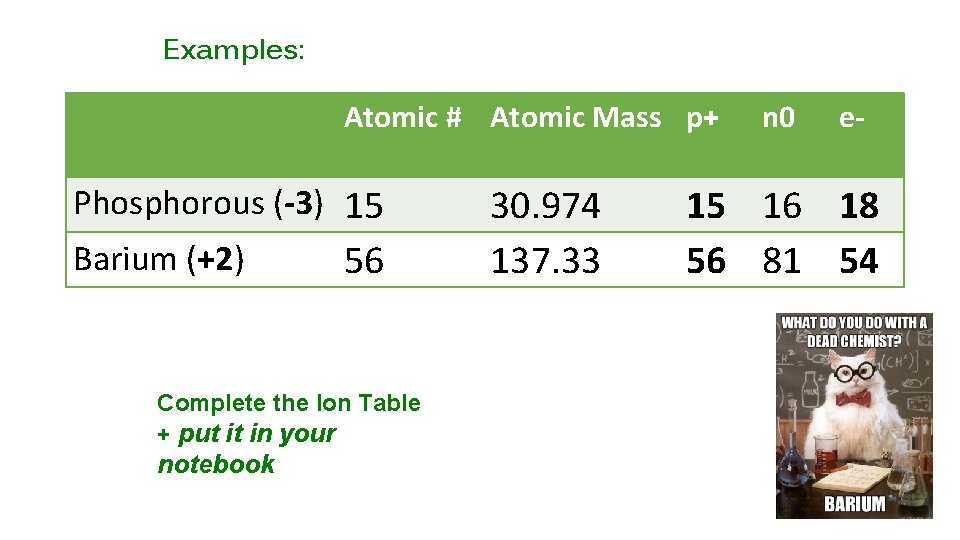
Examples: Atomic # Atomic Mass p+ Phosphorous (-3) 15 Barium (+2) 56 Complete the Ion Table + put it in your notebook 30. 974 137. 33 n 0 e- 15 16 18 56 81 54
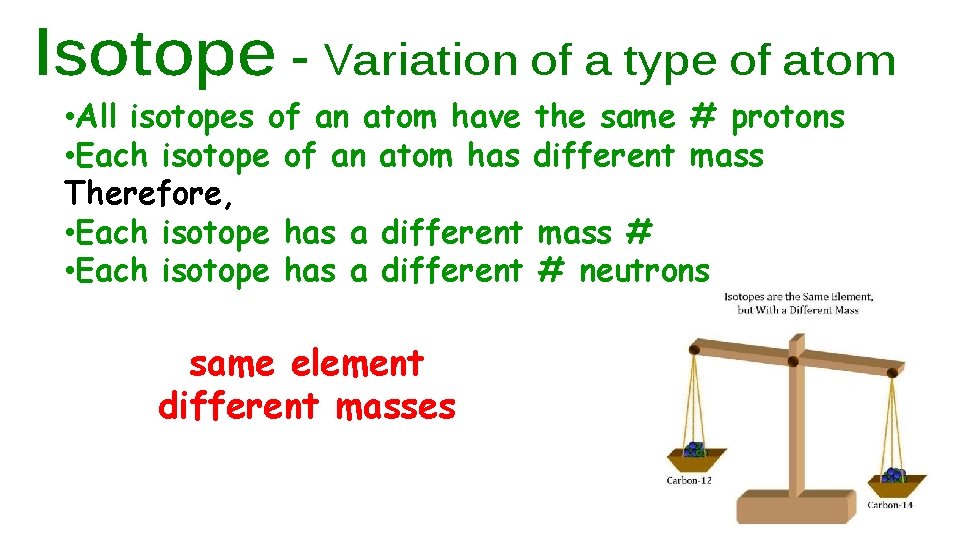
Isotope - Variation of a type of atom • All isotopes of an atom have the same # protons • Each isotope of an atom has different mass Therefore, • Each isotope has a different mass # • Each isotope has a different # neutrons same element different masses
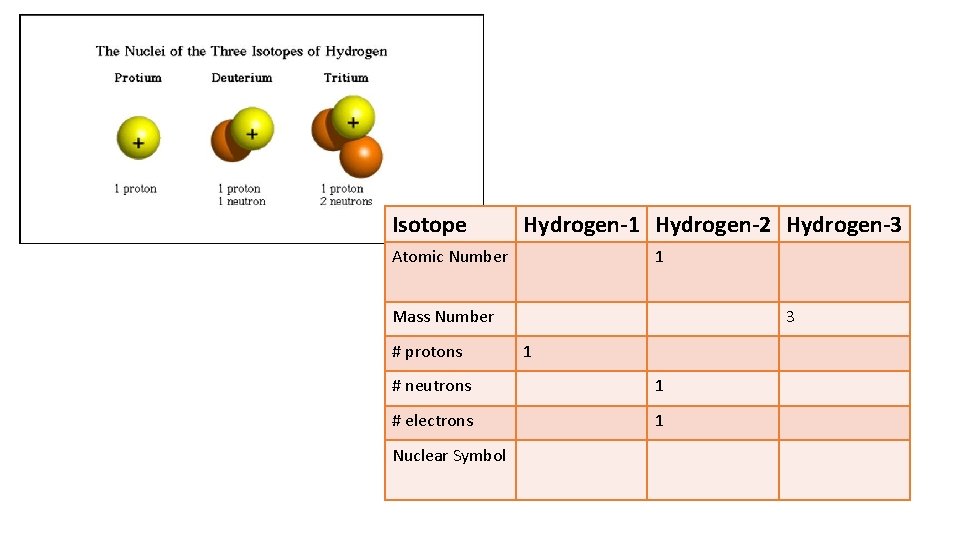
Isotope Hydrogen-1 Hydrogen-2 Hydrogen-3 Atomic Number 1 Mass Number # protons 3 1 # neutrons 1 # electrons 1 Nuclear Symbol
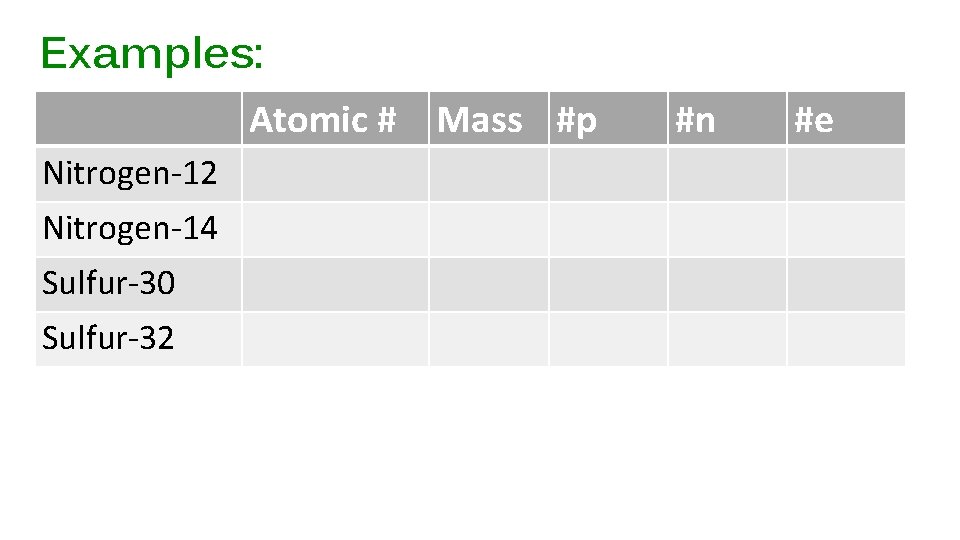
Examples: Atomic # Mass #p Nitrogen-12 Nitrogen-14 Sulfur-30 Sulfur-32 #n #e
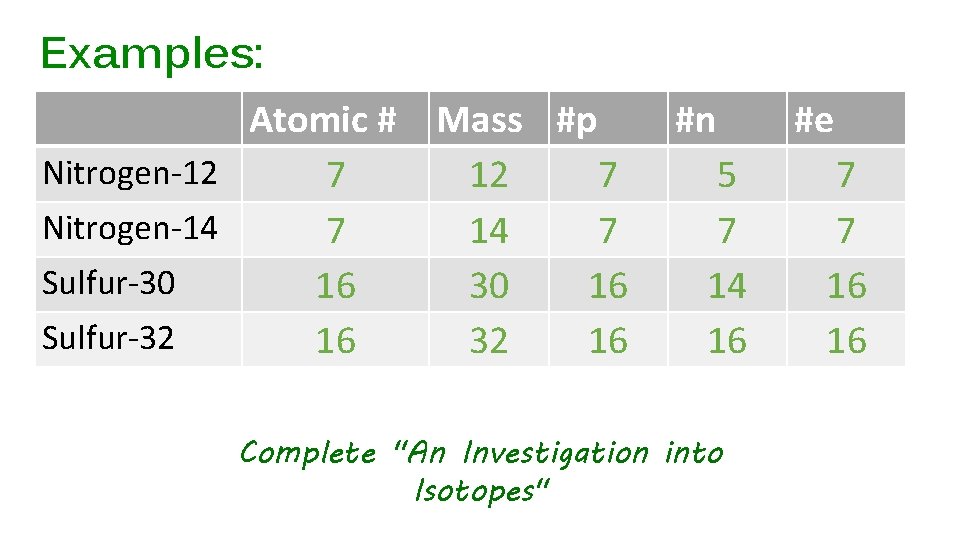
Examples: Atomic # Mass #p Nitrogen-12 7 Nitrogen-14 7 Sulfur-30 16 Sulfur-32 16 #n 5 7 14 16 Complete "An Investigation into Isotopes" #e 7 7 16 16