
In 284 AD Diocletian became the Roman emperor
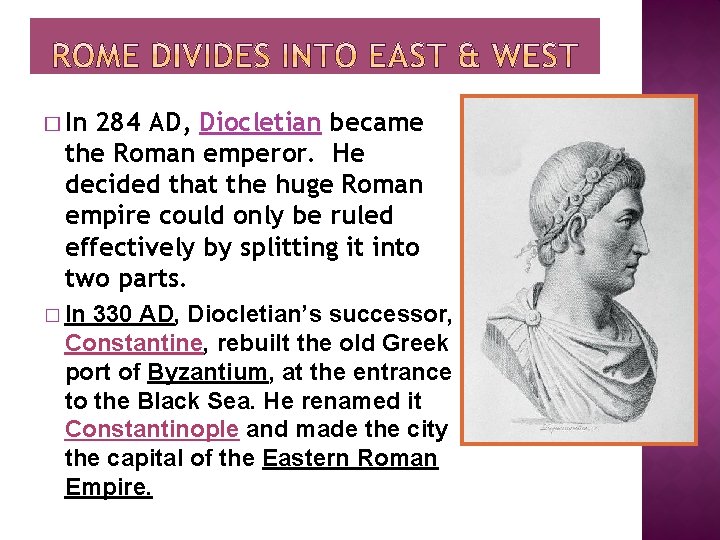
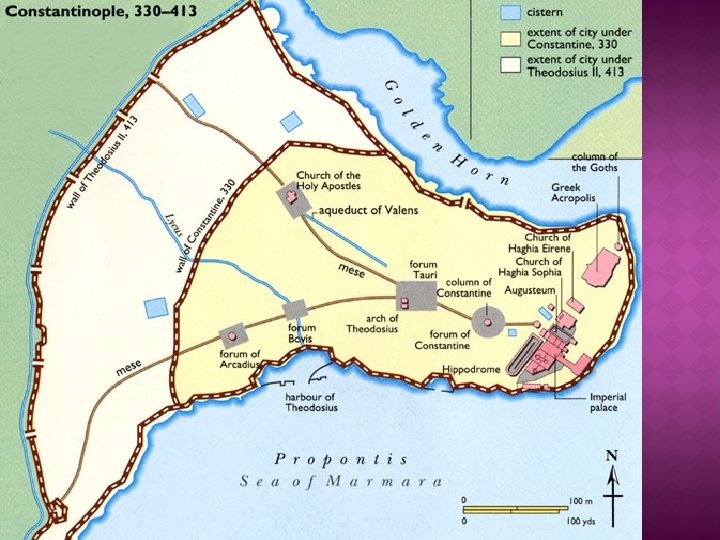
� In 284 AD, Diocletian became the Roman emperor. He decided that the huge Roman empire could only be ruled effectively by splitting it into two parts. � In 330 AD, Diocletian’s successor, Constantine, rebuilt the old Greek port of Byzantium, at the entrance to the Black Sea. He renamed it Constantinople and made the city the capital of the Eastern Roman Empire.
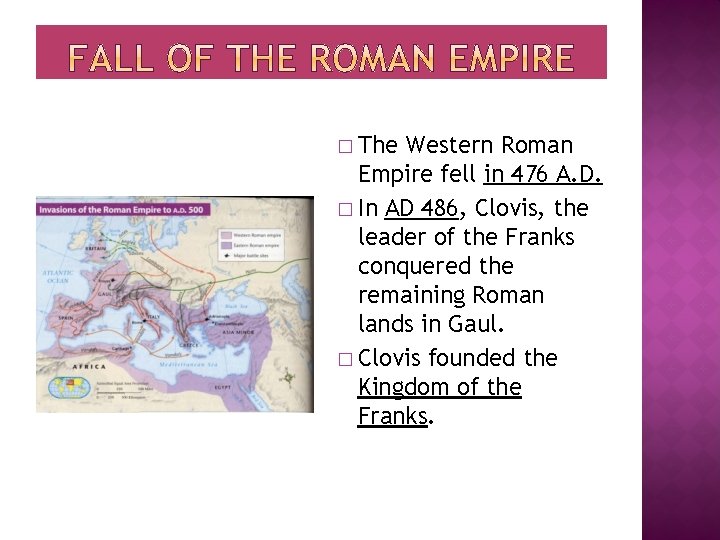
� The Western Roman Empire fell in 476 A. D. � In AD 486, Clovis, the leader of the Franks conquered the remaining Roman lands in Gaul. � Clovis founded the Kingdom of the Franks.
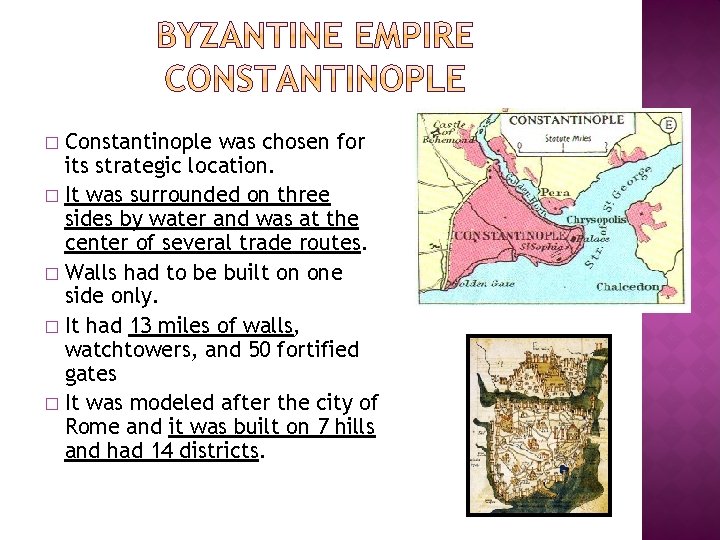
Constantinople was chosen for its strategic location. � It was surrounded on three sides by water and was at the center of several trade routes. � Walls had to be built on one side only. � It had 13 miles of walls, watchtowers, and 50 fortified gates � It was modeled after the city of Rome and it was built on 7 hills and had 14 districts. �
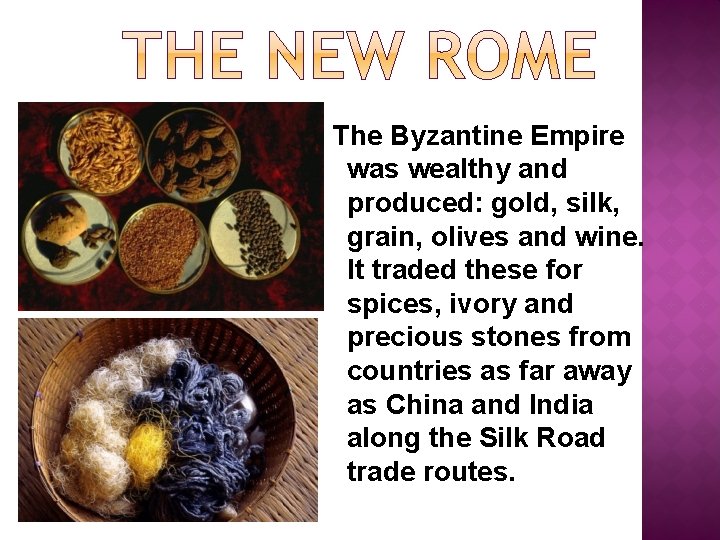
The Byzantine Empire was wealthy and produced: gold, silk, grain, olives and wine. It traded these for spices, ivory and precious stones from countries as far away as China and India along the Silk Road trade routes.
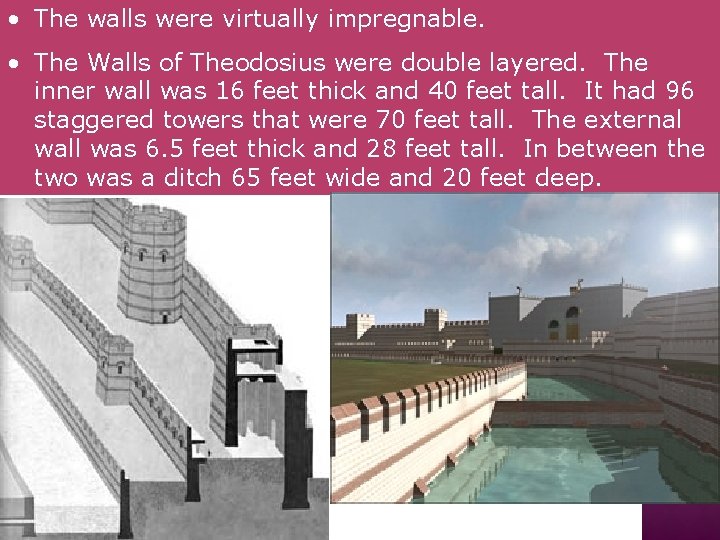
• The walls were virtually impregnable. • The Walls of Theodosius were double layered. The inner wall was 16 feet thick and 40 feet tall. It had 96 staggered towers that were 70 feet tall. The external wall was 6. 5 feet thick and 28 feet tall. In between the two was a ditch 65 feet wide and 20 feet deep.
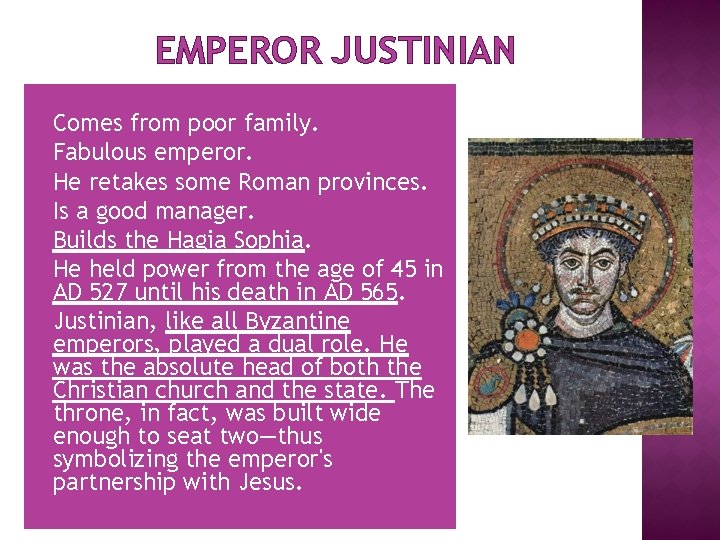
EMPEROR JUSTINIAN � Comes from poor family. � Fabulous emperor. � He retakes some Roman provinces. � Is a good manager. � Builds the Hagia Sophia. � He held power from the age of 45 in AD 527 until his death in AD 565. � Justinian, like all Byzantine emperors, played a dual role. He was the absolute head of both the Christian church and the state. The throne, in fact, was built wide enough to seat two—thus symbolizing the emperor's partnership with Jesus.
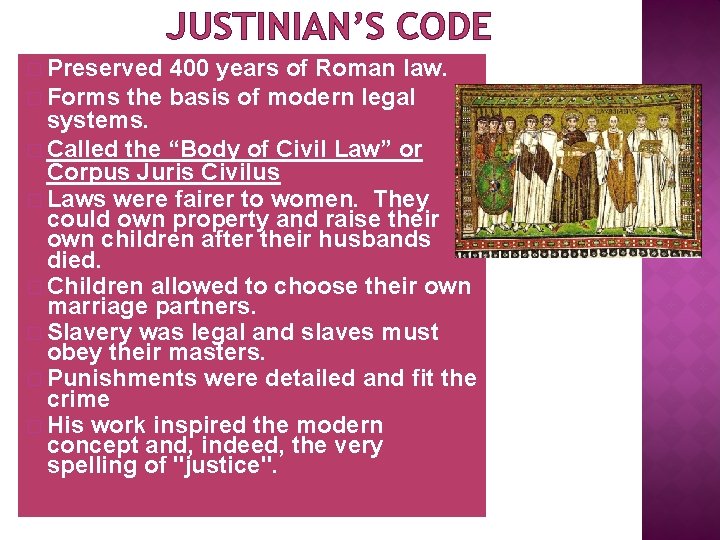
JUSTINIAN’S CODE � Preserved 400 years of Roman law. � Forms the basis of modern legal systems. � Called the “Body of Civil Law” or Corpus Juris Civilus � Laws were fairer to women. They could own property and raise their own children after their husbands died. � Children allowed to choose their own marriage partners. � Slavery was legal and slaves must obey their masters. � Punishments were detailed and fit the crime � His work inspired the modern concept and, indeed, the very spelling of "justice".
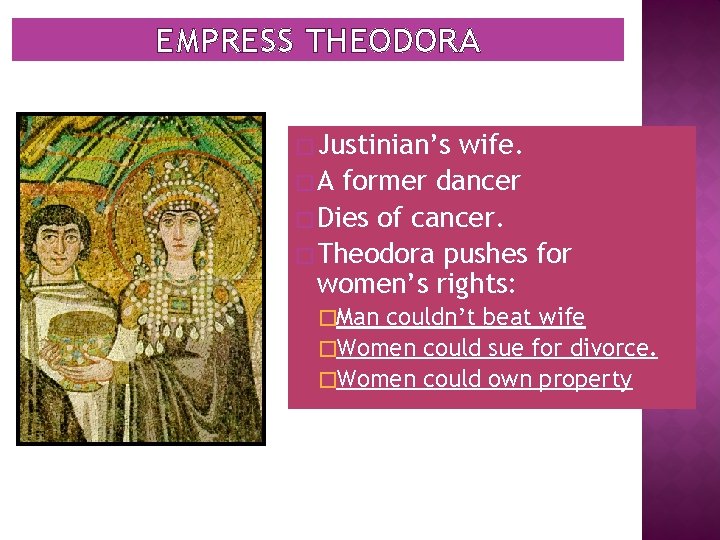
EMPRESS THEODORA � Justinian’s wife. � A former dancer � Dies of cancer. � Theodora pushes for women’s rights: �Man couldn’t beat wife �Women could sue for divorce. �Women could own property
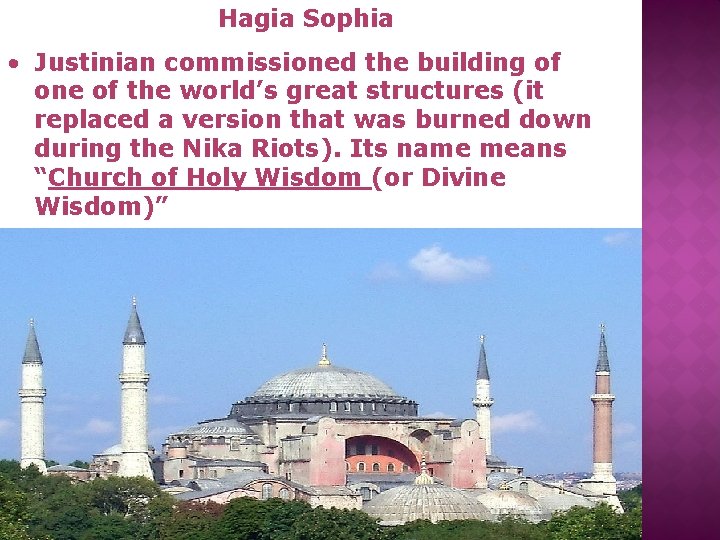
Hagia Sophia • Justinian commissioned the building of one of the world’s great structures (it replaced a version that was burned down during the Nika Riots). Its name means “Church of Holy Wisdom (or Divine Wisdom)”
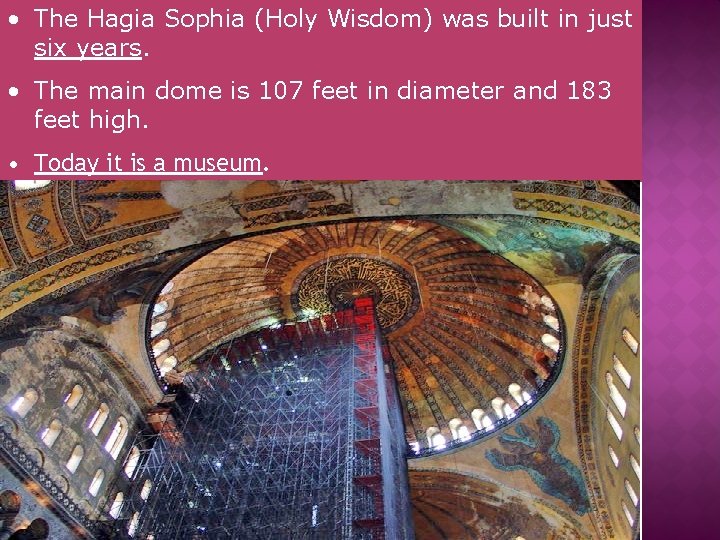
• The Hagia Sophia (Holy Wisdom) was built in just six years. • The main dome is 107 feet in diameter and 183 feet high. • Today it is a museum.
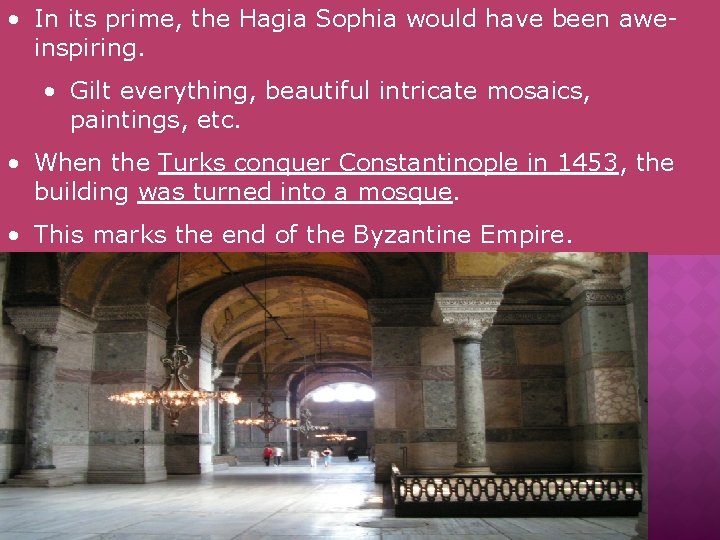
• In its prime, the Hagia Sophia would have been aweinspiring. • Gilt everything, beautiful intricate mosaics, paintings, etc. • When the Turks conquer Constantinople in 1453, the building was turned into a mosque. • This marks the end of the Byzantine Empire.
- Slides: 13