
In 20 words summarise the difference between learning
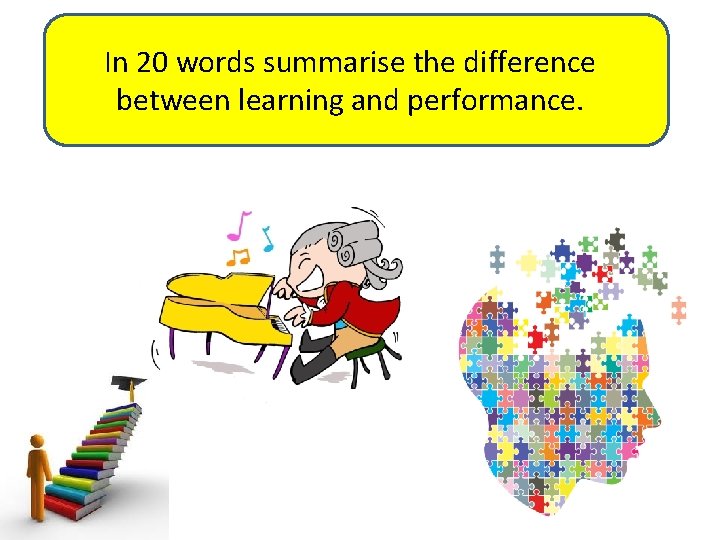
In 20 words summarise the difference between learning and performance.

Some definitions… R. A. Bjork and Bjork (1992): Learning = storage strength Performance = retrieval strength Estes, 1955 a, 1955 b Performance = how associated some target response is to the current instructions Learning = how much some target response is associated to the whole range of cues that characterize some task and situation

“Learning vs performance: An Integrative Review” by N. C. Soderstorm and R. A. Bjork Why does this session matter? Perspectives on Psychological Science 2015, Vol. 10(2) 176– 199 Claims: • Performance during acquisition of a skill or knowledge is not an accurate measure of long-term learning. • As a consequence, what is effective for learning is often very different to our perception of what we think is effective for learning. • As a result, students engage in bad study habits and teachers make inaccurate assessments of learning. Stability bias “The tendency to believe that current accessibility of retrieved information (i. e. , performance) will remain stable across time, rather than appreciating those factors that may impair or enhance later learning. ” p. 191
Link to Practice- why does this matter for you? My problem My solution
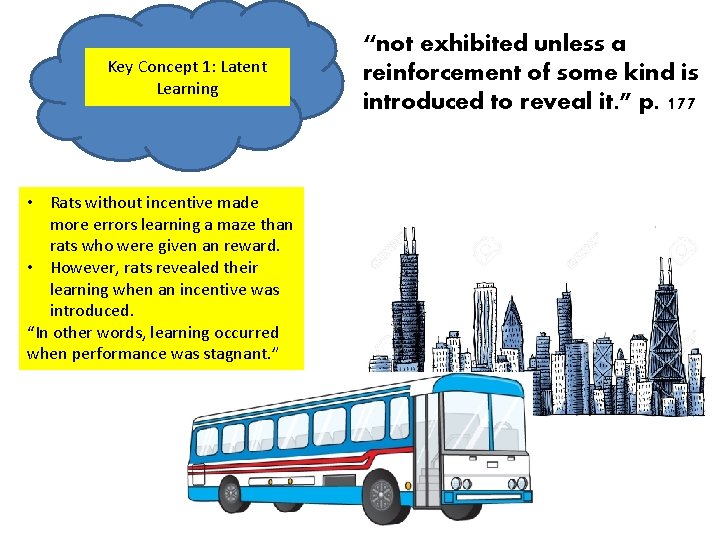
Key Concept 1: Latent Learning • Rats without incentive made more errors learning a maze than rats who were given an reward. • However, rats revealed their learning when an incentive was introduced. “In other words, learning occurred when performance was stagnant. ” “not exhibited unless a reinforcement of some kind is introduced to reveal it. ” p. 177

Key Concept 2: Overlearning and fatigue “The importance of continuing practice beyond the point in time where some…criterion is reached cannot be overemphasized. ” Fitts (1965: 195) • A violinist who continues to practice a musical piece despite already being able to perform it enhances long-term learning. • The degree of overlearning can affect retention. • Learning can occur even after fatigue prevents any further gains in performance during acquisition.

How do we promote long term learning? • Distribution of practice • Variability of practice • Retrieval practice Using your cards link the definition, an example of each of these concepts and an example of application in the classroom.
Link to Practice- why does this matter for you? My problem My solution
Some troubling conclusions • Students might have to feel uncomfortable and face regular failure in the classroom • What enhances learning might damage perceivable performance- how does this impact our use of in-class assessments? How might this impact our assessment of teaching and learning? • Can we reliably predict which students will do well?
- Slides: 9