
IMTAdvanced 4 International Mobile TelecommunicationsAdvanced IMT Advanced systems
IMT-Advanced 4 International Mobile Telecommunications-Advanced (IMT -Advanced) systems are mobile systems that include the new capabilities of IMT that go beyond those of IMT-2000 4 Such systems provide access to a wide range of telecommunication services including advanced mobile services, supported by mobile and fixed networks, which are increasingly packet-based 4 IMT-Advanced systems support low to high mobility applications and a wide range of data rates in accordance with user and service demands in multiple user environments 4 IMT-Advanced also has capabilities for high quality multimedia applications within a wide range of services and platforms, providing a significant improvement in performance and quality of service 3
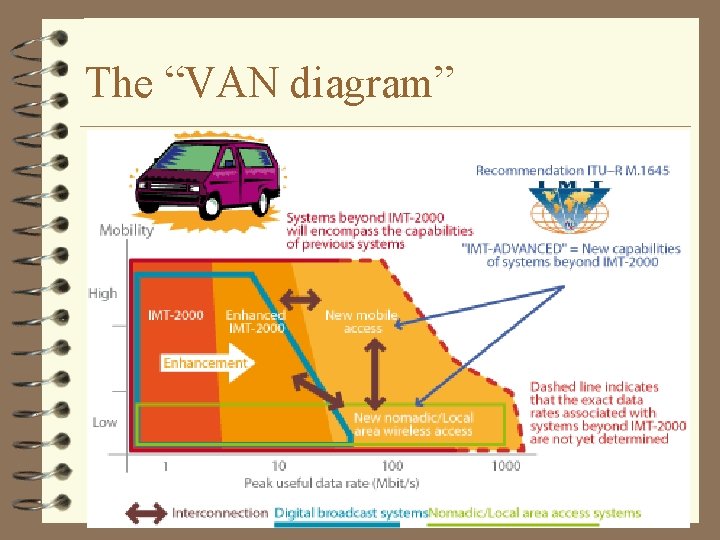
The “VAN diagram” 4
Requirements of IMT-Advanced 4 Based on an all-Internet Protocol (IP) packet switched network 4 Interoperability with existing wireless standards 4 A nominal data rate of 100 Mbit/s while the client physically 4 4 4 moves at high speeds relative to the station, and 1 Gbit/s while client and station are in relatively fixed positions Dynamically share and use the network resources to support more simultaneous users per cell Scalable channel bandwidth 5– 20 MHz, optionally up to 40 MHz Peak link spectral efficiency of 15 bit/s/Hz in the downlink, and 6. 75 bit/s/Hz in the uplink (meaning that 1 Gbit/s in the downlink should be possible over less than 67 MHz bandwidth) System spectral efficiency of up to 3 bit/s/Hz/cell in the downlink and 2. 25 bit/s/Hz/cell for indoor usage Seamless connectivity and global roaming across multiple networks with smooth handovers 5 Ability to offer high quality of service for multimedia support
Key features of IMT-Advanced 4 a high degree of commonality of functionality worldwide while retaining the flexibility to support a wide range of services and applications in a cost efficient manner 4 compatibility of services within IMT and with fixed networks 4 capability of interworking with other radio access systems 4 high quality mobile services 4 user equipment suitable for worldwide use 4 user-friendly applications, services and equipment 4 worldwide roaming capability 4 enhanced peak data rates to support advanced services and applications – 100 Mbit/s for high and 1 Gbit/s for low mobility were established as targets for research 6
Principal technologies 4 MIMO: To attain ultra high spectral efficiency by means of spatial 4 4 4 processing including multi-antenna and multi-user MIMO Frequency-domain-equalization, for example Multi-carrier modulation (OFDM) in the downlink or single-carrier frequencydomain-equalization (SC-FDE) in the uplink: To exploit the frequency selective channel property without complex equalization Frequency-domain statistical multiplexing, for example (OFDMA) or (Single-carrier FDMA) (SC-FDMA, Linearly precoded OFDMA, LP-OFDMA) in the uplink: Variable bit rate by assigning different sub-channels to different users based on the channel conditions Turbo principle error-correcting codes: To minimize the required SNR at the reception side Channel-dependent scheduling: To utilize the time-varying channel Link adaptation: Adaptive modulation and error-correcting codes Relaying, including fixed relay networks (FRNs), and the cooperative relaying concept, known as multi-mode protocol 7
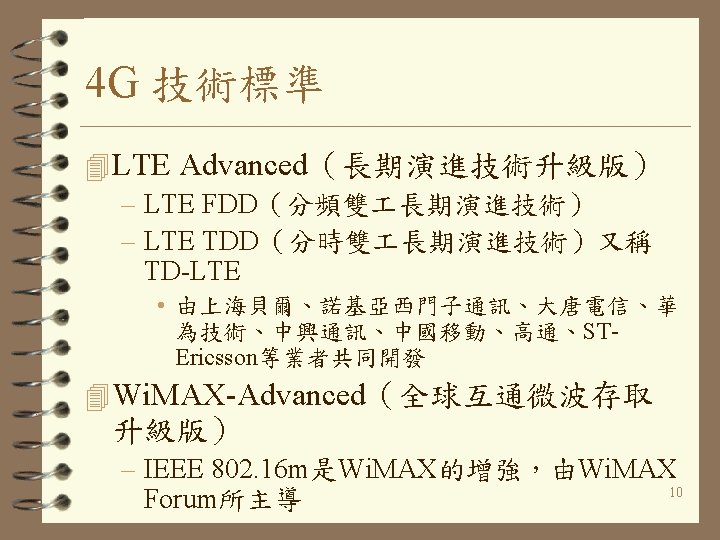
Candidate systems 4 The first set of 3 GPP requirements on LTE Advanced was approved in June 2008 4 On October 21, 2010, ITU-R Working Party 5 D has completed the assessment of six candidate submissions for the global 4 G mobile wireless broadband technology (IMT-Advanced) – Harmonization among these proposals has resulted in two technologies, “LTE-Advanced” and “Wireless. MAN-Advanced” (Wi. MAX Release 2, IEEE 802. 16 m-2011) being accorded the official designation of IMT-Advanced, qualifying them as true 4 G technologies 4 On December 6, 2010, ITU noted that while current versions of LTE, Wi. Max and other evolved 3 G technologies (e. g. , HSPA+) do not fulfill IMT-Advanced requirements for 4 G, some may use the term "4 G" in an "undefined" fashion to represent forerunners to IMT-Advanced that show "a substantial level of improvement in performance and capabilities with respect to the 8 initial third generation systems now deployed"
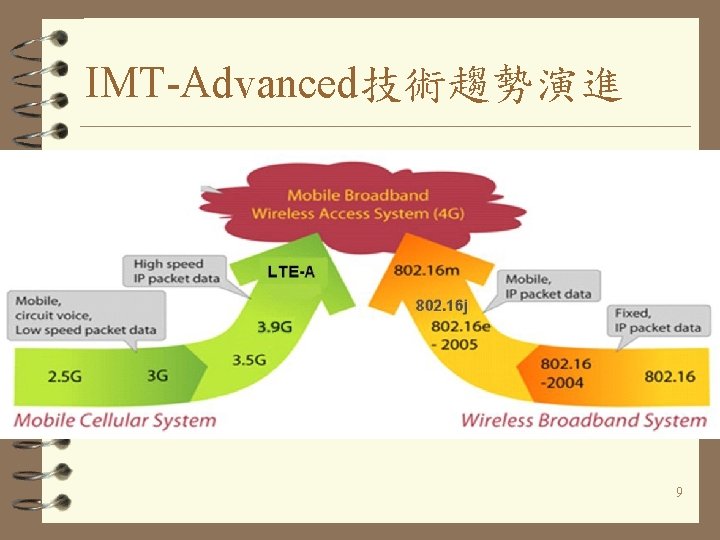
IMT-Advanced技術趨勢演進 9
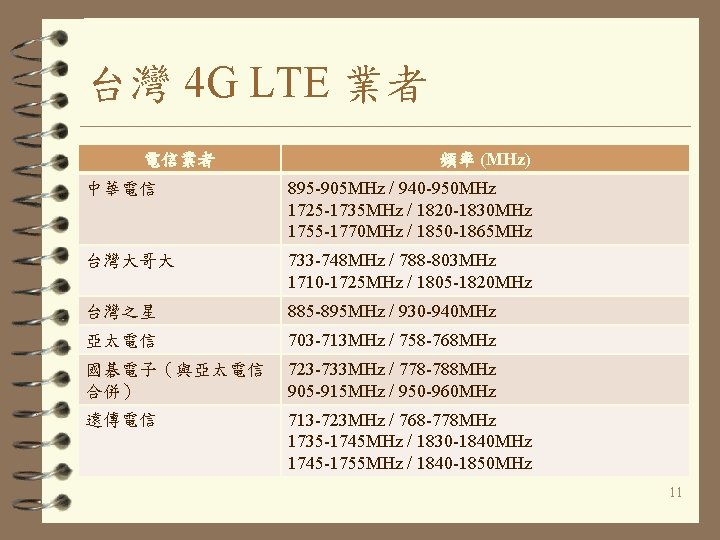
台灣 4 G LTE 業者 電信業者 頻率 (MHz) 中華電信 895 -905 MHz / 940 -950 MHz 1725 -1735 MHz / 1820 -1830 MHz 1755 -1770 MHz / 1850 -1865 MHz 台灣大哥大 733 -748 MHz / 788 -803 MHz 1710 -1725 MHz / 1805 -1820 MHz 台灣之星 885 -895 MHz / 930 -940 MHz 亞太電信 703 -713 MHz / 758 -768 MHz 國碁電子(與亞太電信 合併) 723 -733 MHz / 778 -788 MHz 905 -915 MHz / 950 -960 MHz 遠傳電信 713 -723 MHz / 768 -778 MHz 1735 -1745 MHz / 1830 -1840 MHz 1745 -1755 MHz / 1840 -1850 MHz 11
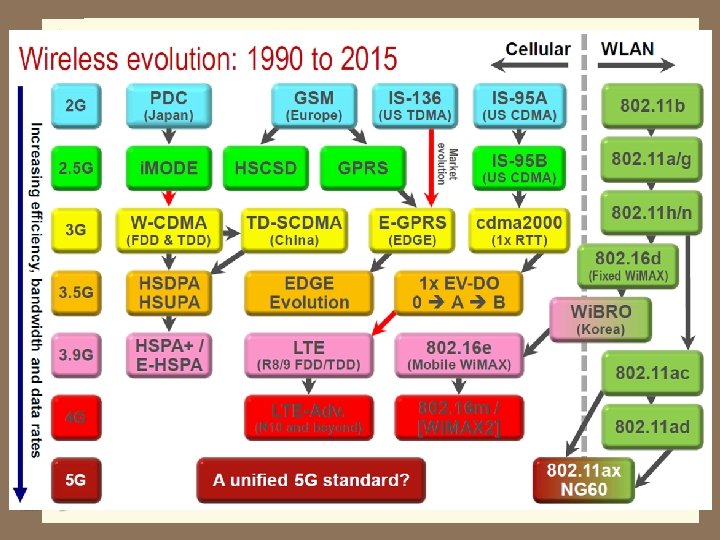
12
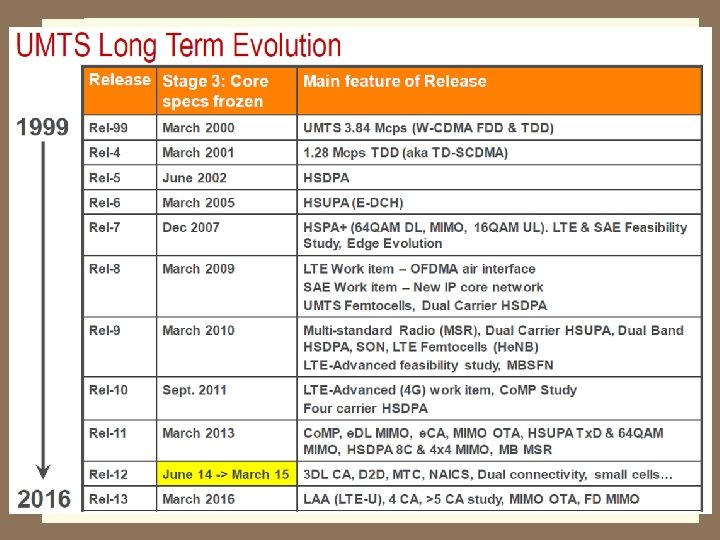
13
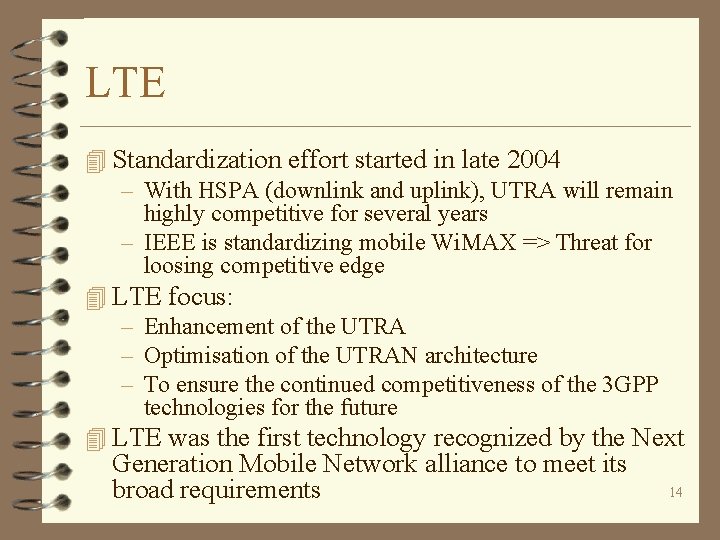
LTE 4 Standardization effort started in late 2004 – With HSPA (downlink and uplink), UTRA will remain highly competitive for several years – IEEE is standardizing mobile Wi. MAX => Threat for loosing competitive edge 4 LTE focus: – Enhancement of the UTRA – Optimisation of the UTRAN architecture – To ensure the continued competitiveness of the 3 GPP technologies for the future 4 LTE was the first technology recognized by the Next Generation Mobile Network alliance to meet its broad requirements 14
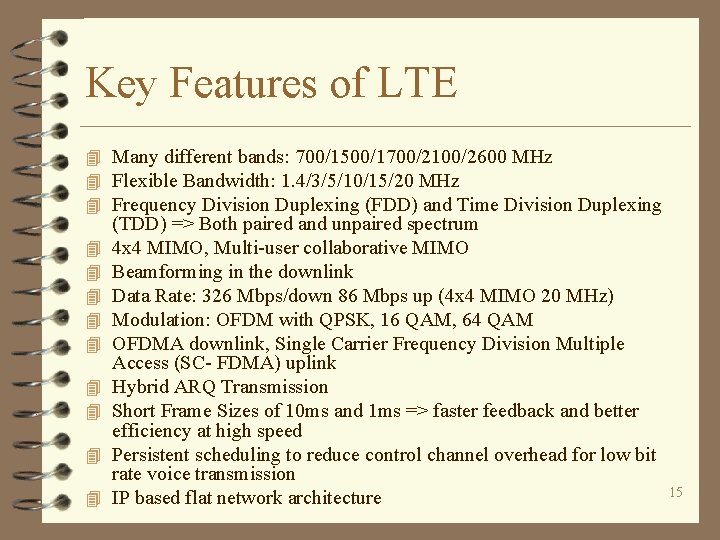
Key Features of LTE 4 Many different bands: 700/1500/1700/2100/2600 MHz 4 Flexible Bandwidth: 1. 4/3/5/10/15/20 MHz 4 Frequency Division Duplexing (FDD) and Time Division Duplexing 4 4 4 4 4 (TDD) => Both paired and unpaired spectrum 4 x 4 MIMO, Multi-user collaborative MIMO Beamforming in the downlink Data Rate: 326 Mbps/down 86 Mbps up (4 x 4 MIMO 20 MHz) Modulation: OFDM with QPSK, 16 QAM, 64 QAM OFDMA downlink, Single Carrier Frequency Division Multiple Access (SC- FDMA) uplink Hybrid ARQ Transmission Short Frame Sizes of 10 ms and 1 ms => faster feedback and better efficiency at high speed Persistent scheduling to reduce control channel overhead for low bit rate voice transmission IP based flat network architecture 15
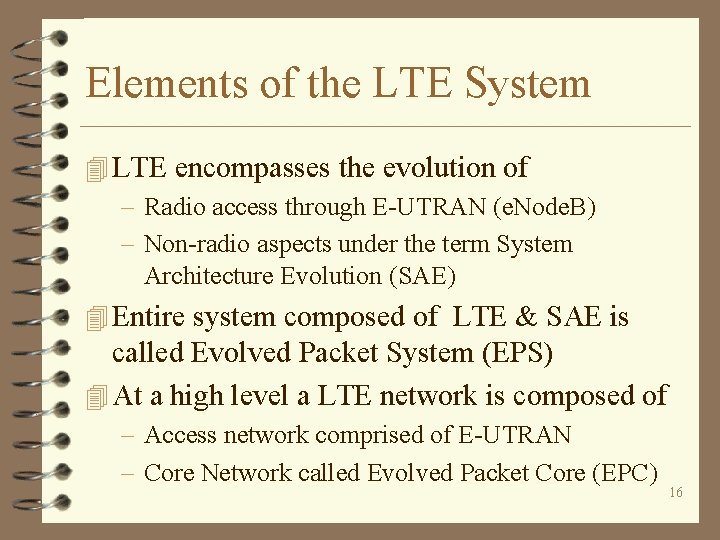
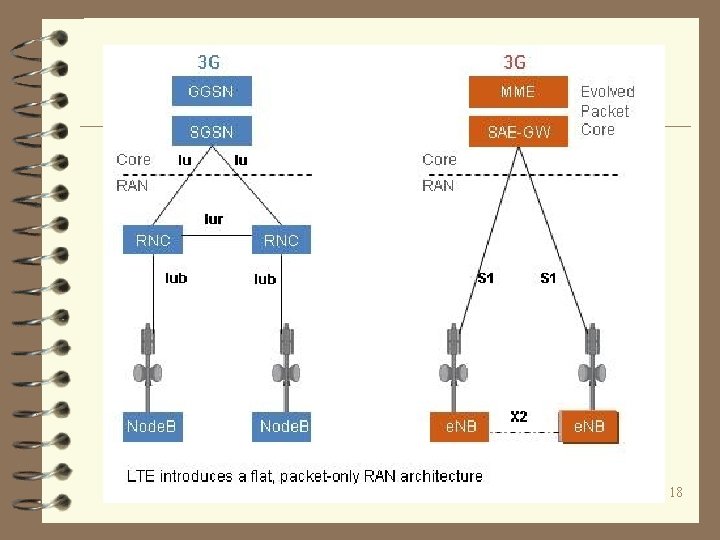
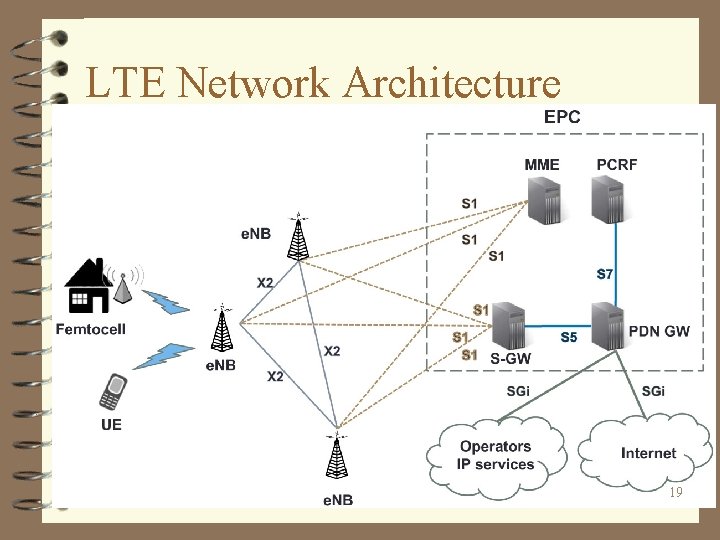
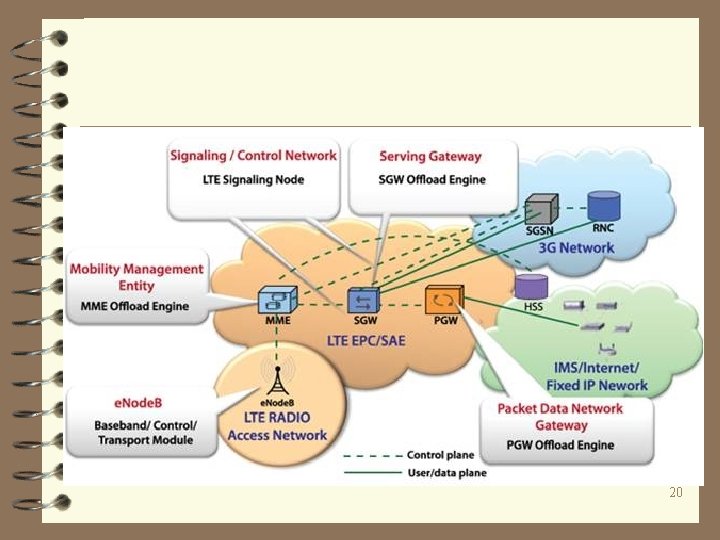
Elements of the LTE System 4 LTE encompasses the evolution of – Radio access through E-UTRAN (e. Node. B) – Non-radio aspects under the term System Architecture Evolution (SAE) 4 Entire system composed of LTE & SAE is called Evolved Packet System (EPS) 4 At a high level a LTE network is composed of – Access network comprised of E-UTRAN – Core Network called Evolved Packet Core (EPC) 16
LTE Network Elements 4 UE – User Equipment used to connect to the EPS (Evolved Packet System) 4 Access Network – ENB (e. Node. B) – The evolved RAN consists of single node, the e. Node. B that interfaces with UE; The e. Node. B hosts the PHY, MAC, RLC & RRC layers; It handles radio resource management & scheduling 4 Core Network (Evolved Packet Core (EPC)) – MME (Mobility Management Entity) – Performs paging, chooses the S-GW during UE attach – S-GW (Serving Gateway) – routes and forwards user data packets – P-GW (Packet Gateway) – provides connectivity between the UE and the external packet networks 17
18
LTE Network Architecture 19
20
New Functionalities of LTEAdvanced (LTE Release 10) 4 Carrier Aggregation 4 Multiple Input Multiple Output (MIMO) (Spatial Multiplexing) 4 Relay Nodes 4 Coordinated Multi Point operation (Co. MP) – R 11 21
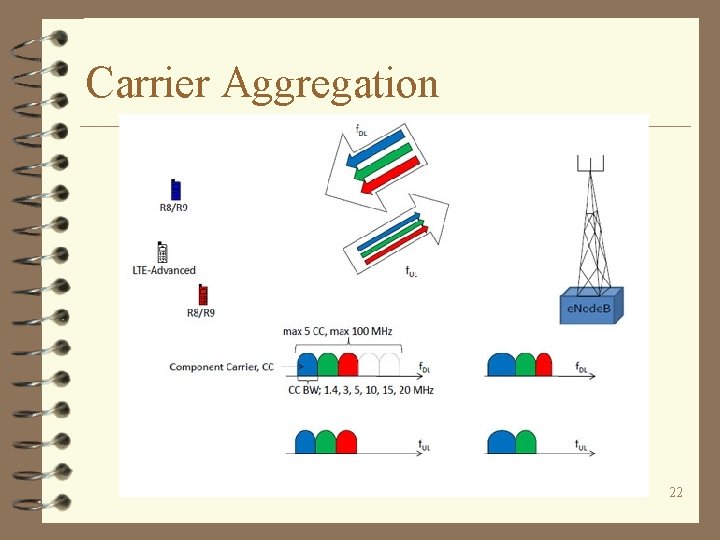
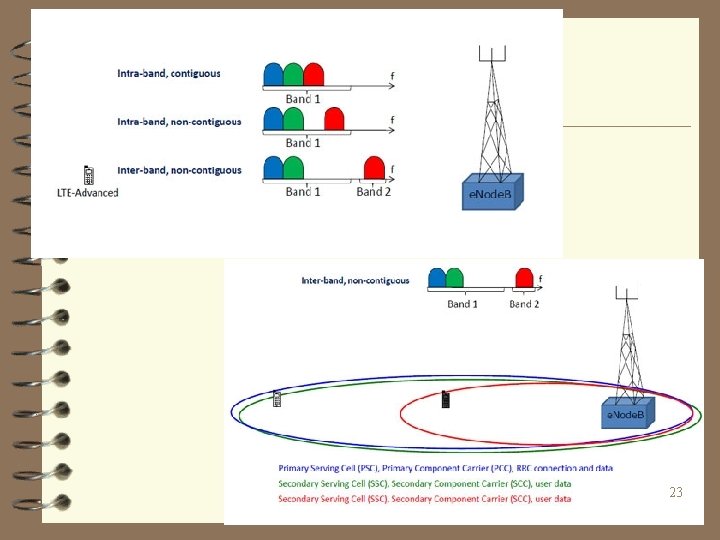
Carrier Aggregation 22
23
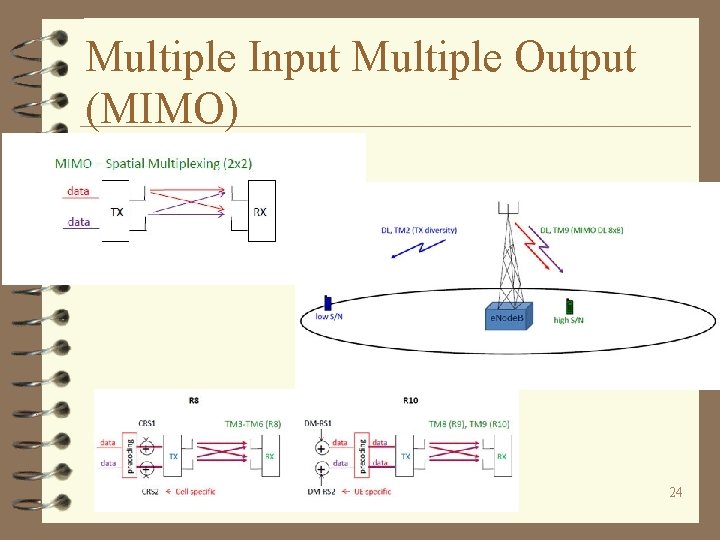
Multiple Input Multiple Output (MIMO) 24
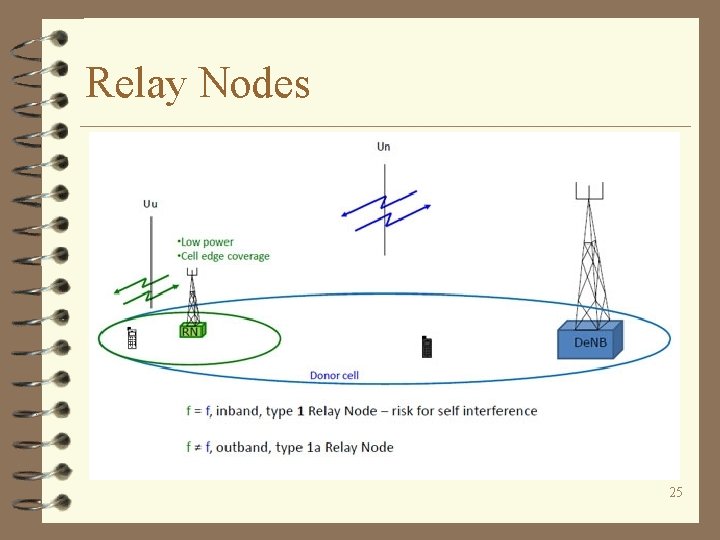
Relay Nodes 25
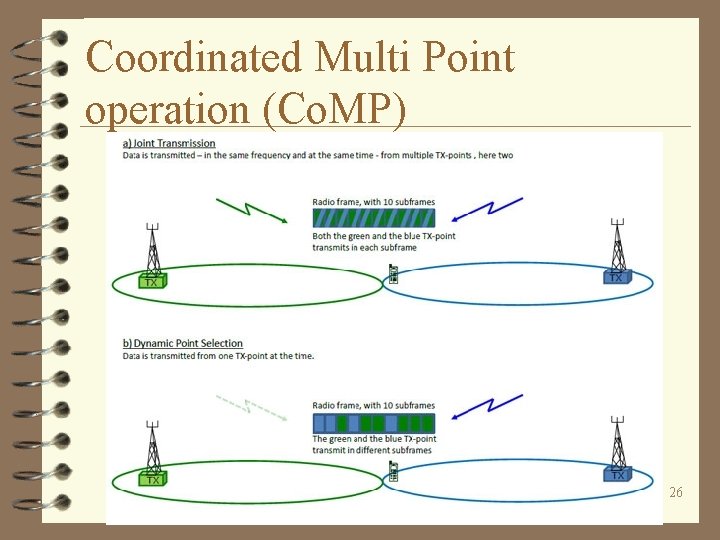
Coordinated Multi Point operation (Co. MP) 26
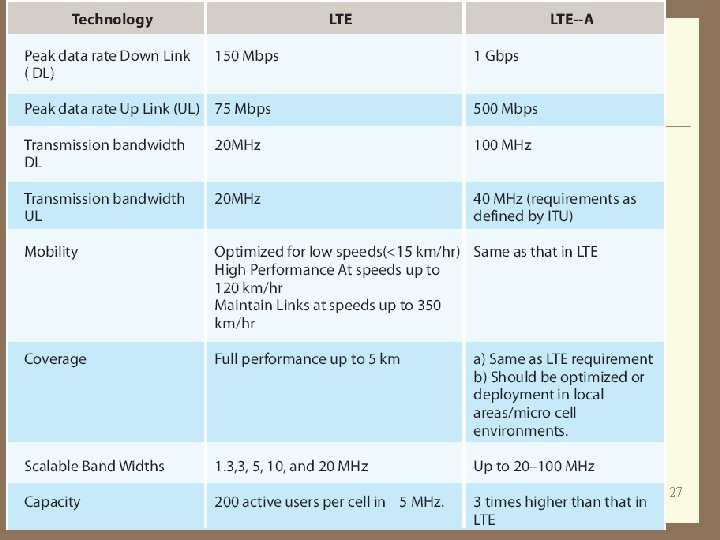
27
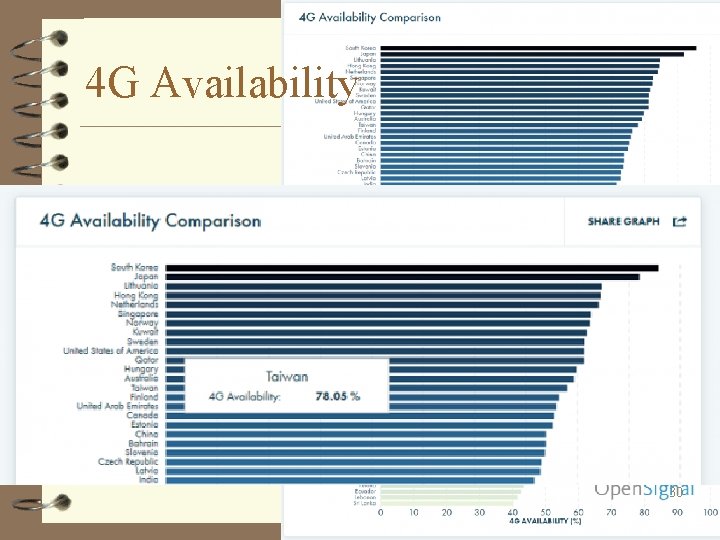
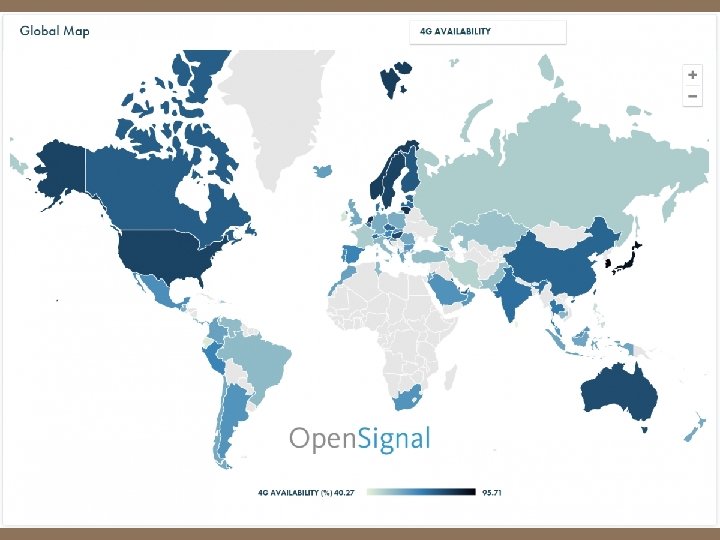
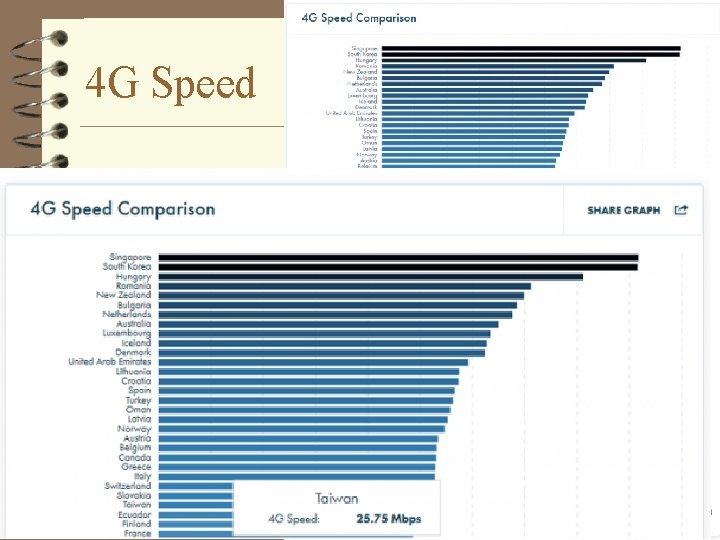
The State of LTE (November 2016) by Open. Signal https: //opensignal. com/reports/2016/11/state-of-lte 4 South Korea leads in 4 G availability – It was a close call, but South Korea eked out ahead of neighbor Japan in 4 G availability. Our users in South Korea were able to connect to an LTE network 95. 7% of the time, making 4 G service almost as ubiquitous as 3 G in that country. 4 Singapore wins the speed crown – Though South Korea also closely contested our top prize for speed, the honor goes to Singapore, which averaged download connections of 45. 9 Mbps. Thanks to new network investment and the latest LTE-Advanced technologies we'll likely soon see 28 some countries pushing past 50 Mbps.
The State of LTE (November 2016) by Open. Signal (Cont. ) 4 Speed doesn't equate consistency – Though there were several countries that outperformed in both 4 G speed and availability, a high score in one category didn't necessarily mean a high score in the other. We found several countries in various stages of development with impressive speeds but low 4 G accessibility, and vice versa. 4 Globally 4 G speeds average 17. 4 Mbps – Though most of the countries we analyzed in this report had speeds well over 20 Mbps, the relatively slow connections of some of the largest countries in the world brought down the global average to 17. 4 Mbps. Luxembourg's 31. 7 Mbps may be impressive, but there are quite a few more smartphones forced to contend 29 with India's average of 6. 4 Mbps.
4 G Availability 30
4 G Availability 31
4 G Speed 32
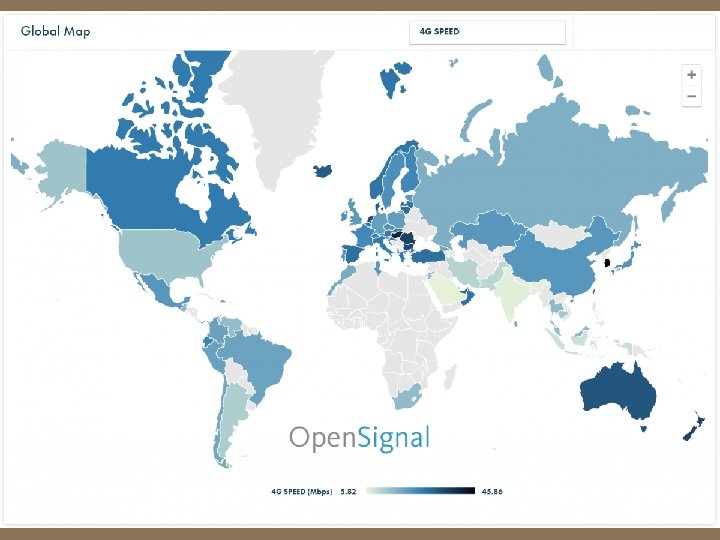
4 G Speed 33
- Slides: 33