
IMPROVISATION Important Improv Terminology C R O W
- Slides: 11
IMPROVISATION
Important Improv Terminology • C. R. O. W. (Character, Relationship, Objective, Where/When) These are the essential components of any scene. When we improvise we work to develop as much as possible each of these points. • The Given The suggestion (s) that is (are) used to start the scene. The Given usually falls into one of the categories from C. R. O. W.
5 BASIC IMPROV SKILLS • • FOCUS CREATIVITY SPONTANEITY ACCEPTANCE OF OFFERS • OFFERING IDEAS
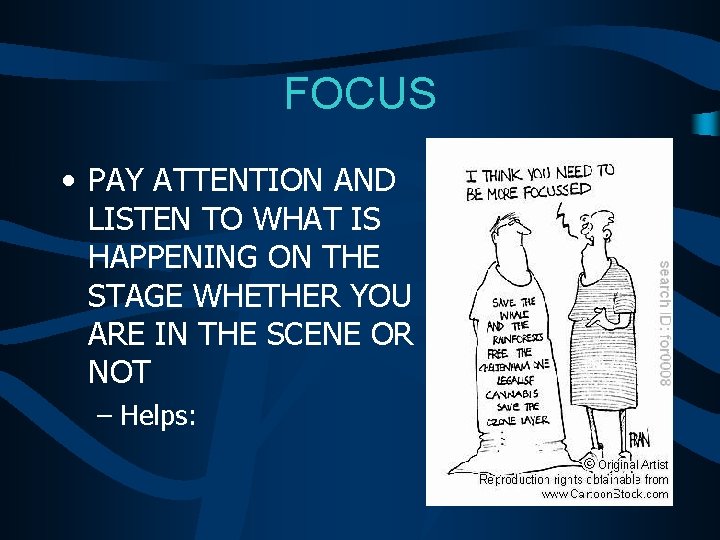
FOCUS • PAY ATTENTION AND LISTEN TO WHAT IS HAPPENING ON THE STAGE WHETHER YOU ARE IN THE SCENE OR NOT – Helps:
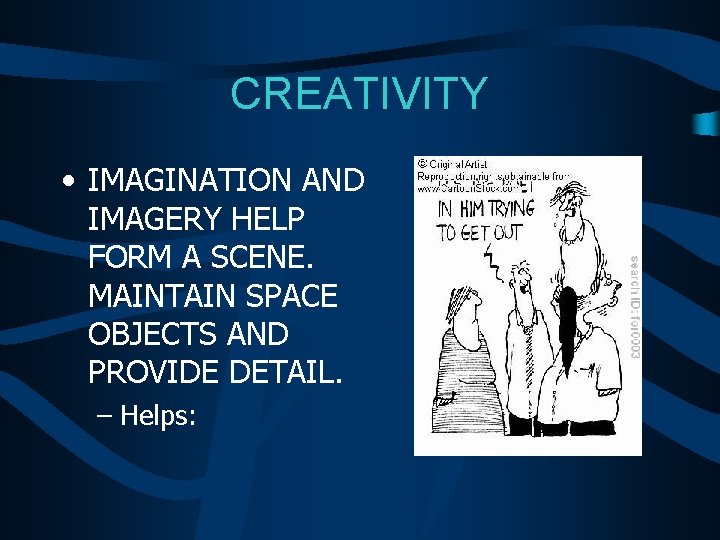
CREATIVITY • IMAGINATION AND IMAGERY HELP FORM A SCENE. MAINTAIN SPACE OBJECTS AND PROVIDE DETAIL. – Helps:
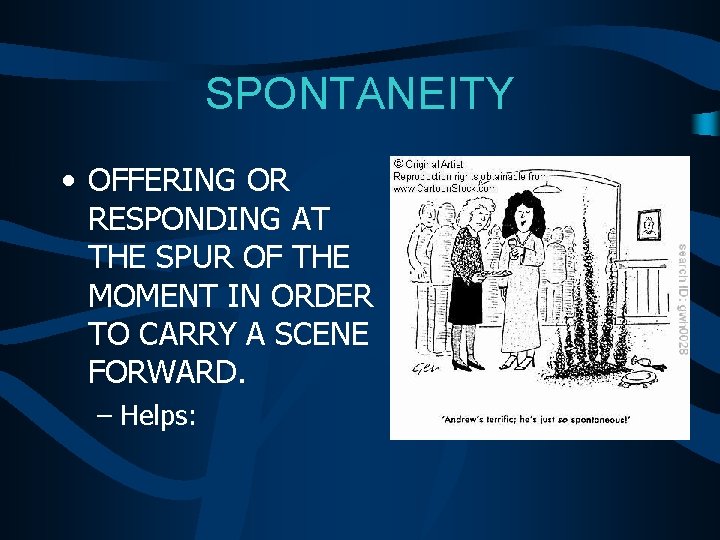
SPONTANEITY • OFFERING OR RESPONDING AT THE SPUR OF THE MOMENT IN ORDER TO CARRY A SCENE FORWARD. – Helps:
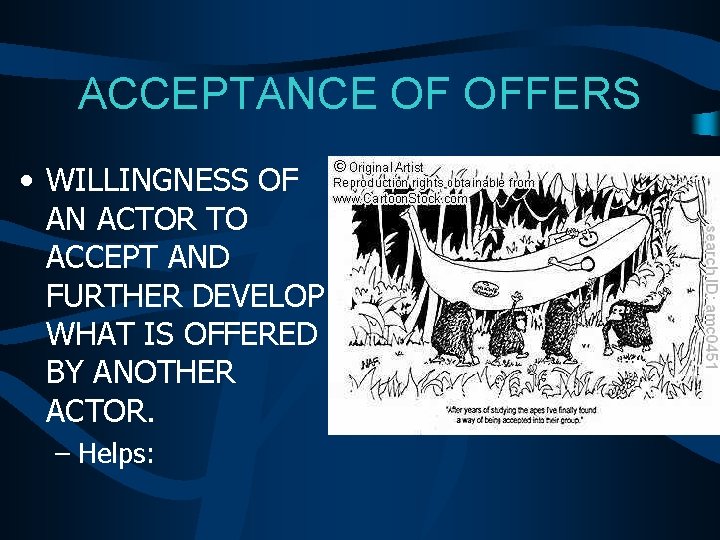
ACCEPTANCE OF OFFERS • WILLINGNESS OF AN ACTOR TO ACCEPT AND FURTHER DEVELOP WHAT IS OFFERED BY ANOTHER ACTOR. – Helps:
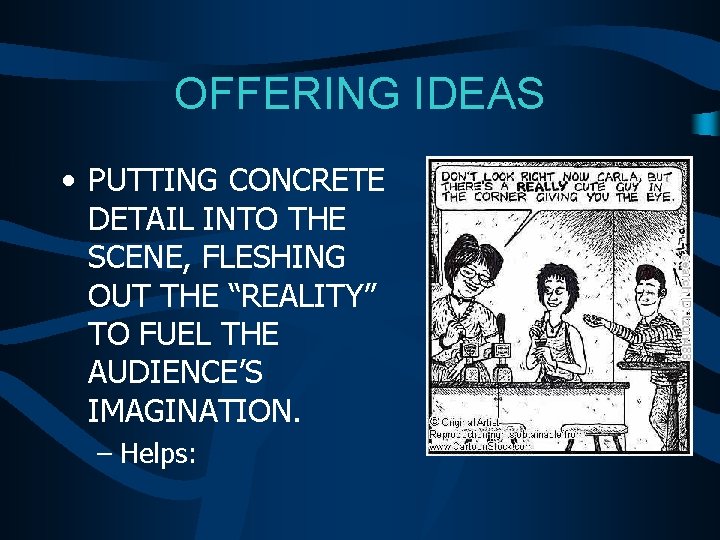
OFFERING IDEAS • PUTTING CONCRETE DETAIL INTO THE SCENE, FLESHING OUT THE “REALITY” TO FUEL THE AUDIENCE’S IMAGINATION. – Helps:
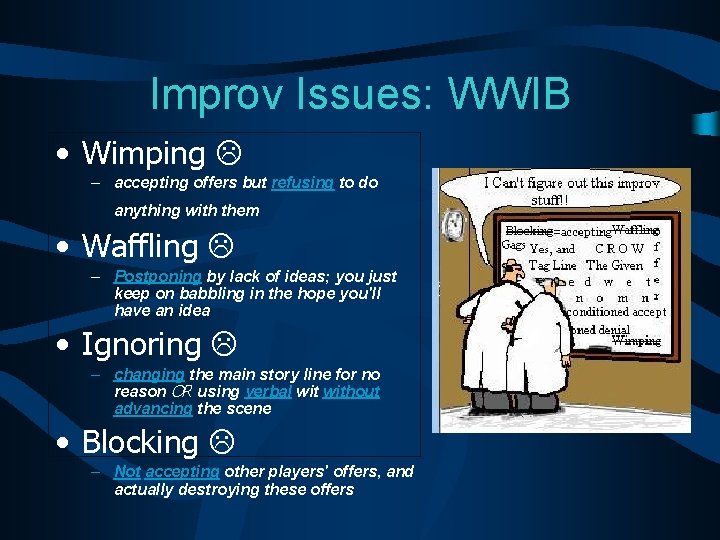
Improv Issues: WWIB • Wimping – accepting offers but refusing to do anything with them • Waffling – Postponing by lack of ideas; you just keep on babbling in the hope you'll have an idea • Ignoring – changing the main story line for no reason OR using verbal without advancing the scene • Blocking – Not accepting other players' offers, and actually destroying these offers
5 BASIC IMPROV SKILLS • • FOCUS CREATIVITY SPONTANEITY ACCEPTANCE OF OFFERS • OFFERING IDEAS
WHOSE LINE IS IT ANYWAY? Improv Analysis http: //www. youtube. com/watch? v=ga. FQy. Jy. SGJ 4