
Improving the Reliability of Peptide Identification by Tandem
Improving the Reliability of Peptide Identification by Tandem Mass Spectrometry Nathan Edwards Department of Biochemistry and Molecular & Cellular Biology Georgetown University Medical Center
Mass Spectrometry for Proteomics • Measure mass of many (bio)molecules simultaneously • High bandwidth • Mass is an intrinsic property of all (bio)molecules • No prior knowledge required 2
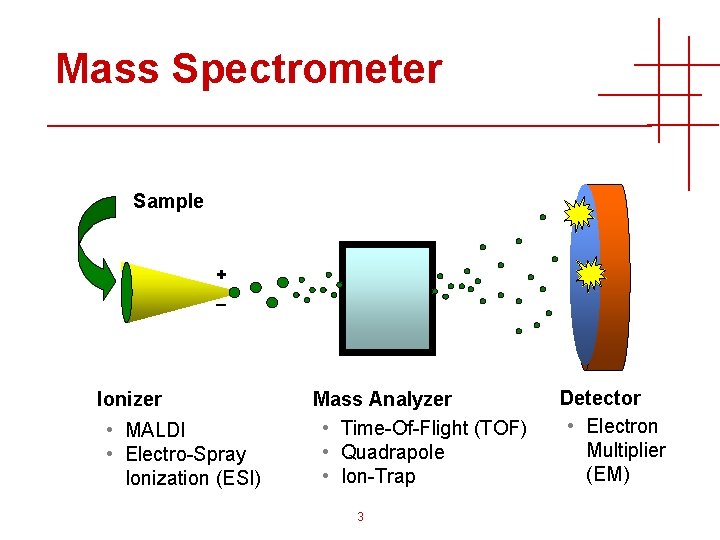
Mass Spectrometer Sample + _ Ionizer • MALDI • Electro-Spray Ionization (ESI) Mass Analyzer • Time-Of-Flight (TOF) • Quadrapole • Ion-Trap 3 Detector • Electron Multiplier (EM)
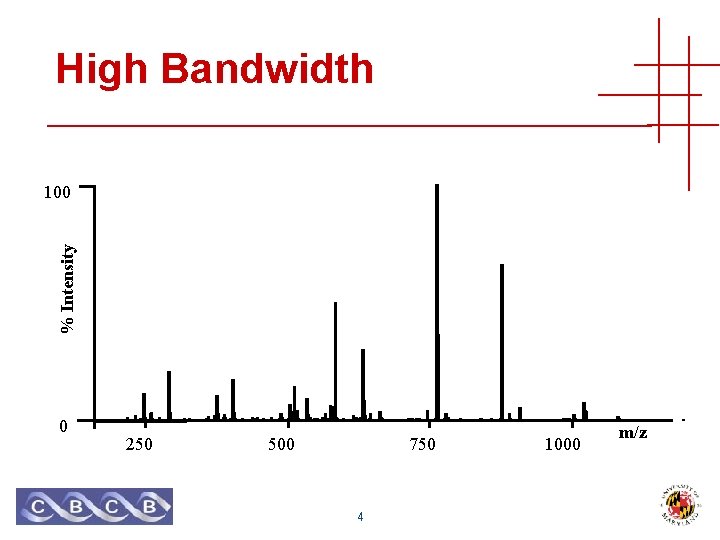
High Bandwidth % Intensity 100 0 250 500 750 4 1000 m/z
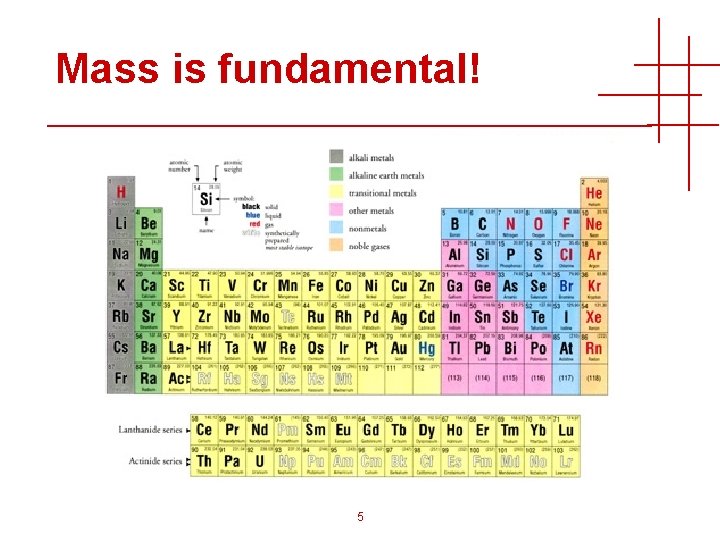
Mass is fundamental! 5
Mass Spectrometry for Proteomics • Measure mass of many molecules simultaneously • . . . but not too many, abundance bias • Mass is an intrinsic property of all (bio)molecules • . . . but need a reference to compare to 6
Mass Spectrometry for Proteomics • Mass spectrometry has been around since the turn of the century. . . • . . . why is MS based Proteomics so new? • Ionization methods • MALDI, Electrospray • Protein chemistry & automation • Chromatography, Gels, Computers • Protein sequence databases • A reference for comparison 7
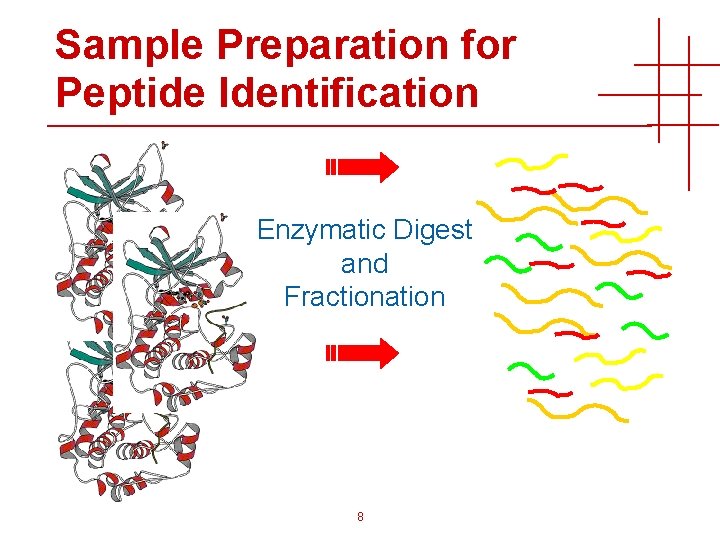
Sample Preparation for Peptide Identification Enzymatic Digest and Fractionation 8
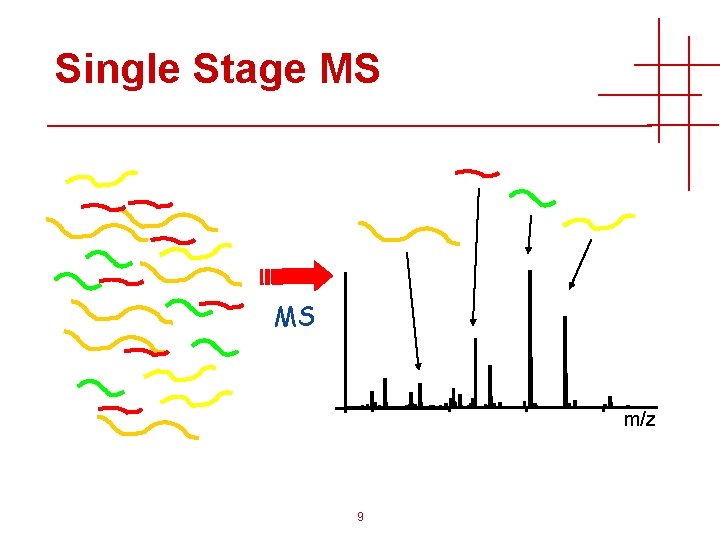
Single Stage MS MS m/z 9
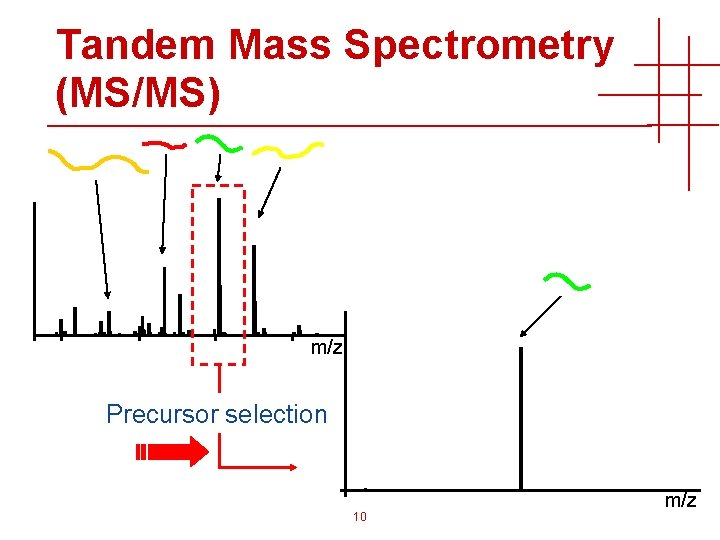
Tandem Mass Spectrometry (MS/MS) m/z Precursor selection 10 m/z

Tandem Mass Spectrometry (MS/MS) Precursor selection + collision induced dissociation (CID) m/z MS/MS 11 m/z
The big picture. . . • MS/MS spectra provide evidence for the amino-acid sequence of functional proteins. • Key concepts: • Spectrum acquisition is unbiased • Direct observation of amino-acid sequence • Sensitive to minor sequence variation • Observed peptides represent folded proteins 12
Peptide Identification • For each (likely) peptide sequence 1. Compute fragment masses 2. Compare with spectrum 3. Retain those that match well • Peptide sequences from protein sequence databases • Swiss-Prot, IPI, NCBI’s nr, . . . • Automated, high-throughput peptide identification in complex mixtures 13
Peptide Identification, but. . . • What about novel peptides? • Search compressed ESTs (C 3, Pep. Seq. DB) • What about peak intensity? • Spectral matching using HMMs (HMMatch) • Which identifications are correct? • Unsupervised, model-free, result combiner with false discovery rate estimation 14
Why don’t we see more novel peptides? • Tandem mass spectrometry doesn’t discriminate against novel peptides. . . but protein sequence databases do! • Searching traditional protein sequence databases biases the results towards well-understood protein isoforms! 15
What goes missing? • Known coding SNPs • Novel coding mutations • Alternative splicing isoforms • Alternative translation start-sites • Microexons • Alternative translation frames 16
Why should we care? • Alternative splicing is the norm! • Only 20 -25 K human genes • Each gene makes many proteins • Proteins have clinical implications • Biomarker discovery • Evidence for SNPs and alternative splicing stops with transcription • Genomic assays, ESTs, m. RNA sequence. • Little hard evidence for translation start site 17
Novel Splice Isoform • Human Jurkat leukemia cell-line • Lipid-raft extraction protocol, targeting T cells • von Haller, et al. MCP 2003. • LIME 1 gene: • LCK interacting transmembrane adaptor 1 • LCK gene: • Leukocyte-specific protein tyrosine kinase • Proto-oncogene • Chromosomal aberration involving LCK in leukemias. • Multiple significant peptide identifications 18
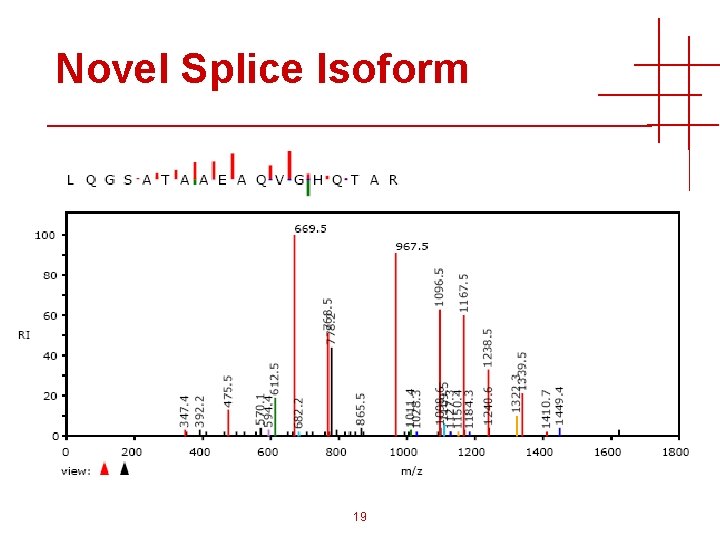
Novel Splice Isoform 19
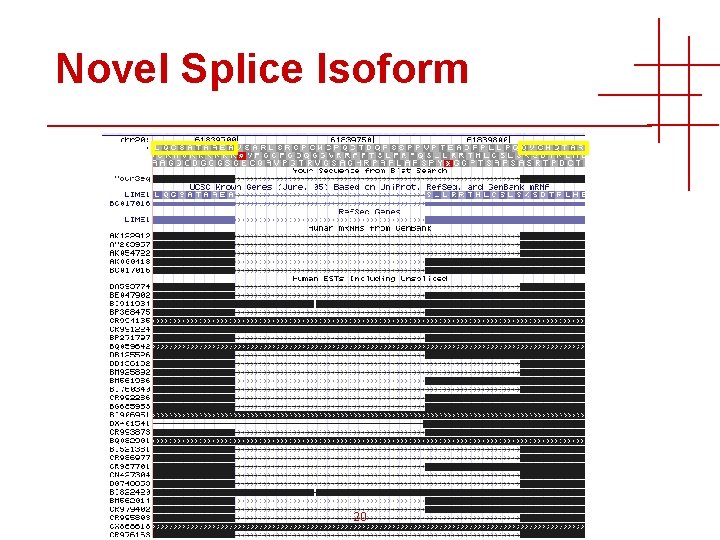
Novel Splice Isoform 20
Novel Mutation • HUPO Plasma Proteome Project • Pooled samples from 10 male & 10 female healthy Chinese subjects • Plasma/EDTA sample protocol • Li, et al. Proteomics 2005. (Lab 29) • TTR gene • Transthyretin (pre-albumin) • Defects in TTR are a cause of amyloidosis. • Familial amyloidotic polyneuropathy • late-onset, dominant inheritance 21
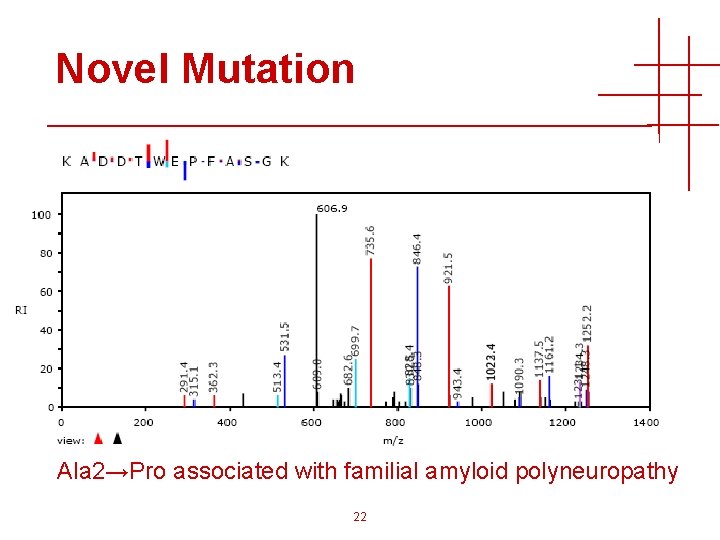
Novel Mutation Ala 2→Pro associated with familial amyloid polyneuropathy 22
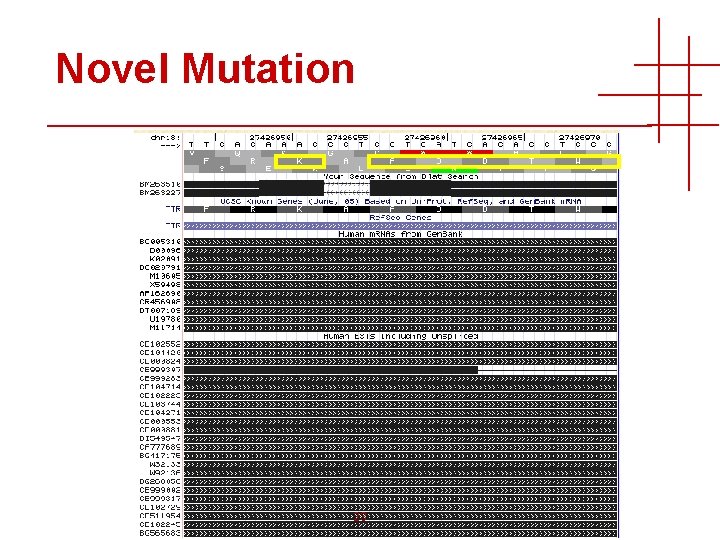
Novel Mutation 23
Searching ESTs • Proposed long ago: • Yates, Eng, and Mc. Cormack; Anal Chem, ’ 95. • Now: • Protein sequences are sufficient for protein identification • Computationally expensive/infeasible • Difficult to interpret • Make EST searching feasible for routine searching to discover novel peptides. 24
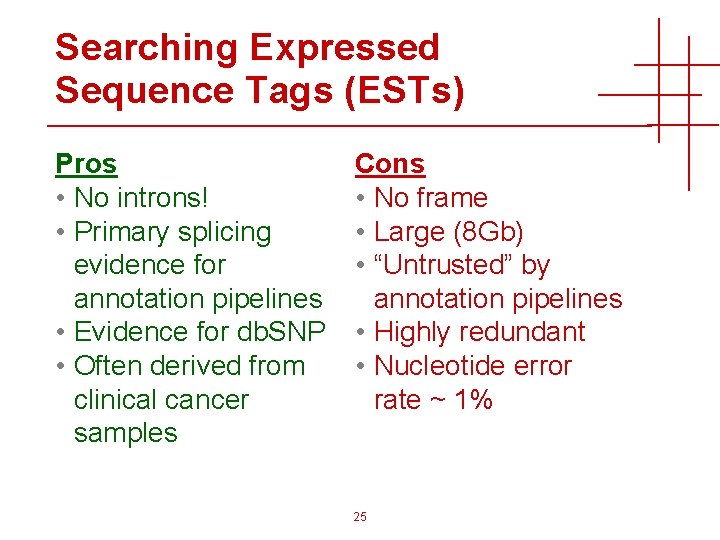
Searching Expressed Sequence Tags (ESTs) Pros • No introns! • Primary splicing evidence for annotation pipelines • Evidence for db. SNP • Often derived from clinical cancer samples Cons • No frame • Large (8 Gb) • “Untrusted” by annotation pipelines • Highly redundant • Nucleotide error rate ~ 1% 25
Compressed EST Peptide Sequence Database • For all ESTs mapped to a Uni. Gene gene: • • Six-frame translation Eliminate ORFs < 30 amino-acids Eliminate amino-acid 30 -mers observed once Compress to C 2 FASTA database • Complete, Correct for amino-acid 30 -mers • Gene-centric peptide sequence database: • Size: < 3% of naïve enumeration, 20774 FASTA entries • Running time: ~ 1% of naïve enumeration search • E-values: ~ 2% of naïve enumeration search results 26
Pep. Seq FASTA Databases • Organisms: • HUMAN, MOUSE, RAT, ZEBRA FISH • Peptide Evidence: • Genbank m. RNA, EST, HTC • Ref. Seq m. RNA, Proteins • Swiss-Prot/Tr. EMBL, VEGA, H-Inv, IPI Proteins • Swiss-Prot variants • Swiss-Prot signal peptide & init. Met removal • Singe FASTA entry per Gene 27
Spectral Matching for Peptide Identification • Detection vs. identification • Increased sensitivity & specificity • No novel peptides! • NIST GC/MS Spectral Library • Identifies small molecules, • 100, 000’s of (consensus) spectra • Bundled/Sold with many instruments • “Dot-product” spectral comparison • Current project: Peptide MS/MS 28
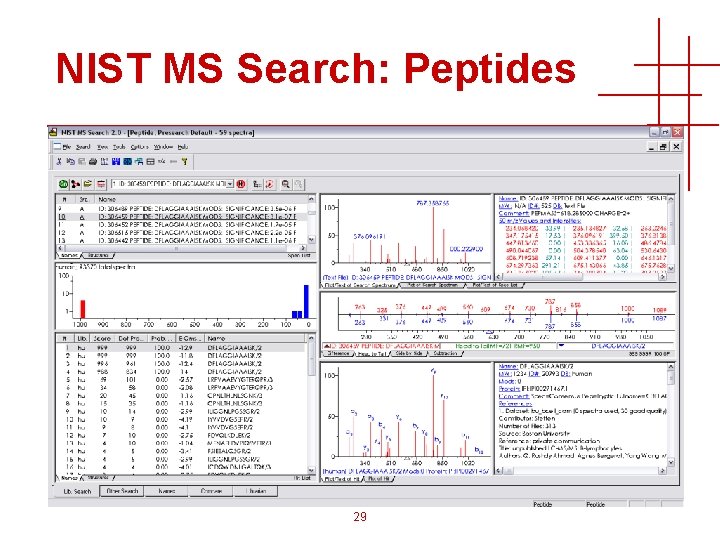
NIST MS Search: Peptides 29
Peptide DLATVYVDVLK 30
Protein Families 31
Protein Families 32
Peptide DLATVYVDVLK 33
Hidden Markov Models for Spectral Matching • Capture statistical variation and consensus in peak intensity • Only need 10 spectra to build a model • Capture semantics of peaks • Extrapolate model to other peptides • Good specificity with superior sensitivity for peptide detection • Assign 1000’s of additional spectra (p-value < 10 -5) 34
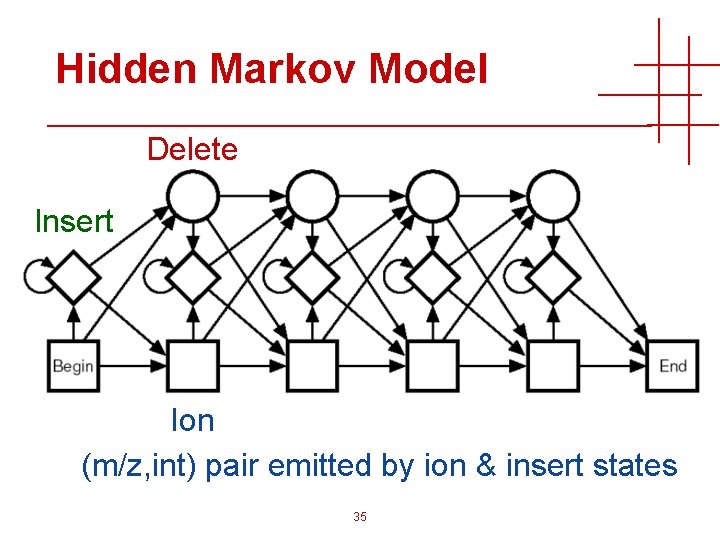
Hidden Markov Model Delete Insert Ion (m/z, int) pair emitted by ion & insert states 35
The devil in the details • Intensity normalization • Discretize (m/z, int) pairs • Viterbi distance as score • Compute p-value using “random” spectra 36
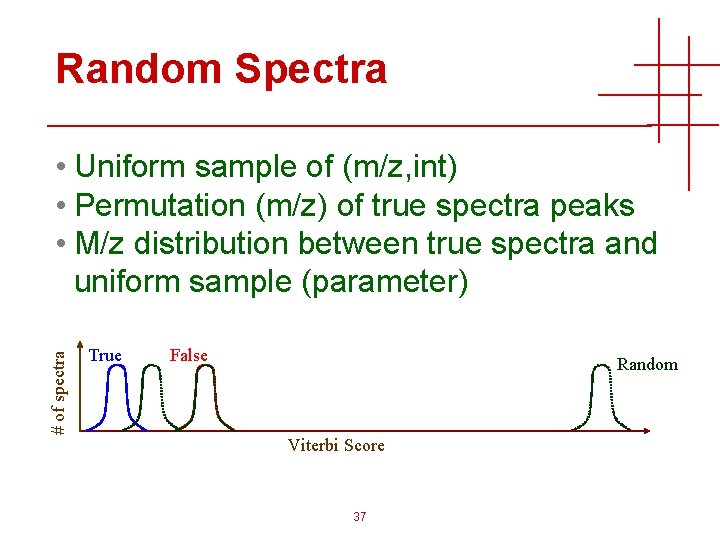
Random Spectra # of spectra • Uniform sample of (m/z, int) • Permutation (m/z) of true spectra peaks • M/z distribution between true spectra and uniform sample (parameter) True False Random Viterbi Score 37
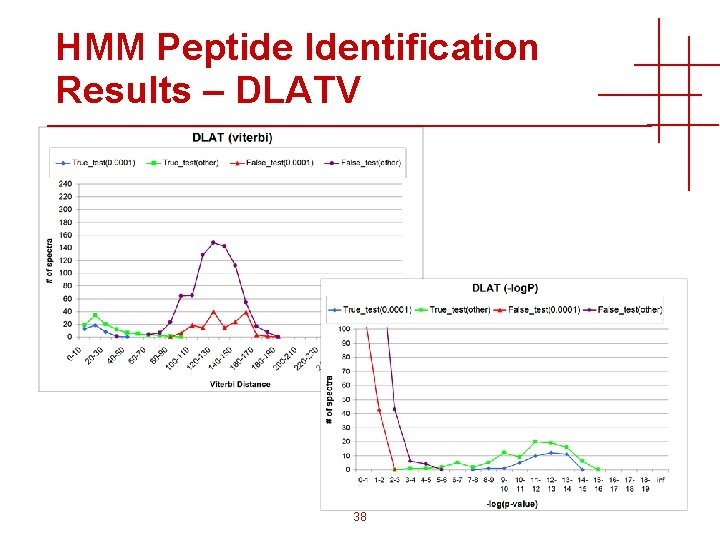
HMM Peptide Identification Results – DLATV 38
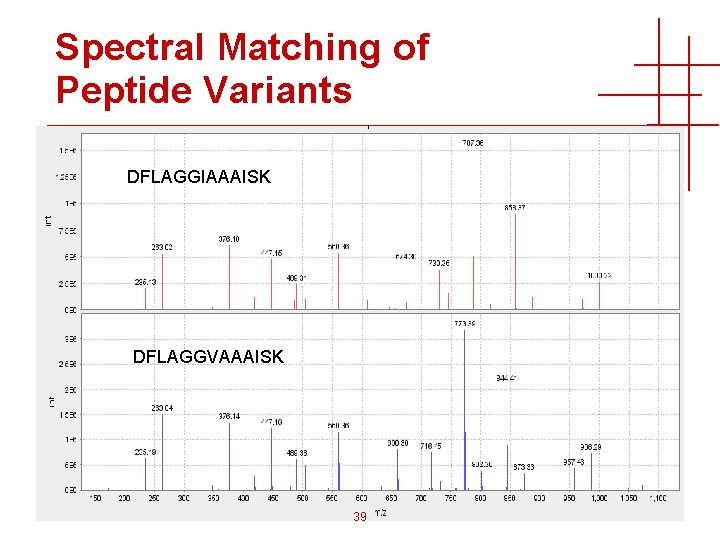
Spectral Matching of Peptide Variants DFLAGGIAAAISK DFLAGGVAAAISK 39
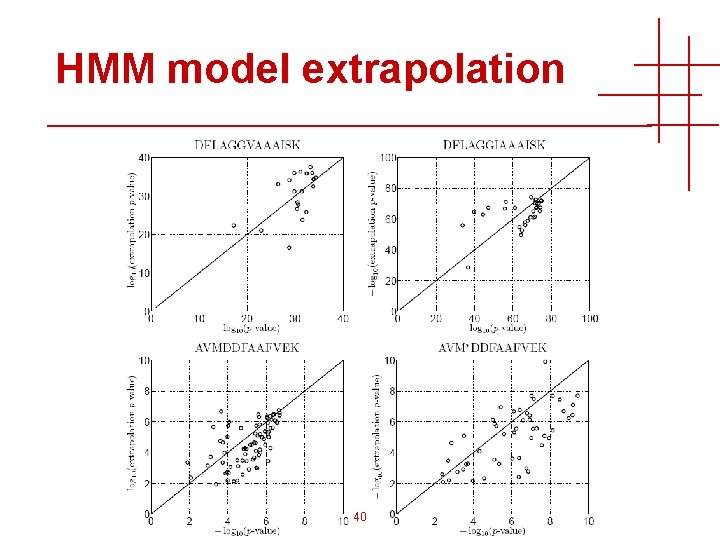
HMM model extrapolation 40
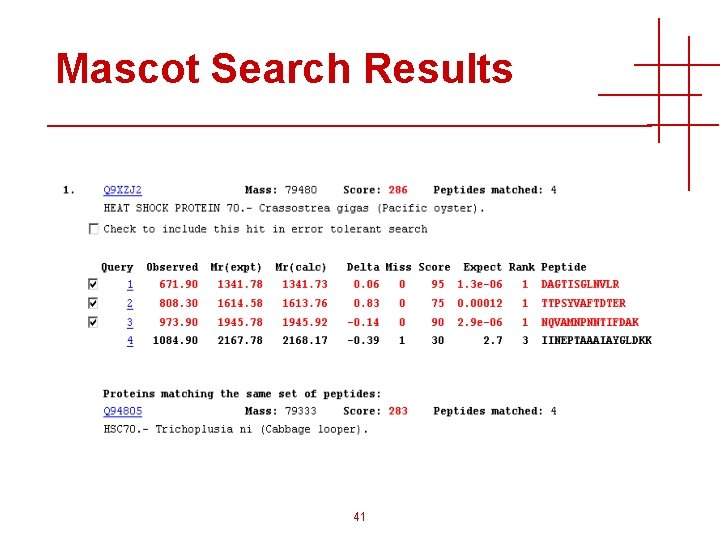
Mascot Search Results 41
Peptide Identification Results • Search engines always provide an answer • Current search engines: • Hard to determine “good” scores • Significance estimates are unreliable • Need better methods! 42
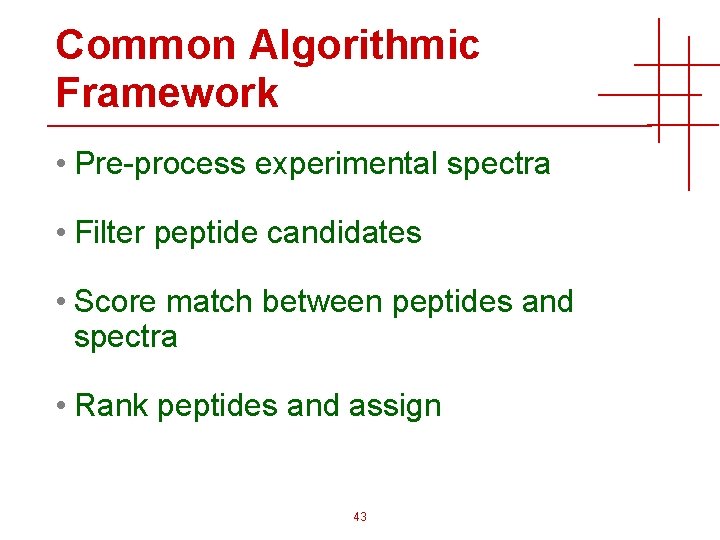
Common Algorithmic Framework • Pre-process experimental spectra • Filter peptide candidates • Score match between peptides and spectra • Rank peptides and assign 43
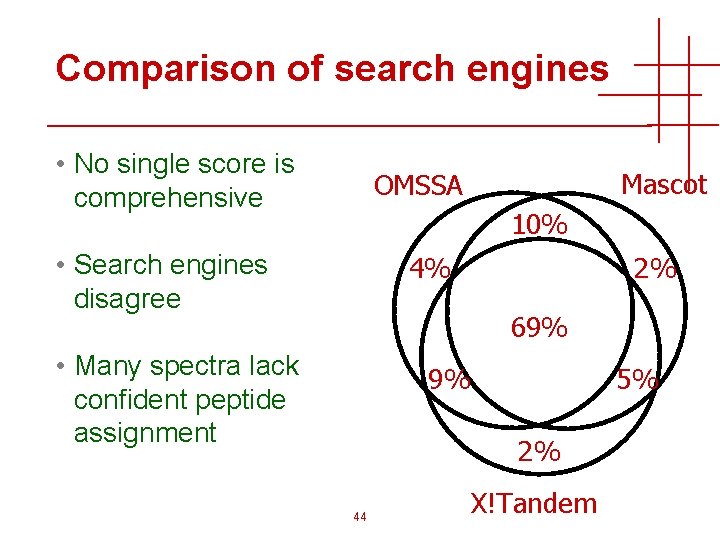
Comparison of search engines • No single score is comprehensive Mascot OMSSA 10% • Search engines disagree 4% 2% 69% • Many spectra lack confident peptide assignment 9% 5% 2% 44 X!Tandem
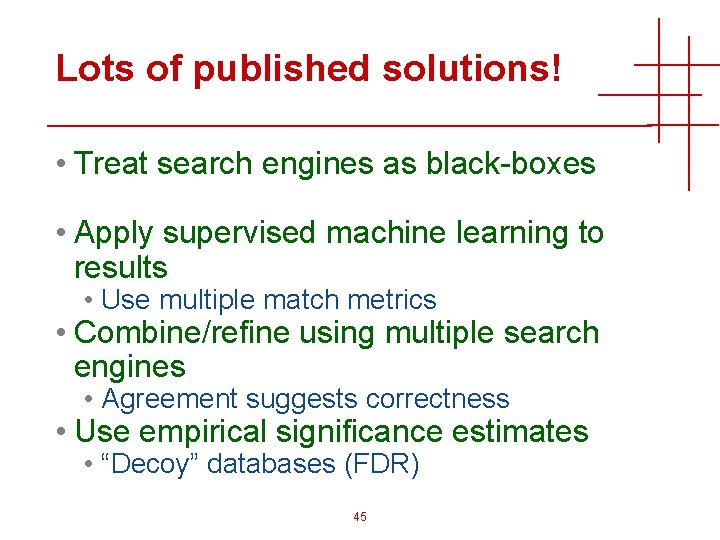
Lots of published solutions! • Treat search engines as black-boxes • Apply supervised machine learning to results • Use multiple match metrics • Combine/refine using multiple search engines • Agreement suggests correctness • Use empirical significance estimates • “Decoy” databases (FDR) 45
Pep. Ar. ML • Peptide identification arbiter by machine learning • Unifies these ideas within a modelfree, combining machine learning framework • Unsupervised training procedure 46
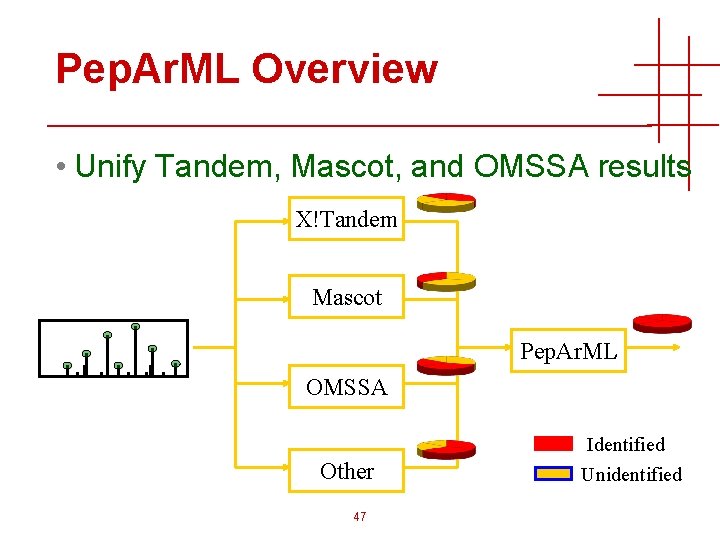
Pep. Ar. ML Overview • Unify Tandem, Mascot, and OMSSA results X!Tandem Mascot Pep. Ar. ML OMSSA Other 47 Identified Unidentified
Voting Heuristic Combiner • Choose peptide ID with the most votes • Use best FDR as confidence • Break ties (single votes) using FDR • Strawman for comparison 48
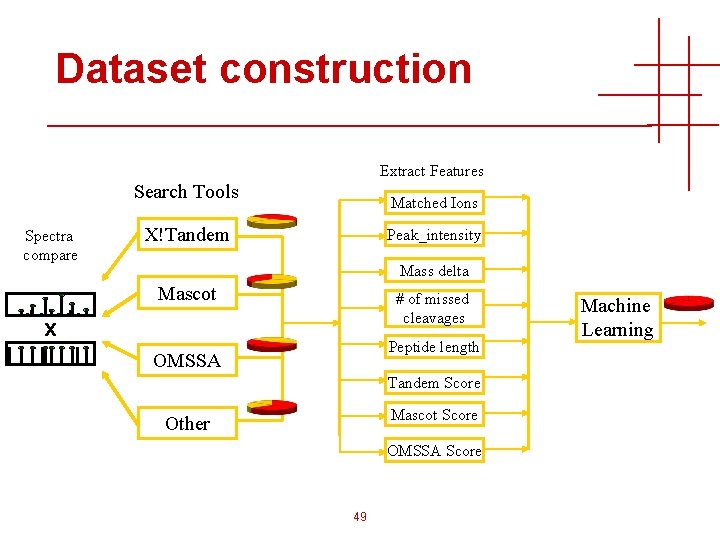
Dataset construction Extract Features Search Tools Spectra compare Matched Ions X!Tandem Peak_intensity Mass delta Mascot # of missed cleavages x Peptide length OMSSA Tandem Score Mascot Score Other OMSSA Score 49 Machine Learning
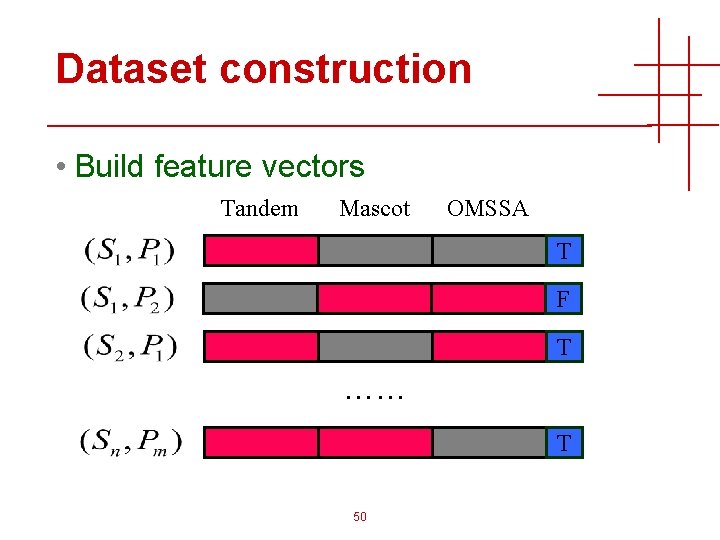
Dataset construction • Build feature vectors Tandem Mascot OMSSA T F T …… T 50
Dataset construction • Synthetic protein mixtures provide ground truth • C 8 • 8 standard proteins (Calibrant Biosystems) • 4594 MS/MS spectra (LTQ) • 618 (11. 2%) true positives • S 17 • 17 standard proteins (Sashimi Repository) • 1389 MS/MS spectra (Q-TOF) • 354 (25. 4%) true positives • AURUM • 364 standard proteins (AURUM 1. 0) • 7508 MS/MS spectra (MALDI-TOF) • 3775 (50. 3%) true positives 51
Machine learning improves single search engines (S 17) 52
Multiple search engines are better than single search engines (S 17) 53
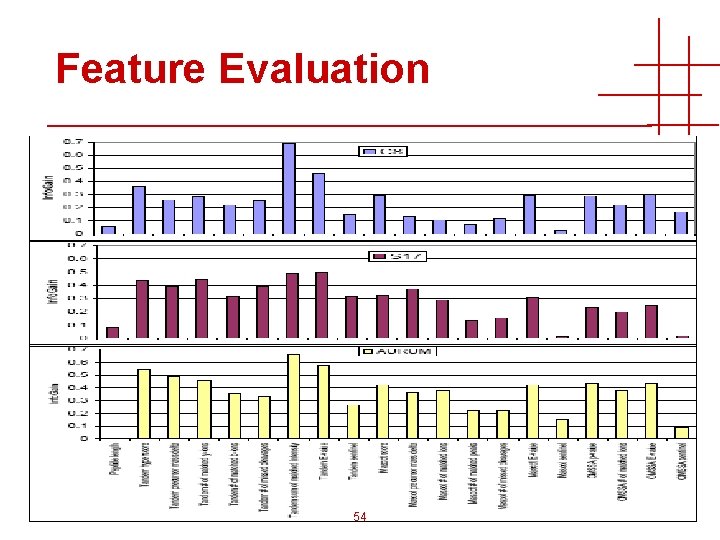
Feature Evaluation 54
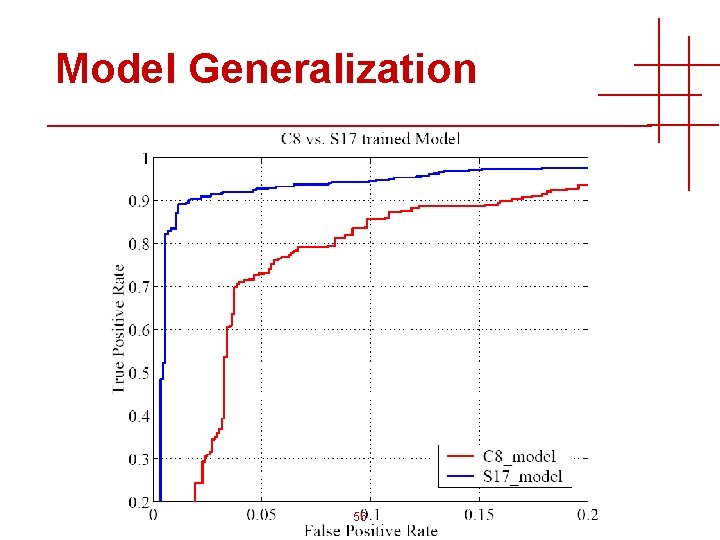
Application to Real Data • How well do these models generalize? • Different instruments • Spectral characteristics change scores • Search parameters • Different parameters change score values • Supervised learning requires • (Synthetic) experimental data from every instrument • Search results from available search engines • Training/models for all parameters x search engine sets x instruments 55
Model Generalization 56
Rescuing Machine Learning • Train a new machine-learning model for every dataset! • Generalization not required • No predetermined search engines, parameters, instruments, features • Perhaps we can “guess” the true proteins • Most proteins not in doubt • Machine learning can tolerate imperfect labels 57
Unsupervised Learning • Heuristic selection of “true” proteins • Train classifier, predict true peptide IDs • Update “true” proteins • Heuristic selection of “true” proteins from classifier predictions • Iterate until convergence 58
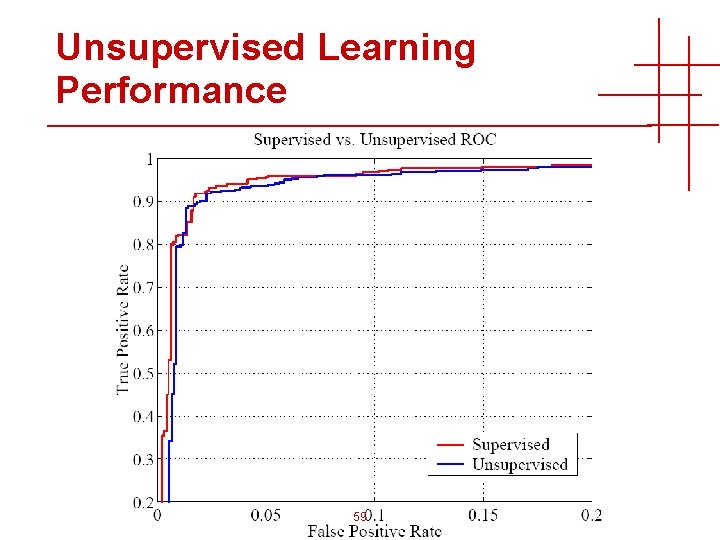
Unsupervised Learning Performance 59

Unsupervised Learning Convergence 60
Conclusions • Proteomics can inform genome annotation • Eukaryotic and prokaryotic • Functional vs silencing variants • Peptides identify more than just proteins • Untapped source of disease biomarkers • Computational inference can make a substantial impact in proteomics 61
Conclusions • Compressed peptide sequence databases make routine EST searching feasible • HMMatch spectral matching improves identification performance for familiar peptides • Unsupervised, model-free, combining Pep. Ar. ML framework solves peptide identification interpretation problem 62
Acknowledgements • Chau-Wen Tseng, Xue Wu • UMCP Computer Science • Catherine Fenselau • UMCP Biochemistry • Cheng Lee • Calibrant Biosystems • Peptide. Atlas, HUPO PPP, X!Tandem • Funding: NIH/NCI, USDA/ARS 63
- Slides: 63