
Improving the Recovery of Students with Brain Injury
Improving the Recovery of Students with Brain Injury in Georgia
National Perspective Traumatic Brain Injury
Brain injury is the leading cause of death and disability in children & young adults.
Good News: Dramatic reduction in brain injury mortality rates over the past 20 years. We are saving roughly 70% of those who previously died in serious motor vehicle accidents. Which Means: Increasing number of young, otherwise healthy individuals with chronic neuropsychiatric disabilities. Traumatic Brain Injury in the United States: A Report to Congress. Division of Acute Care, Rehabilitation Research, and Disability Prevention, CDC, US Dept HHS. December, 1999

CDC Statistics Average ANNUAL number of Traumatic Brain Injury Emergency Department Visits and Hospitalizations in the United States 511, 257 Children with Traumatic Brain Injury 0 -14 years of age • Most children who sustained a TBI (92. 7%) were treated and released from the emergency department. www. cdc. gov/Traumatic. Brain. Injury www. brainandspinalcord. org/brain-injury/statistics. html

National Data – TBI by Age
Traumatic Brain Injury Georgia Statistics
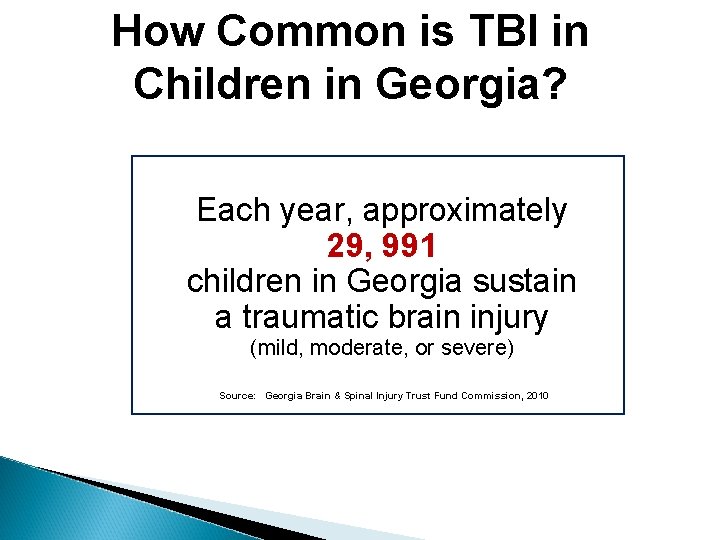
How Common is TBI in Children in Georgia? Each year, approximately 29, 991 children in Georgia sustain a traumatic brain injury (mild, moderate, or severe) Source: Georgia Brain & Spinal Injury Trust Fund Commission, 2010
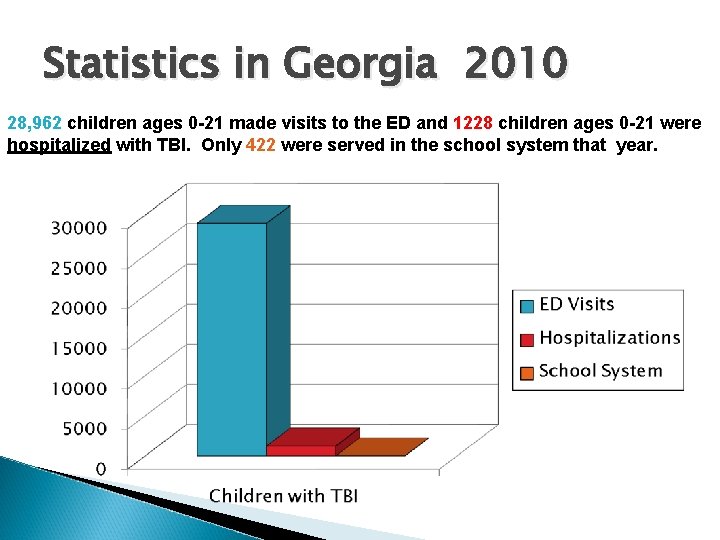
Statistics in Georgia 2010 28, 962 children ages 0 -21 made visits to the ED and 1228 children ages 0 -21 were hospitalized with TBI. Only 422 were served in the school system that year.
Statistics in Georgia 2010 R E M O V E D REMOVED
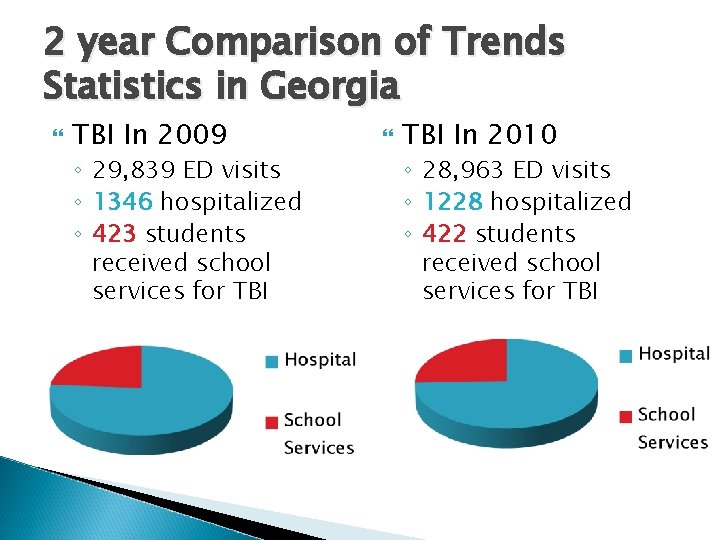
2 year Comparison of Trends Statistics in Georgia TBI In 2009 ◦ 29, 839 ED visits ◦ 1346 hospitalized ◦ 423 students received school services for TBI In 2010 ◦ 28, 963 ED visits ◦ 1228 hospitalized ◦ 422 students received school services for TBI
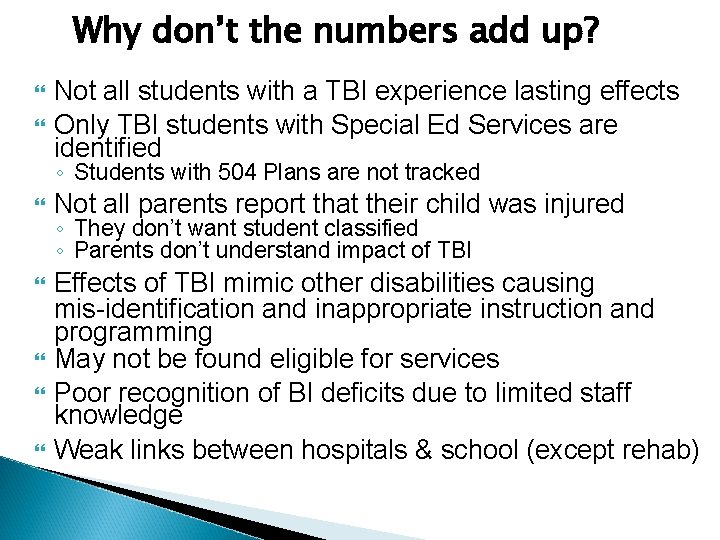
Why don’t the numbers add up? Not all students with a TBI experience lasting effects Only TBI students with Special Ed Services are identified ◦ Students with 504 Plans are not tracked Not all parents report that their child was injured Effects of TBI mimic other disabilities causing mis-identification and inappropriate instruction and programming May not be found eligible for services Poor recognition of BI deficits due to limited staff knowledge Weak links between hospitals & school (except rehab) ◦ They don’t want student classified ◦ Parents don’t understand impact of TBI
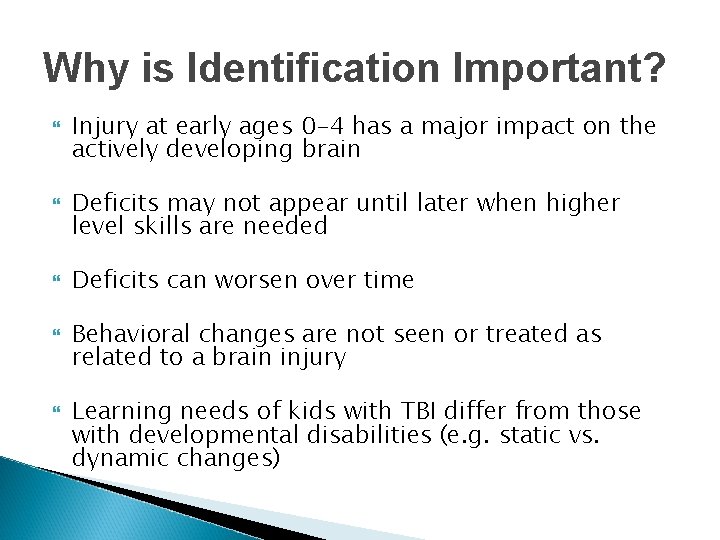
Why is Identification Important? Injury at early ages 0 -4 has a major impact on the actively developing brain Deficits may not appear until later when higher level skills are needed Deficits can worsen over time Behavioral changes are not seen or treated as related to a brain injury Learning needs of kids with TBI differ from those with developmental disabilities (e. g. static vs. dynamic changes)
Importance of Hospital-School Transition Special education is the ticket to continued rehabilitation in school
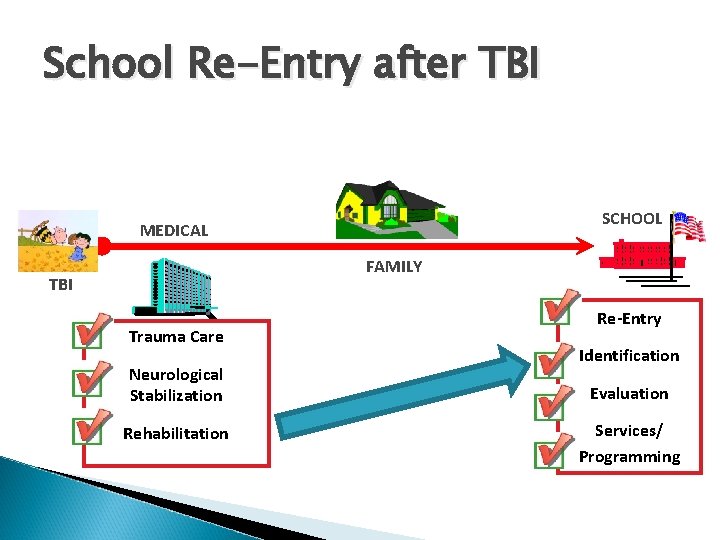
School Re-Entry after TBI SCHOOL MEDICAL FAMILY TBI Trauma Care Neurological Stabilization Rehabilitation Re-Entry Identification Evaluation Services/ Programming
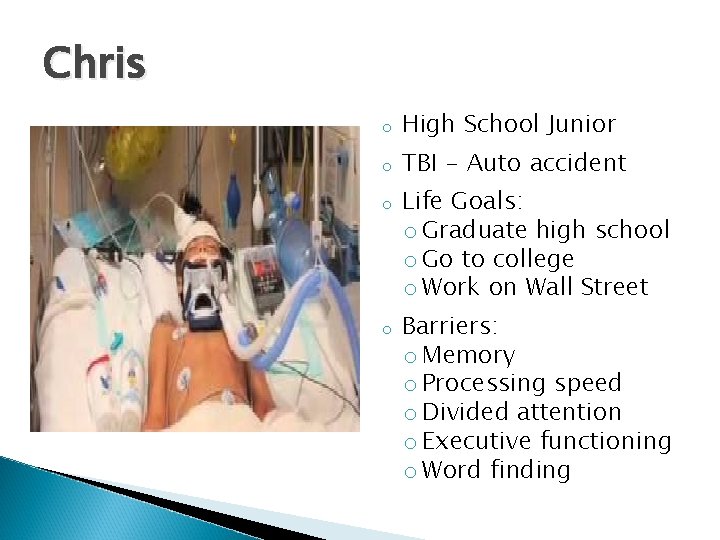
Chris o High School Junior o TBI - Auto accident o o Life Goals: o Graduate high school o Go to college o Work on Wall Street Barriers: o Memory o Processing speed o Divided attention o Executive functioning o Word finding
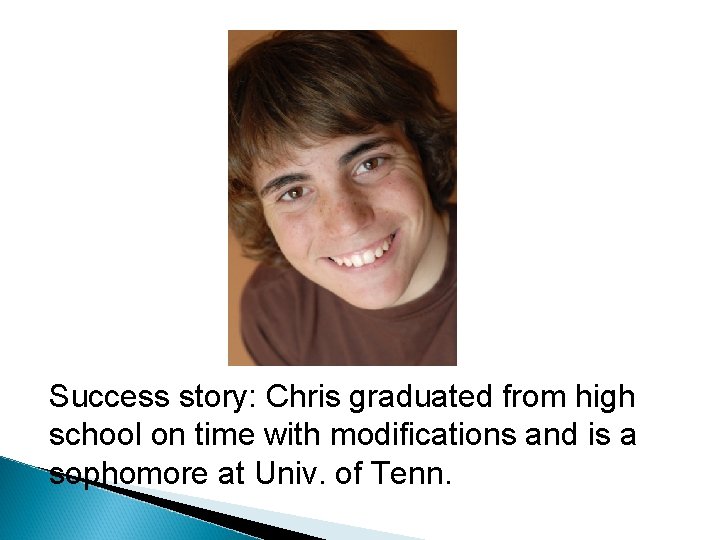
Success story: Chris graduated from high school on time with modifications and is a sophomore at Univ. of Tenn.
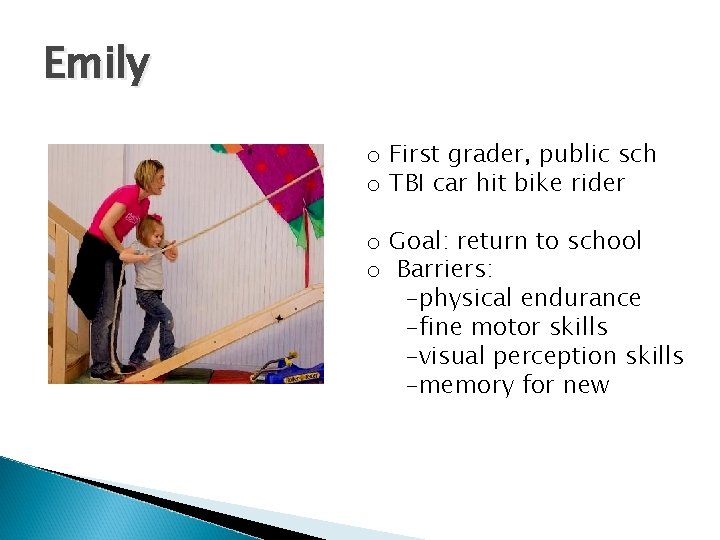
Emily o First grader, public sch o TBI car hit bike rider o Goal: return to school o Barriers: -physical endurance -fine motor skills -visual perception skills -memory for new
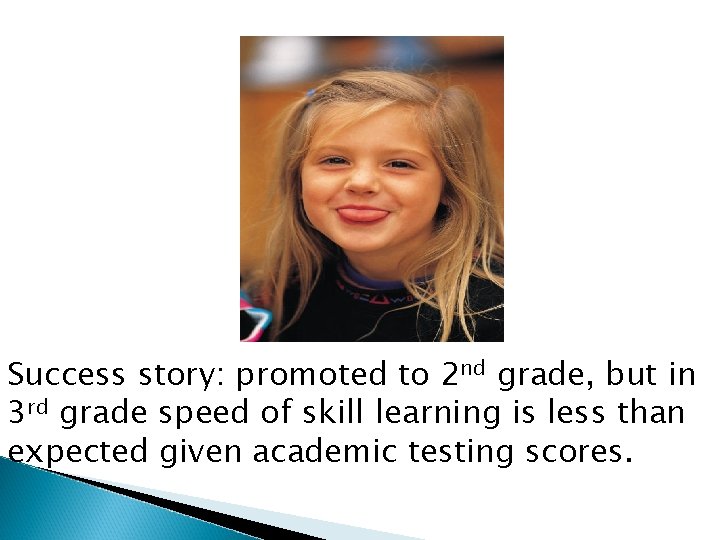
Success story: promoted to 2 nd grade, but in 3 rd grade speed of skill learning is less than expected given academic testing scores.
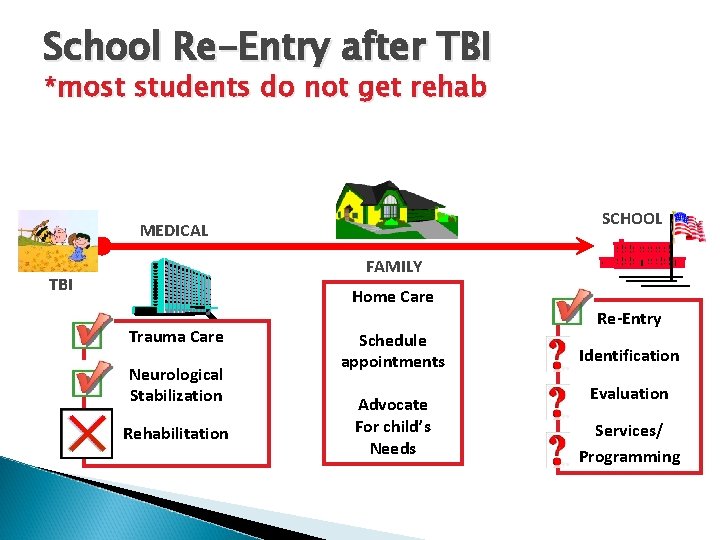
School Re-Entry after TBI *most students do not get rehab SCHOOL MEDICAL FAMILY TBI Home Care Trauma Care Neurological Stabilization Rehabilitation Schedule appointments Advocate For child’s Needs Re-Entry Identification Evaluation Services/ Programming
QUALITY OF RECOVERY AFTER A BRAIN INJURY. . is dependent upon the quality of supports a child receives. . . So TEACHERS deserve to know more about brain injury to be able to help
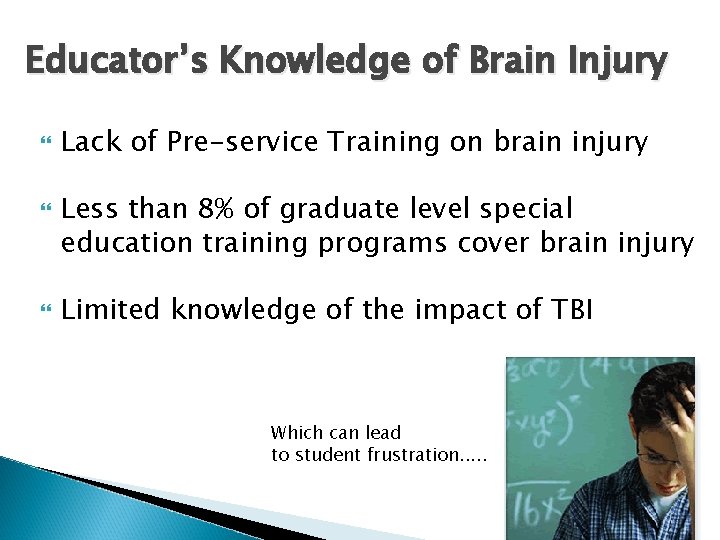
Educator’s Knowledge of Brain Injury Lack of Pre-service Training on brain injury Less than 8% of graduate level special education training programs cover brain injury Limited knowledge of the impact of TBI Which can lead to student frustration. . .
How can we help improve a student’s recovery after surviving a TBI. . . . WHERE DO WE START?
Solutions for Georgia 1. Create a system for connecting children and their families with the school following TBI to identify and track ALL TBI students. 2. Develop an education training module for school staff that is easily accessed by all teachers across the state.
Solution #1 1. Create a system for connecting children and their families with the school following TBI to identify and track ALL TBI students. “STEP” Oregon Program (also in OH, CO, OR, TN): ◦ single point of entry at DOE for hospitals to call ◦ DOE informs trained liaison, then liaison informs school “SCORE” Children’s National Medical Center ◦ 4 -corners approach (family, hosp, school, athletic/recreation) ◦ Direct connection between hospital & schools ◦ Preparation about TBI, develop protocols for hospital to school
Solution #2 2. Develop an education training module for school staff that is easily accessed by all teachers across the state. “STEPS” Pennsylvania o o o Designated TBI professional by DOE Built on “consulting teams” in regions of state, staff training Communication between hosp & school, family & resources BSITF Georgia o o Created a Brain 101 teacher training module Intended to be used to “train the trainer”
Given. . . the the hospital statistics on yearly pediatric brain injury discrepancy between hospital & school data child’s immediate need for intervention after injury child’s need for maximized recovery over time possible delay of the appearance of deficits from injury family’s ongoing need for support and services need for teachers to be able recognize changes after injury need for school staff to have knowledge of TBI We must…
We must begin to create a plan to improve the identification of TBI students and train teachers in appropriate instruction to maximize test scores, graduation rates & overall academic success
Contacts “STEP” Oregon Program (also in OH, CO, OR, TN): ◦ Contact info: todisb@wou. edu “SCORE” Children’s National Medical Center ◦ Contact info: ggioia@childrensnational. org “STEPS” Pennsylvania Program ◦ Contact info: eaganbrown@biapa. org
- Slides: 29