
Improving the interface processes in the ACME model
- Slides: 10
Improving the interface processes in the ACME model PI: Xubin Zeng, University of Arizona (UA) Members: Michael Brunke, Pieter Hazenberg, Jack Eyre (UA) We will carry out four tasks: • Primary Task 1 (land-atmosphere coupling): to implement and test elevation classes (including dynamic topography over land ice sheets) • Task 2 (ocean-atmosphere coupling): to evaluate ocean surface fluxes, implement ocean skin temperature scheme, and improve turbulence schemes • Task 3 (land-ocean coupling): to improve river transport model (to allow for land-ocean exchange of water). • Task 4: (snow-sea ice coupling): to help evaluate and improve snow density parameterization over sea ice Additional interest: to evaluate interface processes in ACME, identify strengths and weaknesses, and attempt to improve weaknesses.
Additional interest: to evaluate interface processes in ACME, identify strengths and weaknesses, and attempt to improve weaknesses. Throughout the years, we have gained from our focus on the atmosphere-land-ocean-ice interface processes (rather than individual components): • used the insights from atmospheric dynamics to revise the soil moisture governing equations (implemented in CLM) • used the soil temperature experience to develop the ocean skin temperature prognostic parameterization (implemented in ECMWF and other models) • Applied our turbulence parameterization over ocean (implemented in NCEP GFS/CFS) to over land (CLM) • Extended the turbulence from ocean/land to sea ice (implemented in RASM - Regional Arctic System Model)
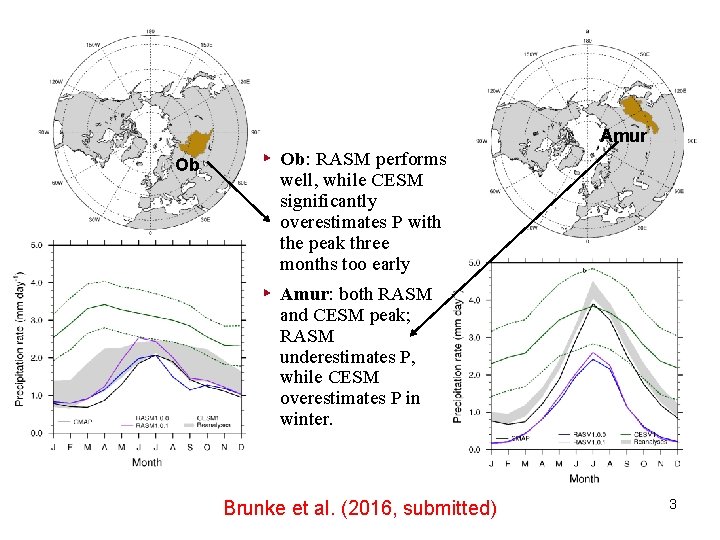
Amur Ob ▸ Ob: RASM performs well, while CESM significantly overestimates P with the peak three months too early ▸ Amur: both RASM and CESM peak; RASM underestimates P, while CESM overestimates P in winter. Brunke et al. (2016, submitted) 3
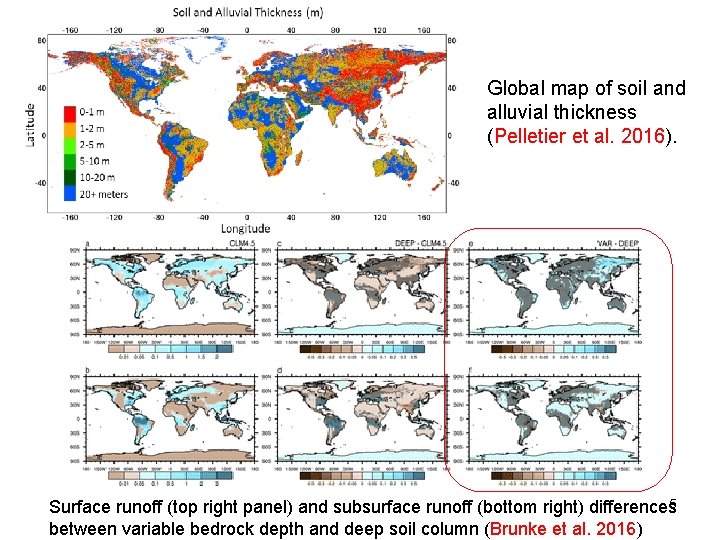
Primary Task 1 (land-atmosphere coupling): to implement and test elevation classes (including dynamic topography over ice sheets) Motivations: • ALM (and CLM) considers subgrid tiles based on land cover • Subgrid elevation classes are important (atmospheric column physics, land ice sheet, and horizontal movement of surface/ground water • PNNL and LANL scientists have done much work • We plan to implement and test elevation classes in ACME Why us? • Extensive experience in land modeling and interface studies • Extensive experience in global land data development: • 5 km maximum snow albedo (Barlage et al. 2005; NCEP); • 1 km maximum vegetation fraction (Broxton et al. 2014 a); • 0. 5 km land cover (Broxton et al. 2014 b; WRF); • 1 km bedrock depth (Pelletier et al. 2016; CLM and ALM soon) Key ideas: • Use global 1 km or 90 m elevation pixels to map unique geographic relation between elevation classes in atmo, land, and ice sheet grids • Pre-process this and save the information in the coupler • Re-do it over ice sheet once a year (or month) as specified by modelers
Global map of soil and alluvial thickness (Pelletier et al. 2016). Surface runoff (top right panel) and subsurface runoff (bottom right) differences 5 between variable bedrock depth and deep soil column (Brunke et al. 2016)
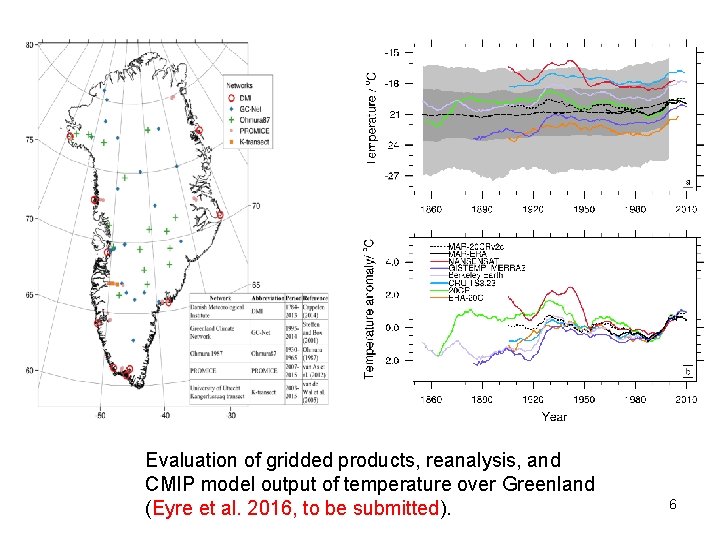
Evaluation of gridded products, reanalysis, and CMIP model output of temperature over Greenland (Eyre et al. 2016, to be submitted). 6
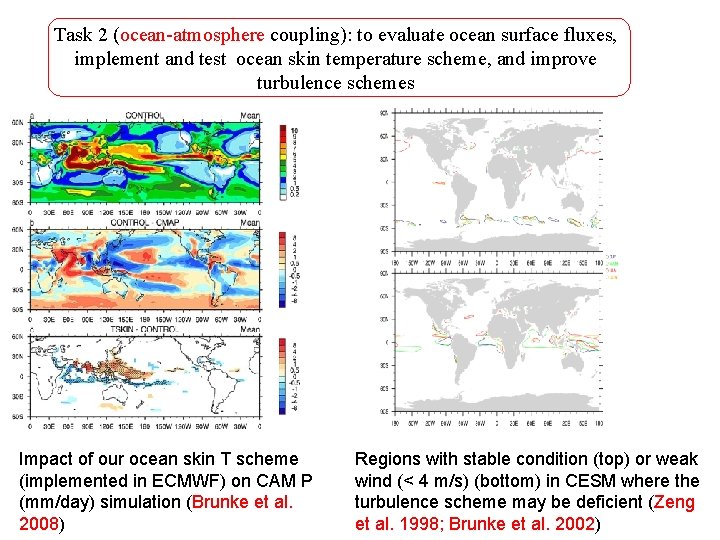
Task 2 (ocean-atmosphere coupling): to evaluate ocean surface fluxes, implement and test ocean skin temperature scheme, and improve turbulence schemes Impact of our ocean skin T scheme (implemented in ECMWF) on CAM P (mm/day) simulation (Brunke et al. 2008) Regions with stable condition (top) or weak wind (< 4 m/s) (bottom) in CESM where the turbulence scheme may be deficient (Zeng et al. 1998; Brunke et al. 2002)
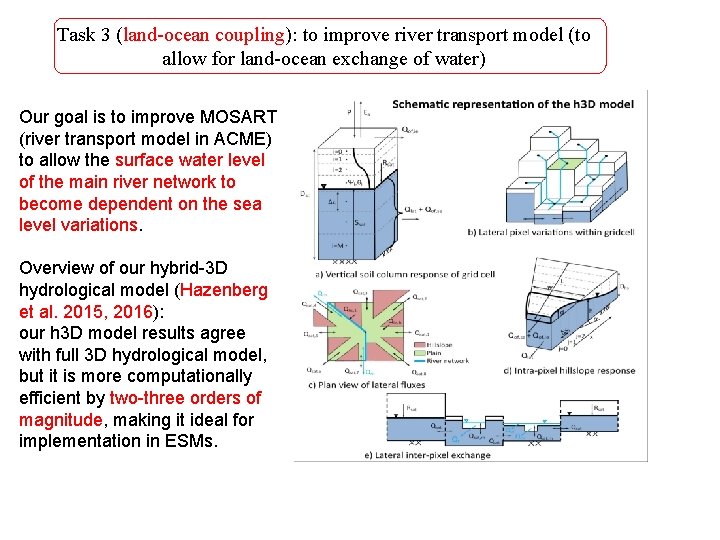
Task 3 (land-ocean coupling): to improve river transport model (to allow for land-ocean exchange of water) Our goal is to improve MOSART (river transport model in ACME) to allow the surface water level of the main river network to become dependent on the sea level variations. Overview of our hybrid-3 D hydrological model (Hazenberg et al. 2015, 2016): our h 3 D model results agree with full 3 D hydrological model, but it is more computationally efficient by two-three orders of magnitude, making it ideal for implementation in ESMs.
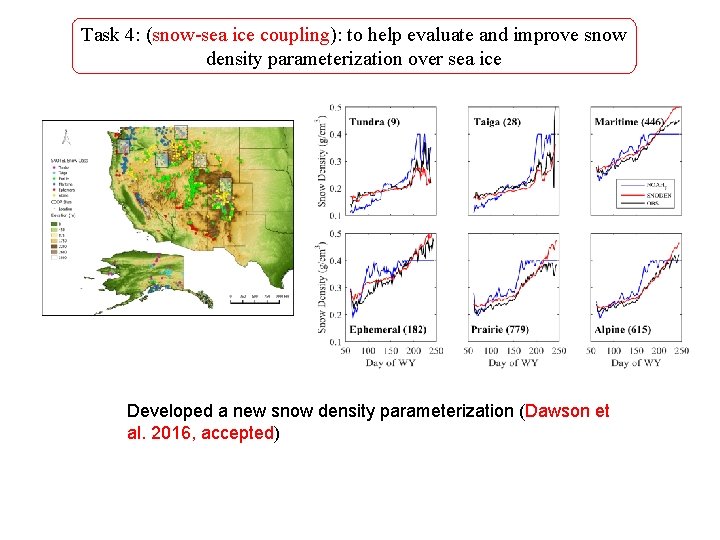
Task 4: (snow-sea ice coupling): to help evaluate and improve snow density parameterization over sea ice Developed a new snow density parameterization (Dawson et al. 2016, accepted)
Current Status • We have access to the ACME code now • We are included in Confluence • We still need to get access to NERSC (in order to evaluate ACME output) • What global elevation, land cover, and vegetation datasets were used to define land, ocean, lake, and ice sheet grids and their subgrid tiles or elevation classes? • We look forward to working with many of you on interface processes in ACME. 10