
Improving seismic isolation in Advanced LIGO using a



- Slides: 28
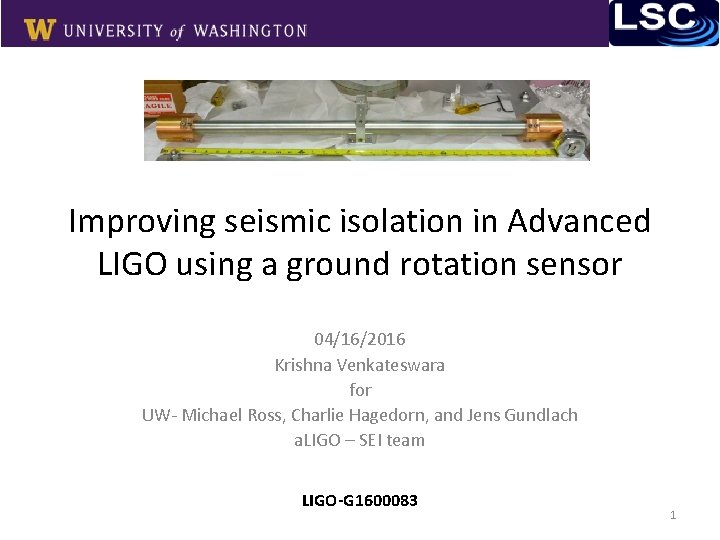
Improving seismic isolation in Advanced LIGO using a ground rotation sensor 04/16/2016 Krishna Venkateswara for UW- Michael Ross, Charlie Hagedorn, and Jens Gundlach a. LIGO – SEI team LIGO-G 1600083 1
Contents Ø Introduction: Why tilt affects LIGO Ø BRS at LIGO Hanford and Tilt Data Ø Next Gen/Compact BRS Ø Summary 2
Introduction 3
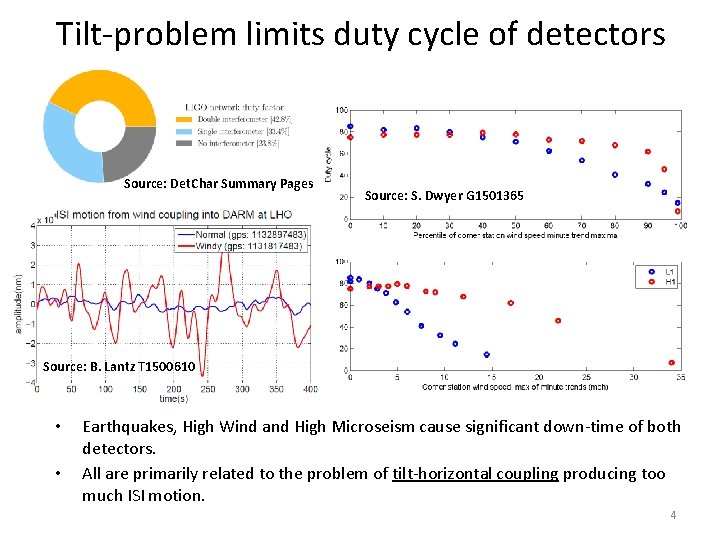
Tilt-problem limits duty cycle of detectors Source: Det. Char Summary Pages Source: S. Dwyer G 1501365 Source: B. Lantz T 1500610 • • Earthquakes, High Wind and High Microseism cause significant down-time of both detectors. All are primarily related to the problem of tilt-horizontal coupling producing too much ISI motion. 4
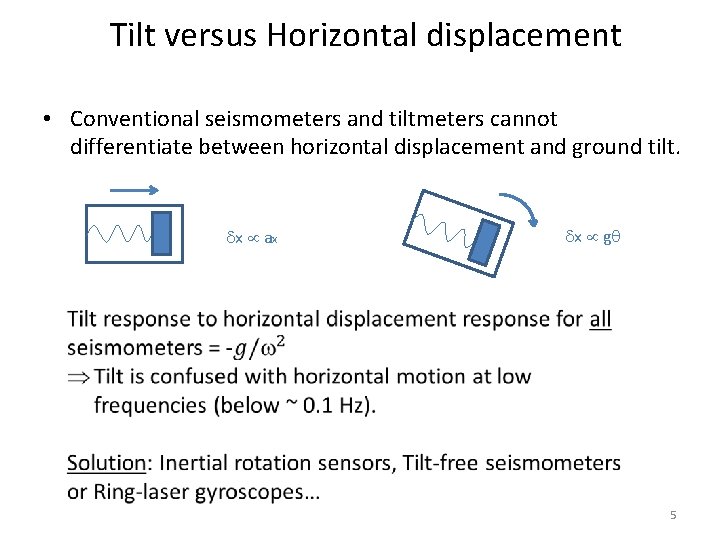
Tilt versus Horizontal displacement • Conventional seismometers and tiltmeters cannot differentiate between horizontal displacement and ground tilt. x ax x g 5
Beam Rotation Sensors 6
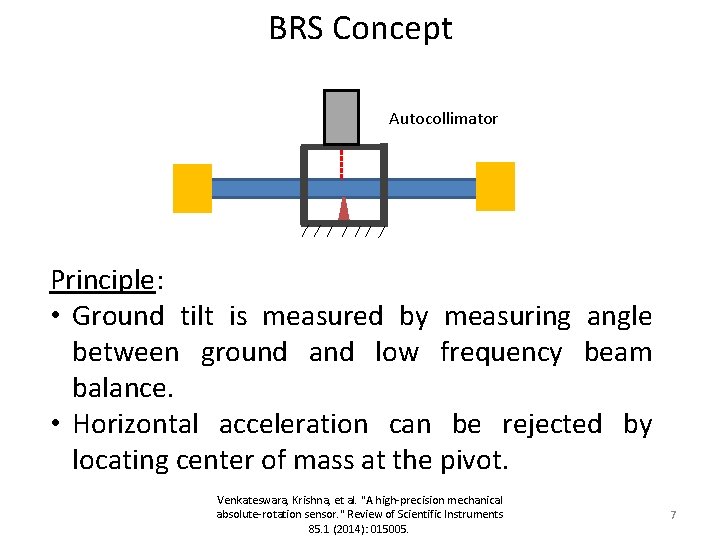
BRS Concept Autocollimator Principle: • Ground tilt is measured by measuring angle between ground and low frequency beam balance. • Horizontal acceleration can be rejected by locating center of mass at the pivot. Venkateswara, Krishna, et al. "A high-precision mechanical absolute-rotation sensor. " Review of Scientific Instruments 85. 1 (2014): 015005. 7
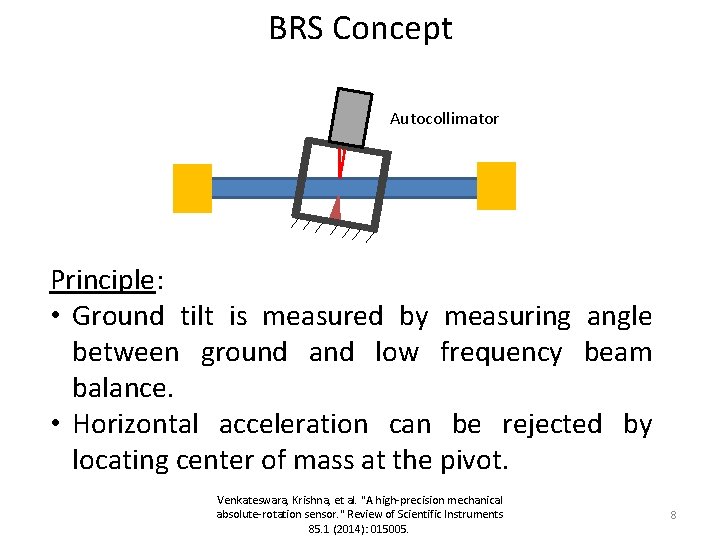
BRS Concept Autocollimator Principle: • Ground tilt is measured by measuring angle between ground and low frequency beam balance. • Horizontal acceleration can be rejected by locating center of mass at the pivot. Venkateswara, Krishna, et al. "A high-precision mechanical absolute-rotation sensor. " Review of Scientific Instruments 85. 1 (2014): 015005. 8
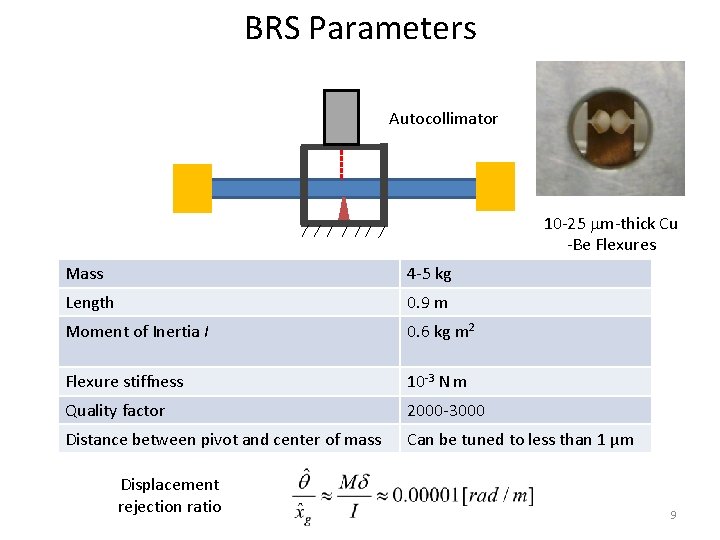
BRS Parameters Autocollimator 10 -25 m-thick Cu -Be Flexures Mass 4 -5 kg Length 0. 9 m Moment of Inertia I 0. 6 kg m 2 Flexure stiffness 10 -3 N m Quality factor 2000 -3000 Distance between pivot and center of mass Can be tuned to less than 1 µm Displacement rejection ratio 9
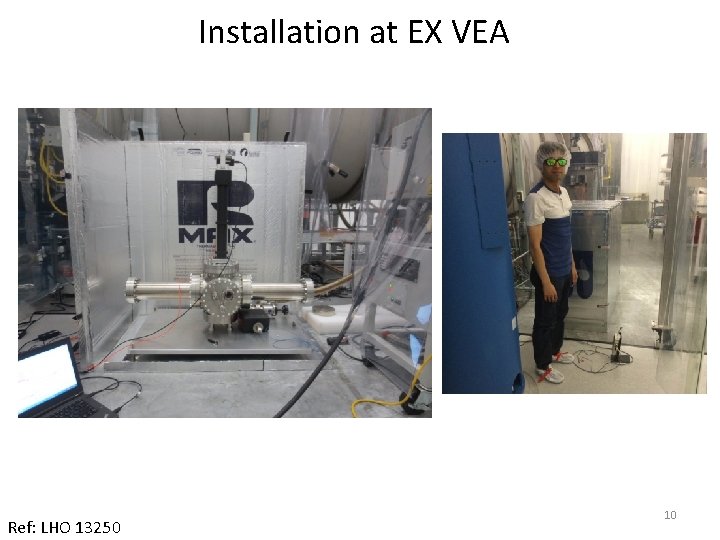
Installation at EX VEA Ref: LHO 13250 10
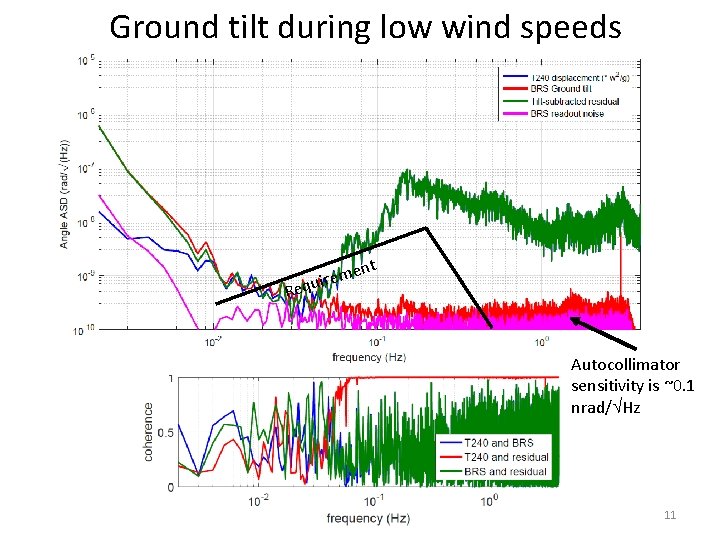
Ground tilt during low wind speeds nt me e r i u eq R Autocollimator sensitivity is ~0. 1 nrad/ Hz 11
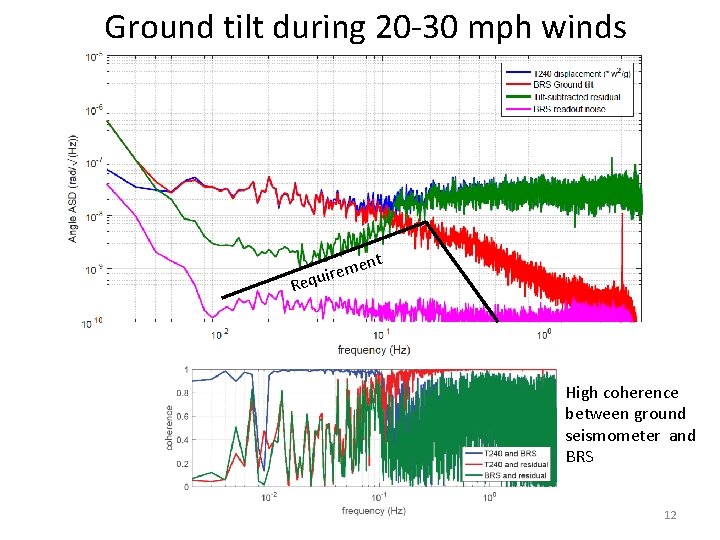
Ground tilt during 20 -30 mph winds nt Re me e r i u q High coherence between ground seismometer and BRS 12
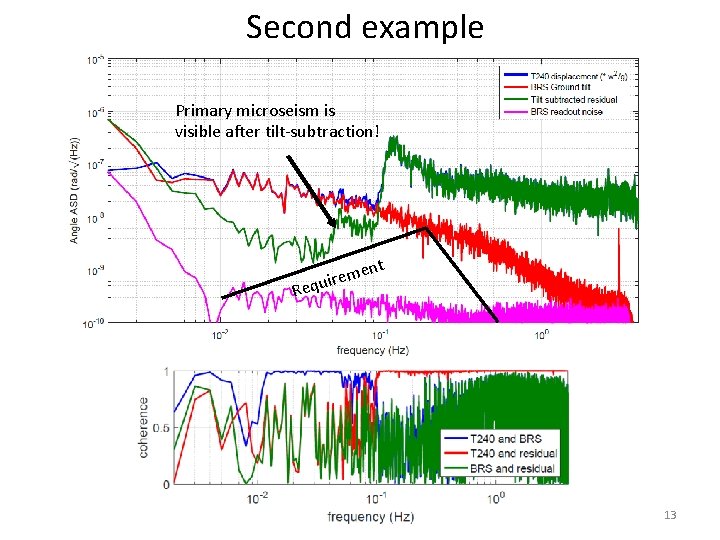
Second example Primary microseism is visible after tilt-subtraction! nt reme i u q e R 13
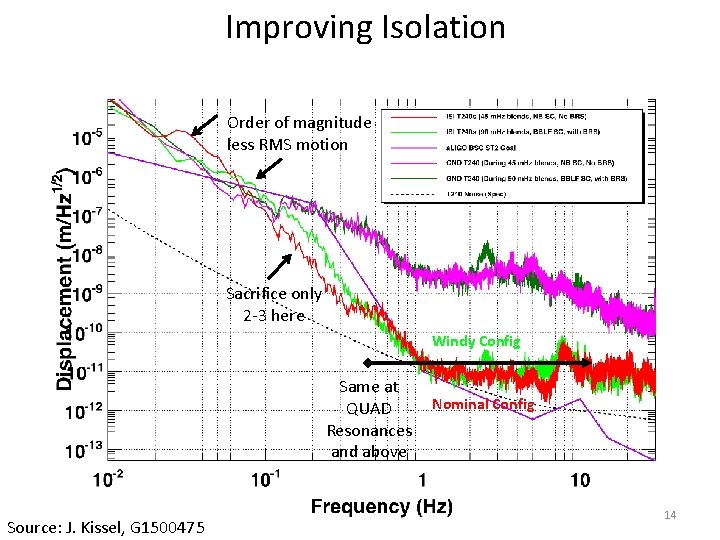
Improving Isolation Order of magnitude less RMS motion Sacrifice only 2 -3 here Windy Config Same at Nominal Config QUAD Resonances and above Source: J. Kissel, G 1500475 14
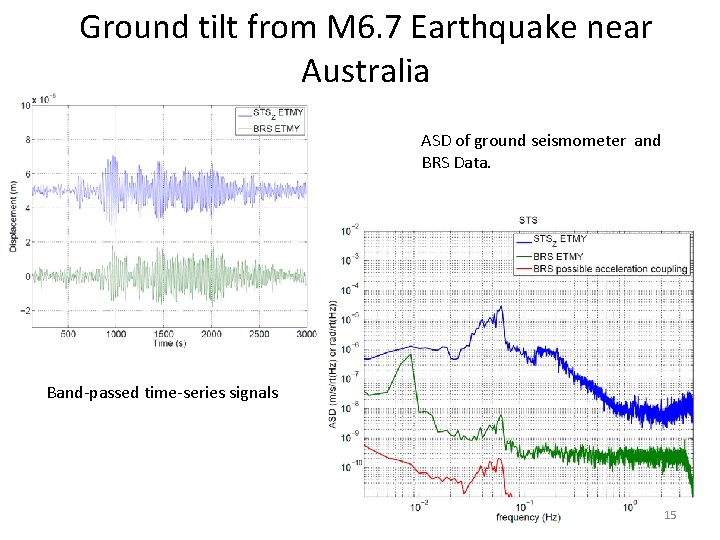
Ground tilt from M 6. 7 Earthquake near Australia ASD of ground seismometer and BRS Data. Band-passed time-series signals 15
Next Gen/Compact BRS 16
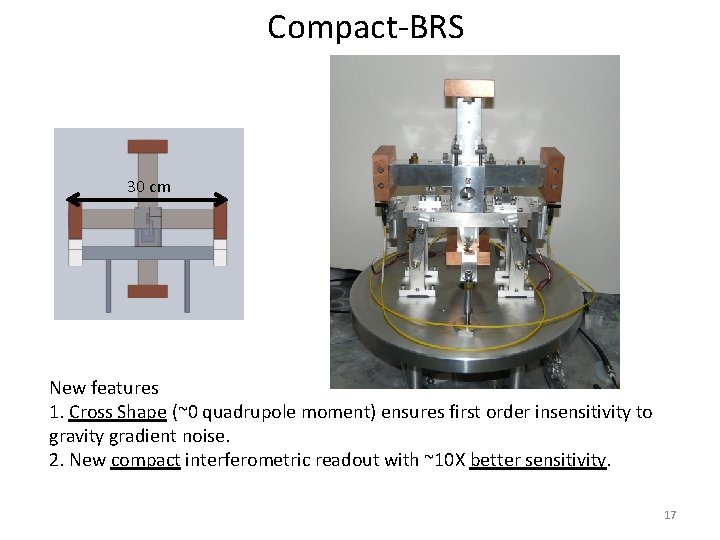
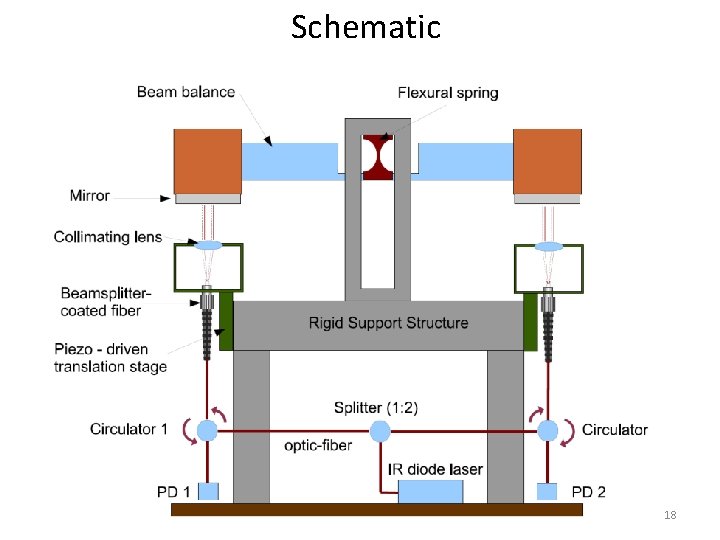
Compact-BRS 30 cm New features 1. Cross Shape (~0 quadrupole moment) ensures first order insensitivity to gravity gradient noise. 2. New compact interferometric readout with ~10 X better sensitivity. 17
Schematic 18
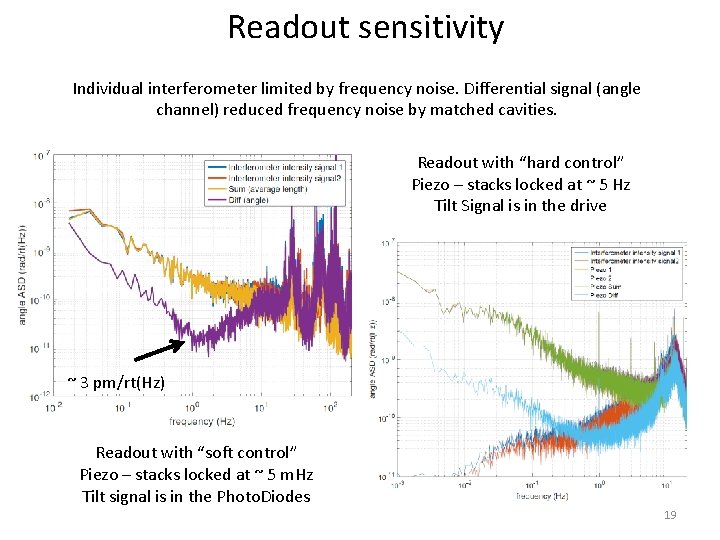
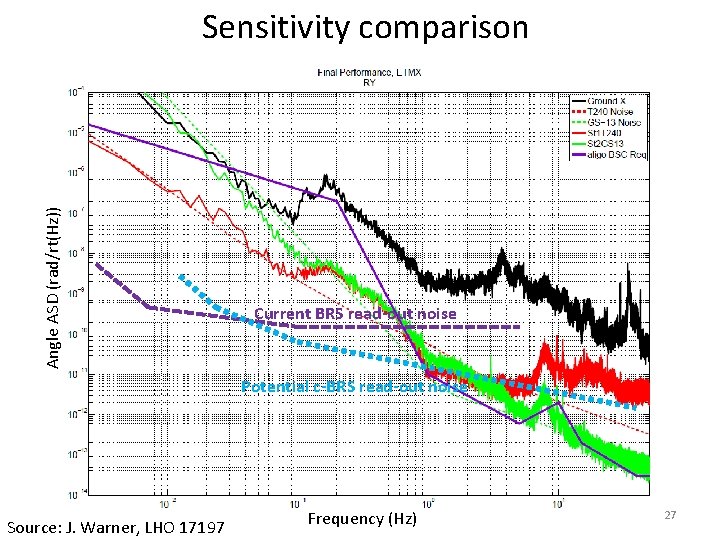
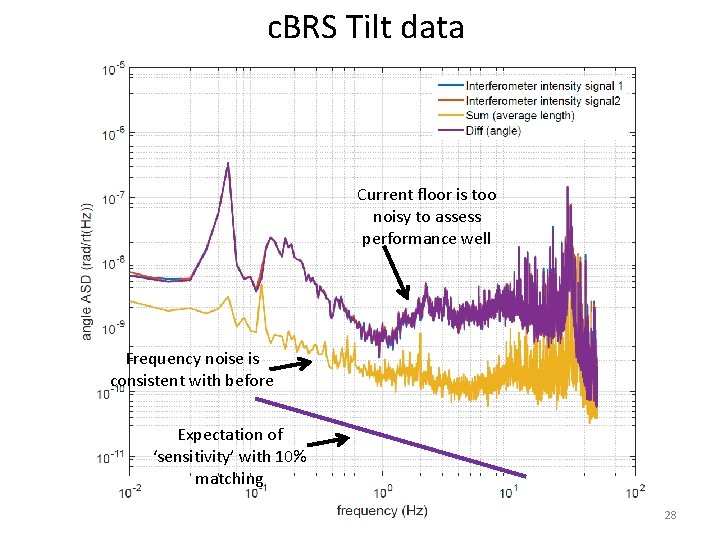
Readout sensitivity Individual interferometer limited by frequency noise. Differential signal (angle channel) reduced frequency noise by matched cavities. Readout with “hard control” Piezo – stacks locked at ~ 5 Hz Tilt Signal is in the drive ~ 3 pm/rt(Hz) Readout with “soft control” Piezo – stacks locked at ~ 5 m. Hz Tilt signal is in the Photo. Diodes 19
Summary 1. BRS allows an unambiguous separation of tilt and horizontal acceleration between 0. 01 to ~30 Hz. 2. BRS-1 and BRS-2 can improve total RMS differential motion of the Optical Platforms in LIGO and improve isolation, especially under windy conditions. 3. A new compact prototype (c. BRS) is under development. When placed on the Optical Platforms, it can significantly boost angular isolation. It may also prove useful in Newtonian Noise measurement at 10 Hz. 20
Thank you! 21
Extra slides 22
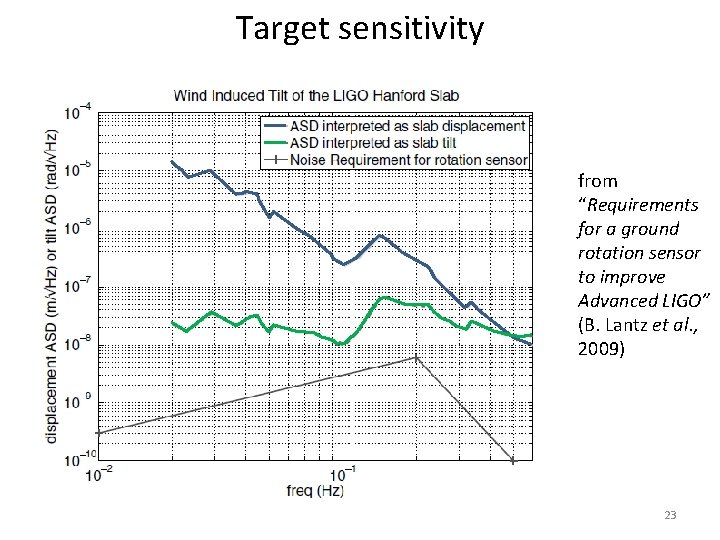
Target sensitivity from “Requirements for a ground rotation sensor to improve Advanced LIGO” (B. Lantz et al. , 2009) 23
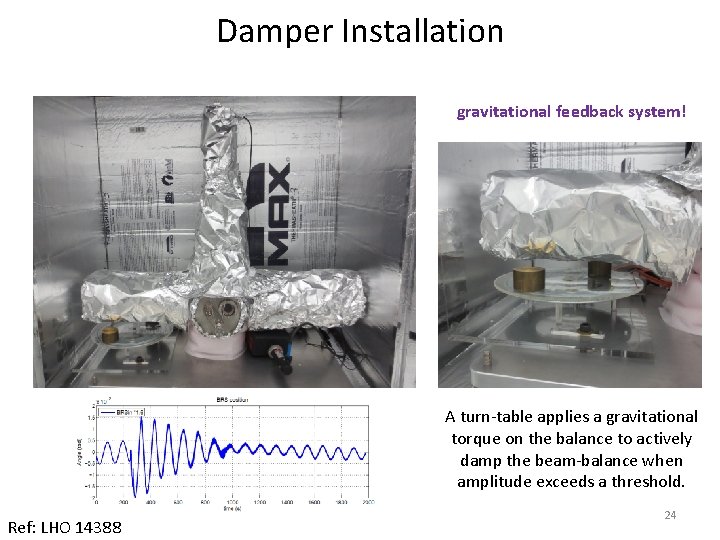
Damper Installation gravitational feedback system! A turn-table applies a gravitational torque on the balance to actively damp the beam-balance when amplitude exceeds a threshold. Ref: LHO 14388 24
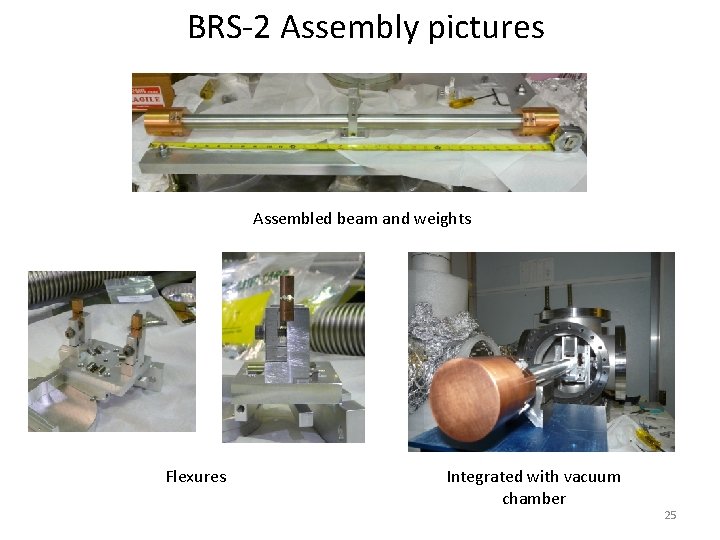
BRS-2 Assembly pictures Assembled beam and weights Flexures Integrated with vacuum chamber 25
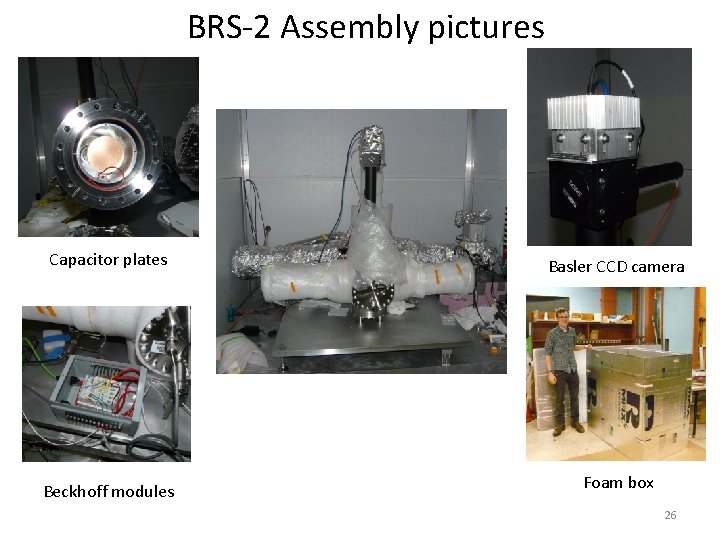
BRS-2 Assembly pictures Capacitor plates Basler CCD camera Beckhoff modules Foam box 26
Angle ASD (rad/rt(Hz)) Sensitivity comparison Current BRS read-out noise Potential c-BRS read-out noise Source: J. Warner, LHO 17197 Frequency (Hz) 27
c. BRS Tilt data Current floor is too noisy to assess performance well Frequency noise is consistent with before Expectation of ‘sensitivity’ with 10% matching 28