
Improving Polycystic Ovarian Syndrome Diagnostic Practices Among Adolescent



- Slides: 37
Improving Polycystic Ovarian Syndrome Diagnostic Practices Among Adolescent Medicine Providers Orquidia Torres, MD Division of Adolescent and Young Adult Medicine Children’s Hospital of Pittsburgh of UPMC
Background • Diagnosing PCOS in adolescents is controversial • Provider knowledge and lack of consensus affect adherence to existing PCOS guidelines • New criteria offer clinical guidance, but not previously used in the division • Limited data on practice improvement for PCOS
Aim • Improve adherence to PCOS guidelines using a curriculum based intervention
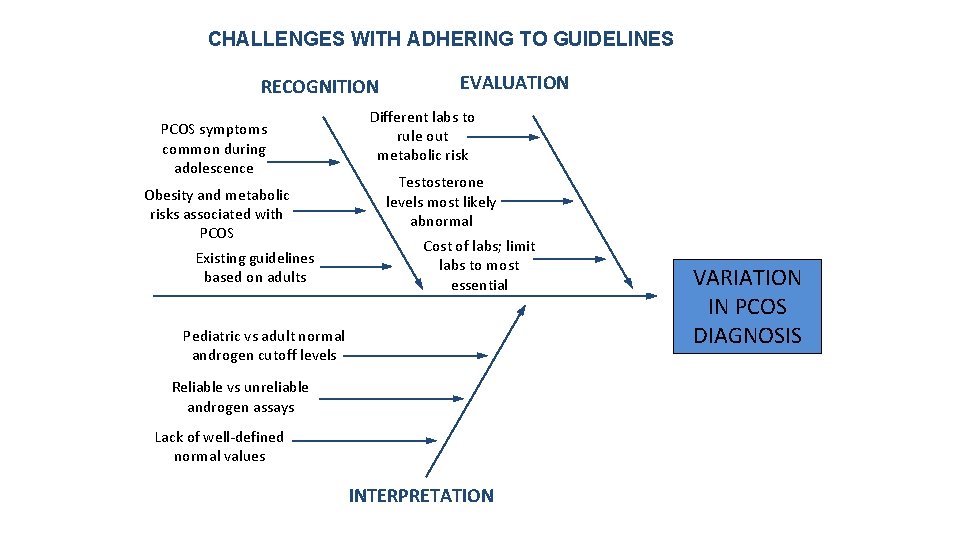
CHALLENGES WITH ADHERING TO GUIDELINES RECOGNITION PCOS symptoms common during adolescence Obesity and metabolic risks associated with PCOS Existing guidelines based on adults EVALUATION Different labs to rule out metabolic risk Testosterone levels most likely abnormal Cost of labs; limit labs to most essential Pediatric vs adult normal androgen cutoff levels Reliable vs unreliable androgen assays Lack of well-defined normal values INTERPRETATION VARIATION IN PCOS DIAGNOSIS
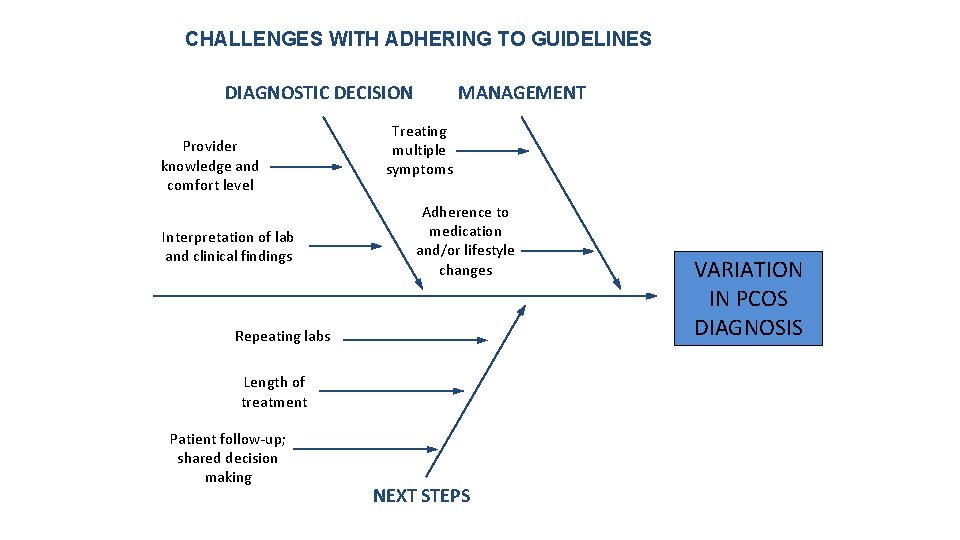
CHALLENGES WITH ADHERING TO GUIDELINES MANAGEMENT DIAGNOSTIC DECISION Provider knowledge and comfort level Interpretation of lab and clinical findings Treating multiple symptoms Adherence to medication and/or lifestyle changes Repeating labs Length of treatment Patient follow-up; shared decision making NEXT STEPS VARIATION IN PCOS DIAGNOSIS
Methods • Retrospective chart review (n=200) • Adolescent females evaluated for irregular menses, abnormal uterine bleeding, oligomenorrhea, acne, hirsutism, obesity, or PCOS • Data abstraction of presenting symptoms, physical exam findings, laboratory evaluation, and assessment statements
Method of Evaluation • Post chart review (n=65) • Outcomes: 1. Diagnosis of PCOS using clinical and laboratory evidence of hyperandrogenism 2. Laboratory evaluation for PCOS involving a full androgen panel 3. Laboratory evaluation for metabolic comorbidities using OGTT and lipid panel
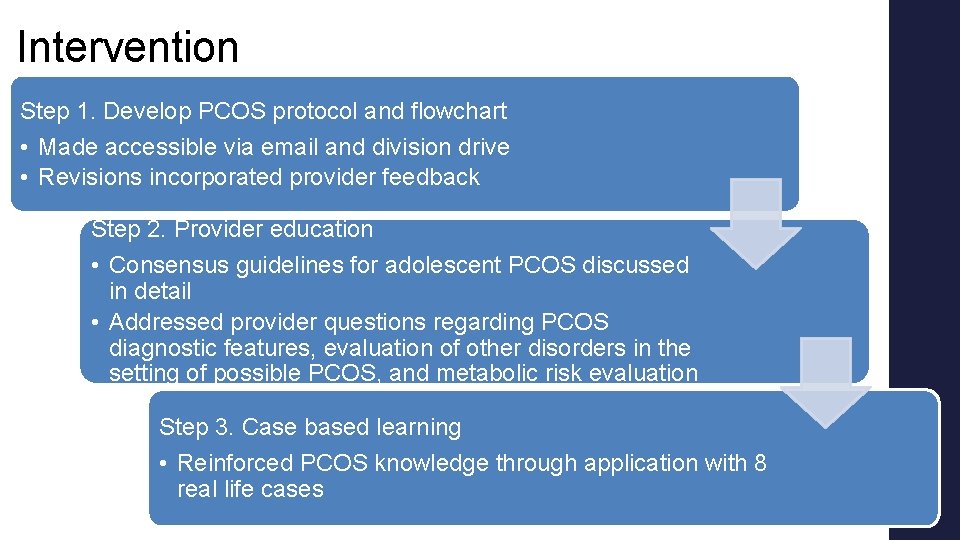
Intervention Step 1. Develop PCOS protocol and flowchart • Made accessible via email and division drive • Revisions incorporated provider feedback Step 2. Provider education • Consensus guidelines for adolescent PCOS discussed in detail • Addressed provider questions regarding PCOS diagnostic features, evaluation of other disorders in the setting of possible PCOS, and metabolic risk evaluation Step 3. Case based learning • Reinforced PCOS knowledge through application with 8 real life cases
Intervention • Three one hour sessions during scheduled division meetings in February, April, and July 2016 • 15 Adolescent medicine faculty, advanced practice practitioners, and fellows
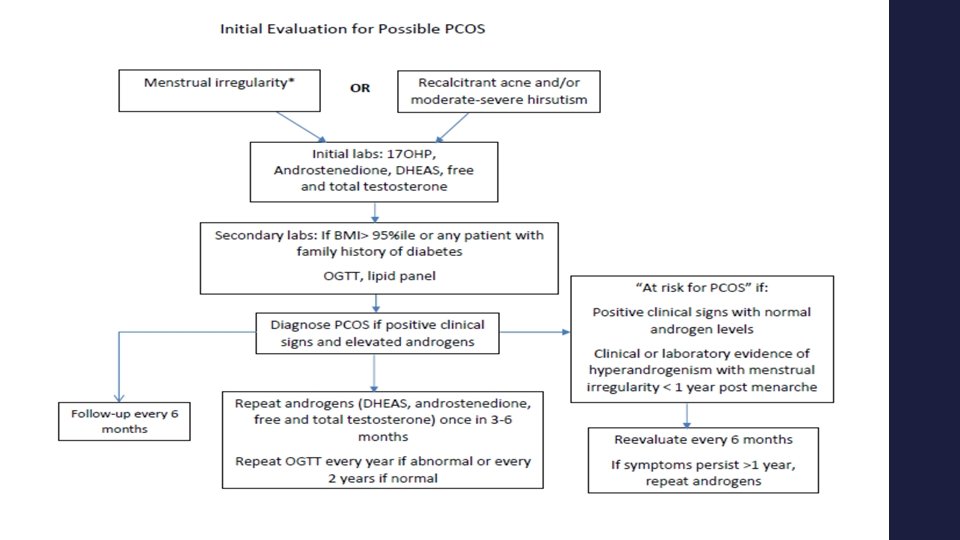
Intervention • Protocol and flowchart based on published guidelines (Witchel et al, 2015). Emailed to division members Made accessible on division network drive and google drive Provider feedback encouraged for revision
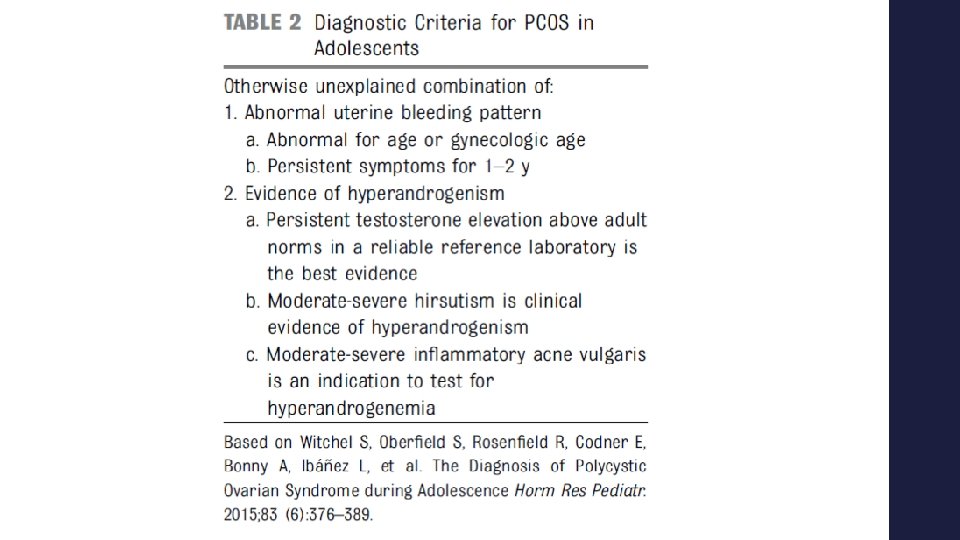
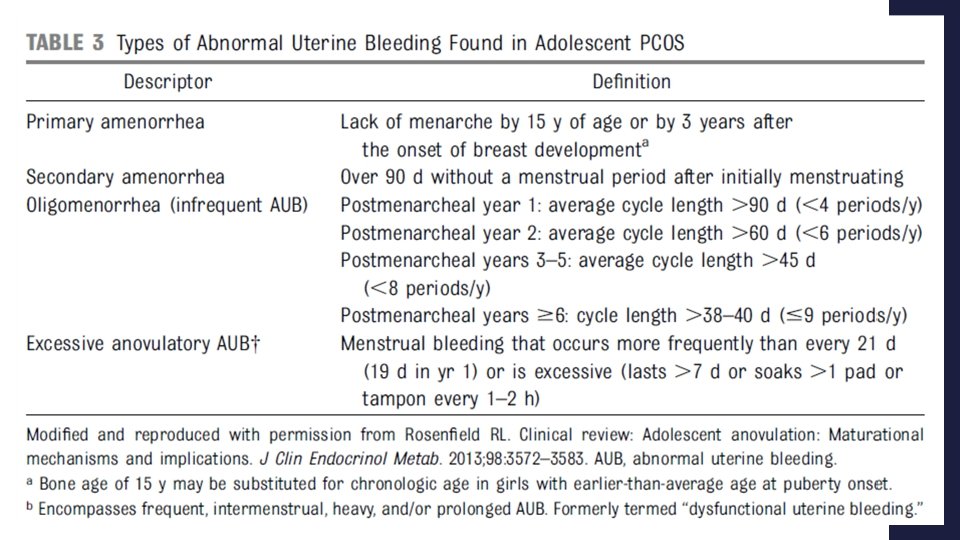
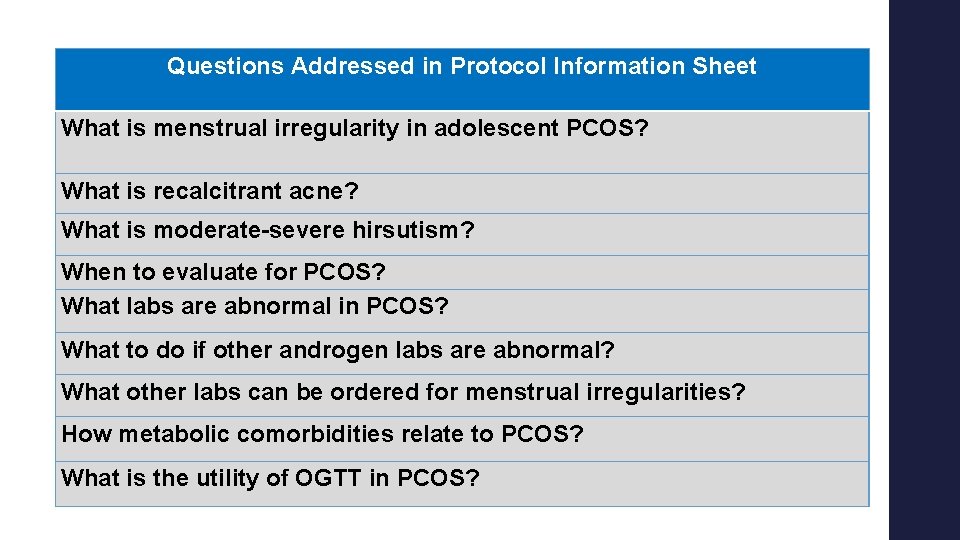
Questions Addressed in Protocol Information Sheet What is menstrual irregularity in adolescent PCOS? What is recalcitrant acne? What is moderate-severe hirsutism? When to evaluate for PCOS? What labs are abnormal in PCOS? What to do if other androgen labs are abnormal? What other labs can be ordered for menstrual irregularities? How metabolic comorbidities relate to PCOS? What is the utility of OGTT in PCOS?
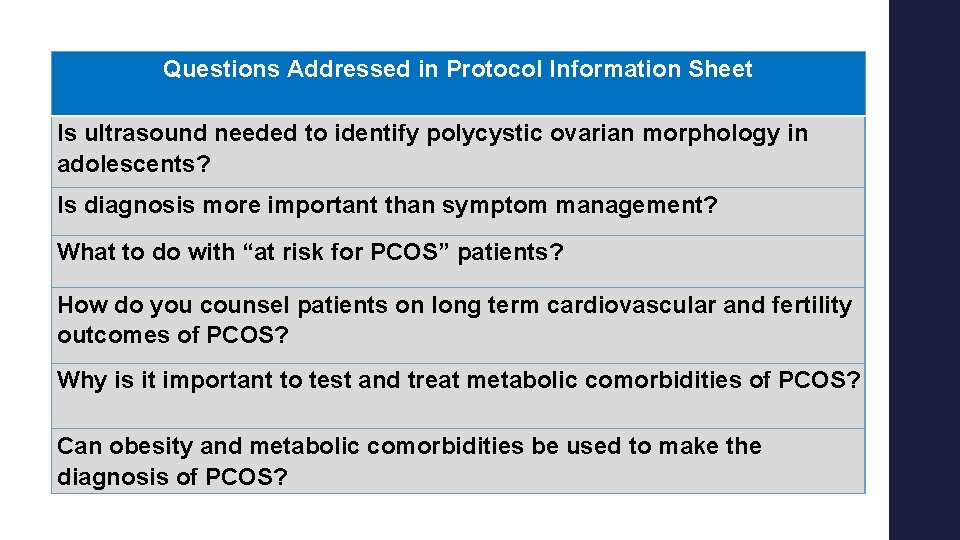
Questions Addressed in Protocol Information Sheet Is ultrasound needed to identify polycystic ovarian morphology in adolescents? Is diagnosis more important than symptom management? What to do with “at risk for PCOS” patients? How do you counsel patients on long term cardiovascular and fertility outcomes of PCOS? Why is it important to test and treat metabolic comorbidities of PCOS? Can obesity and metabolic comorbidities be used to make the diagnosis of PCOS?
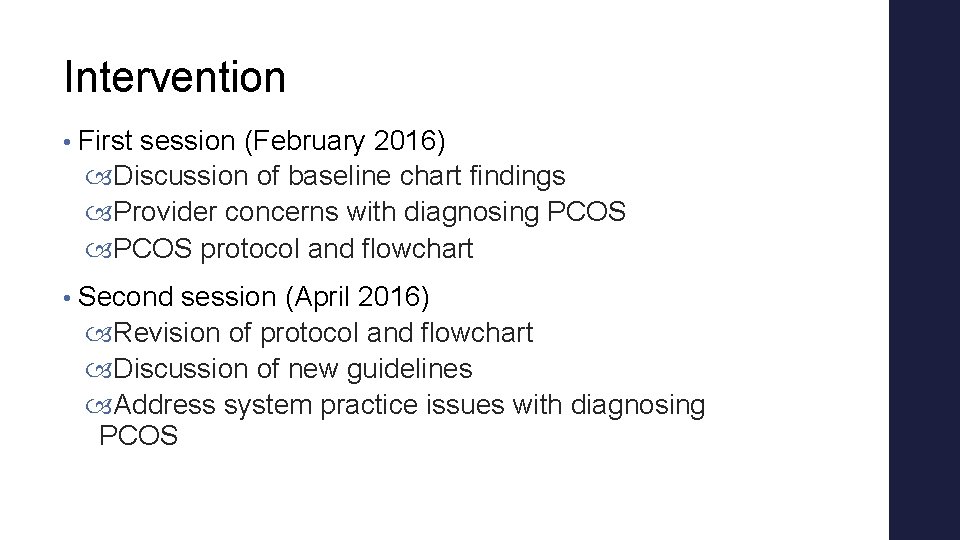
Intervention • First session (February 2016) Discussion of baseline chart findings Provider concerns with diagnosing PCOS protocol and flowchart • Second session (April 2016) Revision of protocol and flowchart Discussion of new guidelines Address system practice issues with diagnosing PCOS
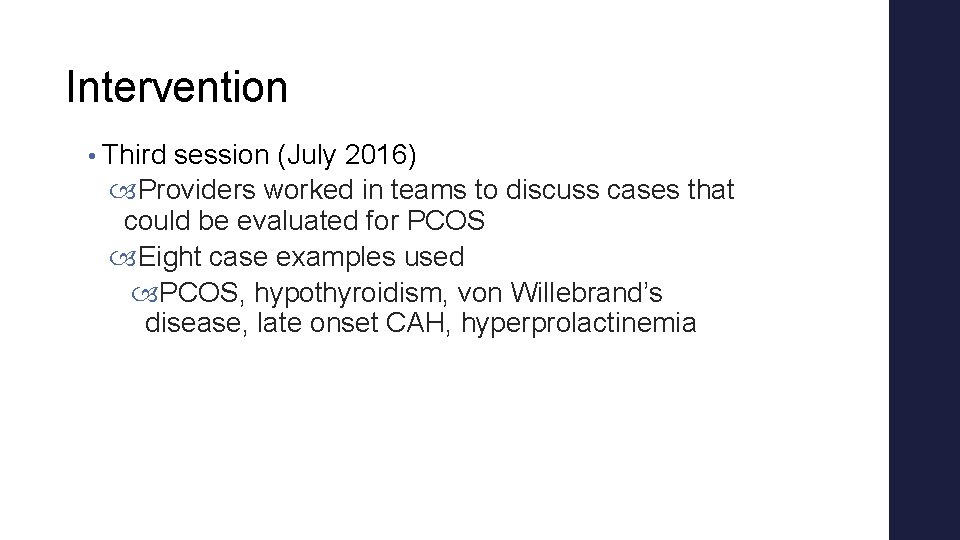
Intervention • Third session (July 2016) Providers worked in teams to discuss cases that could be evaluated for PCOS Eight case examples used PCOS, hypothyroidism, von Willebrand’s disease, late onset CAH, hyperprolactinemia
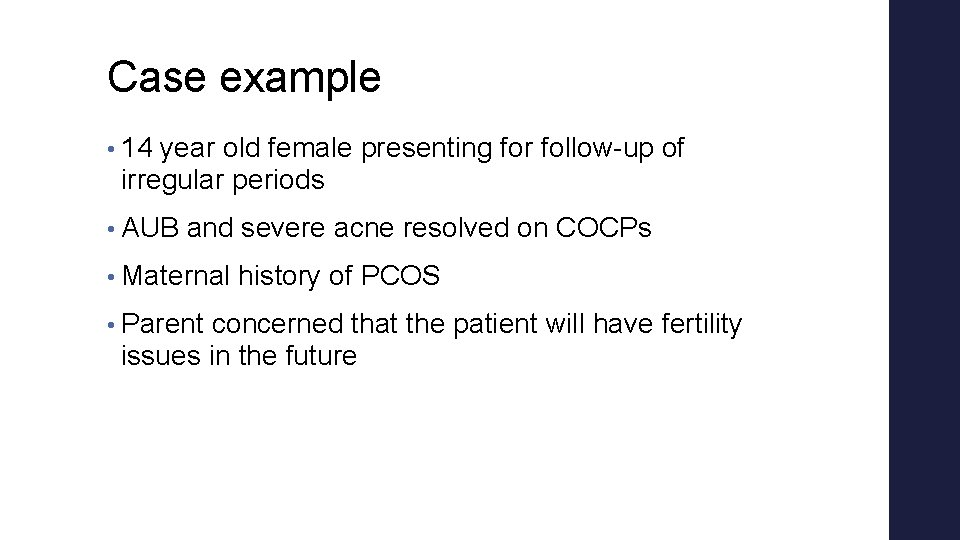
Case example • 14 year old female presenting for follow-up of irregular periods • AUB and severe acne resolved on COCPs • Maternal • Parent history of PCOS concerned that the patient will have fertility issues in the future
Results
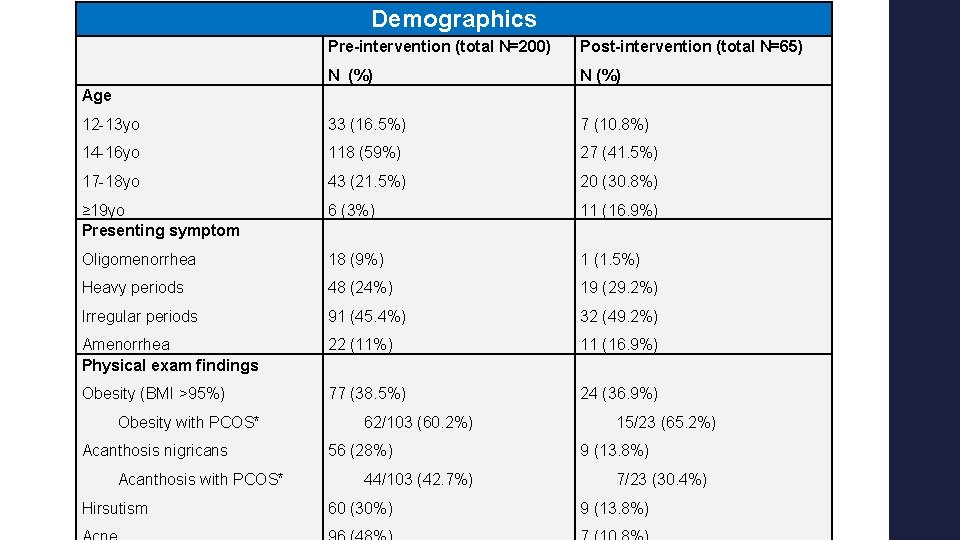
Demographics Pre-intervention (total N=200) Post-intervention (total N=65) N (%) 12 -13 yo 33 (16. 5%) 7 (10. 8%) 14 -16 yo 118 (59%) 27 (41. 5%) 17 -18 yo 43 (21. 5%) 20 (30. 8%) ≥ 19 yo Presenting symptom 6 (3%) 11 (16. 9%) Oligomenorrhea 18 (9%) 1 (1. 5%) Heavy periods 48 (24%) 19 (29. 2%) Irregular periods 91 (45. 4%) 32 (49. 2%) Amenorrhea Physical exam findings 22 (11%) 11 (16. 9%) Obesity (BMI >95%) 77 (38. 5%) 24 (36. 9%) Age Obesity with PCOS* Acanthosis nigricans Acanthosis with PCOS* Hirsutism 62/103 (60. 2%) 56 (28%) 44/103 (42. 7%) 60 (30%) 15/23 (65. 2%) 9 (13. 8%) 7/23 (30. 4%) 9 (13. 8%)
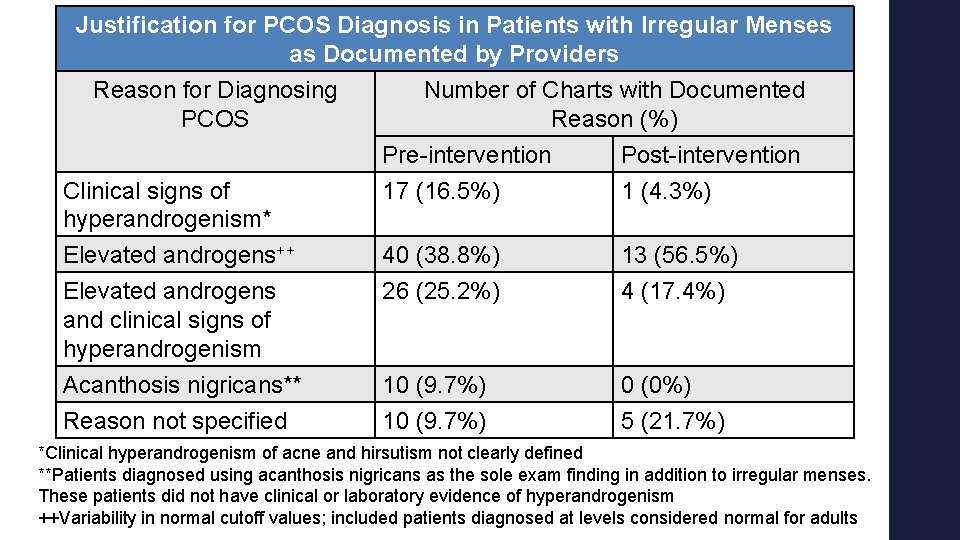
Justification for PCOS Diagnosis in Patients with Irregular Menses as Documented by Providers Reason for Diagnosing Number of Charts with Documented PCOS Reason (%) Pre-intervention 17 (16. 5%) Post-intervention 1 (4. 3%) Elevated androgens++ Elevated androgens and clinical signs of hyperandrogenism 40 (38. 8%) 26 (25. 2%) 13 (56. 5%) 4 (17. 4%) Acanthosis nigricans** Reason not specified 10 (9. 7%) 0 (0%) 5 (21. 7%) Clinical signs of hyperandrogenism* *Clinical hyperandrogenism of acne and hirsutism not clearly defined **Patients diagnosed using acanthosis nigricans as the sole exam finding in addition to irregular menses. These patients did not have clinical or laboratory evidence of hyperandrogenism ++Variability in normal cutoff values; included patients diagnosed at levels considered normal for adults
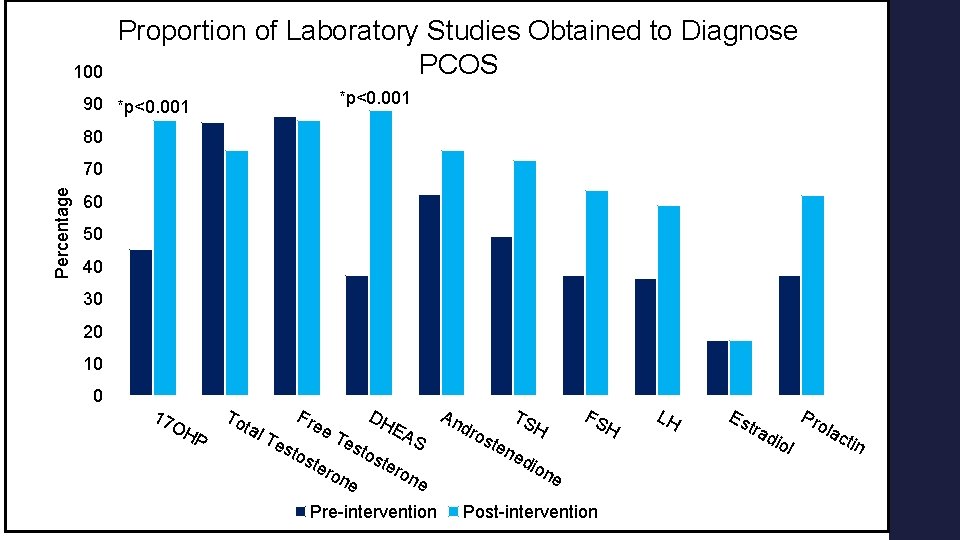
100 Proportion of Laboratory Studies Obtained to Diagnose PCOS *p<0. 001 90 *p<0. 001 80 Percentage 70 60 50 40 30 20 10 0 17 OH P To ta l. T es Fre tos e. T ter es DH on tos e EA ter S on e Pre-intervention An dro TS ste H ne FS dio ne Post-intervention H LH Es tra dio l Pro lac tin
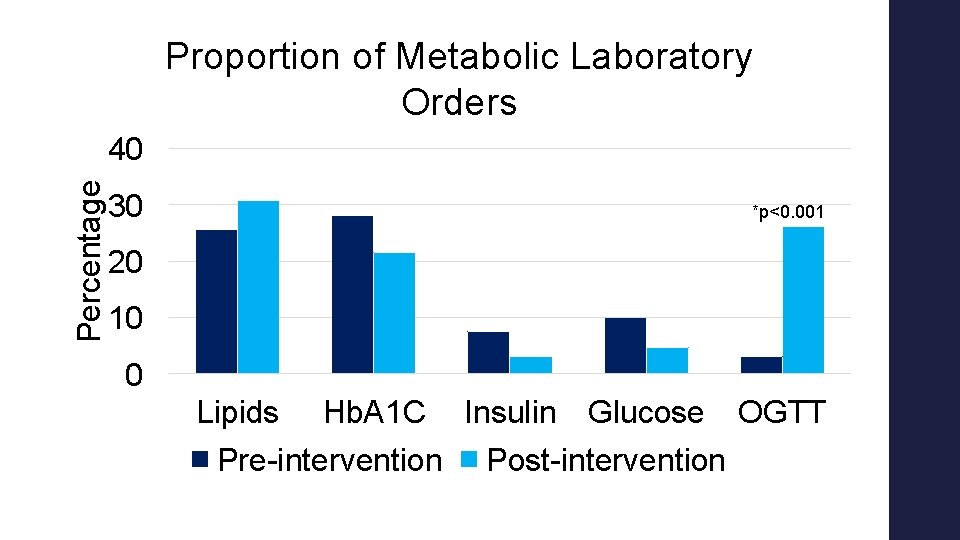
Proportion of Metabolic Laboratory Orders Percentage 40 30 *p<0. 001 20 10 0 Lipids Hb. A 1 C Insulin Glucose OGTT Pre-intervention Post-intervention
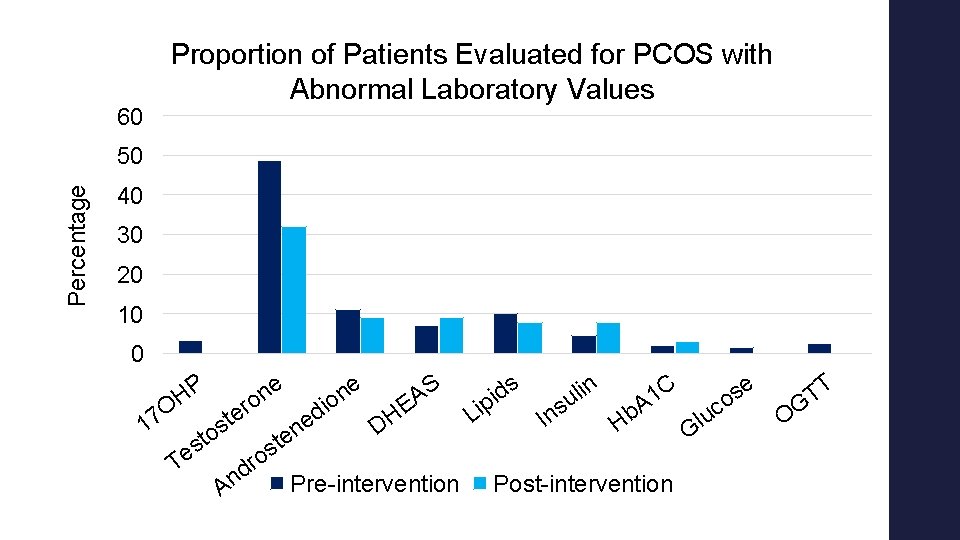
60 Proportion of Patients Evaluated for PCOS with Abnormal Laboratory Values Percentage 50 40 30 20 10 0 P H O 17 T t s e te s o e n ro d e n io D S A HE te s ro d Pre-intervention An L s d i ip In n i l su C 1 A Hb Post-intervention Gl u e s co O T T G
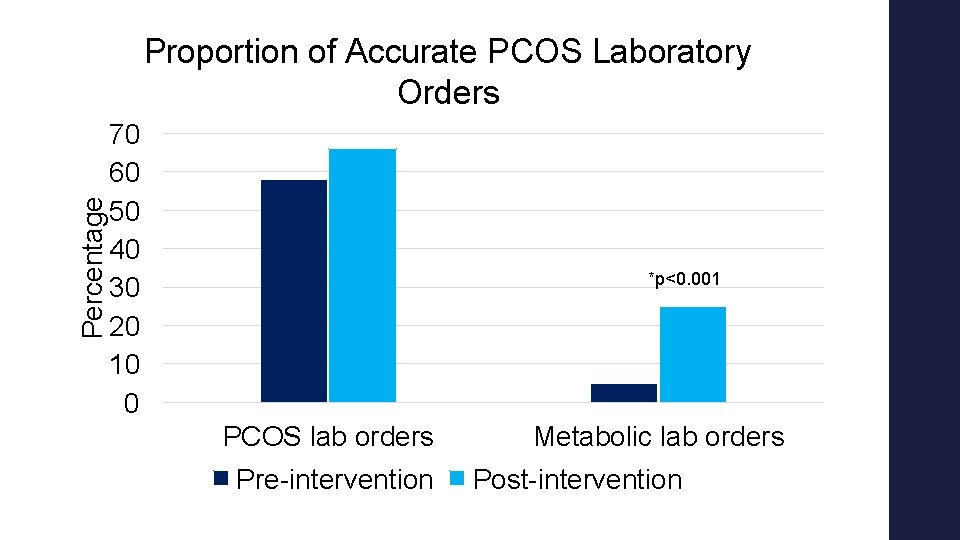
Percentage Proportion of Accurate PCOS Laboratory Orders 70 60 50 40 30 20 10 0 *p<0. 001 PCOS lab orders Pre-intervention Metabolic lab orders Post-intervention
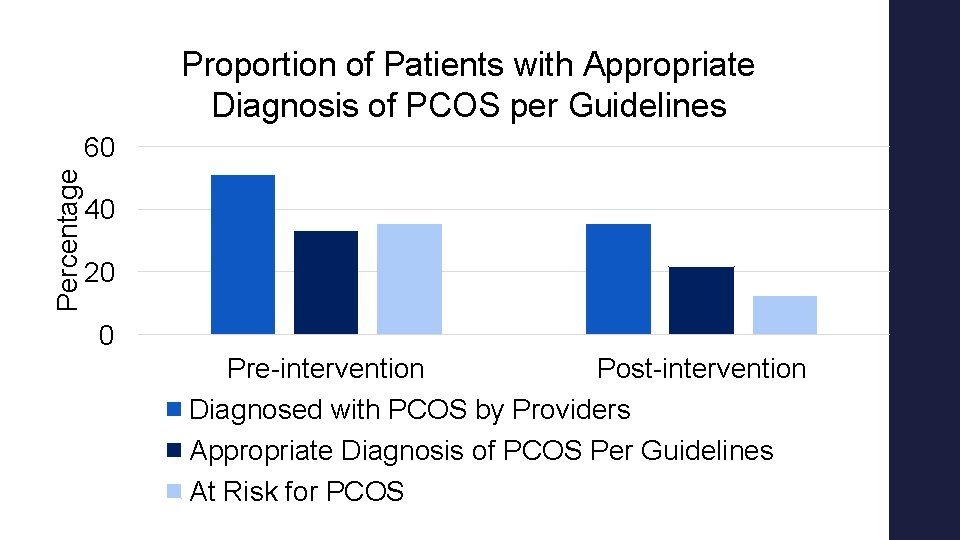
Proportion of Patients with Appropriate Diagnosis of PCOS per Guidelines Percentage 60 40 20 0 Pre-intervention Post-intervention Diagnosed with PCOS by Providers Appropriate Diagnosis of PCOS Per Guidelines At Risk for PCOS
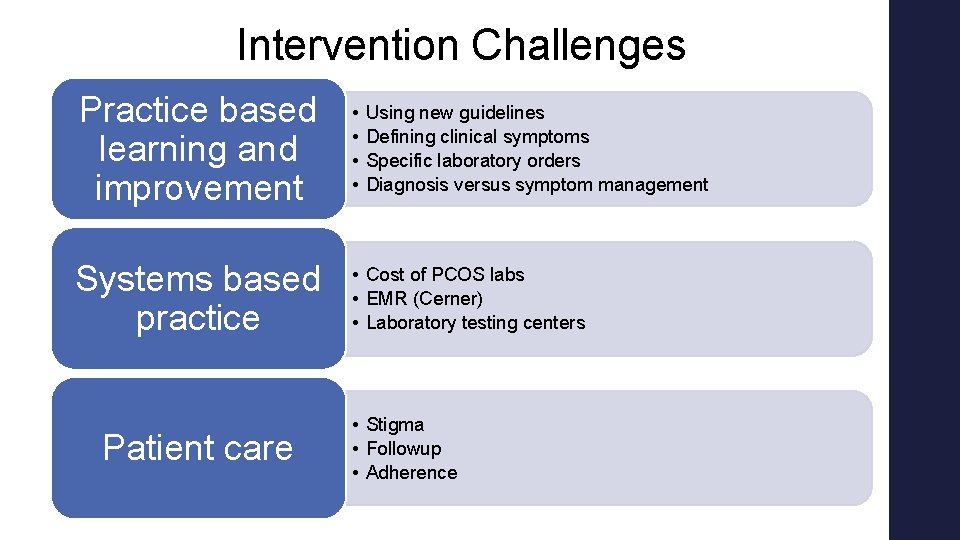
Intervention Challenges Practice based learning and improvement • • Systems based practice • Cost of PCOS labs • EMR (Cerner) • Laboratory testing centers Patient care Using new guidelines Defining clinical symptoms Specific laboratory orders Diagnosis versus symptom management • Stigma • Followup • Adherence
Discussion • This project validates the importance of provider education for implementing evidence based practices • Despite most providers questioning the utility of OGTT, there was a significant increase in the proportion of OGTT ordered • Proportion increased of androgen labs (17 OHP, DHEAS) also
Discussion • Providers participating in discussion likely contributed to a change in behavior Understanding the evidence Self-reflection of practices Encouraging use of the protocol
Discussion • We want to ensure that providers are performing essential lab testing Gonadotropins were ordered in post review Hb. A 1 C, fasting glucose, and fasting insulin ordered • Accurate PCOS diagnosis did not improve Thought process may be correct, but documentation is key
Limitations • One clinical site • Chart review Missing data Interpretation of written documentation Selection bias • Access • Time to charts frame of post review Lack of patient follow-up and obtaining labs
Limitations • Overall proportion of patients diagnosed with PCOS in the post review was less than the baseline • Change in providers during course of project Not accounted for in the post review • Partial intervention Some providers missed case based learning and received separate sessions
Conclusion • Provider education is only one component related to adhering to guidelines • Future work to assess provider attitudes about changing behaviors
Next steps • Create a PCOS note template Include macros for correct documentation • Revise the PCOS powerplan in Cerner Include a systems check before providers sign lab orders