
Improving interactions and communication with people who use
- Slides: 22
Improving interactions and communication with people who use little or no speech Dr Meredith Prain, Able Australia Dr Sheridan Forster, Private Practitioner 30 th July 2020
Overview Introductions What is communication? Australians with communication disabilities Causes of communication disability Modes of communication Importance of relationship Strategies for working with people who communicate symbolically o Talking Mats o Using a facilitator with signing skills if the person has a large signing vocabulary – MP ► Strategies for working with non symbolic communicators o Intensive Interaction o Hanging Out Program o Video Interaction Guidance • Working with speech pathologists o Assessing receptive (understanding/comprehension) and expressive language o Recommendation of appropriate strategies o Finding a suitable speech pathologist • Questions • • 2
Presenters Dr Sheridan Forster Dr Meredith Prain 3
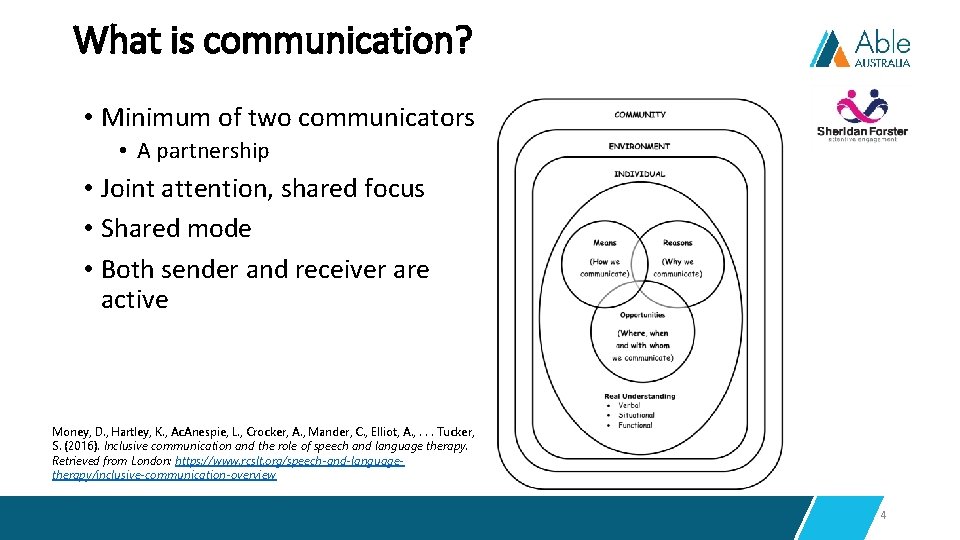
What is communication? • Minimum of two communicators • A partnership • Joint attention, shared focus • Shared mode • Both sender and receiver are active Money, D. , Hartley, K. , Ac. Anespie, L. , Crocker, A. , Mander, C. , Elliot, A. , . . . Tucker, S. (2016). Inclusive communication and the role of speech and language therapy. Retrieved from London: https: //www. rcslt. org/speech-and-languagetherapy/inclusive-communication-overview 4
Australians with communication disabilities • 5% of Australians have a communication disability (SDAC, 2015) • Profound limitation (people who cannot understand or be understood at all and always need help when communicating) • Severe limitation (includes people who sometimes need help understanding or being understood and people who communicate more easily with sign language or other non-spoken communication) • Moderate limitation (people who don’t need help but have difficulty understanding or being understood by someone they don’t know) • Mild limitation (people with no difficulty understanding or being understood, but use a communication aid) 5
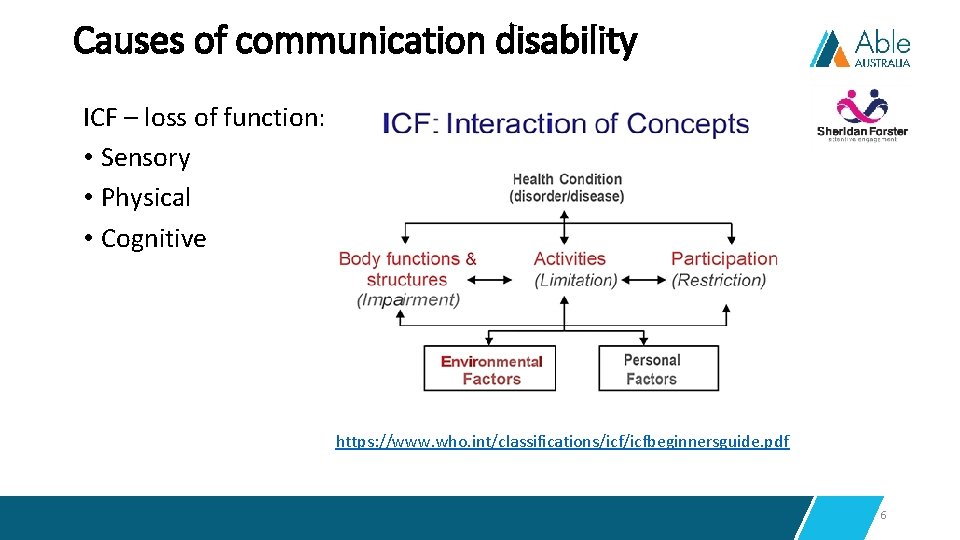
Causes of communication disability ICF – loss of function: • Sensory • Physical • Cognitive https: //www. who. int/classifications/icfbeginnersguide. pdf 6
Two different parts of the same coin • Communication is made up of understanding another person and being able to express yourself • Understanding • Words, tone of voice, facial expressions, gestures, pictures, writing • Expression • Words, signs, gestures, facial expressions, vocalisation • A person can have few means of expression but may understand well, or they may not understand speech at all – the variation is endless • Don’t make presumptions on first sight 7
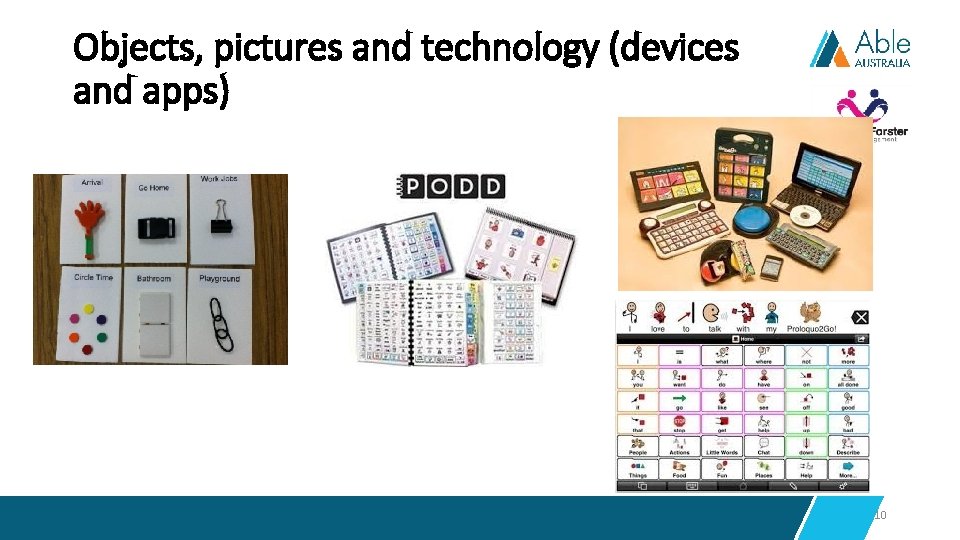
Modes of communication • Ways that use something as a symbol for an idea • Literacy – print, braille , fingerspelling • Speech, Auslan (sign language) • Key word sign, pictures, photos, objects • Ways that do not require a symbol to represent an idea • Vocalisation, facial expression, body language 8
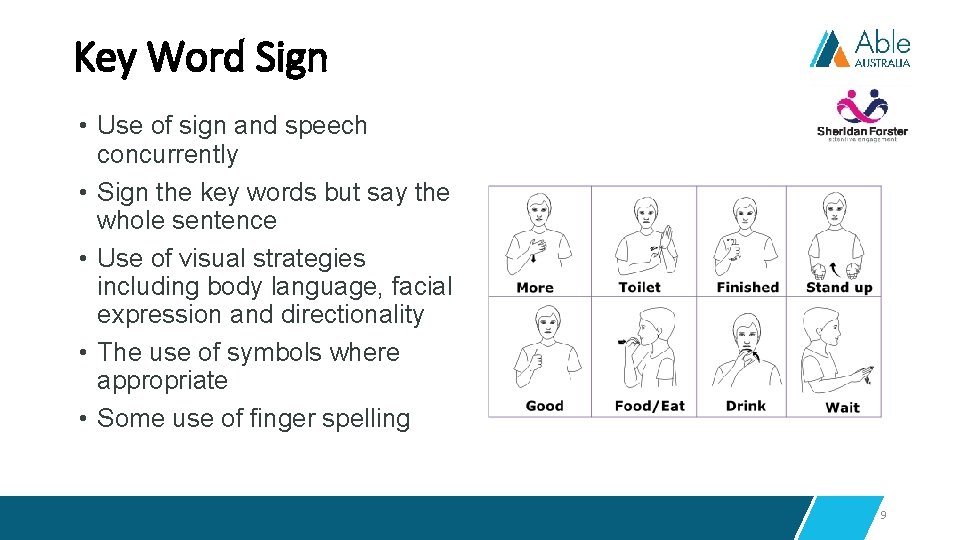
Key Word Sign • Use of sign and speech concurrently • Sign the key words but say the whole sentence • Use of visual strategies including body language, facial expression and directionality • The use of symbols where appropriate • Some use of finger spelling 9
Objects, pictures and technology (devices and apps) 10
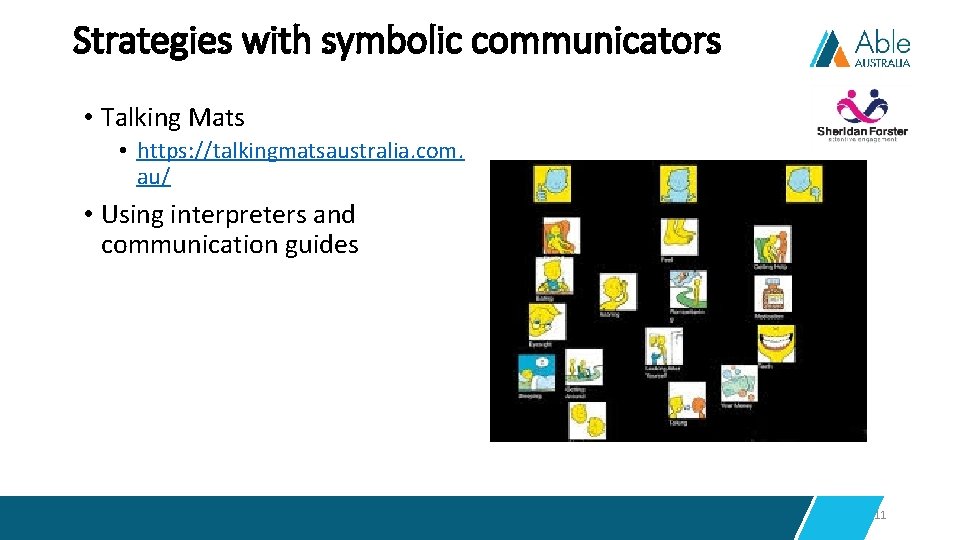
Strategies with symbolic communicators • Talking Mats • https: //talkingmatsaustralia. com. au/ • Using interpreters and communication guides 11
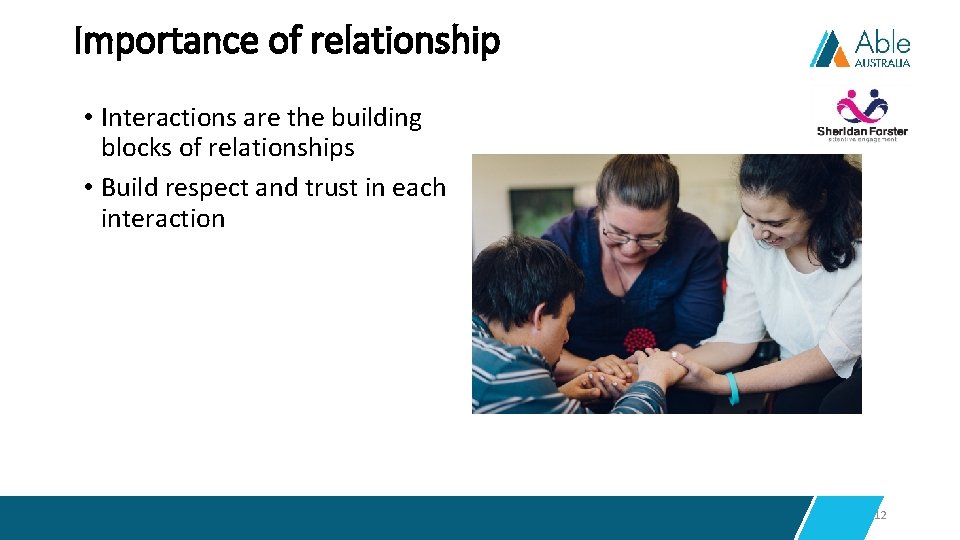
Importance of relationship • Interactions are the building blocks of relationships • Build respect and trust in each interaction 12
Strategies for people who don’t understand symbols • Intensive Interaction • Hanging Out Program • Video Interaction Guidance 13
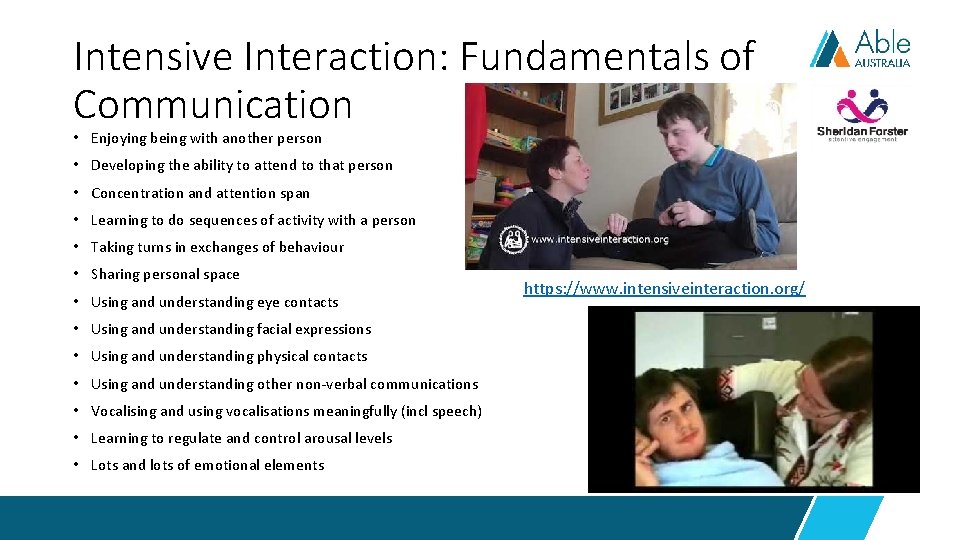
Intensive Interaction: Fundamentals of Communication • Enjoying being with another person • Developing the ability to attend to that person • Concentration and attention span • Learning to do sequences of activity with a person • Taking turns in exchanges of behaviour • Sharing personal space • Using and understanding eye contacts • Using and understanding facial expressions • Using and understanding physical contacts • Using and understanding other non-verbal communications • Vocalising and using vocalisations meaningfully (incl speech) • Learning to regulate and control arousal levels • Lots and lots of emotional elements https: //www. intensiveinteraction. org/
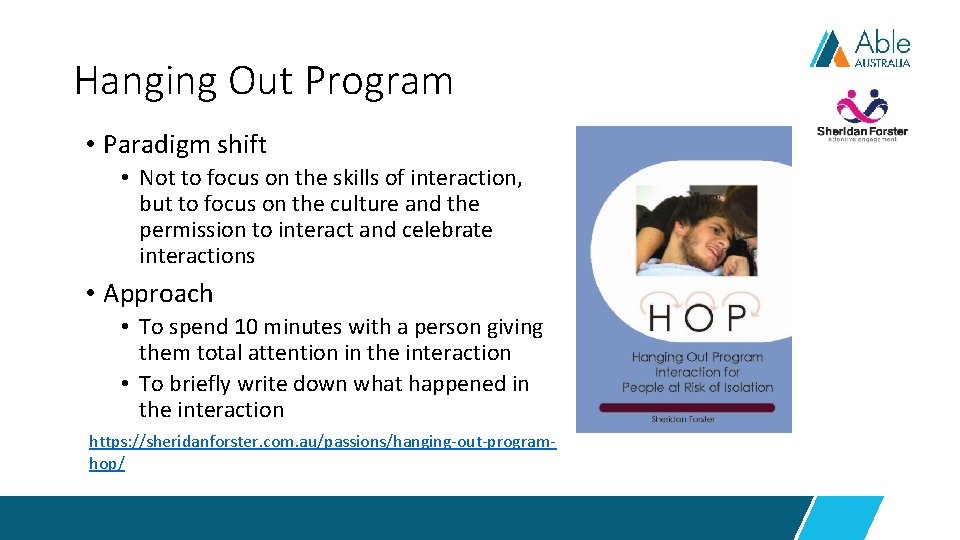
Hanging Out Program • Paradigm shift • Not to focus on the skills of interaction, but to focus on the culture and the permission to interact and celebrate interactions • Approach • To spend 10 minutes with a person giving them total attention in the interaction • To briefly write down what happened in the interaction https: //sheridanforster. com. au/passions/hanging-out-programhop/
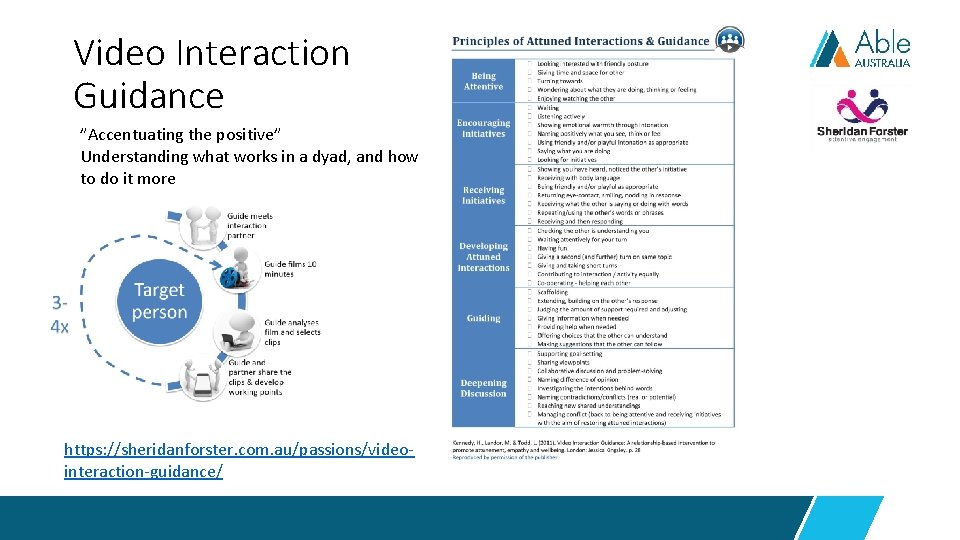
Video Interaction Guidance ”Accentuating the positive” Understanding what works in a dyad, and how to do it more https: //sheridanforster. com. au/passions/videointeraction-guidance/
Working with speech pathologists • Assessment of receptive and expressive communication • Recommendation of appropriate strategies • Finding the right speech pathologist • https: //www. speechpathologyaustralia. org. au/SPAweb/Resources_for_the_P ublic/Find_a_Speech_Pathologist/SPAweb/Resources_for_the_Pubic/Find_a_ Speech_Pathologist/Find_a_Speech_Pathologist. aspx? hkey=0 b 04 c 883 -80 b 243 e 7 -9298 -7 e 5 db 5 c 75197 17
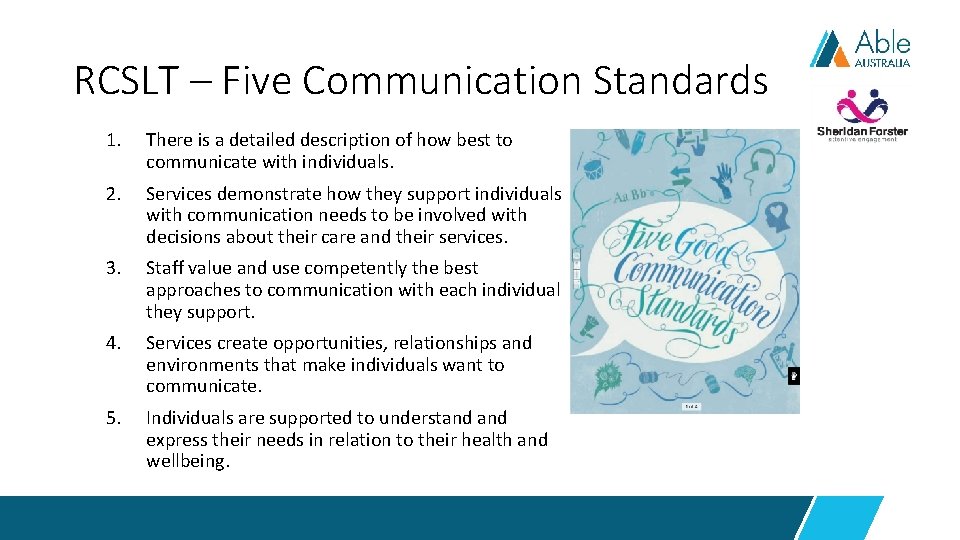
RCSLT – Five Communication Standards 1. There is a detailed description of how best to communicate with individuals. 2. Services demonstrate how they support individuals with communication needs to be involved with decisions about their care and their services. 3. Staff value and use competently the best approaches to communication with each individual they support. 4. Services create opportunities, relationships and environments that make individuals want to communicate. 5. Individuals are supported to understand express their needs in relation to their health and wellbeing.
Key take home points • Communication comprehension skills can be different to expressive skills • Engagement with people requires you to understand “how do I need to be in order to be with you? ” • You can find out more about a person’s communication skills • Everybody can communicate 19
Questions 20
Key take home points • Communication comprehension skills can be different to expressive skills • Engagement with people requires you to understand “how do I need to be in order to be with you? ” • You can find out more about a person’s communication skills • Everybody can communicate 21
Contacts Sheridan • sheri@sheridanforster. com. au Meredith • meredith. prain@ableaustralia. org. au Websites: • www. sheridanforster. com. au • www. ableaustralia. org. au 22