
Improving Diabetes Education in Family Medicine 42 nd
Improving Diabetes Education in Family Medicine 42 nd Annual STFM Spring Conference May 2, 2009 Joe Kingery, D. O. , Jordan Prendergast, D. O. Holly Hall, M. D. , Shersten Killip, M. D. Michael King, M. D. Elizabeth Tovar, Ph. D, RN, FNP-C
Objectives 1. Explain the differences in what patients and providers view as important issues in diabetes. 2. Review use of diabetes educational materials in our clinic after attempts at implementing these. 3. Review differences between approaches to diabetes education.
Background § Diabetes is the seventh leading cause of death in the U. S. § Using the chronic care model as a guide to medical delivery has been shown to improve outcomes for those with chronic illness § Self Management support is one of the six key components, which includes diabetes education to patients.
Background § HRSA Grant to implement the Chronic Care Model into residency training and engage in clinical quality improvement. § Improve educational resources to Diabetics. Look at patients’ perspectives. § Studies in the past that have compared effects of education on diabetes. Unclear if materials were “patient-centered. ”
Methods § All clinic providers and convenience sampling of clinic patients with Type 2 DM. § Rank top 5 most important topics for diabetes self care. Asked about satisfaction with diabetes care and about education materials received in clinic.
Methods (continued) § Providers were asked about the quality and distribution of education materials.
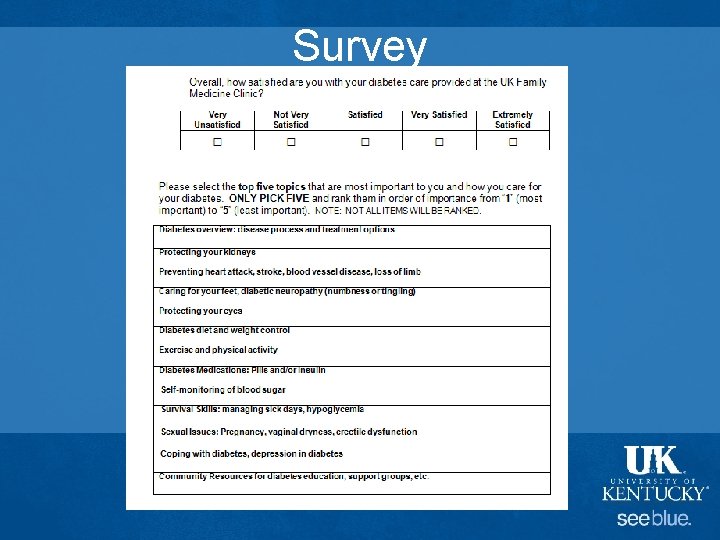
Survey
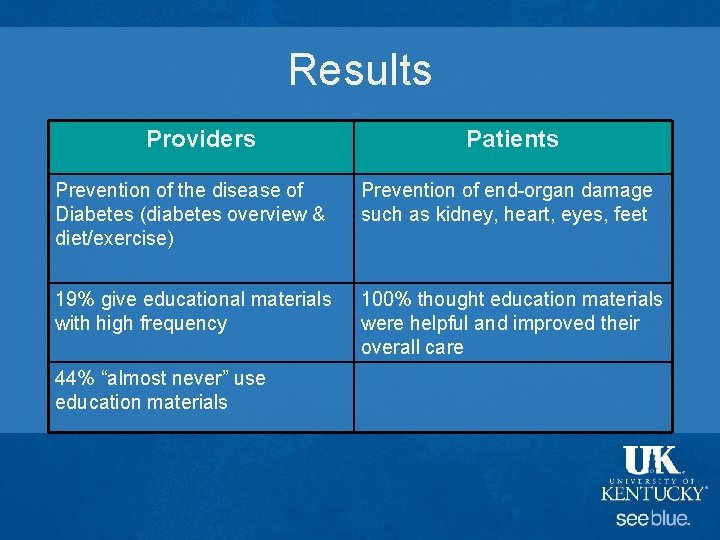
Results Providers Patients Prevention of the disease of Diabetes (diabetes overview & diet/exercise) Prevention of end-organ damage such as kidney, heart, eyes, feet 19% give educational materials with high frequency 100% thought education materials were helpful and improved their overall care 44% “almost never” use education materials
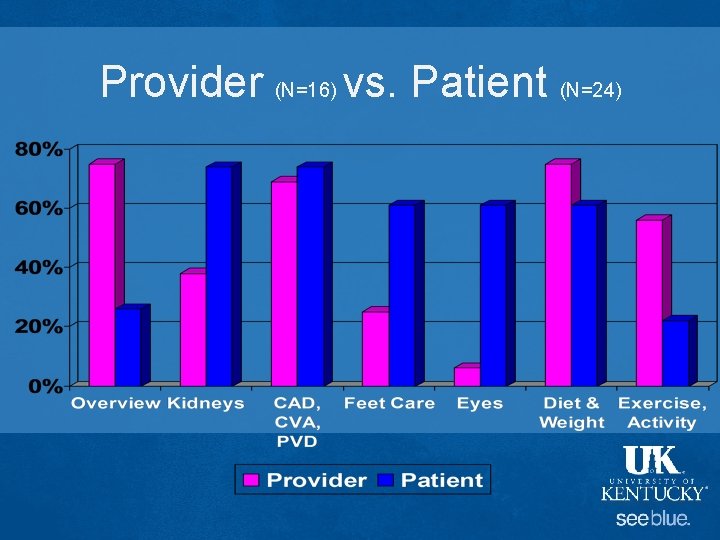
Provider (N=16) vs. Patient (N=24)
Provider vs. Patient
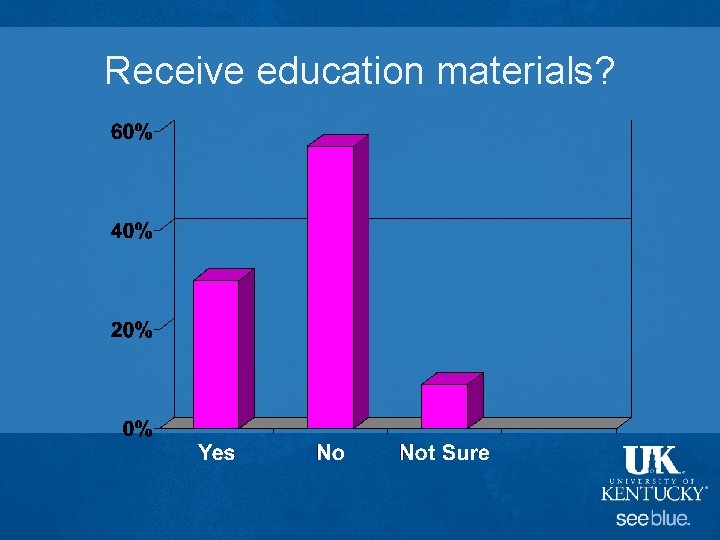
Receive education materials?
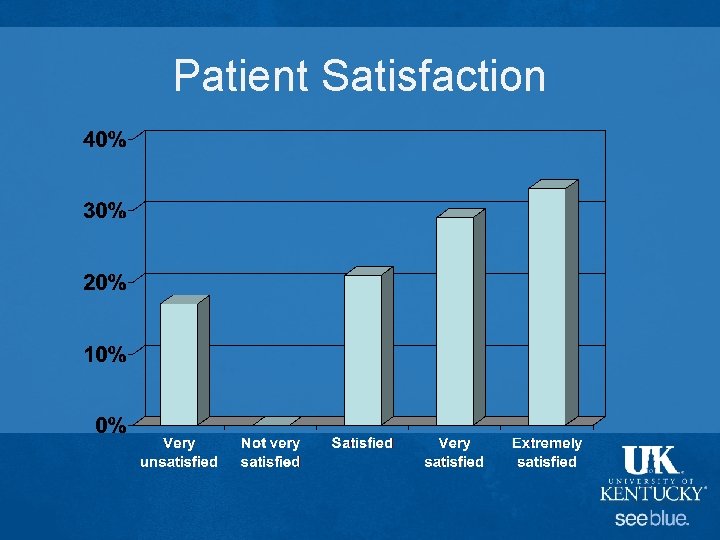
Patient Satisfaction
Conclusions § Patient and Provider views aren’t the same. § Patients fear things such as losing their vision or ending up on dialysis.
Implications § Implementing changes to educate patients on topics they find most important could help improve compliance in diabetic patients. § Whether this changes outcomes is yet to be seen.
References § Mazzuca, SA. Does patient education in chronic disease have therapeutic value. Journal of Chronic Disease. 1982. 35(7): 521 -529. § Bloomgarden, ZT et. Al. Randomized, controlled trial of diabetic patient education: improved knowledge without improved metabolic status. Diabetes Care. 1987. 10(3): 263 -272. § Rickheim, PL, et. Al. Assessment of group versus individual diabetes education: a randomized study. Diabetes Care. 2002. 25(2): 269 -274.
Acknowledgements • Tom O’Neal, M. D. , Talia Ne. Smith, M. D. , Brandy Becker, M. D. , Sayama Rashid, MBBS, Marisa Belcastro, M. D. , Amy Coleman, M. D.
Thank You Questions?
- Slides: 17