
Improving Borehole Optical Stratigraphy BOS T J Fudge
Improving Borehole Optical Stratigraphy (BOS) T. J. Fudge Ben Smith Ed Waddington

What is BOS? BOS measures brightness of borehole wall with depth Hawley, 2008
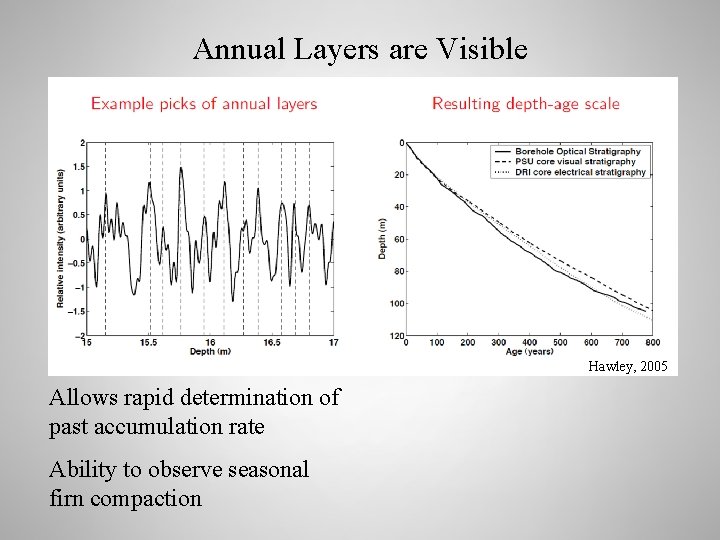
Annual Layers are Visible Hawley, 2005 Allows rapid determination of past accumulation rate Ability to observe seasonal firn compaction
What causes the variations in brightness? Can the physical characteristics of the firn, such as grain size and density, be inferred from the brightness variations? Why is getting in situ grain size and density important? Densification of Firn Trapping of Air in Firn
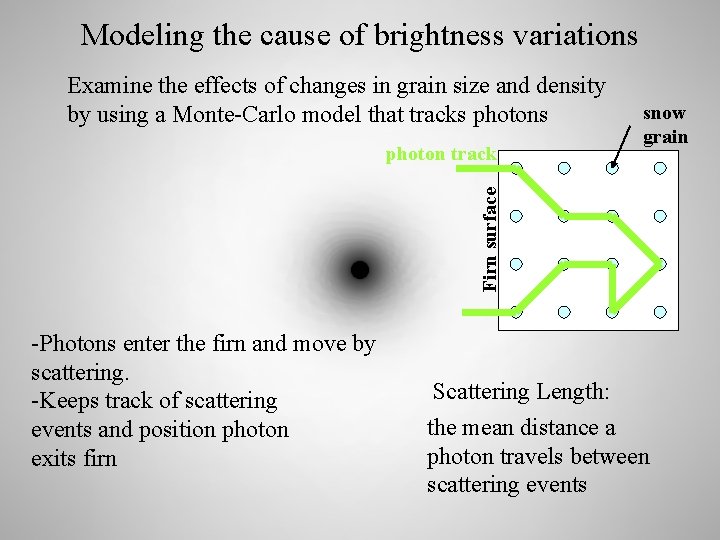
Modeling the cause of brightness variations Examine the effects of changes in grain size and density by using a Monte-Carlo model that tracks photons Firn surface photon track snow grain -Photons enter the firn and move by scattering. -Keeps track of scattering events and position photon exits firn Scattering Length: the mean distance a photon travels between scattering events
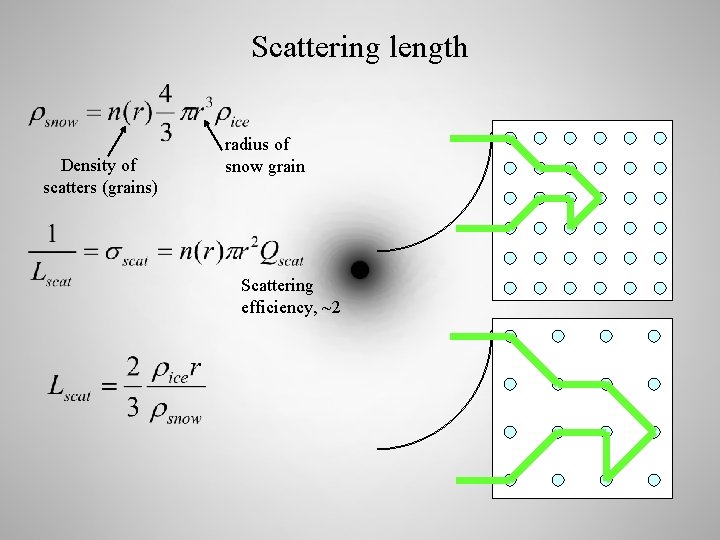
Scattering length Density of scatters (grains) radius of snow grain Scattering efficiency, ~2
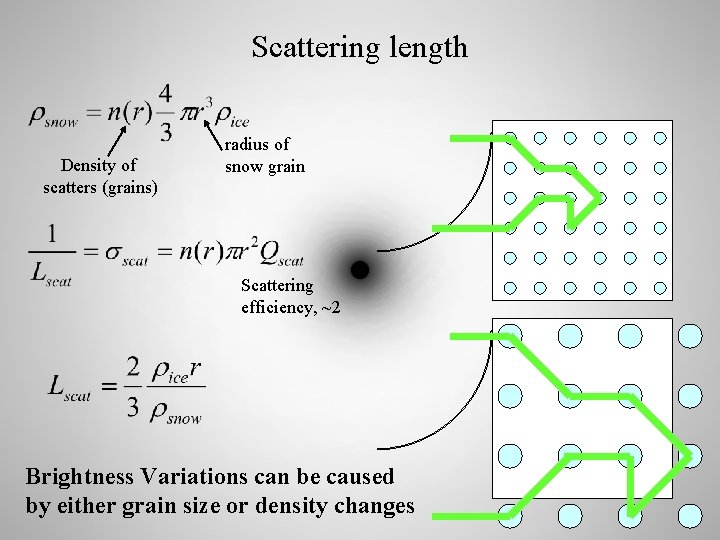
Scattering length Density of scatters (grains) radius of snow grain Scattering efficiency, ~2 Brightness Variations can be caused by either grain size or density changes
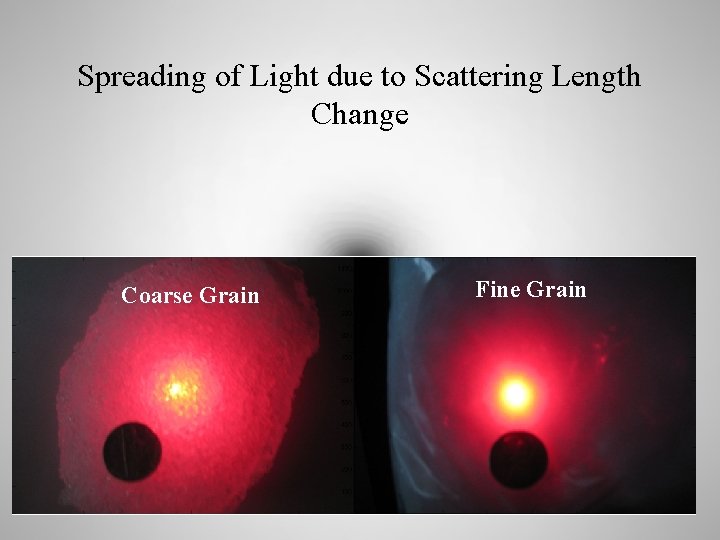
Spreading of Light due to Scattering Length Change Coarse Grain Fine Grain
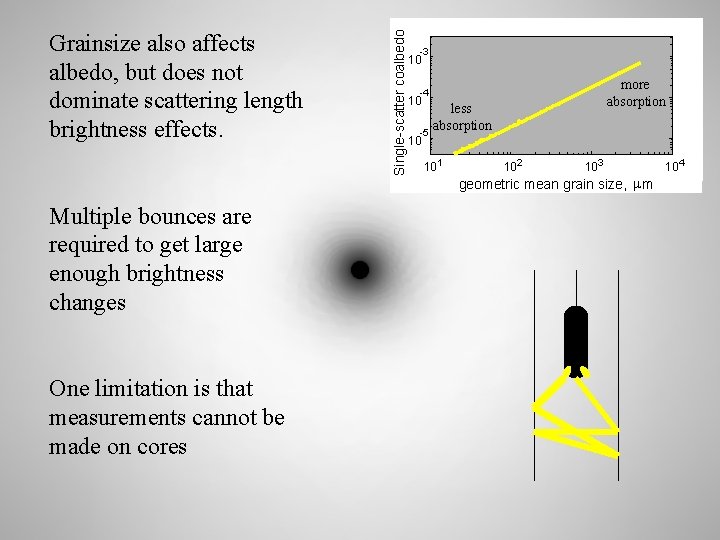
Multiple bounces are required to get large enough brightness changes One limitation is that measurements cannot be made on cores Single-scatter coalbedo Grainsize also affects albedo, but does not dominate scattering length brightness effects. -3 10 more absorption -4 10 -5 less absorption 10 101 102 103 geometric mean grain size, m m 104
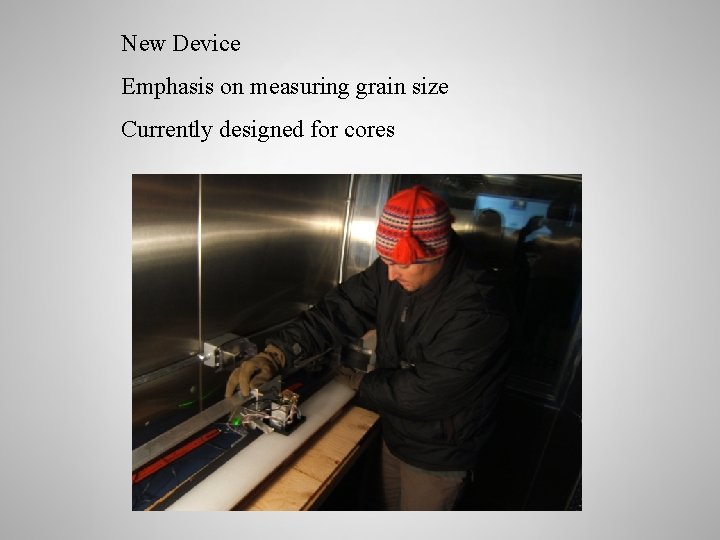
New Device Emphasis on measuring grain size Currently designed for cores
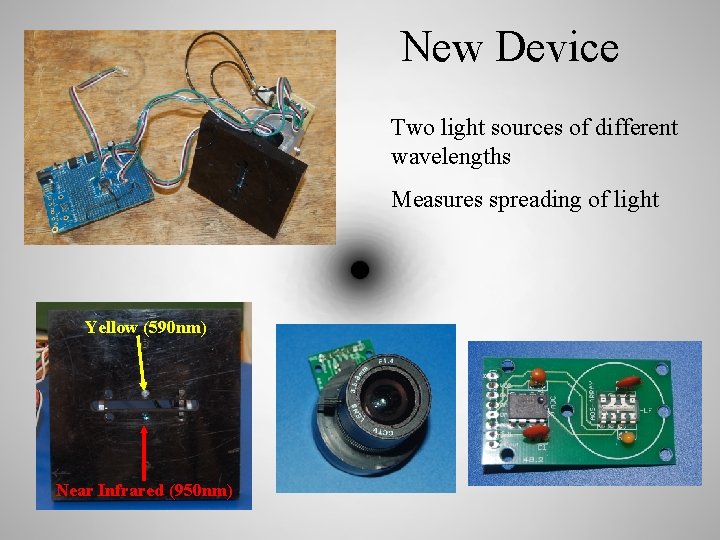
New Device Two light sources of different wavelengths Measures spreading of light Yellow (590 nm) Near Infrared (950 nm)
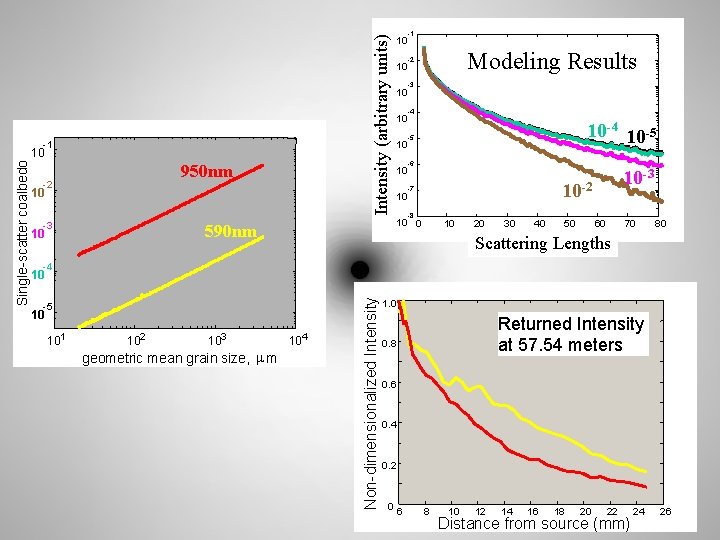
Intensity (arbitrary units) -1 950 nm -2 10 -3 590 nm 10 10 -1 Modeling Results -2 -3 -4 10 -5 -5 -6 10 -3 10 -2 -7 -8 10 0 10 20 30 40 50 60 70 80 Scattering Lengths -4 10 -5 10 101 102 103 geometric mean grain size, m m 104 Non-dimensionalized Intensity Single-scatter coalbedo 10 10 1. 0 Returned Intensity at 57. 54 meters 0. 8 0. 6 0. 4 0. 2 0 6 8 10 12 14 16 18 20 22 Distance from source (mm) 24 26
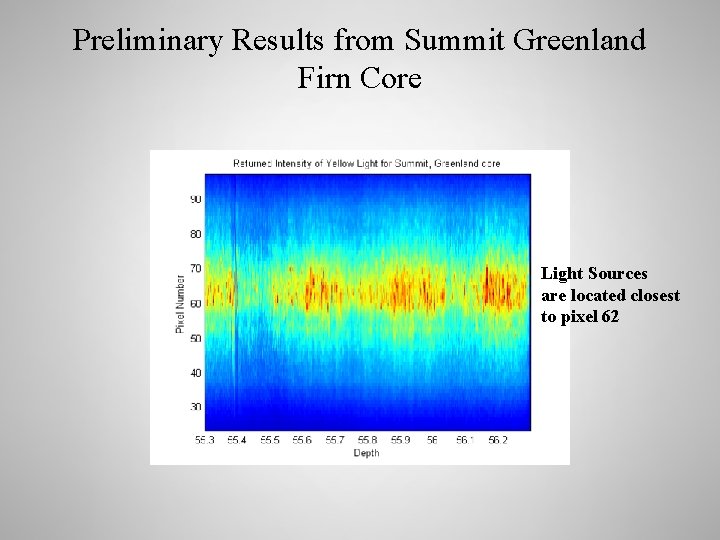
Preliminary Results from Summit Greenland Firn Core Light Sources are located closest to pixel 62
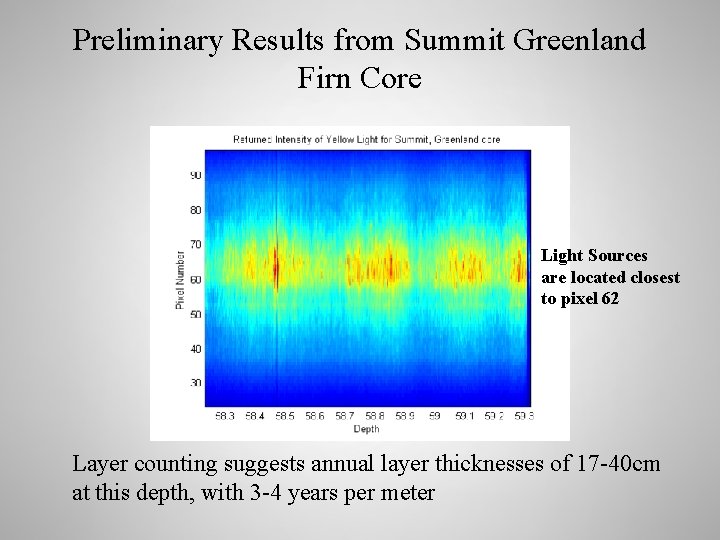
Preliminary Results from Summit Greenland Firn Core Light Sources are located closest to pixel 62 Layer counting suggests annual layer thicknesses of 17 -40 cm at this depth, with 3 -4 years per meter
Conclusions BOS brightness variations can be caused by either changes in density or grains size. The measurement are insufficient to determine physical properties of the firn. A new device using two separate wavelengths of light and simplifying the geometry of the measurement yields promising results for inferring grain size.
- Slides: 15