
Improvement of data availability Dorine VAN DER VLIES
Improvement of data availability Dorine VAN DER VLIES

Introduction / spoilers introduction data availability current methods new methods test pyrheliometers pyrgeometers conclusions
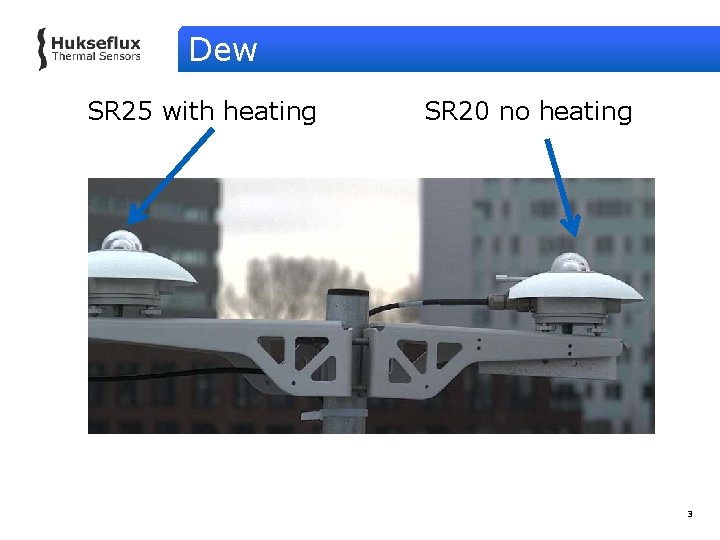
Dew SR 25 with heating SR 20 no heating 3
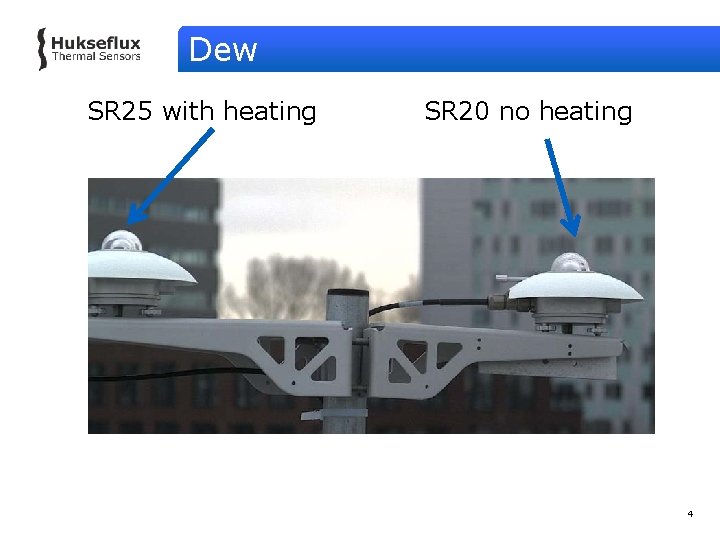
Dew SR 25 with heating SR 20 no heating 4
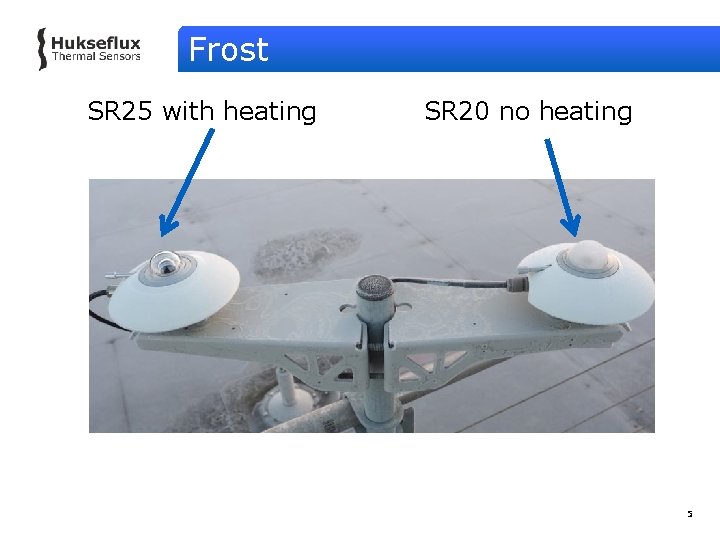
Frost SR 25 with heating SR 20 no heating 5
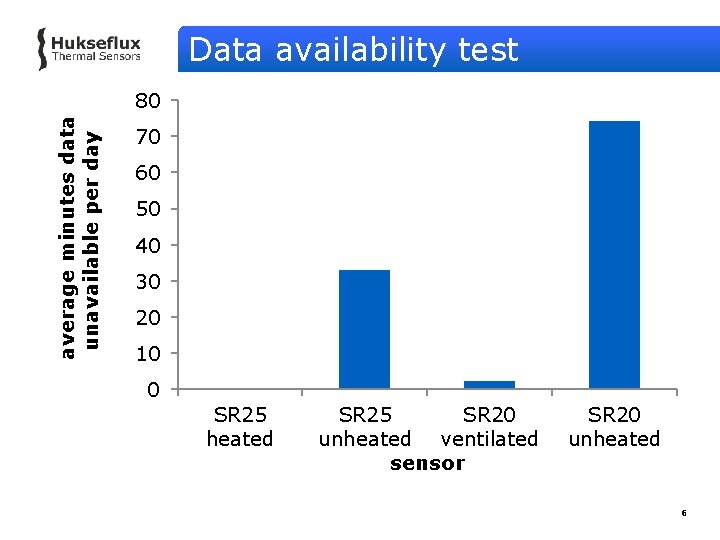
Data availability test average minutes data unavailable per day 80 70 60 50 40 30 20 10 0 SR 25 heated SR 25 SR 20 unheated ventilated sensor SR 20 unheated 6
![Night time offset clear night 22: 59 1: 59 4: 59 offset [W/m²] 0](http://slidetodoc.com/presentation_image_h/8d801f920759e3d4c56b49dc5dffb0c6/image-7.jpg "Night time offset clear night 22: 59 1: 59 4: 59 offset [W/m²] 0")
Night time offset clear night 22: 59 1: 59 4: 59 offset [W/m²] 0 SR 25 unheated -1 SR 25 heated -2 SR 20 unheated -3 unheated sec. st. pyranometer -4 -5 time [hh: mm] Net longwave radiation -100 W/m² 7
Data availability introduction data availability current methods new methods test pyrheliometers pyrgeometers conclusions
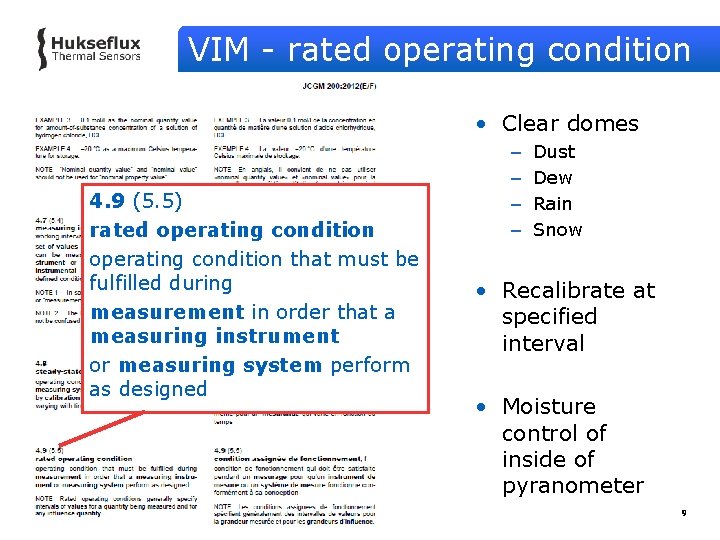
VIM - rated operating condition • Clear domes 4. 9 (5. 5) rated operating condition that must be fulfilled during measurement in order that a measuring instrument or measuring system perform as designed – – Dust Dew Rain Snow • Recalibrate at specified interval • Moisture control of inside of pyranometer 9
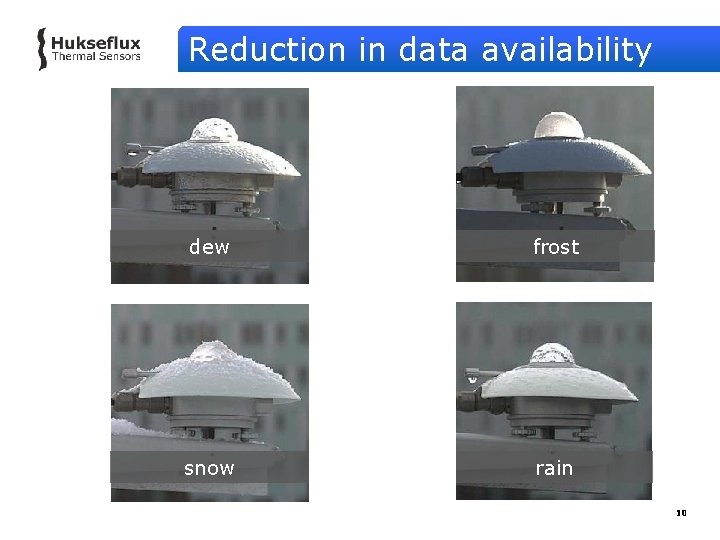
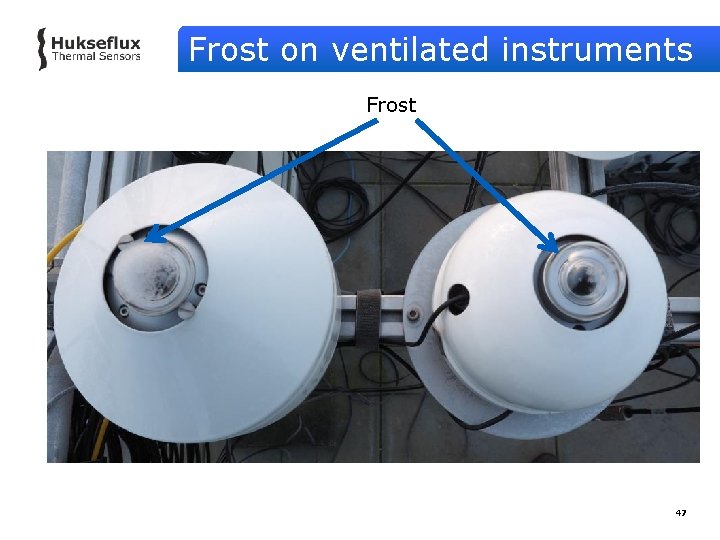
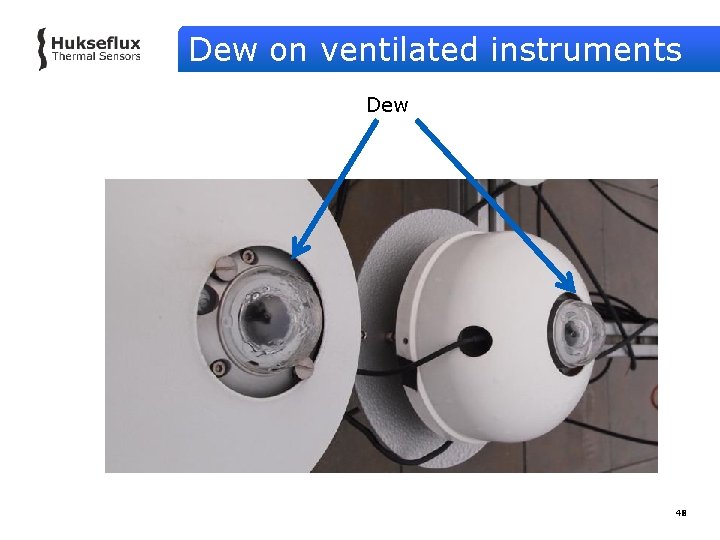
Reduction in data availability dew frost snow rain 10
![Theory - dew point temperature [°C] Magnus formula β =17. 62 and λ =](http://slidetodoc.com/presentation_image_h/8d801f920759e3d4c56b49dc5dffb0c6/image-11.jpg "Theory - dew point temperature [°C] Magnus formula β =17. 62 and λ =")
Theory - dew point temperature [°C] Magnus formula β =17. 62 and λ = 243. 12 °C 30 20 T = -10 °C 10 0 -10 0 T = 0 °C 20 40 60 80 T = 10 °C T = 20 °C -20 T = 30 °C -30 -40 100 relative humidity [%] 11
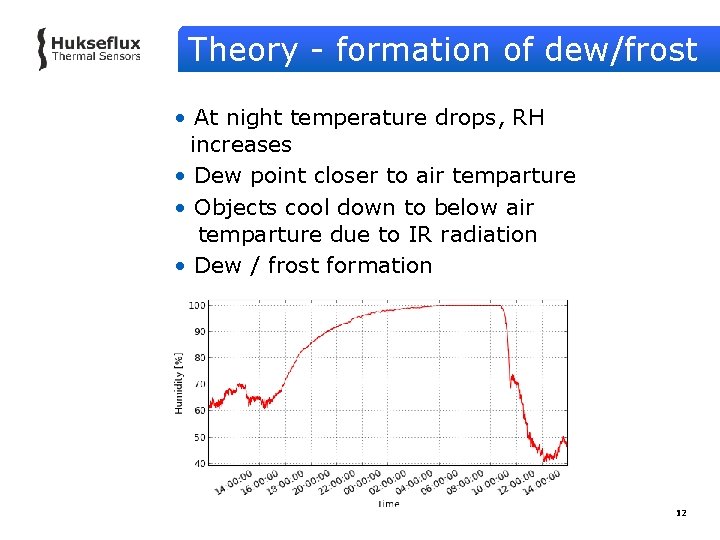
Theory - formation of dew/frost • At night temperature drops, RH increases • Dew point closer to air temparture • Objects cool down to below air temparture due to IR radiation • Dew / frost formation 12
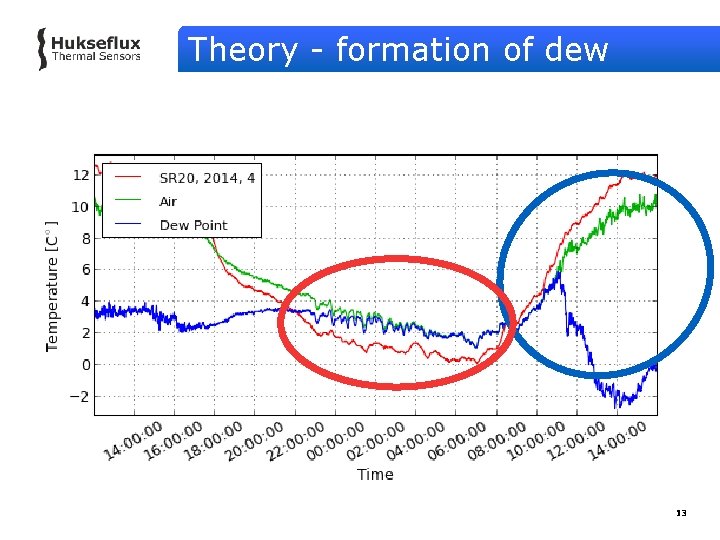
Theory - formation of dew 13
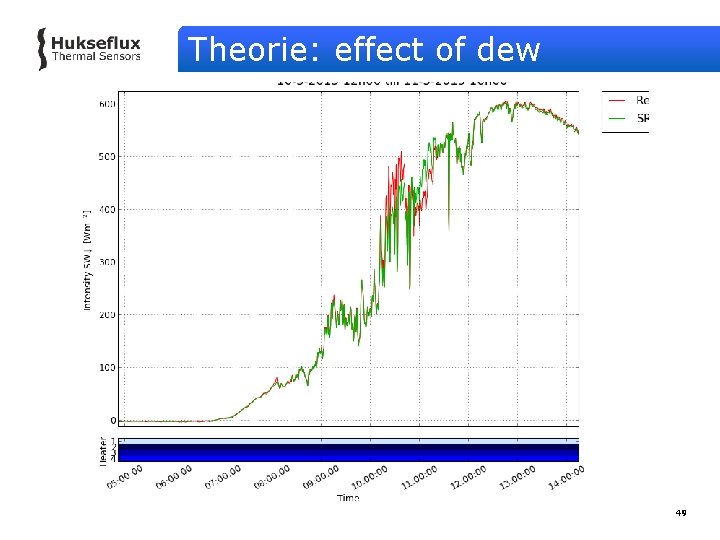
![solar radiation [W/m²] Data availability (dew event) pyranometer with clear domes 500 unheated secondary](http://slidetodoc.com/presentation_image_h/8d801f920759e3d4c56b49dc5dffb0c6/image-14.jpg "solar radiation [W/m²] Data availability (dew event) pyranometer with clear domes 500 unheated secondary")
solar radiation [W/m²] Data availability (dew event) pyranometer with clear domes 500 unheated secondary standard pyranometer clear sky value 0 6: 00 9: 00 time [hh: mm] 12: 00 Dew influences the quality of the data reduces data availability 14
Current methods introduction data availability current methods new methods test pyrheliometers pyrgeometers conclusions
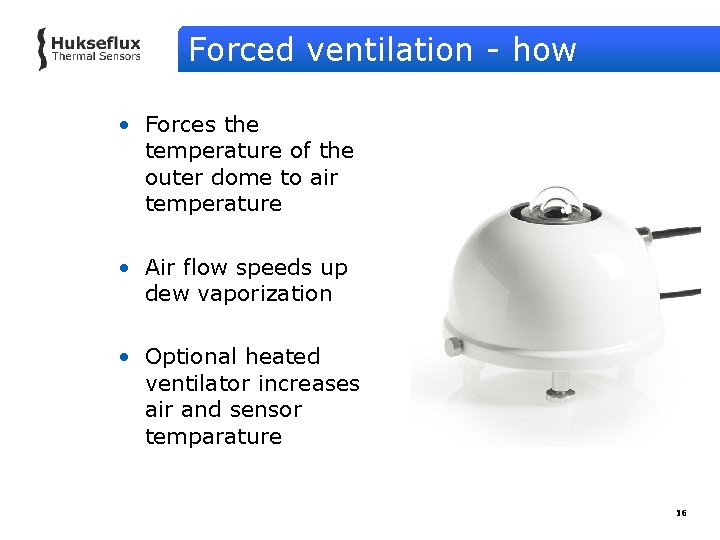
Forced ventilation - how • Forces the temperature of the outer dome to air temperature • Air flow speeds up dew vaporization • Optional heated ventilator increases air and sensor temparature 16
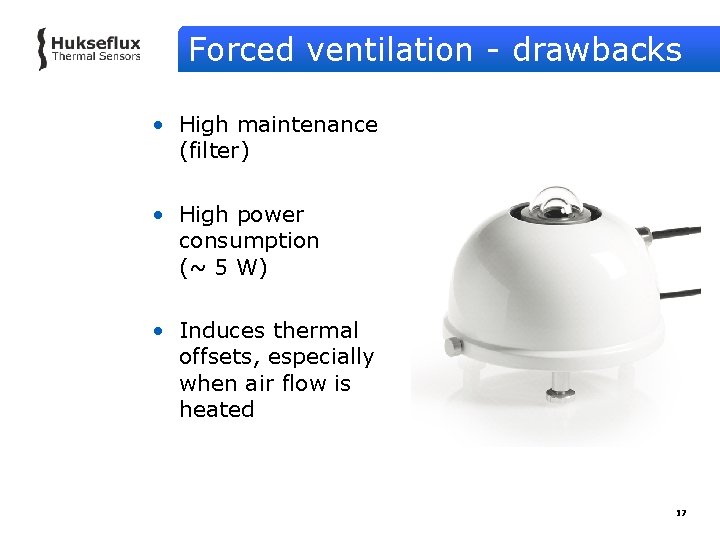
Forced ventilation - drawbacks • High maintenance (filter) • High power consumption (~ 5 W) • Induces thermal offsets, especially when air flow is heated 17
Flagging of bad data BSRN quality check • C. N. Long and E. G. Dutton v 2. 0 – Physically Possible Limits – Extremely Rare Limits – Comparisons (SW/LW/diffuse/direct) • No comparison for SW < 50 W/m² • Direct and diffuse measurements needed Visual monitoring • Continuous monitoring needed (visual) 18

New method to minimize dew introduction data availability current methods new method test pyrheliometers pyrgeometers conclusions
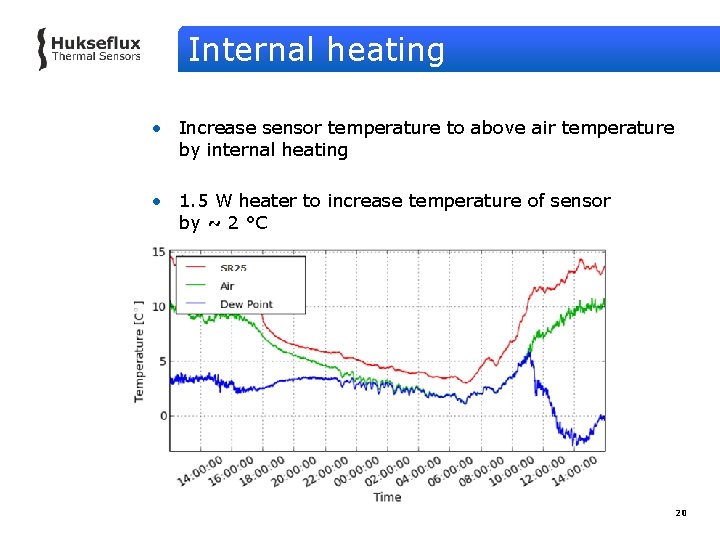
Internal heating • Increase sensor temperature to above air temperature by internal heating • 1. 5 W heater to increase temperature of sensor by ~ 2 °C 20
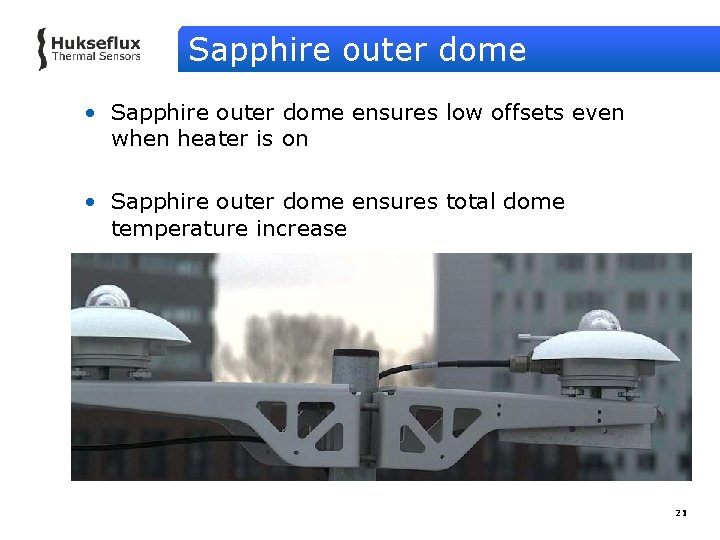
Sapphire outer dome • Sapphire outer dome ensures low offsets even when heater is on • Sapphire outer dome ensures total dome temperature increase 21
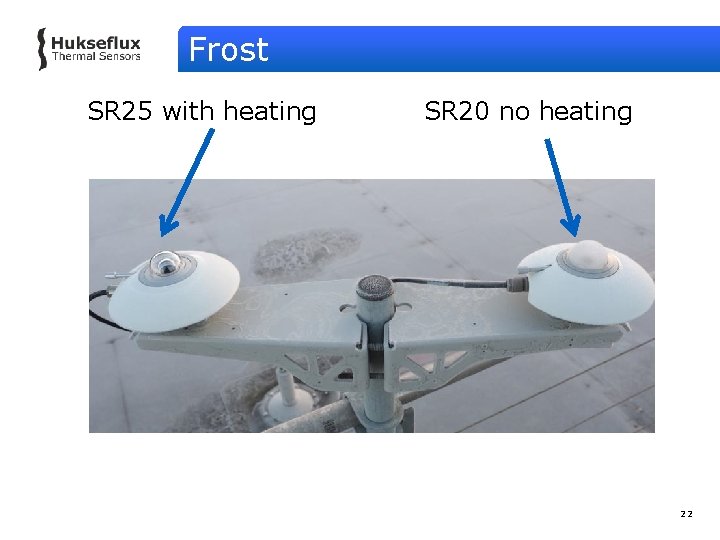
Frost SR 25 with heating SR 20 no heating 22
![Nighttime offset comparison 1 SR 25 unheated offset [W/m²] -100 -50 0 0 -1](http://slidetodoc.com/presentation_image_h/8d801f920759e3d4c56b49dc5dffb0c6/image-23.jpg "Nighttime offset comparison 1 SR 25 unheated offset [W/m²] -100 -50 0 0 -1")
Nighttime offset comparison 1 SR 25 unheated offset [W/m²] -100 -50 0 0 -1 -2 SR 25 heated SR 20 unheated -3 -4 premium brand A unheated secondary standard pyranometer -5 net longwave radiation [W/m²] 23
![Nighttime offsets comparison 1 offset [W/m²] -100 -50 0 -1 -2 SR 25 unheated](http://slidetodoc.com/presentation_image_h/8d801f920759e3d4c56b49dc5dffb0c6/image-24.jpg "Nighttime offsets comparison 1 offset [W/m²] -100 -50 0 -1 -2 SR 25 unheated")
Nighttime offsets comparison 1 offset [W/m²] -100 -50 0 -1 -2 SR 25 unheated 0 SR 25 heated SR 20 ventilated -3 -4 -5 premium brand A ventilated secondary standard pyranometer net longwave radiation [W/m²] 24
Data availability test introduction data availability current methods new methods test pyrheliometers pyrgeometers conclusions
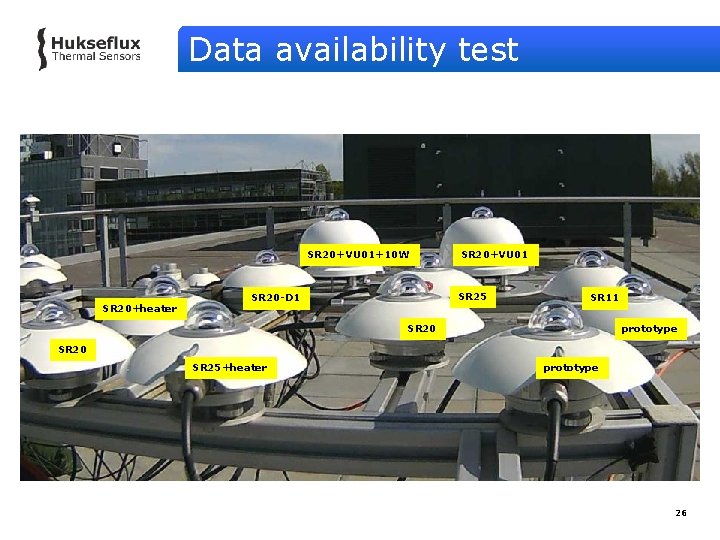
Data availability test SR 20+VU 01+10 W SR 20+heater SR 20+VU 01 SR 25 SR 20 -D 1 SR 11 prototype SR 20 SR 25+heater prototype 26
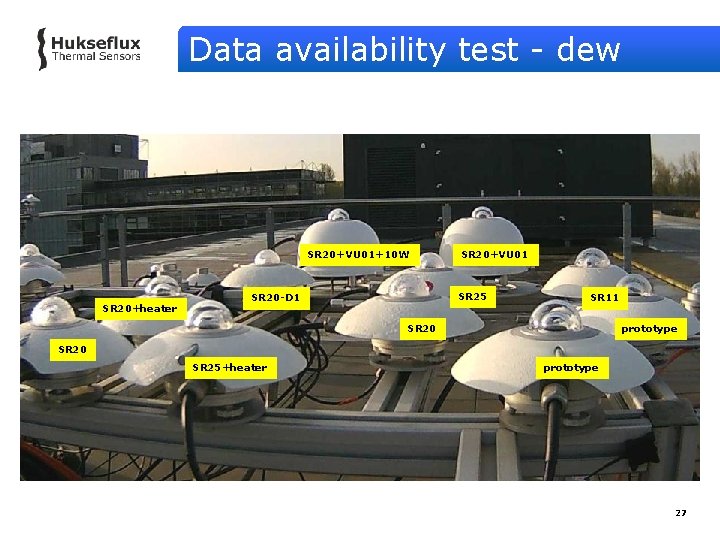
Data availability test - dew SR 20+VU 01+10 W SR 20+heater SR 20+VU 01 SR 25 SR 20 -D 1 SR 11 prototype SR 20 SR 25+heater prototype 27
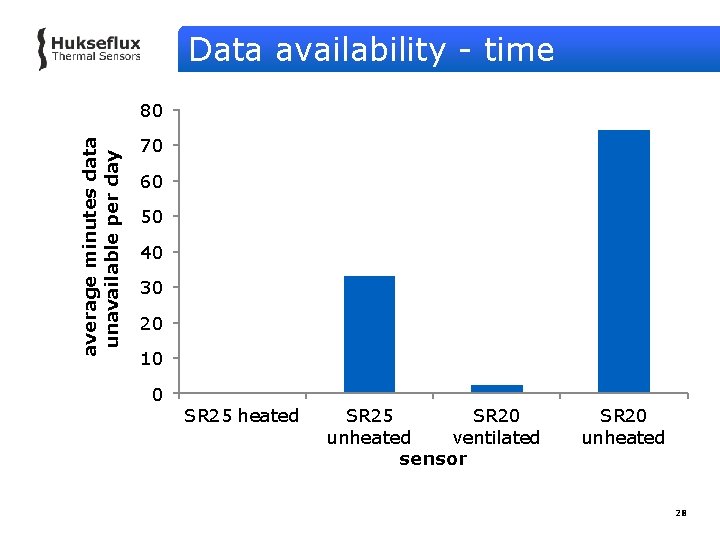
Data availability - time average minutes data unavailable per day 80 70 60 50 40 30 20 10 0 SR 25 heated SR 25 SR 20 unheated ventilated sensor SR 20 unheated 28
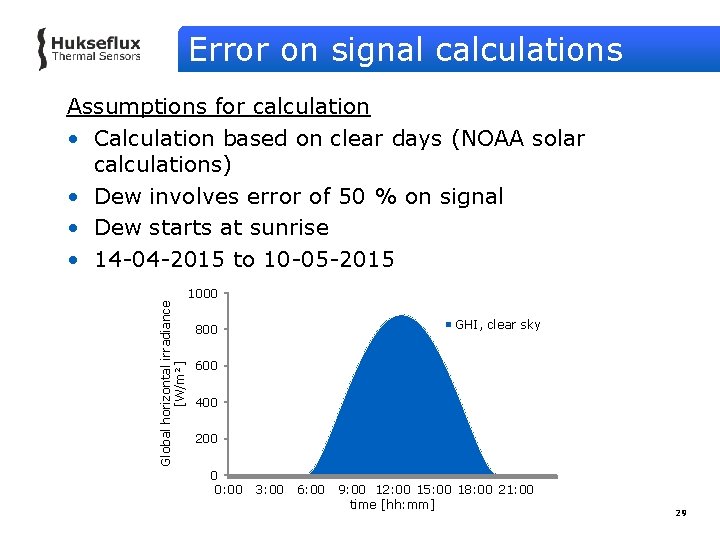
Error on signal calculations Assumptions for calculation • Calculation based on clear days (NOAA solar calculations) • Dew involves error of 50 % on signal • Dew starts at sunrise • 14 -04 -2015 to 10 -05 -2015 Global horizontal irradiance [W/m²] 1000 GHI, clear sky 800 600 400 200 0 0: 00 3: 00 6: 00 9: 00 12: 00 15: 00 18: 00 21: 00 time [hh: mm] 29
![Error on signal calculations Global horizontal irradiance [W/m²] Assumptions for calculation • Calculation based](http://slidetodoc.com/presentation_image_h/8d801f920759e3d4c56b49dc5dffb0c6/image-30.jpg "Error on signal calculations Global horizontal irradiance [W/m²] Assumptions for calculation • Calculation based")
Error on signal calculations Global horizontal irradiance [W/m²] Assumptions for calculation • Calculation based on clear days (NOAA solar calculations) • Dew involves error of 50 % on signal • Dew starts at sunrise • 14 -04 -2015 to 10 -05 -2015 1000 error due to dew 800 GHI, clear sky 600 400 200 0 0: 00 3: 00 6: 00 9: 00 12: 00 15: 00 18: 00 21: 00 time [hh: mm] 30
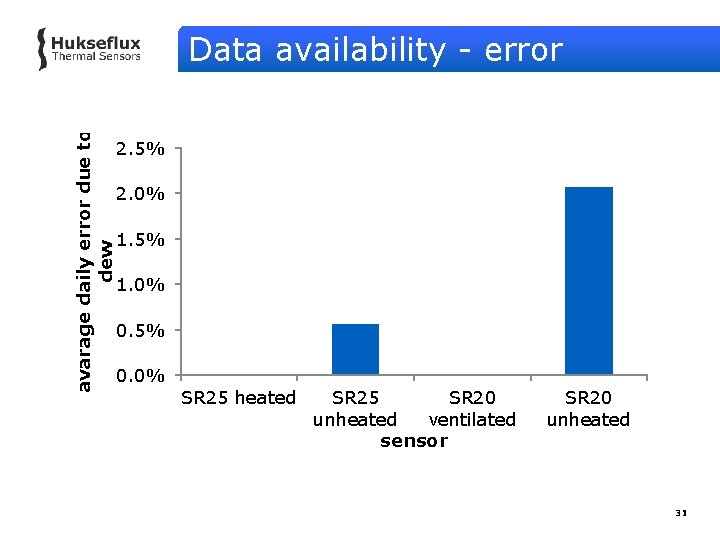
avarage daily error due to dew Data availability - error 2. 5% 2. 0% 1. 5% 1. 0% 0. 5% 0. 0% SR 25 heated SR 25 SR 20 unheated ventilated sensor SR 20 unheated 31
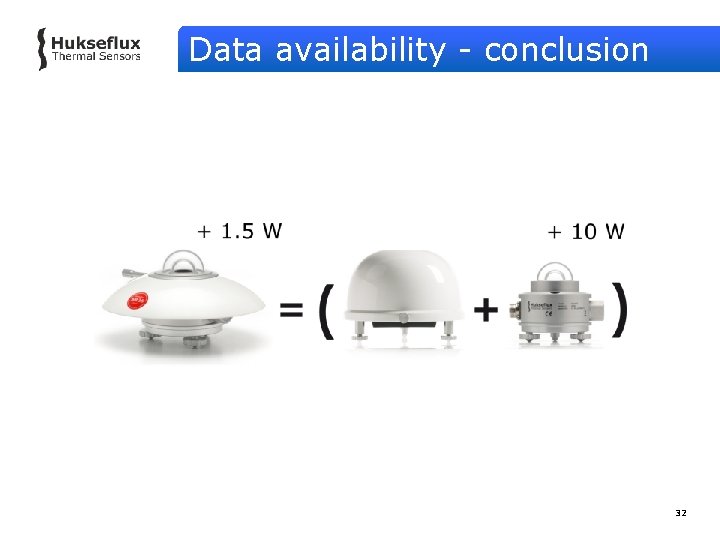
Data availability - conclusion 32
Pyrheliometers introduction data availability current methods new methods test pyrheliometers pyrgeometers conclusions
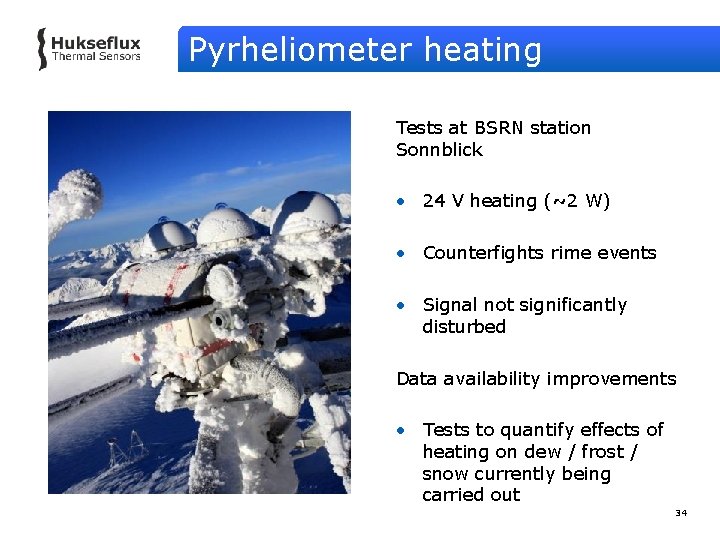
Pyrheliometer heating Tests at BSRN station Sonnblick • 24 V heating (~2 W) • Counterfights rime events • Signal not significantly disturbed Data availability improvements • Tests to quantify effects of heating on dew / frost / snow currently being carried out 34
![offset [W/m²] Offset improvements 5 4 3 2 1 0 DR 01 DR 02](http://slidetodoc.com/presentation_image_h/8d801f920759e3d4c56b49dc5dffb0c6/image-35.jpg "offset [W/m²] Offset improvements 5 4 3 2 1 0 DR 01 DR 02")
offset [W/m²] Offset improvements 5 4 3 2 1 0 DR 01 DR 02 DR 03 0. 5 2 5 heating power [W] DR 04 Prototype 35
Pyrgeometers introduction data availability current methods new methods test pyrheliometers pyrgeometers conclusions
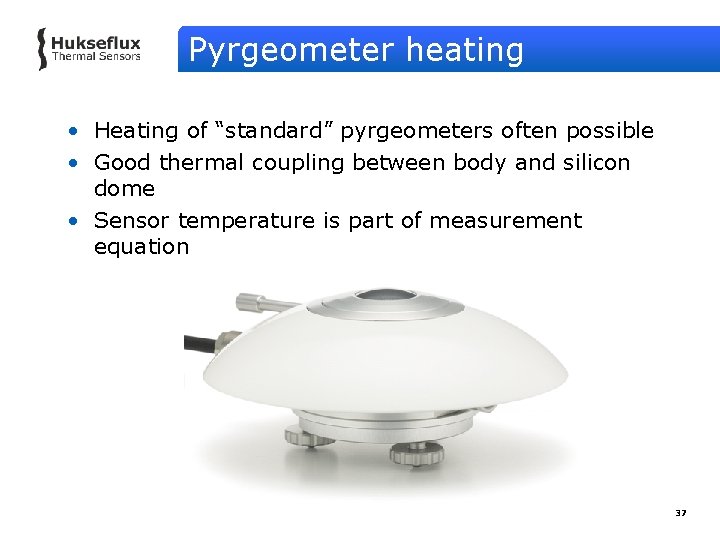
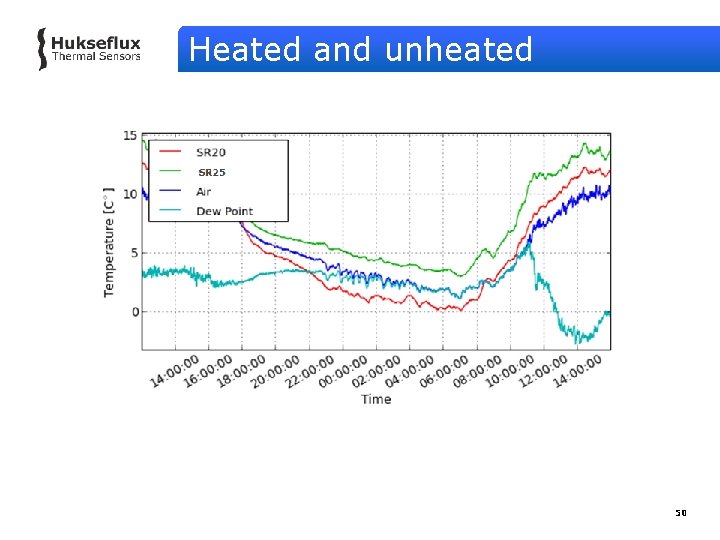
Pyrgeometer heating • Heating of “standard” pyrgeometers often possible • Good thermal coupling between body and silicon dome • Sensor temperature is part of measurement equation 37
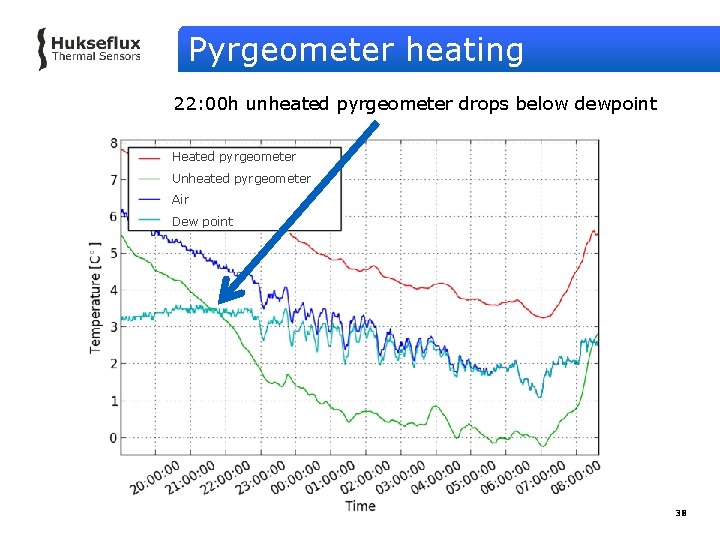
Pyrgeometer heating 22: 00 h unheated pyrgeometer drops below dewpoint Heated pyrgeometer Unheated pyrgeometer Air Dew point 38
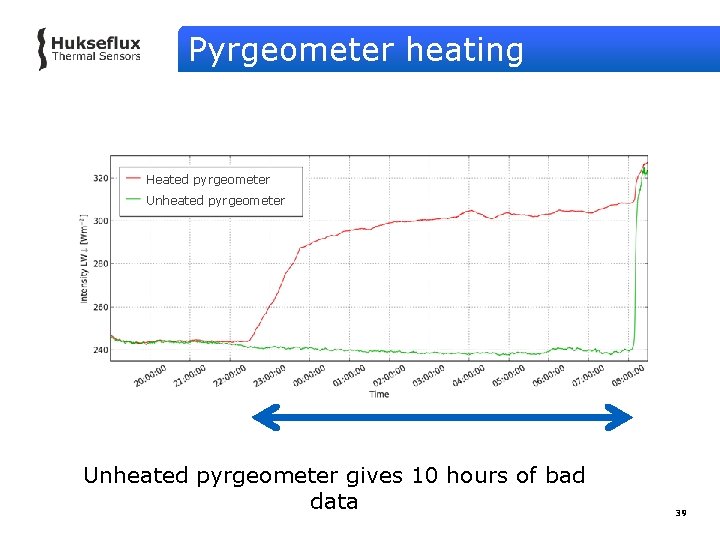
Pyrgeometer heating Heated pyrgeometer Unheated pyrgeometer gives 10 hours of bad data 39
Conclusions introduction data availability current methods new methods test pyrheliometers pyrgeometers conclusions
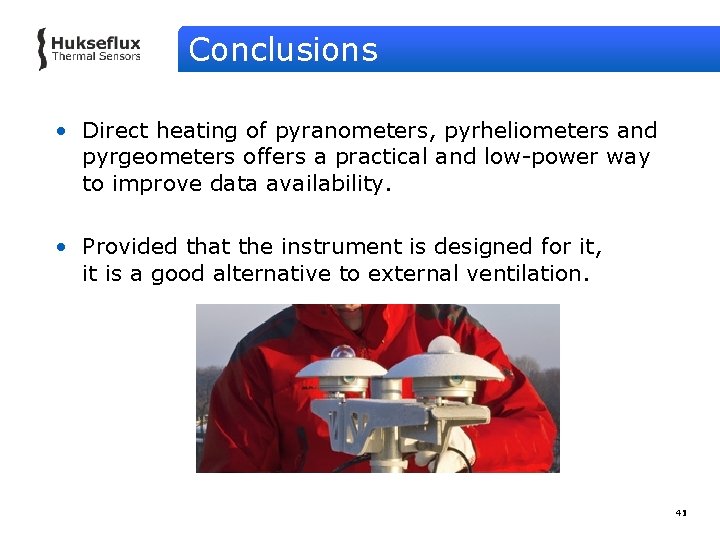
Conclusions • Direct heating of pyranometers, pyrheliometers and pyrgeometers offers a practical and low-power way to improve data availability. • Provided that the instrument is designed for it, it is a good alternative to external ventilation. 41

Thank You!
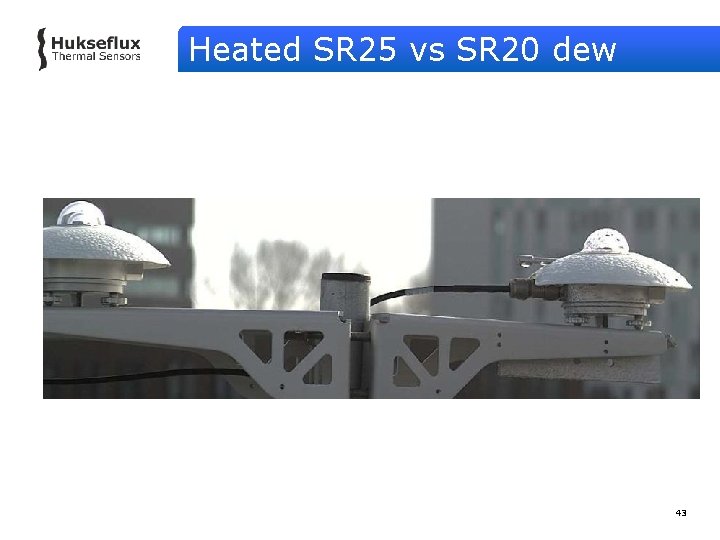
Heated SR 25 vs SR 20 dew 43
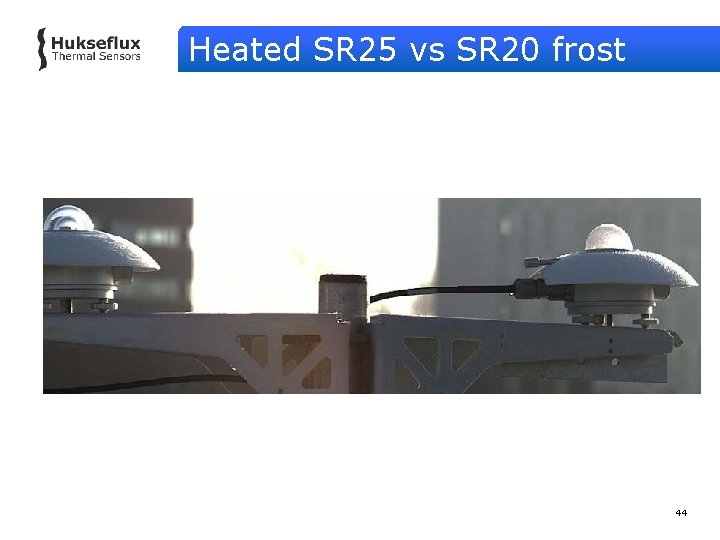
Heated SR 25 vs SR 20 frost 44
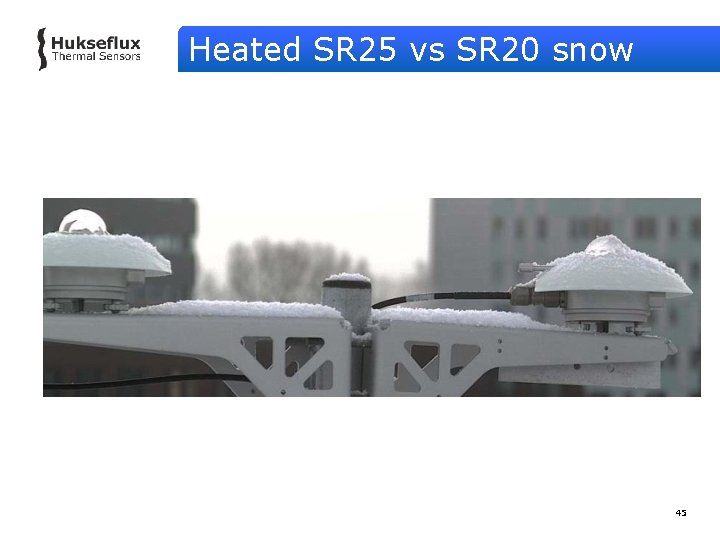
Heated SR 25 vs SR 20 snow 45
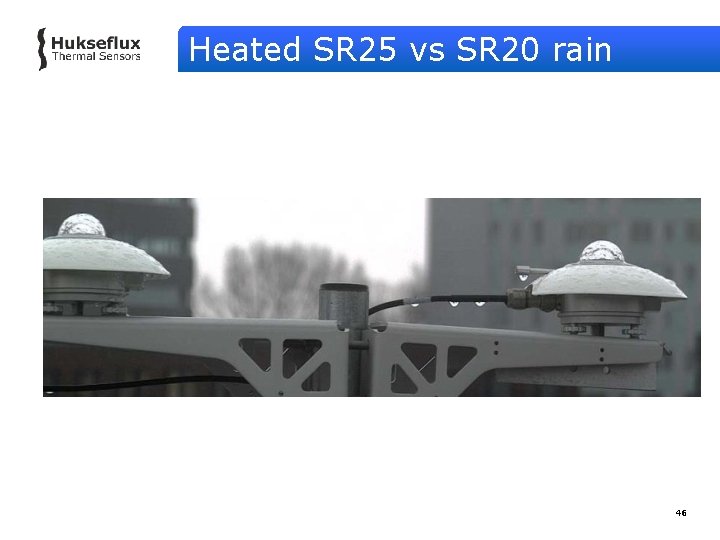
Heated SR 25 vs SR 20 rain 46
Frost on ventilated instruments Frost 47
Dew on ventilated instruments Dew 48
Theorie: effect of dew 49
Heated and unheated 50
- Slides: 50