
Improvement of Community DRR by Proper Disaster Education
Improvement of Community DRR by Proper Disaster Education & Simulation through CBDRM BY ZUHAIR AHMED KOWSHIK INSTITUTE OF DISASTER MANAGEMENT & VULNERABILITY STUDIES, UNIVERSITY OF DHAKA & PUJA KARANJEET YOUTH’S UNESCO CLUB NEPAL
Background Nepal has a history of recurring floods. It is the most destructive types of disasters. Nepal has a steep topography, it has rugged and high- angle slope with complex geology. High intensity of rainfall during monsoon season causes flood and the flow of debris. Unplanned settlements and physical constructions without due considerations to the environment and natural hazard are noticeably aggravating mountain environment. Three quarter of the total land area of Nepal is hilly and situated or adjacent to the unstable hill slopes. Saptarika In Terai is one of the most flood prone district in Nepal.
Background Bangladesh is land of many natural disasters. Southern part of Bangladesh is mostly prone to cyclone and floods. Pirojpur is a southern district of Bangladesh. Every year this district is being ravaged by tropical cyclones and floods in the monsoon. There are some communities in this district which don’t have proper disaster management system as well as lack of awareness.
Project description §This is a comprehensive project plan which is planned to conducted in most hazard prone areas of Bangladesh and Nepal. In Bangladesh, this project will be implemented in several place of Pirojpur (A southern district of Bangladesh near coast) and in Nepal it will be implemented at Saptarika district. §This project includes all the people of community (specially women, children, youth and other vulnerable groups of a community).

Objectives Create a behavioral change and culture of practicing disaster risk reduction in communities Increase the capacity of local people for disaster mitigation and coping mechanism And finally make the community resilient to disaster
Problem Statement v. Pirojpur §In the Pirojpur district, there is lack of proper practical disaster education and lack of knowledge of DRR. §Lack of co-ordination between local disaster management authority and development authority §Saptarika §There is no adequate education in Saptarika district. §No flood risk reduction plan and Strategy. §No framework for flood management. §Great loss of resources during monsoon flood.
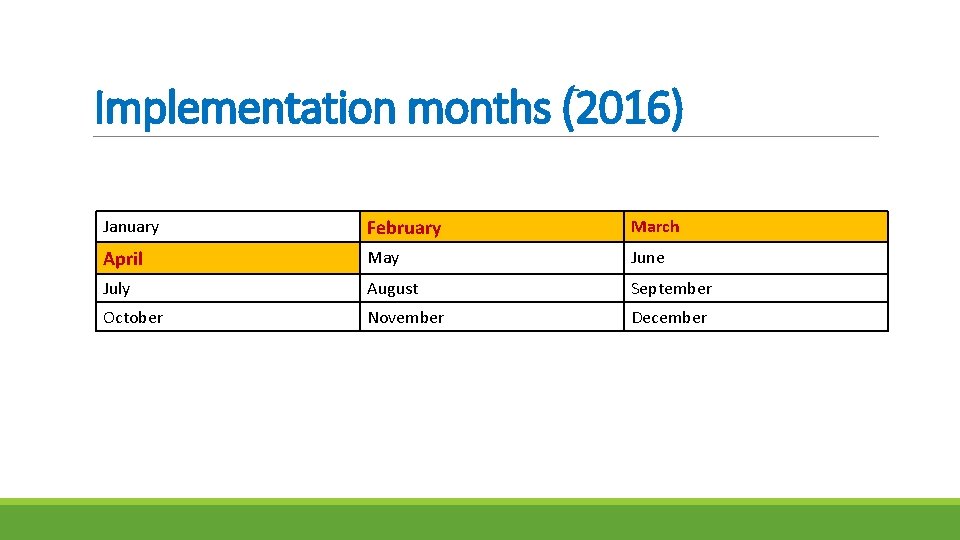
Implementation months (2016) January February March April May June July August September October November December
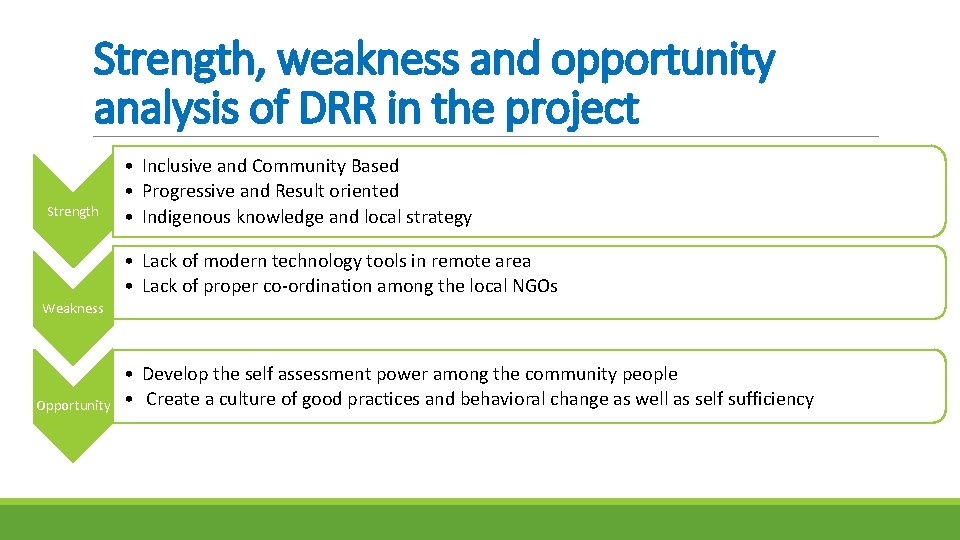
Strength, weakness and opportunity analysis of DRR in the project Strength • Inclusive and Community Based • Progressive and Result oriented • Indigenous knowledge and local strategy • Lack of modern technology tools in remote area • Lack of proper co-ordination among the local NGOs Weakness Opportunity • Develop the self assessment power among the community people • Create a culture of good practices and behavioral change as well as self sufficiency
Goals ØRisk awareness & assessment, including hazard analysis and vulnerability and capacity analysis ØKnowledge development including education, training, research and information ØPublic commitment & institutional frameworks; including organizational policy, legislation and community action ØApplication of measures including environmental management, land use and rural planning, protection of critical facilities, application of science and technology, partnership and networking and also financial instruments. ØEWS system including forecasting, dissemination of warnings, preparedness measures and reaction capacities.

Target groups Women, Children & Youth Most Vulnerable Groups Tribal groups Community People Community Volunteers First responders, local volunteers and Rescue Force member
Activities in each Workshop ØVideo and power point presentations ØBrainstorming sessions ØFrequent lectures ØCVA (Capacity & Vulnerability Analysis) ØMock drill and simulation ØTree plantation ØGroup discussion and flood zone mapping
Parameters of success §Response of the community people and their willingness to participate §Knowledge development regarding disaster management §Proper mitigation plans as well as adequate preparedness and response mechanisms §Co-operation in any future disaster event
Advice q Include International Organizations and Foreign Aid Agencies q Follow the international guidelines and frameworks for DRR q Consider gender and cultural perspectives q Follow and maintain the disaster ethics during this project
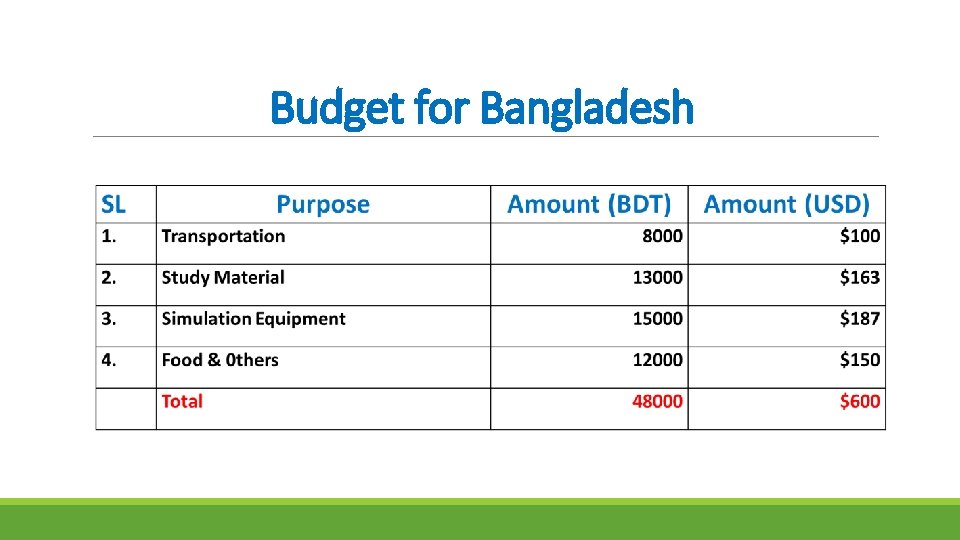
Budget for Bangladesh
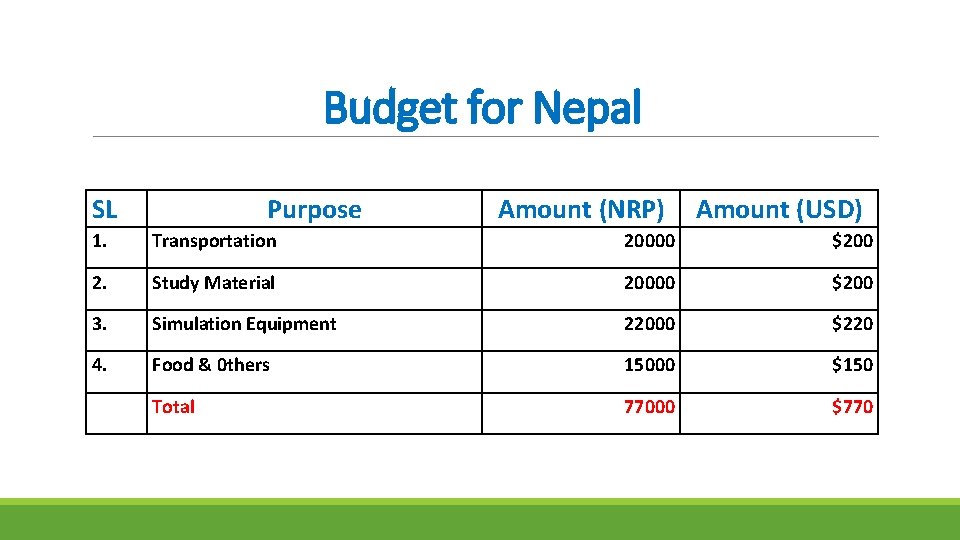
Budget for Nepal SL Purpose Amount (NRP) Amount (USD) 1. Transportation 20000 $200 2. Study Material 20000 $200 3. Simulation Equipment 22000 $220 4. Food & 0 thers 15000 $150 Total 77000 $770
Contact Details Zuhair Ahmed Kowshik Puja Karanjeet E-mail: zakowshik@gmail. com E-mail: pujakaranjeet@gmail. com Cell: +8801730685595 Cell: +977 -1 -422 -5636 Address: Niloy, College road, Kawkhali 8510, Pirojpur, Bangladesh. Address: Kohiti-20, Jaisidewal Kathmandu, Nepal.

- Slides: 17