
Improved jet clustering algorithm with vertex information for

![Vertices in ZHH -> bbbbbb Wrong vertices True vertices Vertex position [mm] In 347](https://slidetodoc.com/presentation_image_h2/a26590ae254bf6f431140ca98a7a59a4/image-41.jpg "Vertices in ZHH -> bbbbbb Wrong vertices True vertices Vertex position [mm] In 347")
- Slides: 44
Improved jet clustering algorithm with vertex information for multi-b final states Taikan Suehara, Tomohiko Tanabe, Satoru Yamashita (The Univ. of Tokyo) Taikan Suehara et al. , TIPP 11 @ Chicago, 11 June 2011 page 1
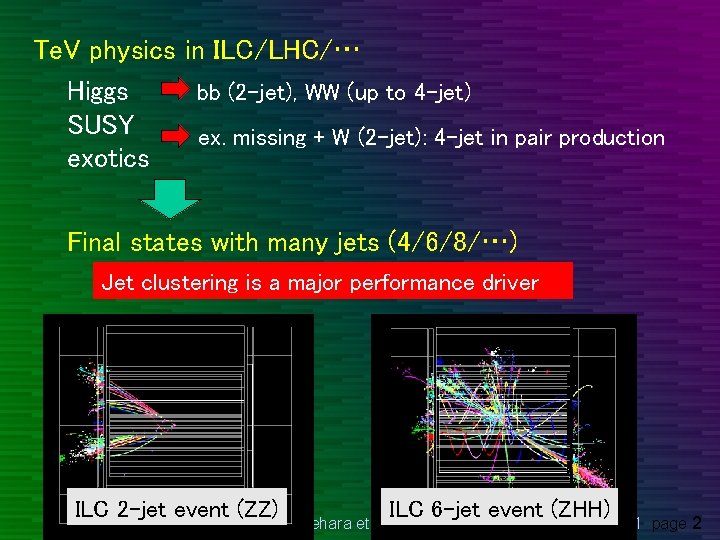
Te. V physics in ILC/LHC/… bb (2 -jet), WW (up to 4 -jet) Higgs SUSY ex. missing + W (2 -jet): 4 -jet in pair production exotics Final states with many jets (4/6/8/…) Jet clustering is a major performance driver ILC 2 -jet event (ZZ) ILC 6 -jet event (ZHH) Taikan Suehara et al. , TIPP 11 @ Chicago, 11 June 2011 page 2
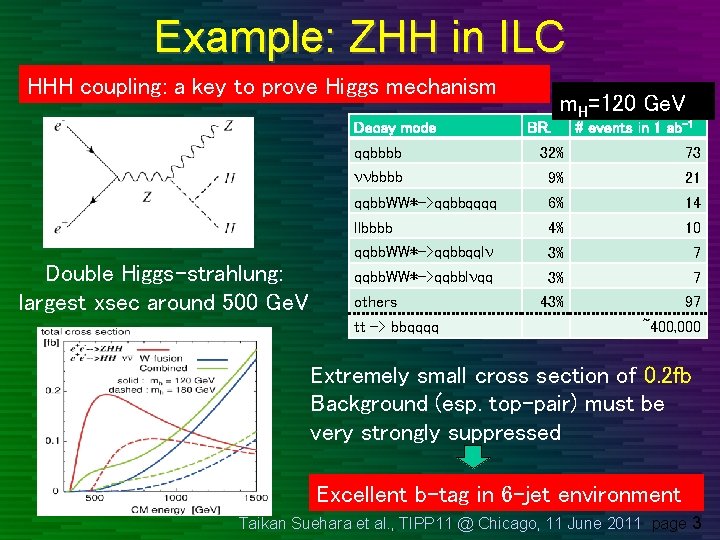
Example: ZHH in ILC HHH coupling: a key to prove Higgs mechanism Decay mode Double Higgs-strahlung: largest xsec around 500 Ge. V BR. m. H=120 Ge. V # events in 1 ab-1 qqbbbb 32% 73 nnbbbb 9% 21 qqbb. WW*->qqbbqqqq 6% 14 llbbbb 4% 10 qqbb. WW*->qqbbqqln 3% 7 qqbb. WW*->qqbblnqq 3% 7 43% 97 others tt -> bbqqqq ~400, 000 Extremely small cross section of 0. 2 fb Background (esp. top-pair) must be very strongly suppressed Excellent b-tag in 6 -jet environment Taikan Suehara et al. , TIPP 11 @ Chicago, 11 June 2011 page 3
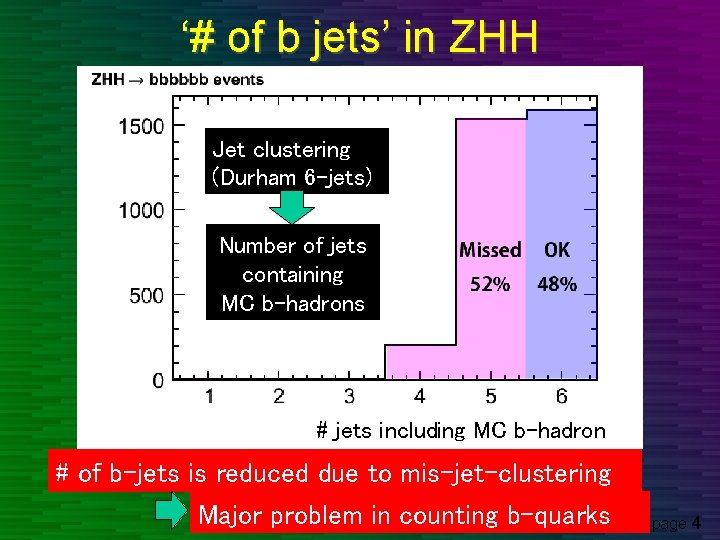
‘# of b jets’ in ZHH Jet clustering (Durham 6 -jets) Number of jets containing MC b-hadrons # jets including MC b-hadron # of b-jets is reduced due to mis-jet-clustering Major problem b-quarks Taikan Suehara et in al. , counting TIPP 11 @ Chicago, 11 June 2011 page 4
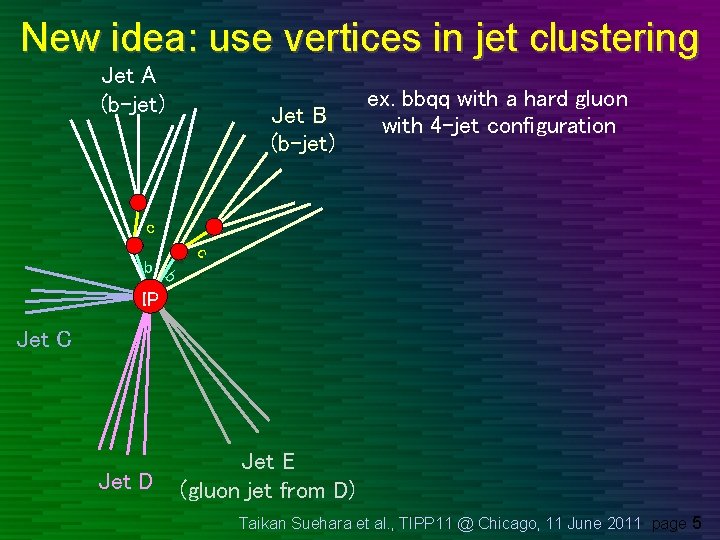
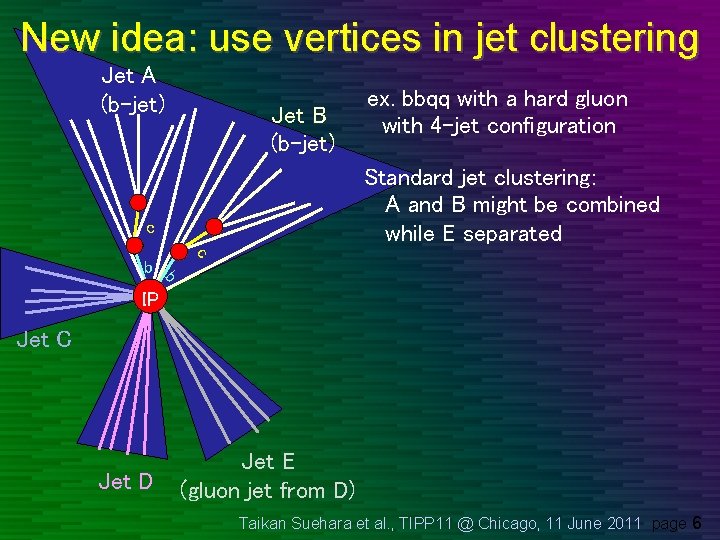
New idea: use vertices in jet clustering Jet A (b-jet) Jet B (b-jet) ex. bbqq with a hard gluon with 4 -jet configuration c c b b IP Jet C Jet D Jet E (gluon jet from D) Taikan Suehara et al. , TIPP 11 @ Chicago, 11 June 2011 page 5
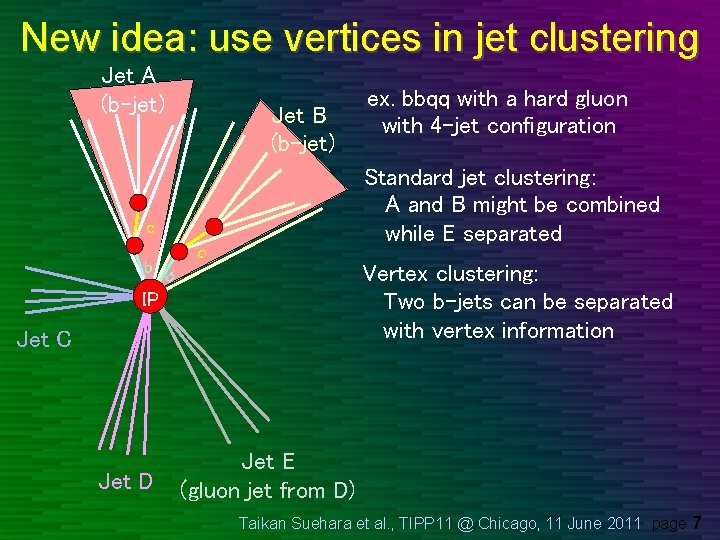
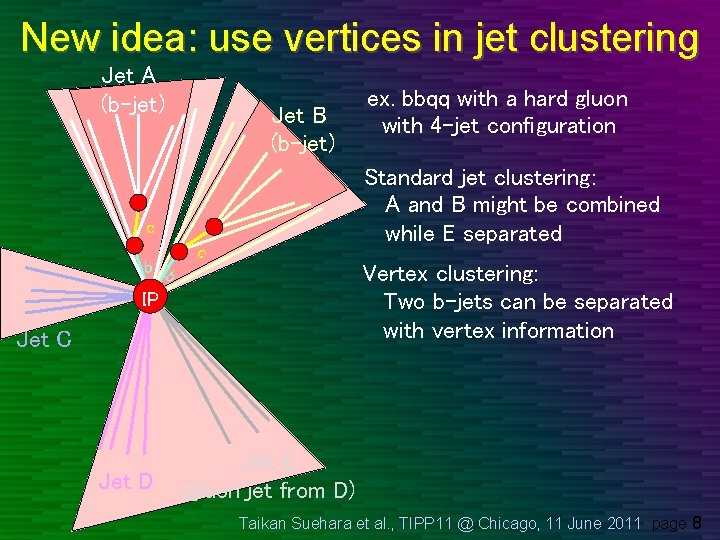
New idea: use vertices in jet clustering Jet A (b-jet) Jet B (b-jet) ex. bbqq with a hard gluon with 4 -jet configuration Standard jet clustering: A and B might be combined while E separated c c b b IP Jet C Jet D Jet E (gluon jet from D) Taikan Suehara et al. , TIPP 11 @ Chicago, 11 June 2011 page 6
New idea: use vertices in jet clustering Jet A (b-jet) Jet B (b-jet) Standard jet clustering: A and B might be combined while E separated c c b b Vertex clustering: Two b-jets can be separated with vertex information IP Jet C Jet D ex. bbqq with a hard gluon with 4 -jet configuration Jet E (gluon jet from D) Taikan Suehara et al. , TIPP 11 @ Chicago, 11 June 2011 page 7
New idea: use vertices in jet clustering Jet A (b-jet) Jet B (b-jet) Standard jet clustering: A and B might be combined while E separated c c b b Vertex clustering: Two b-jets can be separated with vertex information IP Jet C Jet D ex. bbqq with a hard gluon with 4 -jet configuration Jet E (gluon jet from D) Taikan Suehara et al. , TIPP 11 @ Chicago, 11 June 2011 page 8
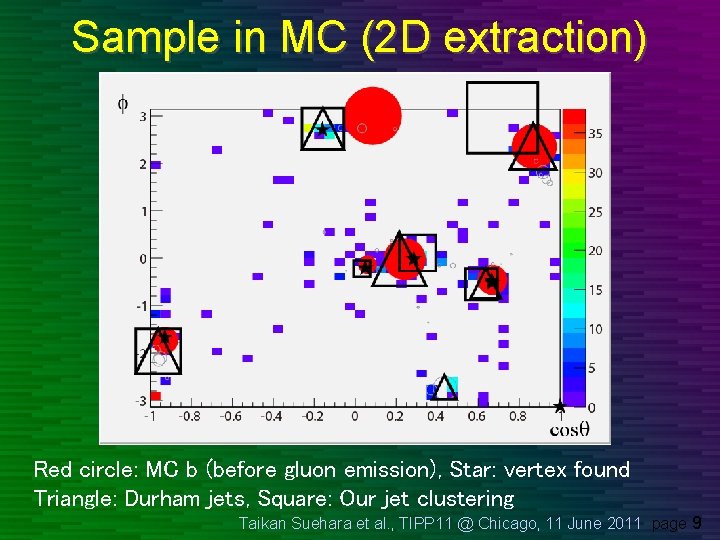
Sample in MC (2 D extraction) Red circle: MC b (before gluon emission), Star: vertex found Triangle: Durham jets, Square: Our jet clustering Taikan Suehara et al. , TIPP 11 @ Chicago, 11 June 2011 page 9
Details (a bit) of our method 1. 2. 3. 4. 5. Vertex finder Secondary Muon ID Vertex combination Jet clustering using vertices Jet flavor tagging Taikan Suehara et al. , TIPP 11 @ Chicago, 11 June 2011 page 10
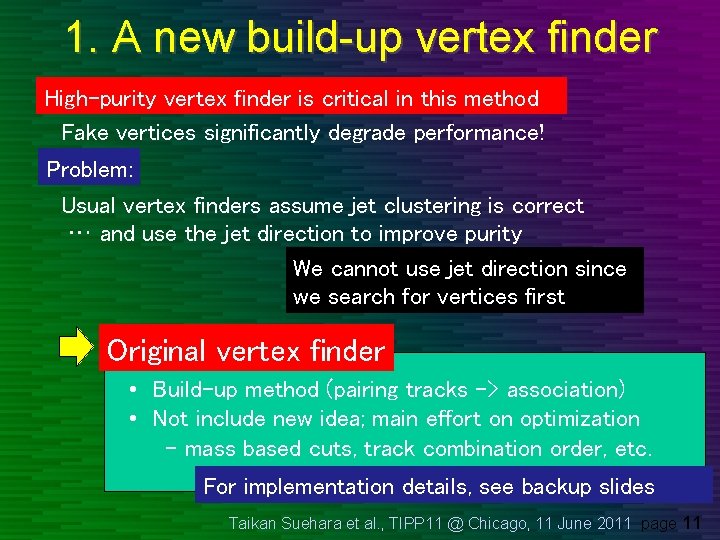
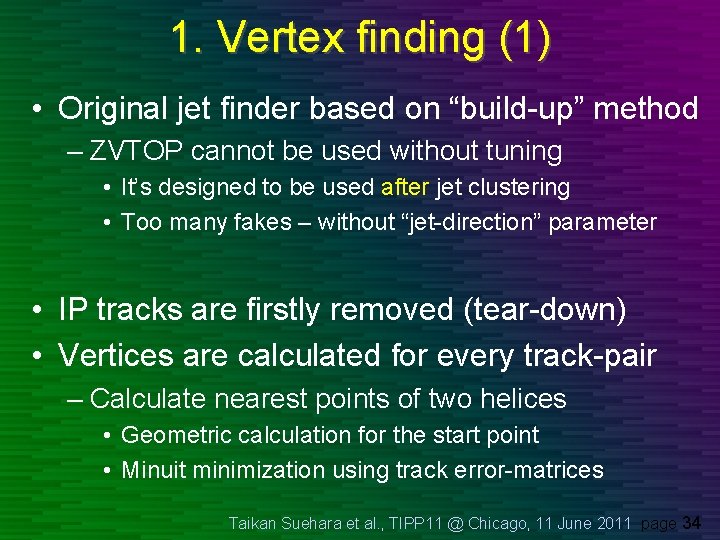
1. A new build-up vertex finder High-purity vertex finder is critical in this method Fake vertices significantly degrade performance! Problem: Usual vertex finders assume jet clustering is correct … and use the jet direction to improve purity We cannot use jet direction since we search for vertices first Original vertex finder • Build-up method (pairing tracks -> association) • Not include new idea; main effort on optimization - mass based cuts, track combination order, etc. For implementation details, see backup slides Taikan Suehara et al. , TIPP 11 @ Chicago, 11 June 2011 page 11
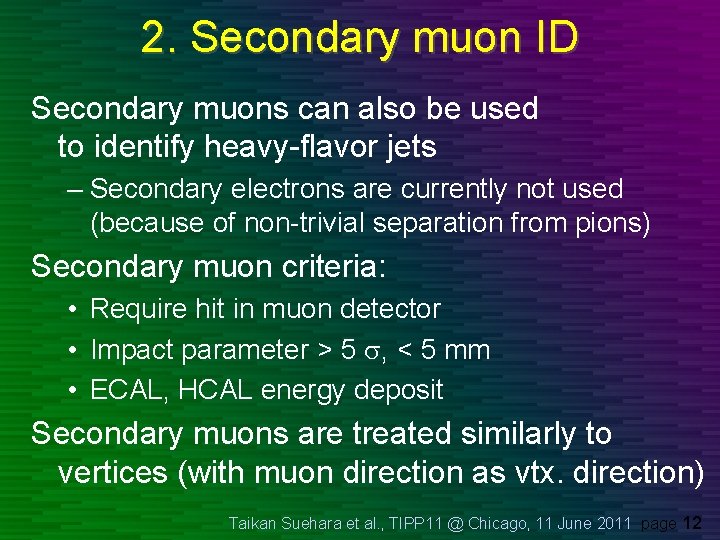
2. Secondary muon ID Secondary muons can also be used to identify heavy-flavor jets – Secondary electrons are currently not used (because of non-trivial separation from pions) Secondary muon criteria: • Require hit in muon detector • Impact parameter > 5 s, < 5 mm • ECAL, HCAL energy deposit Secondary muons are treated similarly to vertices (with muon direction as vtx. direction) Taikan Suehara et al. , TIPP 11 @ Chicago, 11 June 2011 page 12
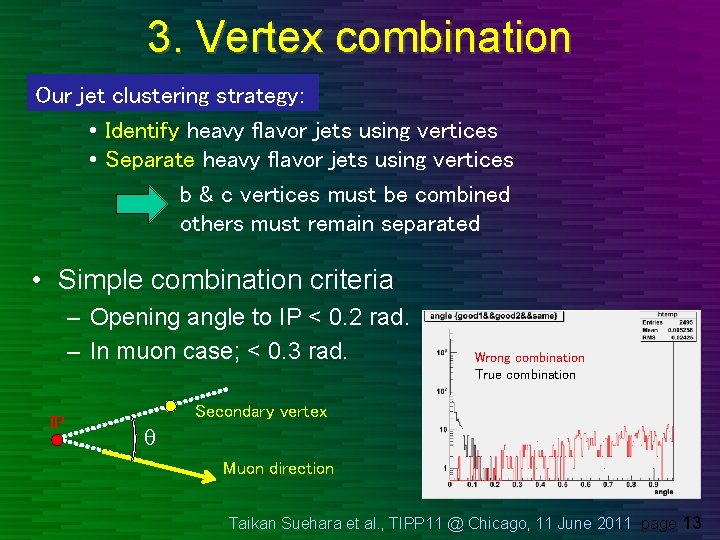
3. Vertex combination Our jet clustering strategy: • Identify heavy flavor jets using vertices • Separate heavy flavor jets using vertices b & c vertices must be combined others must remain separated • Simple combination criteria – Opening angle to IP < 0. 2 rad. – In muon case; < 0. 3 rad. IP Wrong combination True combination Secondary vertex q Muon direction Taikan Suehara et al. , TIPP 11 @ Chicago, 11 June 2011 page 13
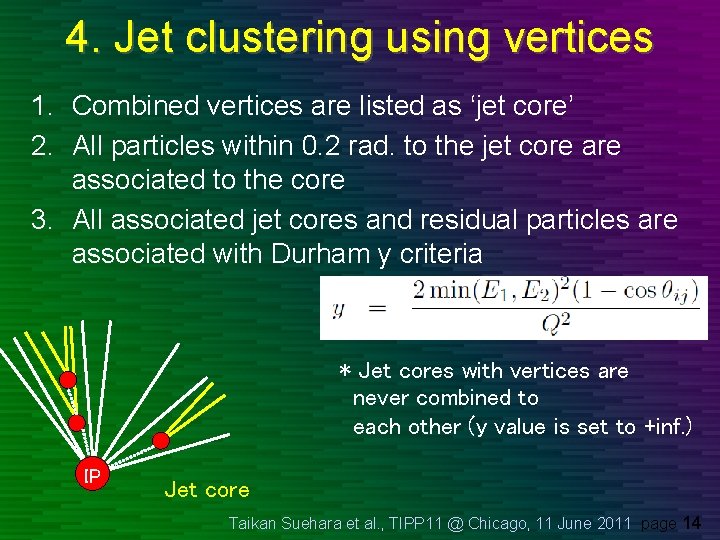
4. Jet clustering using vertices 1. Combined vertices are listed as ‘jet core’ 2. All particles within 0. 2 rad. to the jet core associated to the core 3. All associated jet cores and residual particles are associated with Durham y criteria * Jet cores with vertices are never combined to each other (y value is set to +inf. ) IP Jet core Taikan Suehara et al. , TIPP 11 @ Chicago, 11 June 2011 page 14
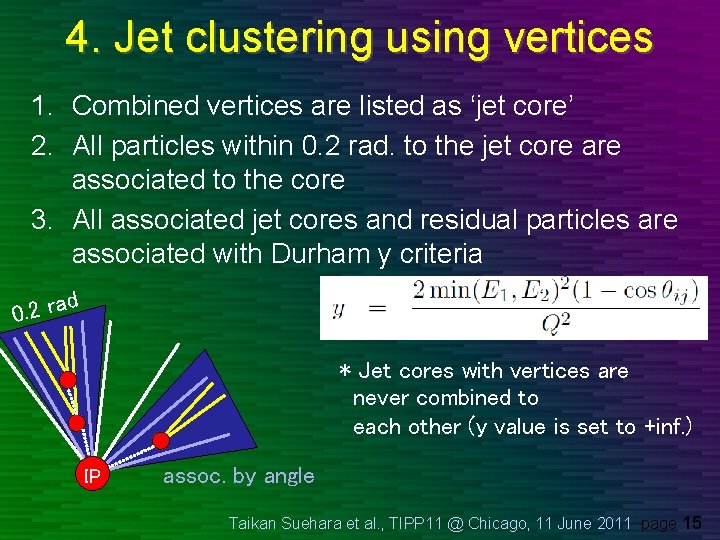
4. Jet clustering using vertices 1. Combined vertices are listed as ‘jet core’ 2. All particles within 0. 2 rad. to the jet core associated to the core 3. All associated jet cores and residual particles are associated with Durham y criteria d 0. 2 ra * Jet cores with vertices are never combined to each other (y value is set to +inf. ) IP assoc. by angle Taikan Suehara et al. , TIPP 11 @ Chicago, 11 June 2011 page 15
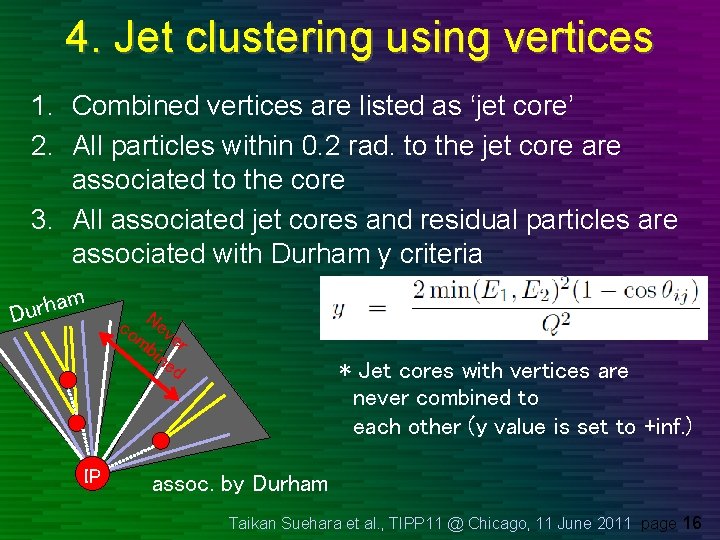
4. Jet clustering using vertices 1. Combined vertices are listed as ‘jet core’ 2. All particles within 0. 2 rad. to the jet core associated to the core 3. All associated jet cores and residual particles are associated with Durham y criteria am h r u D IP co Nev mb er ine d * Jet cores with vertices are never combined to each other (y value is set to +inf. ) assoc. by Durham Taikan Suehara et al. , TIPP 11 @ Chicago, 11 June 2011 page 16
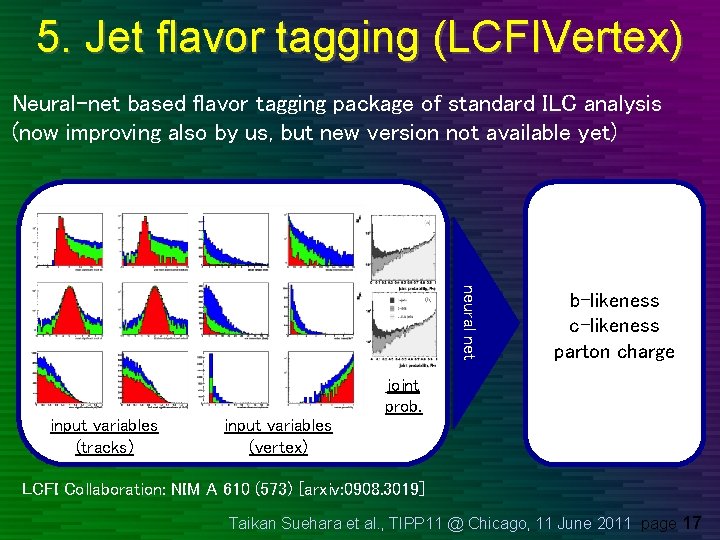
5. Jet flavor tagging (LCFIVertex) Neural-net based flavor tagging package of standard ILC analysis (now improving also by us, but new version not available yet) neural net b-likeness c-likeness parton charge joint prob. input variables (tracks) input variables (vertex) LCFI Collaboration: NIM A 610 (573) [arxiv: 0908. 3019] Taikan Suehara et al. , TIPP 11 @ Chicago, 11 June 2011 page 17
Performance 1. 2. 3. 4. MC number of b-jets MC number of tracks from b-hadrons ZHH vs. top-pair b-tagging performance Effect on b-tag cut in ZHH analysis Taikan Suehara et al. , TIPP 11 @ Chicago, 11 June 2011 page 18
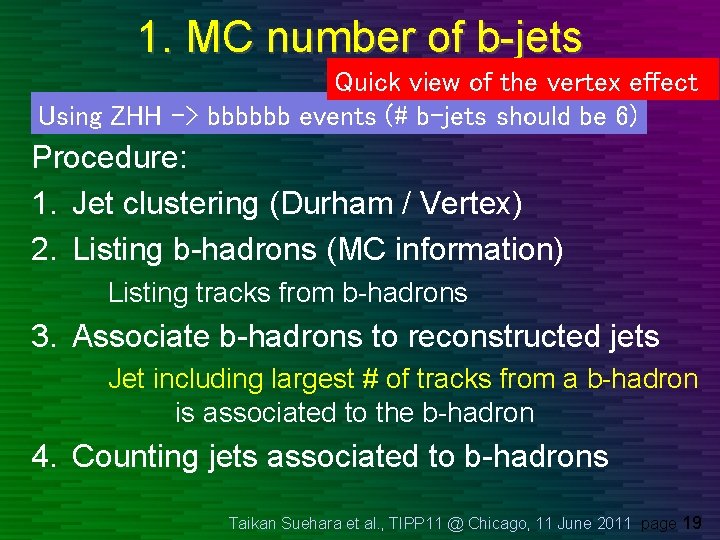
1. MC number of b-jets Quick view of the vertex effect Using ZHH -> bbbbbb events (# b-jets should be 6) Procedure: 1. Jet clustering (Durham / Vertex) 2. Listing b-hadrons (MC information) Listing tracks from b-hadrons 3. Associate b-hadrons to reconstructed jets Jet including largest # of tracks from a b-hadron is associated to the b-hadron 4. Counting jets associated to b-hadrons Taikan Suehara et al. , TIPP 11 @ Chicago, 11 June 2011 page 19
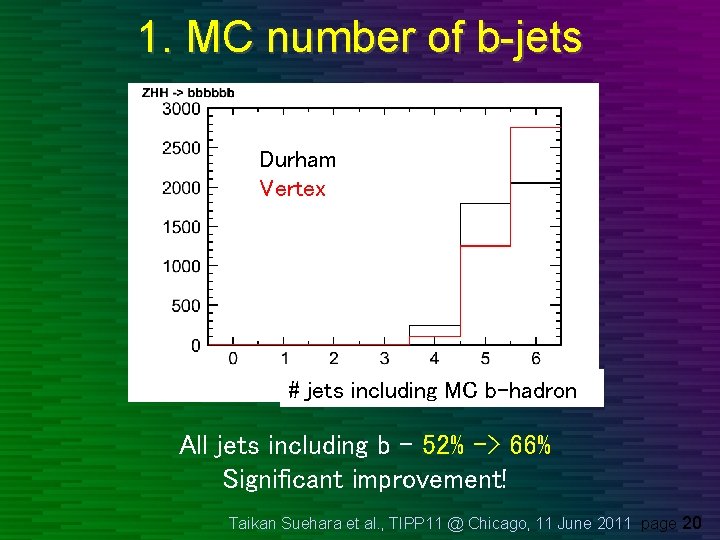
1. MC number of b-jets Durham Vertex # jets including MC b-hadron All jets including b – 52% -> 66% Significant improvement! Taikan Suehara et al. , TIPP 11 @ Chicago, 11 June 2011 page 20
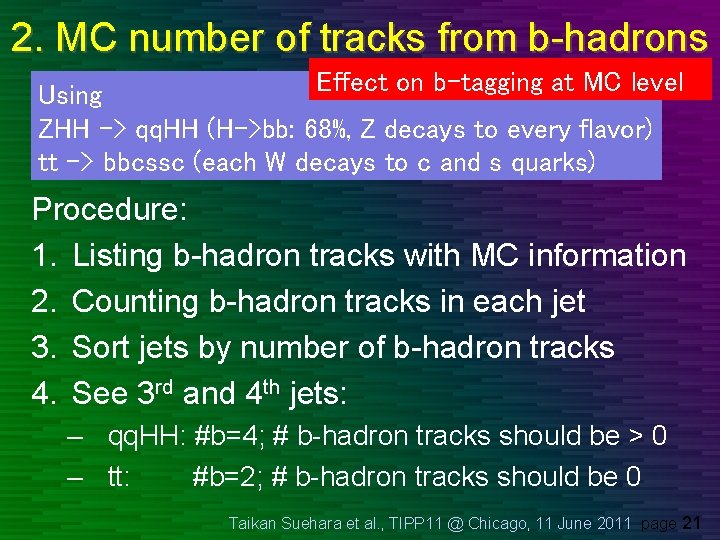
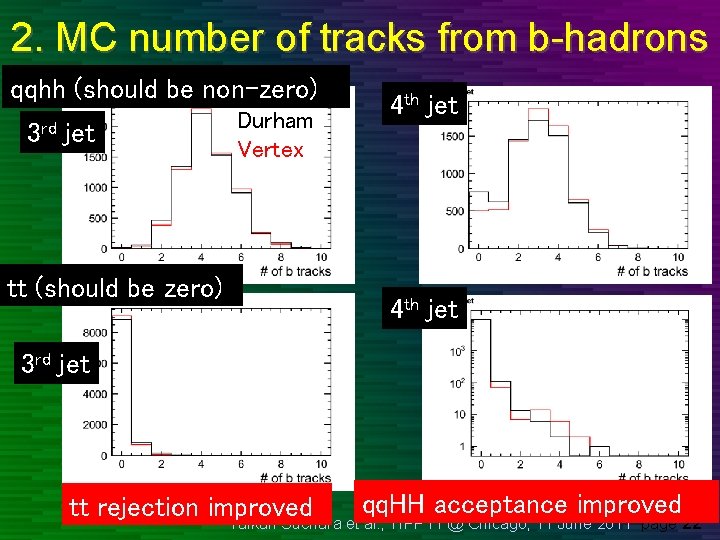
2. MC number of tracks from b-hadrons Effect on b-tagging at MC level Using ZHH -> qq. HH (H->bb: 68%, Z decays to every flavor) tt -> bbcssc (each W decays to c and s quarks) Procedure: 1. Listing b-hadron tracks with MC information 2. Counting b-hadron tracks in each jet 3. Sort jets by number of b-hadron tracks 4. See 3 rd and 4 th jets: – qq. HH: #b=4; # b-hadron tracks should be > 0 – tt: #b=2; # b-hadron tracks should be 0 Taikan Suehara et al. , TIPP 11 @ Chicago, 11 June 2011 page 21
2. MC number of tracks from b-hadrons qqhh (should be non-zero) 3 rd jet tt (should be zero) Durham Vertex 4 th jet 3 rd jet qq. HH acceptance improved tt rejection improved Taikan Suehara et al. , TIPP 11 @ Chicago, 11 June 2011 page 22
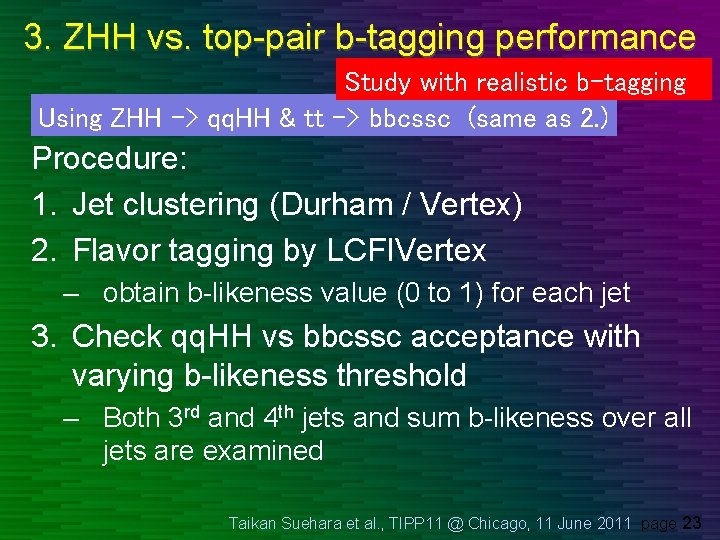
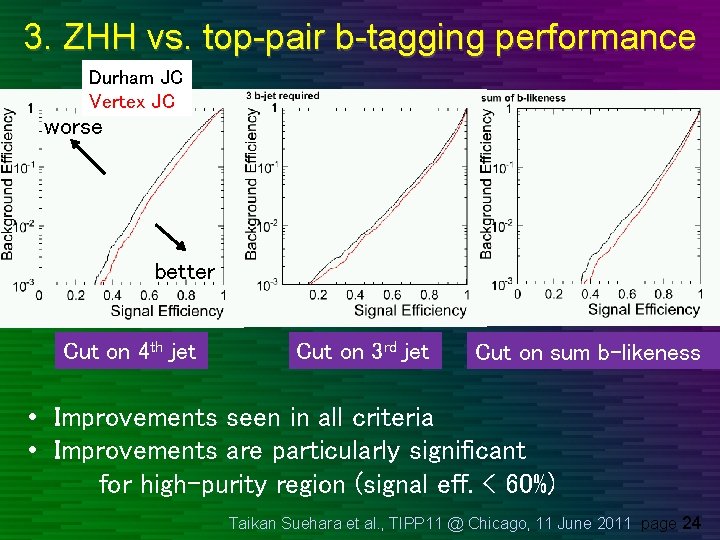
3. ZHH vs. top-pair b-tagging performance Study with realistic b-tagging Using ZHH -> qq. HH & tt -> bbcssc (same as 2. ) Procedure: 1. Jet clustering (Durham / Vertex) 2. Flavor tagging by LCFIVertex – obtain b-likeness value (0 to 1) for each jet 3. Check qq. HH vs bbcssc acceptance with varying b-likeness threshold – Both 3 rd and 4 th jets and sum b-likeness over all jets are examined Taikan Suehara et al. , TIPP 11 @ Chicago, 11 June 2011 page 23
3. ZHH vs. top-pair b-tagging performance Durham JC Vertex JC worse better Cut on 4 th jet Cut on 3 rd jet Cut on sum b-likeness • Improvements seen in all criteria • Improvements are particularly significant for high-purity region (signal eff. < 60%) Taikan Suehara et al. , TIPP 11 @ Chicago, 11 June 2011 page 24
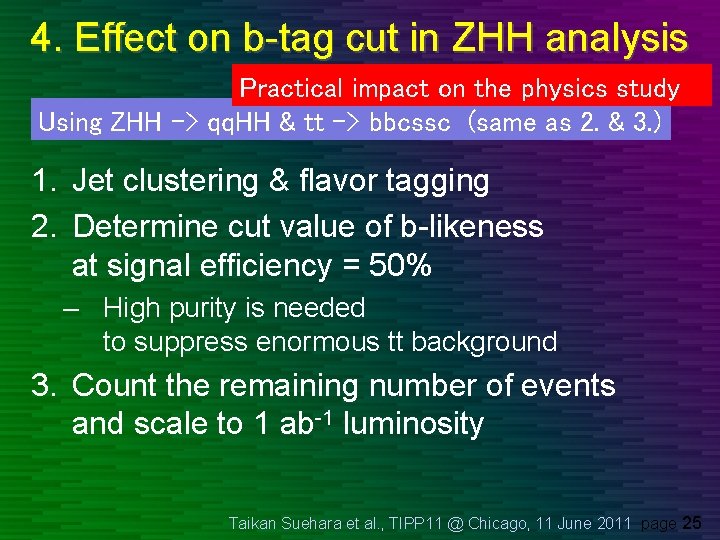
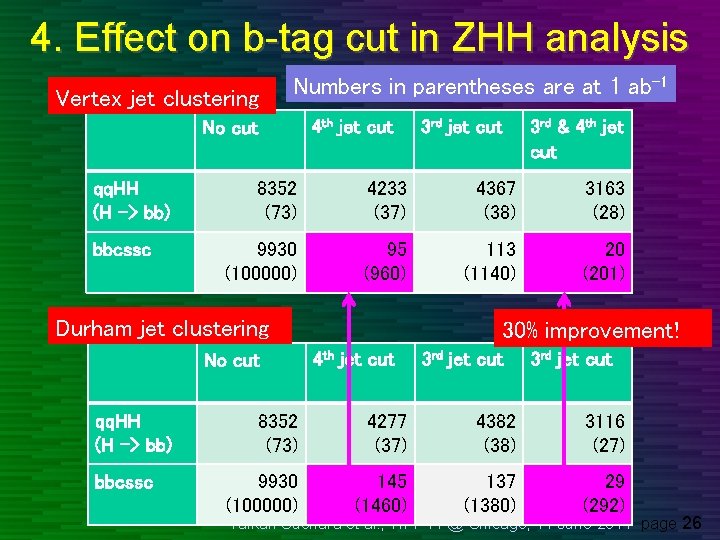
4. Effect on b-tag cut in ZHH analysis Practical impact on the physics study Using ZHH -> qq. HH & tt -> bbcssc (same as 2. & 3. ) 1. Jet clustering & flavor tagging 2. Determine cut value of b-likeness at signal efficiency = 50% – High purity is needed to suppress enormous tt background 3. Count the remaining number of events and scale to 1 ab-1 luminosity Taikan Suehara et al. , TIPP 11 @ Chicago, 11 June 2011 page 25
4. Effect on b-tag cut in ZHH analysis Vertex jet clustering Numbers in parentheses are at 1 ab-1 No cut qq. HH (H -> bb) bbcssc 4 th jet cut 4233 (37) 4367 (38) 3163 (28) 9930 (100000) 95 (960) 113 (1140) 20 (201) No cut bbcssc 3 rd & 4 th jet cut 8352 (73) Durham jet clustering qq. HH (H -> bb) 3 rd jet cut 30% improvement! 4 th jet cut 3 rd jet cut 8352 (73) 4277 (37) 4382 (38) 3116 (27) 9930 (100000) 145 (1460) 137 (1380) 29 (292) Taikan Suehara et al. , TIPP 11 @ Chicago, 11 June 2011 page 26
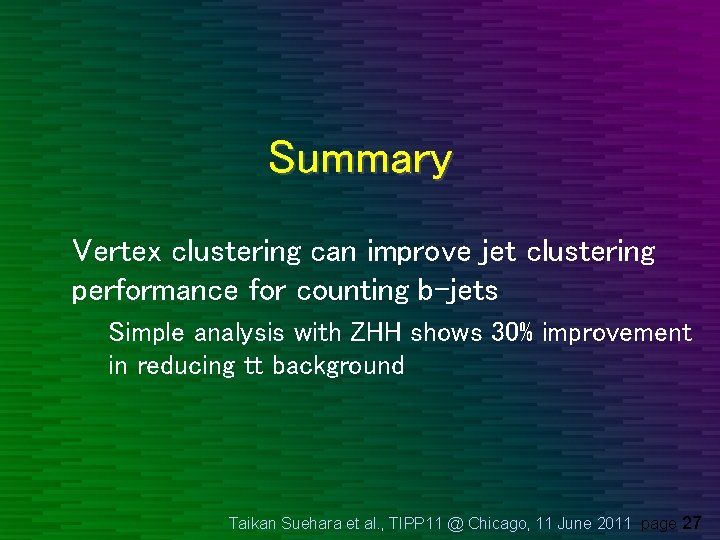
Summary Vertex clustering can improve jet clustering performance for counting b-jets Simple analysis with ZHH shows 30% improvement in reducing tt background Taikan Suehara et al. , TIPP 11 @ Chicago, 11 June 2011 page 27
Backup • • ILD detector ZHH analysis by J. Tian Vertex finder details LCFIVertex input variables Taikan Suehara et al. , TIPP 11 @ Chicago, 11 June 2011 page 28
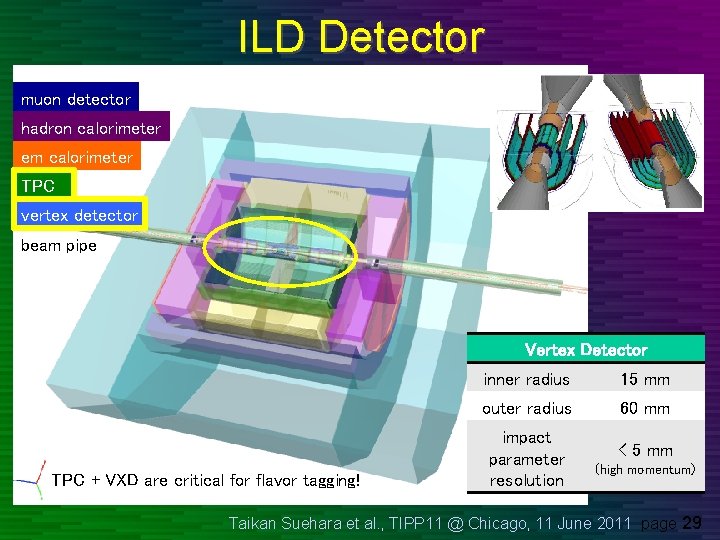
ILD Detector muon detector hadron calorimeter em calorimeter TPC vertex detector beam pipe Vertex Detector TPC + VXD are critical for flavor tagging! inner radius 15 mm outer radius 60 mm impact parameter resolution < 5 mm (high momentum) Taikan Suehara et al. , TIPP 11 @ Chicago, 11 June 2011 page 29
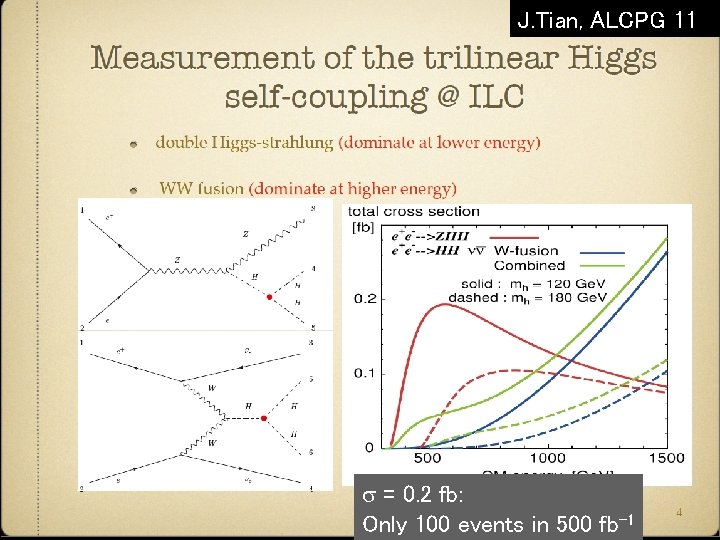
J. Tian, ALCPG 11 s = 0. 2 fb: Taikan Suehara et Only al. , TIPP 11 Chicago, in 11 500 June 2011 100@events fb-1 page 30
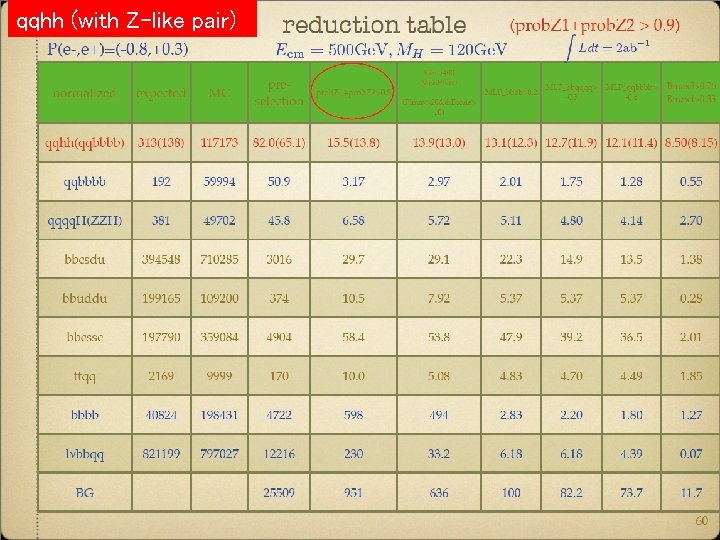
qqhh (with Z-like pair) Taikan Suehara et al. , TIPP 11 @ Chicago, 11 June 2011 page 31
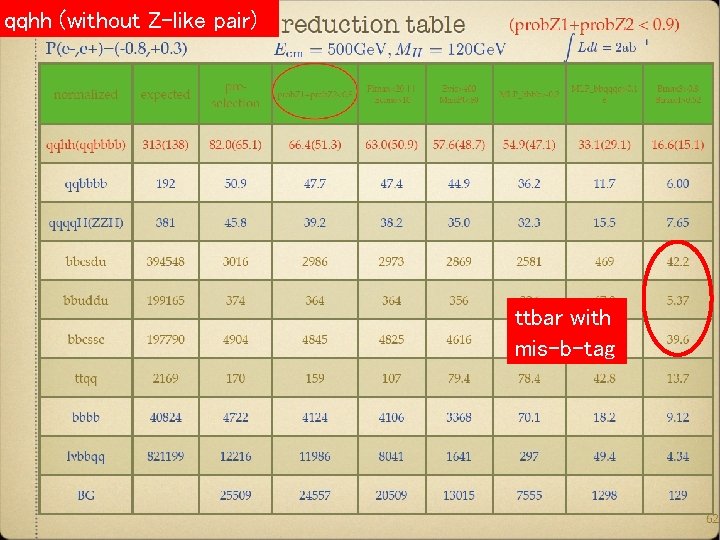
qqhh (without Z-like pair) ttbar with mis-b-tag Taikan Suehara et al. , TIPP 11 @ Chicago, 11 June 2011 page 32
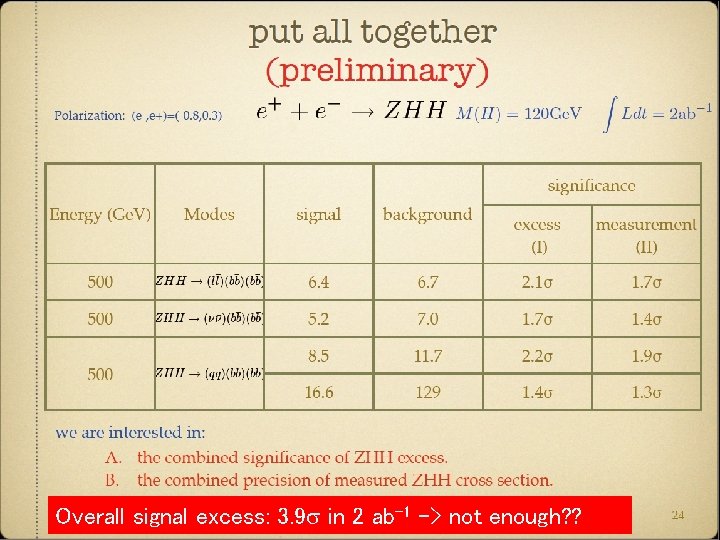
-1 -> not enough? ? Overall signal excess: in et 2 al. , ab. TIPP 11 Taikan 3. 9 s Suehara @ Chicago, 11 June 2011 page 33
1. Vertex finding (1) • Original jet finder based on “build-up” method – ZVTOP cannot be used without tuning • It’s designed to be used after jet clustering • Too many fakes – without “jet-direction” parameter • IP tracks are firstly removed (tear-down) • Vertices are calculated for every track-pair – Calculate nearest points of two helices • Geometric calculation for the start point • Minuit minimization using track error-matrices Taikan Suehara et al. , TIPP 11 @ Chicago, 11 June 2011 page 34
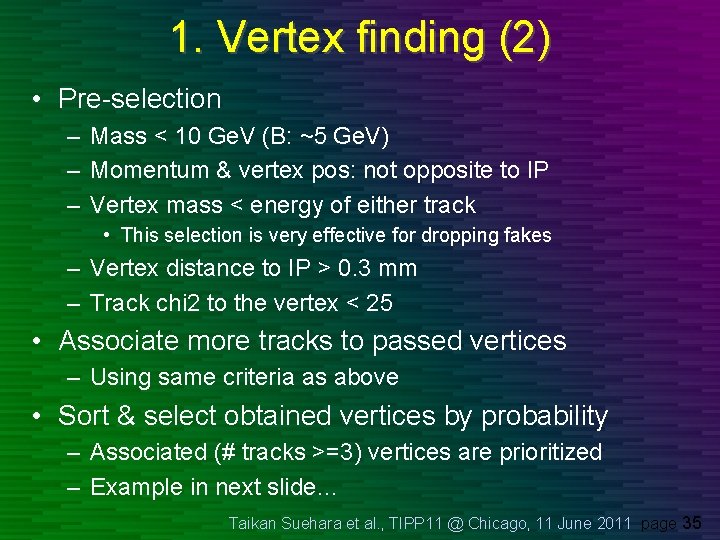
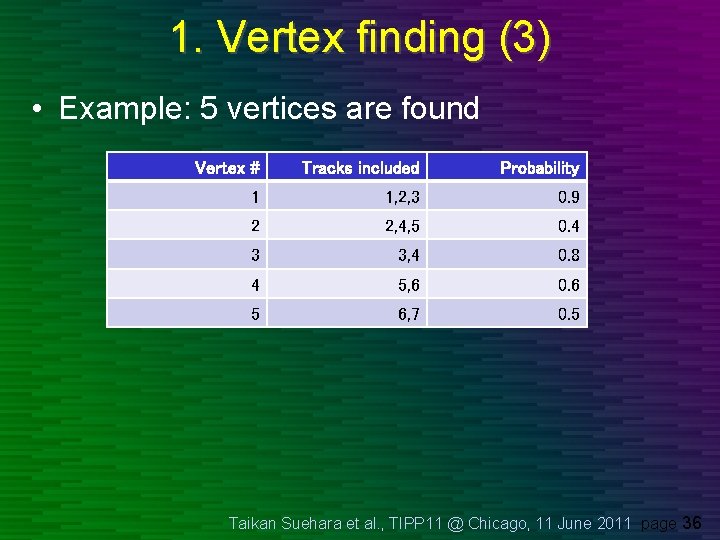
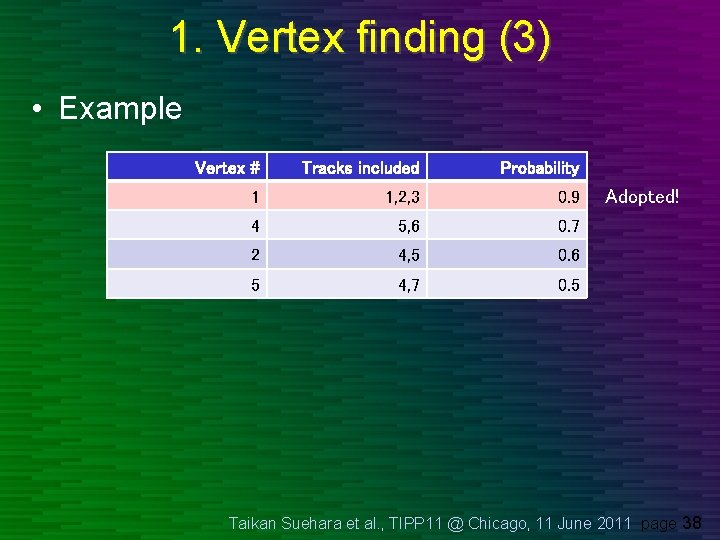
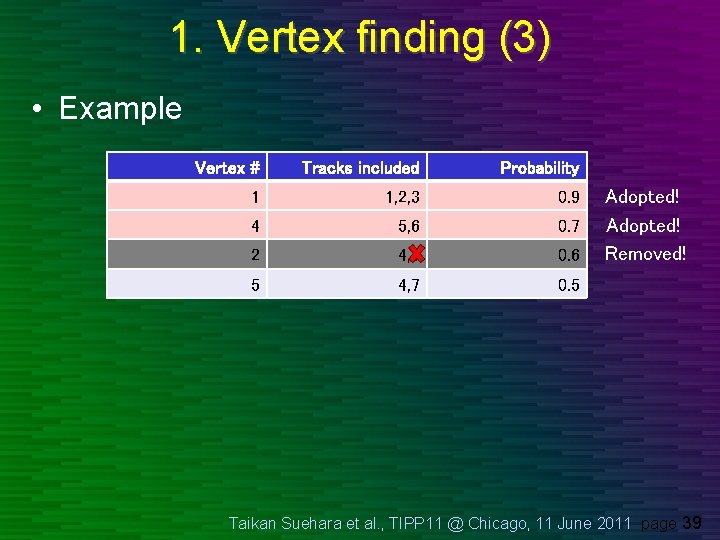
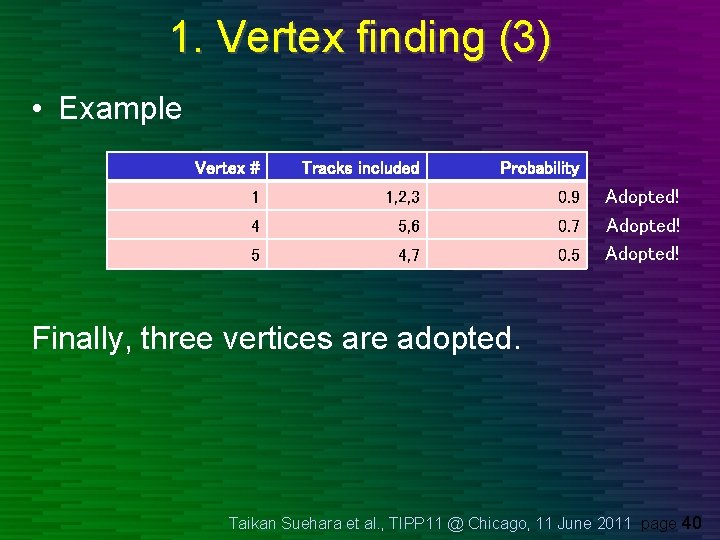
1. Vertex finding (2) • Pre-selection – Mass < 10 Ge. V (B: ~5 Ge. V) – Momentum & vertex pos: not opposite to IP – Vertex mass < energy of either track • This selection is very effective for dropping fakes – Vertex distance to IP > 0. 3 mm – Track chi 2 to the vertex < 25 • Associate more tracks to passed vertices – Using same criteria as above • Sort & select obtained vertices by probability – Associated (# tracks >=3) vertices are prioritized – Example in next slide… Taikan Suehara et al. , TIPP 11 @ Chicago, 11 June 2011 page 35
1. Vertex finding (3) • Example: 5 vertices are found Vertex # Tracks included Probability 1 1, 2, 3 0. 9 2 2, 4, 5 0. 4 3 3, 4 0. 8 4 5, 6 0. 6 5 6, 7 0. 5 Taikan Suehara et al. , TIPP 11 @ Chicago, 11 June 2011 page 36
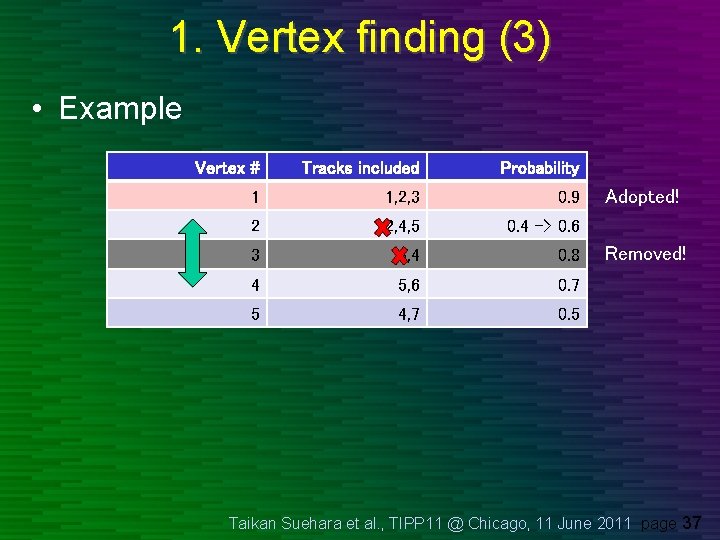
1. Vertex finding (3) • Example Vertex # Tracks included Probability 1 1, 2, 3 0. 9 2 2, 4, 5 0. 4 -> 0. 6 3 3, 4 0. 8 4 5, 6 0. 7 5 4, 7 0. 5 Adopted! Removed! Taikan Suehara et al. , TIPP 11 @ Chicago, 11 June 2011 page 37
1. Vertex finding (3) • Example Vertex # Tracks included Probability 1 1, 2, 3 0. 9 4 5, 6 0. 7 2 4, 5 0. 6 5 4, 7 0. 5 Adopted! Taikan Suehara et al. , TIPP 11 @ Chicago, 11 June 2011 page 38
1. Vertex finding (3) • Example Vertex # Tracks included Probability 1 1, 2, 3 0. 9 4 5, 6 0. 7 2 4, 5 0. 6 5 4, 7 0. 5 Adopted! Removed! Taikan Suehara et al. , TIPP 11 @ Chicago, 11 June 2011 page 39
1. Vertex finding (3) • Example Vertex # Tracks included Probability 1 1, 2, 3 0. 9 4 5, 6 0. 7 5 4, 7 0. 5 Adopted! Finally, three vertices are adopted. Taikan Suehara et al. , TIPP 11 @ Chicago, 11 June 2011 page 40
Vertices in ZHH -> bbbbbb Wrong vertices True vertices Vertex position [mm] In 347 bbbbbb events: Good = 2040, bad (not from B-semistable) = 90 Taikan Suehara et al. , TIPP 11 @ Chicago, 11 June 2011 page 41
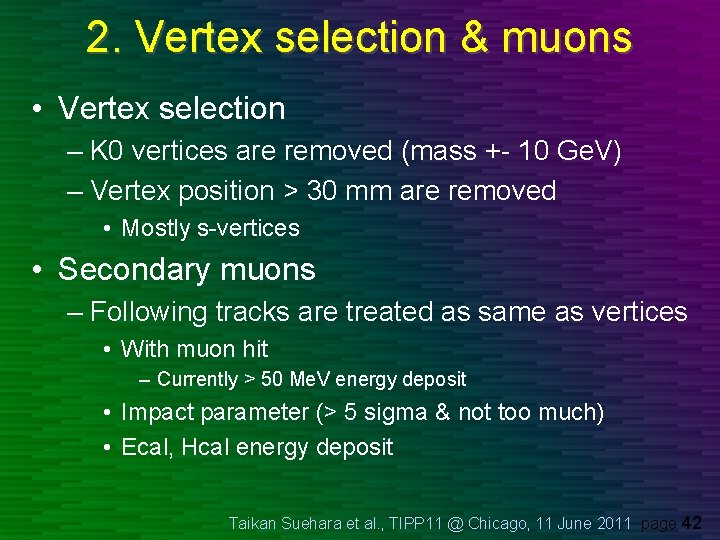
2. Vertex selection & muons • Vertex selection – K 0 vertices are removed (mass +- 10 Ge. V) – Vertex position > 30 mm are removed • Mostly s-vertices • Secondary muons – Following tracks are treated as same as vertices • With muon hit – Currently > 50 Me. V energy deposit • Impact parameter (> 5 sigma & not too much) • Ecal, Hcal energy deposit Taikan Suehara et al. , TIPP 11 @ Chicago, 11 June 2011 page 42
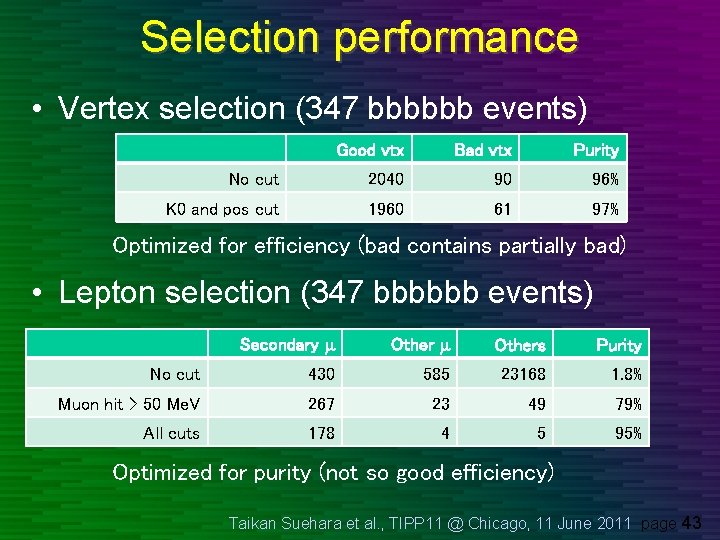
Selection performance • Vertex selection (347 bbbbbb events) Good vtx Bad vtx Purity No cut 2040 90 96% K 0 and pos cut 1960 61 97% Optimized for efficiency (bad contains partially bad) • Lepton selection (347 bbbbbb events) Secondary m Others Purity No cut 430 585 23168 1. 8% Muon hit > 50 Me. V 267 23 49 79% All cuts 178 4 5 95% Optimized for purity (not so good efficiency) Taikan Suehara et al. , TIPP 11 @ Chicago, 11 June 2011 page 43
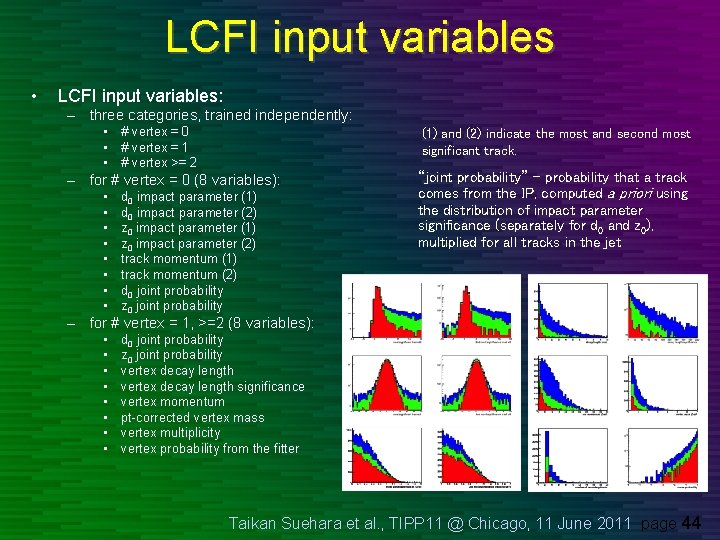
LCFI input variables • LCFI input variables: – three categories, trained independently: • # vertex = 0 • # vertex = 1 • # vertex >= 2 (1) and (2) indicate the most and second most significant track. – for # vertex = 0 (8 variables): • • d 0 impact parameter (1) d 0 impact parameter (2) z 0 impact parameter (1) z 0 impact parameter (2) track momentum (1) track momentum (2) d 0 joint probability z 0 joint probability “joint probability” – probability that a track comes from the IP, computed a priori using the distribution of impact parameter significance (separately for d 0 and z 0), multiplied for all tracks in the jet – for # vertex = 1, >=2 (8 variables): • • d 0 joint probability z 0 joint probability vertex decay length significance vertex momentum pt-corrected vertex mass vertex multiplicity vertex probability from the fitter Taikan Suehara et al. , TIPP 11 @ Chicago, 11 June 2011 page 44