
Improve Your Ward Attending Skills Integrating Learner and
- Slides: 50
Improve Your Ward Attending Skills: Integrating Learner and Faculty Perspectives on Successful Rounds Robert M Centor Brita Roy Lisa Willett 2 nd Annual Education Summit University of Alabama at Birmingham Research and Innovations in Medical Education Week September 28 th, 2012
Bad news… n Your mother (or other loved one) is sick. Your previous UAB IM resident is the doctor taking care of her. n What specific skills do you want that doctor to have?
Reflection n What is the purpose of the attending? n What is the purpose of rounds?
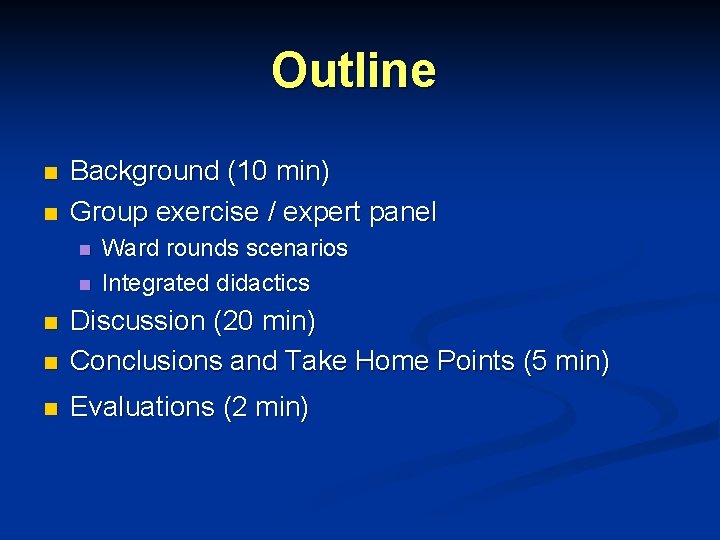
Outline n n Background (10 min) Group exercise / expert panel n n Ward rounds scenarios Integrated didactics n Discussion (20 min) Conclusions and Take Home Points (5 min) n Evaluations (2 min) n
Introductions n n n Name Affiliation Number of ward attending months per year
Reflection n What is the purpose of the attending? n What is the purpose of rounds?
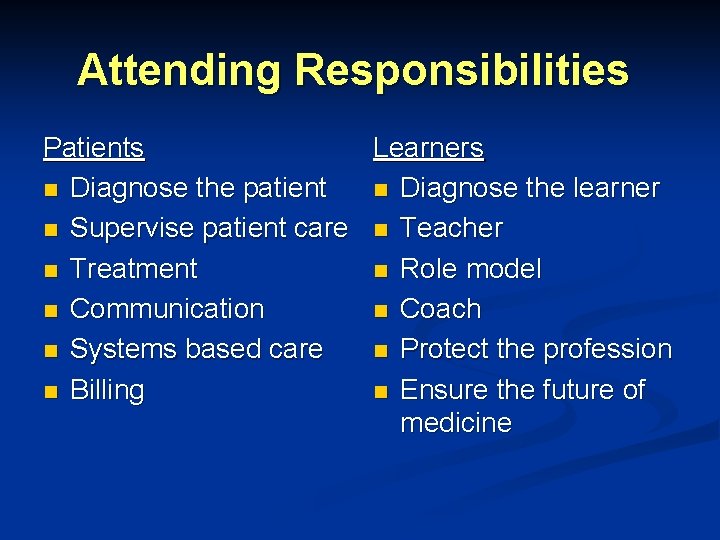
Attending Responsibilities Patients Learners n Diagnose the patient n Diagnose the learner n Supervise patient care n Teacher n Treatment n Role model n Communication n Coach n Systems based care n Protect the profession n Billing n Ensure the future of medicine
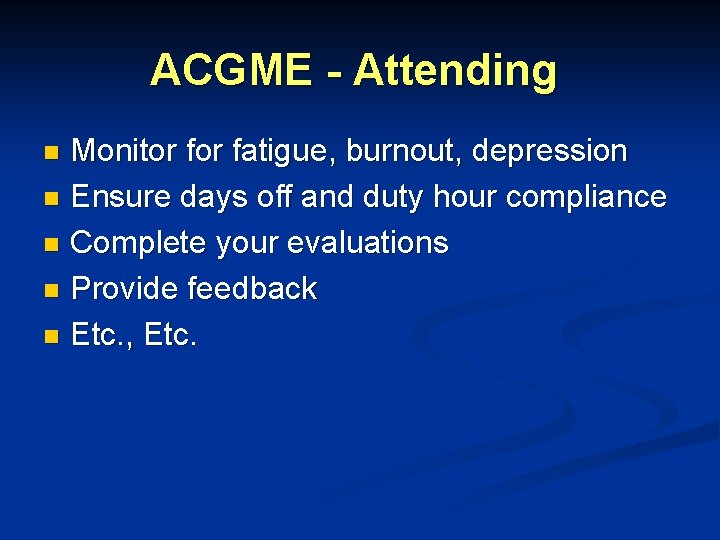
ACGME - Attending Monitor fatigue, burnout, depression n Ensure days off and duty hour compliance n Complete your evaluations n Provide feedback n Etc. , Etc. n
Challenges are plenty… n n Balancing patient care/teaching in pressured environment Increased documentation requirements Short attending rotations (2 wks) Teams are changing n n n Night float Meeting other responsibilities Find the joy
…but it’s worth it n Fundamental educational function in internal medicine training programs n It is the most important thing we can do for our professional future n Embrace it and learn to do it well
Learning Objectives n Explain the domains of successful ward attending rounds – give you a framework n Demonstrate effective techniques to excel in these domains n Explore ways to improve your own ward attending rounds by using this framework
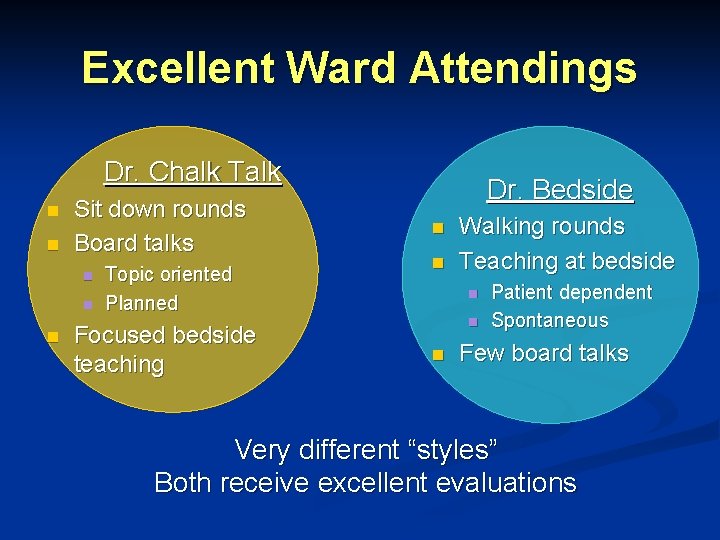
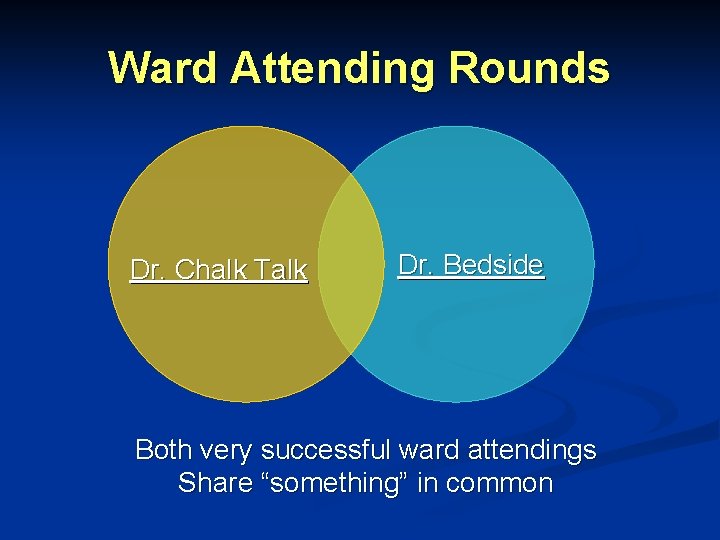
Excellent Ward Attendings Dr. Chalk Talk n n Sit down rounds Board talks n n n Topic oriented Planned Focused bedside teaching Dr. Bedside n n Walking rounds Teaching at bedside n n n Patient dependent Spontaneous Few board talks Very different “styles” Both receive excellent evaluations
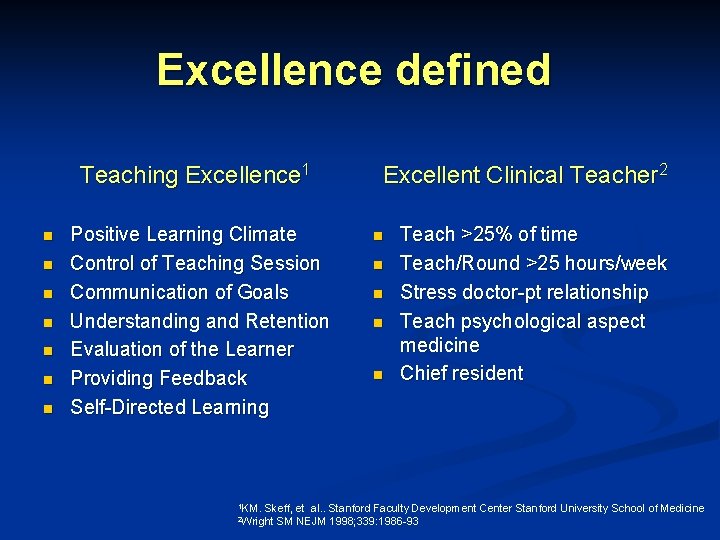
Excellence defined Teaching Excellence 1 n n n n Positive Learning Climate Control of Teaching Session Communication of Goals Understanding and Retention Evaluation of the Learner Providing Feedback Self-Directed Learning 1 KM. Excellent Clinical Teacher 2 n n n Teach >25% of time Teach/Round >25 hours/week Stress doctor-pt relationship Teach psychological aspect medicine Chief resident Skeff, et al. . Stanford Faculty Development Center Stanford University School of Medicine SM NEJM 1998; 339: 1986 -93 2 Wright
Ward Attending Rounds Dr. Chalk Talk Dr. Bedside Both very successful ward attendings Share “something” in common
Ward Attending Rounds Dr. Chalk Talk Dr. Bedside
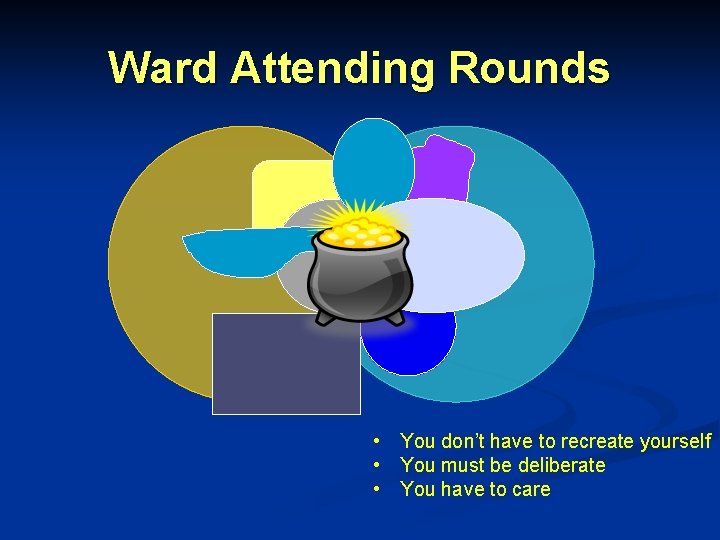
Ward Attending Rounds • You don’t have to recreate yourself • You must be deliberate • You have to care
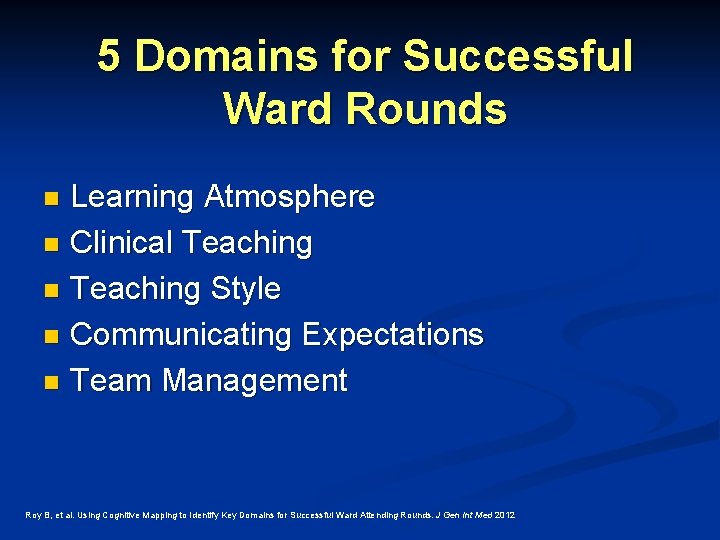
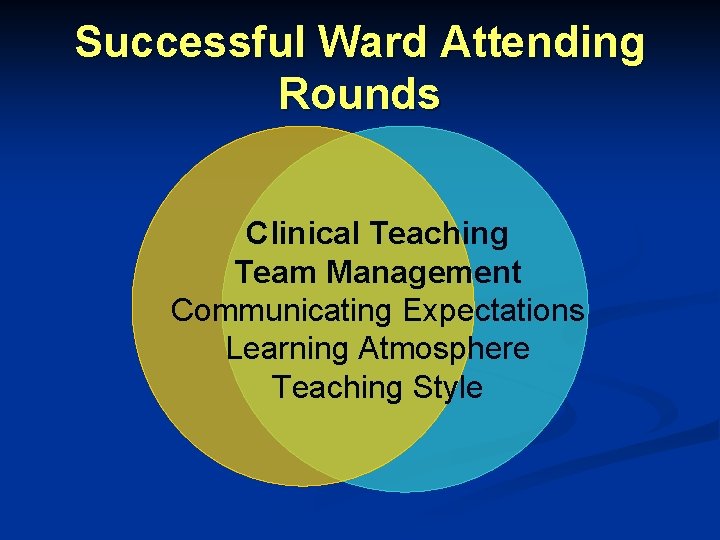
5 Domains for Successful Ward Rounds Learning Atmosphere n Clinical Teaching n Teaching Style n Communicating Expectations n Team Management n Roy B, et al. Using Cognitive Mapping to Identify Key Domains for Successful Ward Attending Rounds. J Gen Int Med 2012
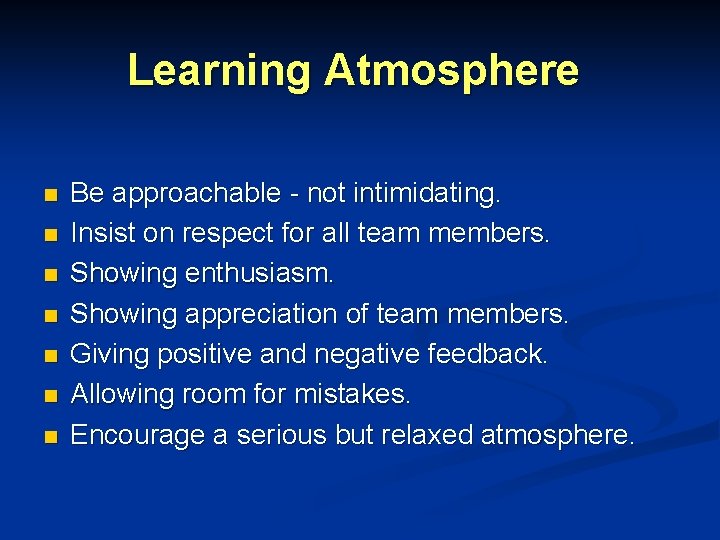
Learning Atmosphere n n n n Be approachable - not intimidating. Insist on respect for all team members. Showing enthusiasm. Showing appreciation of team members. Giving positive and negative feedback. Allowing room for mistakes. Encourage a serious but relaxed atmosphere.
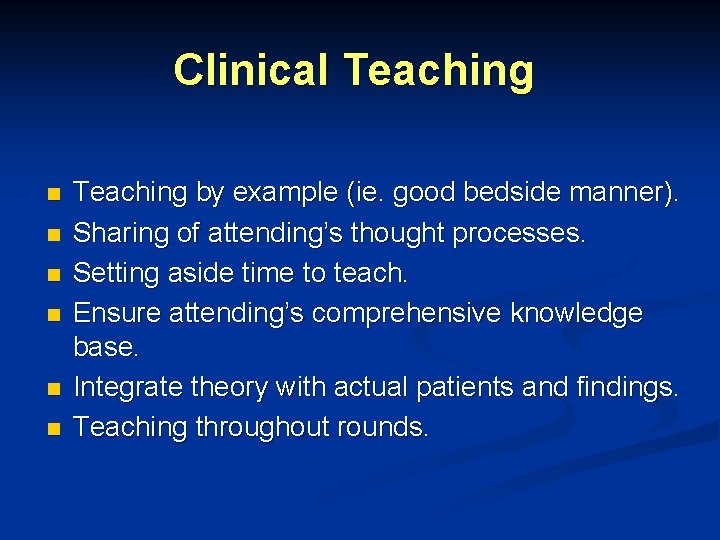
Clinical Teaching n n n Teaching by example (ie. good bedside manner). Sharing of attending’s thought processes. Setting aside time to teach. Ensure attending’s comprehensive knowledge base. Integrate theory with actual patients and findings. Teaching throughout rounds.
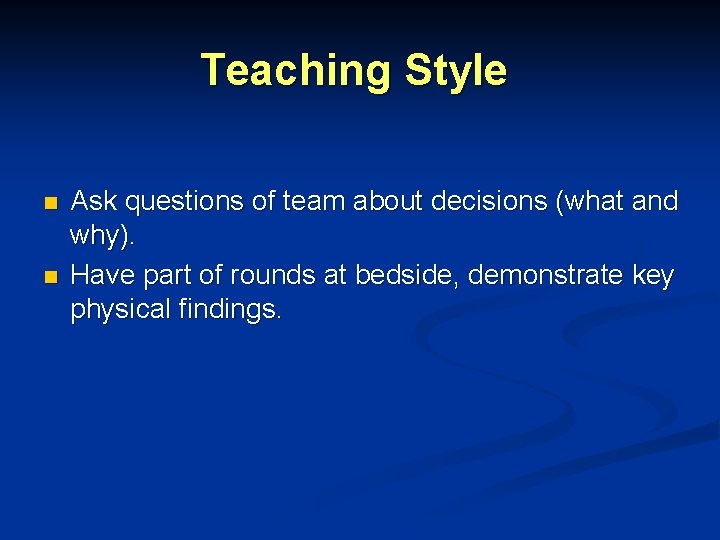
Teaching Style n n Ask questions of team about decisions (what and why). Have part of rounds at bedside, demonstrate key physical findings.
Communicating Expectations n n Stating expectations for residents/students. Allow team some independence in decisionmaking.
Team Management n n n Conduct rounds in an organized, efficient, & timely fashion. Having a consistent, coherent plan of care. Allow time on rounds for residents to meet other responsibilities.
Let’s practice… Common Scenarios on Ward Attending Rounds
Scenario #1 8: 00 am n New ward team n n You are meeting your senior resident for the first time… http: //www. youtube. com/watch? v=m. Esik. H 6 Pd. DA&feature=plcp
Example What went well? n What did not go well? n What could have been done differently? n
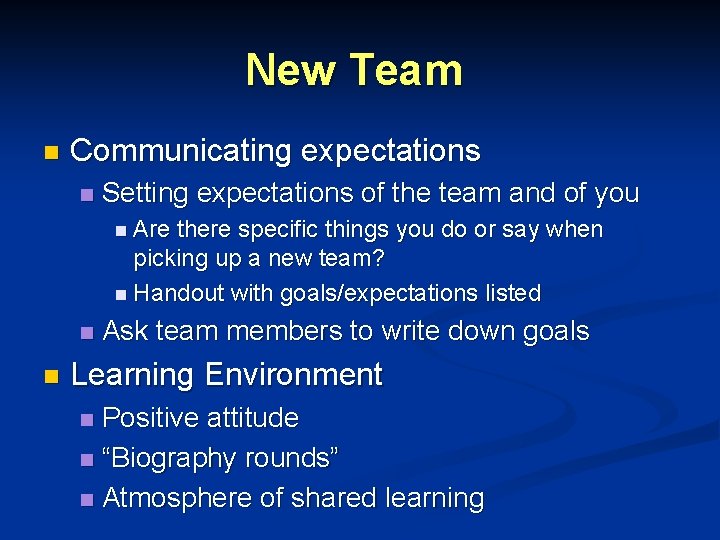
New Team n Communicating expectations n Setting expectations of the team and of you n Are there specific things you do or say when picking up a new team? n Handout with goals/expectations listed n n Ask team members to write down goals Learning Environment Positive attitude n “Biography rounds” n Atmosphere of shared learning n
8: 20 am Intern presents a patient admitted for deep vein thrombosis. n Hypertensive on admission, new diagnosis n n Started metoprolol
Teaching Key Points n Teaching Style n n Ask why this medication was chosen Clinical Teaching Demonstrate your thought process for choosing 1 st line antihypertensive n Integrate evidence into clinical reasoning n
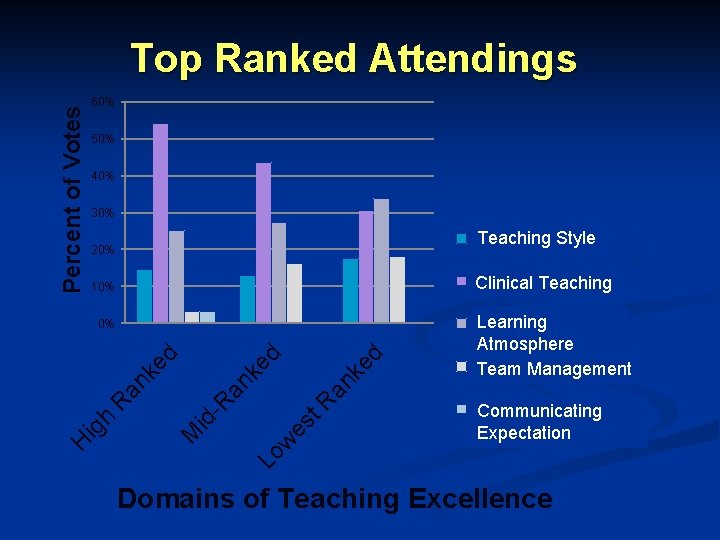
Percent of Votes Top Ranked Attendings 60% 50% 40% 30% Teaching Style Role Modeling 20% Teaching Process Clinical Teaching 10% d ke an an Learning Atmosphere Environment Team. Management Setting expectations Communicating Expectation Lo w es t. R -R M id H ig h R an ke d 0% Domains of Teaching Excellence
9: 00 am n Third year student presents a patient n 59 year old man with chest pain
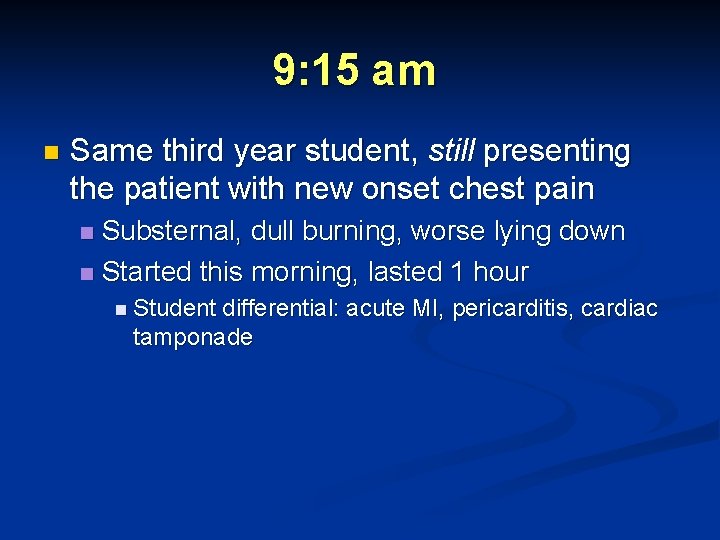
9: 15 am n Same third year student, still presenting the patient with new onset chest pain Substernal, dull burning, worse lying down n Started this morning, lasted 1 hour n n Student differential: acute MI, pericarditis, cardiac tamponade
Efficiency, Broadening Differential n Team Management n n Do you interrupt the student? Clinical Teaching Demonstrate clinical reasoning for non-cardiac causes of chest pain n Ask questions of the group (moving from medical student “up the ranks” to residents) n
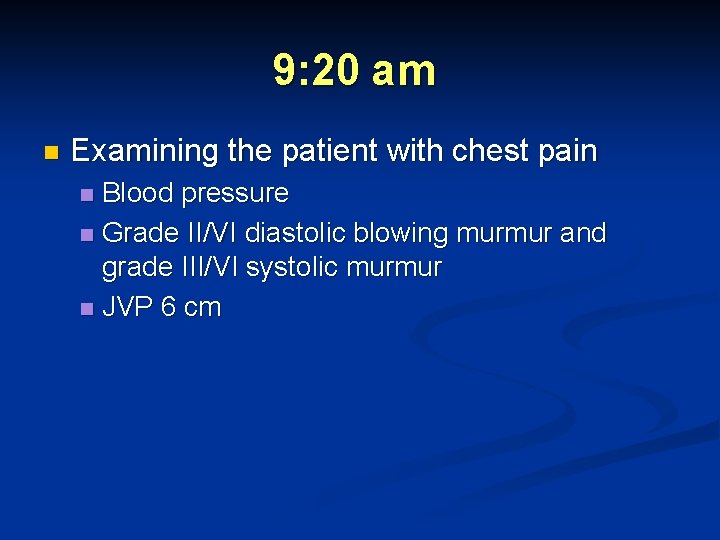
9: 20 am n Examining the patient with chest pain Blood pressure n Grade II/VI diastolic blowing murmur and grade III/VI systolic murmur n JVP 6 cm n
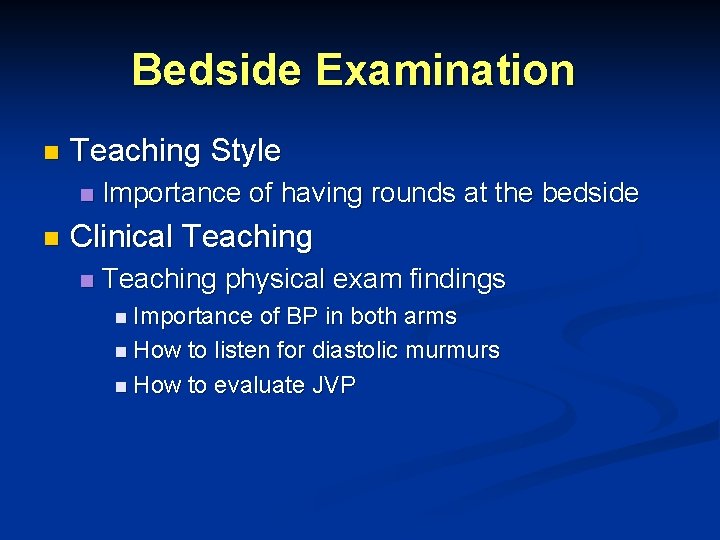
Bedside Examination n Teaching Style n n Importance of having rounds at the bedside Clinical Teaching n Teaching physical exam findings n Importance of BP in both arms n How to listen for diastolic murmurs n How to evaluate JVP
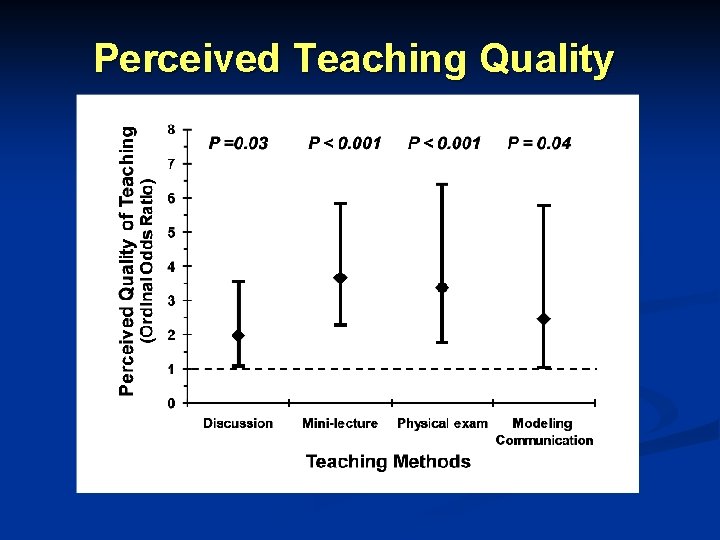
Perceived Teaching Quality
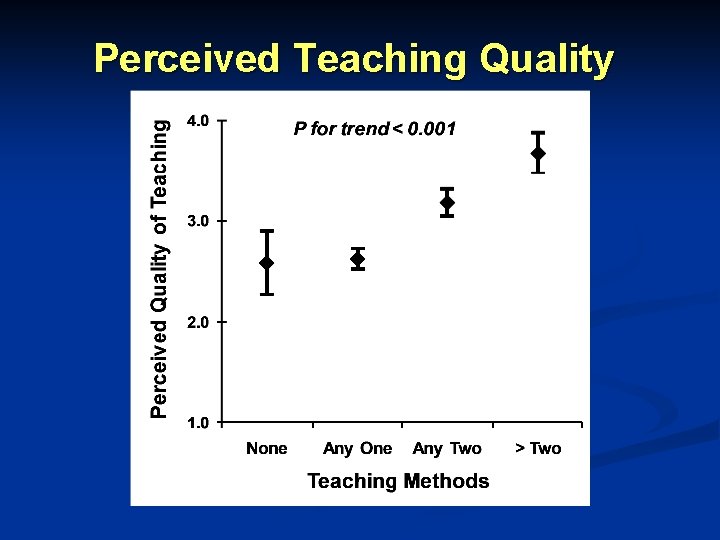
Perceived Teaching Quality
Scenario #2 6: 30 am n Post-call day n 10 new case presentations + 8 old patients n n Prioritization/organization
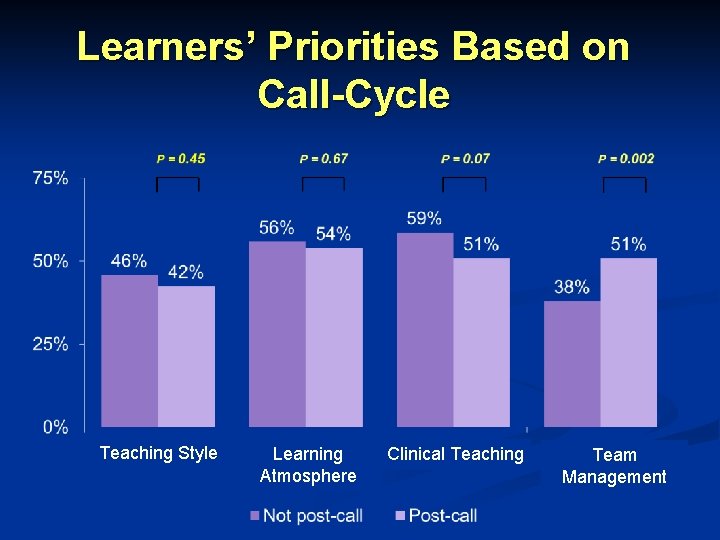
Learners’ Priorities Based on Call-Cycle Teaching Style Learning Atmosphere Clinical Teaching Team Management
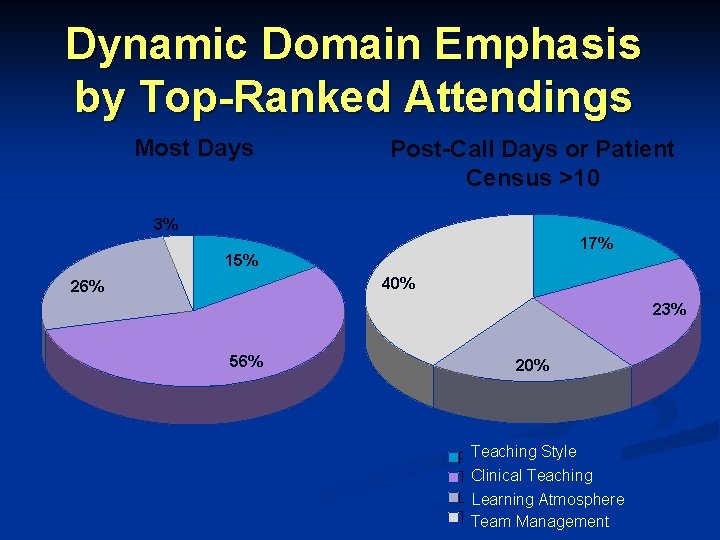
Dynamic Domain Emphasis by Top-Ranked Attendings Most Days Post-Call Days or Patient Census >10 3% 17% 15% 40% 26% 23% 56% 20% Teaching Style Role modeling Clinical Teaching process Learning Environment Learning Atmosphere Team. Management
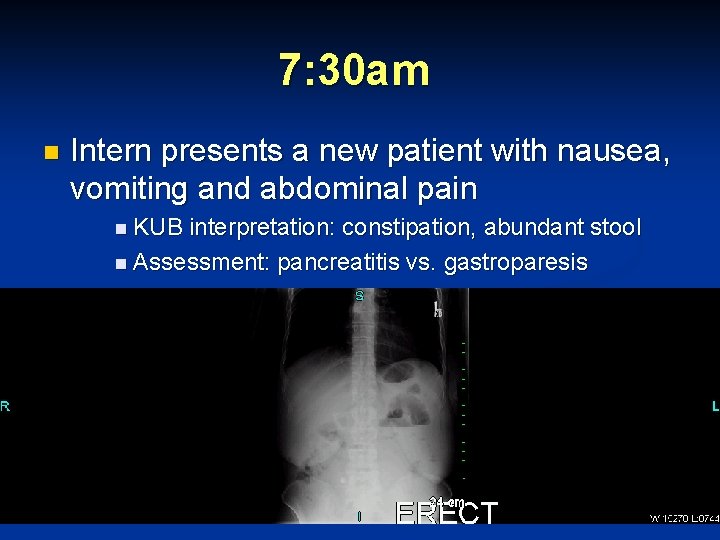
7: 30 am n Intern presents a new patient with nausea, vomiting and abdominal pain n KUB interpretation: constipation, abundant stool n Assessment: pancreatitis vs. gastroparesis
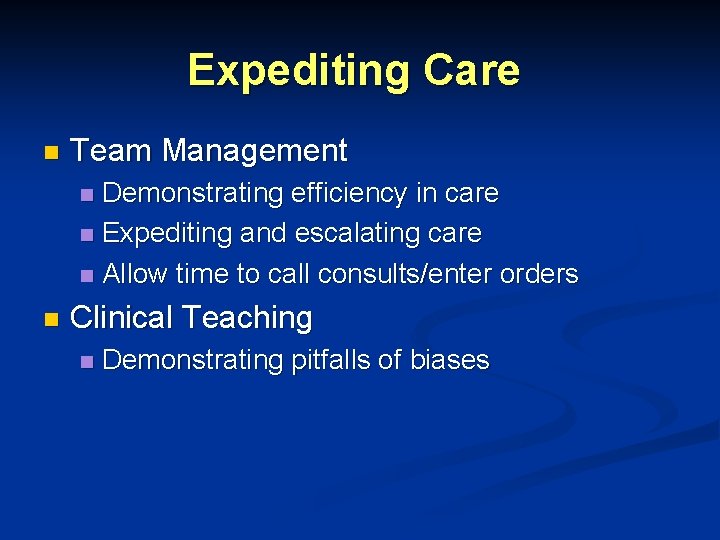
Expediting Care n Team Management Demonstrating efficiency in care n Expediting and escalating care n Allow time to call consults/enter orders n n Clinical Teaching n Demonstrating pitfalls of biases
8: 30 am n Third year student presents a patient with pneumocystis jirovecii pneumonia n A diagnosis the student knows little about
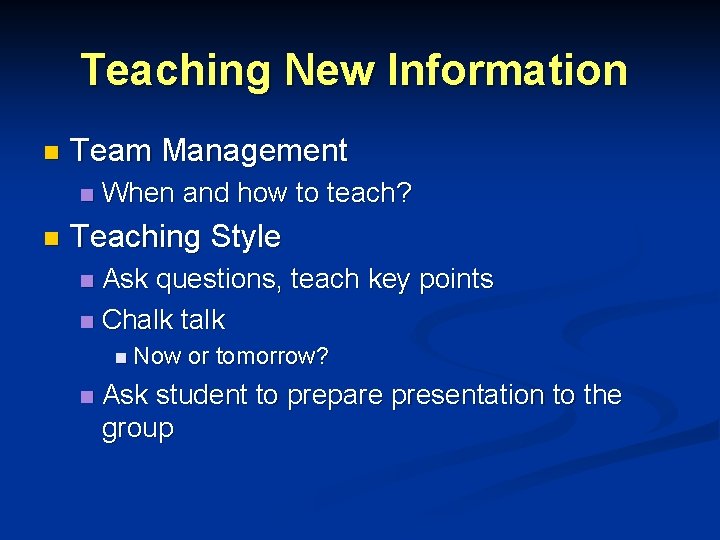
Teaching New Information n Team Management n n When and how to teach? Teaching Style Ask questions, teach key points n Chalk talk n n Now n or tomorrow? Ask student to prepare presentation to the group
8: 35 am n In the patient’s room with PJP n New diagnosis of HIV for the patient
Communication Skills n Clinical Teaching Demonstrating good beside manner n Role-modeling patient communication skills n Teaching the patient n
Other n Feedback When, where? n Format n n Evidence-based medicine
Large Group Discussion
Discussion n What specific changes will you implement based on this information?
Successful Ward Attending Rounds Clinical Teaching Team Management Communicating Expectations Learning Atmosphere Teaching Style
Conclusions Everyone can be a great attending n Deliberate about teaching n Try one thing – anything! n Coach n Protect the profession n Ensure the future of medicine n