
Impression Pattern and Trace Evidence Symposium January 22
- Slides: 20
Impression, Pattern and Trace Evidence Symposium January 22 -25, 2018 Arlington, VA Statistical Error Estimation for an Objective Measure of Similarity to a Latent Image Exploiting the SLEUTH Technology Modeling Random Similarity to a Latent Image Donald Gantz, Ph. D Professor Emeritus of Statistics The Volgenau School of Engineering George Mason University Fairfax, VA 1
ACKNOWLEDGEMENT This presentation introduces the research being supported by the U. S. Department of Justice, National Institute of Justice, Office of Justice Programs under NIJ Award No. 2017 -IJ-CX-0029. Some of the research leading to the proposal for the current research was supported in part by the U. S. Department of Justice, National Institute of Justice, Office of Justice Programs under NIJ Award No. 2009 DN-BX-K 234. 2
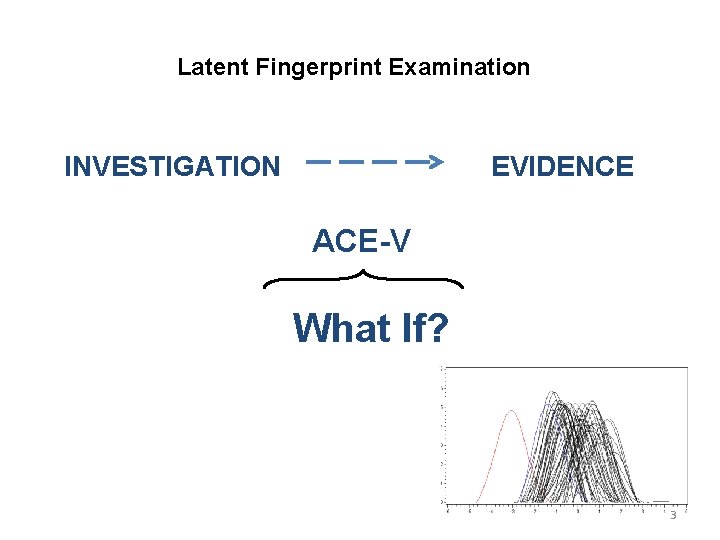
Latent Fingerprint Examination INVESTIGATION EVIDENCE ACE-V What If? 3
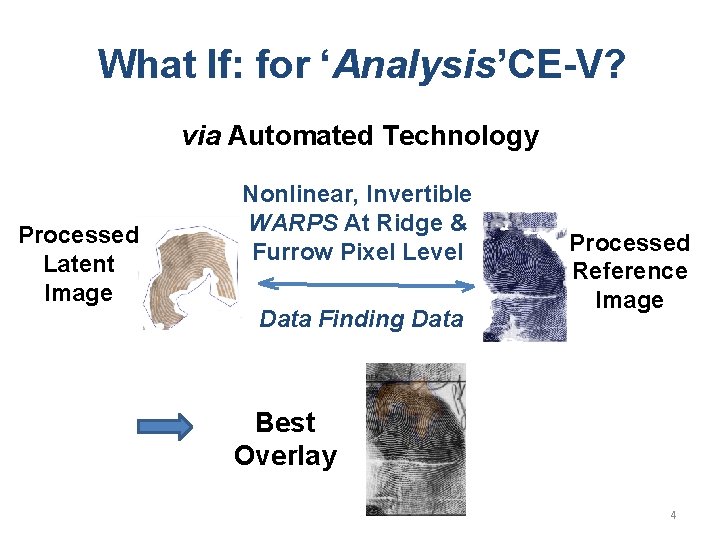
What If: for ‘Analysis’CE-V? via Automated Technology Processed Latent Image Nonlinear, Invertible WARPS At Ridge & Furrow Pixel Level Data Finding Data Processed Reference Image Best Overlay 4
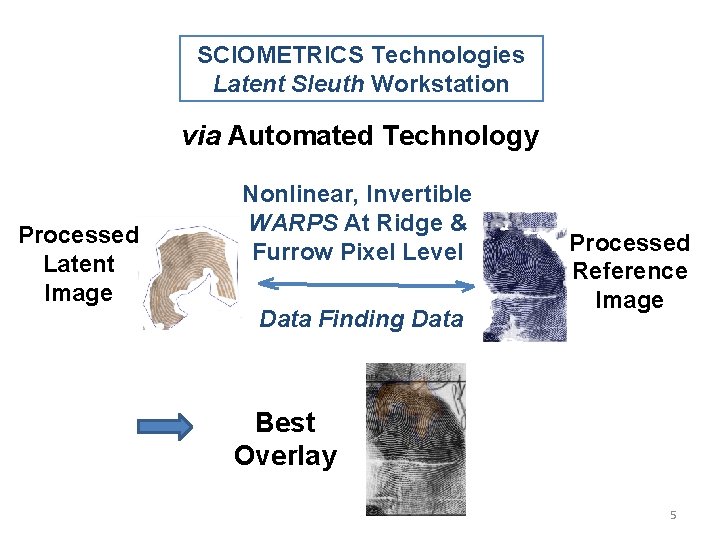
SCIOMETRICS Technologies Latent Sleuth Workstation via Automated Technology Processed Latent Image Nonlinear, Invertible WARPS At Ridge & Furrow Pixel Level Data Finding Data Processed Reference Image Best Overlay 5
6
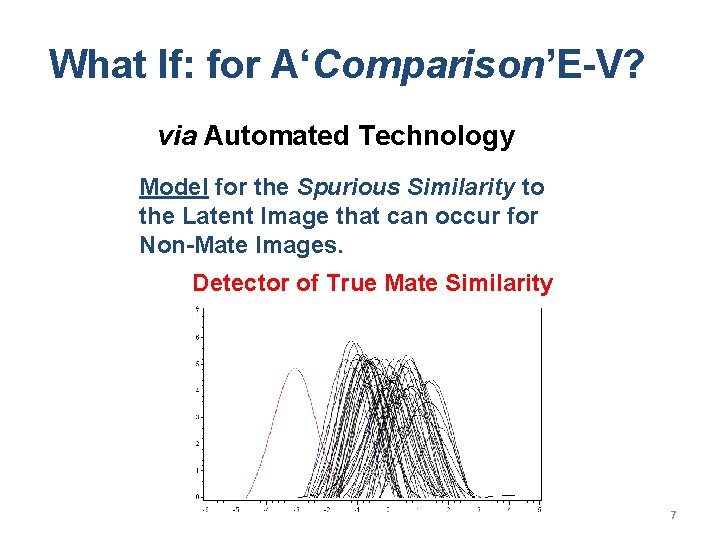
What If: for A‘Comparison’E-V? via Automated Technology Model for the Spurious Similarity to the Latent Image that can occur for Non-Mate Images. Detector of True Mate Similarity 7
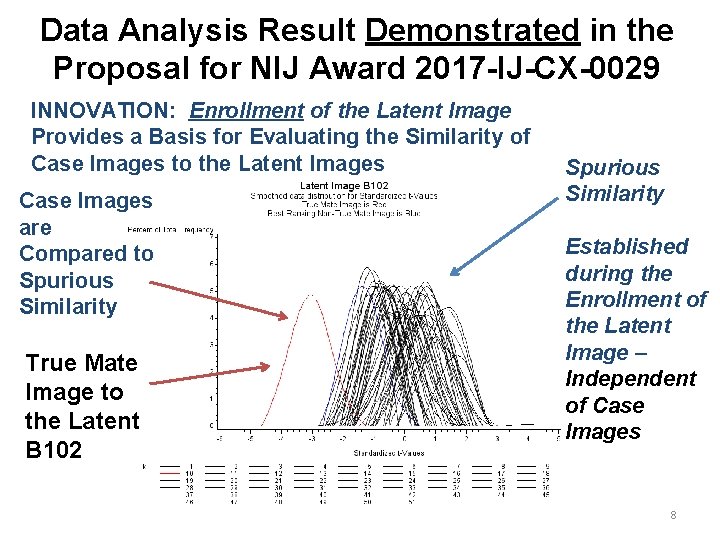
Data Analysis Result Demonstrated in the Proposal for NIJ Award 2017 -IJ-CX-0029 INNOVATION: Enrollment of the Latent Image Provides a Basis for Evaluating the Similarity of Case Images to the Latent Images Case Images are Compared to Spurious Similarity True Mate Image to the Latent B 102 Spurious Similarity Established during the Enrollment of the Latent Image – Independent of Case Images 8
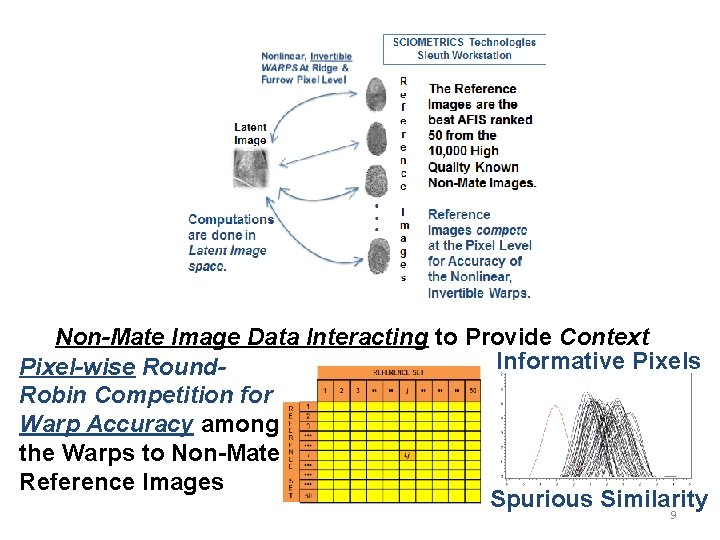
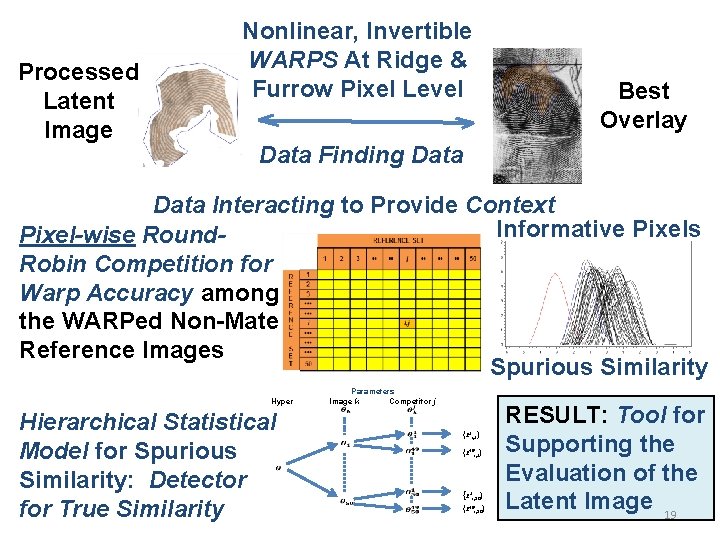
Non-Mate Image Data Interacting to Provide Context Informative Pixels Pixel-wise Round. Robin Competition for Warp Accuracy among the Warps to Non-Mate Reference Images Spurious Similarity 9
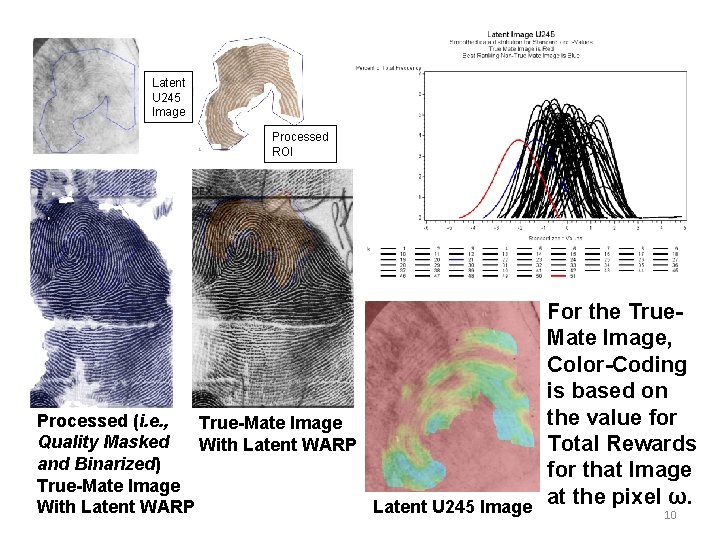
Latent U 245 Image Processed ROI For the True. Mate Image, Color-Coding is based on the value for Processed (i. e. , True-Mate Image Quality Masked With Latent WARP Total Rewards and Binarized) for that Image True-Mate Image at the pixel ω. With Latent WARP Latent U 245 Image 10
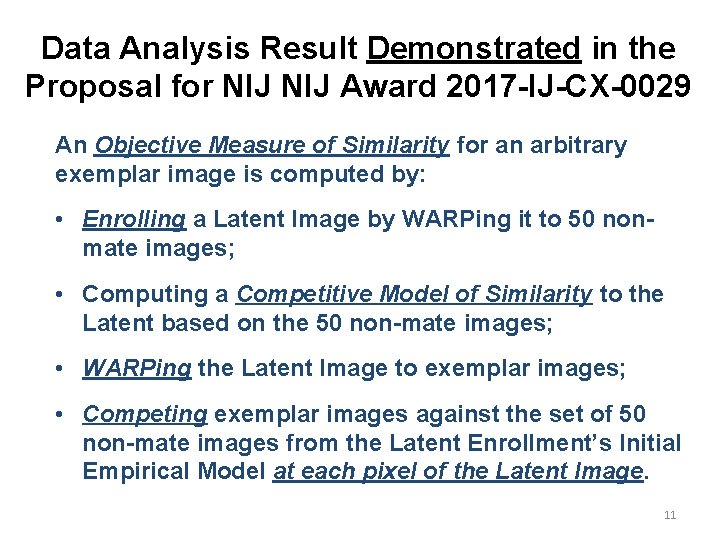
Data Analysis Result Demonstrated in the Proposal for NIJ Award 2017 -IJ-CX-0029 An Objective Measure of Similarity for an arbitrary exemplar image is computed by: • Enrolling a Latent Image by WARPing it to 50 nonmate images; • Computing a Competitive Model of Similarity to the Latent based on the 50 non-mate images; • WARPing the Latent Image to exemplar images; • Competing exemplar images against the set of 50 non-mate images from the Latent Enrollment’s Initial Empirical Model at each pixel of the Latent Image. 11
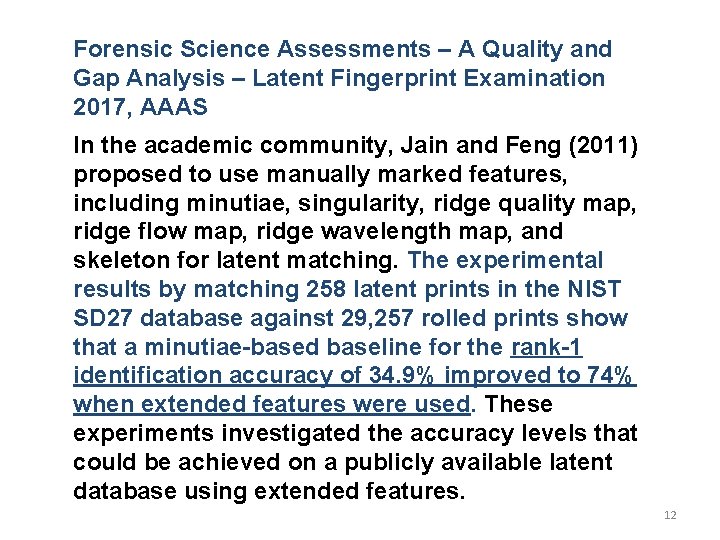
Forensic Science Assessments – A Quality and Gap Analysis – Latent Fingerprint Examination 2017, AAAS In the academic community, Jain and Feng (2011) proposed to use manually marked features, including minutiae, singularity, ridge quality map, ridge flow map, ridge wavelength map, and skeleton for latent matching. The experimental results by matching 258 latent prints in the NIST SD 27 database against 29, 257 rolled prints show that a minutiae-based baseline for the rank-1 identification accuracy of 34. 9% improved to 74% when extended features were used. These experiments investigated the accuracy levels that could be achieved on a publicly available latent database using extended features. 12
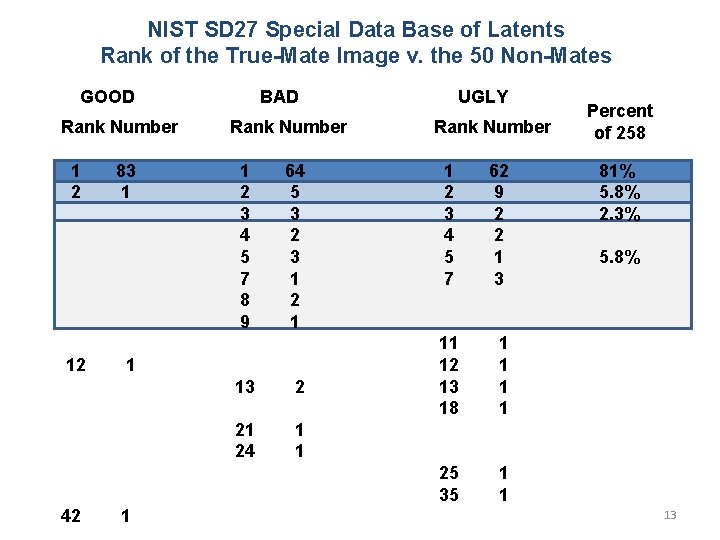
NIST SD 27 Special Data Base of Latents Rank of the True-Mate Image v. the 50 Non-Mates GOOD Rank Number 1 2 12 42 83 1 BAD Rank Number 1 2 3 4 5 7 8 9 64 5 3 2 3 1 2 1 13 2 21 24 1 1 UGLY Rank Number 1 2 3 4 5 7 62 9 2 2 1 3 11 12 13 18 1 1 25 35 1 1 Percent of 258 81% 5. 8% 2. 3% 5. 8% 13
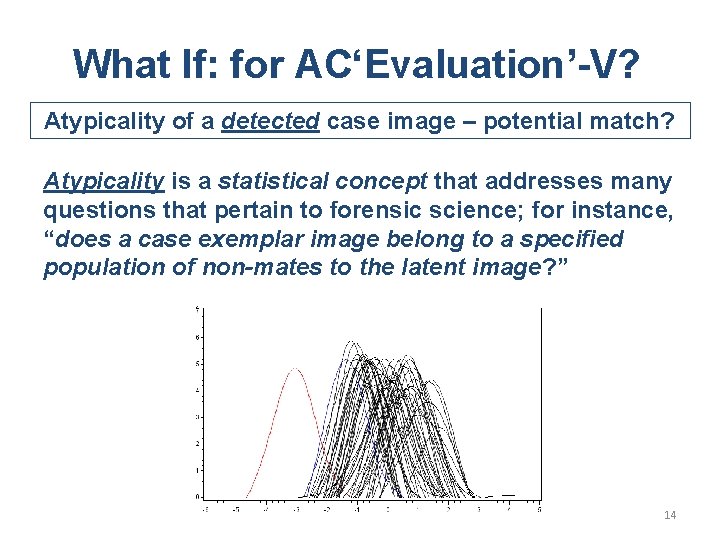
What If: for AC‘Evaluation’-V? Atypicality of a detected case image – potential match? Atypicality is a statistical concept that addresses many questions that pertain to forensic science; for instance, “does a case exemplar image belong to a specified population of non-mates to the latent image? ” 14
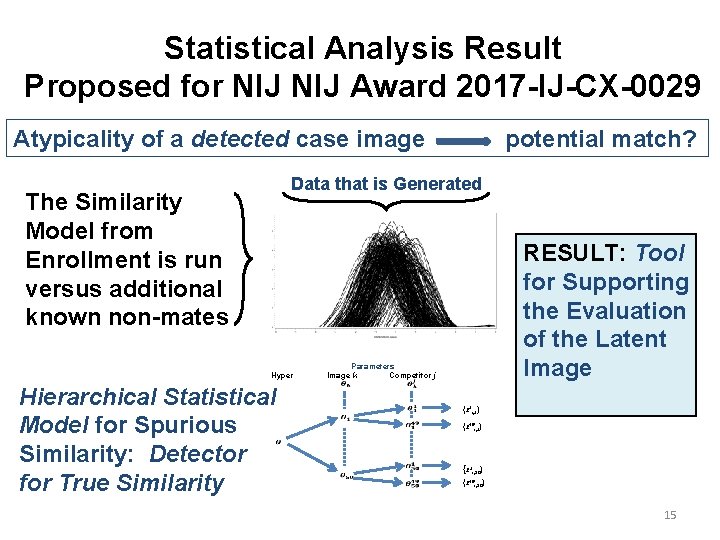
Statistical Analysis Result Proposed for NIJ Award 2017 -IJ-CX-0029 Atypicality of a detected case image potential match? Data that is Generated The Similarity Model from Enrollment is run versus additional known non-mates Hyper Hierarchical Statistical Model for Spurious Similarity: Detector for True Similarity RESULT: Tool for Supporting the Evaluation of the Latent Image Parameters Image k Competitor j {z 1 i, 1} {z 49 i, 1} {z 1 i, 50} {z 49 i, 50} 15
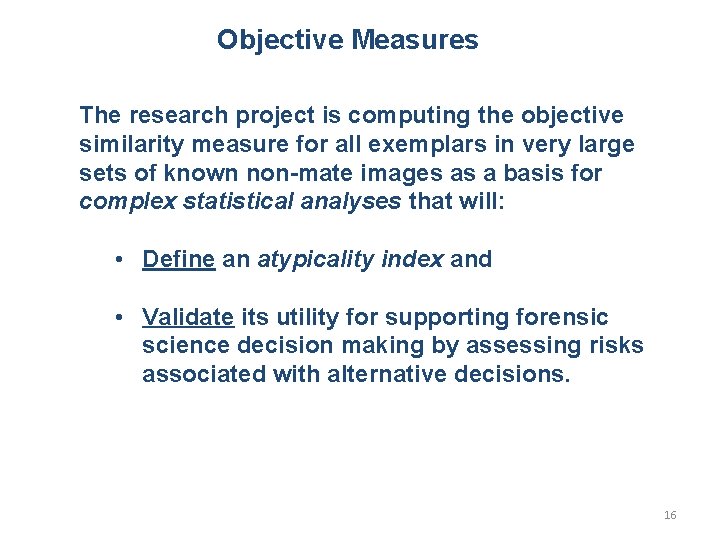
Objective Measures The research project is computing the objective similarity measure for all exemplars in very large sets of known non-mate images as a basis for complex statistical analyses that will: • Define an atypicality index and • Validate its utility for supporting forensic science decision making by assessing risks associated with alternative decisions. 16
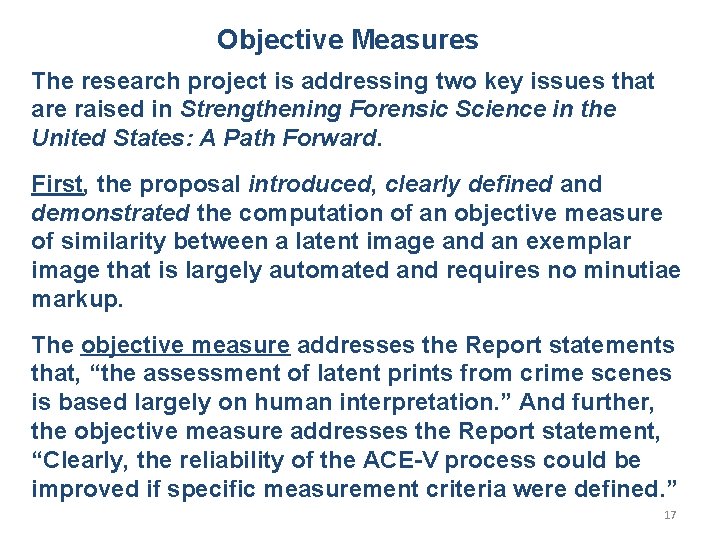
Objective Measures The research project is addressing two key issues that are raised in Strengthening Forensic Science in the United States: A Path Forward. First, the proposal introduced, clearly defined and demonstrated the computation of an objective measure of similarity between a latent image and an exemplar image that is largely automated and requires no minutiae markup. The objective measure addresses the Report statements that, “the assessment of latent prints from crime scenes is based largely on human interpretation. ” And further, the objective measure addresses the Report statement, “Clearly, the reliability of the ACE-V process could be improved if specific measurement criteria were defined. ” 17
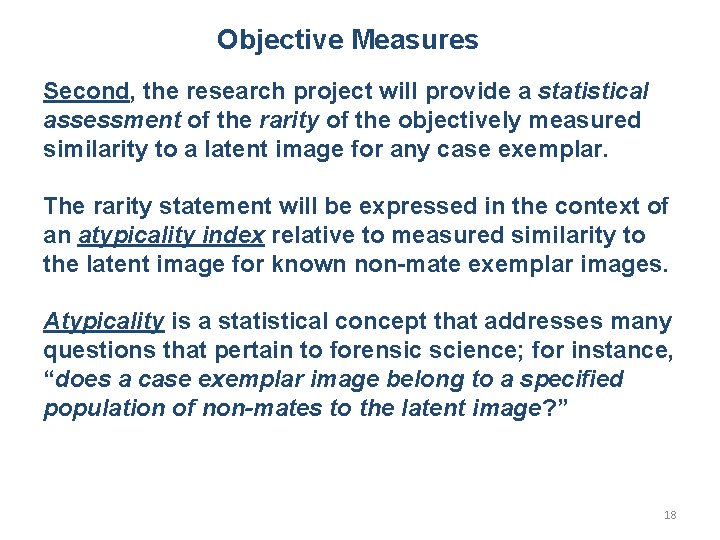
Objective Measures Second, the research project will provide a statistical assessment of the rarity of the objectively measured similarity to a latent image for any case exemplar. The rarity statement will be expressed in the context of an atypicality index relative to measured similarity to the latent image for known non-mate exemplar images. Atypicality is a statistical concept that addresses many questions that pertain to forensic science; for instance, “does a case exemplar image belong to a specified population of non-mates to the latent image? ” 18
Processed Latent Image Nonlinear, Invertible WARPS At Ridge & Furrow Pixel Level Best Overlay Data Finding Data Interacting to Provide Context Informative Pixels Pixel-wise Round. Robin Competition for Warp Accuracy among the WARPed Non-Mate Reference Images Spurious Similarity Hyper Hierarchical Statistical Model for Spurious Similarity: Detector for True Similarity Parameters Image k Competitor j {z 1 i, 1} {z 49 i, 1} {z 1 i, 50} {z 49 i, 50} RESULT: Tool for Supporting the Evaluation of the Latent Image 19
Technology Should be Disruptive to Practice! INVESTIGATION EVIDENCE 20