
Important Points in Drug Design based on Bioinformatics
Important Points in Drug Design based on Bioinformatics Tools http: //www. geocities. com/bioinformaticsweb/drugdiscovery. html History of Drug/Vaccine development – Plants or Natural Product • • Plant and Natural products were source for medical substance Example: foxglove used to treat congestive heart failure Foxglove contain digitalis and cardiotonic glycoside Identification of active component – Accidental Observations • • • Penicillin is one good example Alexander Fleming observed the effect of mold Mold(Penicillium) produce substance penicillin Discovery of penicillin lead to large scale screening Soil micoorganism were grown and tested Streptomycin, neomycin, gentamicin, tetracyclines etc.
Important Points in Drug Design based on Bioinformatics Tools • Chemical Modification of Known Drugs – Drug improvement by chemical modification – Pencillin G -> Methicillin; morphine->nalorphine • Receptor Based drug design – – Receptor is the target (usually a protein) Drug molecule binds to cause biological effects It is also called lock and key system Structure determination of receptor is important • Ligand-based drug design – Search a lead ocompound or active ligand – Structure of ligand guide the drug design process
Important Points in Drug Design based on Bioinformatics Tools • Identify Target Disease – Identify and study the lead compounds – Marginally useful and may have severe side effects • Refinement of the chemical structures – Detect the Molecular Bases for Disease – Detection of drug binding site – Tailor drug to bind at that site – Protein modeling techniques – Traditional Method (brute force testing)
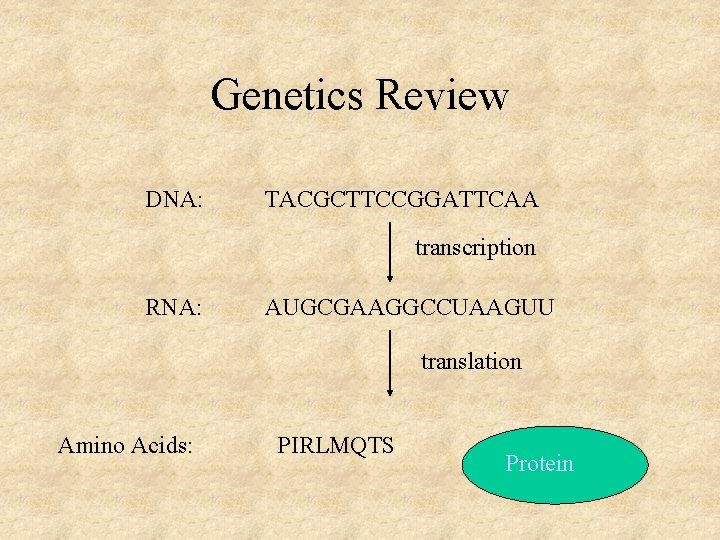
Genetics Review DNA: TACGCTTCCGGATTCAA transcription RNA: AUGCGAAGGCCUAAGUU translation Amino Acids: PIRLMQTS Protein
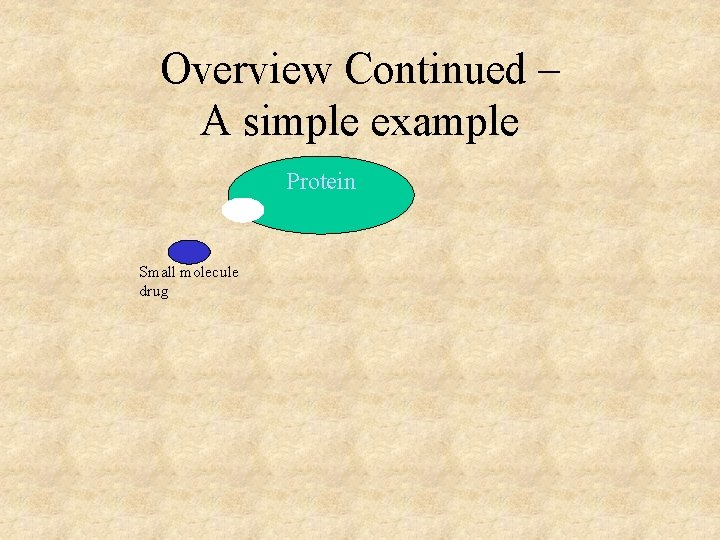
Overview Continued – A simple example Protein Small molecule drug
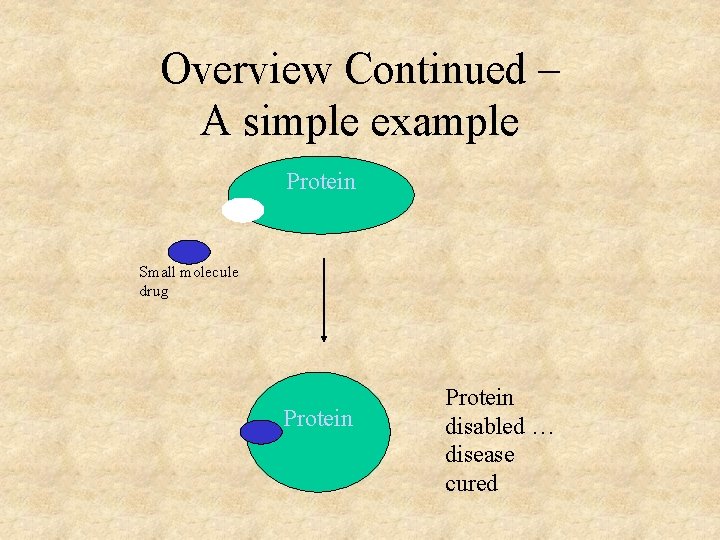
Overview Continued – A simple example Protein Small molecule drug Protein disabled … disease cured
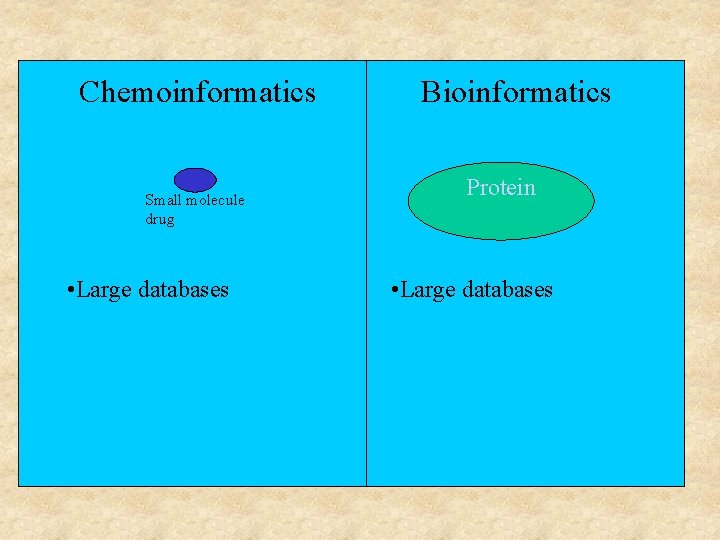
Chemoinformatics Small molecule drug • Large databases Bioinformatics Protein • Large databases
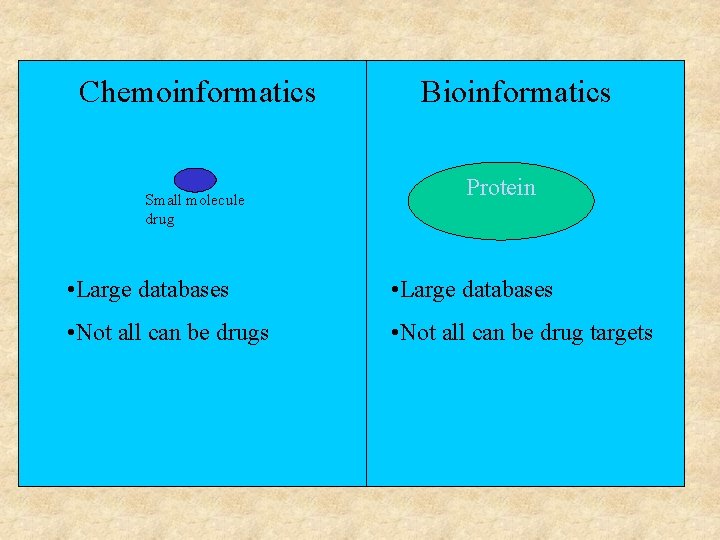
Chemoinformatics Small molecule drug Bioinformatics Protein • Large databases • Not all can be drugs • Not all can be drug targets
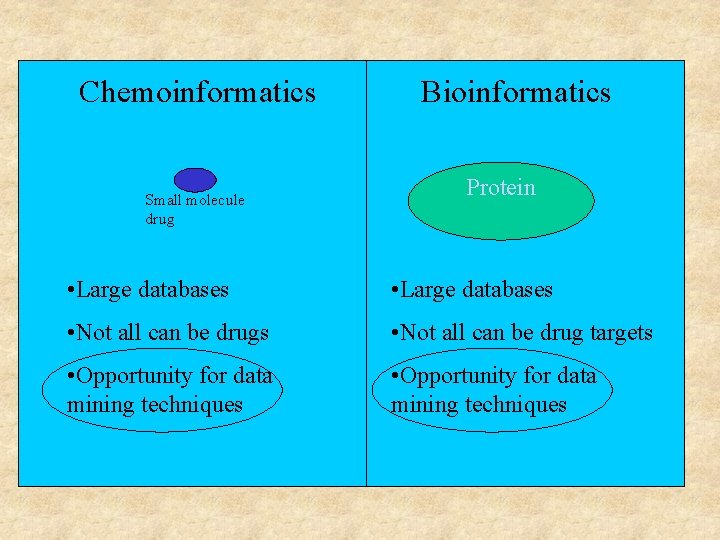
Chemoinformatics Small molecule drug Bioinformatics Protein • Large databases • Not all can be drugs • Not all can be drug targets • Opportunity for data mining techniques
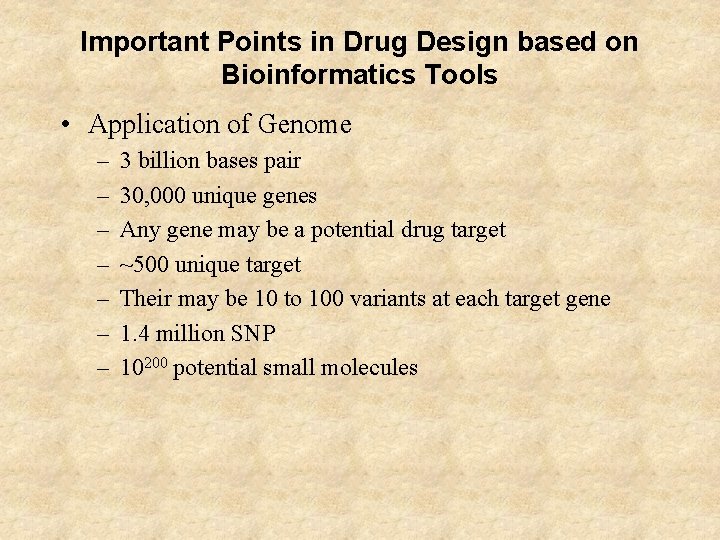
Important Points in Drug Design based on Bioinformatics Tools • Application of Genome – – – – 3 billion bases pair 30, 000 unique genes Any gene may be a potential drug target ~500 unique target Their may be 10 to 100 variants at each target gene 1. 4 million SNP 10200 potential small molecules
Important Points in Drug Design based on Bioinformatics Tools • Detect the Molecular Bases for Disease – Detection of drug binding site – Tailor drug to bind at that site – Protein modeling techniques – Traditional Method (brute force testing) • Rational drug design techniques – Screen likely compounds built – Modeling large number of compounds (automated) – Application of Artificial intelligence – Limitation of known structures
Important Points in Drug Design based on Bioinformatics Tools • Refinement of compounds – Refine lead compounds using laboratory techniques – Greater drug activity and fewer side effects – Compute change required to design better drug • Quantitative Structure Activity Relationships (QSAR) – – Compute functional group in compound QSAR compute every possible number Enormous curve fitting to identify drug activity chemical modifications for synthesis and testing. • Solubility of Molecule • Drug Testing
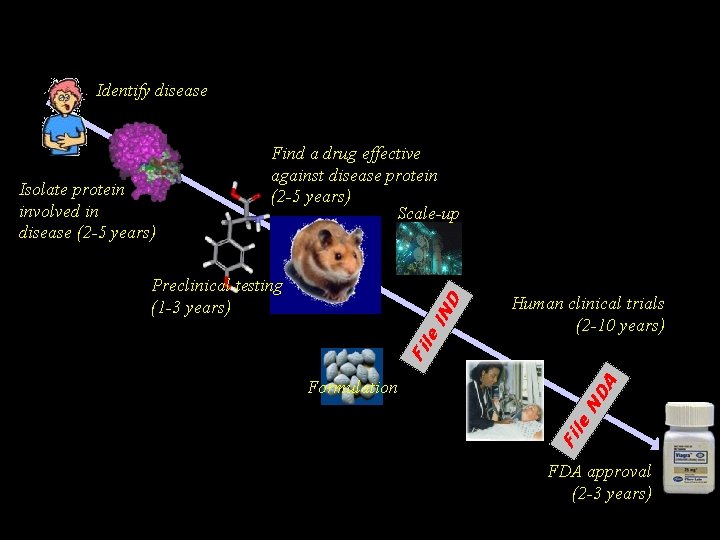
Drug Discovery & Development Identify disease Human clinical trials (2 -10 years) ND le Formulation A Fil e. I ND Preclinical testing (1 -3 years) Fi Isolate protein involved in disease (2 -5 years) Find a drug effective against disease protein (2 -5 years) Scale-up FDA approval (2 -3 years)
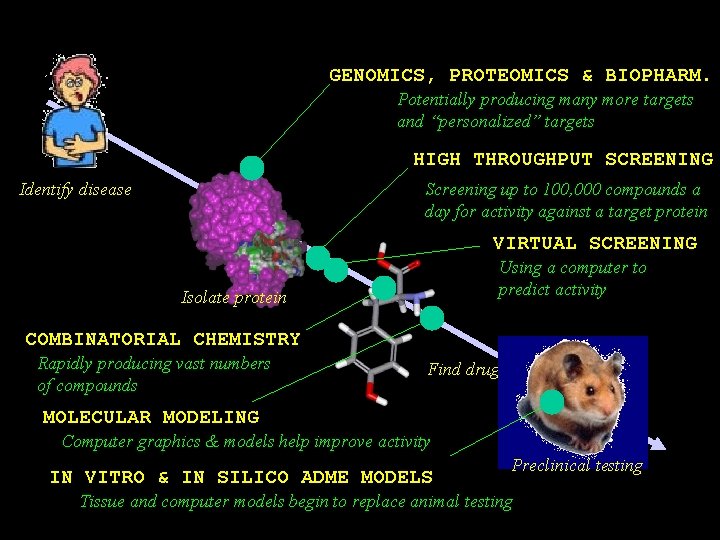
Techology is impacting this process GENOMICS, PROTEOMICS & BIOPHARM. Potentially producing many more targets and “personalized” targets HIGH THROUGHPUT SCREENING Identify disease Screening up to 100, 000 compounds a day for activity against a target protein VIRTUAL SCREENING Using a computer to predict activity Isolate protein COMBINATORIAL CHEMISTRY Rapidly producing vast numbers of compounds Find drug MOLECULAR MODELING Computer graphics & models help improve activity IN VITRO & IN SILICO ADME MODELS Preclinical testing Tissue and computer models begin to replace animal testing
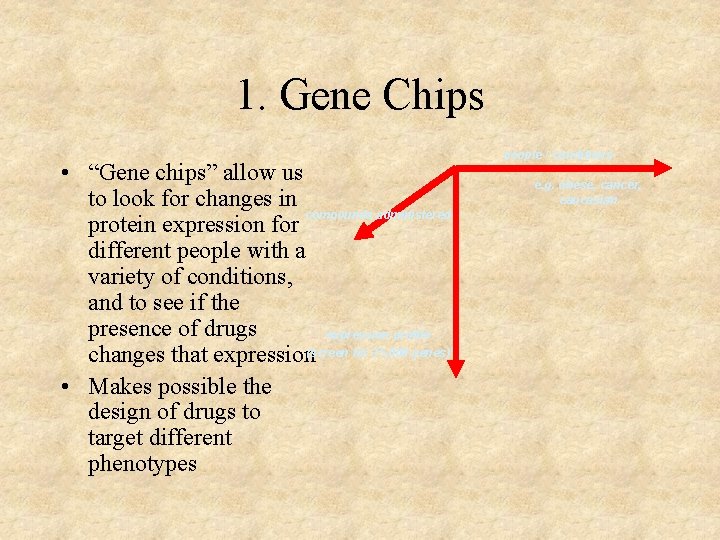
1. Gene Chips • “Gene chips” allow us to look for changes in compounds administered protein expression for different people with a variety of conditions, and to see if the presence of drugs expression profile changes that expression(screen for 35, 000 genes) • Makes possible the design of drugs to target different phenotypes people / conditions e. g. obese, cancer, caucasian
Biopharmaceuticals • Drugs based on proteins, peptides or natural products instead of small molecules (chemistry) • Pioneered by biotechnology companies • Biopharmaceuticals can be quicker to discover than traditional small-molecule therapies • Biotechs now paring up with major pharmaceutical companies
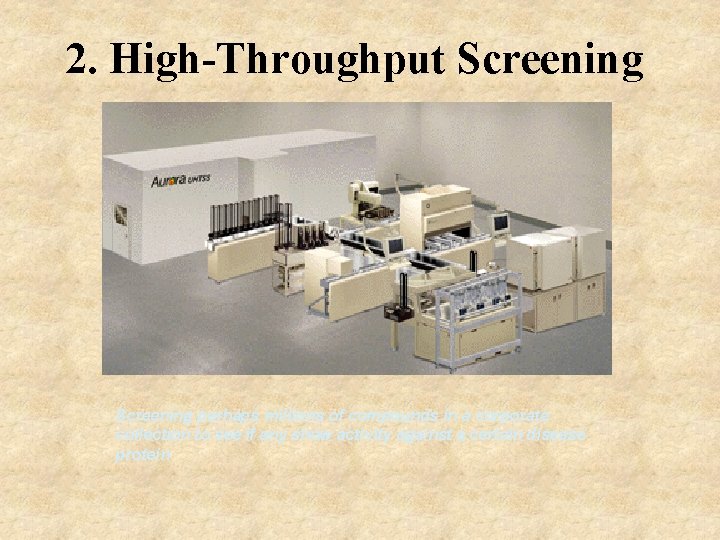
2. High-Throughput Screening perhaps millions of compounds in a corporate collection to see if any show activity against a certain disease protein
High-Throughput Screening • Drug companies now have millions of samples of chemical compounds • High-throughput screening can test 100, 000 compounds a day for activity against a protein target • Maybe tens of thousands of these compounds will show some activity for the protei • The chemist needs to intelligently select the 2 - 3 classes of compounds that show the most promise for being drugs to follow-up
Informatics Implications • Need to be able to store chemical structure and biological data for millions of datapoints – Computational representation of 2 D structure • Need to be able to organize thousands of active compounds into meaningful groups – Group similar structures together and relate to activity • Need to learn as much information as possible from the data (data mining) – Apply statistical methods to the structures and related information
3. Computational Models of Activity • Machine Learning Methods – E. g. Neural nets, Bayesian nets, SVMs, Kahonen nets – Train with compounds of known activity – Predict activity of “unknown” compounds • Scoring methods – Profile compounds based on properties related to target • Fast Docking – Rapidly “dock” 3 D representations of molecules into 3 D representations of proteins, and score according to how well they bind
4. Combinatorial Chemistry • By combining molecular “building blocks”, we can create very large numbers of different molecules very quickly. • Usually involves a “scaffold” molecule, and sets of compounds which can be reacted with the scaffold to place different structures on “attachment points”.
Combinatorial Chemistry Issues • Which R-groups to choose • Which libraries to make – “Fill out” existing compound collection? – Targeted to a particular protein? – As many compounds as possible? • Computational profiling of libraries can help – “Virtual libraries” can be assessed on computer
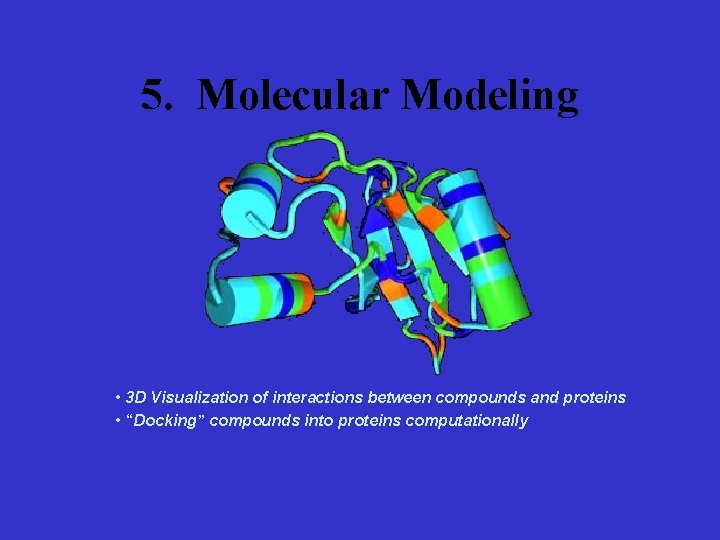
5. Molecular Modeling • 3 D Visualization of interactions between compounds and proteins • “Docking” compounds into proteins computationally
3 D Visualization • X-ray crystallography and NMR Spectroscopy can reveal 3 D structure of protein and bound compounds • Visualization of these “complexes” of proteins and potential drugs can help scientists understand the mechanism of action of the drug and to improve the design of a drug • Visualization uses computational “ball and stick” model of atoms and bonds, as well as surfaces • Stereoscopic visualization available
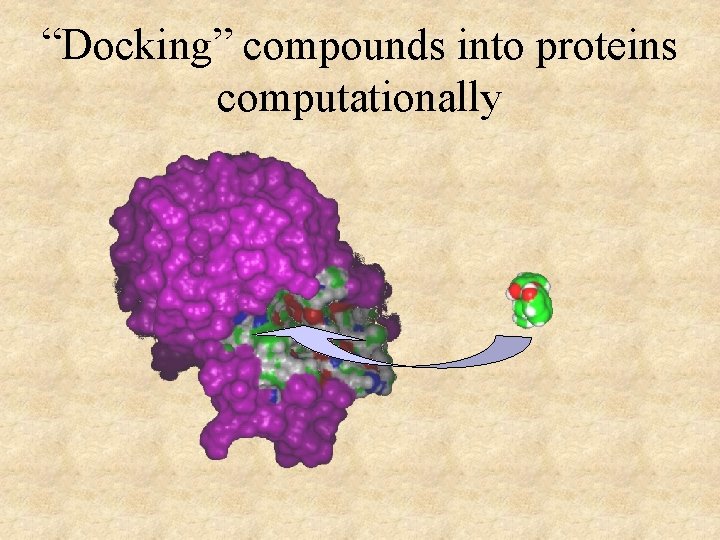
“Docking” compounds into proteins computationally
6. In Vitro & In Silico ADME models • Traditionally, animals were used for pre-human testing. However, animal tests are expensive, time consuming and ethically undesirable • ADME (Absorbtion, Distribution, Metabolism, Excretion) techniques help model how the drug will likely act in the body • These methods can be experemental (in vitro) using cellular tissue, or in silico, using computational models
In Silico ADME Models • Computational methods can predict compound properties important to ADME, e. g. – – Log. P, a liphophilicity measure Solubility Permeability Cytochrome p 450 metabolism • Means estimates can be made for millions of compouds, helping reduce “atrittion” – the failure rate of compounds in late stage
Size of databases • Millions of entries in databases – CAS : 23 million – Gene. Bank : 5 million • Total number of drugs worldwide: 60, 000 • Fewer than 500 characterized molecular targets • Potential targets : 5, 000 -10, 000
- Slides: 28