
IMPORTANT NURSERY OPERATIONS Operations Tree nursery operations involves
- Slides: 21
IMPORTANT NURSERY OPERATIONS
Operations: � � � Tree nursery operations involves various activities such as: seed sourcing Seed bed preparation Sowing seeds Potting Pricking Out Shading Watering Weeding root pruning application of additional fertilizers or manure.
Sourcing seed: � � It is important to try and use good quality seed in planting. Seeds can be bought from local seed dealers, from NGOs. Before planting a lot of seed, it is a good idea to first check it’s viability by seeing if it germinates well. When getting seed from a supplier, it is important to look at the seed and check that it appears to be of good quality, and hasn’t been collected too early (is immature) or contains many empty seed.
Pre sowing seed treatments: � � Sometimes it is important to treat seed before it is planted, in order to improve on the level, speed and uniformity of germination. (a) Soaking seed in hot water until the seeds look swollen. This is used for seeds of trees such as most acacias, tamarind, leucaena and albizia. Procedure: boil water and pour it over seeds in a container. Allow to cool and leave the seed in the water until the seeds look swollen.
(b) Soaking seed in cold/cool water. � � This method is recommended for seeds that have soft seed coats such as sesbania, dalbergia species, sesbania and Acacia augustissima, etc. The time for soaking varies between 12 -48 hours, depending on the tree species. Procedure: Soak the seeds in cold water which is 2 times its volume. Remove all floating seeds. Sow the remaining seeds at the bottom in containers in the nursery or direct sow directly in the field.
Cracking the seed shell method: � � � This method is used for tree species with a hard coat like melia (mukau), podo. Species, croton megalocarpus, etc. The cracking is done to allow water penetration for easy germination. Cracking is done using a sharp knife, a stone or a cracking machine.
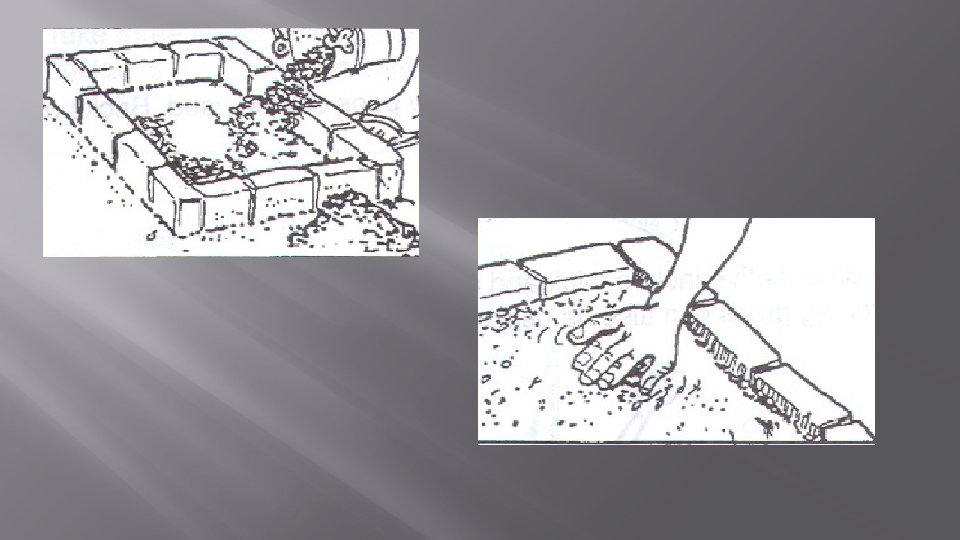
Seed bed preparation: � � nursery beds can be arranged in different ways. Potted seedlings can be raised on a flat bed, or can be set into a sunken bed, which is a basin like excavation of about 1 m by 1 m and about 10 cm deep. Such a structure holds seedlings together, and helps to conserve water in dry areas. Raised beds are used for establishing bare-rooted seedlings; as the sides of the bed can be broken down to reveal the roots of plants, ready for transplanting.
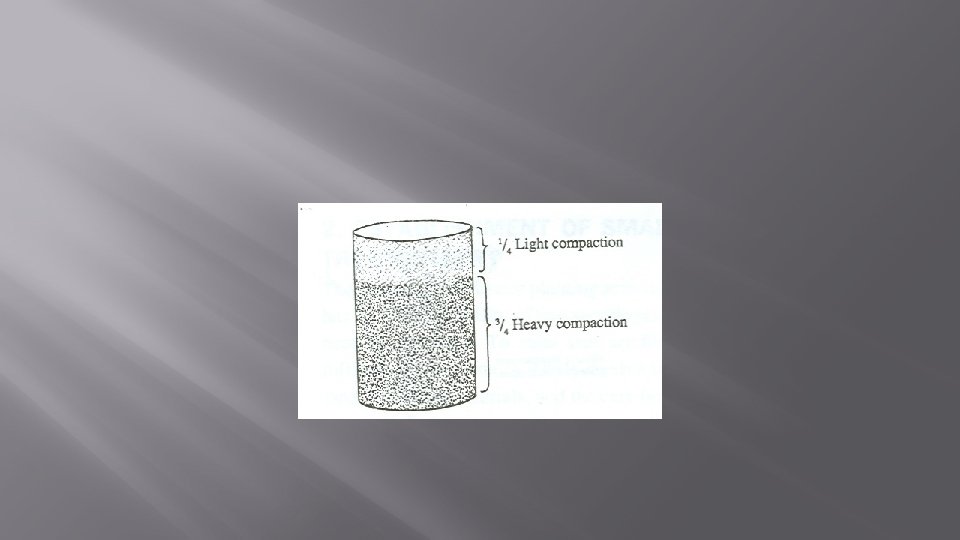
Potting: � � � Potting mixture (soil, sand compost/manure) should be moistened and then pressed into containers to a depth of about three-quarters of the height of pots. Pots should then be topped up more loosely with mixture and pressed down lightly to about 2 cm below the top. Heavy compaction should be avoided at the top of pots because it will inhibit root penetration. Before planting seed, containers should be watered lightly. Sometimes, more than one seed can be planted in a pot and then, if more than one germinate, seedlings can be removed to leave a single individual. This approach might be used if germination rate is expected to be quite low.
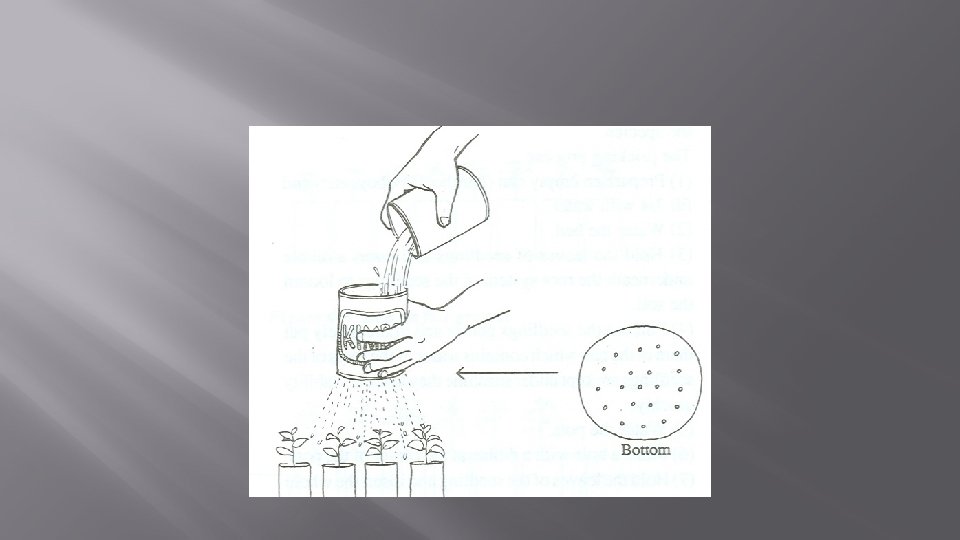
Sowing seed: � � When raising seedlings in pots, it is normal to use polythene tubes that are around 10 cm in diameter and 20 cm deep, though the size of pots will depend on the species and the time that seedlings will be in the nursery. Instead of using plastic tubes, other locally available materials that can be used include small tins, milk packets, cardboard boxes, banana fibre containers, calabashes and clay pots. It is better to use open-bottomed than closed containers, since this allows healthier root development and possible root pruning. If tins or other containers are being used, it is important that holes are made in the bottom to allow the movement of water.
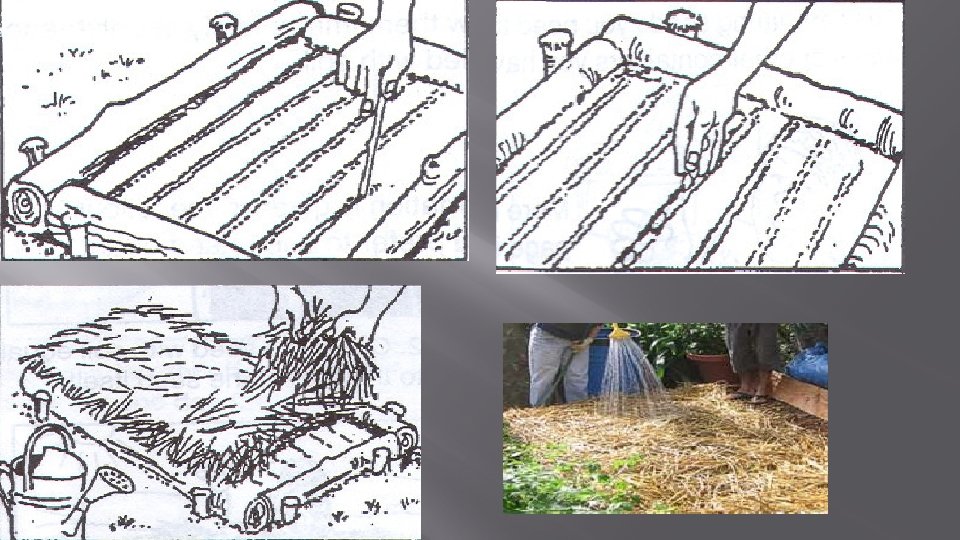
Conti… � � � Seed sowing time depends on the species and the time it takes to attain size for planting out (30 -45 cm). It is important the seeds are sown in time to enable the seedlings attain the recommended size (at least 30 -45 cm in height). This should be attained before the onset of rains (April or November for Kenya). Draw lines 10 cm. apart or the width of your palm. Sow at the spacing of 10 cm. between seeds. Cover the nursery with dry grass or maize stalk then water.
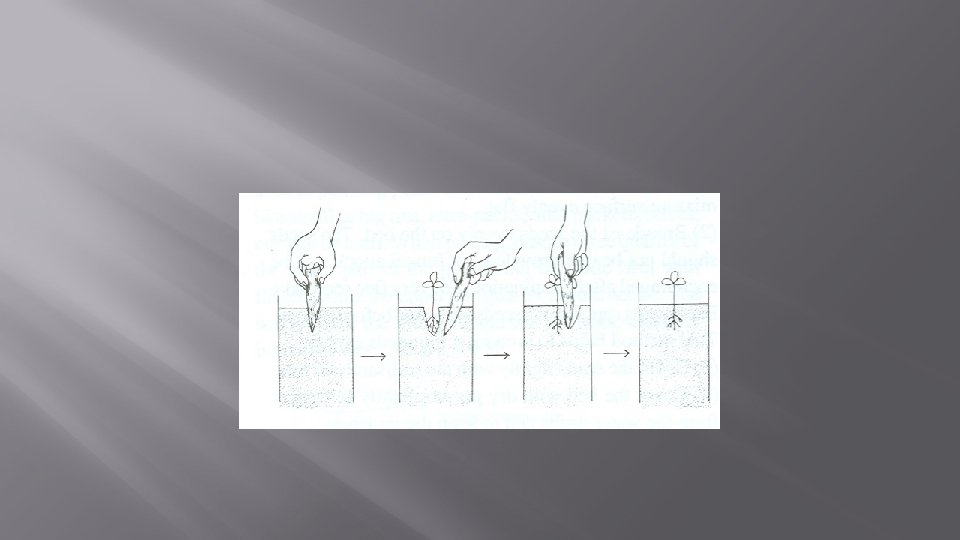
Pricking Out: � � � This is the process of transferring young and tender seedlings from seedbeds into containers (pots). Pricking out should be carried out when the seedlings reach a height of 2 cm. This is usually about two weeks after sowing but depends on the species.
The pricking process: � � � � Water the seedbed and containers properly before commencing the operation. Ensure adequate shade is available. Take an empty container and fill with water to ¾ levels. Hold the leaves of the seedlings and insert a pencil thick stick (dibble) underneath the root system to loosen the soil. Pull out the seedlings gently and immediately put them in the container with water. Note that if the roots of the seedlings are kept under sunshine they lose water and may die. Make a hole at the center of the pot using a stick. If the roots are too long clip off the tip.
Conti… � � � Do not hold the stem of the seedling because they are tender and feeble, this may injure the seedlings. Hold the stick in the tilting position and insert it in the soil about one centimeter away from the seedling to the same depth as the hole. Push the soil towards the seedling to hold it tightly. This ensures that all the air pockets around the roots are closed. Using your fingers cover the hole you made. Water the containers properly once more after planting. Seedlings pricked out from same batch of the seed bed should be arranged in the same place.
Shading and watering: � � � Shading: Construct a shade to protect the seedlings from direct sunlight for two to three weeks after pricking out. Use locally available materials such as grass, mats, or banana fibers for shade construction. Watering: The regular supply of clean water is essential to plant growth. Plants are made out of more than 90% water. When grown in containers, nursery plants have only a limited volume of substrate and do not have the ability of mature trees to search for water from below the soil surface.
Weeding: � � Weeds are a threat to healthy seedlings development. They compete with seedlings for nutrients, water and light hence they must be controlled. With your hands or gently pullout unwanted growth (rouging). this should be done whenever weeds are observed. Remove all the weeds around the beds manualy and don’t leave any rubbish around unless you are sure that this can be converted to compost.
Application of additional fertilizers (Nutrition): � � Fertilizers or manure is applied when the seedlings show sign of weakness. The most common fertilizers are NPK and DAP. It’s important to note that manure from livestock can also be used. However weakness of the seedlings can be caused not only by insufficiency of the nutrient but also by pests and disease.