
Importance of Fish Wildlife FW Chapter 1 Objectives
Importance of Fish & Wildlife (F&W) Chapter 1 • Objectives: • Explain the importance of F&W resources • Explain F&W conservation, management, and recreation • Describe how F&W species are classified • Identify impacts on F&W populations • Explain biodiversity as related to F&W populations
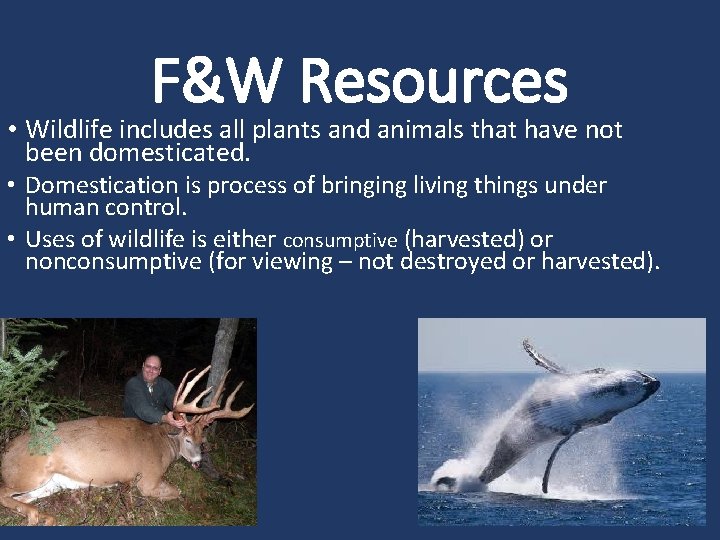
F&W Resources • Wildlife includes all plants and animals that have not been domesticated. • Domestication is process of bringing living things under human control. • Uses of wildlife is either consumptive (harvested) or nonconsumptive (for viewing – not destroyed or harvested).
Values of F&W • Commercial value (money from harvest and sales) • Game value (personal use) • Aesthetic value (beauty and appeal) • Scientific value (study and research) • Ecological value (role of species in nature)
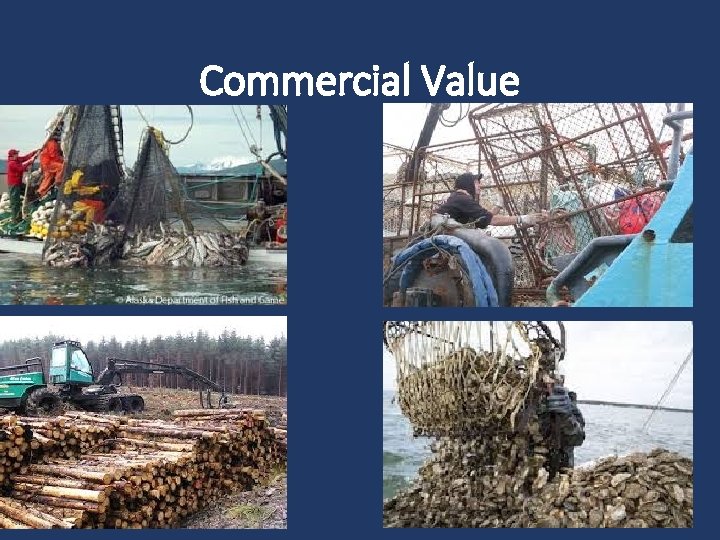
Commercial Value
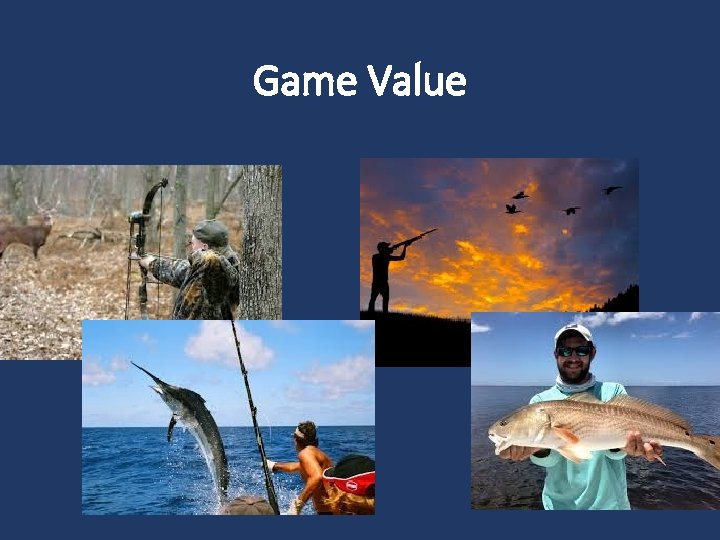
Game Value
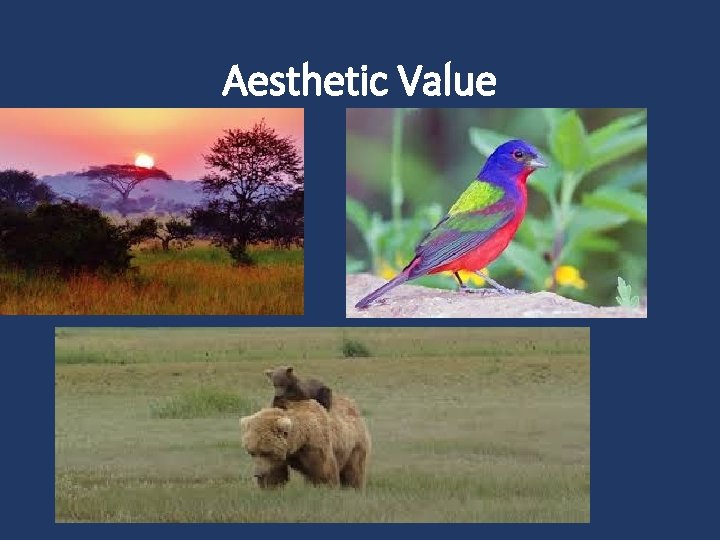
Aesthetic Value
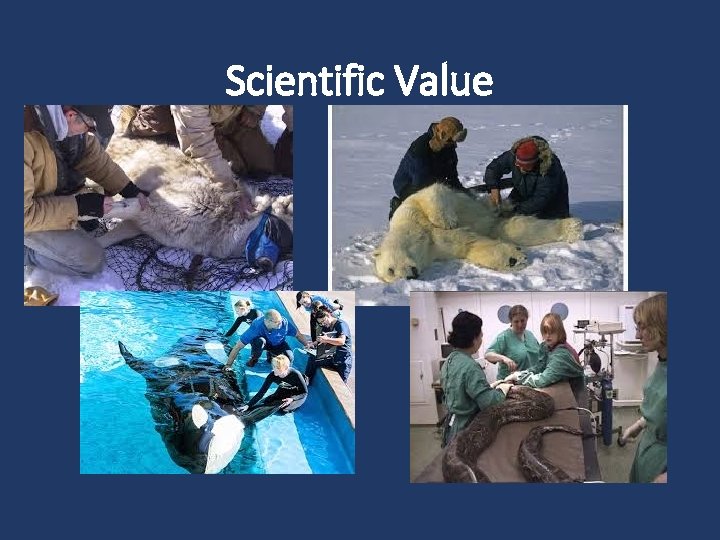
Scientific Value

Ecological Value
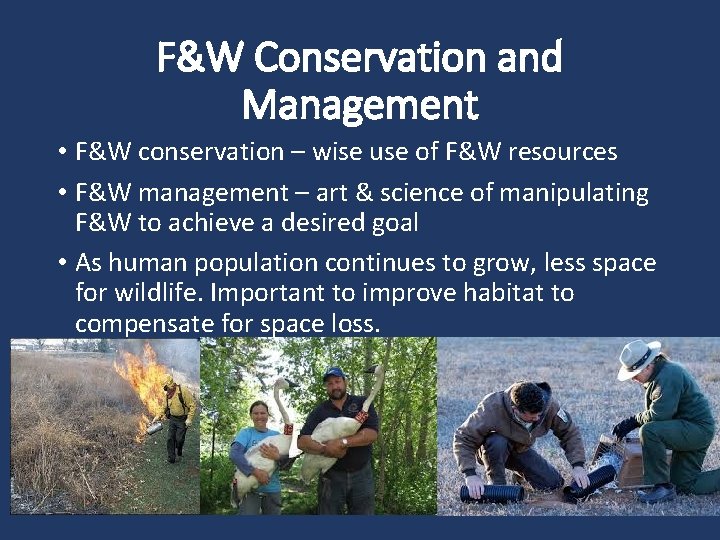
F&W Conservation and Management • F&W conservation – wise use of F&W resources • F&W management – art & science of manipulating F&W to achieve a desired goal • As human population continues to grow, less space for wildlife. Important to improve habitat to compensate for space loss.
F&W Organisms • All organisms (living things) can be classified into one of six kingdoms • Archaebacteria ( ancient bacteria) • Eubacteria ( modern bacteria) • Protista (algae and protozoans) • Fungi (molds, mildews, mushrooms) • Plantae (true plants - roots, stems, and leaves) • Animals
Other key F&W terms • Habitat – physical area where an organism lives • Terrestrial – lives on land • Aquatic – lives in water • Semi-aquatic – lives on land in water • Fisheries – study of the fish and related species in an area of water • Freshwater – little or no salt • Brackish – freshwater and saltwater mixed • Marine - saltwater
Levels of Organization • Organism – a single living thing • Species – a group of like organisms • Population – all the members of one species • Community – all the members of all species • Ecosystem – community plus the non-living components • Biome – large area characterized by plants and climate • Biosphere – all areas of earth inhabited by living organisms
Additional Key Terms • Population density – number of organisms in an area • Natality – birth rate • Mortality – death rate • Renewable natural resource – one that can produce more of itself • Carrying capacity – the numbers of individuals a habitat can support • Biodiversity – the variety of living things
- Slides: 13