
Implicit Bias Stereotype Threat and Women in Philosophy
Implicit Bias, Stereotype Threat and Women in Philosophy Jennifer Saul University of Sheffield j. saul@sheffield. ac. uk
? Numbers � Women are 16 -25% of full-time employed philosophers in every country for which we have data. This looks like science or engineering subjects, not like arts subjects. � In UK, women enter at close to parity, drop to 30 -35% at MA level (in US, drop is at decision to major). � [Blacks are 1. 32% of graduate students OR academic staff in US philosophy departments. ]
Explanations? Innate, unchangeable psychological differences? Could be, but there are good reasons for doubt. (See esp. Fine, Jordan-Young) � Different intuitions? (See Antony for reply to Buckwalter and Stich) � Difficulty combining work and childcare? Surely an issue, but can’t explain why there are so many more women in literature or law than in science or philosophy. � Conscious, old-fashioned sexism? Still exists, but not so widespread. � Sexual harassment? � But there’s very good reason to believe that unconscious psychological phenomena are playing a role (also with other/overlapping groups). �
Two phenomena– roughly characterised � Implicit Biases: those that we will be concerned with here are unconscious biases that affect the way we perceive, evaluate, or interact with people from groups that are stigmatised in our society. � Stereotype Threat: people’s awareness of their group membership may (often unconsciously) have a negative impact on their performance.
Implicit Bias � Well-known that humans form and act on associations very quickly, automatically, and often unconsciously. � Over last two decades psychologists have come to understand the disturbing effects that this has when the associations are about social groups. � Our focus here will be on ways in which these associations work to the detriment of stigmatised groups. © The University of Sheffield 31/10/2020
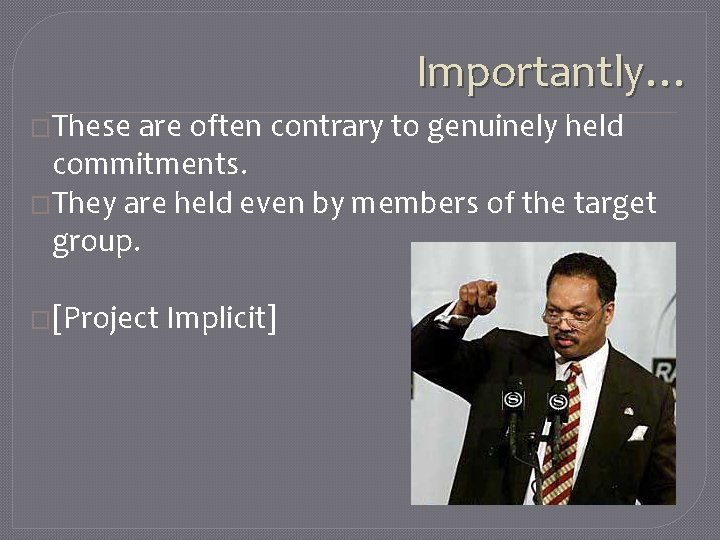
Importantly… �These are often contrary to genuinely held commitments. �They are held even by members of the target group. �[Project Implicit]
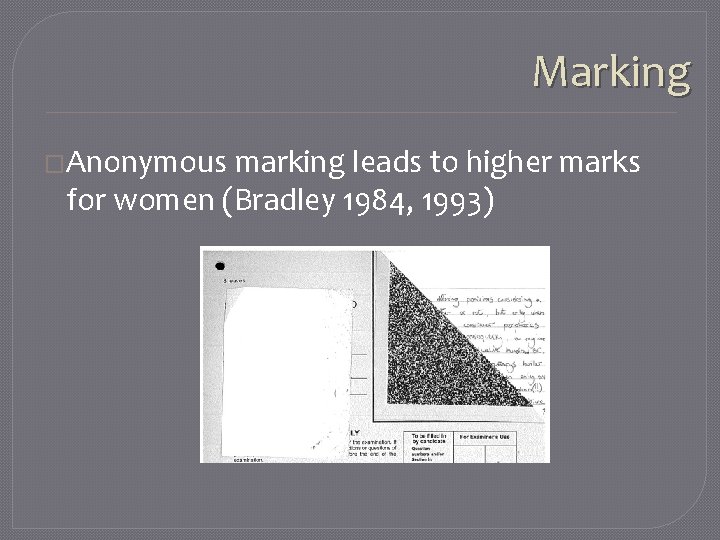
Marking �Anonymous marking leads to higher marks for women (Bradley 1984, 1993)
Letters of Reference �Man: “brilliant”; “outstanding”; “original” �Woman: � “works hard”; �“friendly”; �“surprisingly successful”; �“very attractive”; �“friends with my wife” © The University of Sheffield 31/10/2020
Teaching �More likely to call on male students, more likely to charitably interpret their inchoate contributions �More likely to take point raised by a woman seriously if re-stated by a man. © The University of Sheffield 31/10/2020
Student recruitment �More likely to respond to email from prospective research student who is white male. © The University of Sheffield 31/10/2020
Hiring �CVs: Same CV, with different names �John more employable than Jane. �John more employable than Yasser. (motherhood, sexual orientation) �Dying out? � No: 2012 -- Equally Strong for men and women, of all ages. © The University of Sheffield 31/10/2020

Leadership

Leadership
Leadership and teaching � “If students (or conference participants) challenge women more than they do men, women have to face choices that men do not, and these choices are likely to be double binds. So for example, when I taught a course to engineers that was usually taught by a male colleague, he advised me to brook absolutely no excuses for late papers, and to announce (as he always did) that students would simply be docked 5 points for every day late. When I found that I had over 40 late papers (in a class of 300+), and that many of them were so late they would have a failing grade before I even read them, I asked him what he did: did he disregard the announced policy, or did he let the chips fall where they may (leading to failing grades for quite a few students). His answer: that's never happened to me. Thus, he never had to face the dilemma of either undermining his own authority by not following his announced policy, or evoking the ire of 40 students in a class that didn't like you to begin with. ” – Louise Antony
Citation �Healy 2013 - shows women are cited far less frequently than men in philosophy �Schwitzgebel 2014 - same results for SEP � 2013 study, in International Relations • Of faculty members at research universities: The average paper by an untenured male is cited 26. 7 times, while the average paper by a female colleague at same level would be cited only 21. 5 times. © The University of Sheffield 31/10/2020
Implicit bias results in injustice Examples: �People not receiving the marks that they should �Hiring not based on merit �Women’s career progress impeded
Stereotype Threat �Underperformance (or avoidance) on particular tasks by members of groups stigmatised as less good at these tasks, when • They really care about doing well • Stakes are high • They are reminded of their group membership • Stereotype threat is based in explicit knowledge of stereotypes (which the victim may well not endorse), but the victim is often not aware that they are underperforming/avoiding the area.
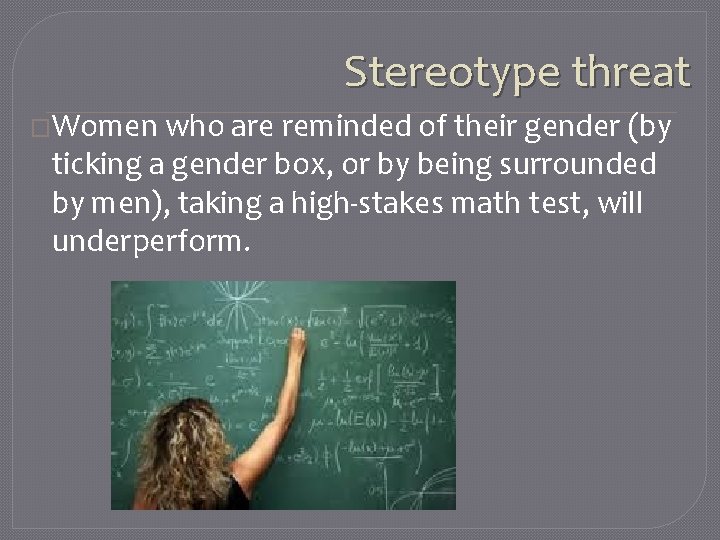
Stereotype threat �Women who are reminded of their gender (by ticking a gender box, or by being surrounded by men), taking a high-stakes math test, will underperform.
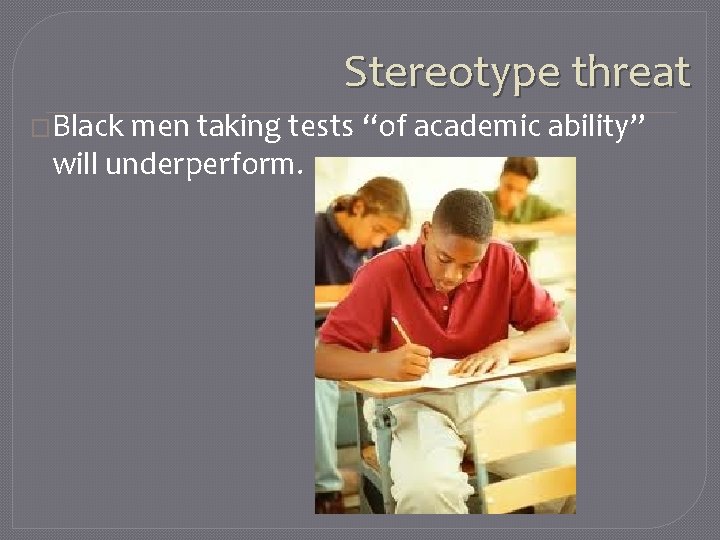
Stereotype threat �Black men taking tests “of academic ability” will underperform.
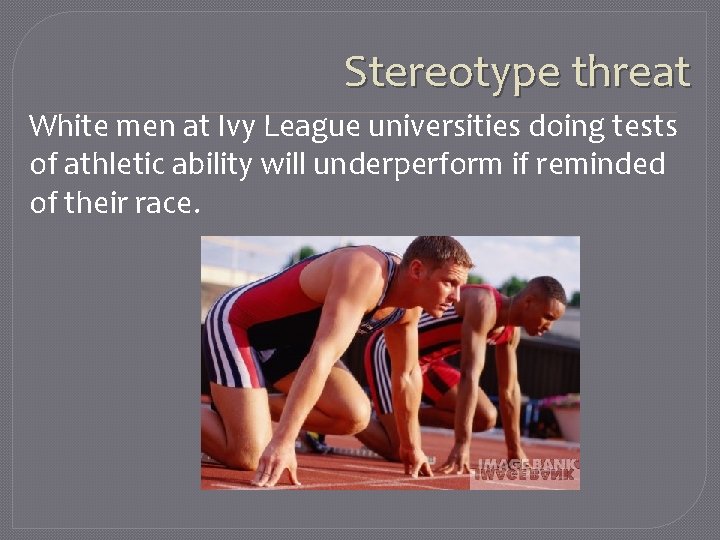
Stereotype threat White men at Ivy League universities doing tests of athletic ability will underperform if reminded of their race.
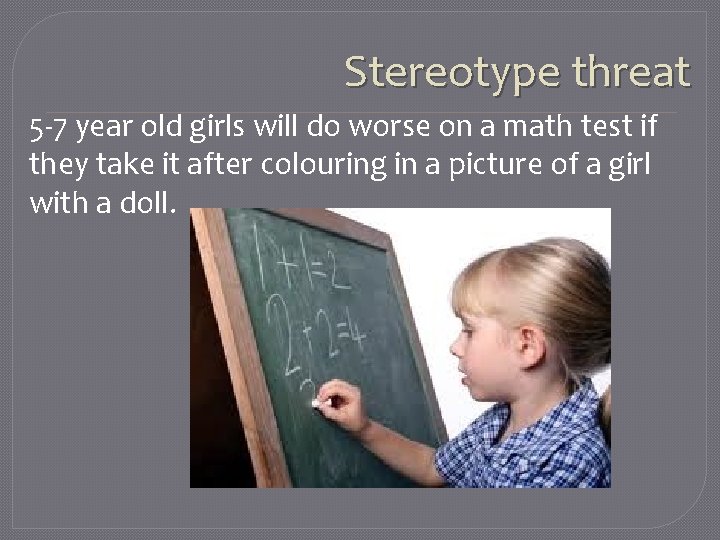
Stereotype threat 5 -7 year old girls will do worse on a math test if they take it after colouring in a picture of a girl with a doll.
Results of stereotype threat and implicit bias �Members of stigmatised groups have harder time being given proper credit for what they do and also a more difficult time doing as well as they can… �And much of this will be the result of unconscious bias from people with genuine egalitarian commitments.
Why Philosophy? �Overwhelmingly male lecturers, reading lists, speakers at seminars/conferences, papers in intro anthologies. �Stereotypically male behaviour– e. g. unnecessary aggression (Beebee). �Stereotypes associated with maths may carry over to logic, often treated as foundational. © The University of Sheffield 31/10/2020
Acting: What not to do �Don’t �This just tell yourself “ don’t be biased”. can backfire and make it worse. �Don’t just tell yourself “be objective”. �Priming with objectivity increases implicit bias.
What only sort of works � Putting women on hiring committees in order ensure gender fairness. • Women, like men, are very likely to hold negative implicit biases against women. • Women have trouble getting their contributions to discussion taken seroiusly. � However: can help to reduce stereotype threat for interviewees. �But note: One woman probably won’t be enough. � Also, woman can be counterstereotypical exemplar.
What to Do �Note: many (not all) of these things to do can be motivated independently of implicit bias/stereotype threat. © The University of Sheffield 31/10/2020
What works �Anonymise whenever possible. (Think about parts of process to anonymise. )
What works �Get more counterstereotypical exemplars in. �As students, as lecturers, as researchers, as visiting speakers, at conferences, on reading lists. �This both reduces the influence of biases and helps to change the regularities in the world that perpetuate the biases.
Objection �But that means basing one’s judgments (in part) on something other than merit! �Our judgments are already (in part) based on something other than merit: they are based partly on social prejudices.
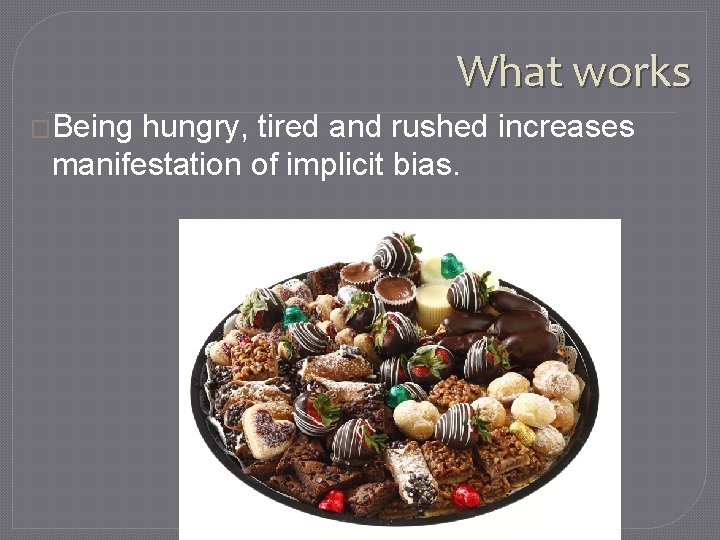
What works �Being hungry, tired and rushed increases manifestation of implicit bias.
What works �Agree on criteria in advance. �Don’t put too much weight on one thing (e. g. job talk). �Get feedback on each element as you go, to avoid overall gestalt evaluation.
What works �Try harder to notice when a woman student wants to speak. �If a woman’s comment is being ignored, or attributed to someone else, speak up. �Active chairing to prevent a few individuals dominating discussion. �Focus on the philosophy rather than on winning or destroying the speaker.
What works �Re-examine your letters of reference for gendered content. �Have a look at your bibliographies, and think whethere are women you should cite. © The University of Sheffield 31/10/2020
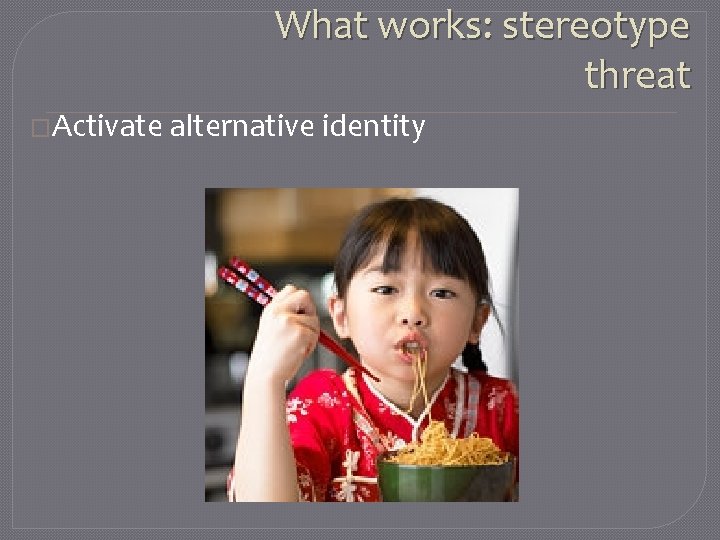
What works: stereotype threat �Activate alternative identity
What works: stereotype threat �Sharing stories of those who have succeeded despite it. �Talk about it as a possible source of anxiety. �Stereotype threat: values affirmation.
Stop Talking About Who’s Smart �Prone to implicit bias– gestalt evaluation, insensitivity to evidence. (Schwitzgebel) �Feeds stereotype threat and implicit bias, as based in ”entity view of intelligence” (Dweck) �Instead: talk about specific virtues of particular papers. © The University of Sheffield 31/10/2020
Example: What we did �Anonymous CVs, cover letters for longlisting. � 2 stage longlisting: • First panel read anonymous writing samples. • Later they were given names and references, before shortlisting. © The University of Sheffield 31/10/2020
What We Did �Highly structured discussion by panel after job talks interviews. • Separate discussion for each candidate of written work, job talk presentation, responses to questions, area appropriateness, teaching experience, collegiality, etc. • No comparative or overall judgments allowed till end of discussion. • Also, lots of snacks. © The University of Sheffield 31/10/2020
Notice… �Many of these ways of countering implicit bias and stereotype threat really require scientists to discover them. �What we’d most naturally think of to do doesn’t work, and some strange things do. �The first step is raising awareness of ubiquity of phenomena. �The next step is raising awareness of what to do.
Bias and blame? • Many biases are both unconscious and blameless, I hold. �Many people are totally unaware of their implicit biases and the effects that they have. �Even after becoming aware, people are likely to not know how to combat them. So blame is not appropriate
Bias as blameworthy �But…. �Bias becomes blameworthy if people learn about implicit bias and don’t try to do anything about it.
- Slides: 41