
Implementing the Zero Suicide Model in Vermont Jaskanwar
- Slides: 27
Implementing the Zero Suicide Model in Vermont Jaskanwar S Batra, MD Medical Director, Vermont Department of Mental Health Clinical Associate Professor, University of Vermont, College of Medicine
SURVIVAL INSTINCT noun the instinct in humans and animals to do things in a dangerous situation that will prevent them from dying
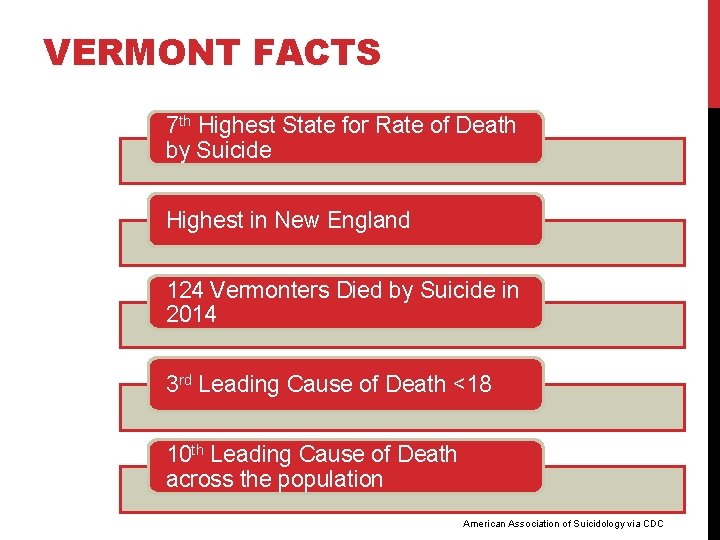
VERMONT FACTS 7 th Highest State for Rate of Death by Suicide Highest in New England 124 Vermonters Died by Suicide in 2014 3 rd Leading Cause of Death <18 10 th Leading Cause of Death across the population American Association of Suicidology via CDC
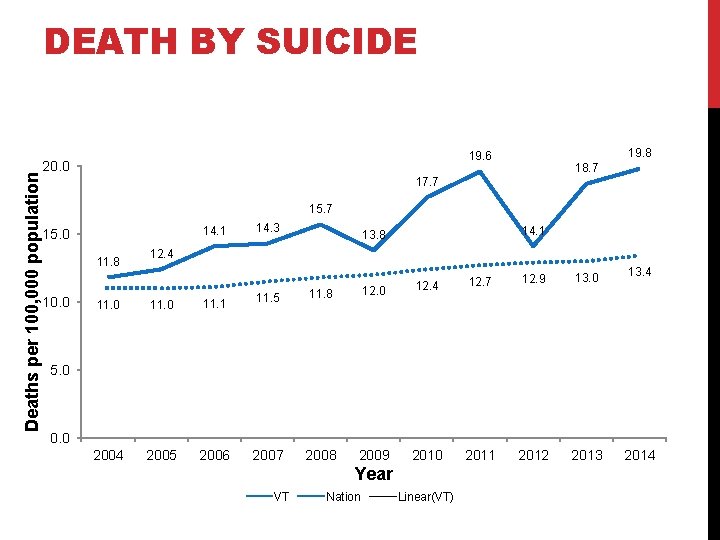
Deaths per 100, 000 population DEATH BY SUICIDE 19. 8 19. 6 20. 0 18. 7 17. 7 15. 7 14. 1 15. 0 11. 8 10. 0 14. 3 14. 1 13. 8 12. 4 11. 0 11. 1 2004 2005 2006 11. 5 11. 8 12. 0 12. 4 2007 2008 2009 2010 12. 7 12. 9 13. 0 13. 4 2011 2012 2013 2014 5. 0 0. 0 Year VT Nation Linear(VT)
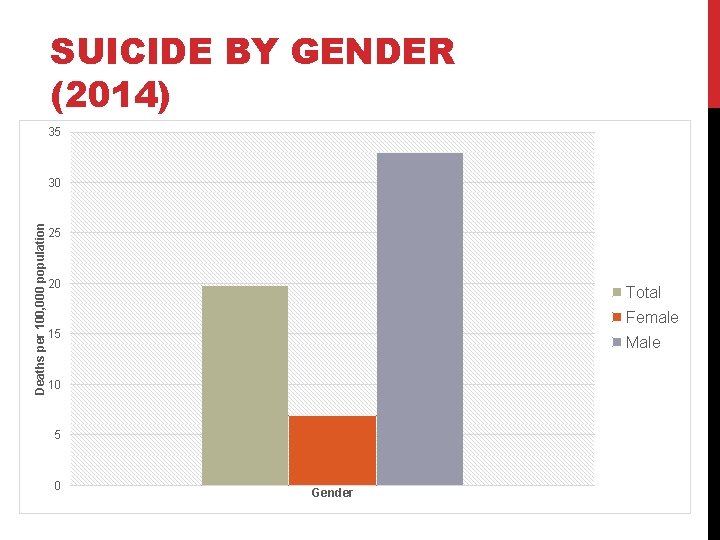
SUICIDE BY GENDER (2014) 35 Deaths per 100, 000 population 30 25 20 Total Female 15 Male 10 5 0 Gender
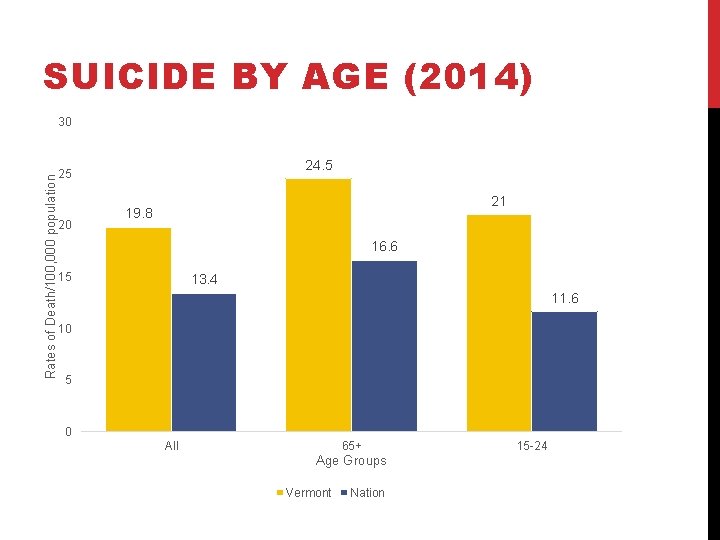
SUICIDE BY AGE (2014) Rates of Death/100, 000 population 30 24. 5 25 20 21 19. 8 16. 6 15 13. 4 11. 6 10 5 0 All 65+ Age Groups Vermont Nation 15 -24
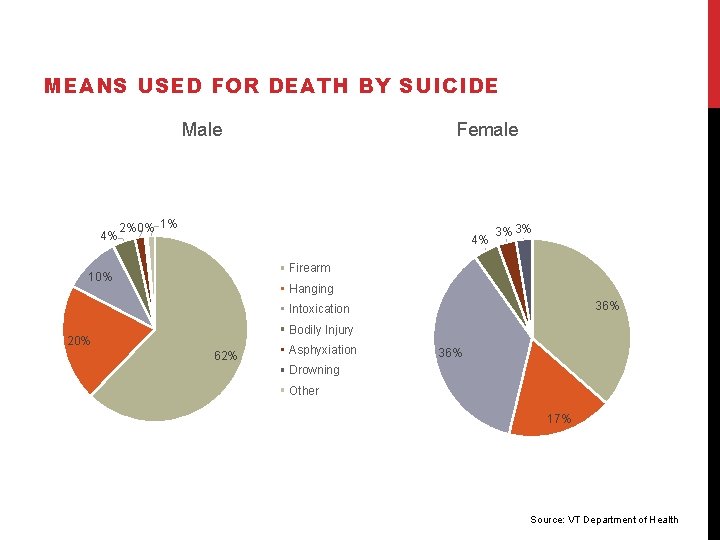
MEANS USED FOR DEATH BY SUICIDE Male 4% Female 2%0% 1% 4% 3% 3% Firearm 10% Hanging 36% Intoxication Bodily Injury 20% 62% Asphyxiation 36% Drowning Other 17% Source: VT Department of Health
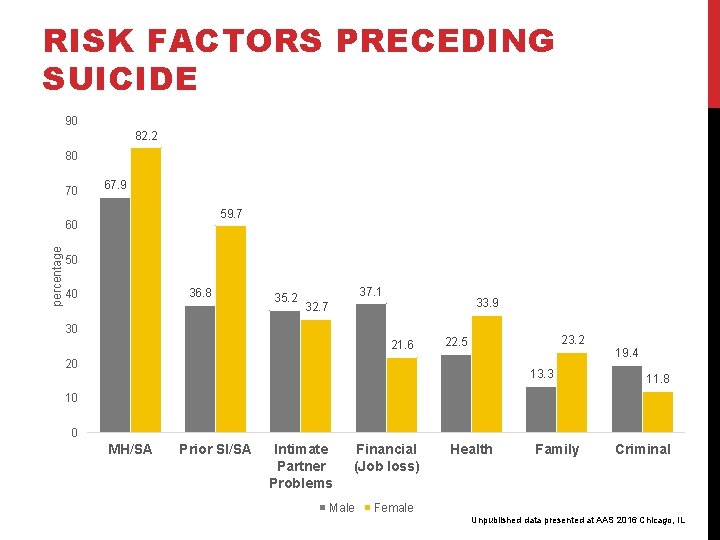
RISK FACTORS PRECEDING SUICIDE 90 82. 2 80 70 67. 9 59. 7 percentage 60 50 36. 8 40 35. 2 37. 1 33. 9 32. 7 30 21. 6 23. 2 22. 5 20 13. 3 19. 4 11. 8 10 0 MH/SA Prior SI/SA Intimate Partner Problems Financial (Job loss) Male Health Family Criminal Female Unpublished data presented at AAS 2016 Chicago, IL
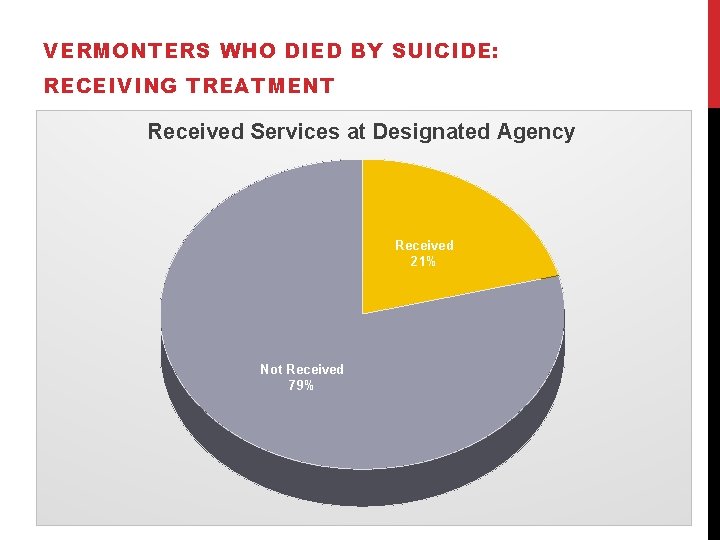
VERMONTERS WHO DIED BY SUICIDE: RECEIVING TREATMENT Received Services at Designated Agency Received 21% Not Received 79%
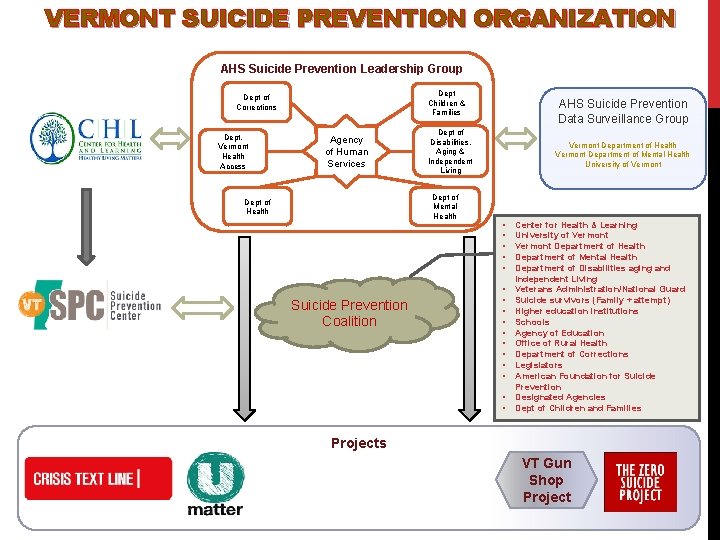
VERMONT SUICIDE PREVENTION ORGANIZATION AHS Suicide Prevention Leadership Group Dept Children & Families Dept of Corrections Dept. Vermont Health Access Agency of Human Services Dept of Disabilities, Aging & Independent Living Dept of Mental Health Dept of Health Suicide Prevention Coalition AHS Suicide Prevention Data Surveillance Group Vermont Department of Health Vermont Department of Mental Health University of Vermont • • • • Center for Health & Learning University of Vermont Department of Health Department of Mental Health Department of Disabilities aging and Independent Living Veterans Administration/National Guard Suicide survivors (Family + attempt) Higher education institutions Schools Agency of Education Office of Rural Health Department of Corrections Legislators American Foundation for Suicide Prevention Designated Agencies Dept of Children and Families Projects VT Gun Shop Project
ZERO SUICIDE, REALLY?
WHY ZERO SUICIDE? BECAUSE IT WORKS!
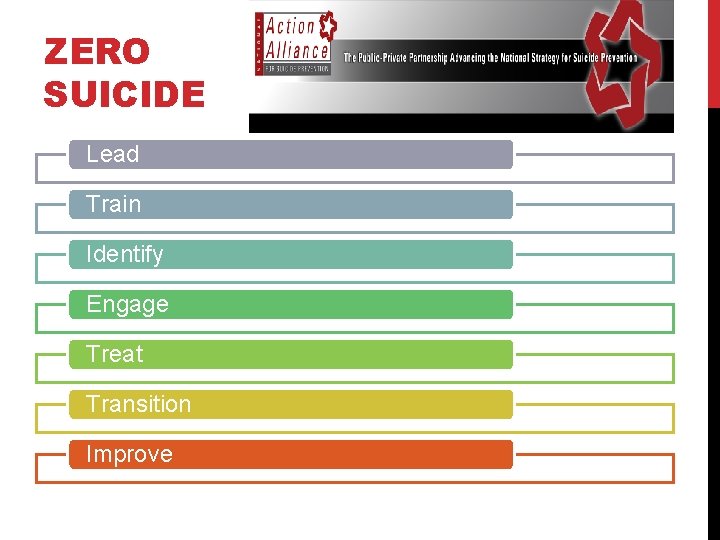
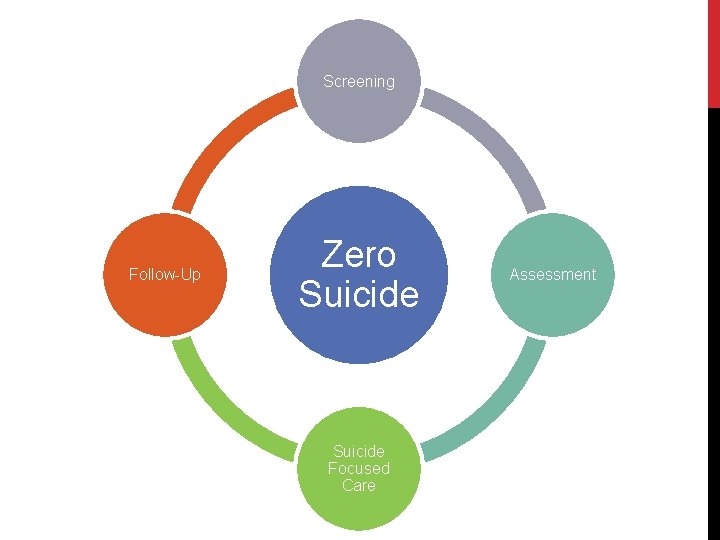
ZERO SUICIDE Lead Train Identify Engage Treat Transition Improve
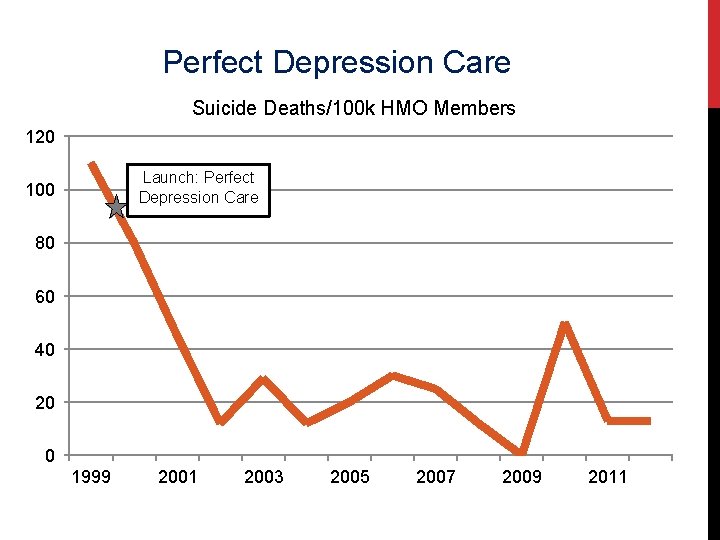
Perfect Depression Care Suicide Deaths/100 k HMO Members 120 Launch: Perfect Depression Care 100 80 60 40 20 0 1999 2001 2003 2005 2007 2009 2011
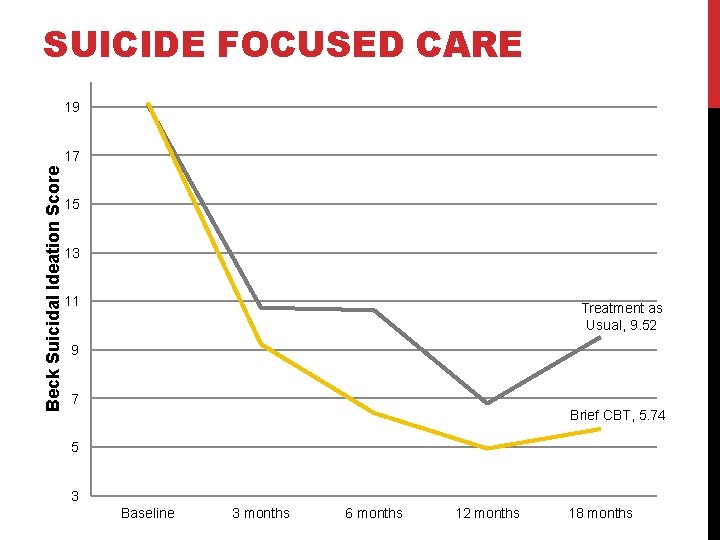
SUICIDE FOCUSED CARE 19 Beck Suicidal Ideation Score 17 15 13 11 Treatment as Usual, 9. 52 9 7 Brief CBT, 5. 74 5 3 Baseline 3 months 6 months 12 months 18 months
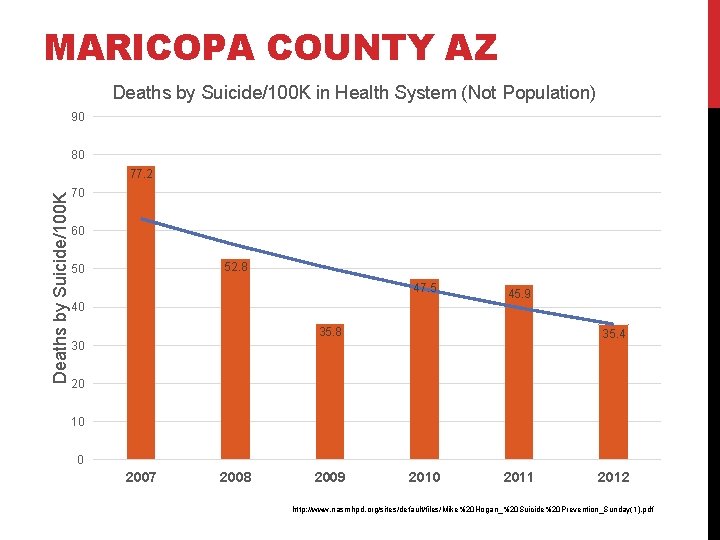
MARICOPA COUNTY AZ Deaths by Suicide/100 K in Health System (Not Population) 90 80 Deaths by Suicide/100 K 77. 2 70 60 52. 8 50 47. 5 45. 9 40 35. 8 35. 4 30 20 10 0 2007 2008 2009 2010 2011 2012 http: //www. nasmhpd. org/sites/default/files/Mike%20 Hogan_%20 Suicide%20 Prevention_Sunday(1). pdf
Screening Follow-Up Zero Suicide Focused Care Assessment
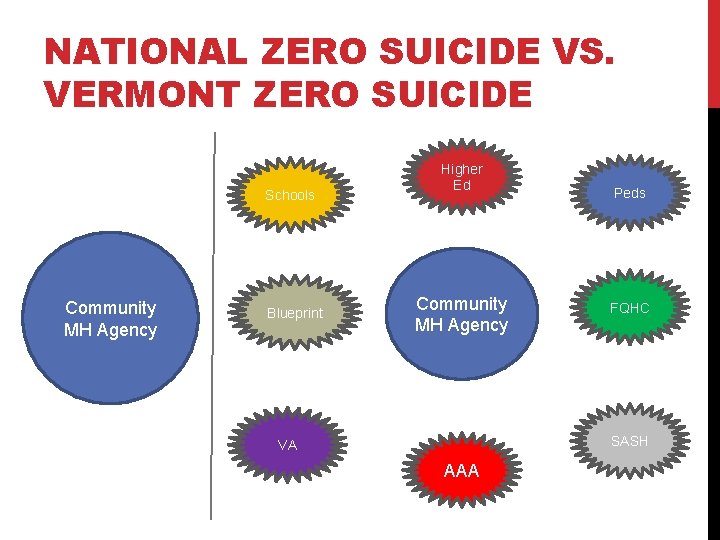
NATIONAL ZERO SUICIDE VS. VERMONT ZERO SUICIDE Schools Community MH Agency Blueprint Higher Ed Community MH Agency Peds FQHC SASH VA AAA
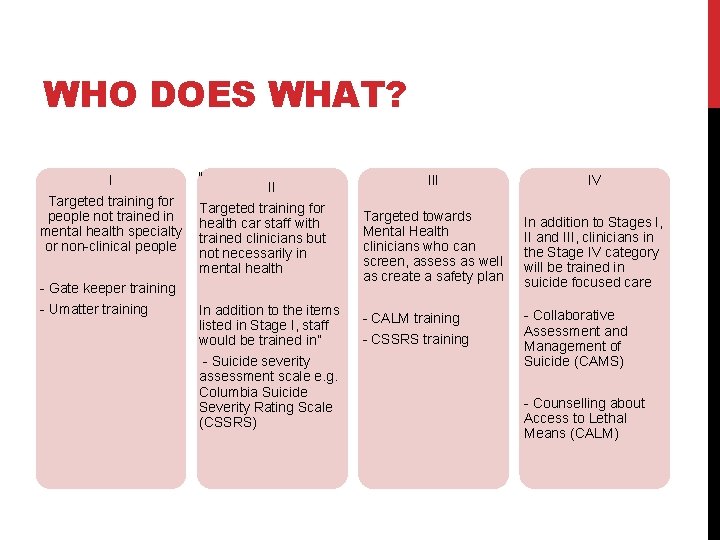
WHO DOES WHAT? I Targeted training for people not trained in mental health specialty or non-clinical people - Gate keeper training - Umatter training II II Targeted training for health car staff with trained clinicians but not necessarily in mental health In addition to the items listed in Stage I, staff would be trained in” - Suicide severity assessment scale e. g. Columbia Suicide Severity Rating Scale (CSSRS) III IV Targeted towards Mental Health clinicians who can screen, assess as well as create a safety plan In addition to Stages I, II and III, clinicians in the Stage IV category will be trained in suicide focused care - CALM training - CSSRS training - Collaborative Assessment and Management of Suicide (CAMS) - Counselling about Access to Lethal Means (CALM)
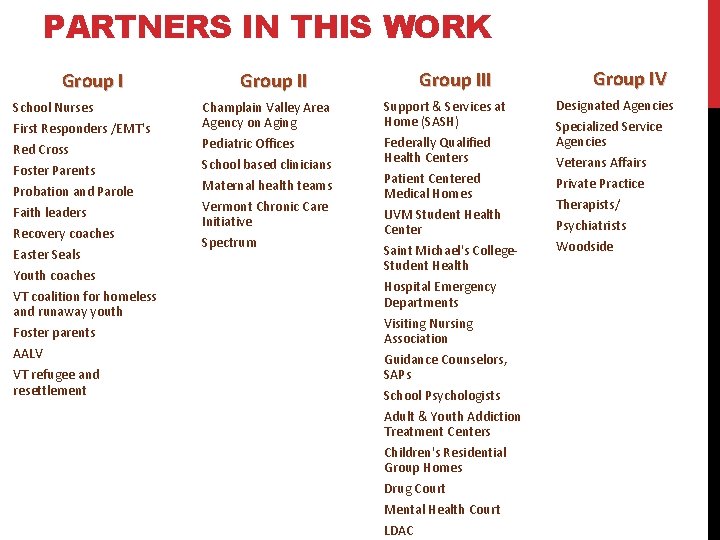
PARTNERS IN THIS WORK Group I School Nurses First Responders /EMT's Red Cross Foster Parents Probation and Parole Faith leaders Recovery coaches Easter Seals Youth coaches VT coalition for homeless and runaway youth Foster parents AALV VT refugee and resettlement Group II Champlain Valley Area Agency on Aging Pediatric Offices School based clinicians Maternal health teams Vermont Chronic Care Initiative Spectrum Group III Support & Services at Home (SASH) Federally Qualified Health Centers Patient Centered Medical Homes UVM Student Health Center Saint Michael's College. Student Health Hospital Emergency Departments Visiting Nursing Association Guidance Counselors, SAPs School Psychologists Adult & Youth Addiction Treatment Centers Children's Residential Group Homes Drug Court Mental Health Court LDAC Group IV Designated Agencies Specialized Service Agencies Veterans Affairs Private Practice Therapists/ Psychiatrists Woodside
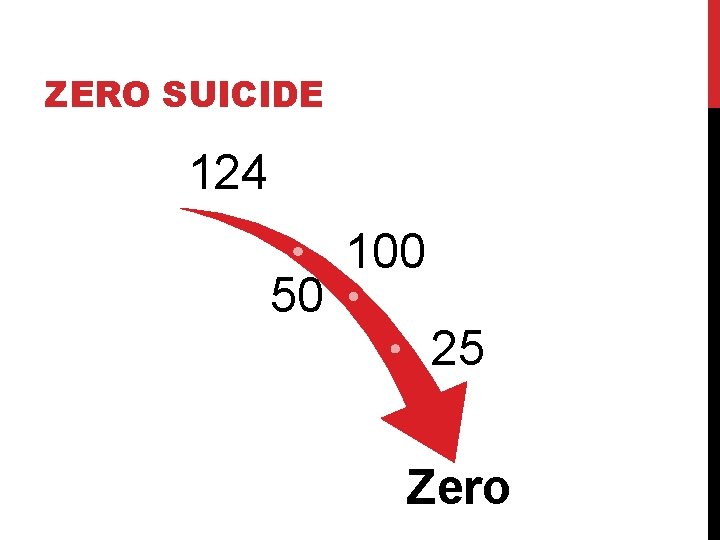
ZERO SUICIDE 124 50 100 25 Zero
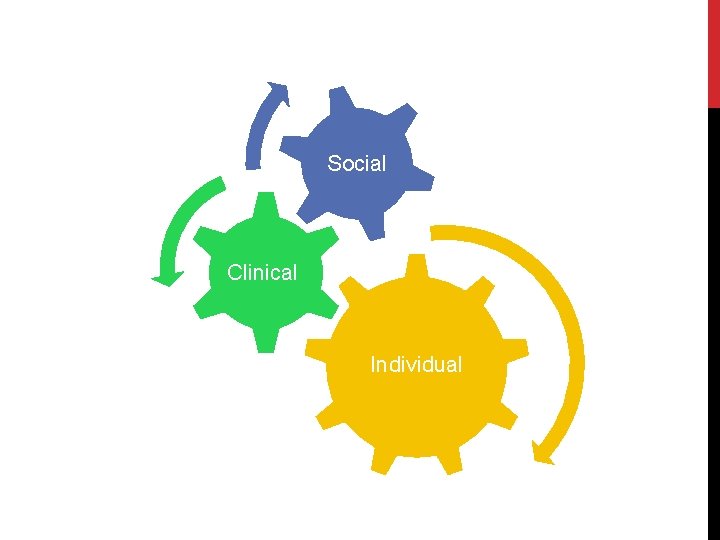
Social Clinical Individual
“In your life you only get to do so many things and right now we’ve chosen to do this, so let’s make it great” - Steve Jobs
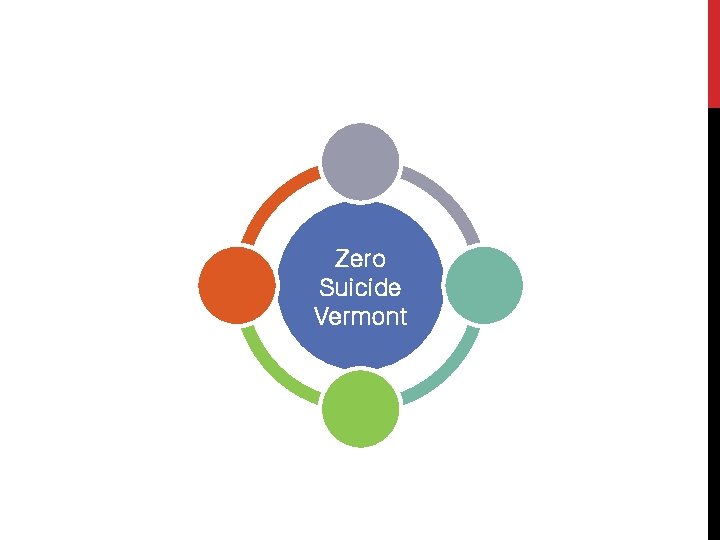
Zero Suicide Vermont