
Implementing the New Title I Part A Schoolwide














- Slides: 45
Implementing the New Title I, Part A, Schoolwide Guidance Title I University Lynn Sodat, Title I Coordinator Office of Program Administration and Accountability Virginia Department of Education December 1 and 3, 2015 1
Session Agenda • Overview of Schoolwide Programs • Targeted Assistance v. Schoolwide • Developing a Schoolwide Plan • Comprehensive Needs Assessment (CNA) • Schoolwide Plan Development • Annual Review and Revision of Plan • New USED Guidance on Schoolwide Programs • Highlights of USED Presentation • Clarification on Consolidation of Funds • Next Steps for Implementation • Developing or Revising Schoolwide Plans for 2016 -2017 • Future Opportunities for Training 2
Overview of Schoolwide Programs 3
Two Types of Title I Programs Targeted Assistance Programs—provide supplemental education services to eligible students with the greatest need. Schoolwide Programs—comprehensive programs designed to upgrade the entire educational program in order to improve achievement of the lowestachieving students. Schoolwide schools must have a poverty percentage of 40% or more. 4
Two Types of Title I Programs Targeted Assistance Programs Schoolwide Programs • Services must be targeted to • All students may participate specific at-risk students in Title I-funded initiatives • Only eligible students may • Maximizes flexibility in using participate in Title I-funded federal funds services • Serves as a vehicle for whole • Use of funds must be school reform with focus on consistent with specific Title I improving achievement of rules lowest-achieving students • Addresses student needs through a schoolwide plan based on a comprehensive needs assessment 5
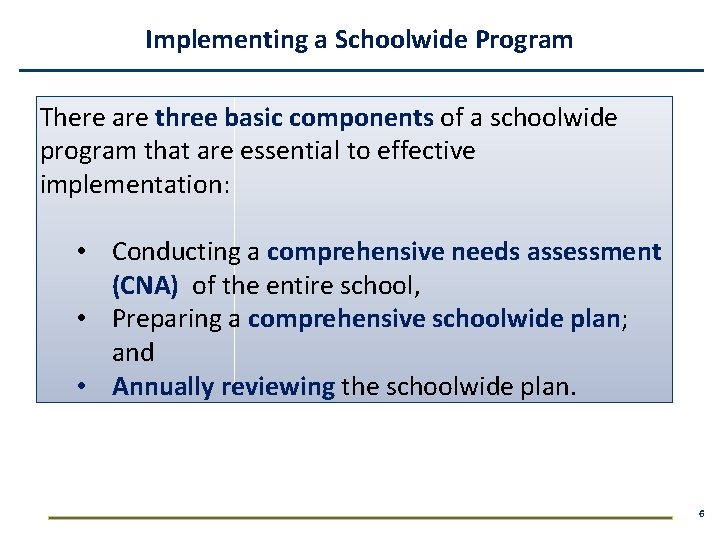
Implementing a Schoolwide Program There are three basic components of a schoolwide program that are essential to effective implementation: • Conducting a comprehensive needs assessment (CNA) of the entire school, • Preparing a comprehensive schoolwide plan; and • Annually reviewing the schoolwide plan. 6
Schoolwide Program Planning Cycle CNA Monitoring and Evaluation SW Plan Design Implementation 7
What is a Needs Assessment? Title I regulations § 200. 26 state: Core elements of a schoolwide program. (a) Comprehensive needs assessment. (1) A school operating a schoolwide program must conduct a comprehensive needs assessment of the entire school that—(i) Is based on academic achievement information about all students in the school, including all groups under § 200. 13(b)(7) and migratory children as defined in section 1309(2) of the ESEA, relative to the State’s academic standards under § 200. 1 to—(A) Help the school understand the subjects and skills for which teaching and learning need to be improved; and (B) Identify the specific academic needs of students and groups of students who are not yet achieving the State’s academic standards; and (ii) Assesses the needs of the school relative to each of the components of the schoolwide program under § 200. 28. (2) The comprehensive needs assessment must be developed with the participation of individuals who will carry out the schoolwide program plan. (3) The school must document how it conducted the needs assessment, the results it obtained, and the conclusions it drew from those results. 8
What is a Needs Assessment? A needs assessment is the first step in developing a schoolwide plan. It is a process of looking at data and information about the school to develop a clear picture and understanding of what is and has been occurring at the school. A needs assessment is a process to help school teams learn about the areas in which they succeed (strengths) and the areas in need of improvement (challenges). A needs assessment includes more than just scores - it provides the opportunity to hypothesize about the causes of student achievement. 9
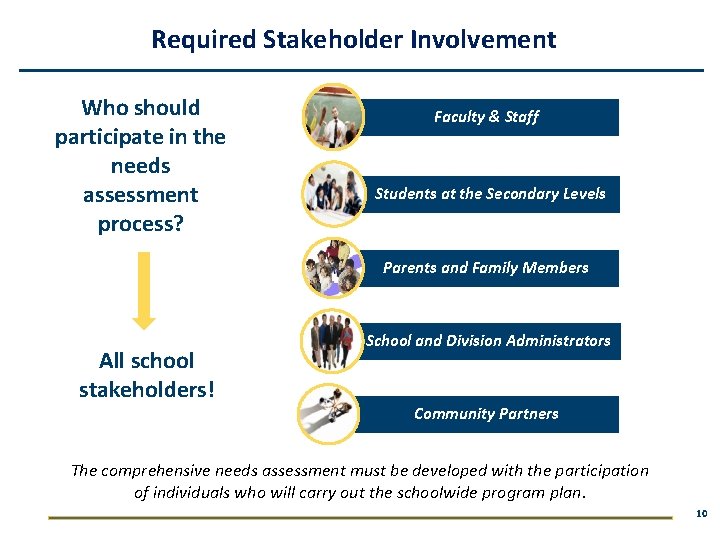
Required Stakeholder Involvement Who should participate in the needs assessment process? Faculty & Staff Students at the Secondary Levels Parents and Family Members All school stakeholders! School and Division Administrators Community Partners The comprehensive needs assessment must be developed with the participation of individuals who will carry out the schoolwide program plan. 10
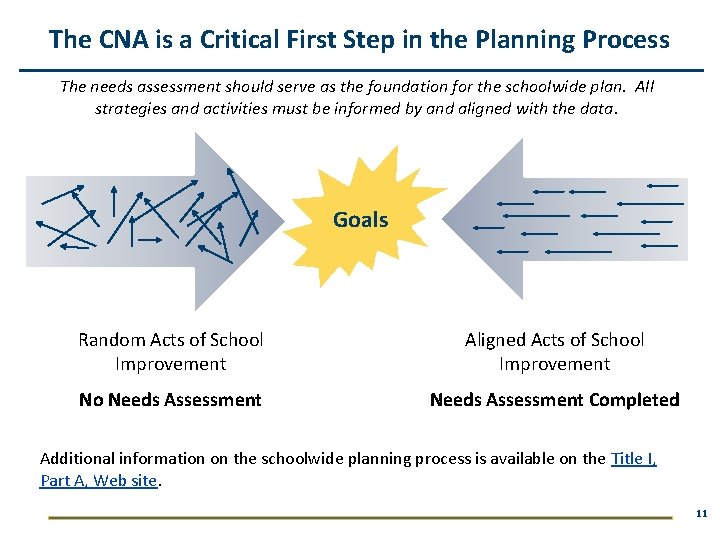
The CNA is a Critical First Step in the Planning Process The needs assessment should serve as the foundation for the schoolwide plan. All strategies and activities must be informed by and aligned with the data. Goals Random Acts of School Improvement Aligned Acts of School Improvement No Needs Assessment Completed Additional information on the schoolwide planning process is available on the Title I, Part A, Web site. 11
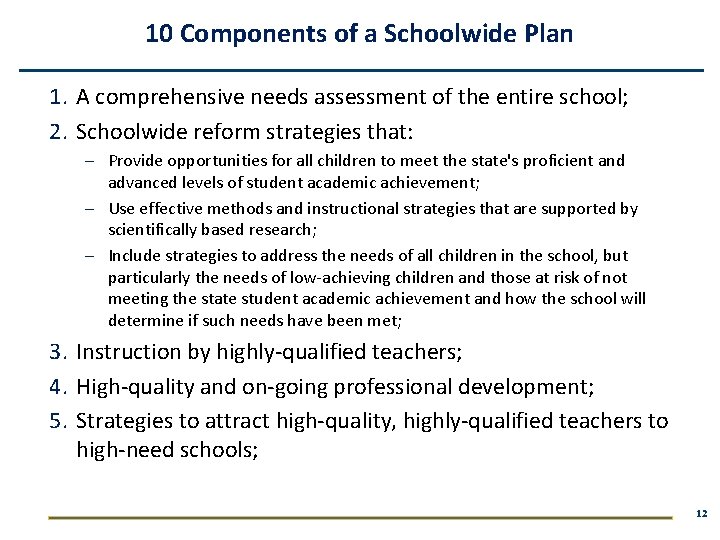
10 Components of a Schoolwide Plan 1. A comprehensive needs assessment of the entire school; 2. Schoolwide reform strategies that: – Provide opportunities for all children to meet the state's proficient and advanced levels of student academic achievement; – Use effective methods and instructional strategies that are supported by scientifically based research; – Include strategies to address the needs of all children in the school, but particularly the needs of low-achieving children and those at risk of not meeting the state student academic achievement and how the school will determine if such needs have been met; 3. Instruction by highly-qualified teachers; 4. High-quality and on-going professional development; 5. Strategies to attract high-quality, highly-qualified teachers to high-need schools; 12
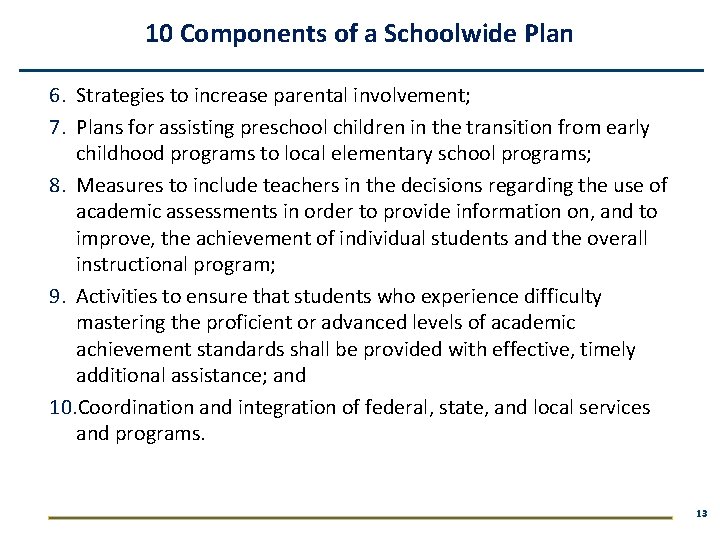
10 Components of a Schoolwide Plan 6. Strategies to increase parental involvement; 7. Plans for assisting preschool children in the transition from early childhood programs to local elementary school programs; 8. Measures to include teachers in the decisions regarding the use of academic assessments in order to provide information on, and to improve, the achievement of individual students and the overall instructional program; 9. Activities to ensure that students who experience difficulty mastering the proficient or advanced levels of academic achievement standards shall be provided with effective, timely additional assistance; and 10. Coordination and integration of federal, state, and local services and programs. 13
Developing the Schoolwide Plan The schoolwide plan describes • Targeted research-based strategies; • Action steps; • Responsibility; and • Monitoring and frequency so that anyone in the school is able to understand the adult practices which will be regularly measured and monitored to ensure effective implementation. CNA: What is our current state? A B Schoolwide Plan: • Where should we be in 2 -3 years? • How will we get there? • How will we know that we’ve met our goals? 14
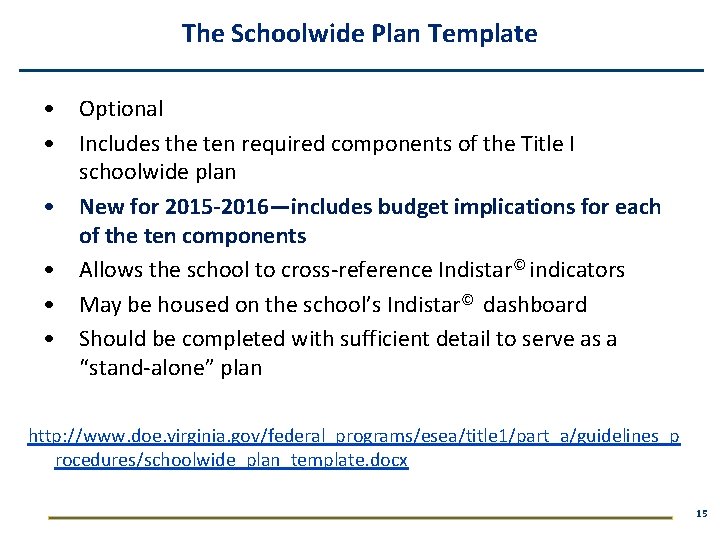
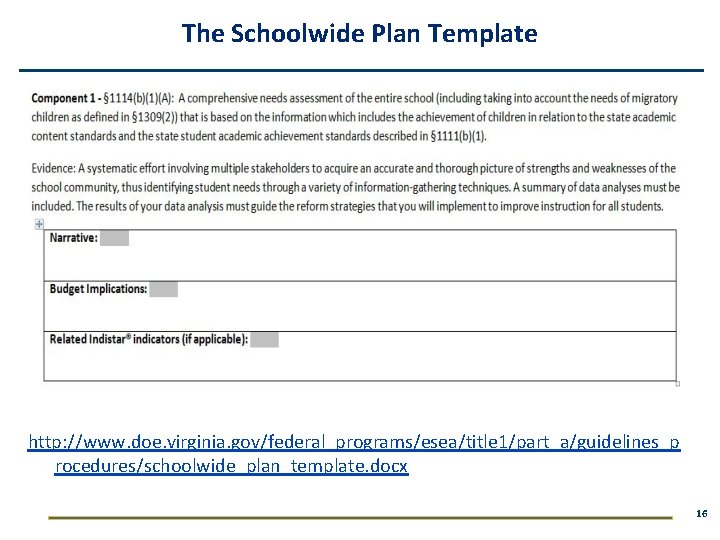
The Schoolwide Plan Template • Optional • Includes the ten required components of the Title I schoolwide plan • New for 2015 -2016—includes budget implications for each of the ten components • Allows the school to cross-reference Indistar© indicators • May be housed on the school’s Indistar© dashboard • Should be completed with sufficient detail to serve as a “stand-alone” plan http: //www. doe. virginia. gov/federal_programs/esea/title 1/part_a/guidelines_p rocedures/schoolwide_plan_template. docx 15
The Schoolwide Plan Template http: //www. doe. virginia. gov/federal_programs/esea/title 1/part_a/guidelines_p rocedures/schoolwide_plan_template. docx 16
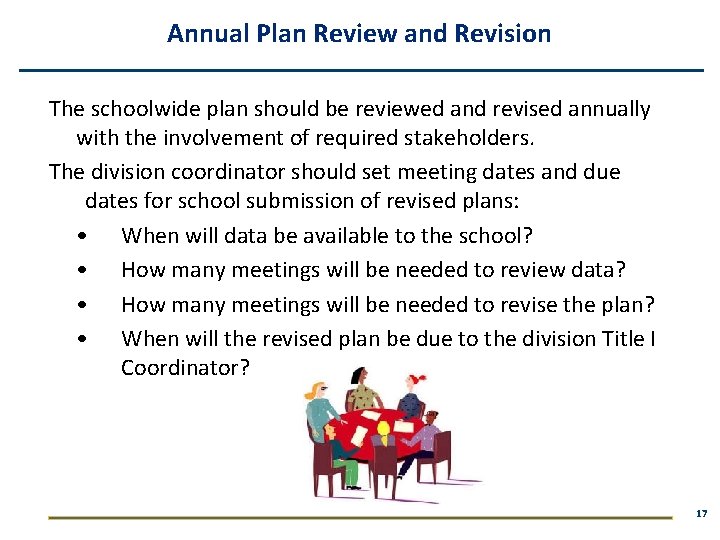
Annual Plan Review and Revision The schoolwide plan should be reviewed and revised annually with the involvement of required stakeholders. The division coordinator should set meeting dates and due dates for school submission of revised plans: • When will data be available to the school? • How many meetings will be needed to review data? • How many meetings will be needed to revise the plan? • When will the revised plan be due to the division Title I Coordinator? 17
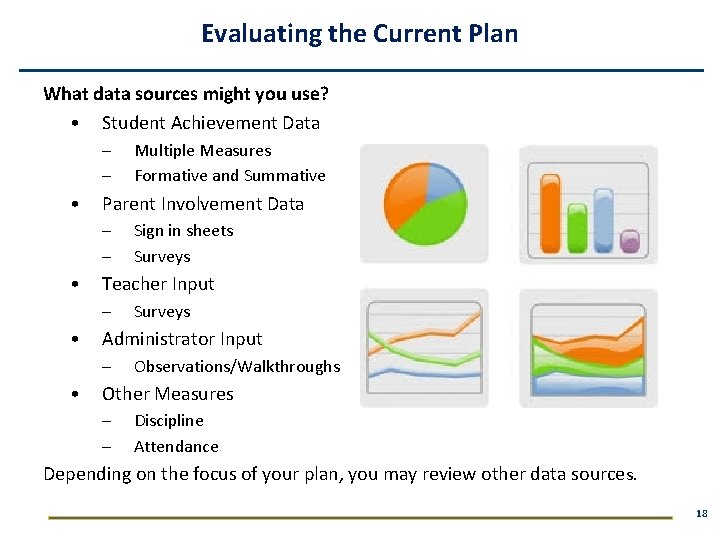
Evaluating the Current Plan What data sources might you use? • Student Achievement Data – – • Parent Involvement Data – – • Surveys Administrator Input – • Sign in sheets Surveys Teacher Input – • Multiple Measures Formative and Summative Observations/Walkthroughs Other Measures – – Discipline Attendance Depending on the focus of your plan, you may review other data sources. 18
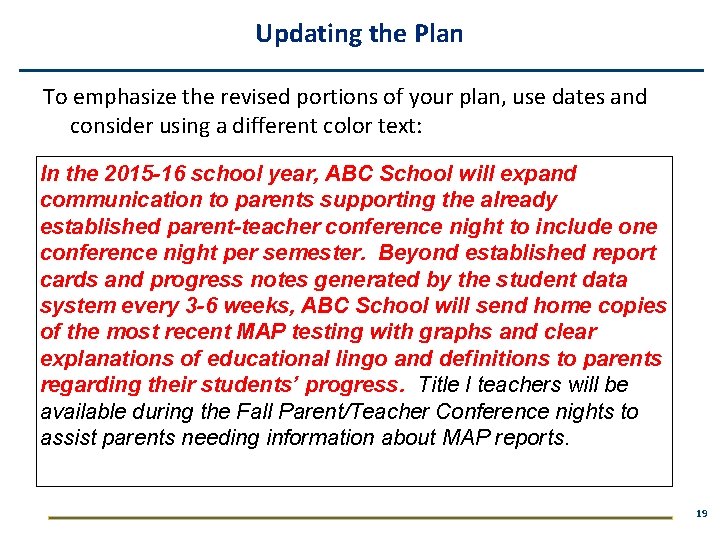
Updating the Plan To emphasize the revised portions of your plan, use dates and consider using a different color text: In the 2015 -16 school year, ABC School will expand communication to parents supporting the already established parent-teacher conference night to include one conference night per semester. Beyond established report cards and progress notes generated by the student data system every 3 -6 weeks, ABC School will send home copies of the most recent MAP testing with graphs and clear explanations of educational lingo and definitions to parents regarding their students’ progress. Title I teachers will be available during the Fall Parent/Teacher Conference nights to assist parents needing information about MAP reports. 19
New USED Schoolwide Guidance 20
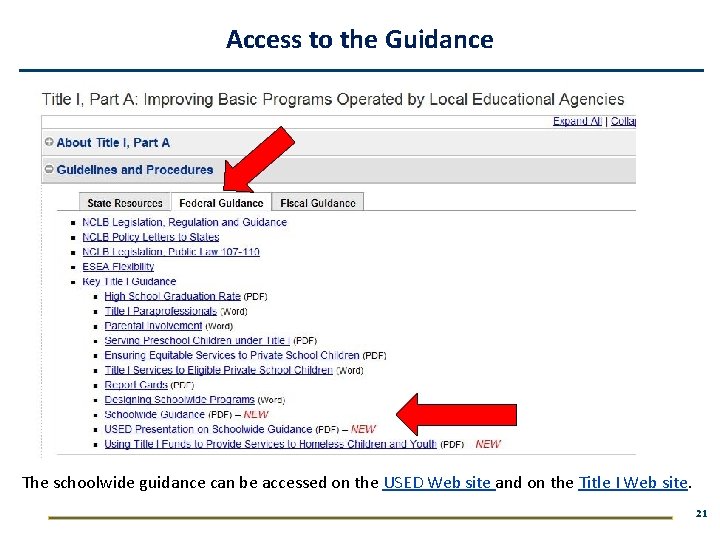
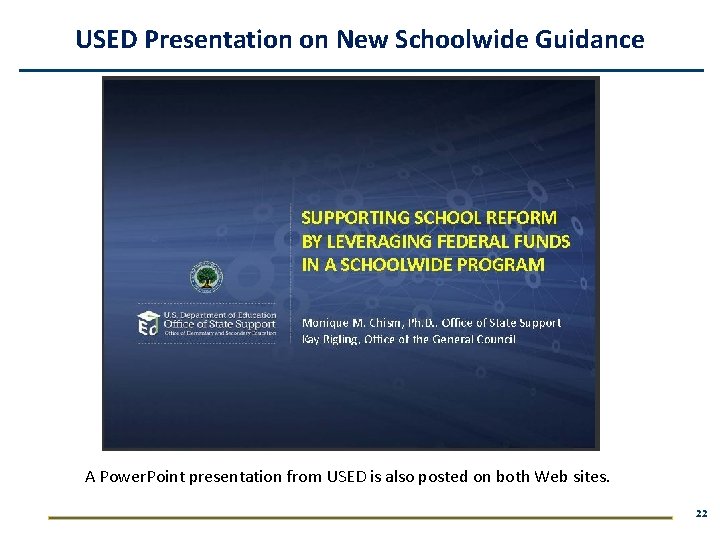
Access to the Guidance The schoolwide guidance can be accessed on the USED Web site and on the Title I Web site. 21
USED Presentation on New Schoolwide Guidance A Power. Point presentation from USED is also posted on both Web sites. 22
Highlights from USED Presentation 23
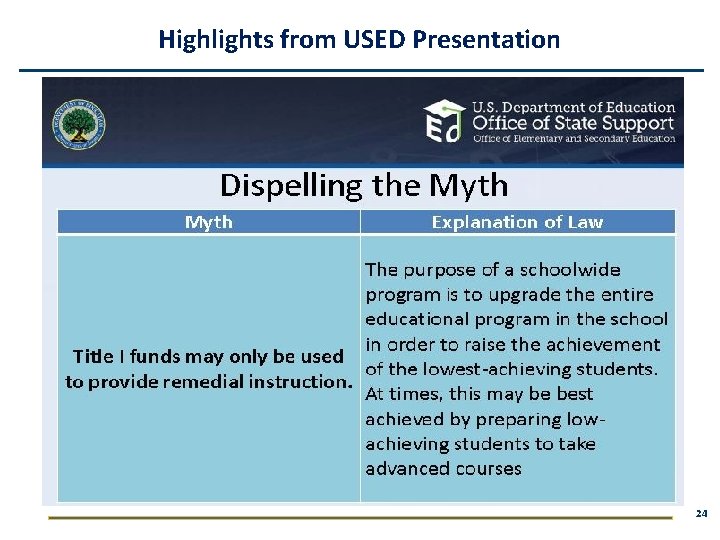
Highlights from USED Presentation 24
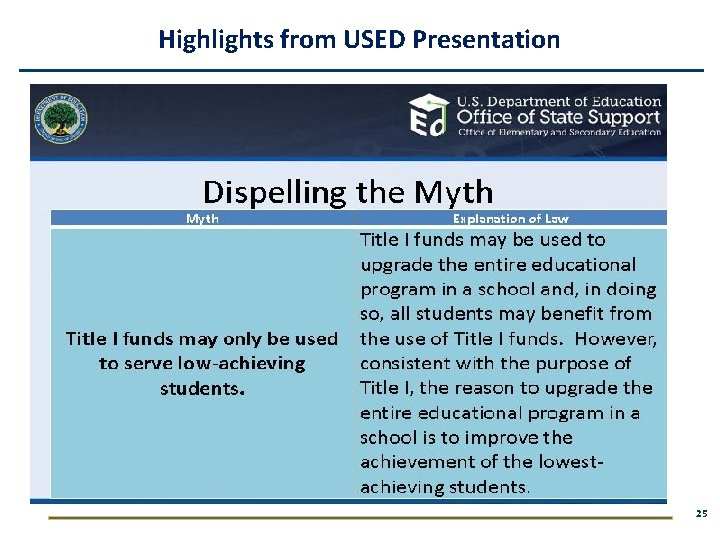
Highlights from USED Presentation 25
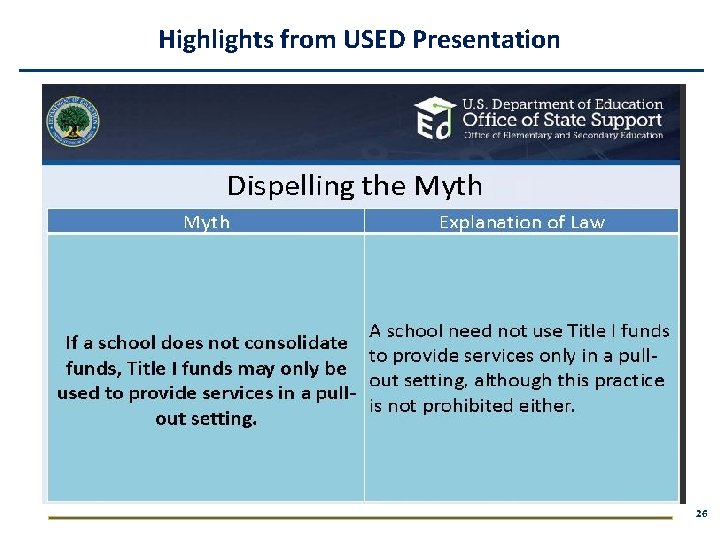
Highlights from USED Presentation 26
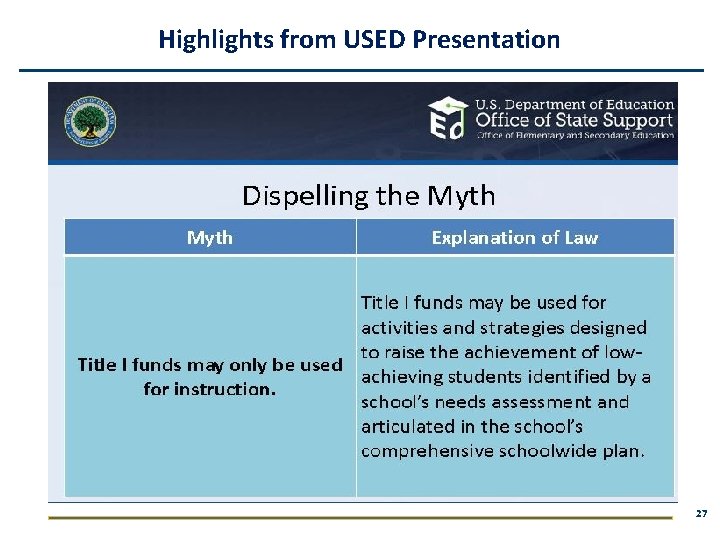
Highlights from USED Presentation 27
Highlights from USED Presentation 28
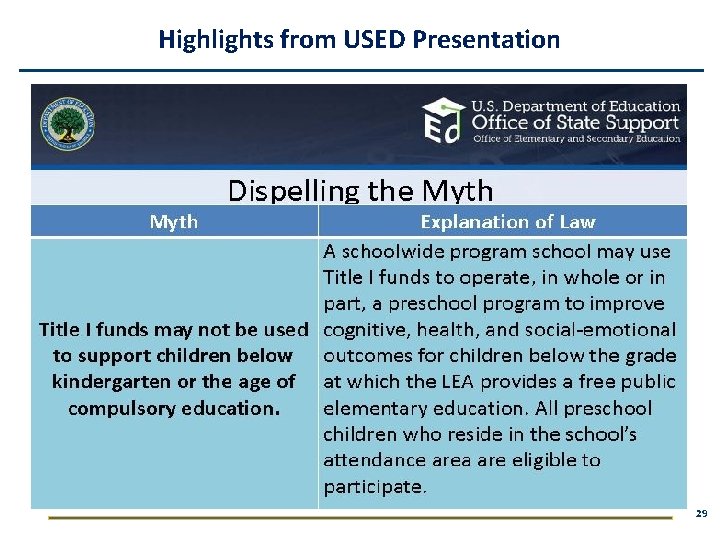
Highlights from USED Presentation 29
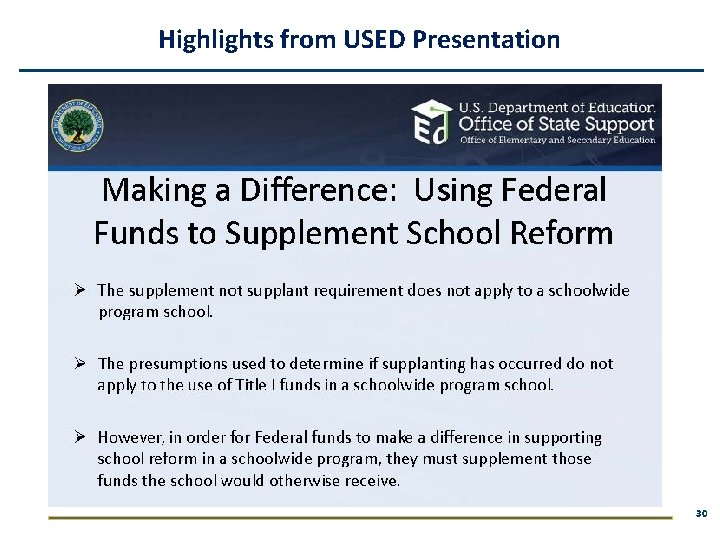
Highlights from USED Presentation 30
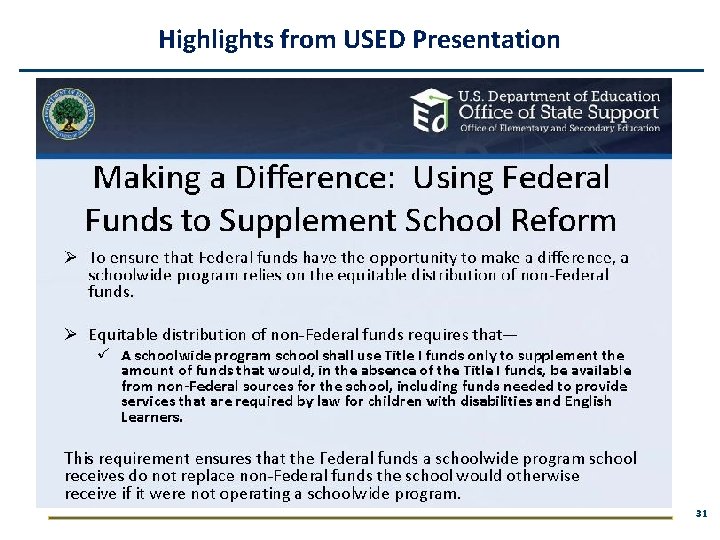
Highlights from USED Presentation 31
Highlights from USED Presentation 32
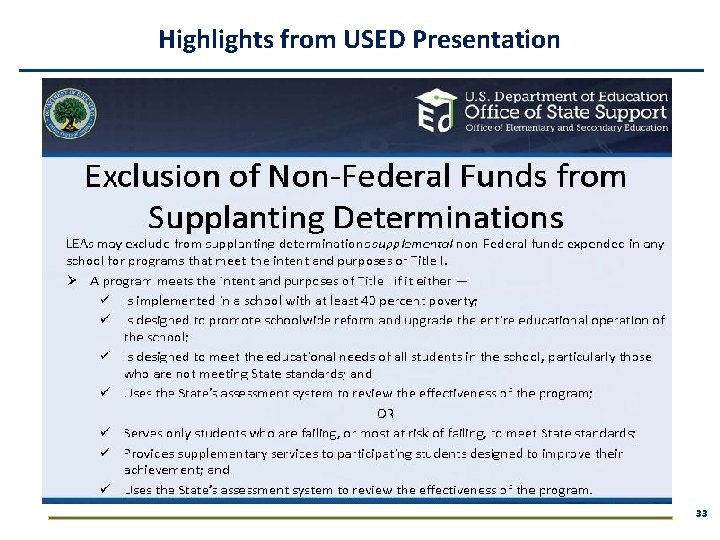
Highlights from USED Presentation 33
Highlights from USED Presentation 34
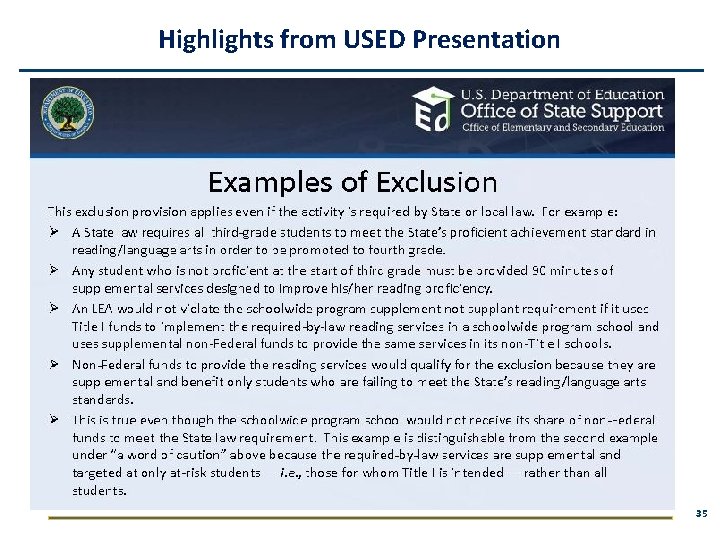
Highlights from USED Presentation 35
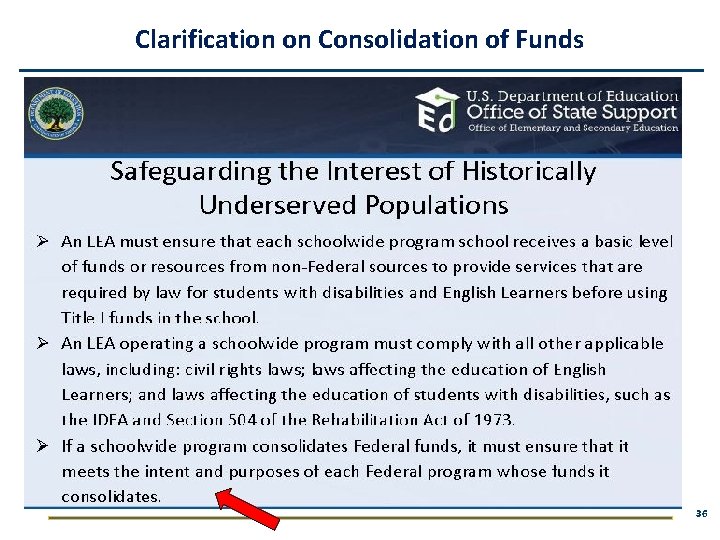
Clarification on Consolidation of Funds 36
Clarification on Consolidation of Funds 37
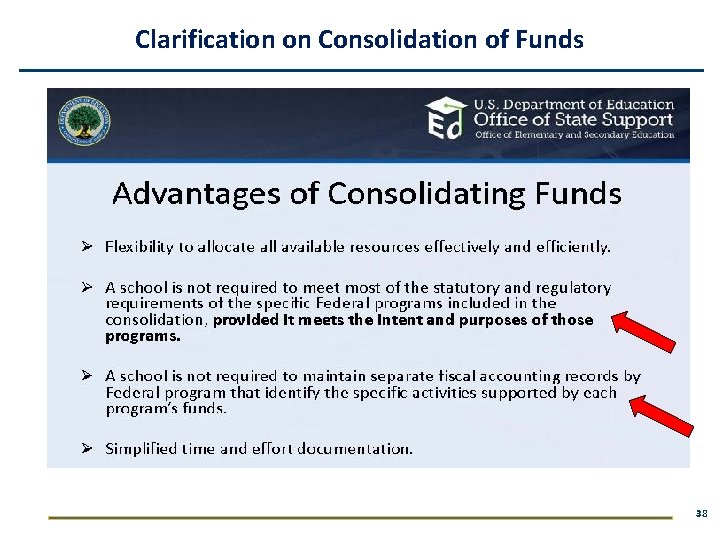
Clarification on Consolidation of Funds 38
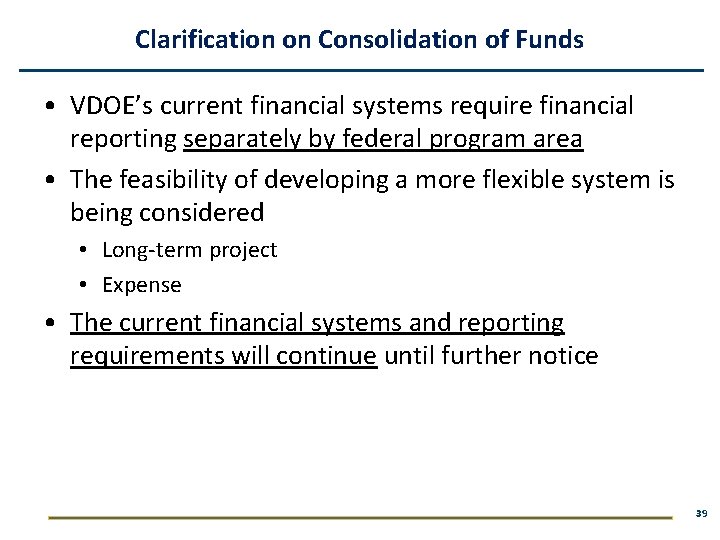
Clarification on Consolidation of Funds • VDOE’s current financial systems require financial reporting separately by federal program area • The feasibility of developing a more flexible system is being considered • Long-term project • Expense • The current financial systems and reporting requirements will continue until further notice 39
Next Steps for Implementation 40
Developing New Schoolwide Plans for 2016 -2017 Targeted assistance schools engaged in yearlong planning to become schoolwide schools: • Complete CNA • Develop Schoolwide Plan using VDOE template or a comparable structure to address all ten components • Address budget implications in the plan • Submit plan to VDOE Title I specialist for review (plans are requested by May 1) NOTE: The federal funding application for divisions with new schoolwide schools cannot be reviewed until the VDOE Title I specialist has the opportunity to review the new schoolwide plans. 41
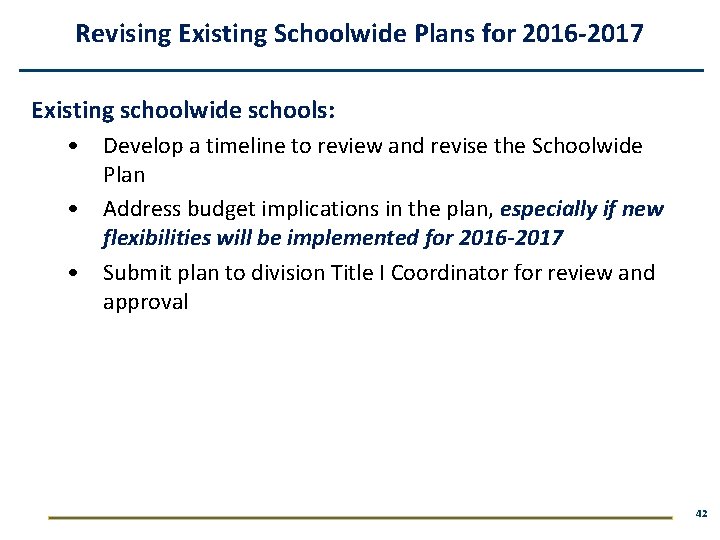
Revising Existing Schoolwide Plans for 2016 -2017 Existing schoolwide schools: • Develop a timeline to review and revise the Schoolwide Plan • Address budget implications in the plan, especially if new flexibilities will be implemented for 2016 -2017 • Submit plan to division Title I Coordinator for review and approval 42
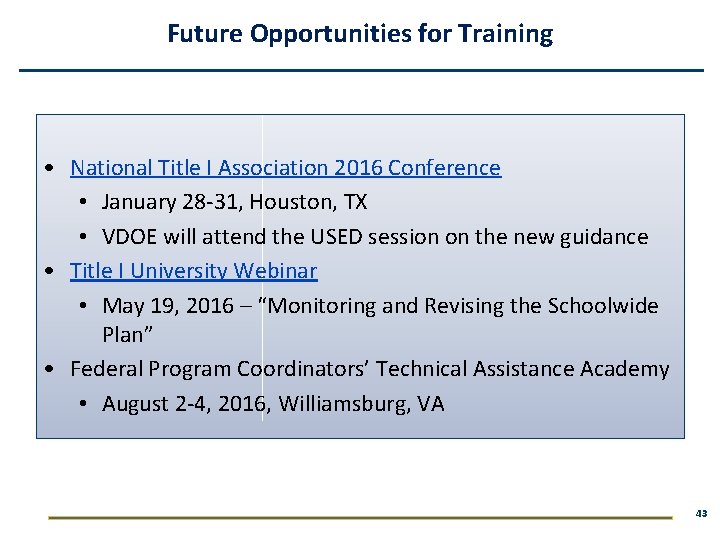
Future Opportunities for Training • National Title I Association 2016 Conference • January 28 -31, Houston, TX • VDOE will attend the USED session on the new guidance • Title I University Webinar • May 19, 2016 – “Monitoring and Revising the Schoolwide Plan” • Federal Program Coordinators’ Technical Assistance Academy • August 2 -4, 2016, Williamsburg, VA 43
Questions 44
Contact Information Dr. Lynn Sodat Title I Coordinator Lynn. Sodat@doe. virginia. gov 804 -371 -2934 Title I, Part A, Web Page http: //www. doe. virginia. gov/federal_programs/esea/title 1/part_a/index. shtml 45