
Implementing the EPWP in the Infrastructure Sector 2
- Slides: 47
Implementing the EPWP in the Infrastructure Sector 2 March 2005 1
INTRODUCTION TO THE EPWP 2
BACKGROUND n President’s State of the Nation Address February 2003 n Growth and Development Summit June 2003 n Cabinet approved conceptual framework November 2003 n National Launch in May by President n KZN Provincial Launch in August by Deputy President 3
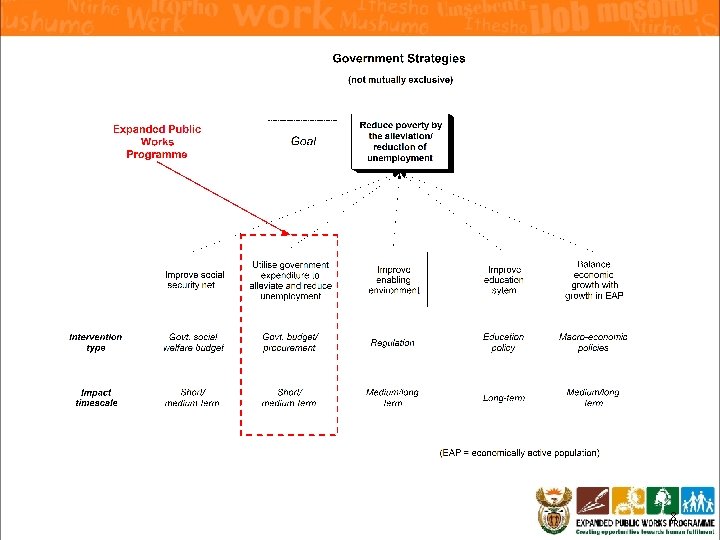
DEFINITION Nation-wide programme which will draw significant numbers of the unemployed into productive work, so that workers gain skills while they work, and increase their capacity to earn an income 4
OBJECTIVE To utilise public sector budgets to alleviate unemployment 5
This will be achieved by: q Creating productive employment opportunities n Increasing the labour intensity of government-funded infrastructure projects n Creating work opportunities in public environmental programmes (eg Working for Water) n Creating work opportunities in public social programmes (eg community health workers) n Utilising general government expenditure on goods and services to provide the work experience component of small enterprise learnership / incubation programmes 6
Enhancing the ability of workers to earn an income, either through the labour market or through entrepreneurial activity n Provide unemployed people with work experience n Provide education and skills development programmes to the workers 7
8
TARGETS, SCOPE, AND INSTTUTIONAL ARRANGEMENTS 9
TARGETS n Target the unemployed and marginalised n To provide one million employment opportunities with training to unemployed people, within the first five years of the programme 10
SCOPE n Covers all spheres of government and SOE’s n Each public body must formulate plans for utilising its budget to draw significant numbers of the unemployed into productive work, and to provide them with training 11
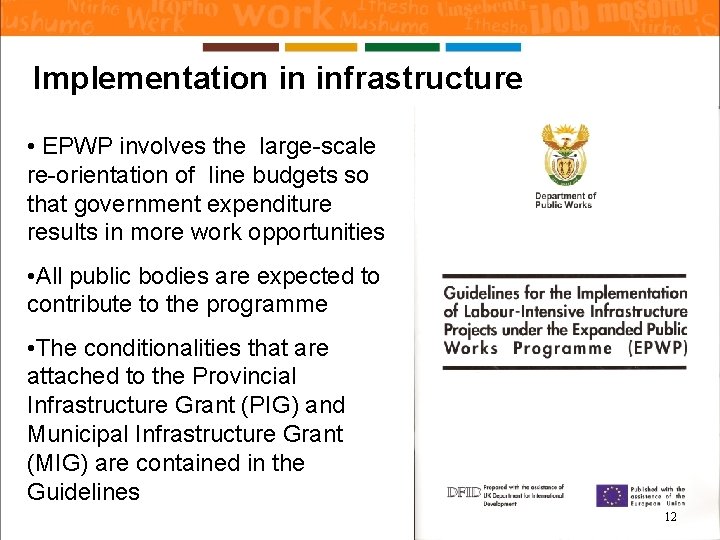
Implementation in infrastructure • EPWP involves the large-scale re-orientation of line budgets so that government expenditure results in more work opportunities • All public bodies are expected to contribute to the programme • The conditionalities that are attached to the Provincial Infrastructure Grant (PIG) and Municipal Infrastructure Grant (MIG) are contained in the Guidelines 12
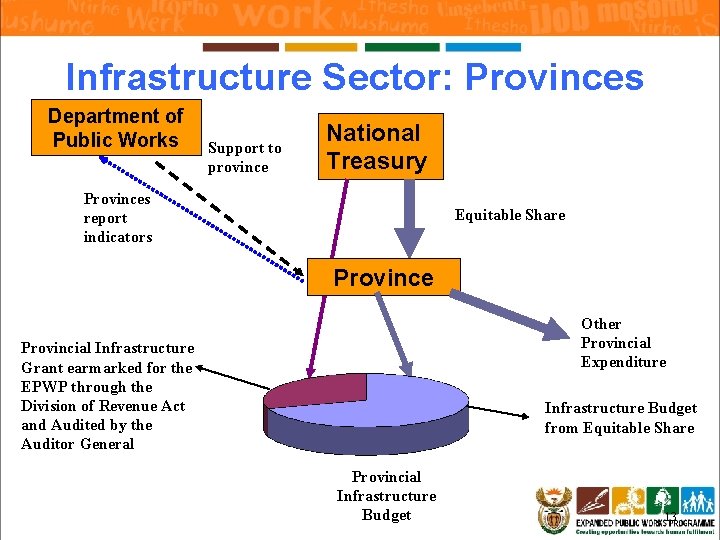
Infrastructure Sector: Provinces Department of Public Works Support to province National Treasury Provinces report indicators Equitable Share Province Other Provincial Expenditure Provincial Infrastructure Grant earmarked for the EPWP through the Division of Revenue Act and Audited by the Auditor General Infrastructure Budget from Equitable Share Provincial Infrastructure Budget 13
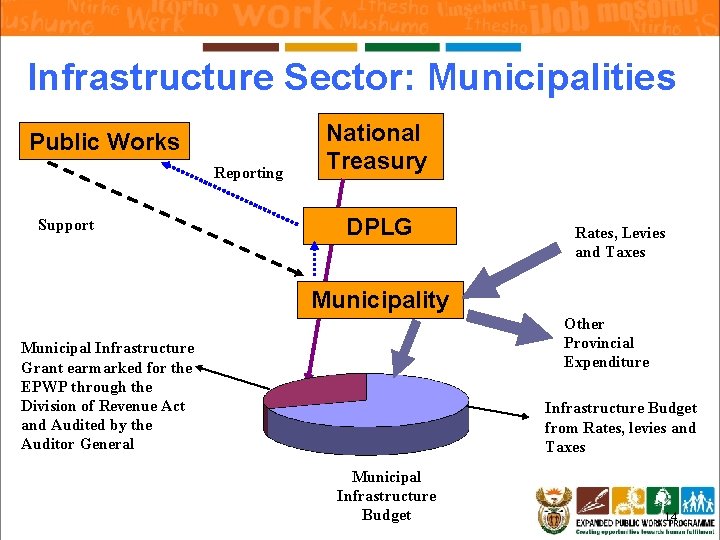
Infrastructure Sector: Municipalities Public Works Reporting Support National Treasury DPLG Rates, Levies and Taxes Municipality Other Provincial Expenditure Municipal Infrastructure Grant earmarked for the EPWP through the Division of Revenue Act and Audited by the Auditor General Infrastructure Budget from Rates, levies and Taxes Municipal Infrastructure Budget 14
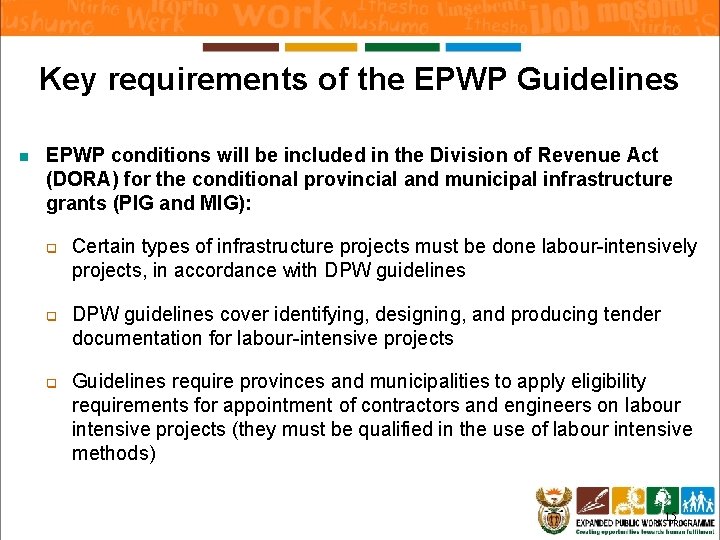
Key requirements of the EPWP Guidelines n EPWP conditions will be included in the Division of Revenue Act (DORA) for the conditional provincial and municipal infrastructure grants (PIG and MIG): q q q Certain types of infrastructure projects must be done labour-intensively projects, in accordance with DPW guidelines cover identifying, designing, and producing tender documentation for labour-intensive projects Guidelines require provinces and municipalities to apply eligibility requirements for appointment of contractors and engineers on labour intensive projects (they must be qualified in the use of labour intensive methods) 15
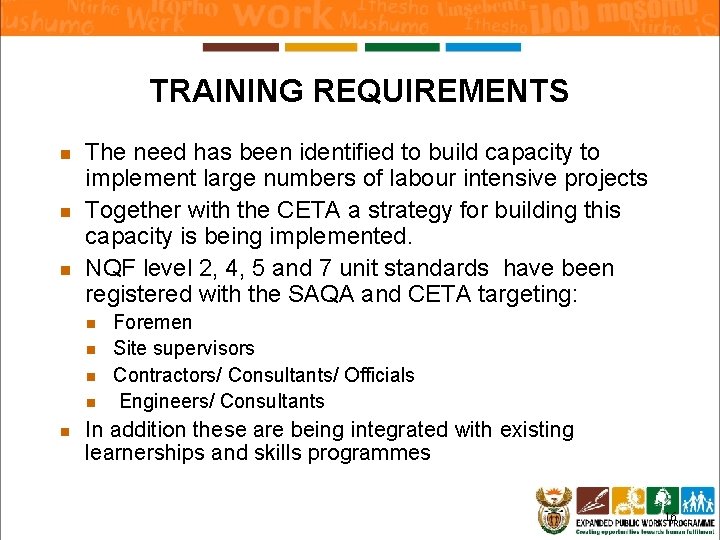
TRAINING REQUIREMENTS n n n The need has been identified to build capacity to implement large numbers of labour intensive projects Together with the CETA a strategy for building this capacity is being implemented. NQF level 2, 4, 5 and 7 unit standards have been registered with the SAQA and CETA targeting: n n n Foremen Site supervisors Contractors/ Consultants/ Officials Engineers/ Consultants In addition these are being integrated with existing learnerships and skills programmes 16
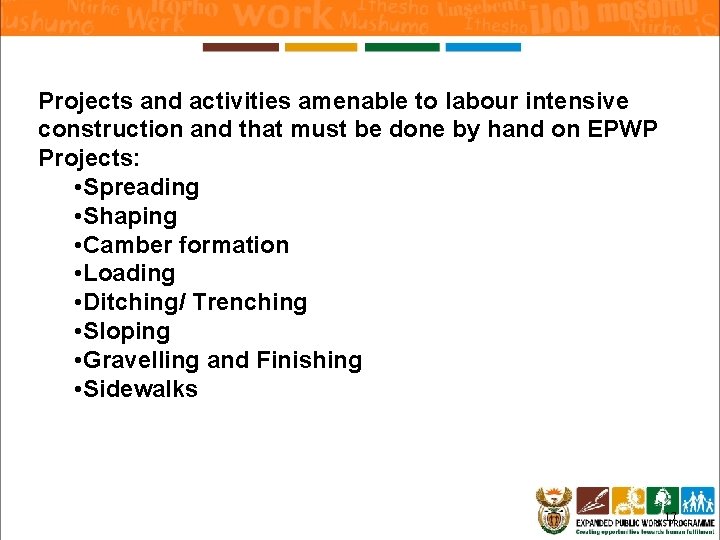
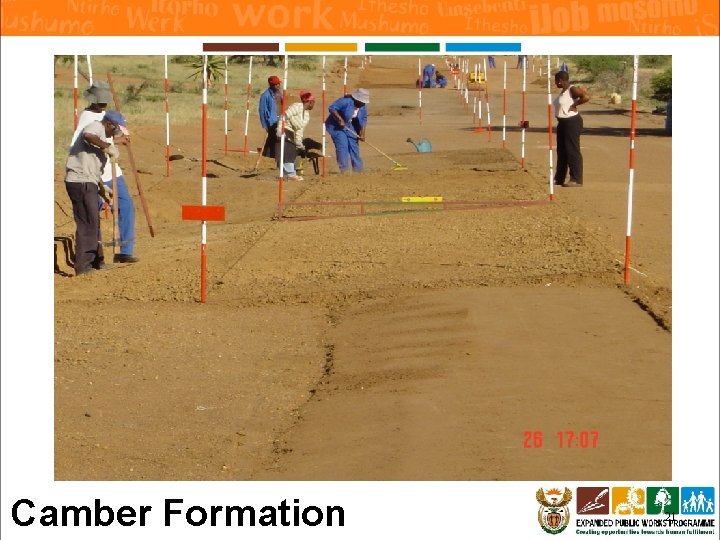
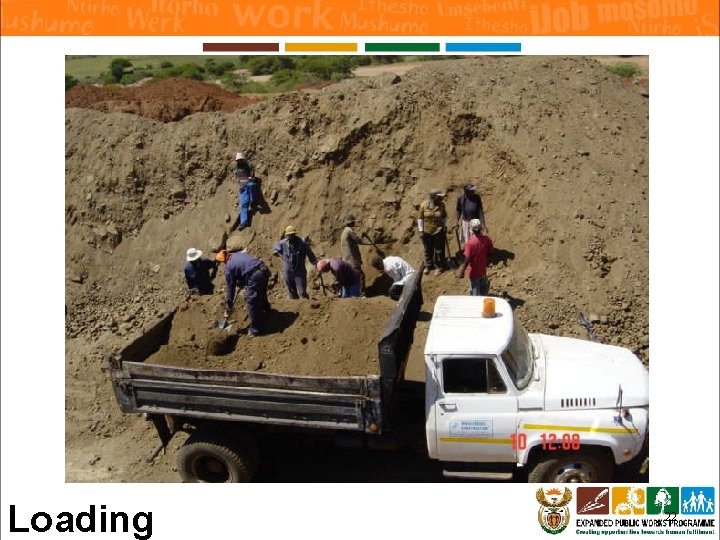
Projects and activities amenable to labour intensive construction and that must be done by hand on EPWP Projects: • Spreading • Shaping • Camber formation • Loading • Ditching/ Trenching • Sloping • Gravelling and Finishing • Sidewalks 17
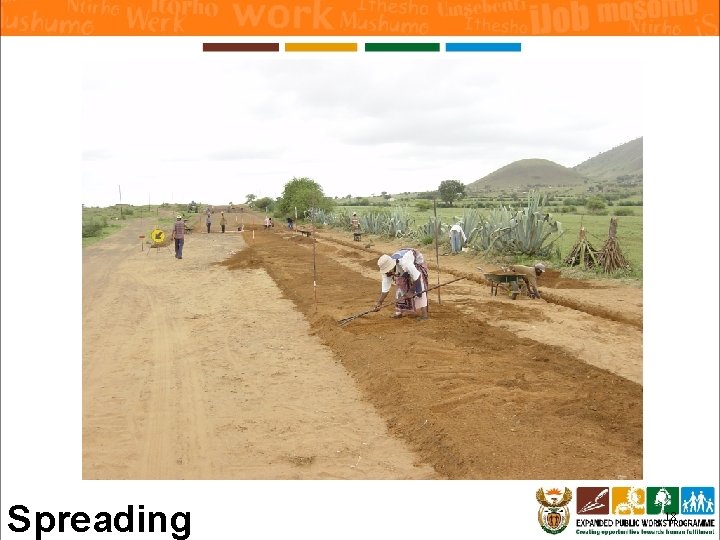
Spreading 18
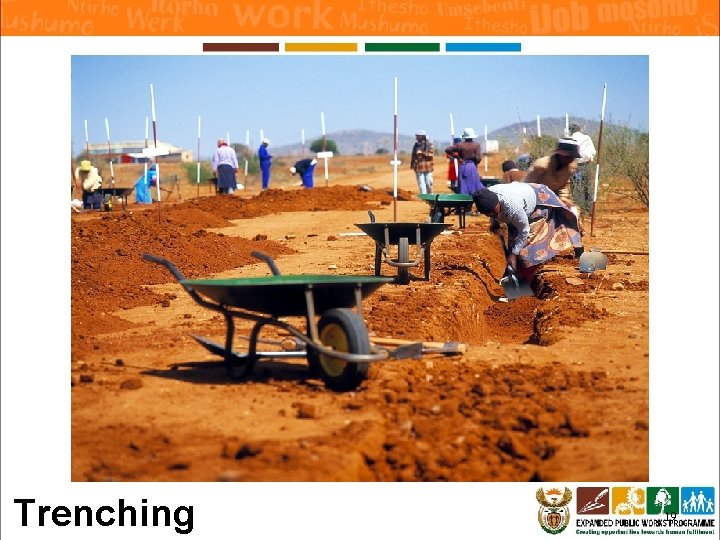
Trenching 19
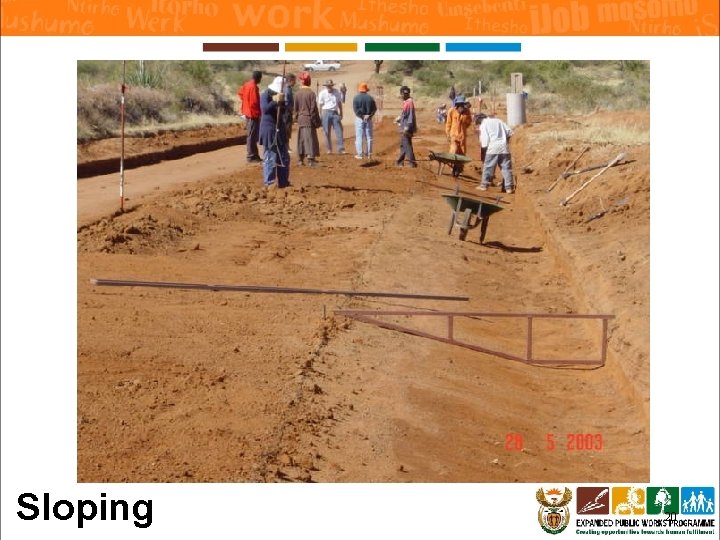
Sloping 20
Camber Formation 21
Loading 22
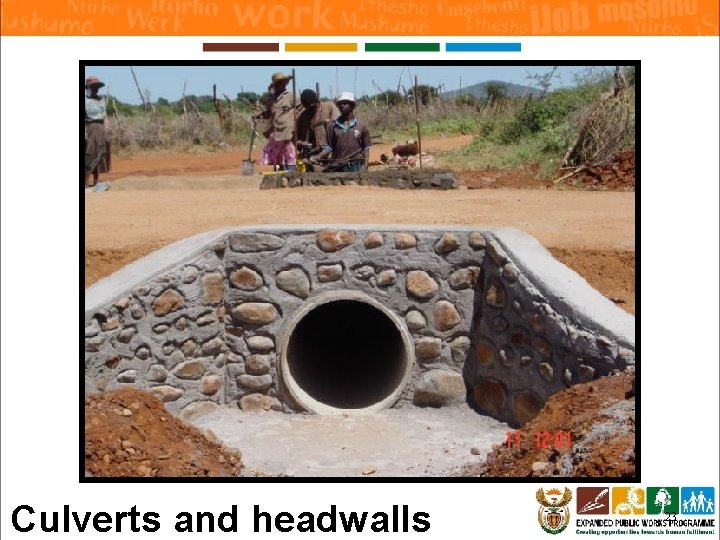
Culverts and headwalls 23
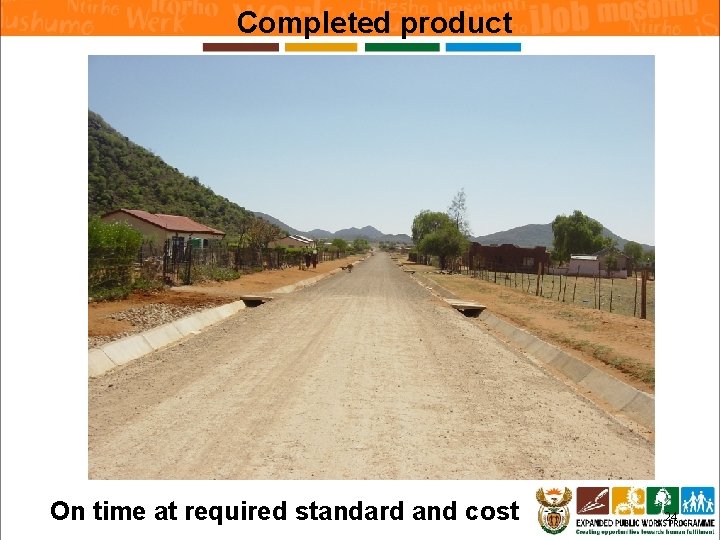
Completed product On time at required standard and cost 24
Implications of the EPWP on the execution of projects n n DORA conditions are aimed at creating a minimum amount of labour-intensive construction. Government bodies are encouraged to do more While it is recognised that most provinces and municipalities do some labour intensive construction projects, the targets of the EPWP will only be met if the use of these methods is increased significantly. This means that it will need to go beyond the small common LI contracts and needs to move also executing larger projects labour-intensively This will mean that larger contractors will also be required to use labour-intensive methods 25
n Provinces and municipalities prioritise and decide on projects using their PIG and MIG funding, using normal allocation methods, such as Integrated Development Plans (IDPs) n National not involved in allocation of funds to projects – provinces and municipalities allocate in line with DORA conditions MIG is managed and disbursed through dplg, PIG through National Treasury n n DPW will provide support to provinces and municipalities to simplify implementation n CETA and DPW putting in place NQF unit standards, qualifications, and accredited training programmes for contractors and engineers for labour-intensive construction 26
Going beyond the minimum Appendices A & B of the Guidelines include references to documents and suggestions on the use of LIC on other higher standard infraustructure • Agrément South Africa • Construction Industry Development Board • Development Bank of Southern Africa • Southern African Bitumen and Tar Association • Standards South Africa • The School of Civil Engineering , University of the Witwatersrand 27
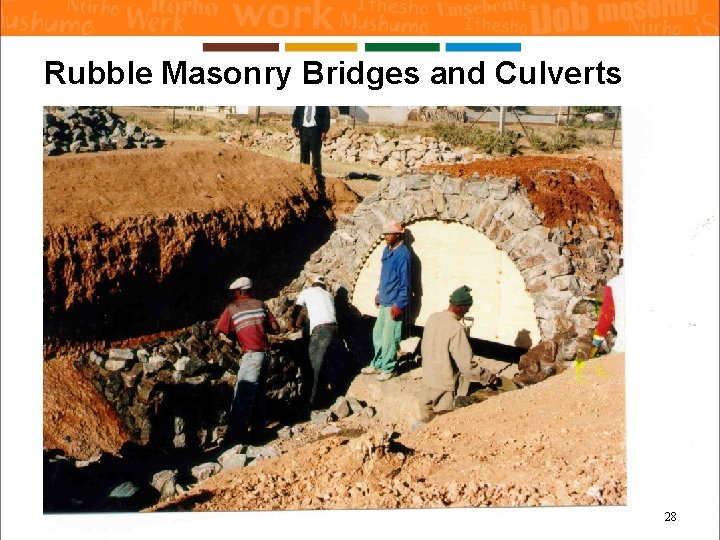
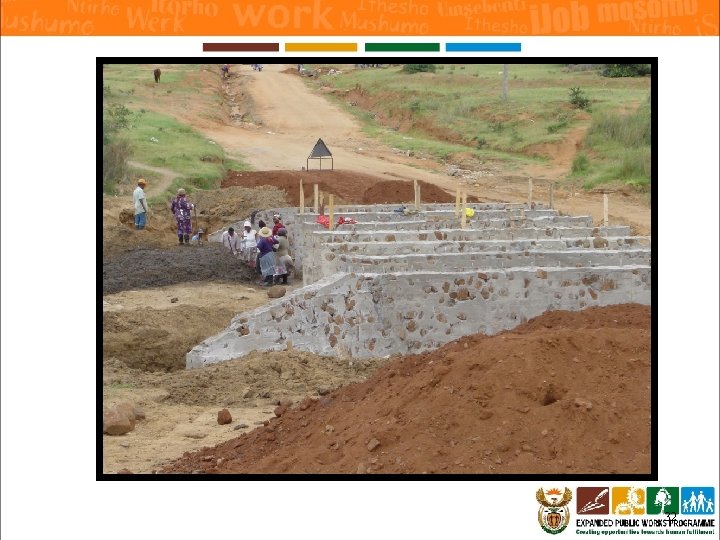
Rubble Masonry Bridges and Culverts 28
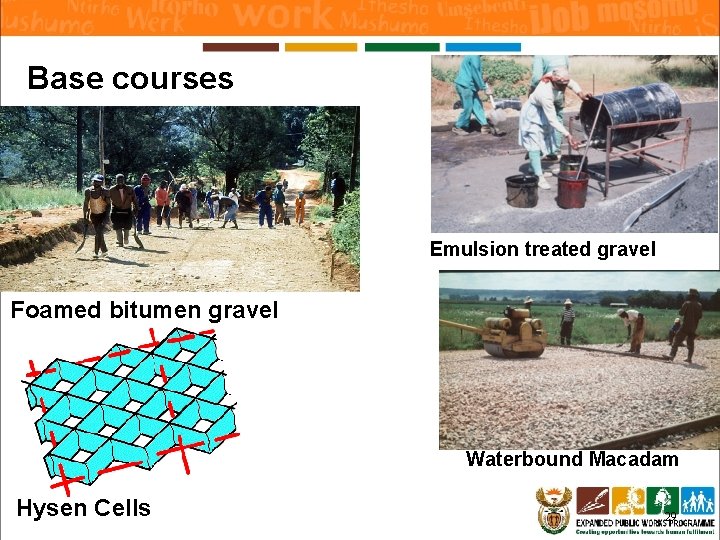
Base courses Emulsion treated gravel Foamed bitumen gravel Cast in-situ block paving Waterbound Macadam Hysen Cells 29
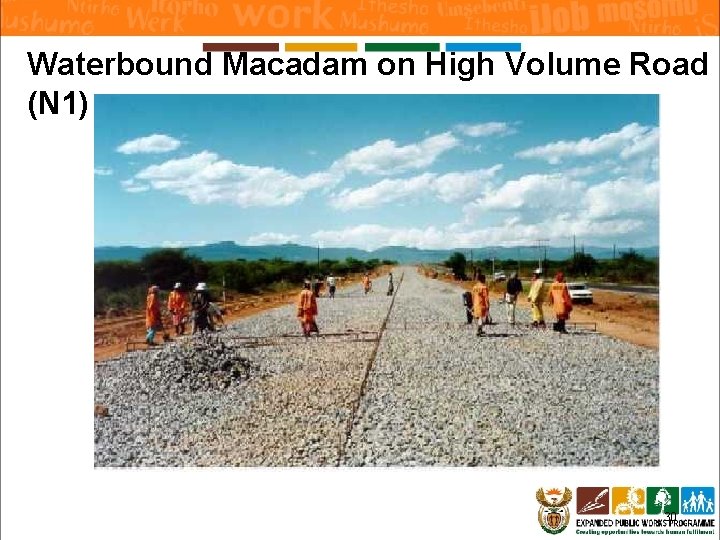
Waterbound Macadam on High Volume Road (N 1) 30
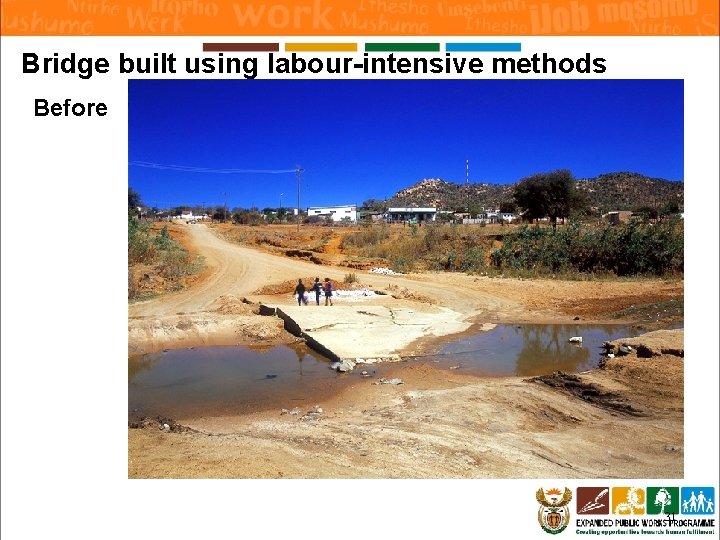
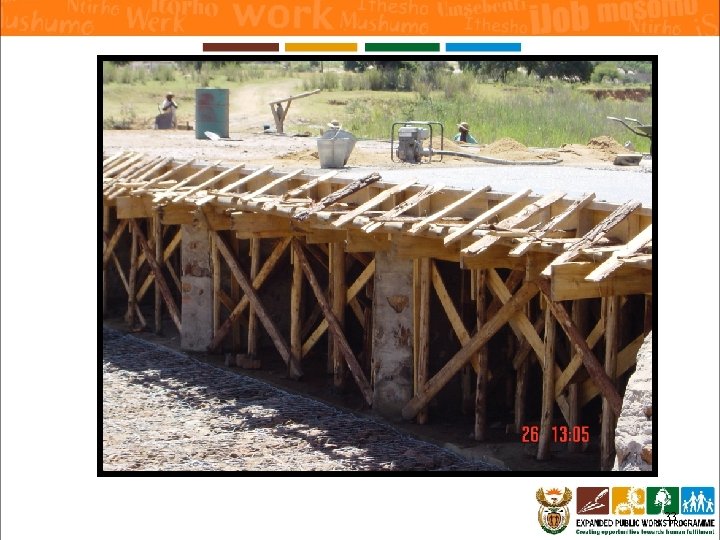
Bridge built using labour-intensive methods Before 31
32
33
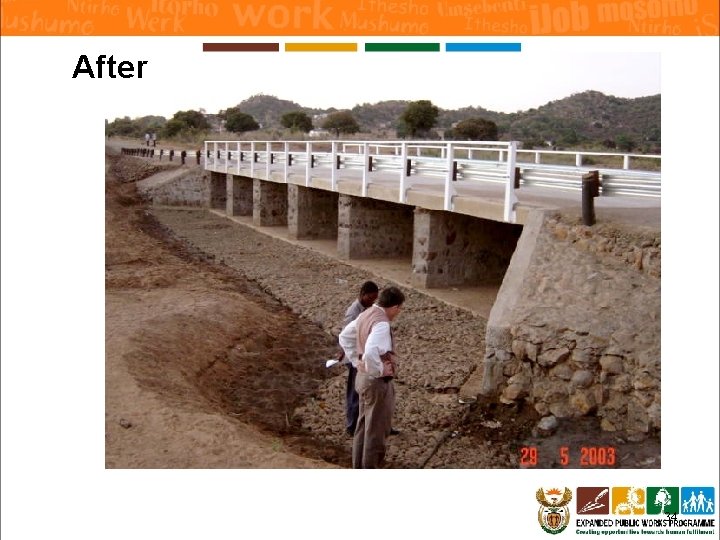
After 34
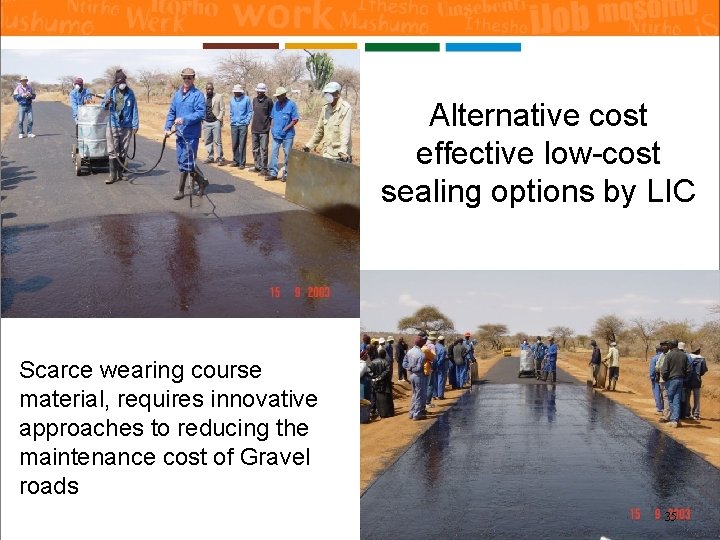
Alternative cost effective low-cost sealing options by LIC Scarce wearing course material, requires innovative approaches to reducing the maintenance cost of Gravel roads 35
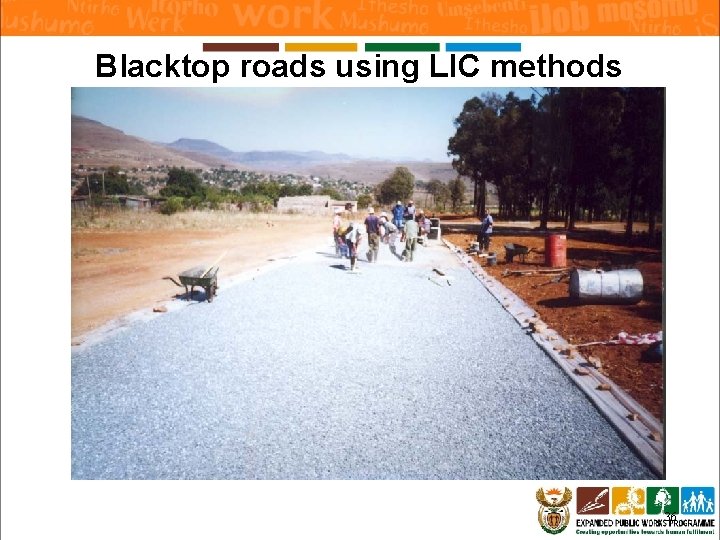
Blacktop roads using LIC methods 36
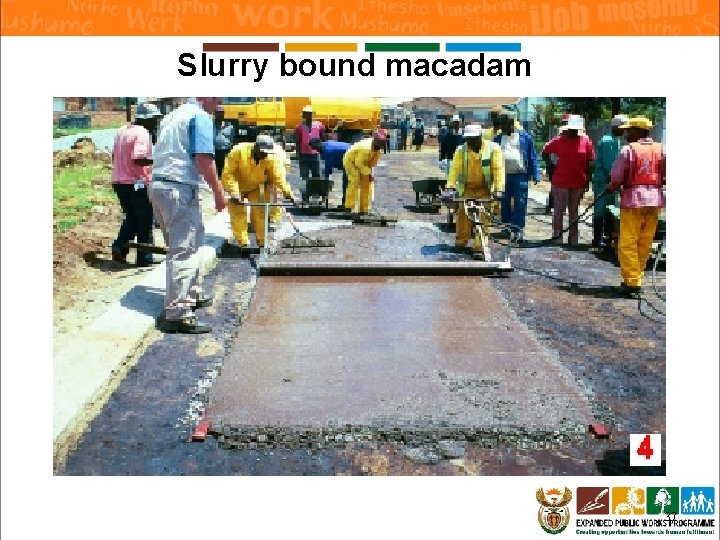
Slurry bound macadam 37
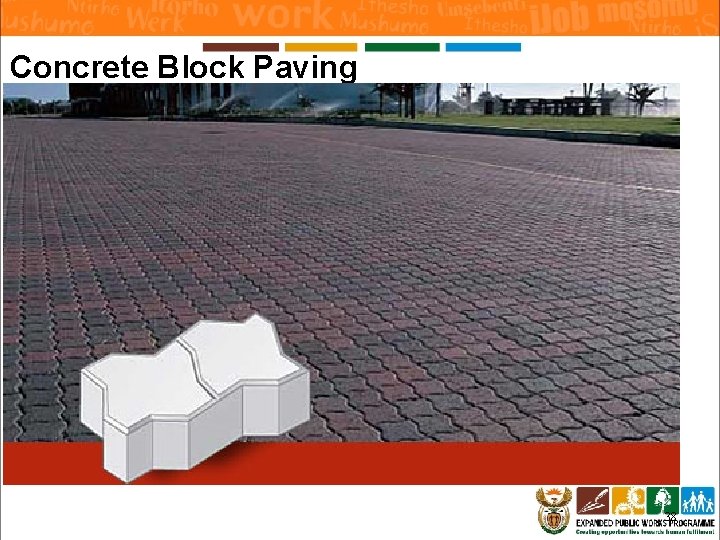
Concrete Block Paving 38
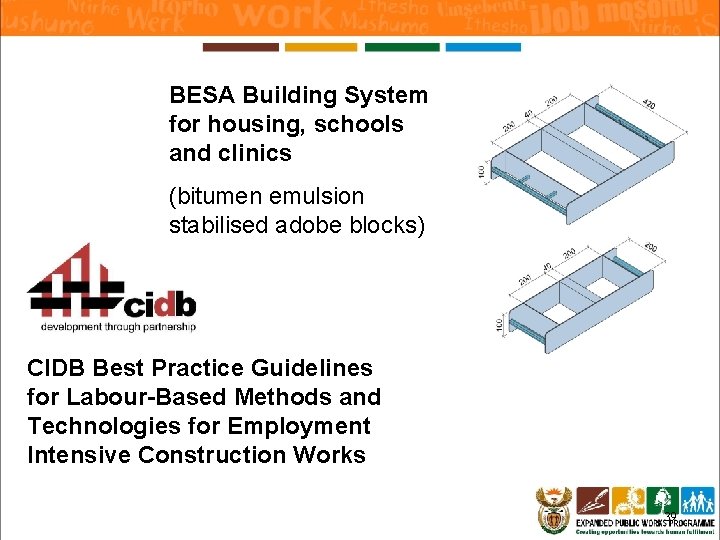
BESA Building System for housing, schools and clinics (bitumen emulsion stabilised adobe blocks) CIDB Best Practice Guidelines for Labour-Based Methods and Technologies for Employment Intensive Construction Works 39
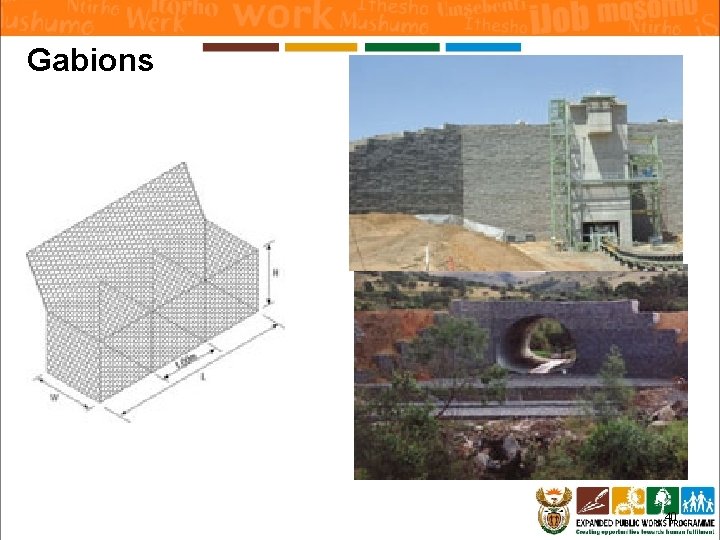
Gabions 40
n Key aspects of the EPWP employment conditions frameworks: q q q Ministerial Determination for Special Public Works Programmes and the Code of Good Practice Gazetted after negotiations at NEDLAC Allow for special conditions of employment to facilitate greater employment on Public Works Programmes: • Employers may set rates of pay locally at self-targeting rates, to avoid attracting workers away from more permanent employment • Reduced obligations for employers, eg no UIF insurance payments • Task-based payment for labour-intensive works 41
n These special conditions of employment are on condition that: q Workers have an entitlement to training q The duration of employment of a worker under these special conditions is limited 42
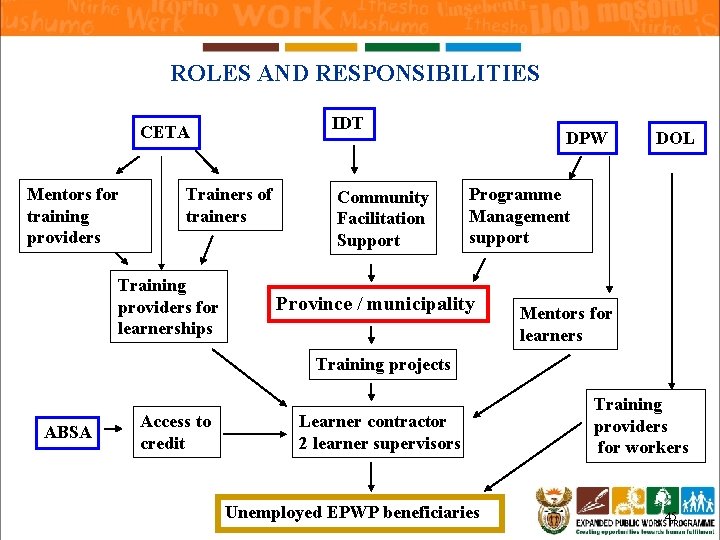
LABOUR INTENSIVE CONTRACTOR LEARNERSHIP PROGRAMME n DPW and CETA designed learnership programme n Is a support mechanism to provinces and municipalities: participation is optional n Participation based on province/municipality signing an MOU with DPW and the CETA n Modelled on Limpopo’s Gundo Lashu programme (expansion of best practice) 43
n n n CETA has agreed to fund learnerships for 1500 individuals for the EPWP Labour Intensive contractor learnership programme Each Contractor Learnership will have three persons trained in the programme: one contractor and two site supervisors DPW will provide a mentor over the two-year period to the learner contractor Municipality or province will allocate three training projects to the learner contractors DPW will also provide programme management support as required 44
ROLES AND RESPONSIBILITIES IDT CETA Mentors for training providers Trainers of trainers Training providers for learnerships Community Facilitation Support DPW DOL Programme Management support Province / municipality Mentors for learners Training projects ABSA Access to credit Learner contractor 2 learner supervisors Unemployed EPWP beneficiaries Training providers for workers 45
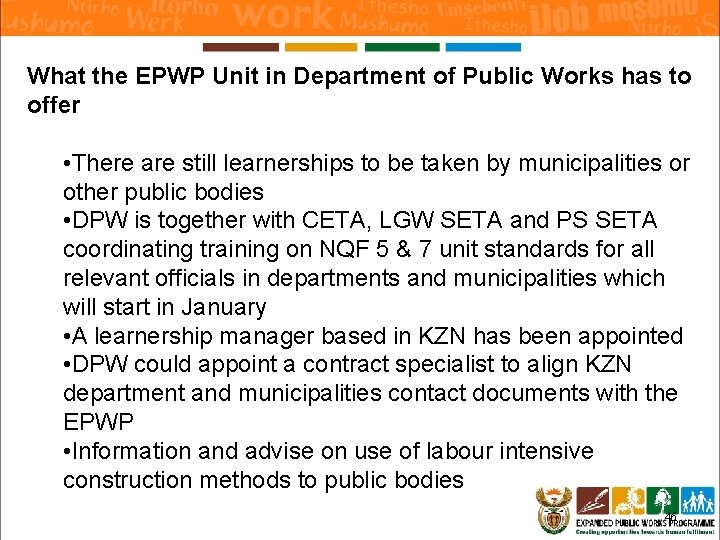
What the EPWP Unit in Department of Public Works has to offer • There are still learnerships to be taken by municipalities or other public bodies • DPW is together with CETA, LGW SETA and PS SETA coordinating training on NQF 5 & 7 unit standards for all relevant officials in departments and municipalities which will start in January • A learnership manager based in KZN has been appointed • DPW could appoint a contract specialist to align KZN department and municipalities contact documents with the EPWP • Information and advise on use of labour intensive construction methods to public bodies 46
Contact Details: EPWP Unit Department of Public Works Internet www. epwp. gov. za E-MAIL: EPWP@dpw. gov. za Tel: 012 337 3115 Fax: 012 328 6820 Gautent Programme Manager: Swazi Maja: Swazi. Maja@dpw. gov. za Maikel R. Lieuw Kie Song maikel@dpw. gov. za 47