
Implementing Sustainable Tourism in the USAID Context Arusha
Implementing Sustainable Tourism in the USAID Context Arusha, Tanzania February 2006
MODULE 2: USAID & TOURISM
Objectives By the end of the session, participants will be able to: • Explore approaches where USAID has used tourism to address programmatic themes • Examine how tourism fits into USAID strategic framework • Identify the Role of Tourism within USAID • Address Development Objectives • Identify a framework for USAID interventions • Explore examples where tourism fits into a Mission’s strategic objectives
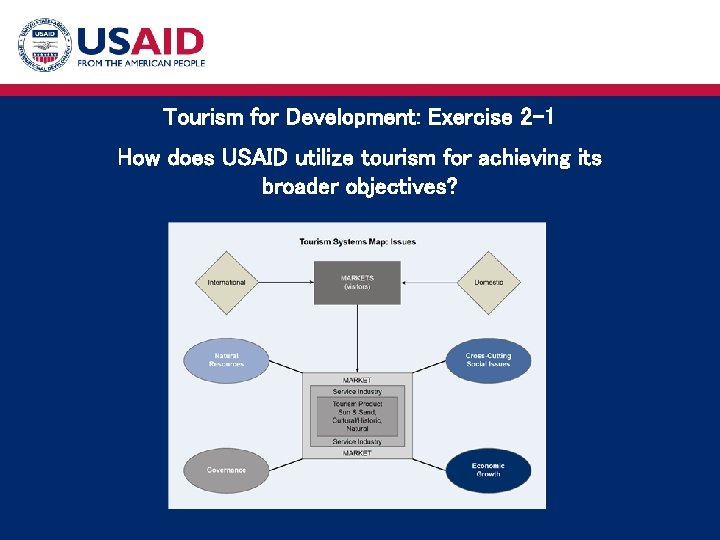
Tourism for Development: Exercise 2 -1 How does USAID utilize tourism for achieving its broader objectives?
Exercise 2 -1 What tourism-related issues are included in the four categories? Ex: 1. 2. 3. 4. NRM - visitor damage to resources GOV – open skies policy EG – access to credit SOCIAL – visitor health Divide into four groups (by category), choose a recorder and reporter Brainstorm list of issues (10 minutes) Identify what stakeholders might affect or be affected by these issues (5 minutes) Share your list (2 minutes)
Thematic Issues and Tourism
Number of USAID Projects with a Tourism Component by Major Development Objective, 2000 -2004 Source: Natural Resources Information Clearinghouse
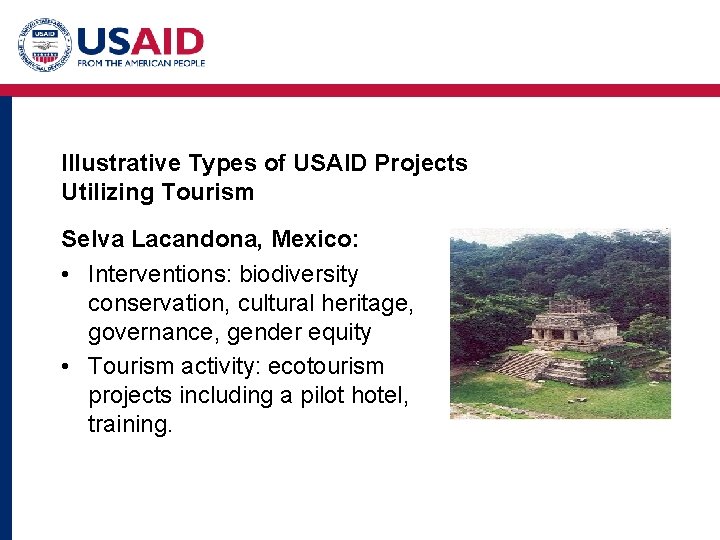
Illustrative Types of USAID Projects Utilizing Tourism Selva Lacandona, Mexico: • Interventions: biodiversity conservation, cultural heritage, governance, gender equity • Tourism activity: ecotourism projects including a pilot hotel, training.
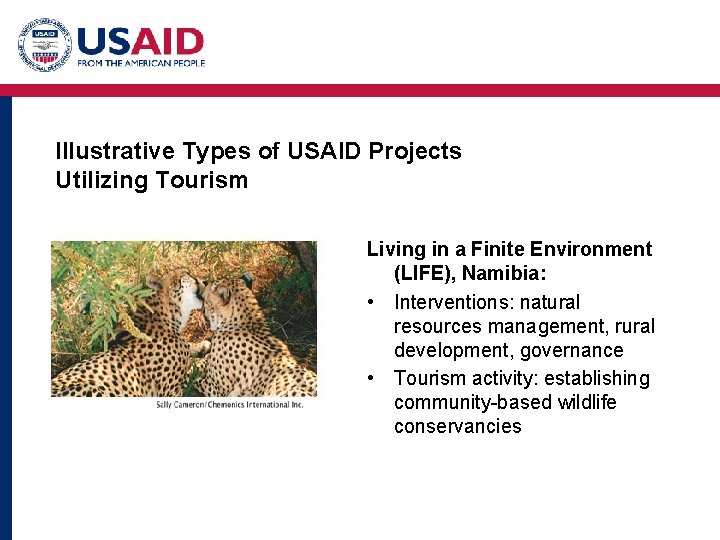
Illustrative Types of USAID Projects Utilizing Tourism Living in a Finite Environment (LIFE), Namibia: • Interventions: natural resources management, rural development, governance • Tourism activity: establishing community-based wildlife conservancies
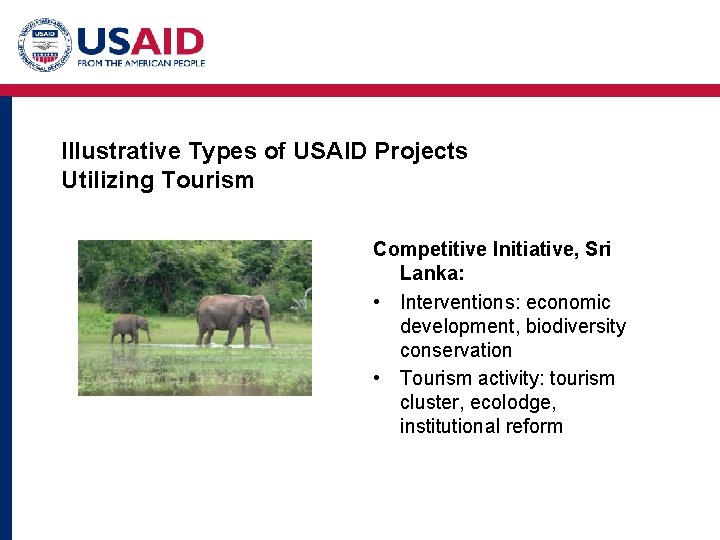
Illustrative Types of USAID Projects Utilizing Tourism Competitive Initiative, Sri Lanka: • Interventions: economic development, biodiversity conservation • Tourism activity: tourism cluster, ecolodge, institutional reform
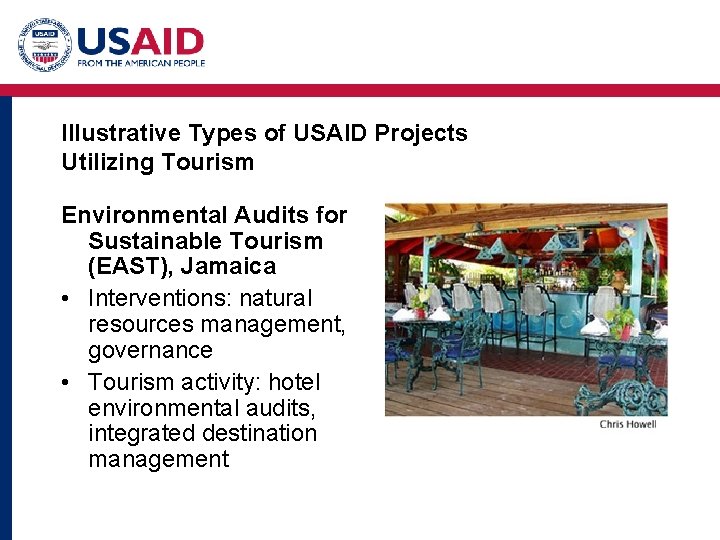
Illustrative Types of USAID Projects Utilizing Tourism Environmental Audits for Sustainable Tourism (EAST), Jamaica • Interventions: natural resources management, governance • Tourism activity: hotel environmental audits, integrated destination management
Thematic Issues and Tourism
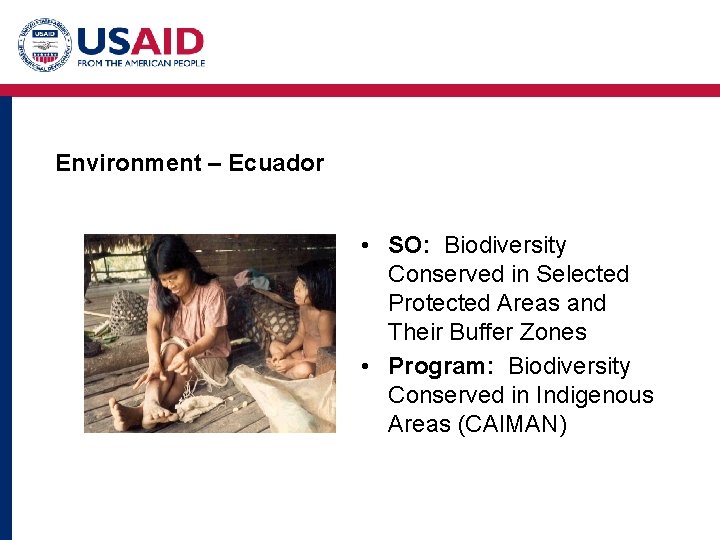
Environment – Ecuador • SO: Biodiversity Conserved in Selected Protected Areas and Their Buffer Zones • Program: Biodiversity Conserved in Indigenous Areas (CAIMAN)
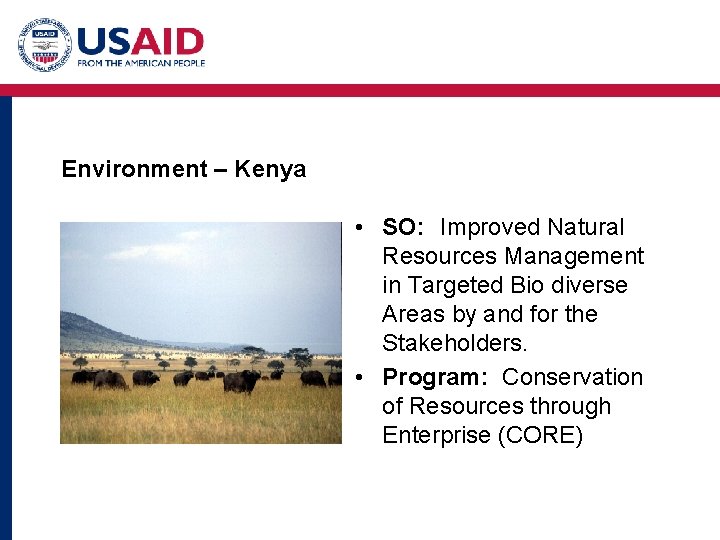
Environment – Kenya • SO: Improved Natural Resources Management in Targeted Bio diverse Areas by and for the Stakeholders. • Program: Conservation of Resources through Enterprise (CORE)
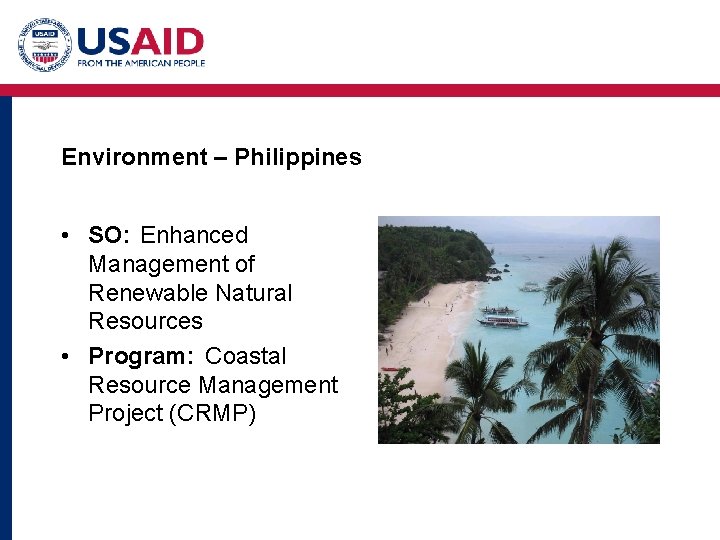
Environment – Philippines • SO: Enhanced Management of Renewable Natural Resources • Program: Coastal Resource Management Project (CRMP)
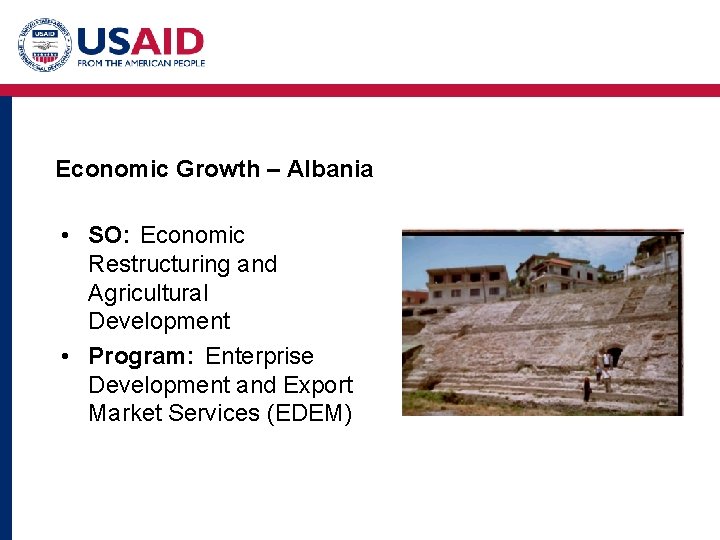
Economic Growth – Albania • SO: Economic Restructuring and Agricultural Development • Program: Enterprise Development and Export Market Services (EDEM)
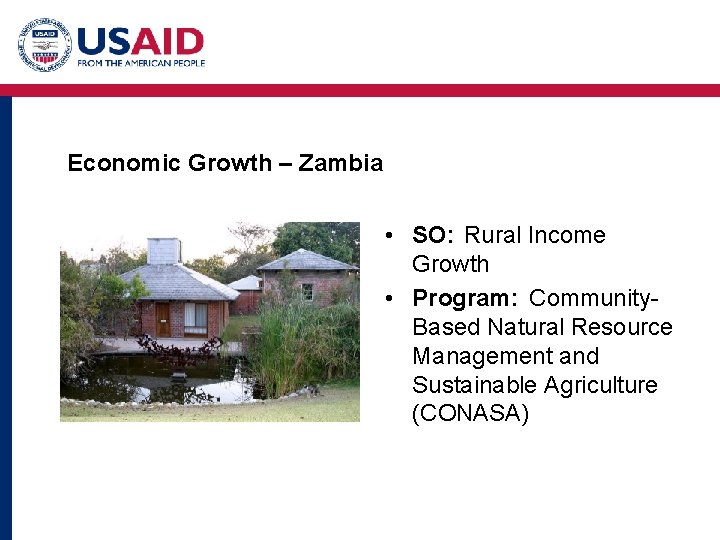
Economic Growth – Zambia • SO: Rural Income Growth • Program: Community. Based Natural Resource Management and Sustainable Agriculture (CONASA)
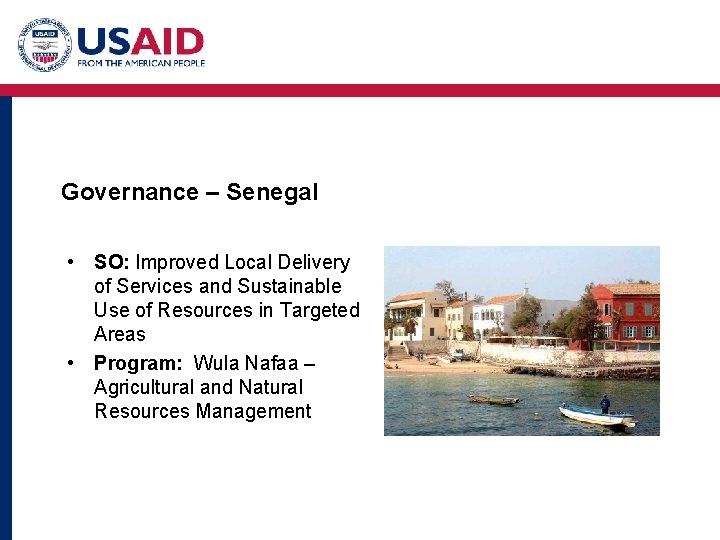
Governance – Senegal • SO: Improved Local Delivery of Services and Sustainable Use of Resources in Targeted Areas • Program: Wula Nafaa – Agricultural and Natural Resources Management
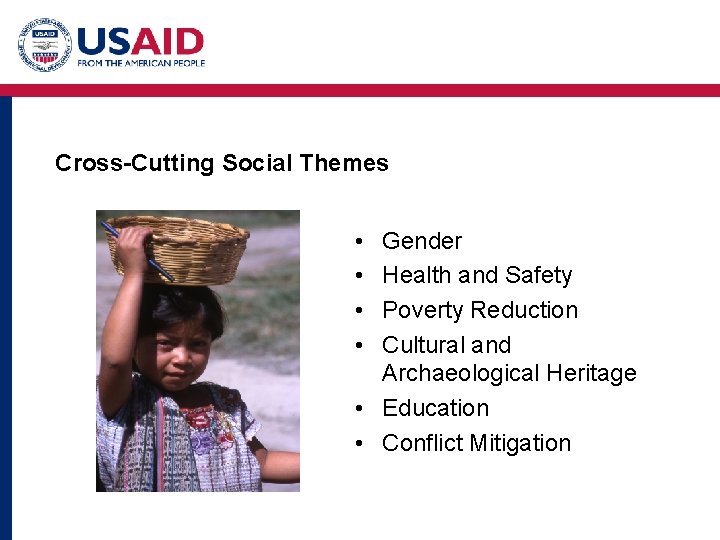
Cross-Cutting Social Themes • • Gender Health and Safety Poverty Reduction Cultural and Archaeological Heritage • Education • Conflict Mitigation
Tourism within the USAID Results Framework USAID Strategy for Jamaica 2005 -2009
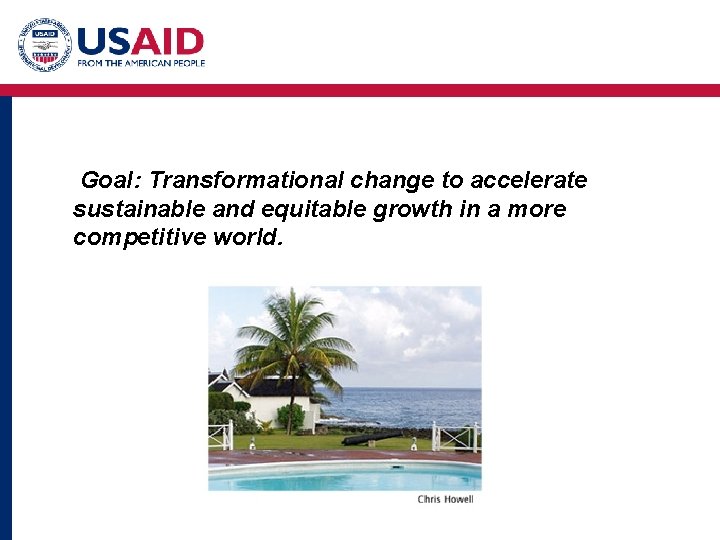
Goal: Transformational change to accelerate sustainable and equitable growth in a more competitive world.
Related Strategic Objectives • Increased trade competitiveness in target industries • Natural assets managed for rural development and sustainable economic growth • Improved health status among youth and most vulnerable groups • Improved education of targeted Jamaican youth • Improved accountability and citizen security and participation
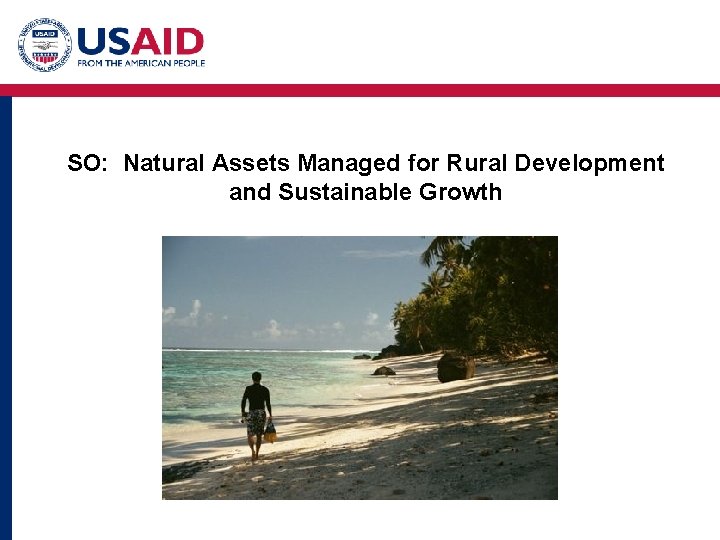
SO: Natural Assets Managed for Rural Development and Sustainable Growth
Intermediate Results: • IR-1: Improved management of targeted ecosystems • IR-2: Institutional capacity to manage natural assets increased • IR-3: More environmentally sustainable rural enterprises
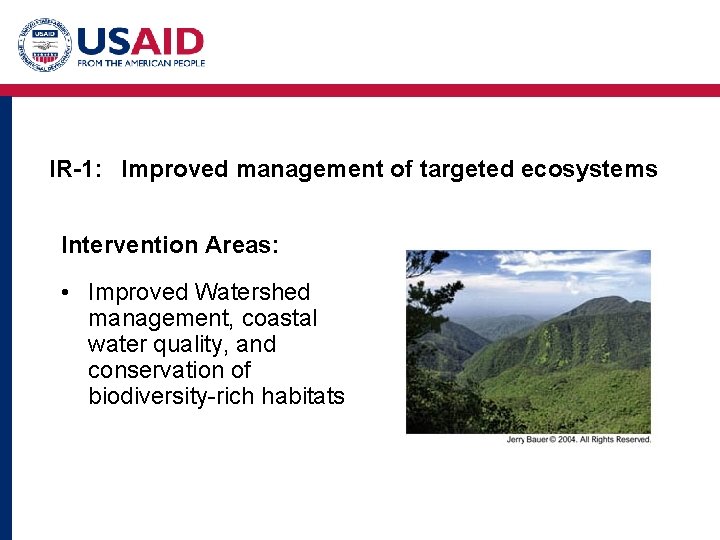
IR-1: Improved management of targeted ecosystems Intervention Areas: • Improved Watershed management, coastal water quality, and conservation of biodiversity-rich habitats
IR-2: Institutional capacity to manage natural assets increased Intervention Areas: • Strengthening NGO, civil society and government skills and inclusion in community environmental management and decision-making.
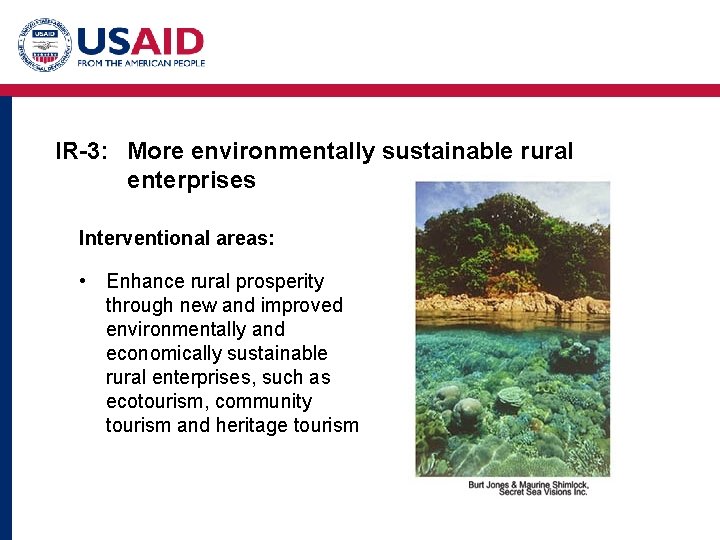
IR-3: More environmentally sustainable rural enterprises Interventional areas: • Enhance rural prosperity through new and improved environmentally and economically sustainable rural enterprises, such as ecotourism, community tourism and heritage tourism
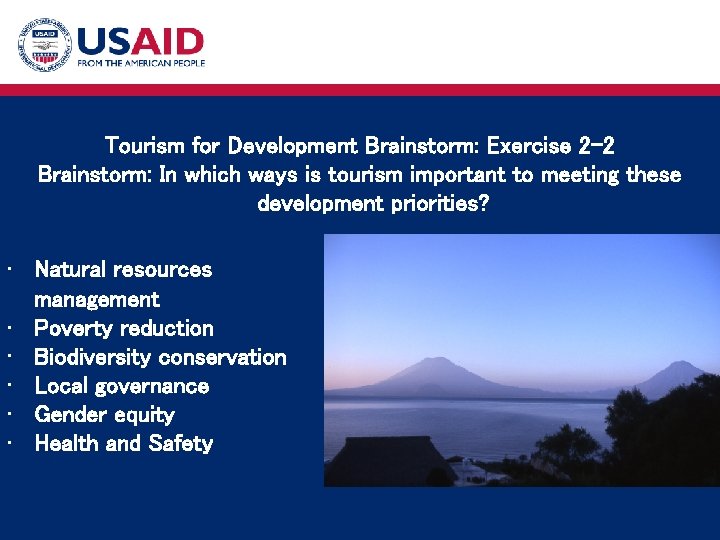
Tourism for Development Brainstorm: Exercise 2 -2 Brainstorm: In which ways is tourism important to meeting these development priorities? • Natural resources management • Poverty reduction • Biodiversity conservation • Local governance • Gender equity • Health and Safety
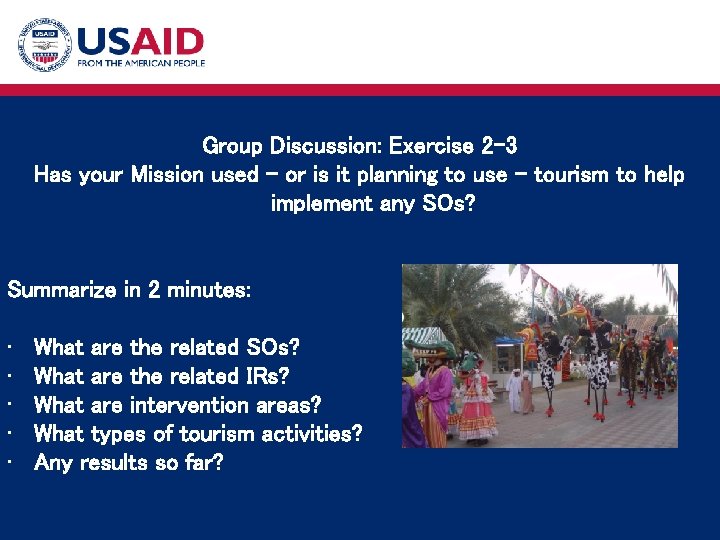
Group Discussion: Exercise 2 -3 Has your Mission used – or is it planning to use – tourism to help implement any SOs? Summarize in 2 minutes: • • • What are the related SOs? What are the related IRs? What are intervention areas? What types of tourism activities? Any results so far?
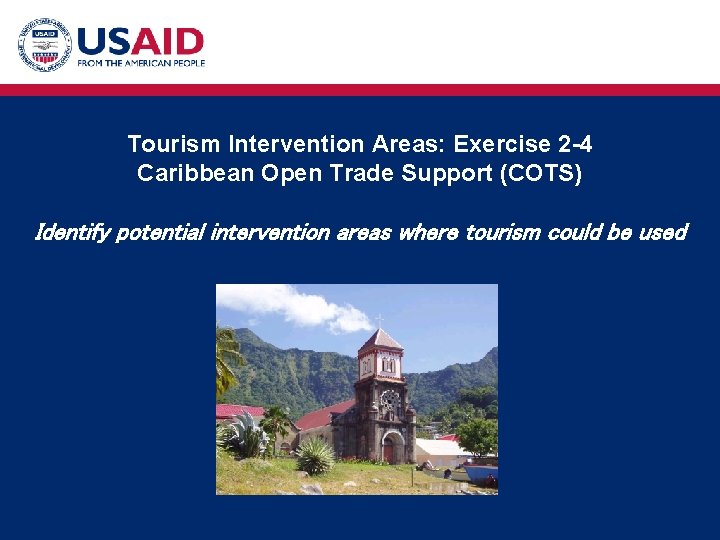
Tourism Intervention Areas: Exercise 2 -4 Caribbean Open Trade Support (COTS) Identify potential intervention areas where tourism could be used
Some Basic Tenets 1) Tourism is not a panacea. 2) Many Strategic Objectives are mutually supporting or, increasingly, merge previously distinct Objectives. 3) To be sustainable, tourism-related intervention areas need to be more demand-driven than supply-driven.
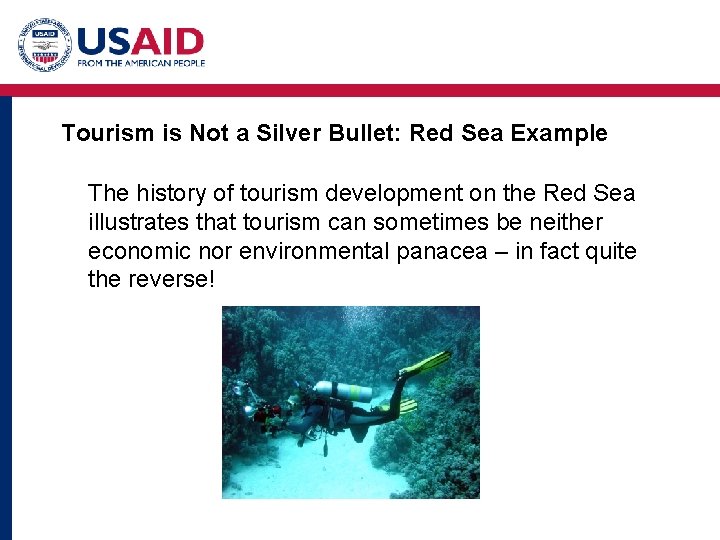
Tourism is Not a Silver Bullet: Red Sea Example The history of tourism development on the Red Sea illustrates that tourism can sometimes be neither economic nor environmental panacea – in fact quite the reverse!
RECAP • Tourism fits into many USAID program areas • Tourism can be used as a project component to achieve multiple objectives • There are many case studies you can turn to for ideas and lessons learned
- Slides: 33