
Implementing Prevention through Design to Achieve LifeCycle Safety
- Slides: 47
Implementing Prevention through Design to Achieve Life-Cycle Safety SSOE July 26, 2018 Mike Toole, Ph. D, PE, F. ASCE Dean, College of Engineering Professor, Civil & Env. Engineering
SUMMARY FROM LAST TIME q Our clients and taxpayers may increasingly be demanding that we deliver integrated design and construction and proactively consider the triple bottom line on our projects.
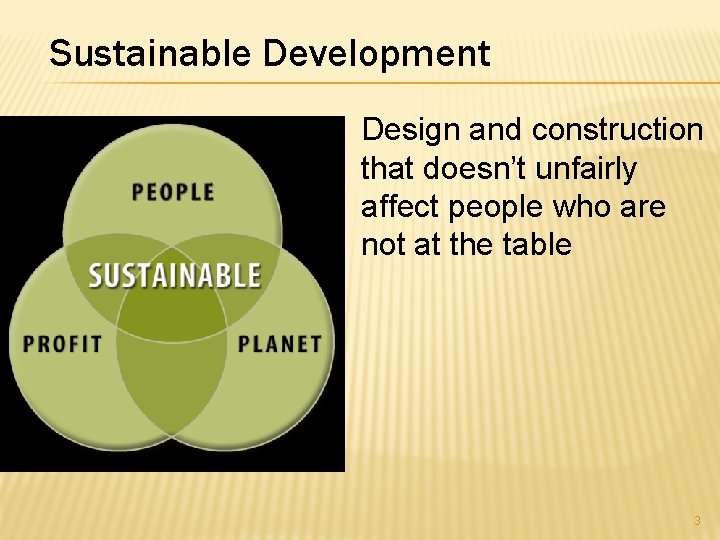
Sustainable Development Design and construction that doesn’t unfairly affect people who are not at the table 3
SUMMARY FROM LAST TIME q Our clients and taxpayers may increasingly be demanding that we deliver integrated design and construction and proactively consider the triple bottom line on our projects. q Prevention through Design is a promising way to achieve economic, social and environmental sustainability.
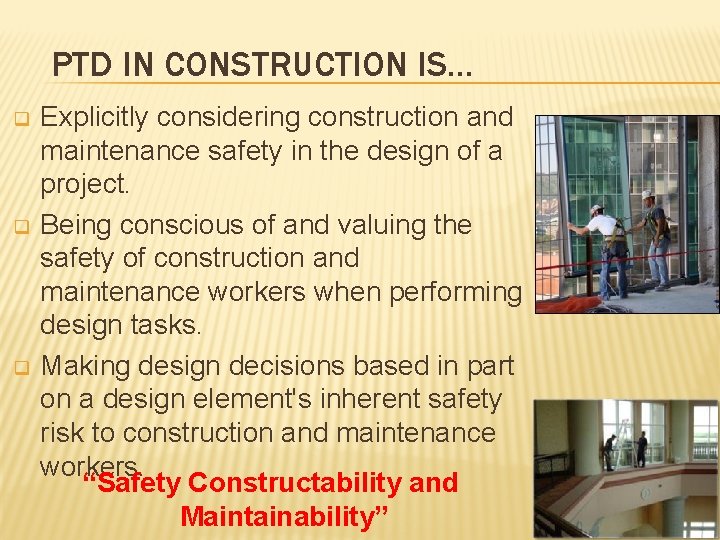
PTD IN CONSTRUCTION IS… q q q Explicitly considering construction and maintenance safety in the design of a project. Being conscious of and valuing the safety of construction and maintenance workers when performing design tasks. Making design decisions based in part on a design element's inherent safety risk to construction and maintenance workers. “Safety Constructability and Maintainability”
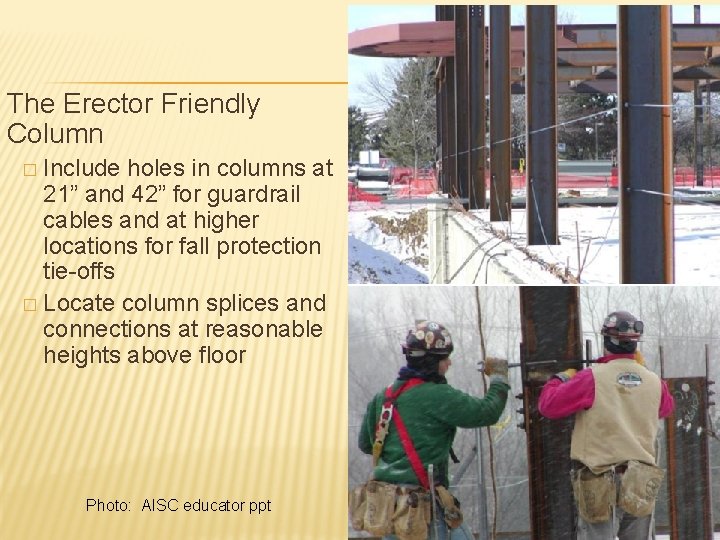
The Erector Friendly Column Include holes in columns at 21” and 42” for guardrail cables and at higher locations for fall protection tie-offs � Locate column splices and connections at reasonable heights above floor � Photo: AISC educator ppt
PREFABRICATION: THE LINK BETWEEN ENVIRONMENTAL SUSTAINABILITY AND SAFETY Prefabricated construction is inherently safer than “stick-built. ” q Work is shifted from dangerous work environments to engineered work environments and processes. q § § q at height in trenches in confined spaces exposed to weather (wind, water, ice, mud, lightning) Prefabricated construction has § § lower construction waste lower embodied energy
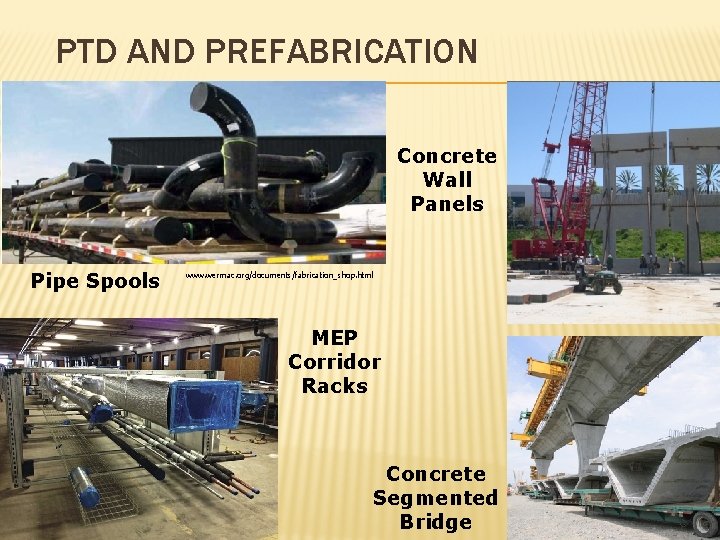
PTD AND PREFABRICATION Concrete Wall Panels Pipe Spools www. wermac. org/documents/fabrication_shop. html MEP Corridor Racks Concrete Segmented Bridge
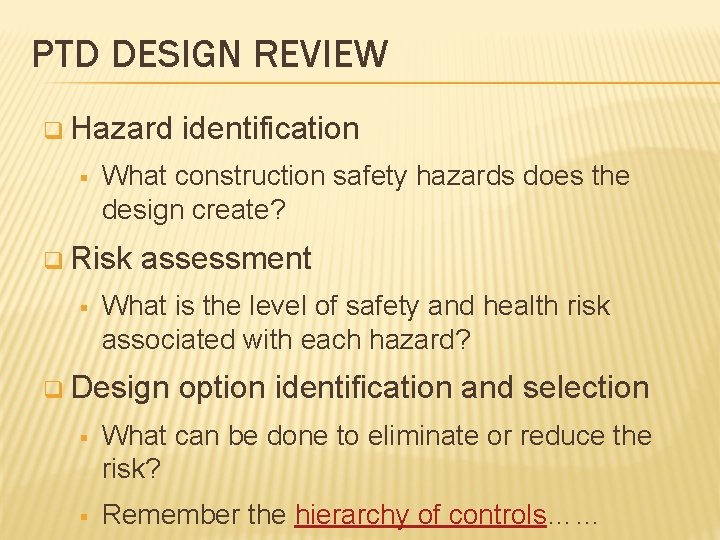
PTD DESIGN REVIEW q Hazard § What construction safety hazards does the design create? q Risk § identification assessment What is the level of safety and health risk associated with each hazard? q Design option identification and selection § What can be done to eliminate or reduce the risk? § Remember the hierarchy of controls……
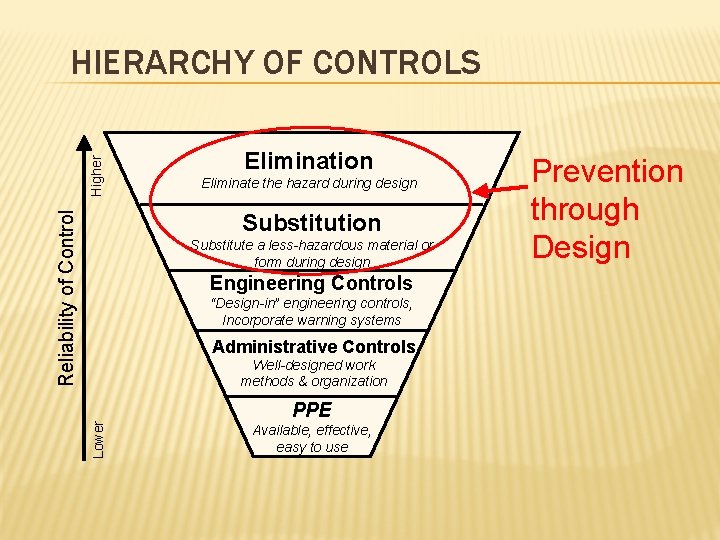
Reliability of Control Higher HIERARCHY OF CONTROLS Elimination Eliminate the hazard during design Substitution Substitute a less-hazardous material or form during design Engineering Controls “Design-in” engineering controls, Incorporate warning systems Administrative Controls Lower Well-designed work methods & organization PPE Available, effective, easy to use Prevention through Design
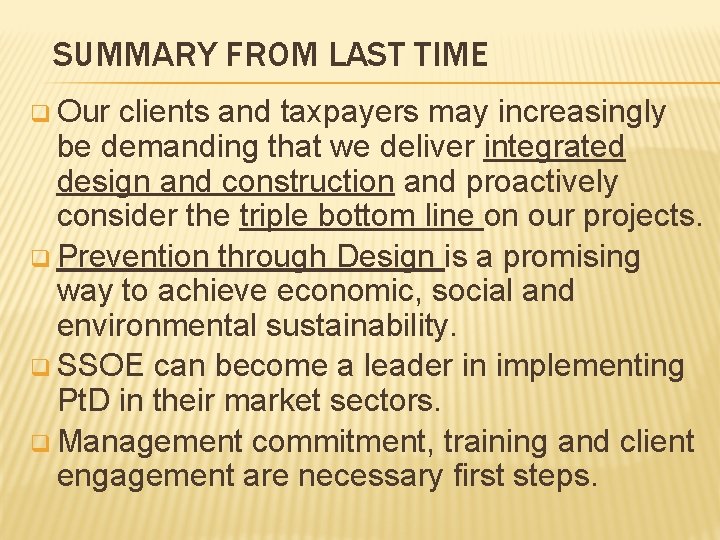
SUMMARY FROM LAST TIME q Our clients and taxpayers may increasingly be demanding that we deliver integrated design and construction and proactively consider the triple bottom line on our projects. q Prevention through Design is a promising way to achieve economic, social and environmental sustainability. q SSOE can become a leader in implementing Pt. D in their market sectors. q Management commitment, training and client engagement are necessary first steps.
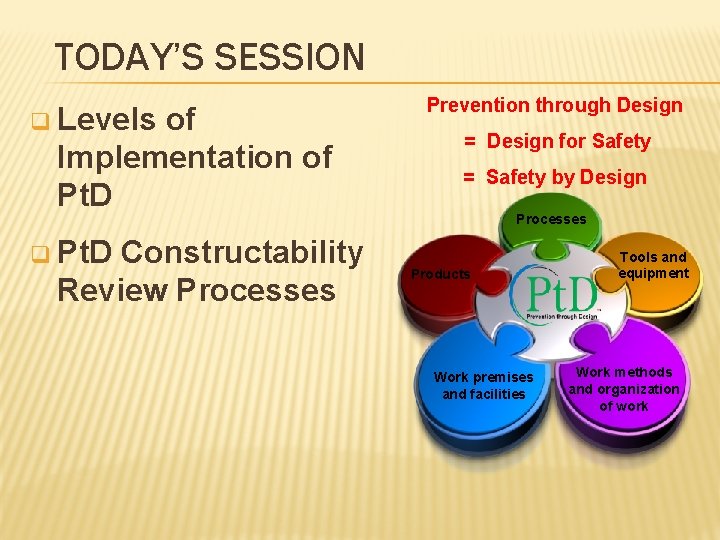
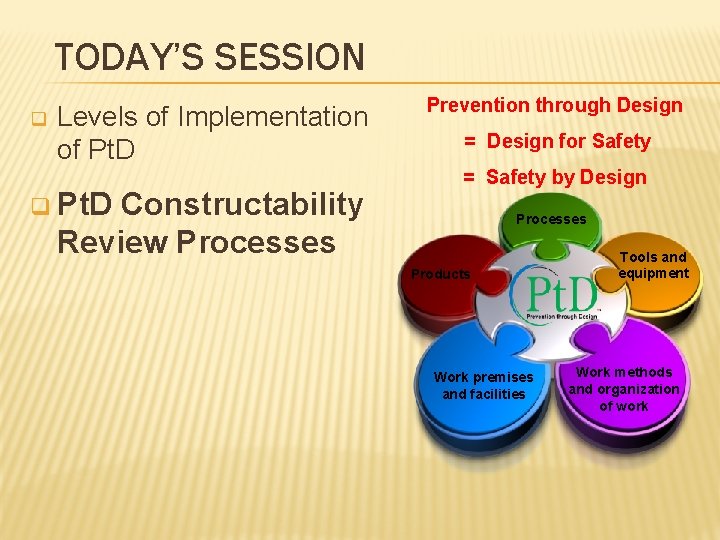
TODAY’S SESSION q Levels of Implementation of Pt. D q Pt. D Constructability Review Processes Prevention through Design = Design for Safety = Safety by Design Processes Products Work premises and facilities Tools and equipment Work methods and organization of work
BEST TO IMPLEMENT PTD INCREMENTALLY q Most likely to lead to decision to pursue Pt. D q Reduce resources and organizational knowledge needed q Increase the chances of successful implementation q Reduce risks of adverse consequences
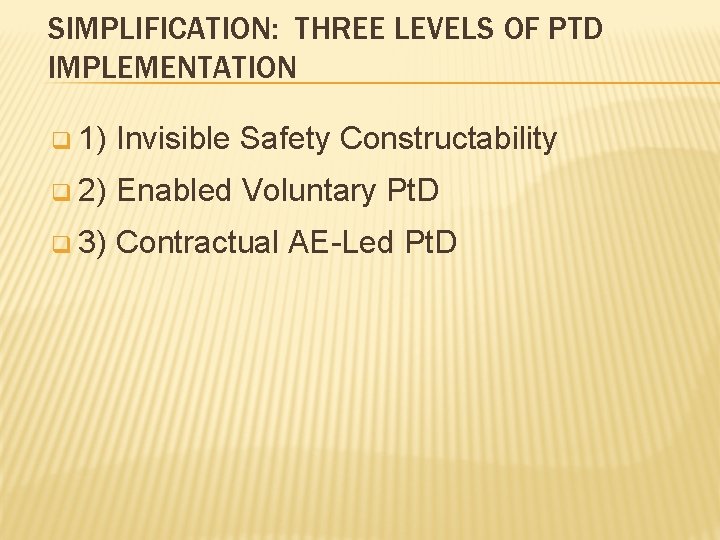
SIMPLIFICATION: THREE LEVELS OF PTD IMPLEMENTATION q 1) Invisible Safety Constructability q 2) Enabled Voluntary Pt. D q 3) Contractual AE-Led Pt. D
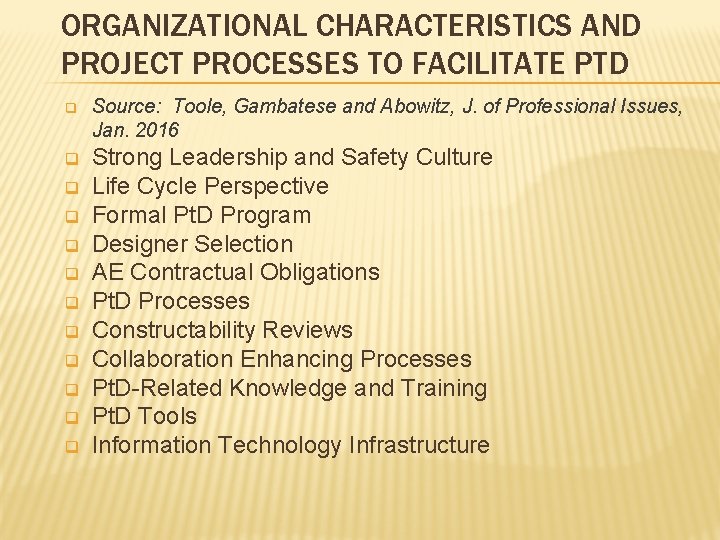
ORGANIZATIONAL CHARACTERISTICS AND PROJECT PROCESSES TO FACILITATE PTD q Source: Toole, Gambatese and Abowitz, J. of Professional Issues, Jan. 2016 q Strong Leadership and Safety Culture Life Cycle Perspective Formal Pt. D Program Designer Selection AE Contractual Obligations Pt. D Processes Constructability Reviews Collaboration Enhancing Processes Pt. D-Related Knowledge and Training Pt. D Tools Information Technology Infrastructure q q q q q
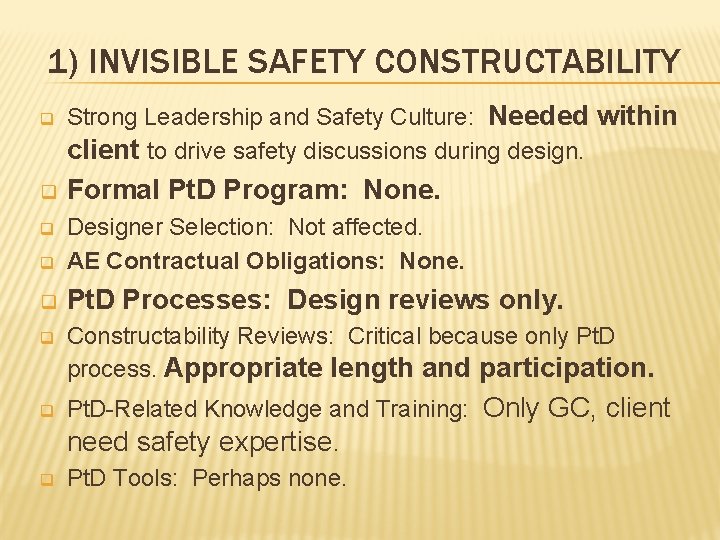
1) INVISIBLE SAFETY CONSTRUCTABILITY q Strong Leadership and Safety Culture: Needed within client to drive safety discussions during design. q Formal Pt. D Program: None. q q Designer Selection: Not affected. AE Contractual Obligations: None. q Pt. D Processes: Design reviews only. q Constructability Reviews: Critical because only Pt. D process. Appropriate length and participation. q Pt. D-Related Knowledge and Training: Only GC, client need safety expertise. q Pt. D Tools: Perhaps none.
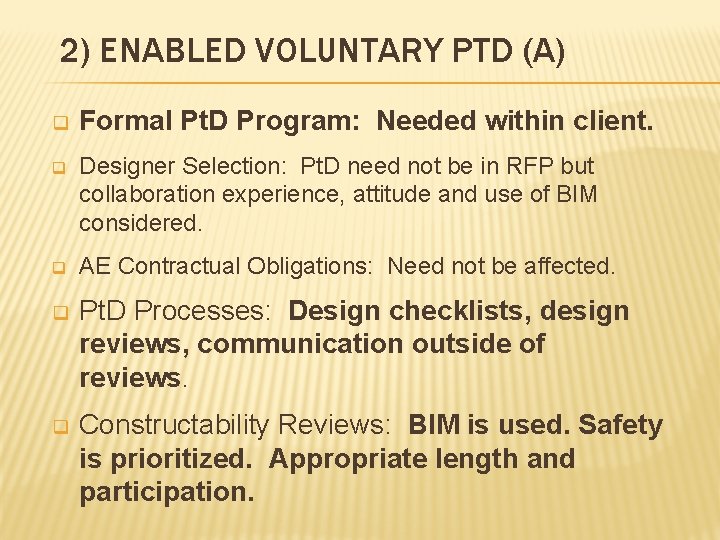
2) ENABLED VOLUNTARY PTD (A) q Formal Pt. D Program: Needed within client. q Designer Selection: Pt. D need not be in RFP but collaboration experience, attitude and use of BIM considered. q AE Contractual Obligations: Need not be affected. q Pt. D Processes: Design checklists, design reviews, communication outside of reviews. q Constructability Reviews: BIM is used. Safety is prioritized. Appropriate length and participation.
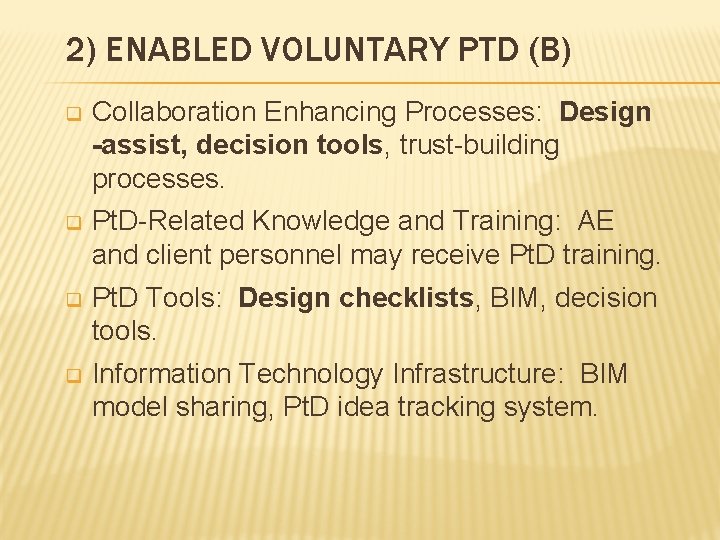
2) ENABLED VOLUNTARY PTD (B) q Collaboration Enhancing Processes: Design -assist, decision tools, trust-building processes. q Pt. D-Related Knowledge and Training: AE and client personnel may receive Pt. D training. q Pt. D Tools: Design checklists, BIM, decision tools. q Information Technology Infrastructure: BIM model sharing, Pt. D idea tracking system.
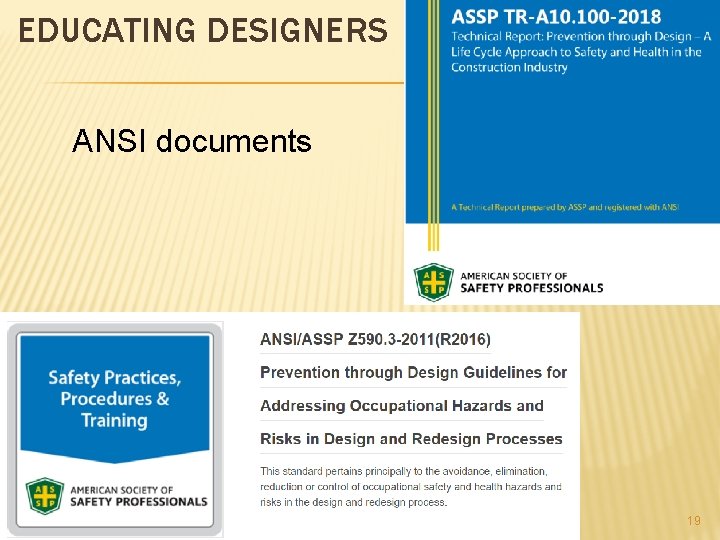
EDUCATING DESIGNERS ANSI documents 19
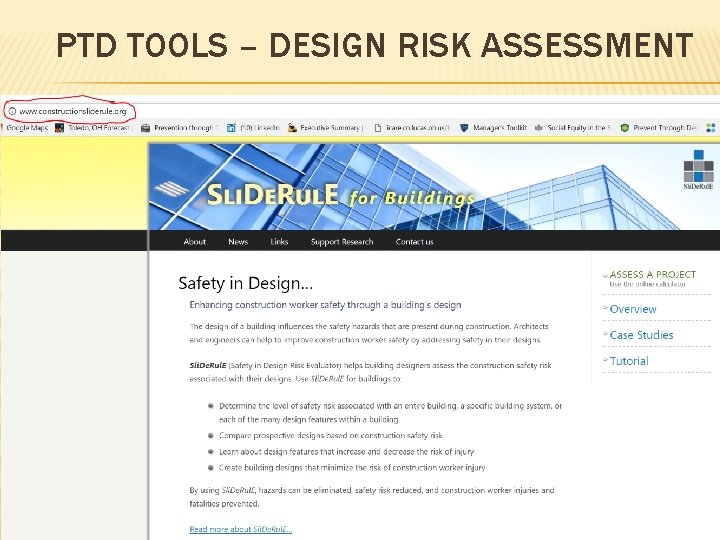
PTD TOOLS – DESIGN RISK ASSESSMENT www. constructionsliderule. org
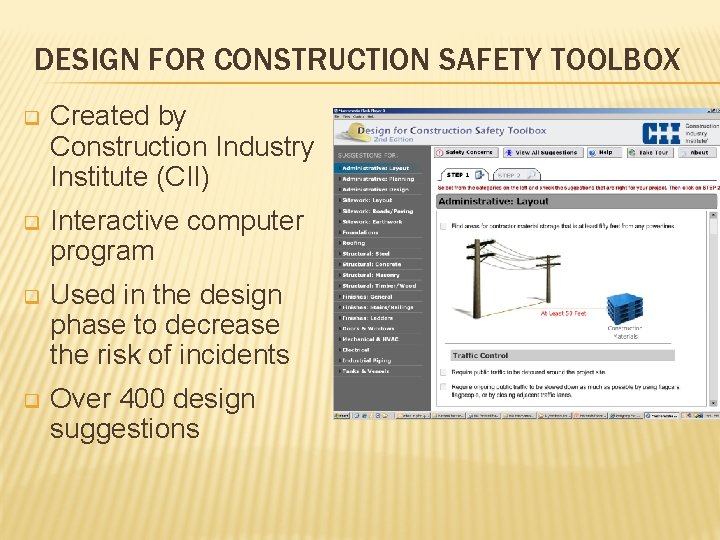
DESIGN FOR CONSTRUCTION SAFETY TOOLBOX q Created by Construction Industry Institute (CII) q Interactive computer program q Used in the design phase to decrease the risk of incidents q Over 400 design suggestions
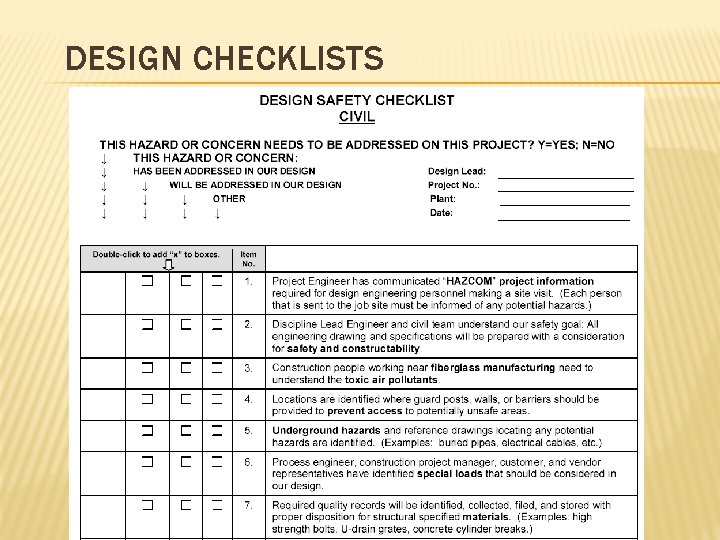
DESIGN CHECKLISTS
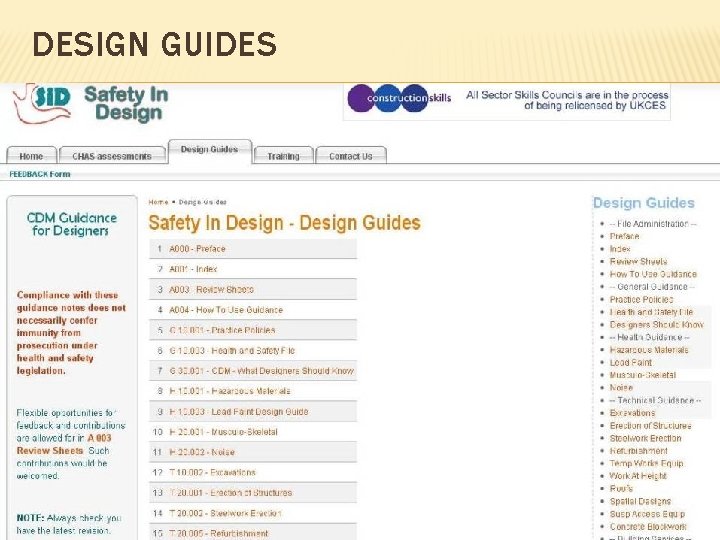
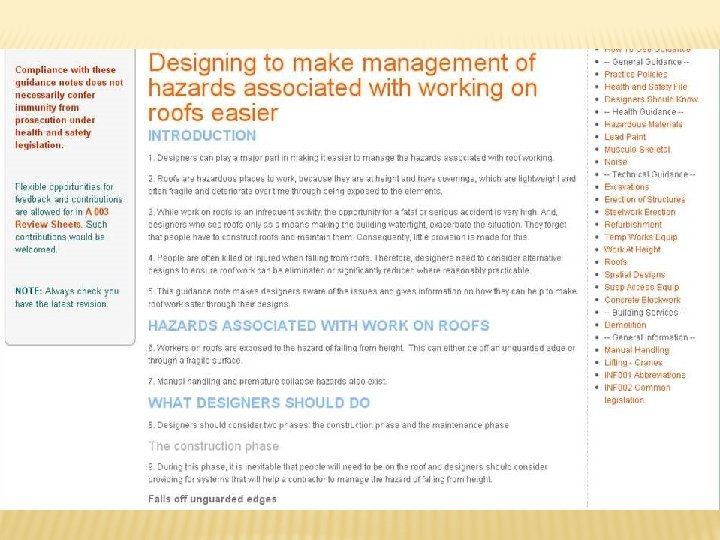
DESIGN GUIDES
25
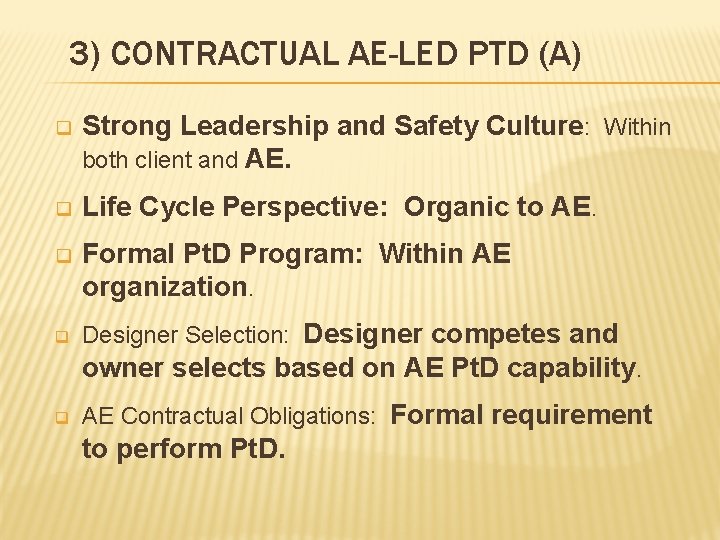
3) CONTRACTUAL AE-LED PTD (A) q Strong Leadership and Safety Culture: Within both client and AE. q Life Cycle Perspective: Organic to AE. q Formal Pt. D Program: Within AE organization. q Designer Selection: Designer competes and owner selects based on AE Pt. D capability. q AE Contractual Obligations: Formal requirement to perform Pt. D.
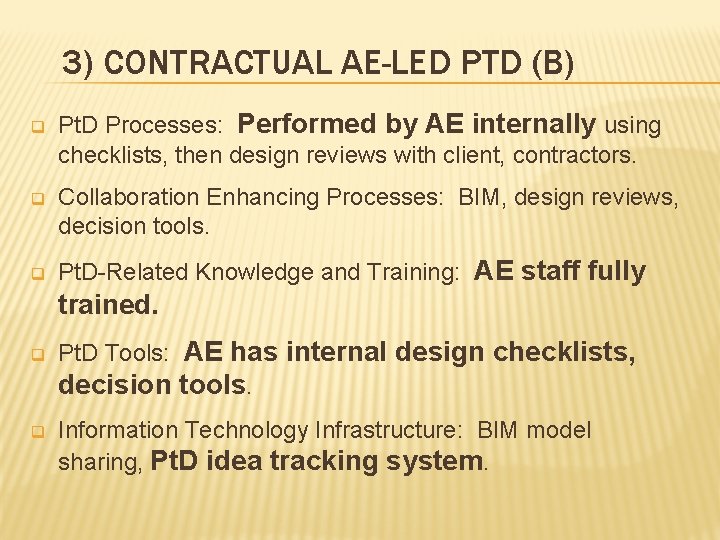
3) CONTRACTUAL AE-LED PTD (B) q q q Pt. D Processes: Performed by AE internally using checklists, then design reviews with client, contractors. Collaboration Enhancing Processes: BIM, design reviews, decision tools. Pt. D-Related Knowledge and Training: AE staff fully trained. q q Pt. D Tools: AE has internal design checklists, decision tools. Information Technology Infrastructure: BIM model sharing, Pt. D idea tracking system.
WHAT DO YOU THINK? q Do you agree incremental implementation makes sense? q Do you understand each level of Pt. D implementation? q What levels has SSOE implemented to date? q What levels are realistic for SSOE over next 12 months? 28
TODAY’S SESSION q Levels of Implementation of Pt. D q Pt. D Constructability Review Processes Prevention through Design = Design for Safety = Safety by Design Processes Products Work premises and facilities Tools and equipment Work methods and organization of work
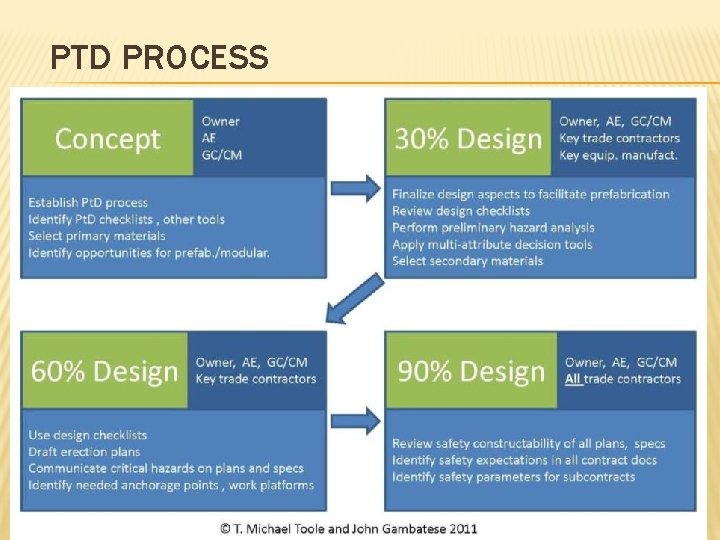
PTD PROCESS
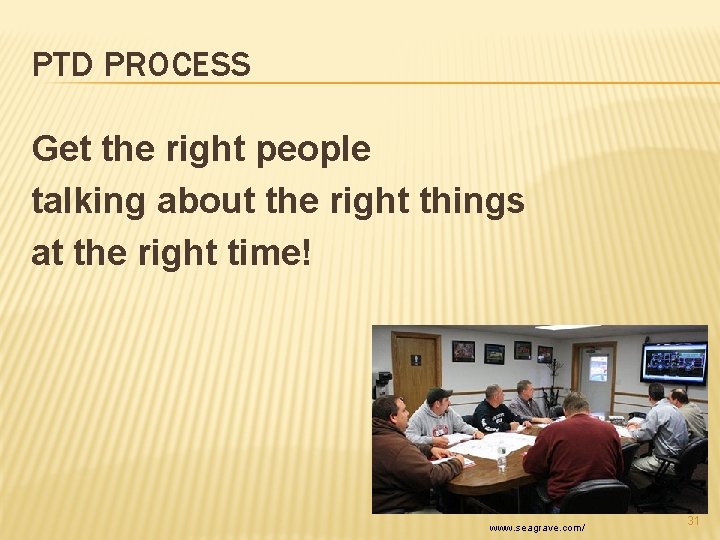
PTD PROCESS Get the right people talking about the right things at the right time! www. seagrave. com/ 31
WHO SHOULD PARTICIPATE? q q Owner § project management § construction safety § maintenance/maintenance safety AE § project management § discipline leads § safety lead GC § project management § construction safety Subs § project management/superintendents § construction safety 32
TRADE-SPECIFIC CONSTRUCTABILITY REVIEW MEETINGS q Held at Concept-30%-60% q Excavation, site utilities and foundation q Steel, concrete superstructure, roof and building envelope q Mechanical, electrical, plumbing 33
DESIGN FOR MAINTENANCE SAFETY q Provide safe access for recurring maintenance/preventive maintenance § § q Light Bulbs, Air Filters, Belts, Valves At height, confined space, awkward ergonomics Provide safe clearance for replacing units § § Blower Units, Boilers, Compressors, Pumps Isolation, Material handling, Path out and in 34
HOW LONG SHOULD EACH REVIEW TAKE? q Each constructability reviewer should have 12 weeks to review the design before the meeting q Each meeting should be day-long q Design team should have 2 -4 weeks to incorporate feedback, update hazard mitigation list, and send revised plans out for review q Tech Specs can be important part of Pt. D 35
WHAT SHOULD BE DISCUSSED AT EACH STAGE? q Identify § client’s top hazards perhaps using past/current injury data q Use energy to identify hazards that may be present § Potential/Kinetic energy v falls, § struck bys, slips and trips, tool use Electrical energy v Electrical § Chemical energy v contact § shock, arc flash with eyes and skin, inhalation Radiation energy v welding 36
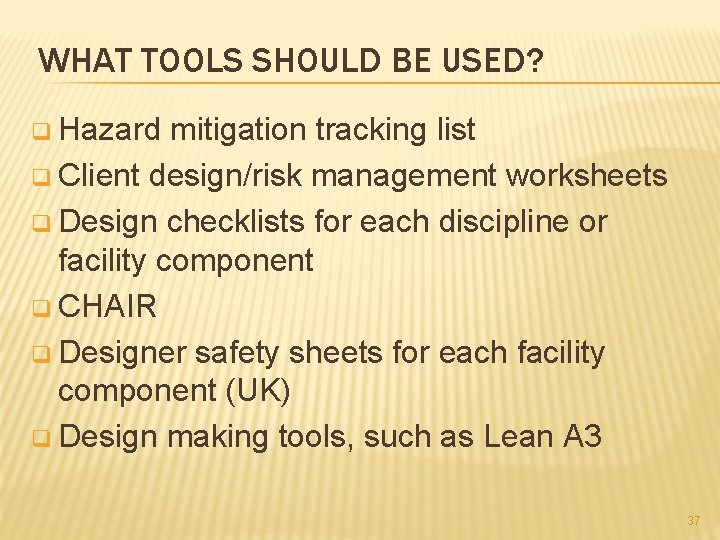
WHAT TOOLS SHOULD BE USED? q Hazard mitigation tracking list q Client design/risk management worksheets q Design checklists for each discipline or facility component q CHAIR q Designer safety sheets for each facility component (UK) q Design making tools, such as Lean A 3 37
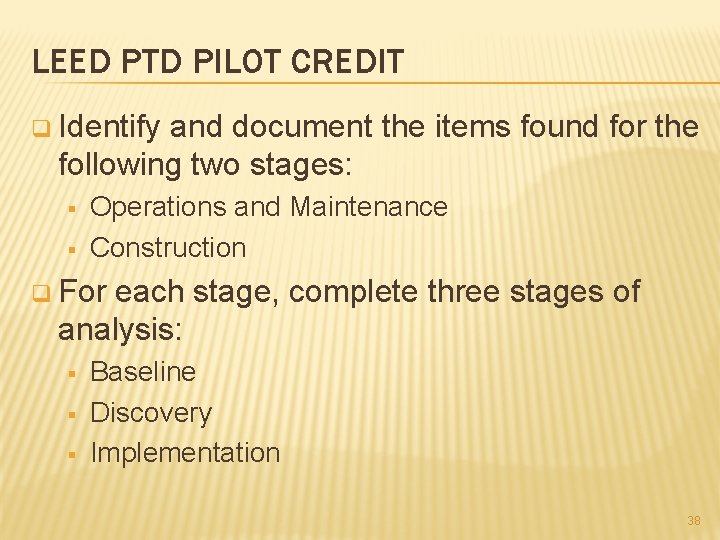
LEED PTD PILOT CREDIT q Identify and document the items found for the following two stages: § § Operations and Maintenance Construction q For each stage, complete three stages of analysis: § § § Baseline Discovery Implementation 38
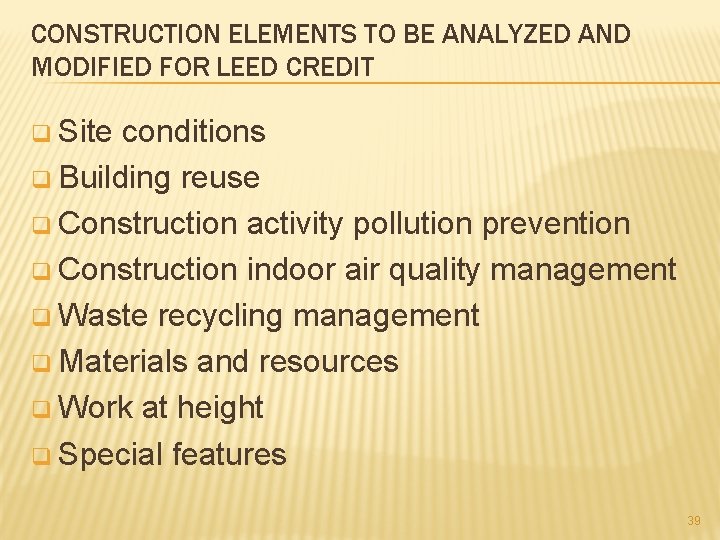
CONSTRUCTION ELEMENTS TO BE ANALYZED AND MODIFIED FOR LEED CREDIT q Site conditions q Building reuse q Construction activity pollution prevention q Construction indoor air quality management q Waste recycling management q Materials and resources q Work at height q Special features 39
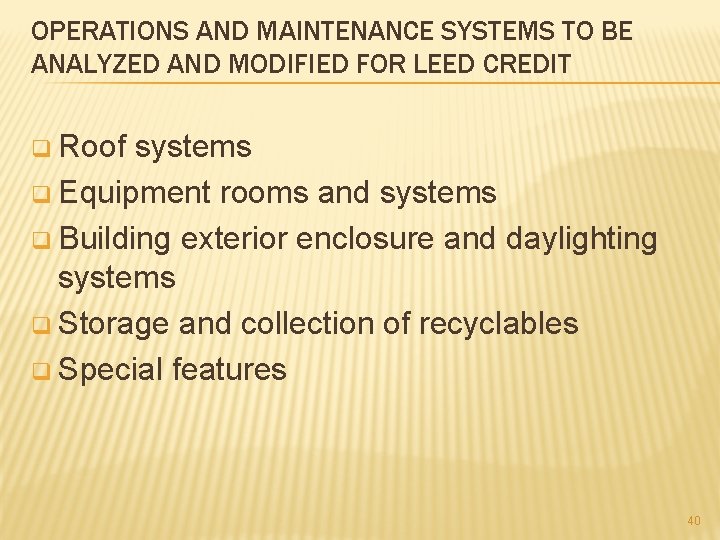
OPERATIONS AND MAINTENANCE SYSTEMS TO BE ANALYZED AND MODIFIED FOR LEED CREDIT q Roof systems q Equipment rooms and systems q Building exterior enclosure and daylighting systems q Storage and collection of recyclables q Special features 40
SUMMARY q q Pt. D should be implemented gradually § Level 1: just safety constructability reviews § Level 2: Pt. D training, design tools benefit constructability reviews § Level 3: Committed, trained, equipped AE drives Pt. D process Effective safety constructability reviews requires § Time § broad participation § Training § Tools § collaborative attitude
WHAT DO YOU THINK? q Is it realistic to have the recommended participants involved in design reviews? q Are full day constructability reviews realistic? q Do the three trade-specific reviews make sense? q How many of the Pt. D-related design/decision tools does SSOE have? 42
THANK YOU FOR YOUR TIME! Mike Toole michael. toole@utoledo. edu www. designforconstructionsafety. org
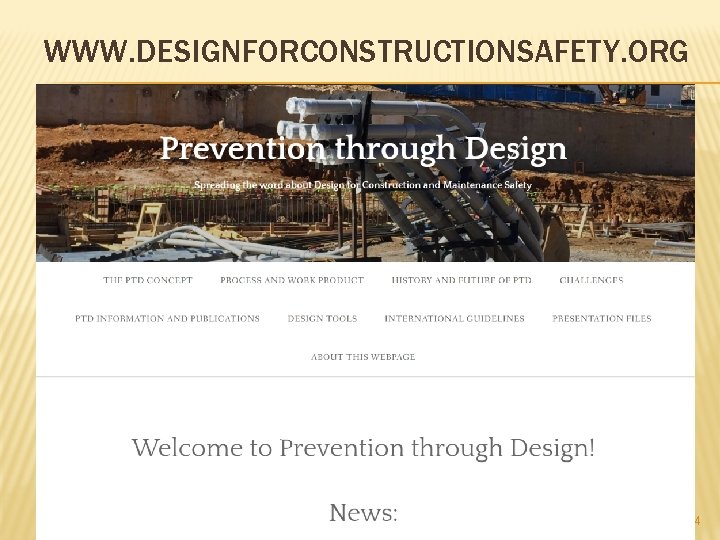
WWW. DESIGNFORCONSTRUCTIONSAFETY. ORG 44
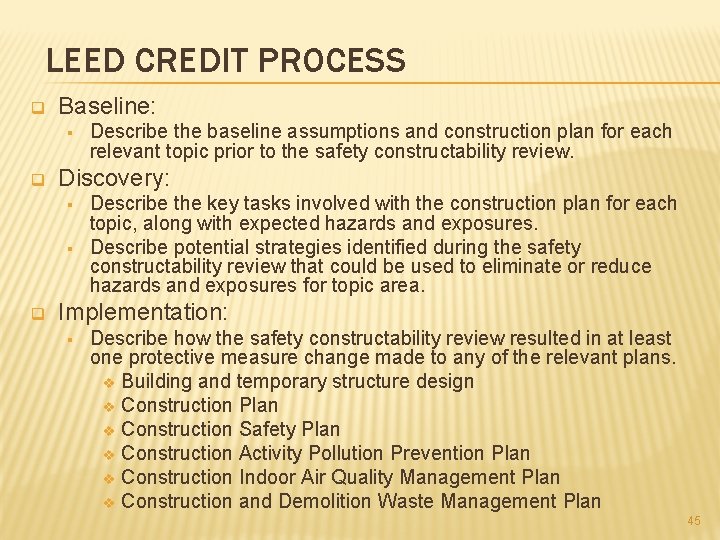
LEED CREDIT PROCESS q Baseline: § q Discovery: § § q Describe the baseline assumptions and construction plan for each relevant topic prior to the safety constructability review. Describe the key tasks involved with the construction plan for each topic, along with expected hazards and exposures. Describe potential strategies identified during the safety constructability review that could be used to eliminate or reduce hazards and exposures for topic area. Implementation: § Describe how the safety constructability review resulted in at least one protective measure change made to any of the relevant plans. v Building and temporary structure design v Construction Plan v Construction Safety Plan v Construction Activity Pollution Prevention Plan v Construction Indoor Air Quality Management Plan v Construction and Demolition Waste Management Plan 45
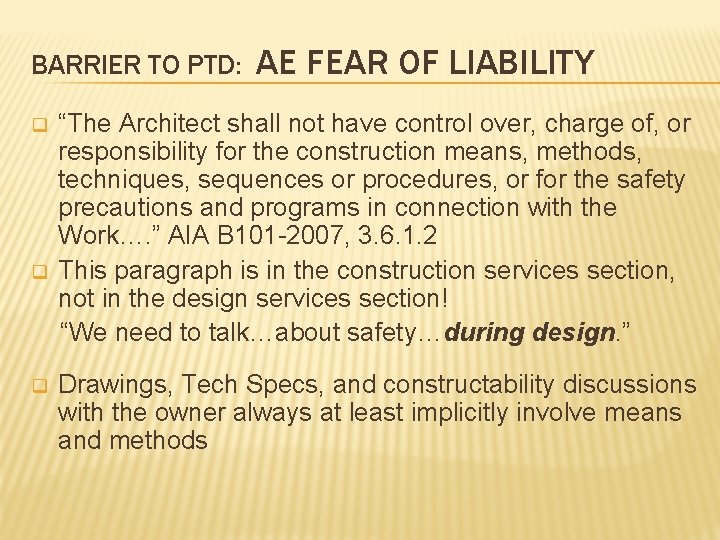
BARRIER TO PTD: q q q AE FEAR OF LIABILITY “The Architect shall not have control over, charge of, or responsibility for the construction means, methods, techniques, sequences or procedures, or for the safety precautions and programs in connection with the Work…. ” AIA B 101 -2007, 3. 6. 1. 2 This paragraph is in the construction services section, not in the design services section! “We need to talk…about safety…during design. ” Drawings, Tech Specs, and constructability discussions with the owner always at least implicitly involve means and methods
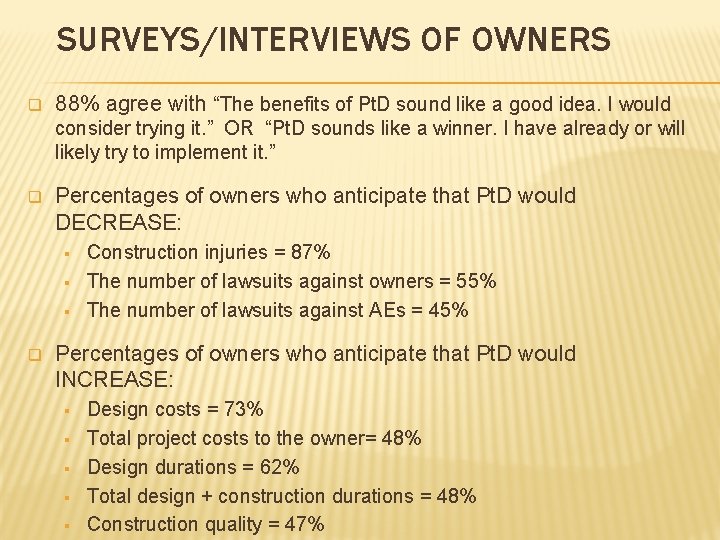
SURVEYS/INTERVIEWS OF OWNERS q 88% agree with “The benefits of Pt. D sound like a good idea. I would consider trying it. ” OR “Pt. D sounds like a winner. I have already or will likely try to implement it. ” q Percentages of owners who anticipate that Pt. D would DECREASE: § § § q Construction injuries = 87% The number of lawsuits against owners = 55% The number of lawsuits against AEs = 45% Percentages of owners who anticipate that Pt. D would INCREASE: § § § Design costs = 73% Total project costs to the owner= 48% Design durations = 62% Total design + construction durations = 48% Construction quality = 47%