
Implementing POGIL into the High School Chemistry Classroom

- Slides: 9
Implementing POGIL into the High School Chemistry Classroom VAST 2007 Jill Barker James Wood High School Winchester, VA barkerj@frederick. k 12. va. us
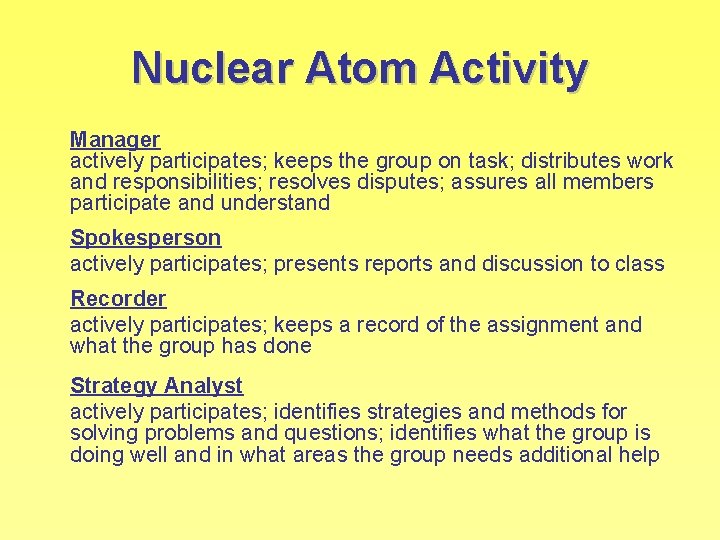
Nuclear Atom Activity Manager actively participates; keeps the group on task; distributes work and responsibilities; resolves disputes; assures all members participate and understand Spokesperson actively participates; presents reports and discussion to class Recorder actively participates; keeps a record of the assignment and what the group has done Strategy Analyst actively participates; identifies strategies and methods for solving problems and questions; identifies what the group is doing well and in what areas the group needs additional help
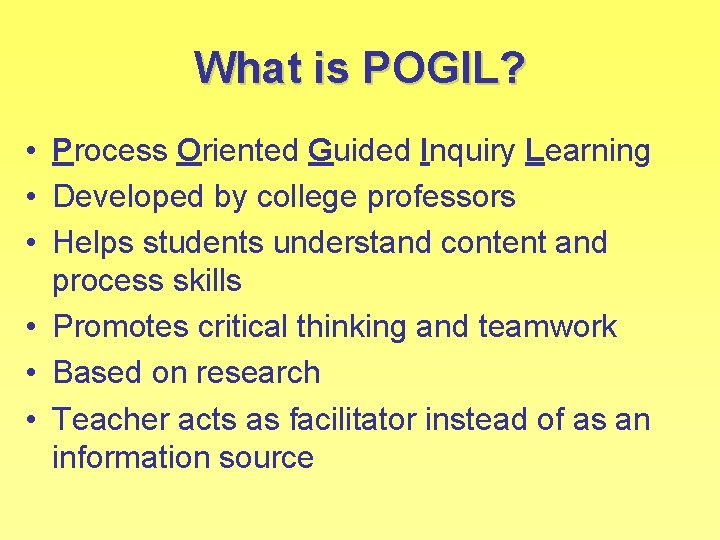
What is POGIL? • Process Oriented Guided Inquiry Learning • Developed by college professors • Helps students understand content and process skills • Promotes critical thinking and teamwork • Based on research • Teacher acts as facilitator instead of as an information source
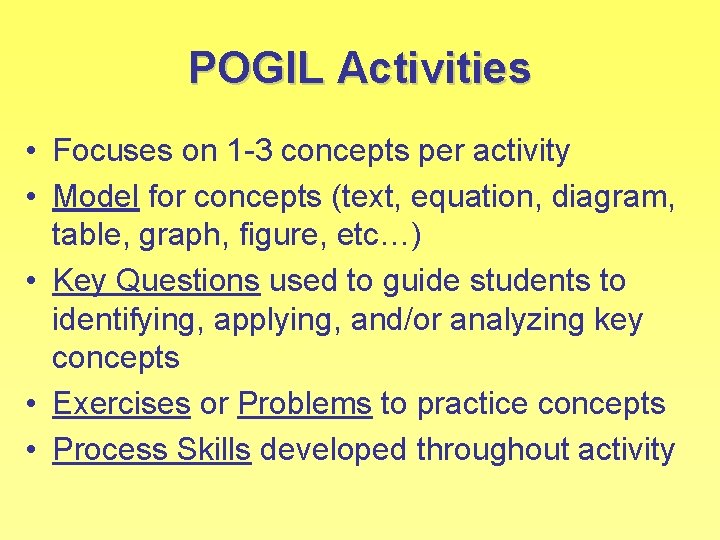
POGIL Activities • Focuses on 1 -3 concepts per activity • Model for concepts (text, equation, diagram, table, graph, figure, etc…) • Key Questions used to guide students to identifying, applying, and/or analyzing key concepts • Exercises or Problems to practice concepts • Process Skills developed throughout activity
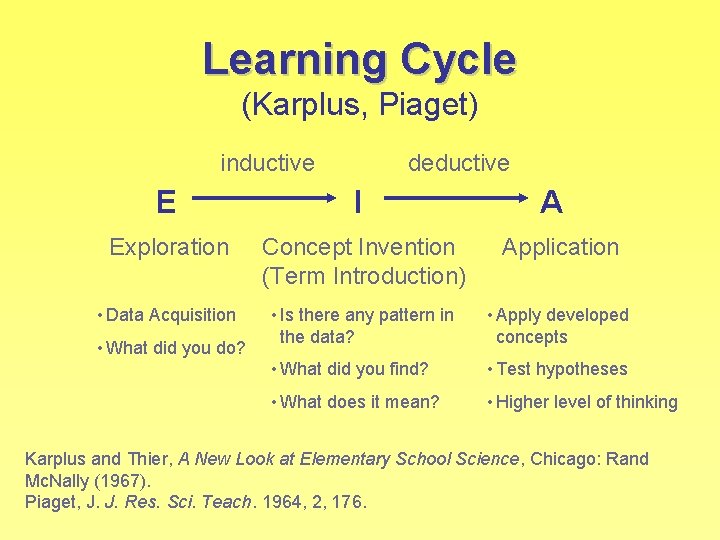
Learning Cycle (Karplus, Piaget) inductive deductive E I Exploration Concept Invention (Term Introduction) Application • Data Acquisition • Is there any pattern in the data? • Apply developed concepts • What did you find? • Test hypotheses • What does it mean? • Higher level of thinking • What did you do? A Karplus and Thier, A New Look at Elementary School Science, Chicago: Rand Mc. Nally (1967). Piaget, J. J. Res. Sci. Teach. 1964, 2, 176.
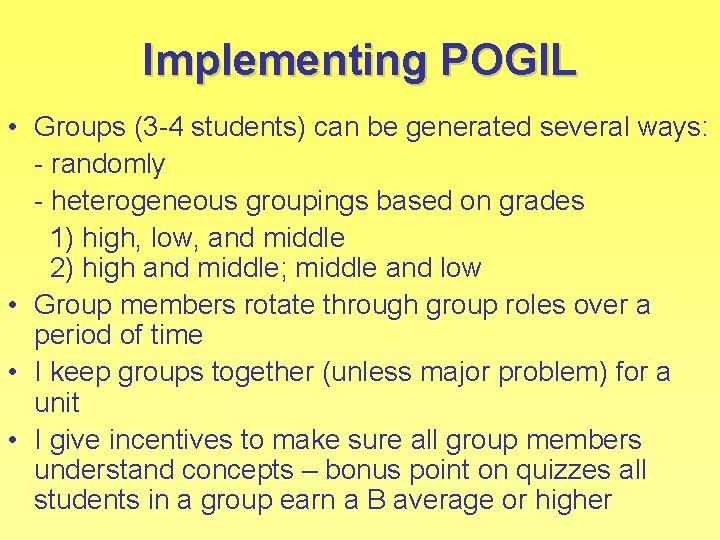
Implementing POGIL • Groups (3 -4 students) can be generated several ways: - randomly - heterogeneous groupings based on grades 1) high, low, and middle 2) high and middle; middle and low • Group members rotate through group roles over a period of time • I keep groups together (unless major problem) for a unit • I give incentives to make sure all group members understand concepts – bonus point on quizzes all students in a group earn a B average or higher
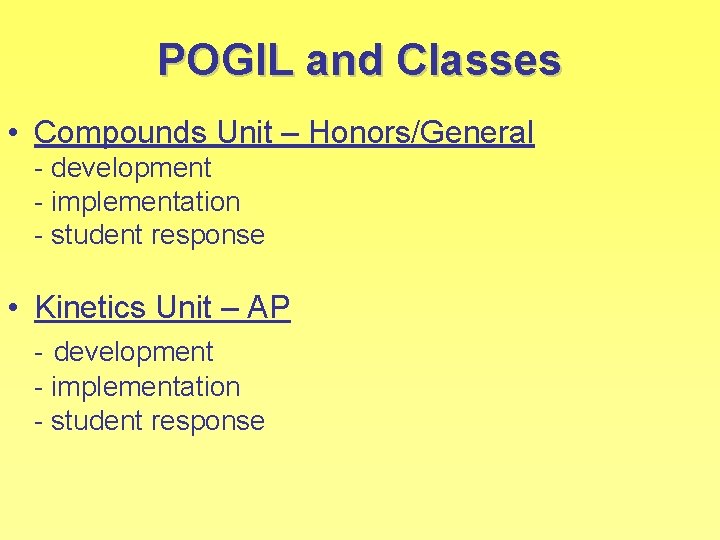
POGIL and Classes • Compounds Unit – Honors/General - development - implementation - student response • Kinetics Unit – AP - development - implementation - student response
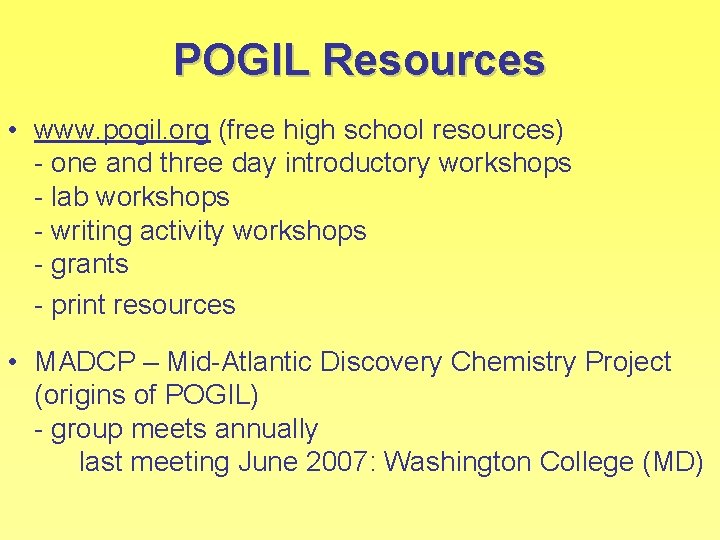
POGIL Resources • www. pogil. org (free high school resources) - one and three day introductory workshops - lab workshops - writing activity workshops - grants - print resources • MADCP – Mid-Atlantic Discovery Chemistry Project (origins of POGIL) - group meets annually last meeting June 2007: Washington College (MD)
www. geocities. com/jmbalaya