
Implementing Mutual Exclusion Andy Wang Operating Systems COP
- Slides: 39
Implementing Mutual Exclusion Andy Wang Operating Systems COP 4610 / CGS 5765
From the Previous Lecture u The “too much milk” example shows that writing concurrent programs directly with load and store instructions (i. e. , C assignment statements) is tricky u Programmers want to use higherlevel operations, such as locks
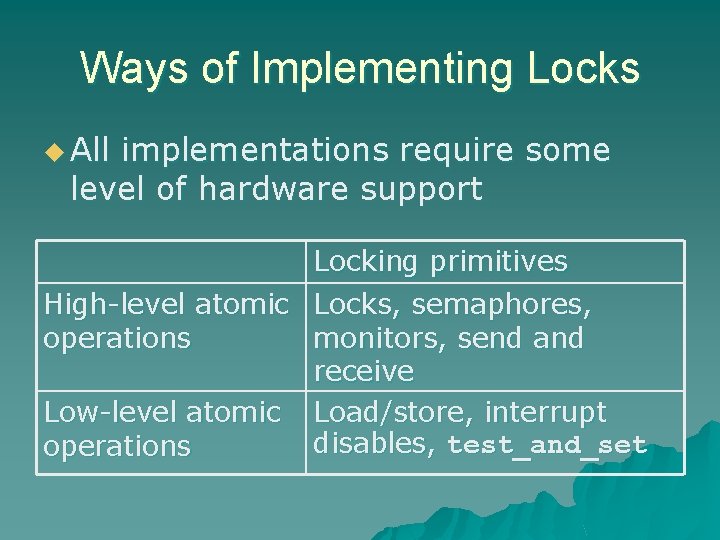
Ways of Implementing Locks u All implementations require some level of hardware support Locking primitives High-level atomic Locks, semaphores, operations monitors, send and receive Low-level atomic Load/store, interrupt disables, test_and_set operations
Atomic Memory Load and Store u. C assignment statements u Examples: “too much milk” solutions
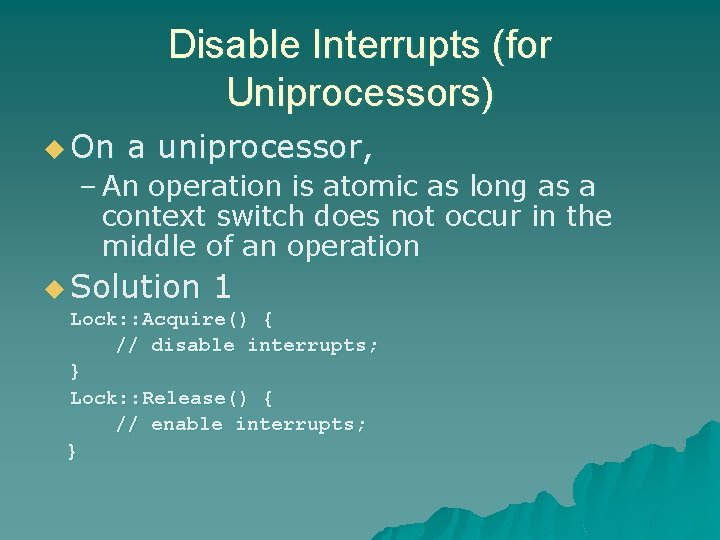
Disable Interrupts (for Uniprocessors) u On a uniprocessor, – An operation is atomic as long as a context switch does not occur in the middle of an operation u Solution 1 Lock: : Acquire() { // disable interrupts; } Lock: : Release() { // enable interrupts; }
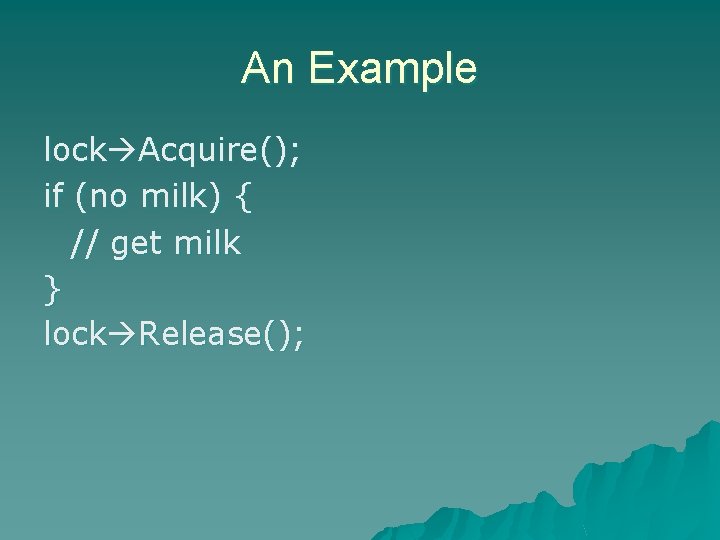
An Example lock Acquire(); if (no milk) { // get milk } lock Release();
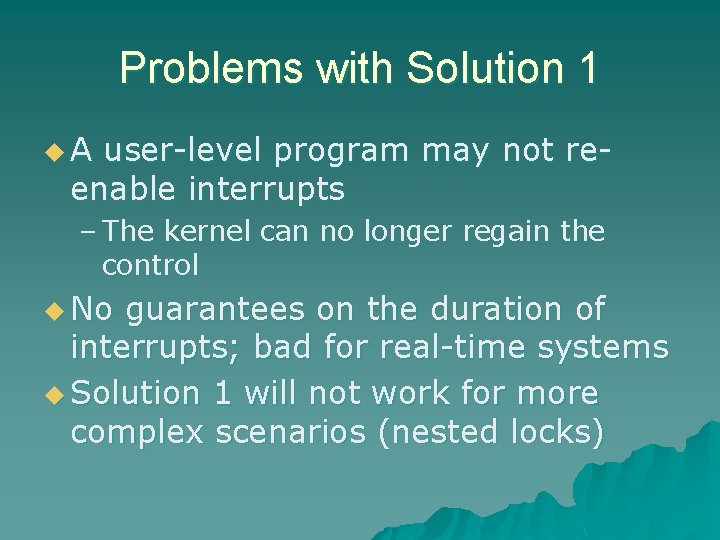
Problems with Solution 1 u. A user-level program may not reenable interrupts – The kernel can no longer regain the control u No guarantees on the duration of interrupts; bad for real-time systems u Solution 1 will not work for more complex scenarios (nested locks)
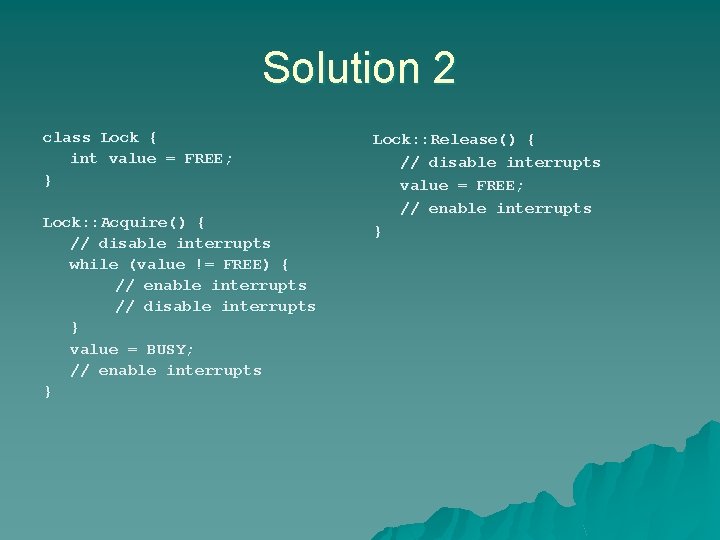
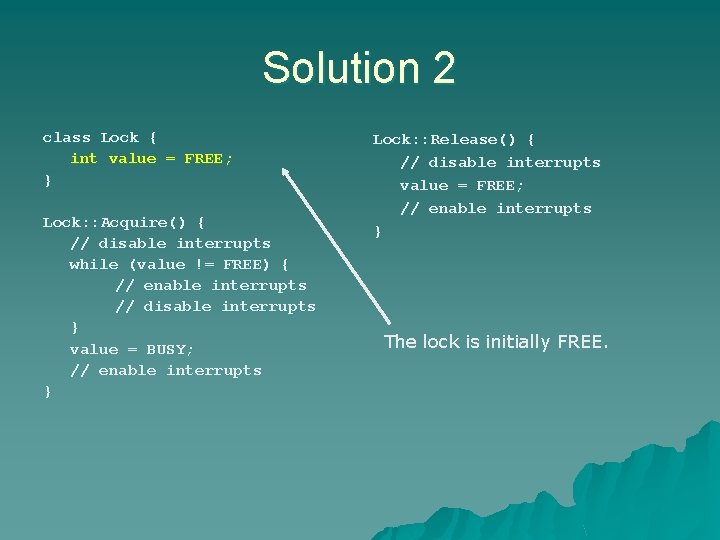
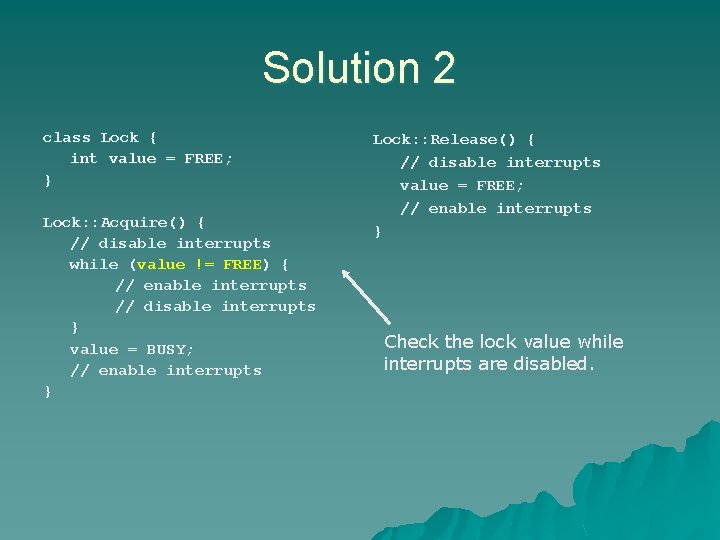
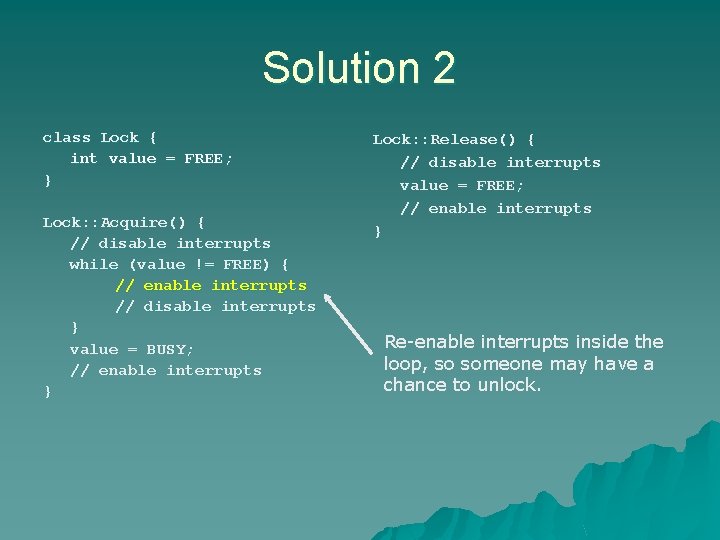
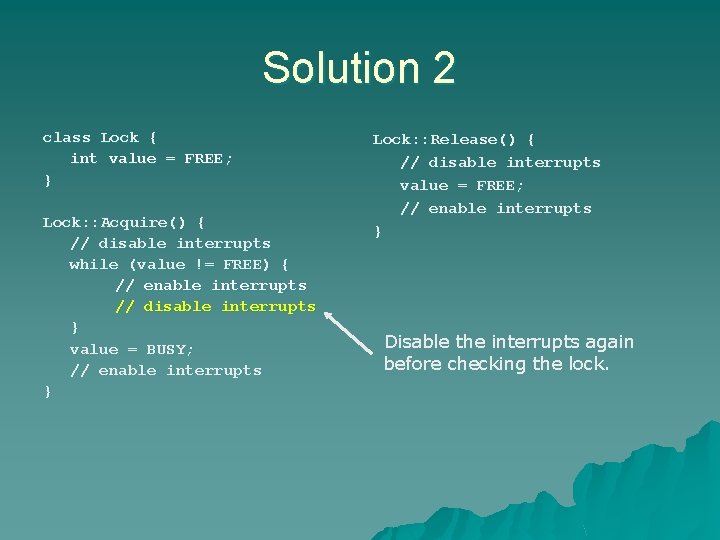
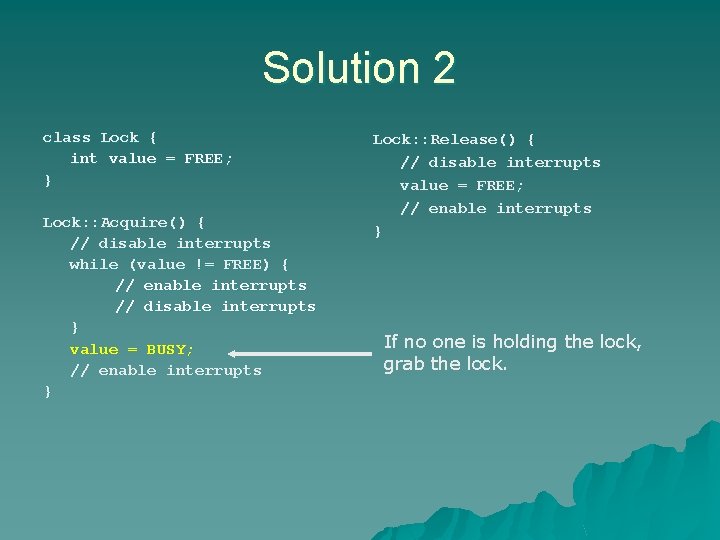
Solution 2 class Lock { int value = FREE; } Lock: : Acquire() { // disable interrupts while (value != FREE) { // enable interrupts // disable interrupts } value = BUSY; // enable interrupts } Lock: : Release() { // disable interrupts value = FREE; // enable interrupts }
Solution 2 class Lock { int value = FREE; } Lock: : Acquire() { // disable interrupts while (value != FREE) { // enable interrupts // disable interrupts } value = BUSY; // enable interrupts } Lock: : Release() { // disable interrupts value = FREE; // enable interrupts } The lock is initially FREE.
Solution 2 class Lock { int value = FREE; } Lock: : Acquire() { // disable interrupts while (value != FREE) { // enable interrupts // disable interrupts } value = BUSY; // enable interrupts } Lock: : Release() { // disable interrupts value = FREE; // enable interrupts } Check the lock value while interrupts are disabled.
Solution 2 class Lock { int value = FREE; } Lock: : Acquire() { // disable interrupts while (value != FREE) { // enable interrupts // disable interrupts } value = BUSY; // enable interrupts } Lock: : Release() { // disable interrupts value = FREE; // enable interrupts } Re-enable interrupts inside the loop, so someone may have a chance to unlock.
Solution 2 class Lock { int value = FREE; } Lock: : Acquire() { // disable interrupts while (value != FREE) { // enable interrupts // disable interrupts } value = BUSY; // enable interrupts } Lock: : Release() { // disable interrupts value = FREE; // enable interrupts } Disable the interrupts again before checking the lock.
Solution 2 class Lock { int value = FREE; } Lock: : Acquire() { // disable interrupts while (value != FREE) { // enable interrupts // disable interrupts } value = BUSY; // enable interrupts } Lock: : Release() { // disable interrupts value = FREE; // enable interrupts } If no one is holding the lock, grab the lock.
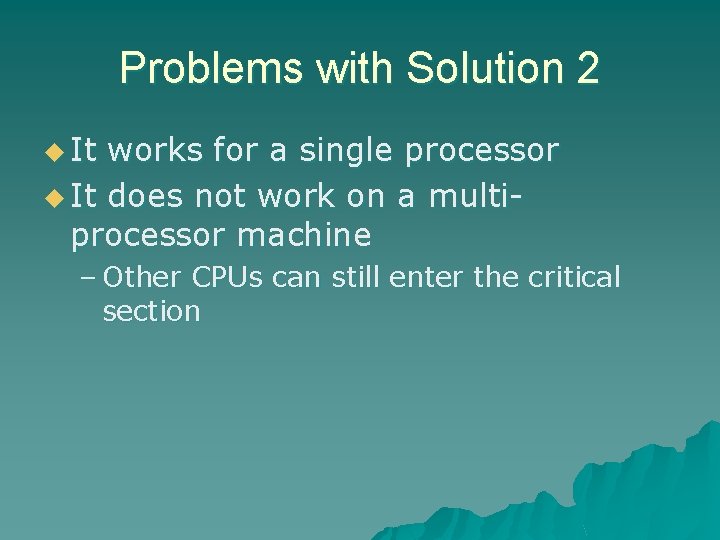
Problems with Solution 2 u It works for a single processor u It does not work on a multiprocessor machine – Other CPUs can still enter the critical section
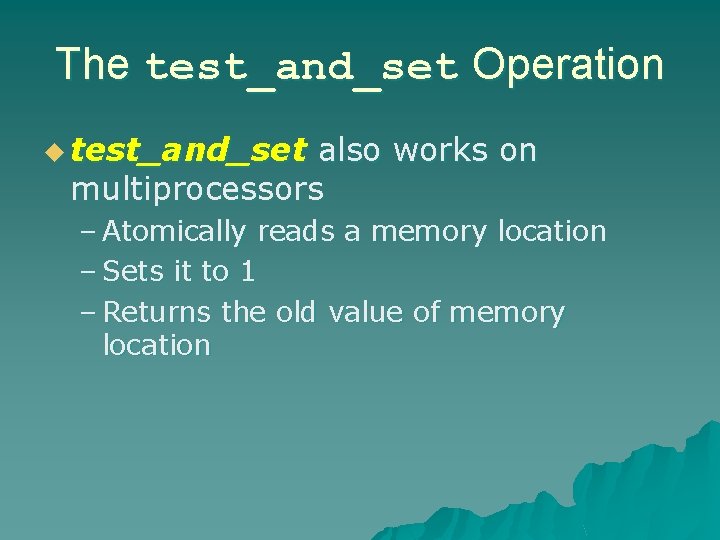
The test_and_set Operation u test_and_set also works on multiprocessors – Atomically reads a memory location – Sets it to 1 – Returns the old value of memory location
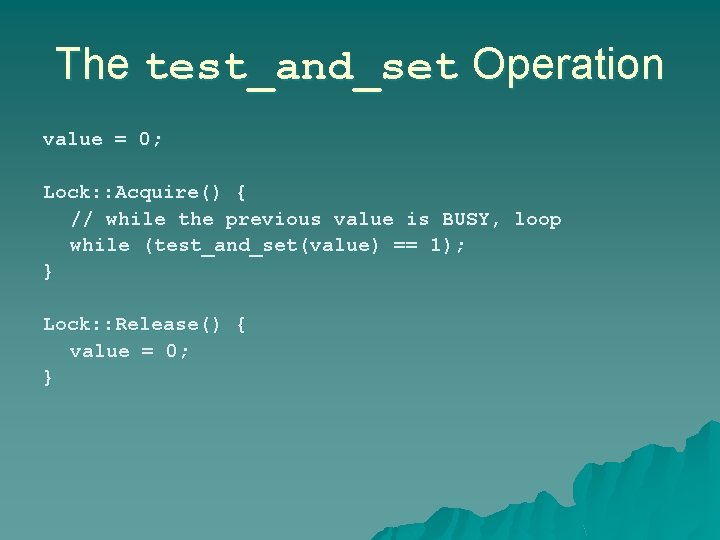
The test_and_set Operation value = 0; Lock: : Acquire() { // while the previous value is BUSY, loop while (test_and_set(value) == 1); } Lock: : Release() { value = 0; }
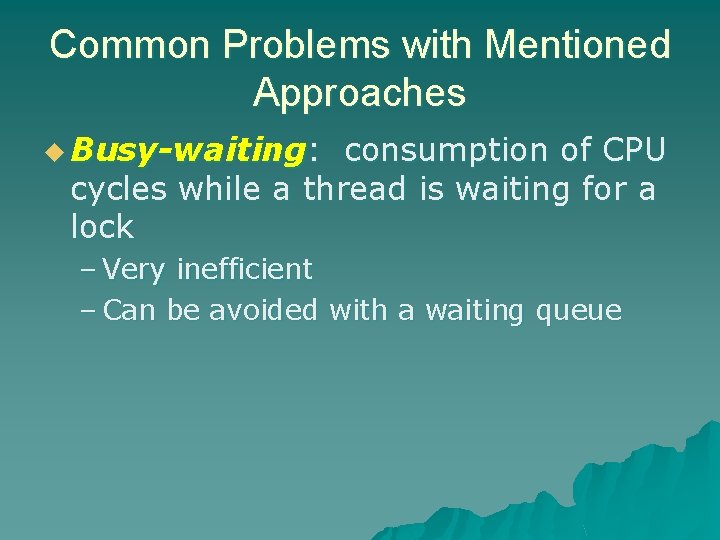
Common Problems with Mentioned Approaches u Busy-waiting: consumption of CPU cycles while a thread is waiting for a lock – Very inefficient – Can be avoided with a waiting queue
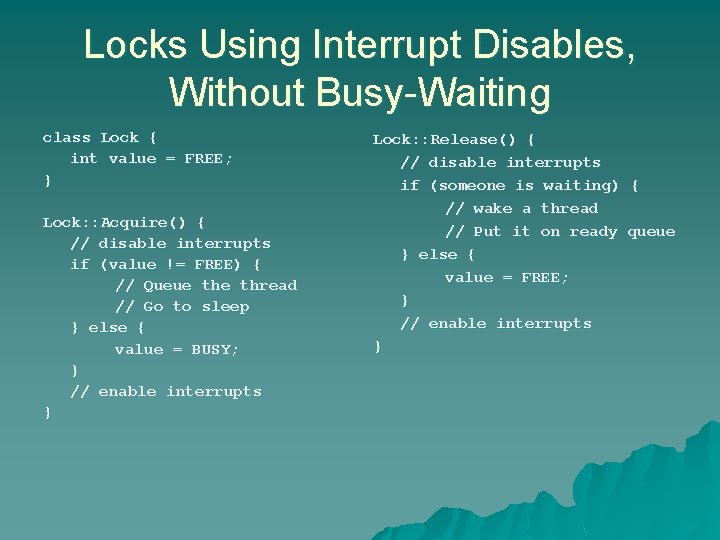
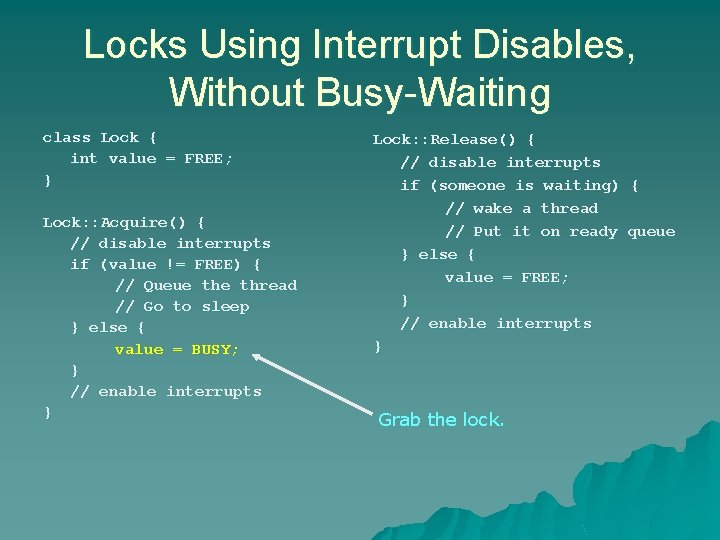
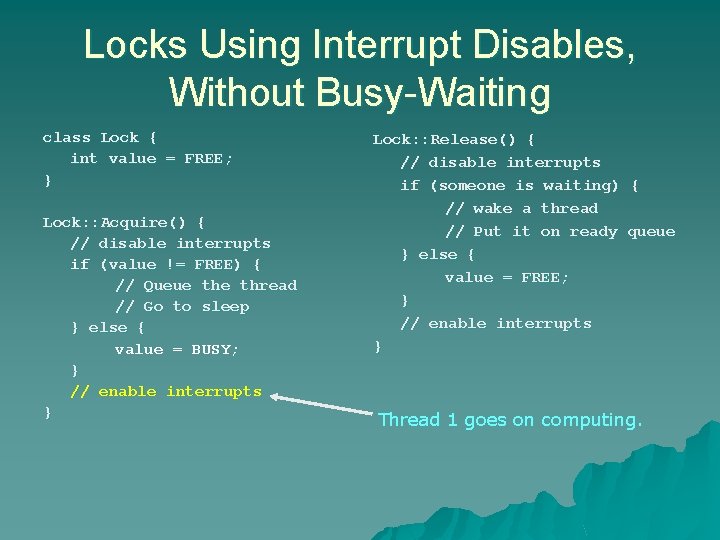
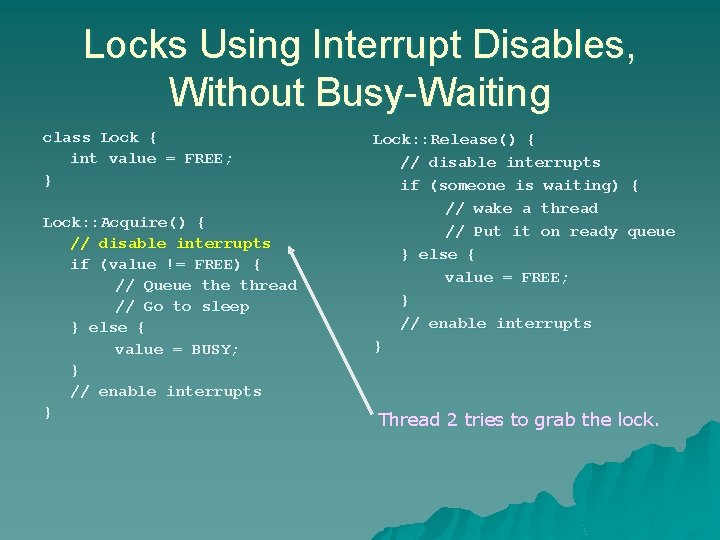
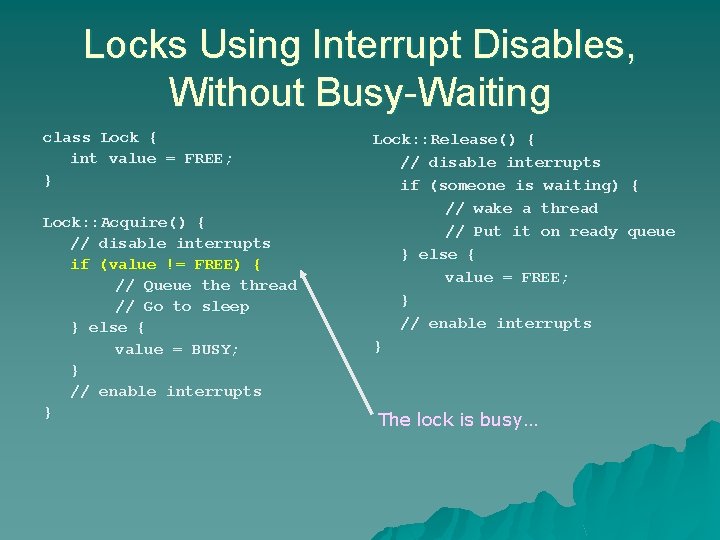
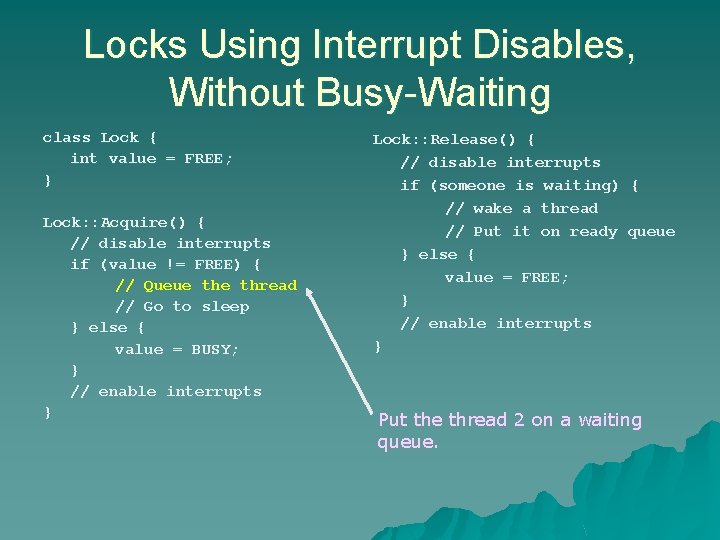
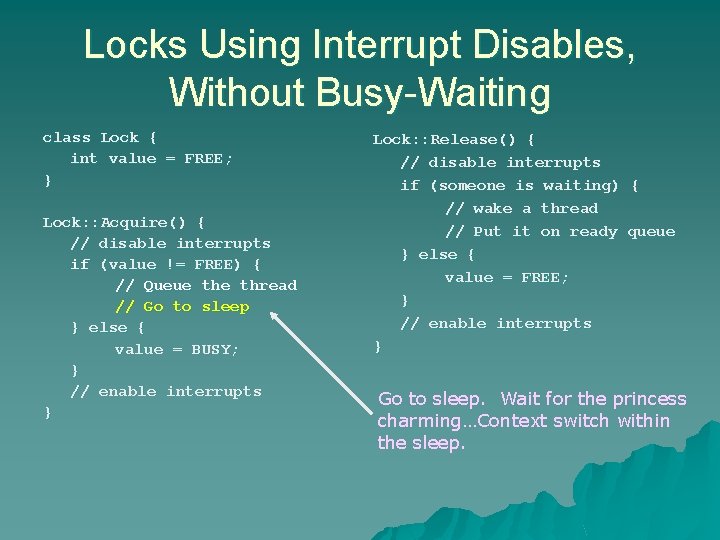
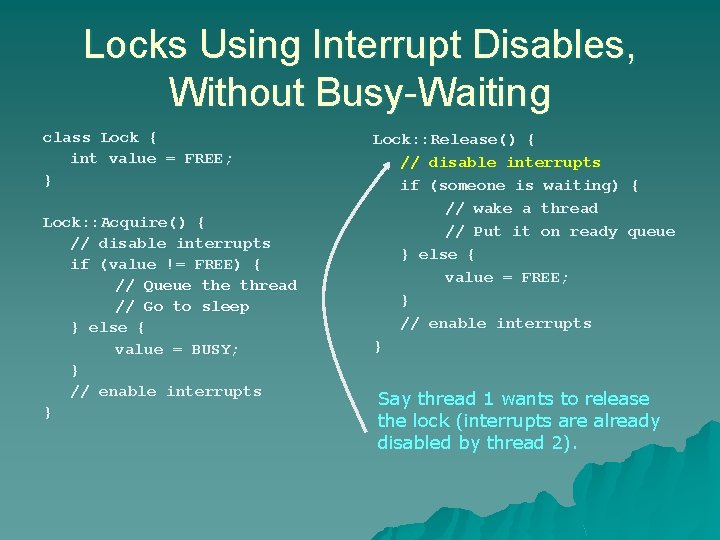
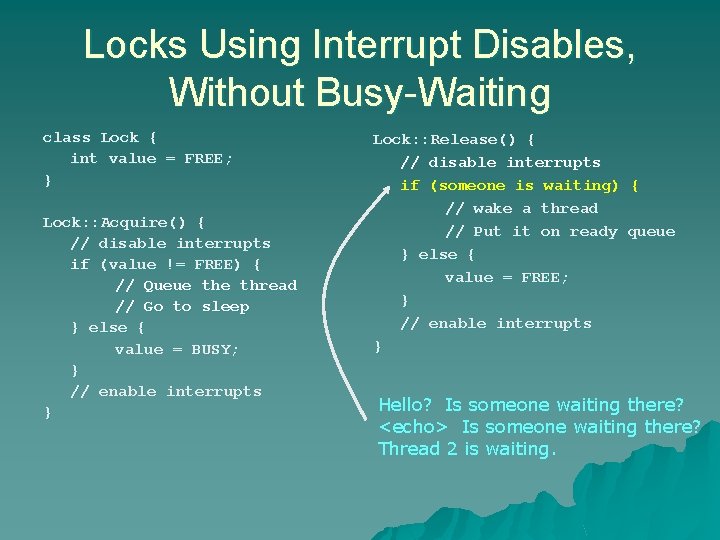
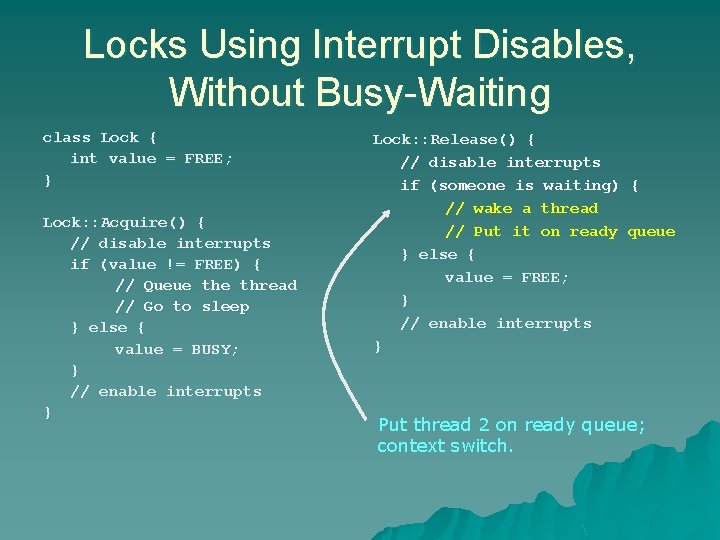
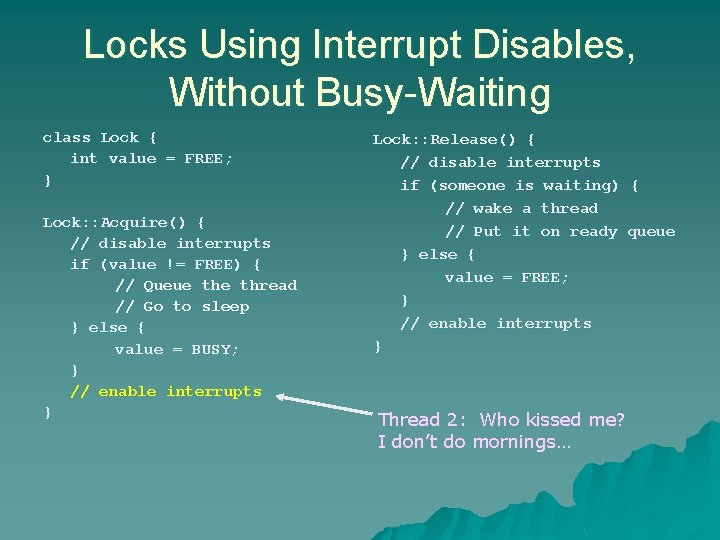
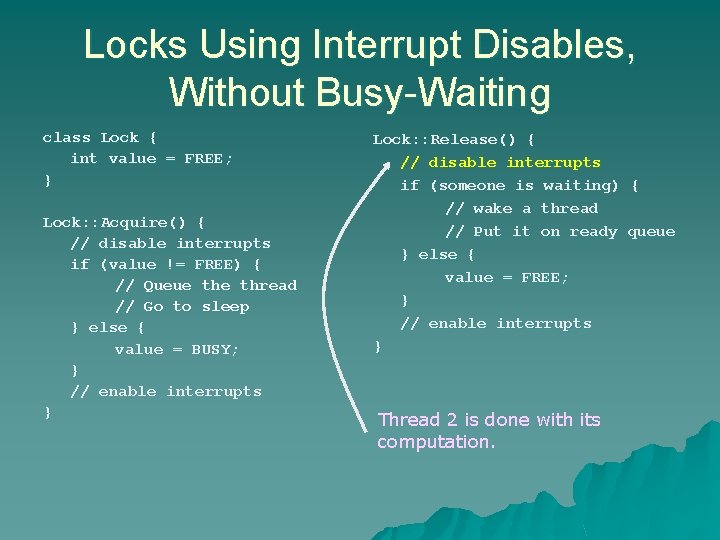
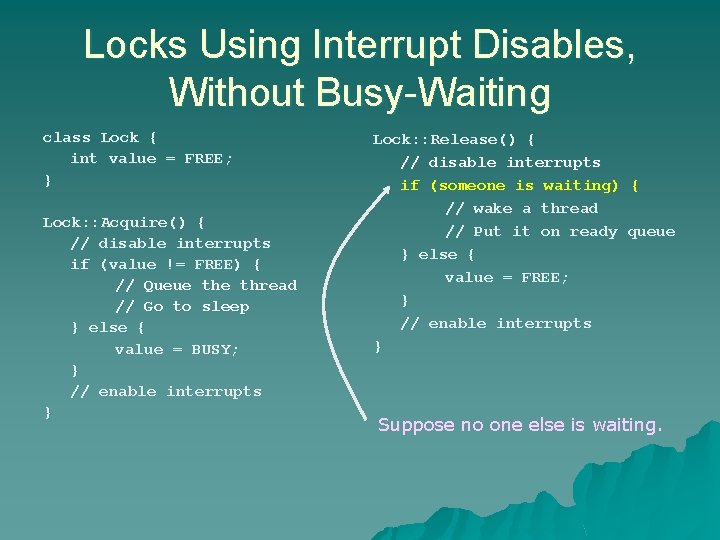
Locks Using Interrupt Disables, Without Busy-Waiting class Lock { int value = FREE; } Lock: : Acquire() { // disable interrupts if (value != FREE) { // Queue thread // Go to sleep } else { value = BUSY; } // enable interrupts } Lock: : Release() { // disable interrupts if (someone is waiting) { // wake a thread // Put it on ready queue } else { value = FREE; } // enable interrupts }
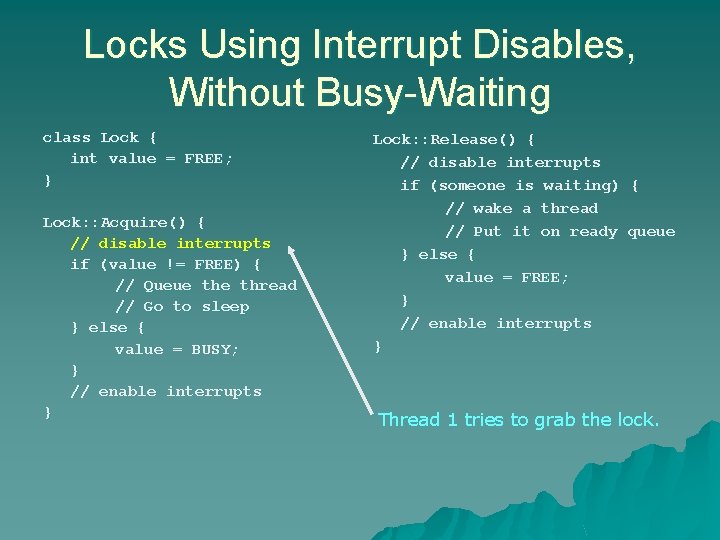
Locks Using Interrupt Disables, Without Busy-Waiting class Lock { int value = FREE; } Lock: : Acquire() { // disable interrupts if (value != FREE) { // Queue thread // Go to sleep } else { value = BUSY; } // enable interrupts } Lock: : Release() { // disable interrupts if (someone is waiting) { // wake a thread // Put it on ready queue } else { value = FREE; } // enable interrupts } Thread 1 tries to grab the lock.
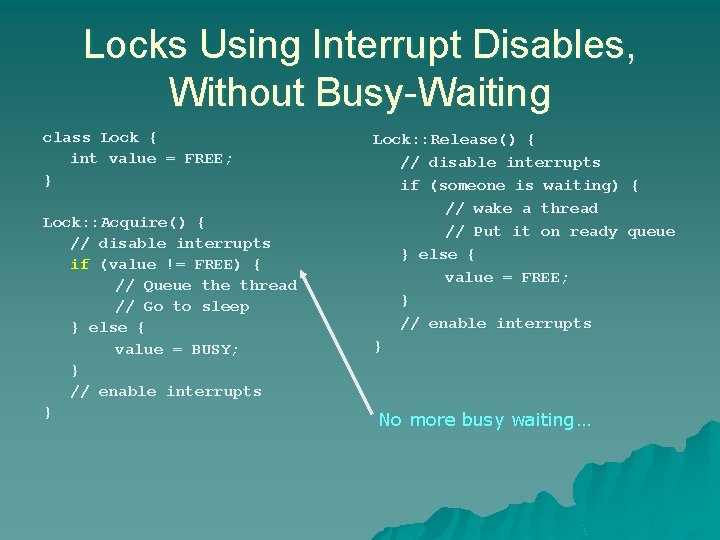
Locks Using Interrupt Disables, Without Busy-Waiting class Lock { int value = FREE; } Lock: : Acquire() { // disable interrupts if (value != FREE) { // Queue thread // Go to sleep } else { value = BUSY; } // enable interrupts } Lock: : Release() { // disable interrupts if (someone is waiting) { // wake a thread // Put it on ready queue } else { value = FREE; } // enable interrupts } No more busy waiting…
Locks Using Interrupt Disables, Without Busy-Waiting class Lock { int value = FREE; } Lock: : Acquire() { // disable interrupts if (value != FREE) { // Queue thread // Go to sleep } else { value = BUSY; } // enable interrupts } Lock: : Release() { // disable interrupts if (someone is waiting) { // wake a thread // Put it on ready queue } else { value = FREE; } // enable interrupts } Grab the lock.
Locks Using Interrupt Disables, Without Busy-Waiting class Lock { int value = FREE; } Lock: : Acquire() { // disable interrupts if (value != FREE) { // Queue thread // Go to sleep } else { value = BUSY; } // enable interrupts } Lock: : Release() { // disable interrupts if (someone is waiting) { // wake a thread // Put it on ready queue } else { value = FREE; } // enable interrupts } Thread 1 goes on computing.
Locks Using Interrupt Disables, Without Busy-Waiting class Lock { int value = FREE; } Lock: : Acquire() { // disable interrupts if (value != FREE) { // Queue thread // Go to sleep } else { value = BUSY; } // enable interrupts } Lock: : Release() { // disable interrupts if (someone is waiting) { // wake a thread // Put it on ready queue } else { value = FREE; } // enable interrupts } Thread 2 tries to grab the lock.
Locks Using Interrupt Disables, Without Busy-Waiting class Lock { int value = FREE; } Lock: : Acquire() { // disable interrupts if (value != FREE) { // Queue thread // Go to sleep } else { value = BUSY; } // enable interrupts } Lock: : Release() { // disable interrupts if (someone is waiting) { // wake a thread // Put it on ready queue } else { value = FREE; } // enable interrupts } The lock is busy…
Locks Using Interrupt Disables, Without Busy-Waiting class Lock { int value = FREE; } Lock: : Acquire() { // disable interrupts if (value != FREE) { // Queue thread // Go to sleep } else { value = BUSY; } // enable interrupts } Lock: : Release() { // disable interrupts if (someone is waiting) { // wake a thread // Put it on ready queue } else { value = FREE; } // enable interrupts } Put the thread 2 on a waiting queue.
Locks Using Interrupt Disables, Without Busy-Waiting class Lock { int value = FREE; } Lock: : Acquire() { // disable interrupts if (value != FREE) { // Queue thread // Go to sleep } else { value = BUSY; } // enable interrupts } Lock: : Release() { // disable interrupts if (someone is waiting) { // wake a thread // Put it on ready queue } else { value = FREE; } // enable interrupts } Go to sleep. Wait for the princess charming…Context switch within the sleep.
Locks Using Interrupt Disables, Without Busy-Waiting class Lock { int value = FREE; } Lock: : Acquire() { // disable interrupts if (value != FREE) { // Queue thread // Go to sleep } else { value = BUSY; } // enable interrupts } Lock: : Release() { // disable interrupts if (someone is waiting) { // wake a thread // Put it on ready queue } else { value = FREE; } // enable interrupts } Say thread 1 wants to release the lock (interrupts are already disabled by thread 2).
Locks Using Interrupt Disables, Without Busy-Waiting class Lock { int value = FREE; } Lock: : Acquire() { // disable interrupts if (value != FREE) { // Queue thread // Go to sleep } else { value = BUSY; } // enable interrupts } Lock: : Release() { // disable interrupts if (someone is waiting) { // wake a thread // Put it on ready queue } else { value = FREE; } // enable interrupts } Hello? Is someone waiting there? <echo> Is someone waiting there? Thread 2 is waiting.
Locks Using Interrupt Disables, Without Busy-Waiting class Lock { int value = FREE; } Lock: : Acquire() { // disable interrupts if (value != FREE) { // Queue thread // Go to sleep } else { value = BUSY; } // enable interrupts } Lock: : Release() { // disable interrupts if (someone is waiting) { // wake a thread // Put it on ready queue } else { value = FREE; } // enable interrupts } Put thread 2 on ready queue; context switch.
Locks Using Interrupt Disables, Without Busy-Waiting class Lock { int value = FREE; } Lock: : Acquire() { // disable interrupts if (value != FREE) { // Queue thread // Go to sleep } else { value = BUSY; } // enable interrupts } Lock: : Release() { // disable interrupts if (someone is waiting) { // wake a thread // Put it on ready queue } else { value = FREE; } // enable interrupts } Thread 2: Who kissed me? I don’t do mornings…
Locks Using Interrupt Disables, Without Busy-Waiting class Lock { int value = FREE; } Lock: : Acquire() { // disable interrupts if (value != FREE) { // Queue thread // Go to sleep } else { value = BUSY; } // enable interrupts } Lock: : Release() { // disable interrupts if (someone is waiting) { // wake a thread // Put it on ready queue } else { value = FREE; } // enable interrupts } Thread 2 is done with its computation.
Locks Using Interrupt Disables, Without Busy-Waiting class Lock { int value = FREE; } Lock: : Acquire() { // disable interrupts if (value != FREE) { // Queue thread // Go to sleep } else { value = BUSY; } // enable interrupts } Lock: : Release() { // disable interrupts if (someone is waiting) { // wake a thread // Put it on ready queue } else { value = FREE; } // enable interrupts } Suppose no one else is waiting.
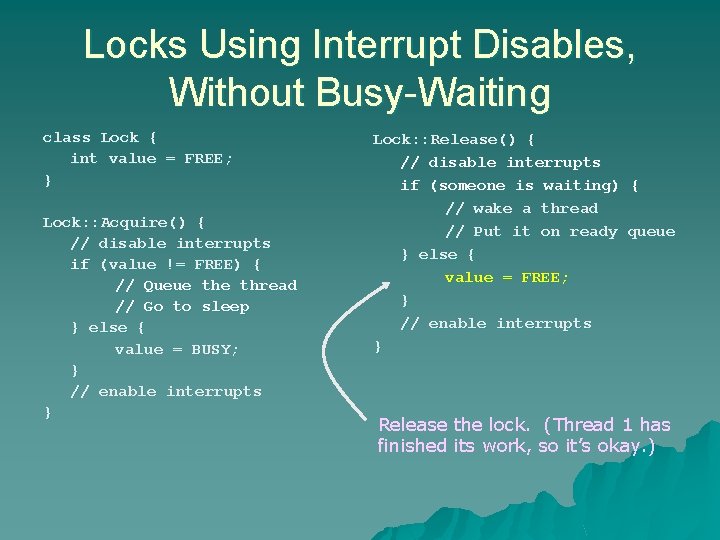
Locks Using Interrupt Disables, Without Busy-Waiting class Lock { int value = FREE; } Lock: : Acquire() { // disable interrupts if (value != FREE) { // Queue thread // Go to sleep } else { value = BUSY; } // enable interrupts } Lock: : Release() { // disable interrupts if (someone is waiting) { // wake a thread // Put it on ready queue } else { value = FREE; } // enable interrupts } Release the lock. (Thread 1 has finished its work, so it’s okay. )
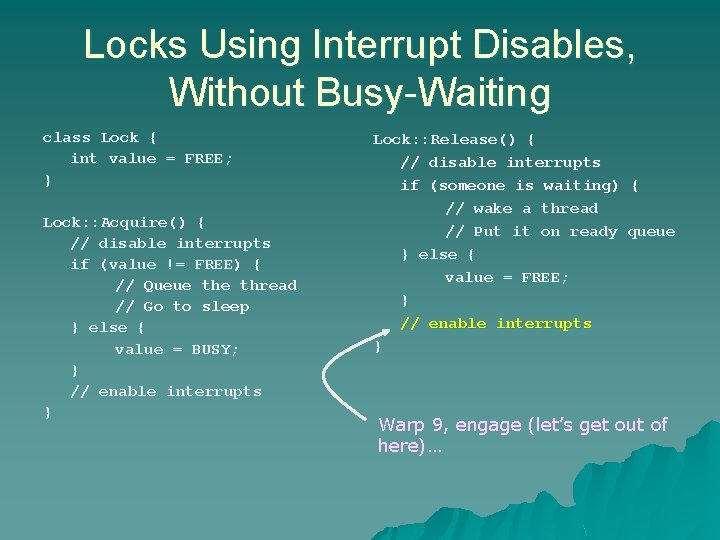
Locks Using Interrupt Disables, Without Busy-Waiting class Lock { int value = FREE; } Lock: : Acquire() { // disable interrupts if (value != FREE) { // Queue thread // Go to sleep } else { value = BUSY; } // enable interrupts } Lock: : Release() { // disable interrupts if (someone is waiting) { // wake a thread // Put it on ready queue } else { value = FREE; } // enable interrupts } Warp 9, engage (let’s get out of here)…
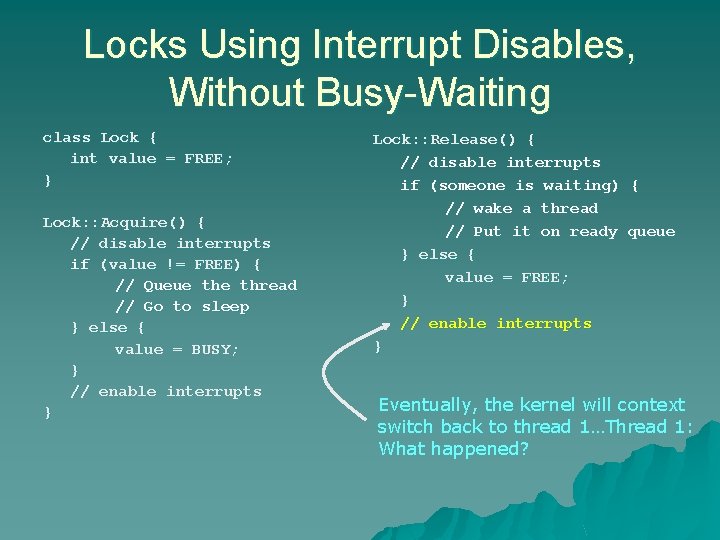
Locks Using Interrupt Disables, Without Busy-Waiting class Lock { int value = FREE; } Lock: : Acquire() { // disable interrupts if (value != FREE) { // Queue thread // Go to sleep } else { value = BUSY; } // enable interrupts } Lock: : Release() { // disable interrupts if (someone is waiting) { // wake a thread // Put it on ready queue } else { value = FREE; } // enable interrupts } Eventually, the kernel will context switch back to thread 1…Thread 1: What happened?
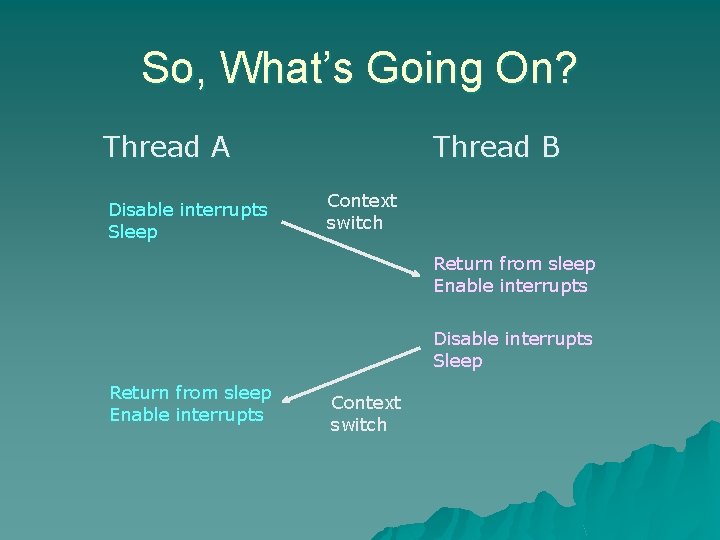
So, What’s Going On? u Interrupt disable and enable operations occur across context switches (at the steady state)
So, What’s Going On? Thread A Disable interrupts Sleep Thread B Context switch Return from sleep Enable interrupts Disable interrupts Sleep Return from sleep Enable interrupts Context switch
Locks Using test_and_set, With Minimal Busy-Waiting u Impossible to use test_and_set to avoid busy-waiting u However, waiting can be minimized with a waiting queue
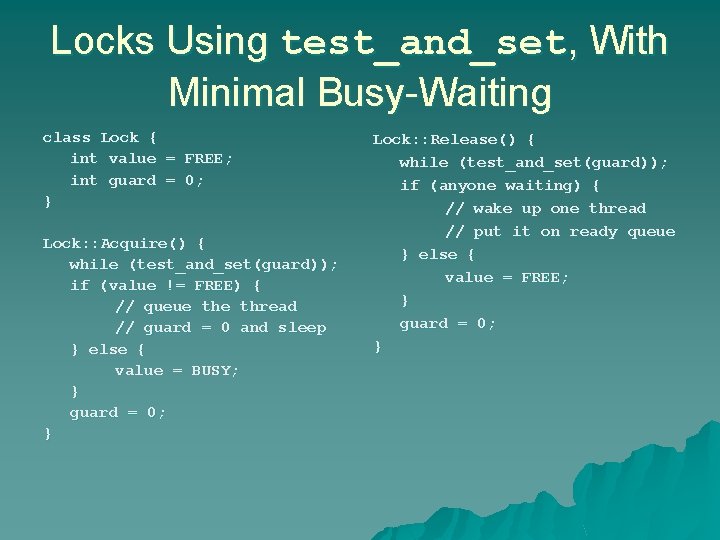
Locks Using test_and_set, With Minimal Busy-Waiting class Lock { int value = FREE; int guard = 0; } Lock: : Acquire() { while (test_and_set(guard)); if (value != FREE) { // queue thread // guard = 0 and sleep } else { value = BUSY; } guard = 0; } Lock: : Release() { while (test_and_set(guard)); if (anyone waiting) { // wake up one thread // put it on ready queue } else { value = FREE; } guard = 0; }