
Implementing Monitoring the SDGs in the Caribbean The
Implementing & Monitoring the SDGs in the Caribbean: The Role of the Ocean INTERDEPENDENCIES BETWEEN SUSTAINABLE DEVELOPMENT GOALS AND IMPLEMENTATION Dr Julian Roberts Blue Resources Ltd

Why Discuss This? • “the SDGs are meant to be integrated, indivisible and collectively support a development agenda balancing the economic, social and environmental dimensions of sustainability”
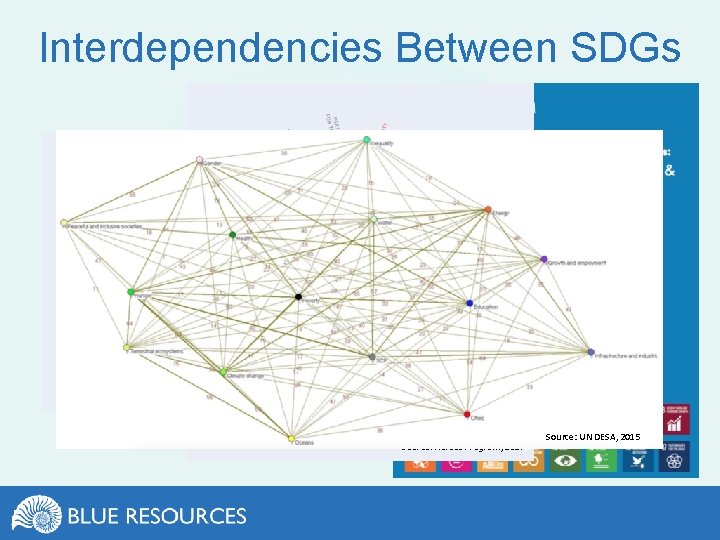
Interdependencies Between SDGs Source: Nereus Program, 2017 Source: UN DESA, 2015
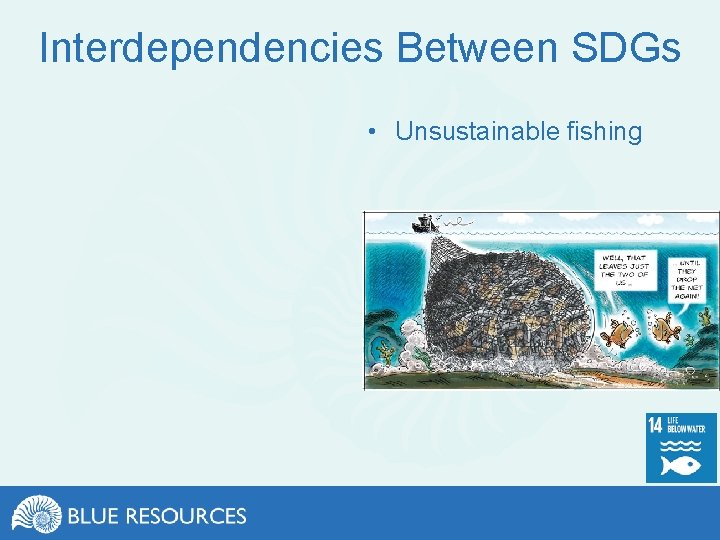
Interdependencies Between SDGs • Unsustainable fishing
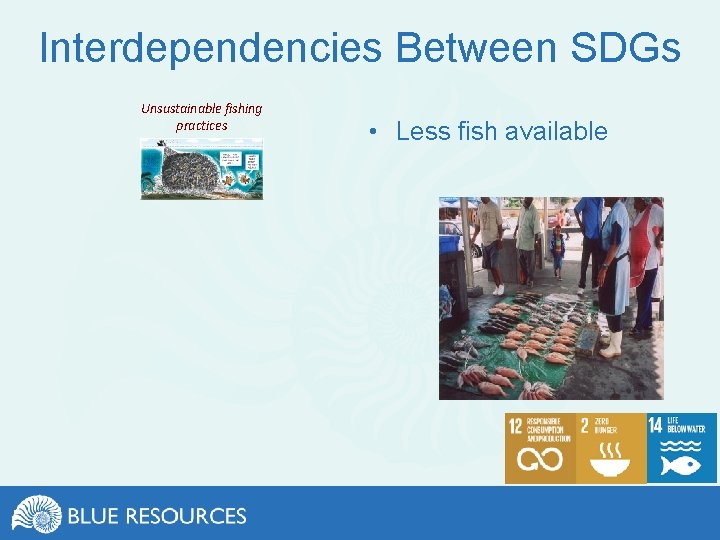
Interdependencies Between SDGs Unsustainable fishing practices • Less fish available
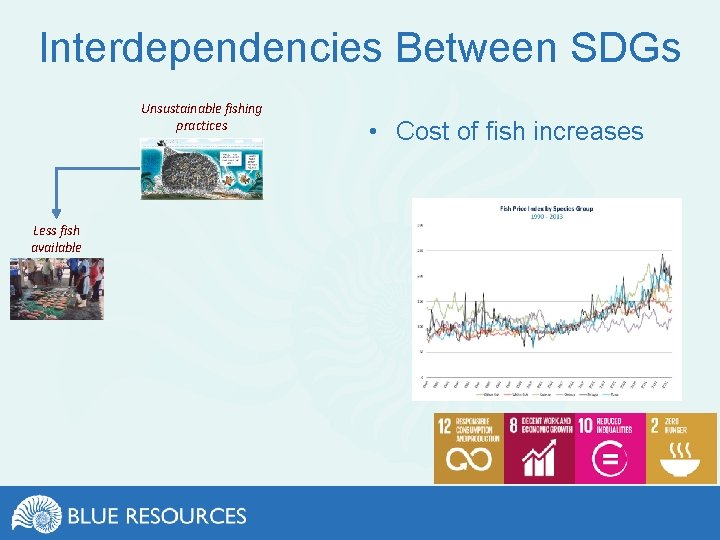
Interdependencies Between SDGs Unsustainable fishing practices Less fish available • Cost of fish increases
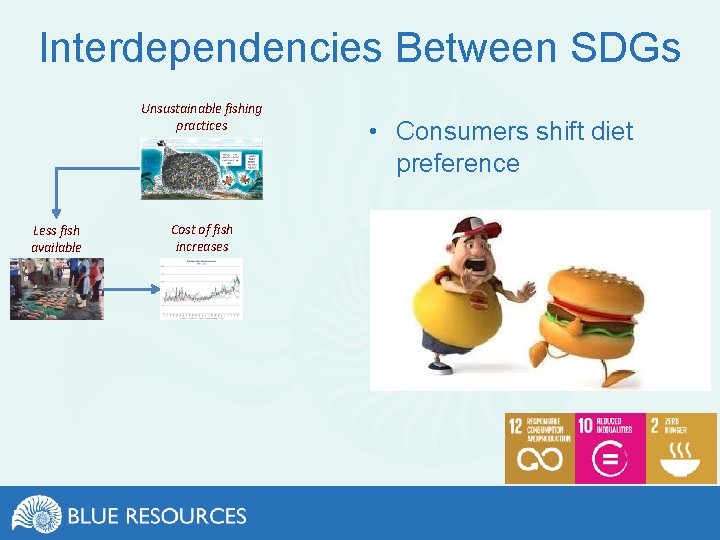
Interdependencies Between SDGs Unsustainable fishing practices Less fish available Cost of fish increases • Consumers shift diet preference
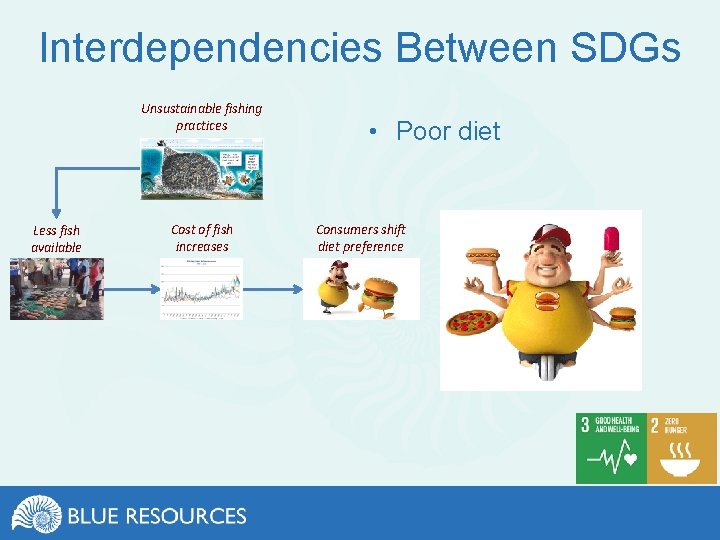
Interdependencies Between SDGs Unsustainable fishing practices Less fish available Cost of fish increases • Poor diet Consumers shift diet preference
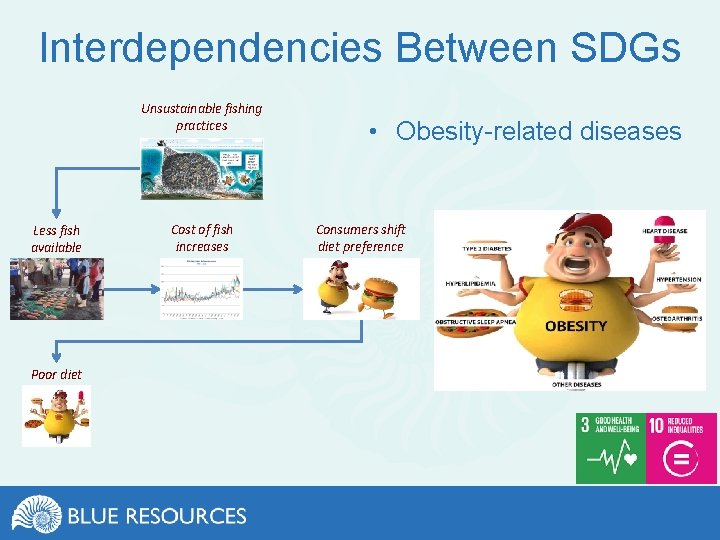
Interdependencies Between SDGs Unsustainable fishing practices Less fish available Poor diet Cost of fish increases • Obesity-related diseases Consumers shift diet preference
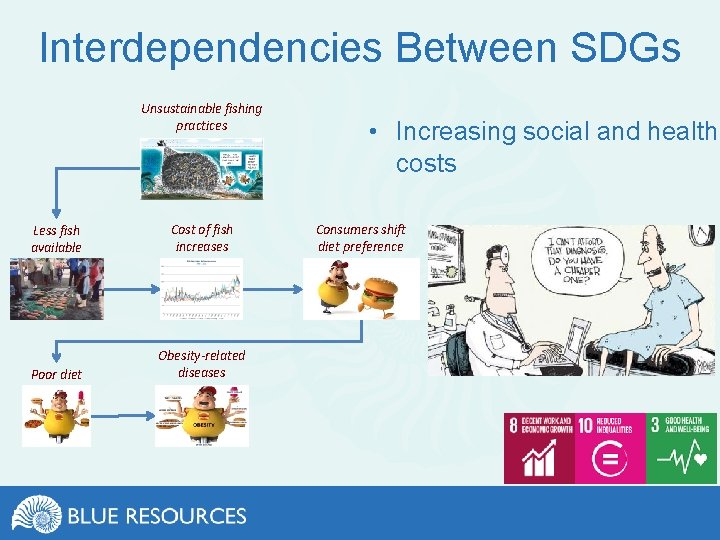
Interdependencies Between SDGs Unsustainable fishing practices Less fish available Cost of fish increases Poor diet Obesity-related diseases • Increasing social and health costs Consumers shift diet preference
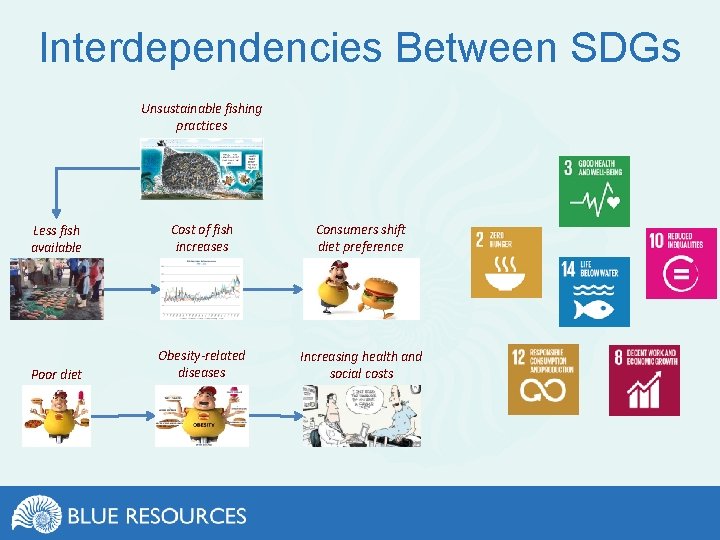
Interdependencies Between SDGs Unsustainable fishing practices Less fish available Cost of fish increases Consumers shift diet preference Poor diet Obesity-related diseases Increasing health and social costs
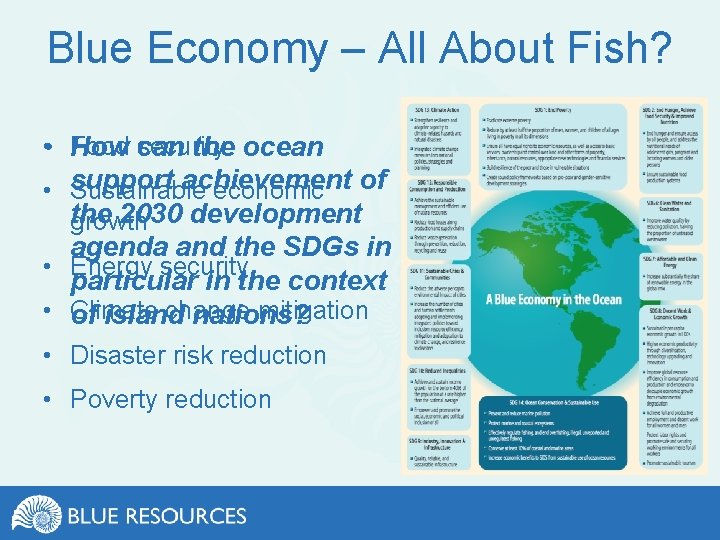
Blue Economy – All About Fish? Food can security • How the ocean achievement • support Sustainable economic of the 2030 development growth agenda and the SDGs in • Energy security particular in the context • of Climate change mitigation island nations? • Disaster risk reduction • Poverty reduction
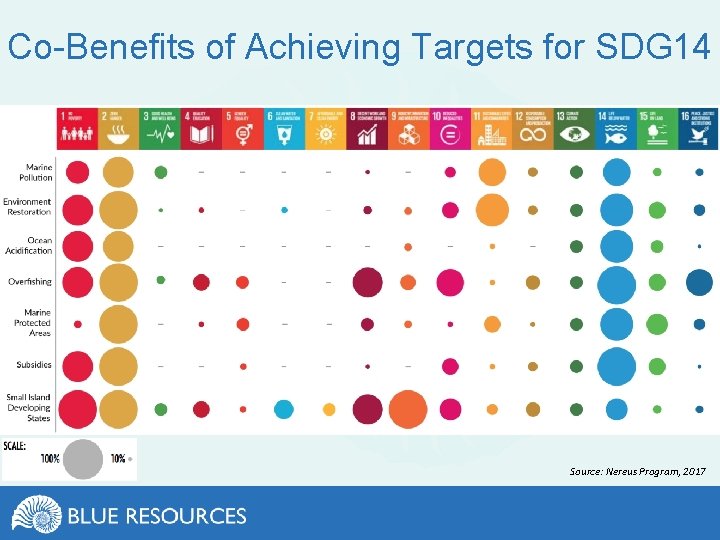
Co-Benefits of Achieving Targets for SDG 14 Source: Nereus Program, 2017
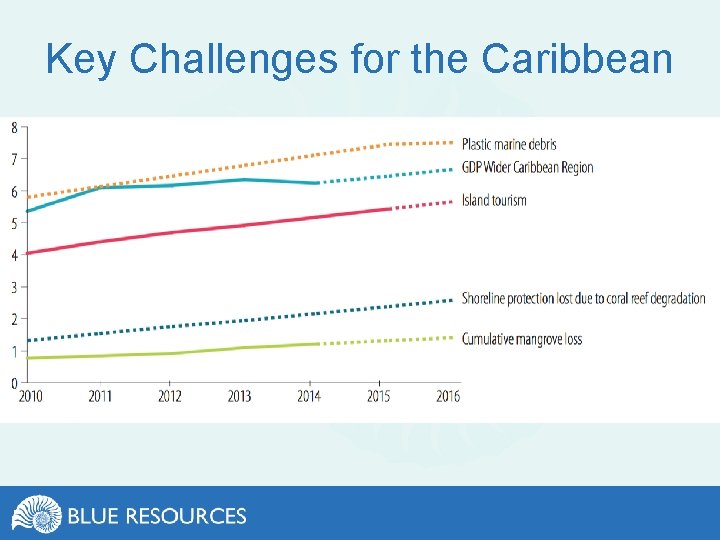
Key Challenges for the Caribbean • Challenges – small size of the countries – provision of public services has a high cost – limiting the institutions and skills available for policy response – high Government debt-GDP ratio • Lack of economic diversification • Threats to the marine environment
Key Challenges for the Caribbean
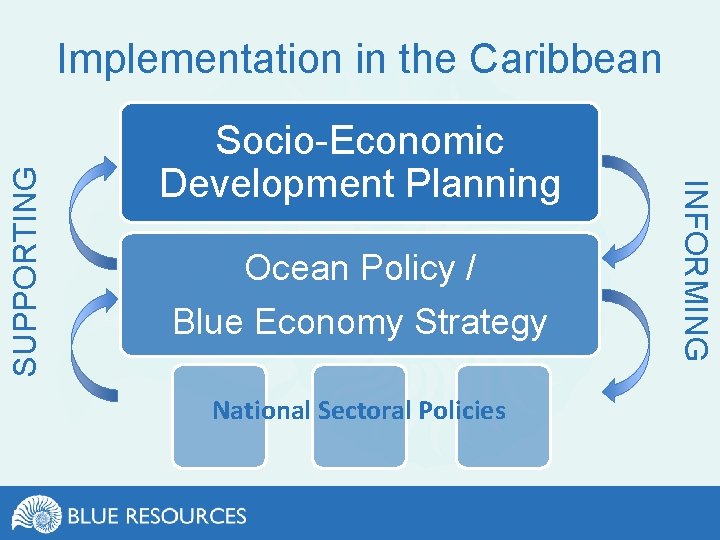
Socio-Economic Development Planning Ocean Policy / Blue Economy Strategy National Sectoral Policies INFORMING SUPPORTING Implementation in the Caribbean

Shocks and Discontinuities • Shocks – Sudden events that impact on the vulnerability of the system and its components
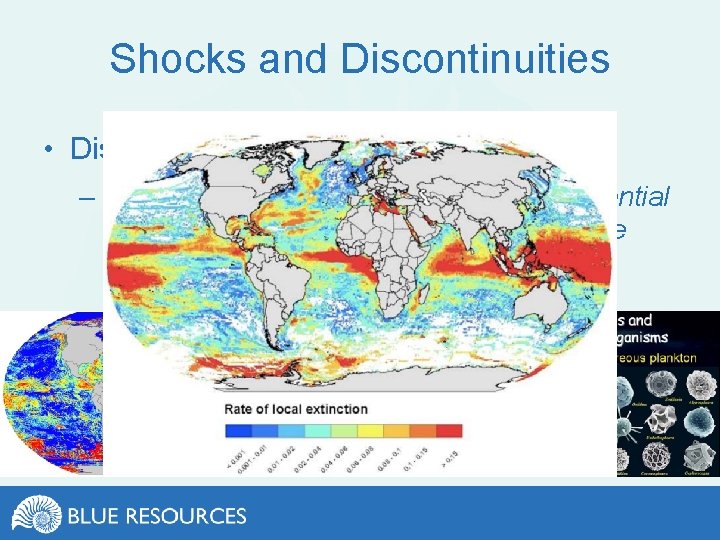
Shocks and Discontinuities • Discontinuities – Long-term trends that undermine the potential of a given system or process and increase vulnerability

Scenario-Based Planning
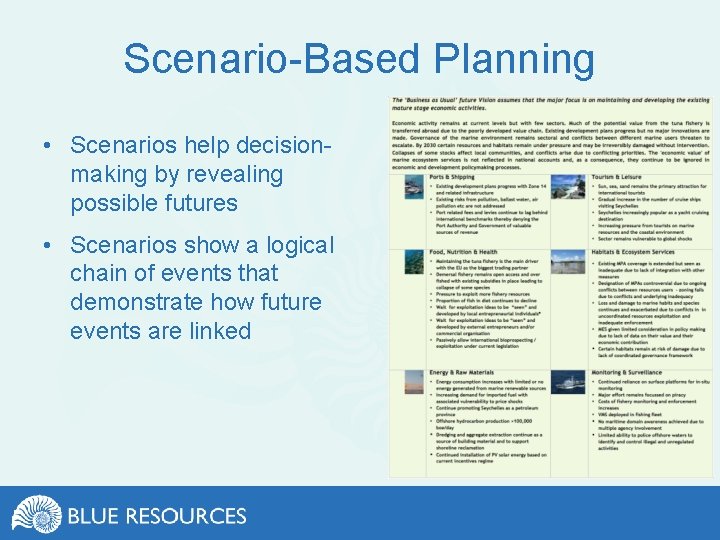
Scenario-Based Planning • Scenarios help decisionmaking by revealing possible futures • Scenarios show a logical chain of events that demonstrate how future events are linked
THANK YOU FOR LISTENING Dr Julian Roberts j. roberts@blueresources. co. uk With thanks to the CME Programme for enabling my participation
Implementing & Monitoring the SDGs in the Caribbean: The Role of the Ocean Beachcombers Hotel, St Vincent and the Grenadines 17 th to 19 th January 2018
CME Programme UK Government commitment • to support Commonwealth Small Island Developing States (SIDS) • to alleviate poverty • by preserving their marine environments • and harnessing maritime resources that will support the sustainable growth • 3 partners/agencies - expertise from Cefas, UKHO & National Oceanography Centre (NOC) • currently in yr 2 of a 4 yr programme www. gov. uk/guidance/commonwealth-marine-economies-programme Total funding over 4 yrs likely to exceed £ 23 M
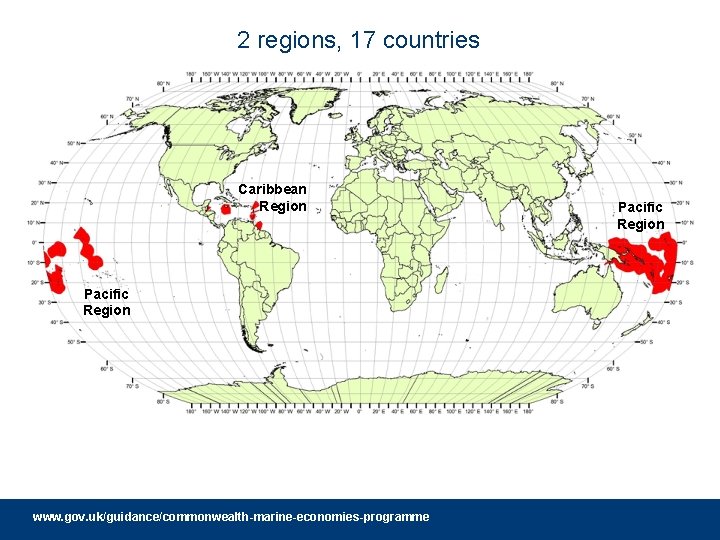
2 regions, 17 countries Caribbean Region Pacific Region www. gov. uk/guidance/commonwealth-marine-economies-programme Pacific Region
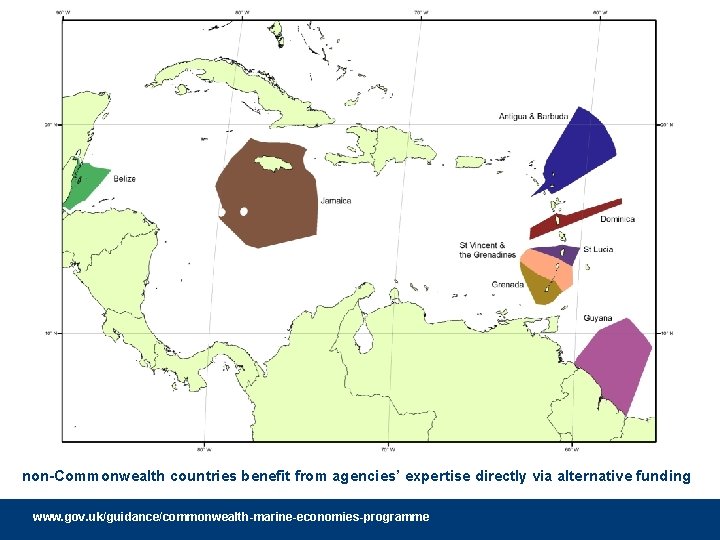
non-Commonwealth countries benefit from agencies’ expertise directly via alternative funding www. gov. uk/guidance/commonwealth-marine-economies-programme
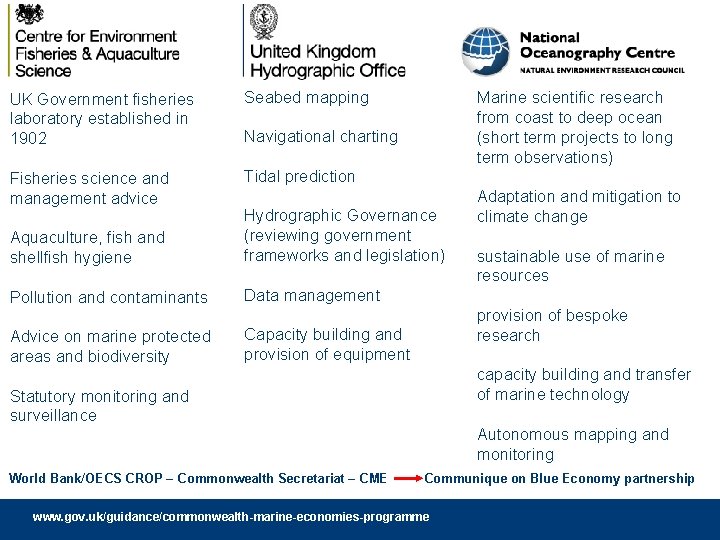
UK Government fisheries laboratory established in 1902 Seabed mapping Fisheries science and management advice Tidal prediction Marine scientific research from coast to deep ocean (short term projects to long term observations) Navigational charting Aquaculture, fish and shellfish hygiene Hydrographic Governance (reviewing government frameworks and legislation) Pollution and contaminants Data management Advice on marine protected areas and biodiversity Capacity building and provision of equipment sustainable use of marine resources provision of bespoke research capacity building and transfer of marine technology Statutory monitoring and surveillance World Bank/OECS CROP – Commonwealth Secretariat – CME Adaptation and mitigation to climate change Autonomous mapping and monitoring Communique on Blue Economy partnership www. gov. uk/guidance/commonwealth-marine-economies-programme
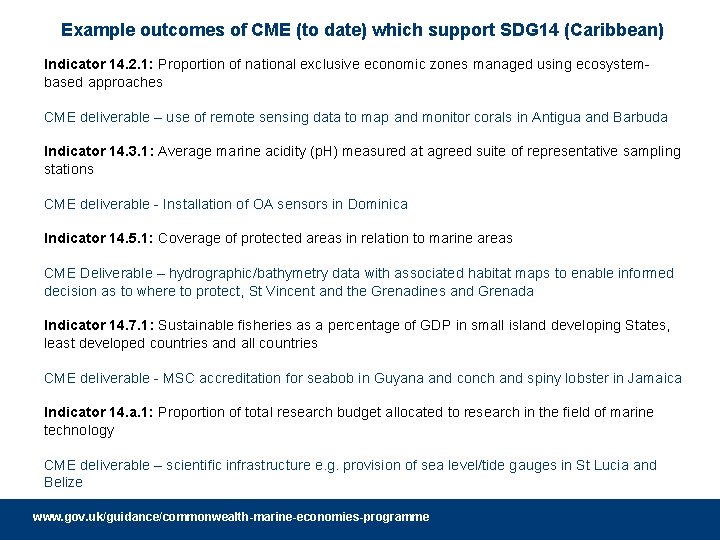
Example outcomes of CME (to date) which support SDG 14 (Caribbean) Indicator 14. 2. 1: Proportion of national exclusive economic zones managed using ecosystembased approaches CME deliverable – use of remote sensing data to map and monitor corals in Antigua and Barbuda Indicator 14. 3. 1: Average marine acidity (p. H) measured at agreed suite of representative sampling stations CME deliverable - Installation of OA sensors in Dominica Indicator 14. 5. 1: Coverage of protected areas in relation to marine areas CME Deliverable – hydrographic/bathymetry data with associated habitat maps to enable informed decision as to where to protect, St Vincent and the Grenadines and Grenada Indicator 14. 7. 1: Sustainable fisheries as a percentage of GDP in small island developing States, least developed countries and all countries CME deliverable - MSC accreditation for seabob in Guyana and conch and spiny lobster in Jamaica Indicator 14. a. 1: Proportion of total research budget allocated to research in the field of marine technology CME deliverable – scientific infrastructure e. g. provision of sea level/tide gauges in St Lucia and Belize www. gov. uk/guidance/commonwealth-marine-economies-programme
Announcement! Monitoring and Modelling the Coastal Zone – A 3 -day interactive training course and stakeholder workshop run by the National Oceanography Centre, UK funded by the Commonwealth Marine Economies Programme March 5 th to 7 th at the NIS Building, Kingstown Part 1: Observing the Ocean from Space Satellite Oceanography, winds and waves Part 2: Modelling Coastal Impacts for St Vincent modelling, monitoring, managing Infrastructure, resilience, scientific knowledge www. gov. uk/guidance/commonwealth-marine-economies-programme
Thank you Alan Evans International and Strategic Partnership Office, NOC Alan. Evans@noc. ac. uk www. gov. uk/guidance/commonwealth-marine-economies-programme
- Slides: 29