
Implementing Comprehensive Integrated ThreeTiered Ci 3 T Models


- Slides: 50
Implementing Comprehensive, Integrated, Three-Tiered (Ci 3 T) Models of Prevention: Installing Systematic Screening for Behavior Council for Children with Behavioral Disorders 2015 Conference Wendy Peia Oakes, Ph. D. Arizona State University 2015 2016 Ci 3 T Research Projects
Implementing Ci 3 T Models of Prevention Department of Education (DOE): Institute of Education Sciences USD 497 Lawrence Public Schools The University of Kansas Arizona State University 2015 2016 Ci 3 T Research Projects 2
Agenda • Ci 3 T Monitoring Procedures – Systematic Screening for Behavior • Exploring screening? • Are you ready to install screening? • Preparing • Screening • Scoring • Interpreting • Responding 2015 2016 Ci 3 T Research Projects 3
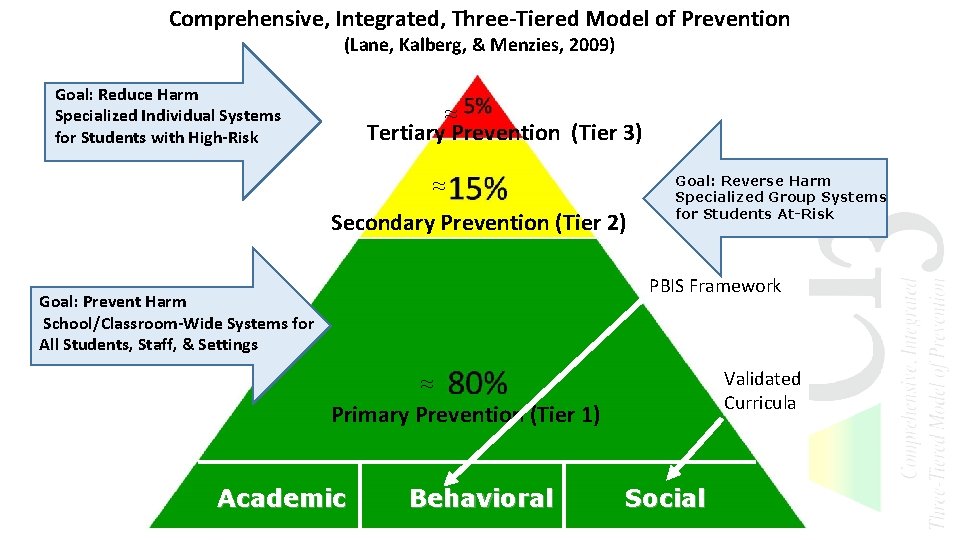
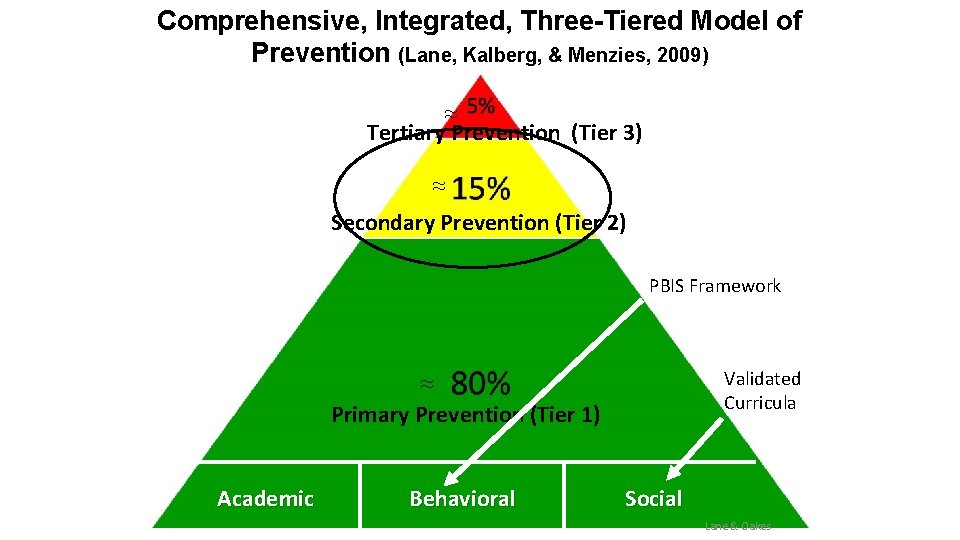
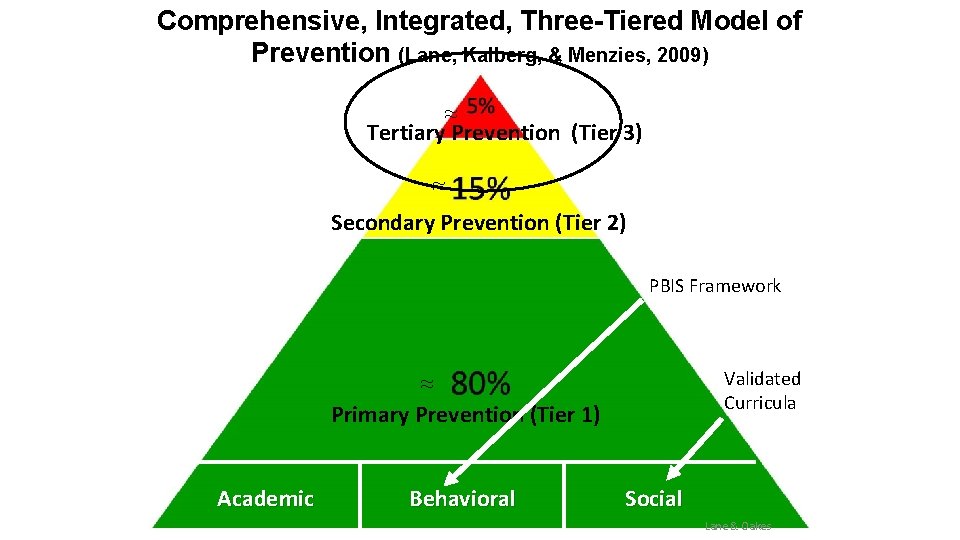
Comprehensive, Integrated, Three-Tiered Model of Prevention (Lane, Kalberg, & Menzies, 2009) Goal: Reduce Harm Specialized Individual Systems for Students with High-Risk ≈ Tertiary Prevention (Tier 3) ≈ Secondary Prevention (Tier 2) Goal: Reverse Harm Specialized Group Systems for Students At-Risk PBIS Framework Goal: Prevent Harm School/Classroom-Wide Systems for All Students, Staff, & Settings Validated Curricula ≈ Primary Prevention (Tier 1) Academic Behavioral Social
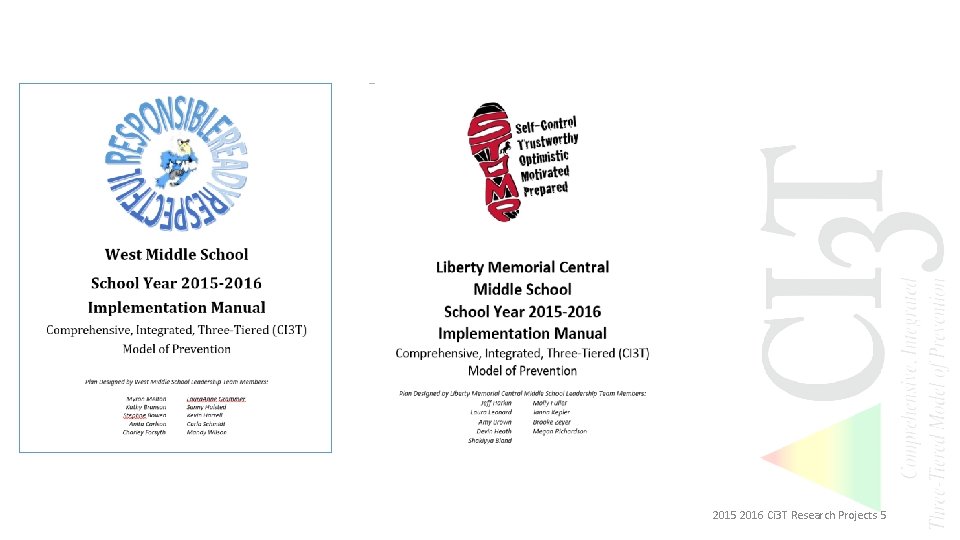
2015 2016 Ci 3 T Research Projects 5
Essential Components: Procedures for Monitoring Primary Prevention Social Validity Treatment Integrity Systematic Screening Academic Behavior al c i t i r C or f n o i at m r o f in nd a l o scho teams t c i r t s di
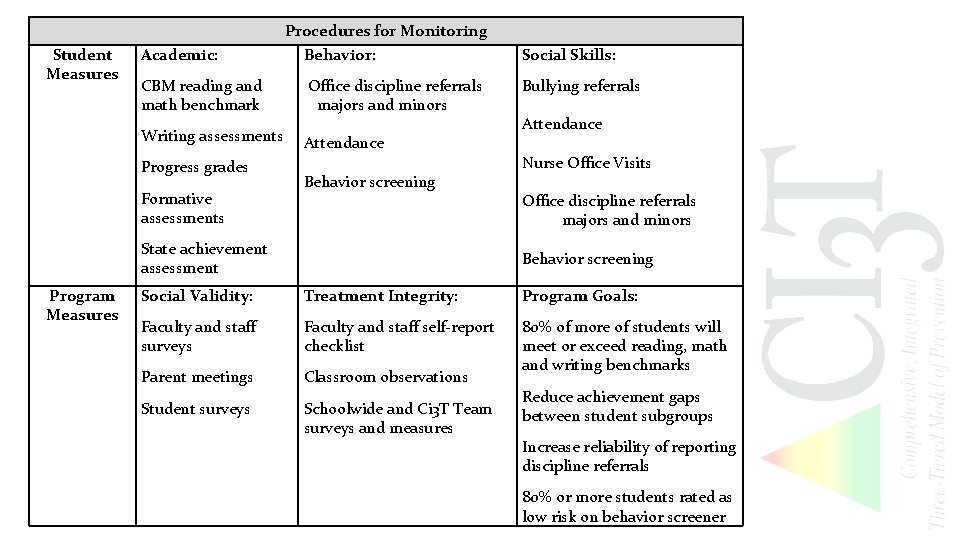
Student Measures Academic: Procedures for Monitoring Behavior: CBM reading and math benchmark Office discipline referrals majors and minors Writing assessments Attendance Progress grades Formative assessments Behavior screening State achievement assessment Program Measures Social Skills: Bullying referrals Attendance Nurse Office Visits Office discipline referrals majors and minors Behavior screening Social Validity: Treatment Integrity: Program Goals: Faculty and staff surveys Faculty and staff self-report checklist Parent meetings Classroom observations 80% of more of students will meet or exceed reading, math and writing benchmarks Student surveys Schoolwide and Ci 3 T Team surveys and measures Reduce achievement gaps between student subgroups Increase reliability of reporting discipline referrals 80% or more students rated as low risk on behavior screener
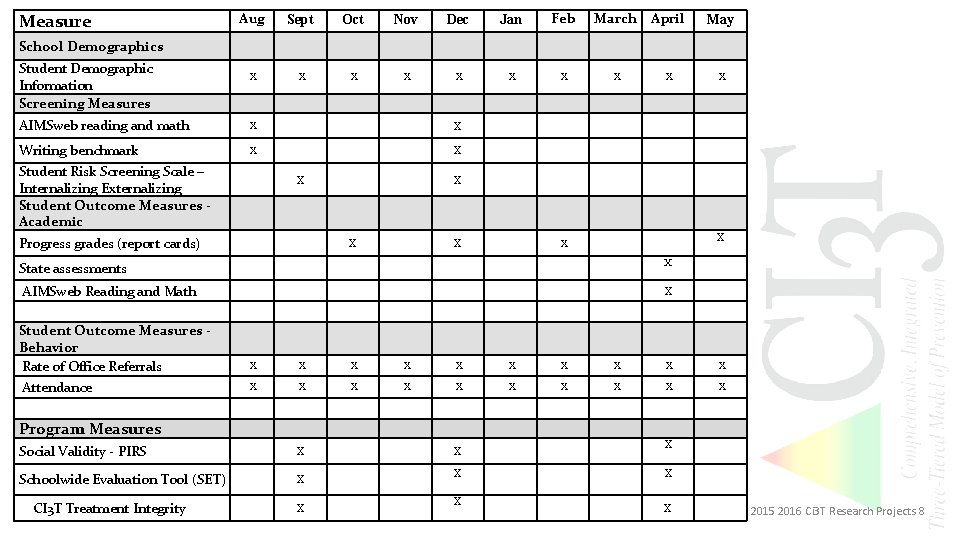
Measure School Demographics Student Demographic Information Screening Measures Aug Sept Oct Nov Dec Jan X X X Feb March April X X X AIMSweb reading and math X X Writing benchmark Student Risk Screening Scale – Internalizing Externalizing Student Outcome Measures - Academic X X X X May X X Progress grades (report cards) State assessments X AIMSweb Reading and Math Student Outcome Measures - Behavior Rate of Office Referrals X X X X Attendance X X X X X Program Measures Social Validity - PIRS X X Schoolwide Evaluation Tool (SET) X CI 3 T Treatment Integrity X X 2015 2016 Ci 3 T Research Projects 8
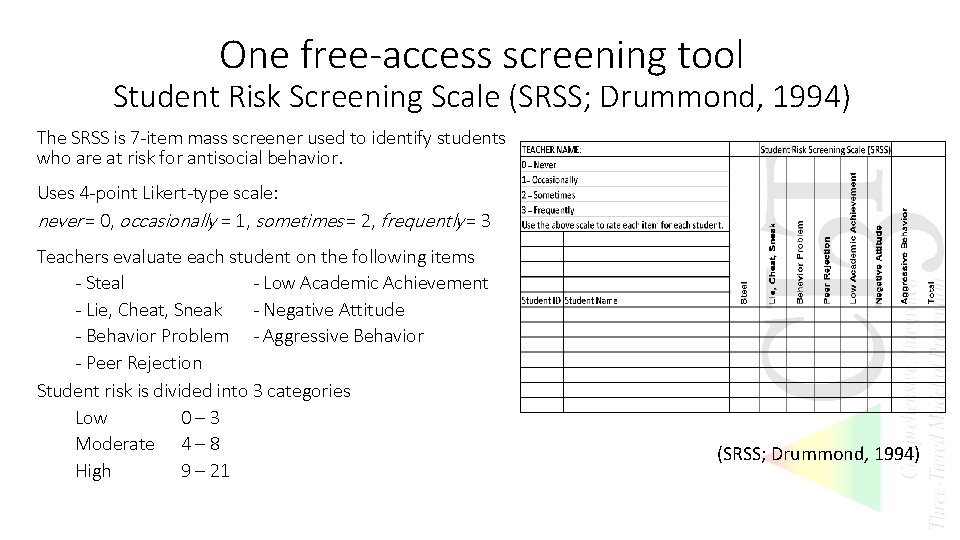
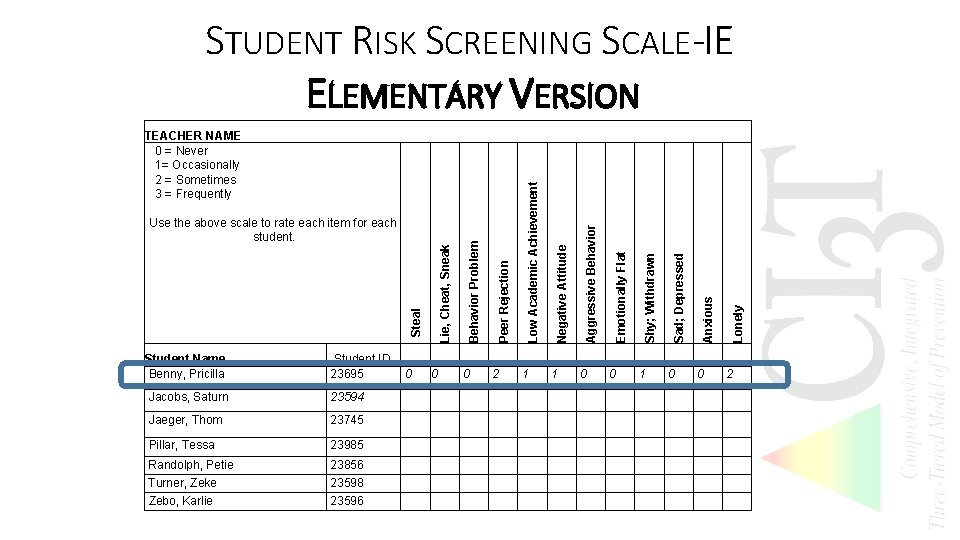
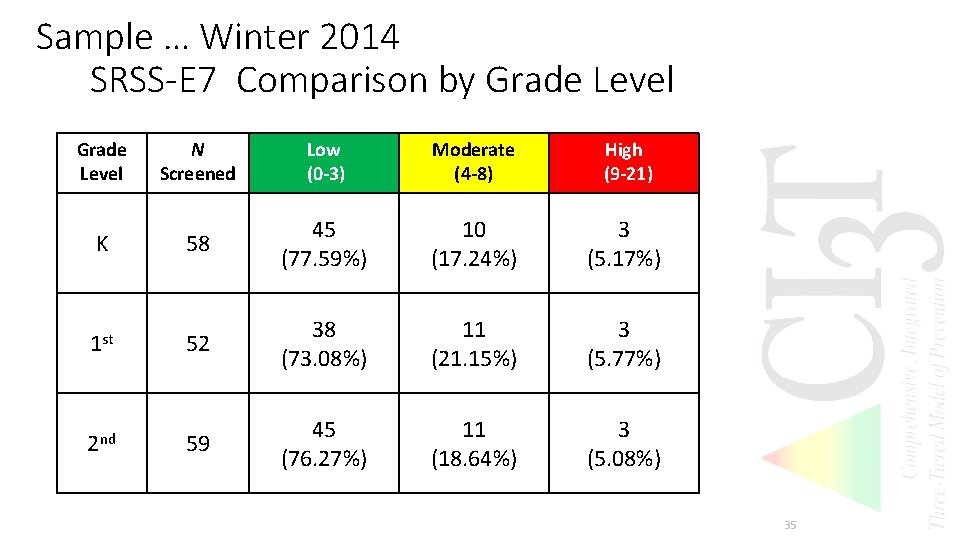
One free-access screening tool Student Risk Screening Scale (SRSS; Drummond, 1994) The SRSS is 7 -item mass screener used to identify students who are at risk for antisocial behavior. Uses 4 -point Likert-type scale: never = 0, occasionally = 1, sometimes = 2, frequently = 3 Teachers evaluate each student on the following items - Steal - Low Academic Achievement - Lie, Cheat, Sneak - Negative Attitude - Behavior Problem - Aggressive Behavior - Peer Rejection Student risk is divided into 3 categories Low 0– 3 Moderate 4 – 8 High 9 – 21 (SRSS; Drummond, 1994)
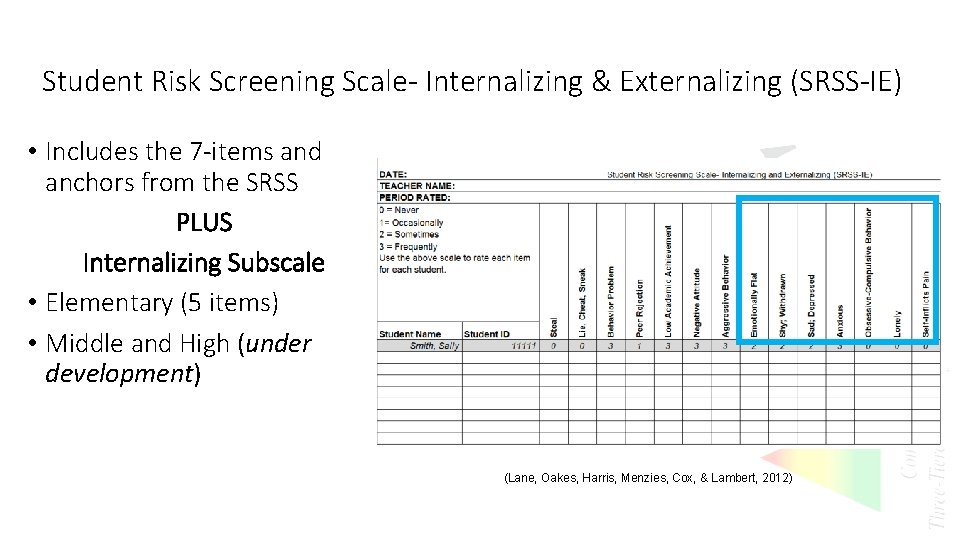
Student Risk Screening Scale- Internalizing & Externalizing (SRSS-IE) • Includes the 7 -items and anchors from the SRSS PLUS Internalizing Subscale • Elementary (5 items) • Middle and High (under development) (Lane, Oakes, Harris, Menzies, Cox, & Lambert, 2012)
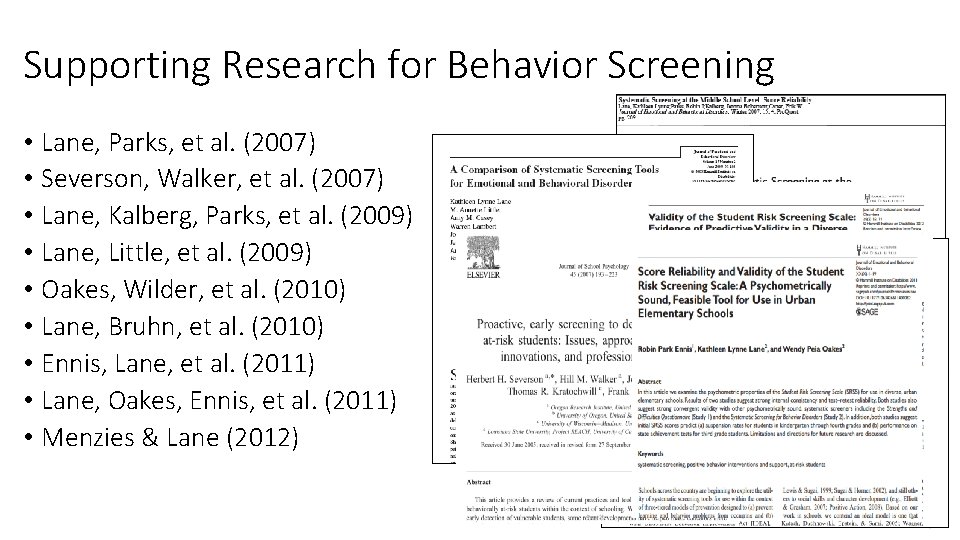
Supporting Research for Behavior Screening • Lane, Parks, et al. (2007) • Severson, Walker, et al. (2007) • Lane, Kalberg, Parks, et al. (2009) • Lane, Little, et al. (2009) • Oakes, Wilder, et al. (2010) • Lane, Bruhn, et al. (2010) • Ennis, Lane, et al. (2011) • Lane, Oakes, Ennis, et al. (2011) • Menzies & Lane (2012)
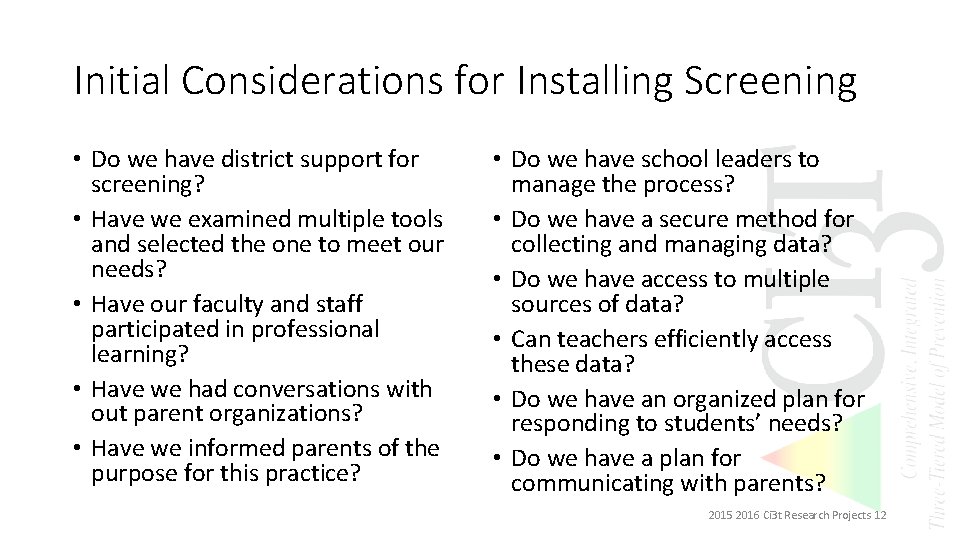
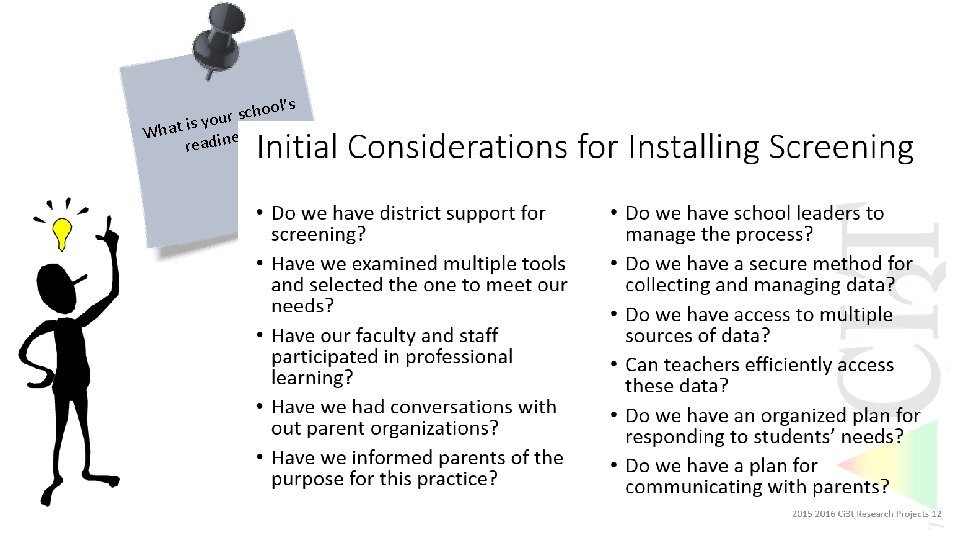
Initial Considerations for Installing Screening • Do we have district support for screening? • Have we examined multiple tools and selected the one to meet our needs? • Have our faculty and staff participated in professional learning? • Have we had conversations with out parent organizations? • Have we informed parents of the purpose for this practice? • Do we have school leaders to manage the process? • Do we have a secure method for collecting and managing data? • Do we have access to multiple sources of data? • Can teachers efficiently access these data? • Do we have an organized plan for responding to students’ needs? • Do we have a plan for communicating with parents? 2015 2016 Ci 3 t Research Projects 12
ool’s h c s r u s yo What i diness? rea
Part 1. Administration Before Screening Preparing
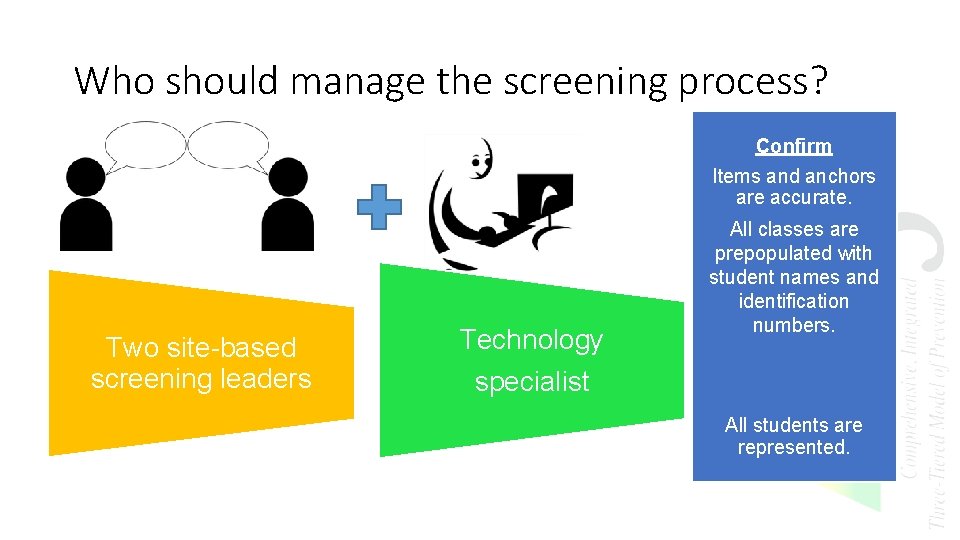
Who should manage the screening process? Confirm Items and anchors are accurate. Two site-based screening leaders Technology All classes are prepopulated with student names and identification numbers. specialist All students are represented.
When should we administer the SRSS? • Three times per year • Set the calendar at the start of the year
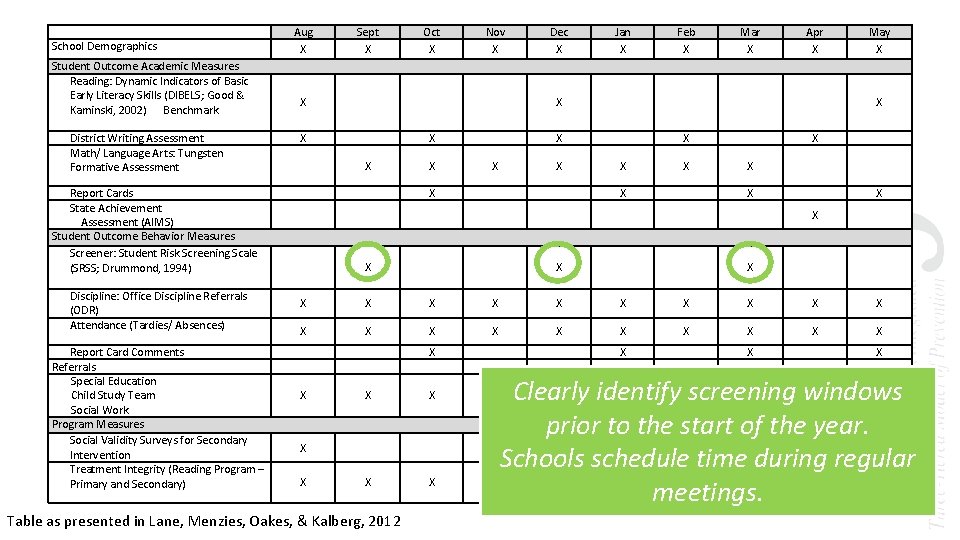
School Demographics Student Outcome Academic Measures Reading: Dynamic Indicators of Basic Early Literacy Skills (DIBELS; Good & Kaminski, 2002) Benchmark District Writing Assessment Math/ Language Arts: Tungsten Formative Assessment Aug X Report Card Comments Referrals Special Education Child Study Team Social Work Program Measures Social Validity Surveys for Secondary Intervention Treatment Integrity (Reading Program – Primary and Secondary) Oct X Nov X X Dec X Jan X Feb X Mar X Apr X X X Report Cards State Achievement Assessment (AIMS) Student Outcome Behavior Measures Screener: Student Risk Screening Scale (SRSS; Drummond, 1994) Discipline: Office Discipline Referrals (ODR) Attendance (Tardies/ Absences) Sept X X X X May X X X X X X X X X X X Table as presented in Lane, Menzies, Oakes, & Kalberg, 2012 X X Xscreening X X X Clearly identify windows prior to the start of the year. X Schools schedule time during regular X X X meetings. X
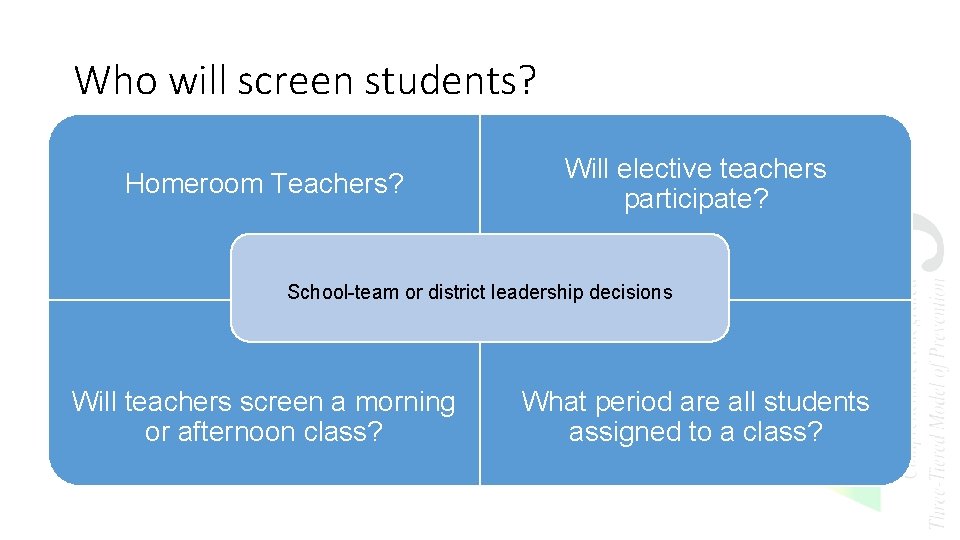
Who will screen students? Homeroom Teachers? Will elective teachers participate? School-team or district leadership decisions Will teachers screen a morning or afternoon class? What period are all students assigned to a class?
How will you ensure security of the data?
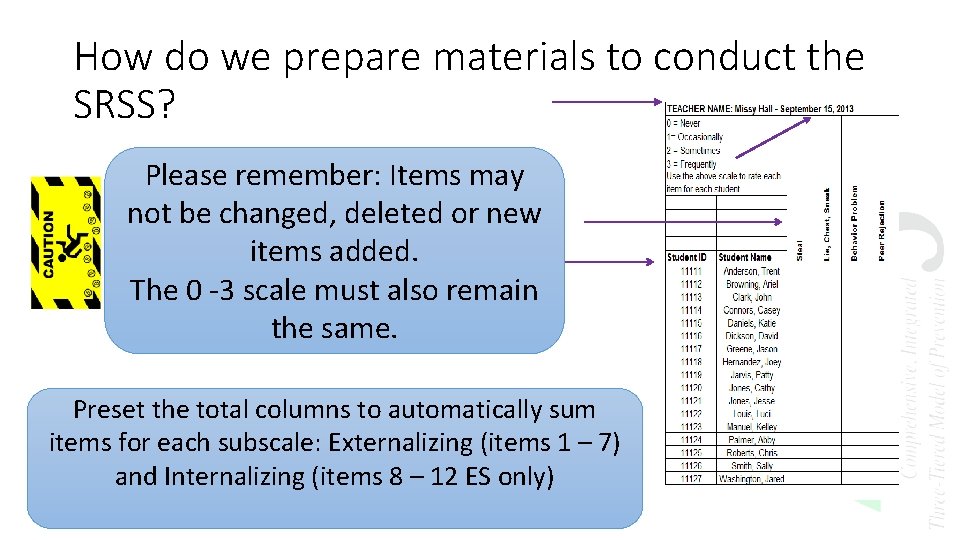
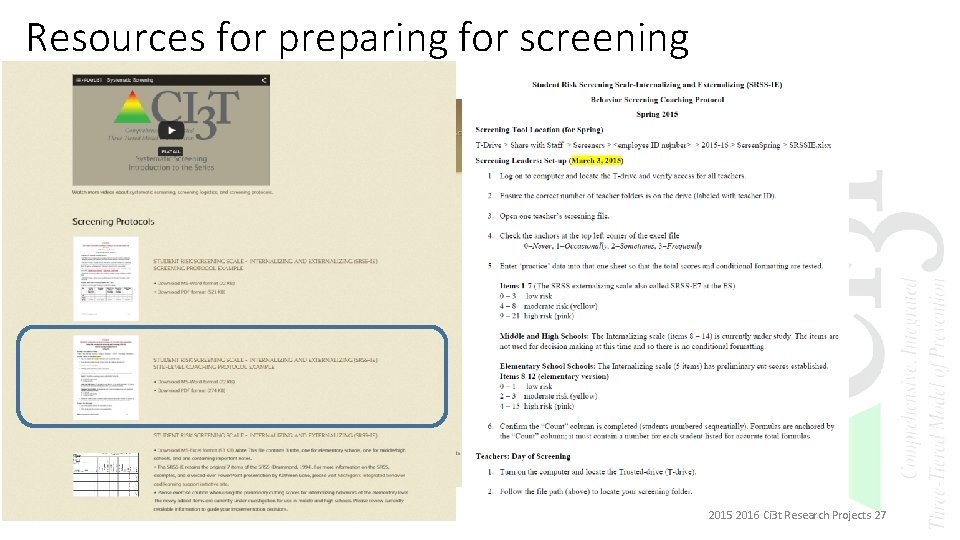
How do we prepare materials to conduct the SRSS? Please remember: Items may not be changed, deleted or new items added. The 0 -3 scale must also remain the same. Preset the total columns to automatically sum items for each subscale: Externalizing (items 1 – 7) and Internalizing (items 8 – 12 ES only)
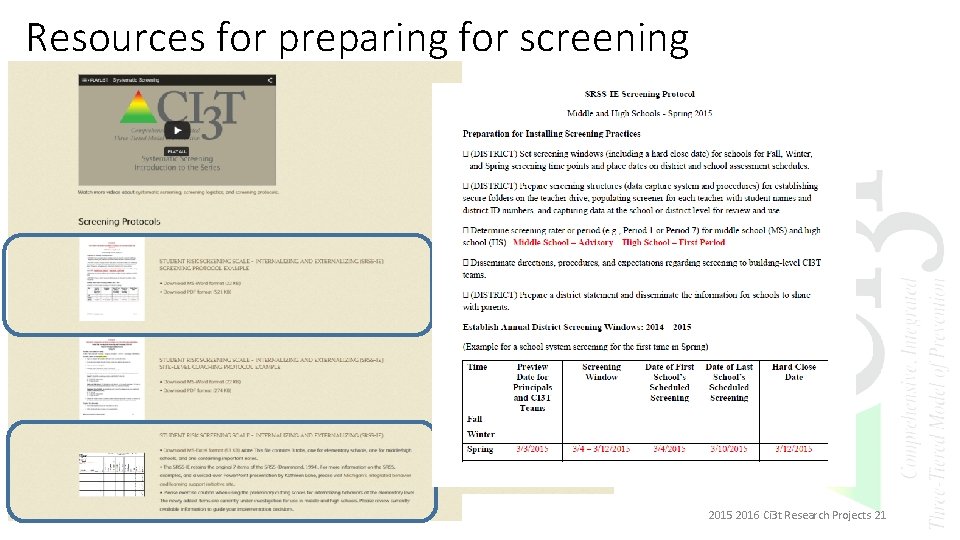
Resources for preparing for screening visit ci 3 t. org 2015 2016 Ci 3 t Research Projects 21
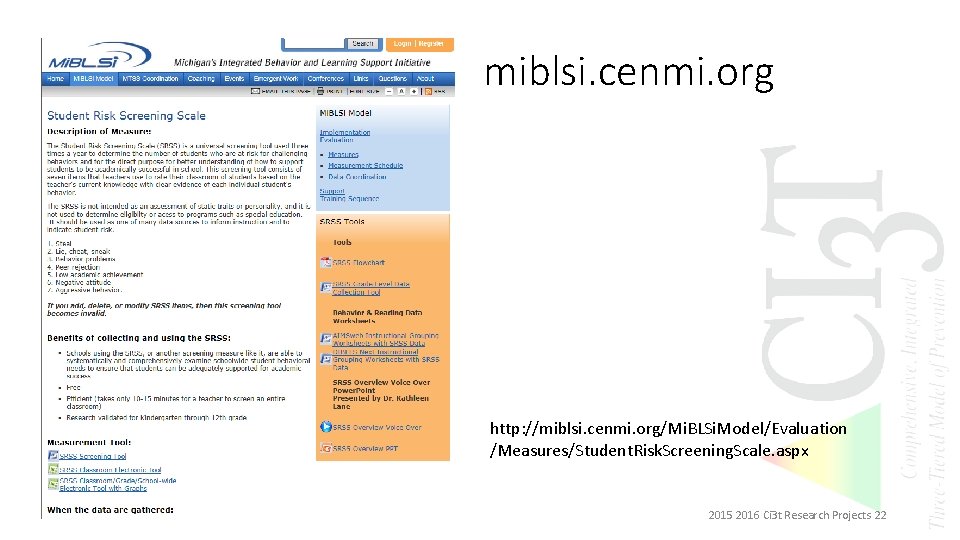
miblsi. cenmi. org http: //miblsi. cenmi. org/Mi. BLSi. Model/Evaluation /Measures/Student. Risk. Screening. Scale. aspx 2015 2016 Ci 3 t Research Projects 22
Part 2. Administration During Screening
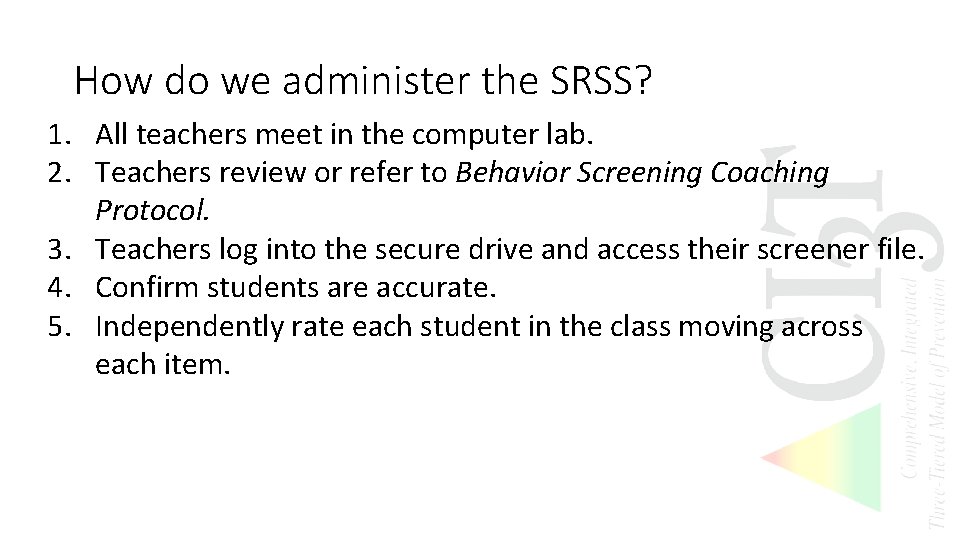
How do we administer the SRSS? 1. All teachers meet in the computer lab. 2. Teachers review or refer to Behavior Screening Coaching Protocol. 3. Teachers log into the secure drive and access their screener file. 4. Confirm students are accurate. 5. Independently rate each student in the class moving across each item.
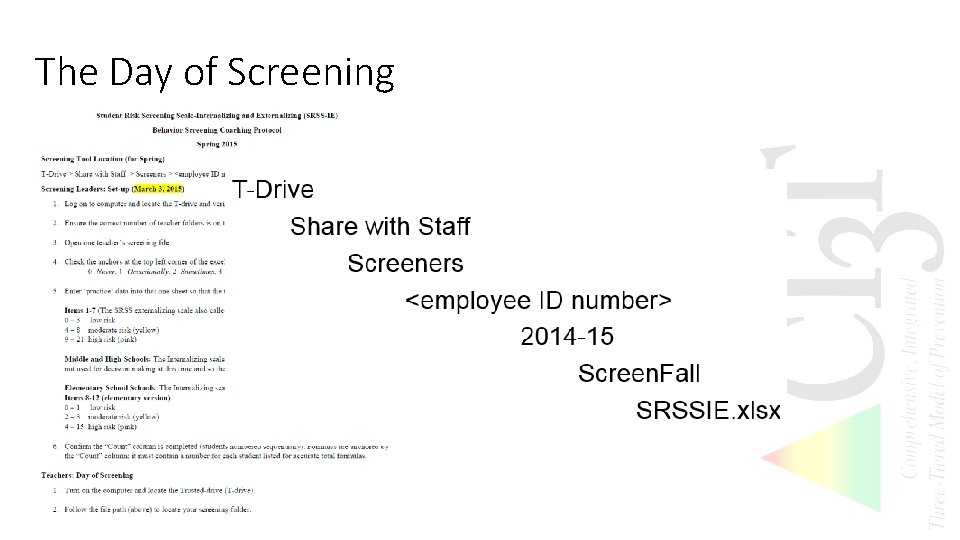
The Day of Screening
0 0 2 1 1 Jacobs, Saturn 23594 Jaeger, Thom 23745 Pillar, Tessa 23985 Randolph, Petie Turner, Zeke Zebo, Karlie 23856 23598 23596 Lonely Aggressive Behavior Anxious Negative Attitude Student ID 23695 0 Sad; Depressed Low Academic Achievement Student Name Benny, Pricilla Shy; Withdrawn Peer Rejection Steal Behavior Problem Use the above scale to rate each item for each student. Lie, Cheat, Sneak TEACHER NAME 0 = Never 1= Occasionally 2 = Sometimes 3 = Frequently Emotionally Flat STUDENT RISK SCREENING SCALE-IE ELEMENTARY VERSION 0 0 1 0 0 2
Resources for preparing for screening visit ci 3 t. org 2015 2016 Ci 3 t Research Projects 27
Part 3. Administration After Screening Scoring
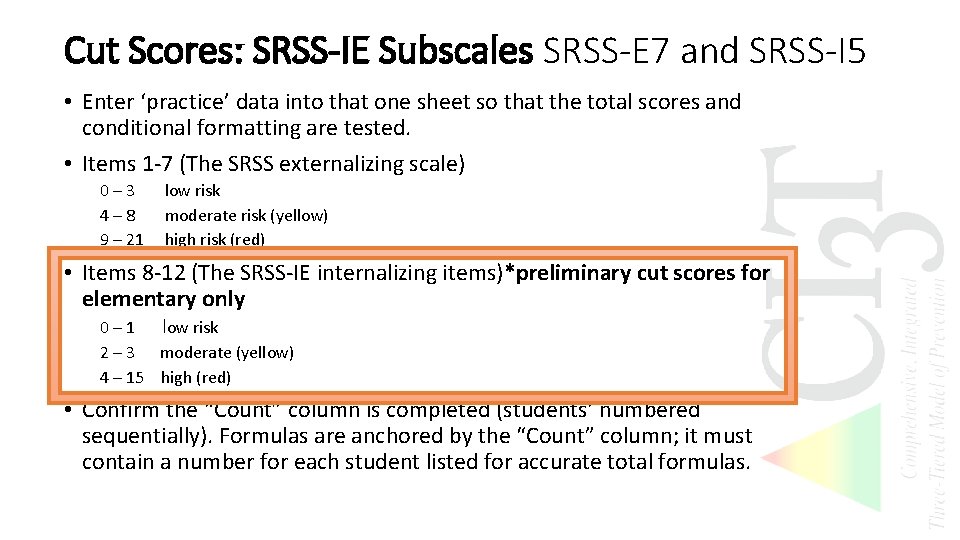
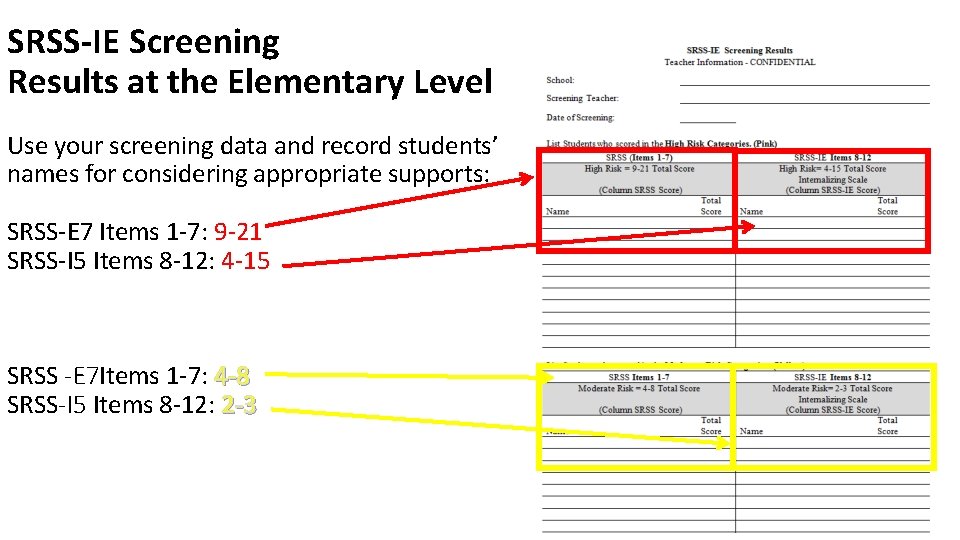
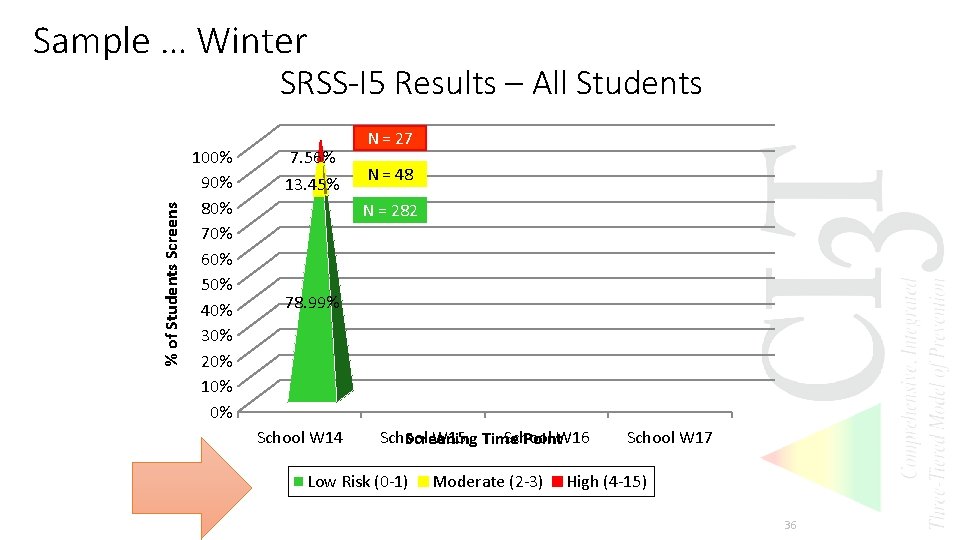
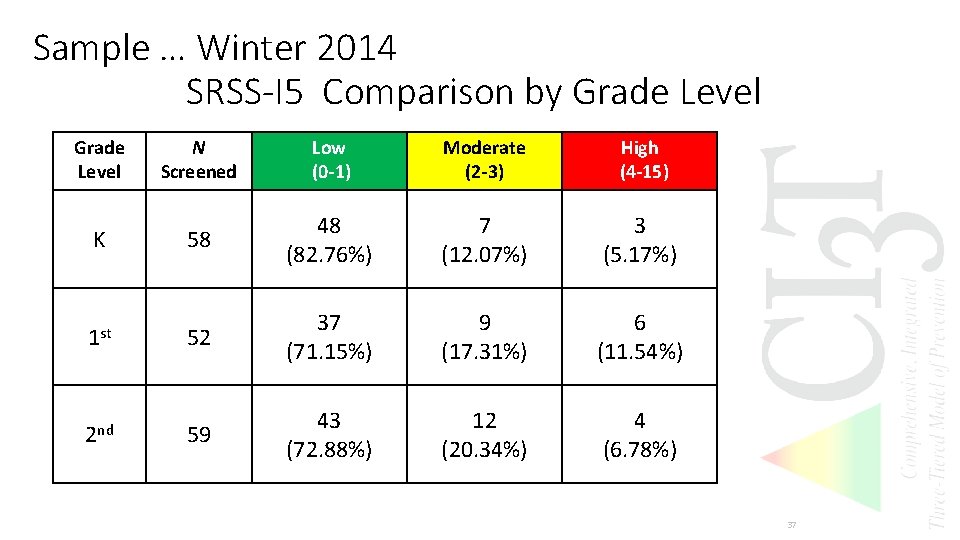
Cut Scores: SRSS-IE Subscales SRSS-E 7 and SRSS-I 5 • Enter ‘practice’ data into that one sheet so that the total scores and conditional formatting are tested. • Items 1 -7 (The SRSS externalizing scale) 0– 3 4– 8 9 – 21 low risk moderate risk (yellow) high risk (red) • Items 8 -12 (The SRSS-IE internalizing items)*preliminary cut scores for elementary only 0 – 1 low risk 2 – 3 moderate (yellow) 4 – 15 high (red) • Confirm the “Count” column is completed (students’ numbered sequentially). Formulas are anchored by the “Count” column; it must contain a number for each student listed for accurate total formulas.
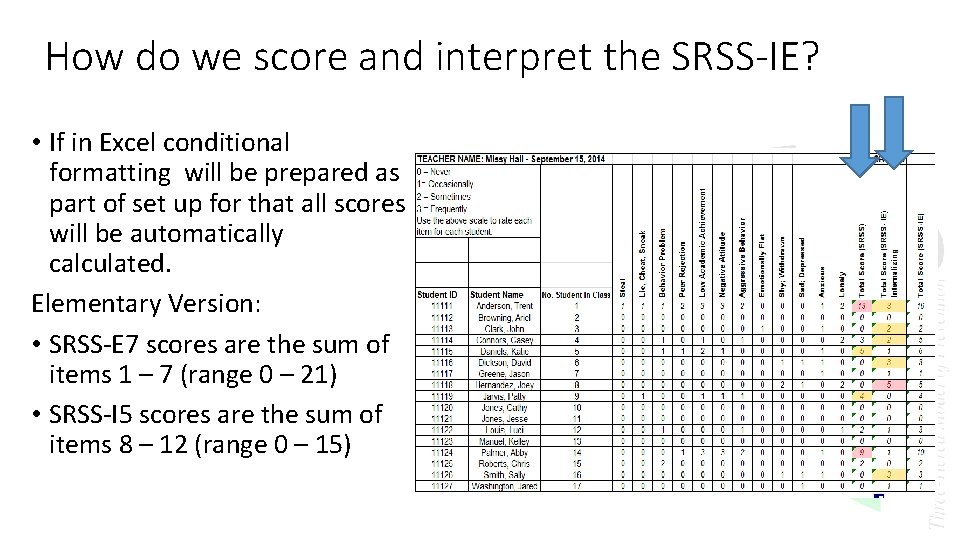
How do we score and interpret the SRSS-IE? • If in Excel conditional formatting will be prepared as part of set up for that all scores will be automatically calculated. Elementary Version: • SRSS-E 7 scores are the sum of items 1 – 7 (range 0 – 21) • SRSS-I 5 scores are the sum of items 8 – 12 (range 0 – 15)
SRSS-IE Screening Results at the Elementary Level Use your screening data and record students’ names for considering appropriate supports: SRSS-E 7 Items 1 -7: 9 -21 SRSS-I 5 Items 8 -12: 4 -15 SRSS -E 7 Items 1 -7: 4 -8 SRSS-I 5 Items 8 -12: 2 -3
Part 4. Administration After Screening Interpreting
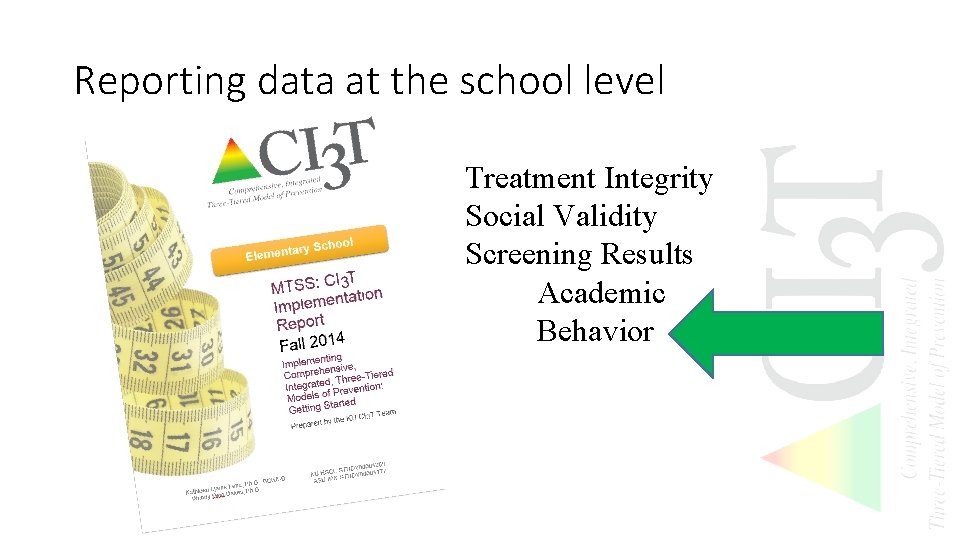
Reporting data at the school level Treatment Integrity Social Validity Screening Results Academic Behavior
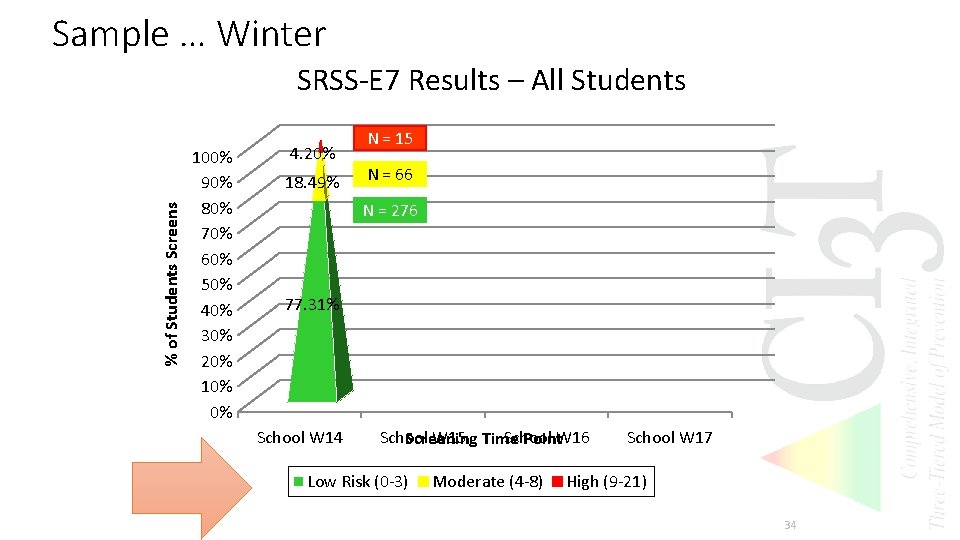
Sample … Winter % of Students Screens SRSS-E 7 Results – All Students 100% 90% 80% 70% 60% 50% 40% 30% 20% 10% 0% 4. 20% 18. 49% N = 15 N = 66 N = 276 77. 31% School W 14 School W 15 Time School Screening Point. W 16 Low Risk (0 -3) Moderate (4 -8) School W 17 High (9 -21) 34
Sample … Winter 2014 SRSS-E 7 Comparison by Grade Level N Screened Low (0 -3) Moderate (4 -8) High (9 -21) K 58 45 (77. 59%) 10 (17. 24%) 3 (5. 17%) 1 st 52 38 (73. 08%) 11 (21. 15%) 3 (5. 77%) 2 nd 59 45 (76. 27%) 11 (18. 64%) 3 (5. 08%) 35
Sample … Winter % of Students Screens SRSS-I 5 Results – All Students 100% 90% 80% 70% 60% 50% 40% 30% 20% 10% 0% 7. 56% 13. 45% N = 27 N = 48 N = 282 78. 99% School W 14 School W 15 Time School Screening Point. W 16 Low Risk (0 -1) Moderate (2 -3) School W 17 High (4 -15) 36
Sample … Winter 2014 SRSS-I 5 Comparison by Grade Level N Screened Low (0 -1) Moderate (2 -3) High (4 -15) K 58 48 (82. 76%) 7 (12. 07%) 3 (5. 17%) 52 37 (71. 15%) 9 (17. 31%) 6 (11. 54%) 59 43 (72. 88%) 12 (20. 34%) 4 (6. 78%) 1 st 2 nd 37
Part 5. Administration After Screening Responding
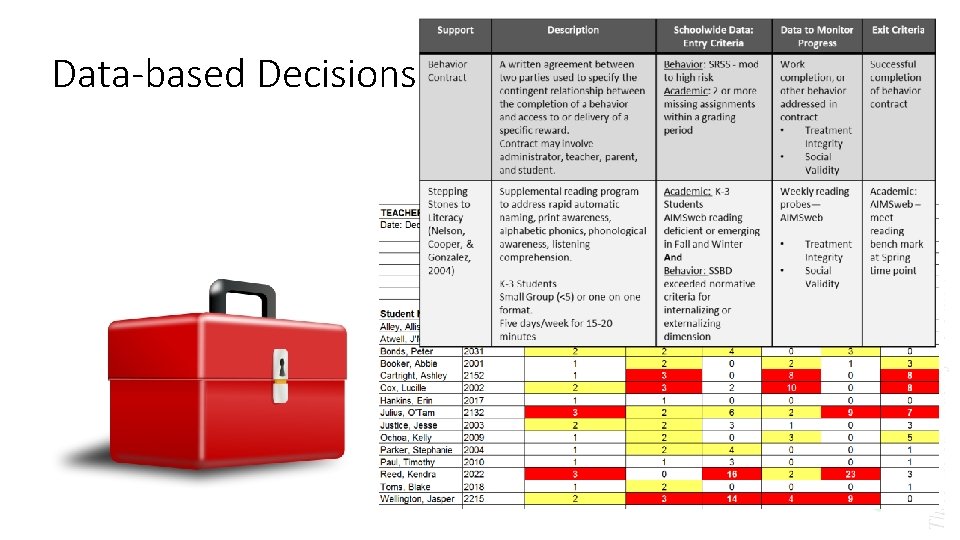
Data-based Decisions
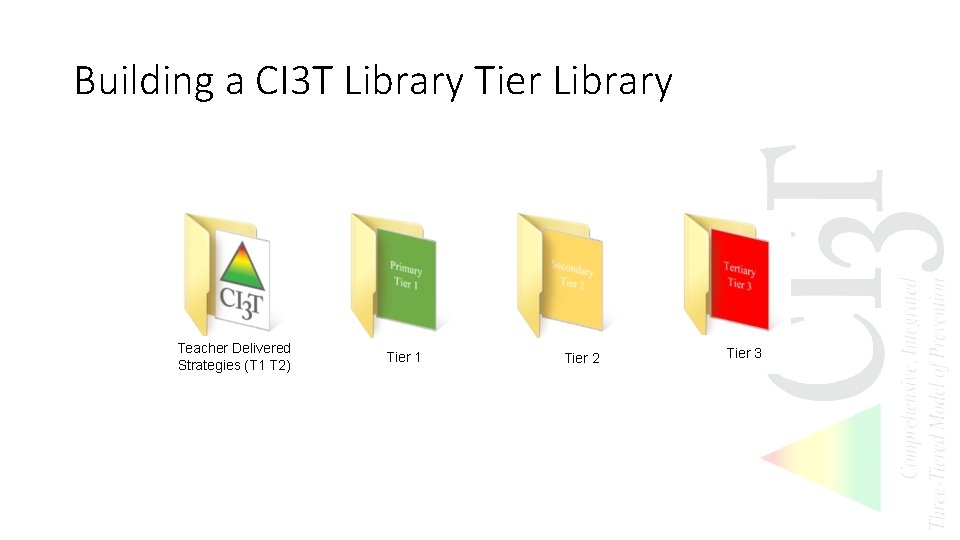
Building a CI 3 T Library Tier Library Teacher Delivered Strategies (T 1 T 2) Tier 1 Tier 2 Tier 3
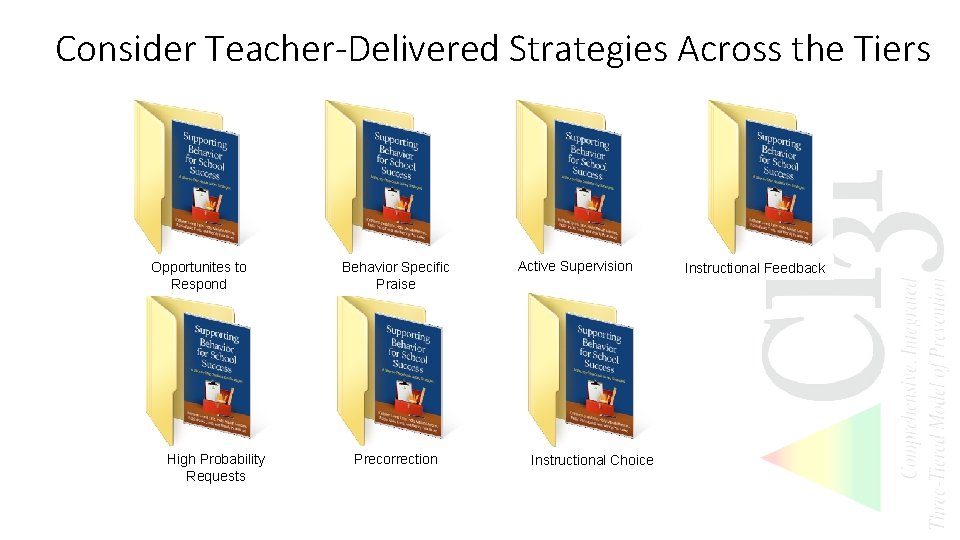
Consider Teacher-Delivered Strategies Across the Tiers Opportunites to Respond High Probability Requests Behavior Specific Praise Precorrection Active Supervision Instructional Choice Instructional Feedback
Comprehensive, Integrated, Three-Tiered Model of Prevention (Lane, Kalberg, & Menzies, 2009) ≈ Tertiary Prevention (Tier 3) ≈ Secondary Prevention (Tier 2) PBIS Framework Validated Curricula ≈ Primary Prevention (Tier 1) Academic Behavioral Social Lane & Oakes
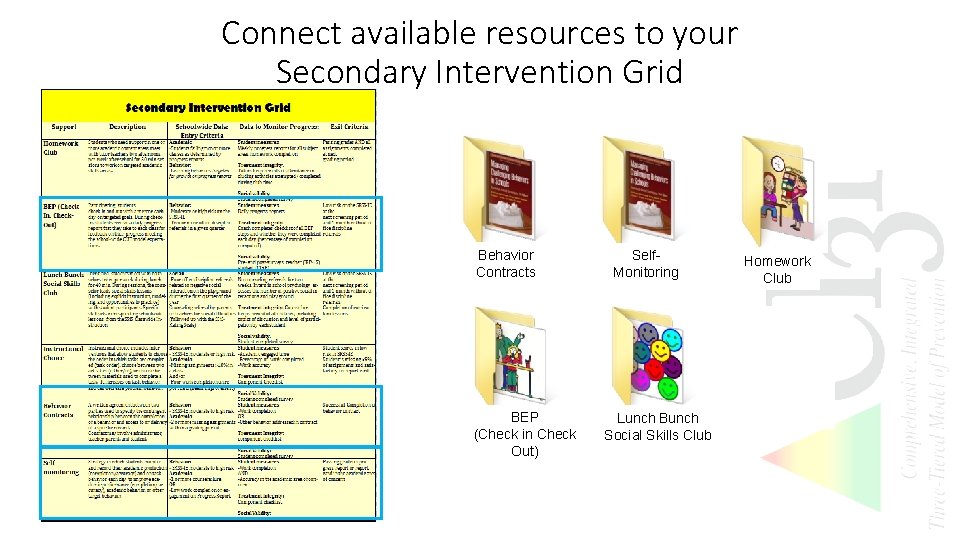
Connect available resources to your Secondary Intervention Grid Behavior Contracts BEP (Check in Check Out) Self. Monitoring Lunch Bunch Social Skills Club Homework Club
Comprehensive, Integrated, Three-Tiered Model of Prevention (Lane, Kalberg, & Menzies, 2009) ≈ Tertiary Prevention (Tier 3) ≈ Secondary Prevention (Tier 2) PBIS Framework Validated Curricula ≈ Primary Prevention (Tier 1) Academic Behavioral Social Lane & Oakes
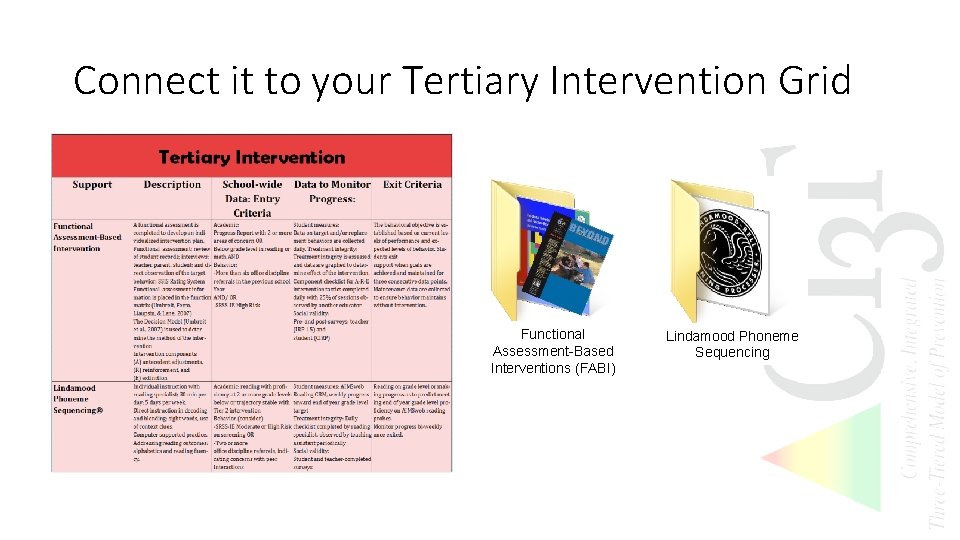
Connect it to your Tertiary Intervention Grid Functional Assessment-Based Interventions (FABI) Lindamood Phoneme Sequencing
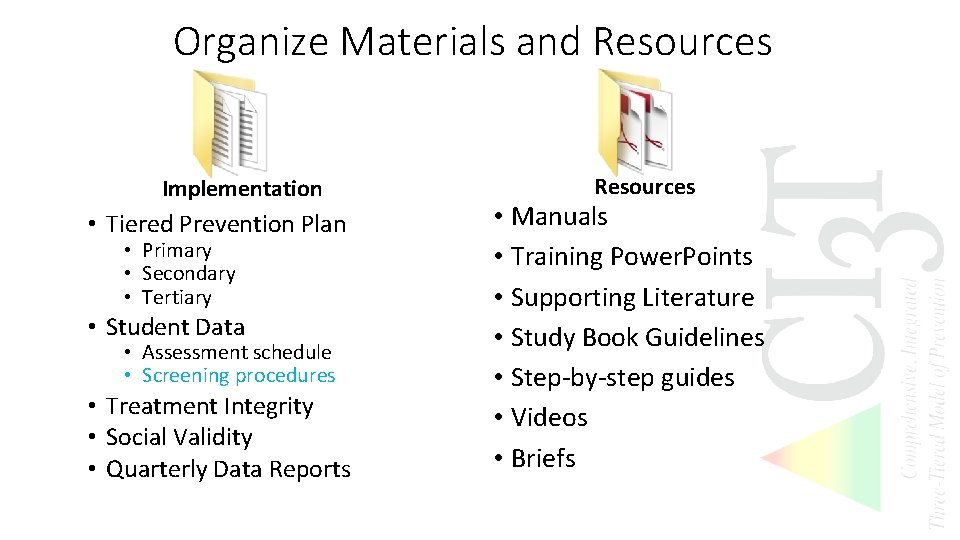
Organize Materials and Resources Implementation • Tiered Prevention Plan • Primary • Secondary • Tertiary • Student Data • Assessment schedule • Screening procedures • Treatment Integrity • Social Validity • Quarterly Data Reports Resources • Manuals • Training Power. Points • Supporting Literature • Study Book Guidelines • Step-by-step guides • Videos • Briefs
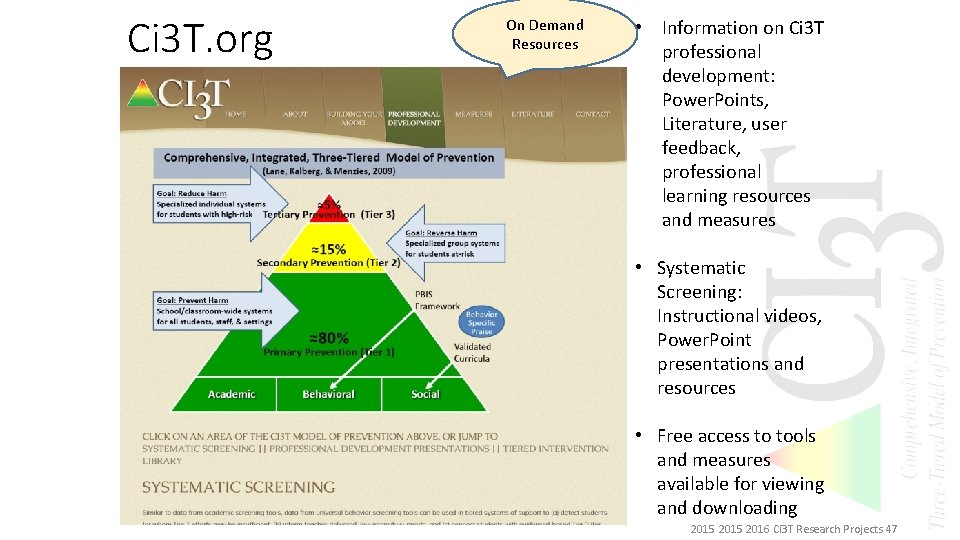
Ci 3 T. org On Demand Resources • Information on Ci 3 T professional development: Power. Points, Literature, user feedback, professional learning resources and measures • Systematic Screening: Instructional videos, Power. Point presentations and resources • Free access to tools and measures available for viewing and downloading 2015 2016 Ci 3 T Research Projects 47
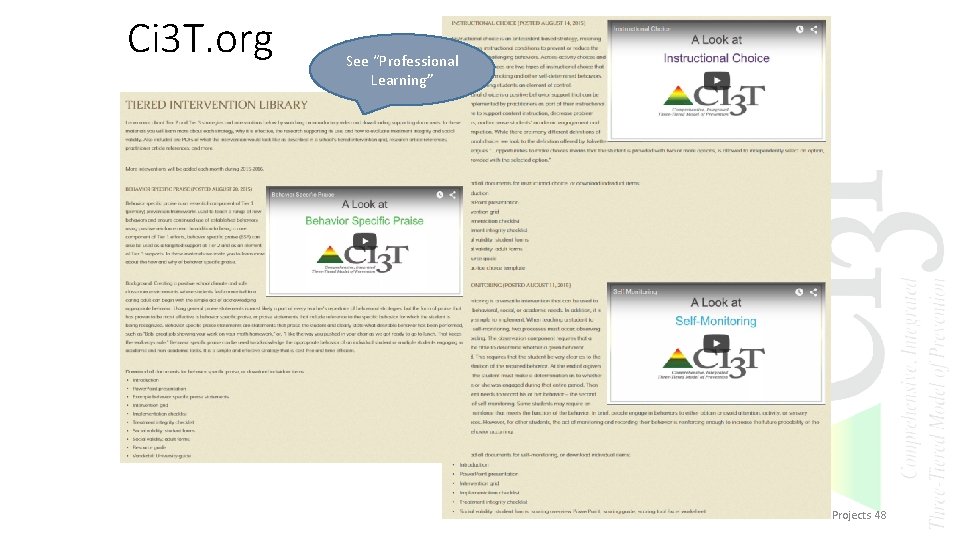
Ci 3 T. org See “Professional Learning” 2015 2016 Ci 3 T Research Projects 48
Discuss: 1. What did I learn? 2. How will I take this information back to my faculty, staff, and parents? Let’s talk … and make plans!
Thank you! Wendy. Oakes@asu. edu For additional resources and information please visit us at http: //ci 3 t. org/pl. html#screening 2015 2016 Ci 3 t Research Projects 50