
Implementing and Understanding Tax Increment Financing TIF Districts
- Slides: 18
Implementing and Understanding Tax Increment Financing (TIF) Districts
TIF Overview • • What is Tax Increment Financing (TIF)? When is it the Right Tool? How is it Implemented? How is the TIF Financed?
TIF is a municipal financial incentive tool created by the Illinois State Legislature in 1978 to assist communities implement sound economic development. • TIF can be used to acquire property. • TIF can provide infrastructure. • TIF can pay for consultant, engineering, attorney and other applicable soft costs.
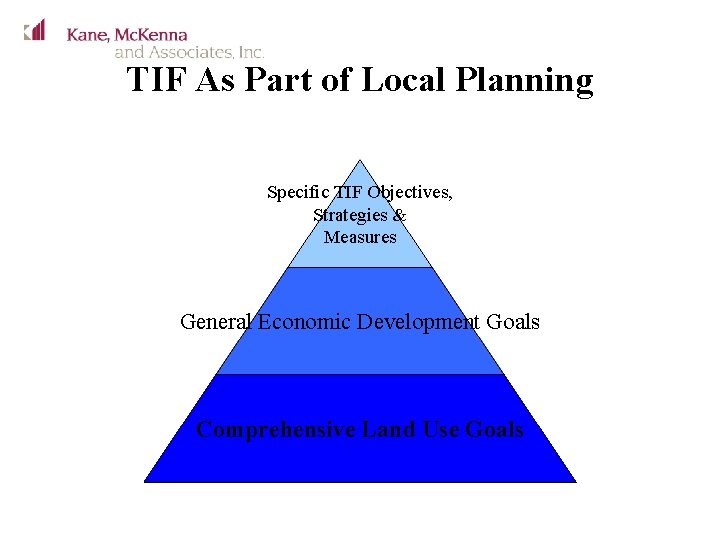
TIF As Part of Local Planning Specific TIF Objectives, Strategies & Measures General Economic Development Goals Comprehensive Land Use Goals
WHEN IS IT THE RIGHT TOOL? Will the area benefit from a TIF designation? What is the area’s current condition or past history? • To Induce Industrial Projects • To Induce Commercial Projects including Downtown areas • To Induce Residential and Mixed Use Projects
HOW IS TIF IMPLEMENTED? • Determine the Area to be Studied • Adopt a Feasibility Resolution • Qualify the Redevelopment Area • Conservation Area • Blighted Improved / Vacant • Industrial Jobs Recover Area (IJRL)
HOW IS THE TIF FUNDED “PAY AS YOU GO” “UP FRONT” • Developer Note • Redevelopment Agreement • GO TIF Bond • Taxable Revenue Bond • Maximum TIF term – 23 years, • Financing obligations – 20 years
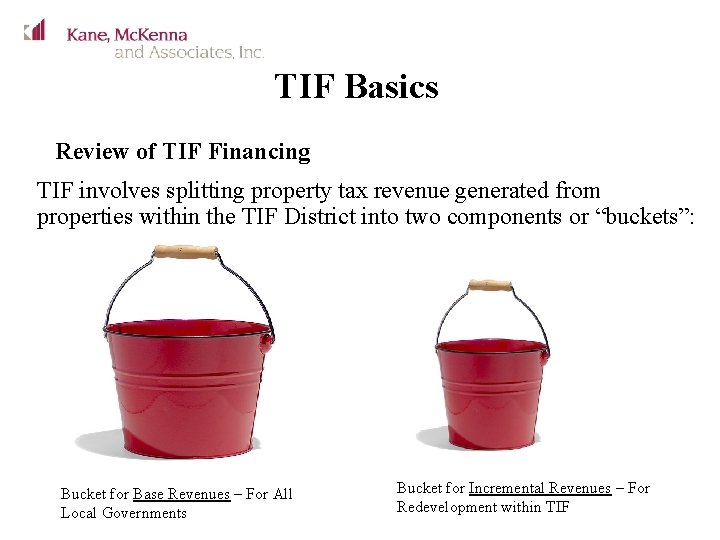
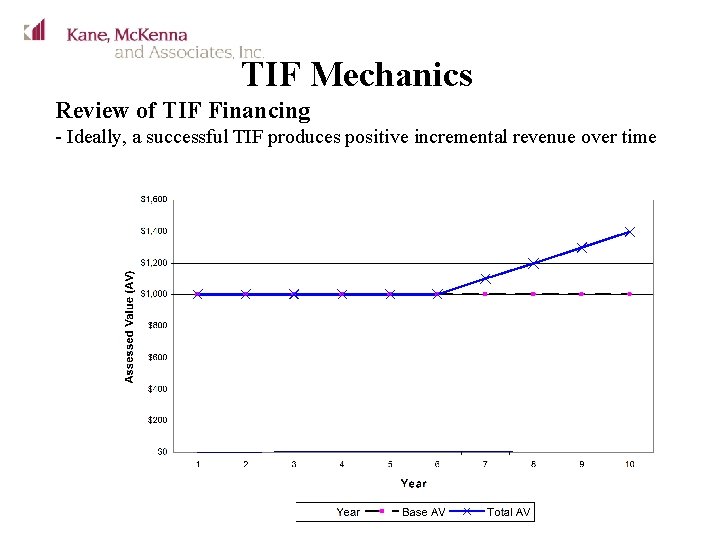
TIF Basics Review of TIF Financing TIF involves splitting property tax revenue generated from properties within the TIF District into two components or “buckets”: Bucket for Base Revenues – For All Local Governments Bucket for Incremental Revenues – For Redevelopment within TIF
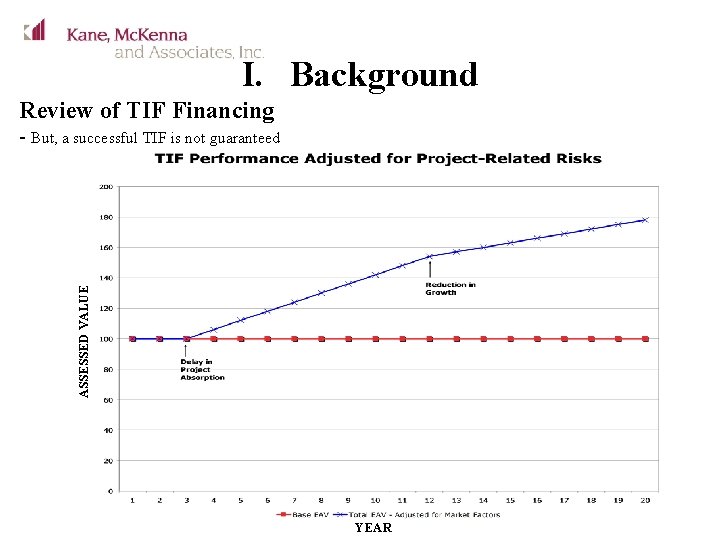
TIF Mechanics Review of TIF Financing - Ideally, a successful TIF produces positive incremental revenue over time
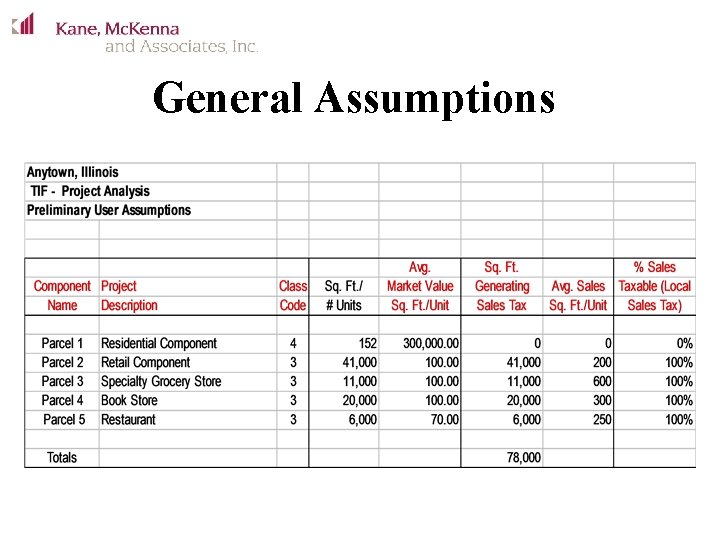
General Assumptions
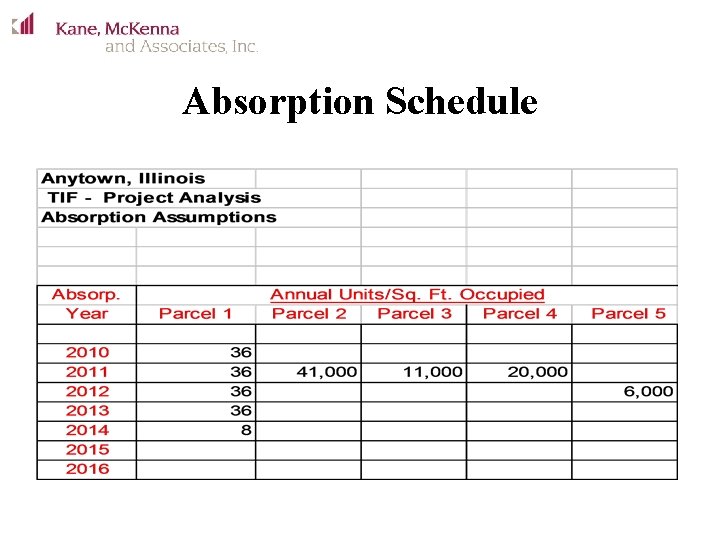
Absorption Schedule
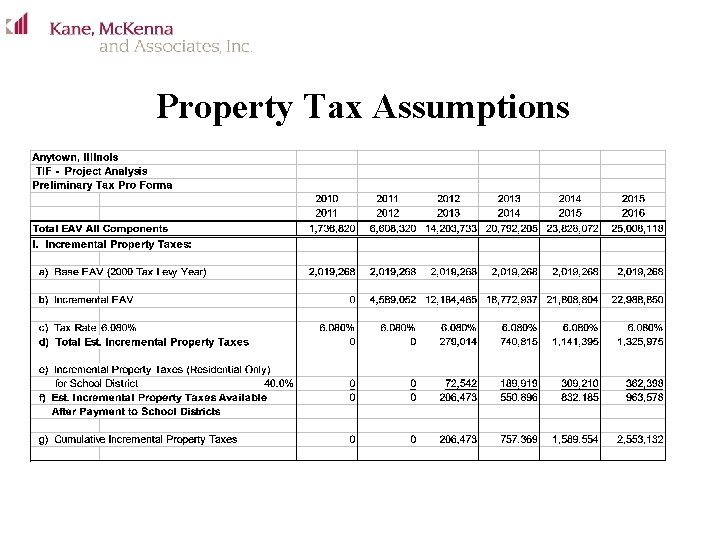
Property Tax Assumptions
I. Background Review of TIF Financing ASSESSED VALUE - But, a successful TIF is not guaranteed YEAR
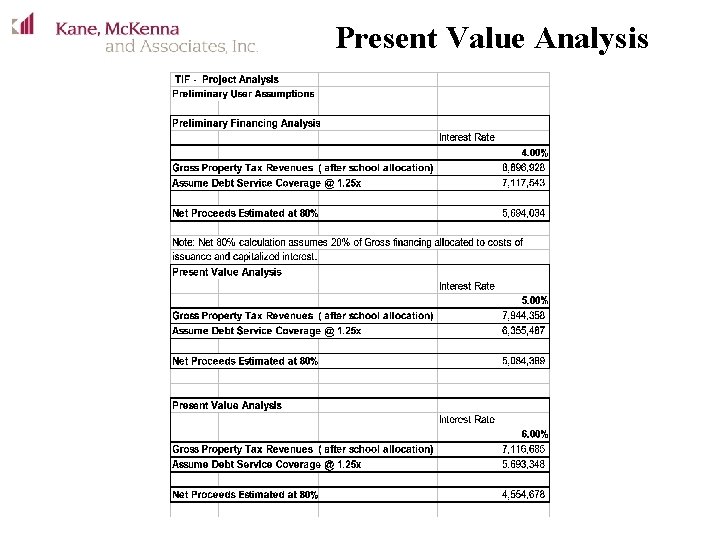
Present Value Analysis
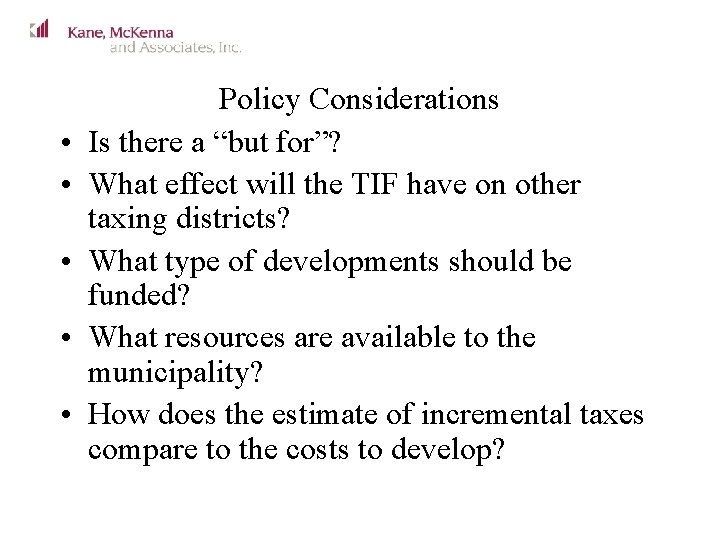
• • • Policy Considerations Is there a “but for”? What effect will the TIF have on other taxing districts? What type of developments should be funded? What resources are available to the municipality? How does the estimate of incremental taxes compare to the costs to develop?
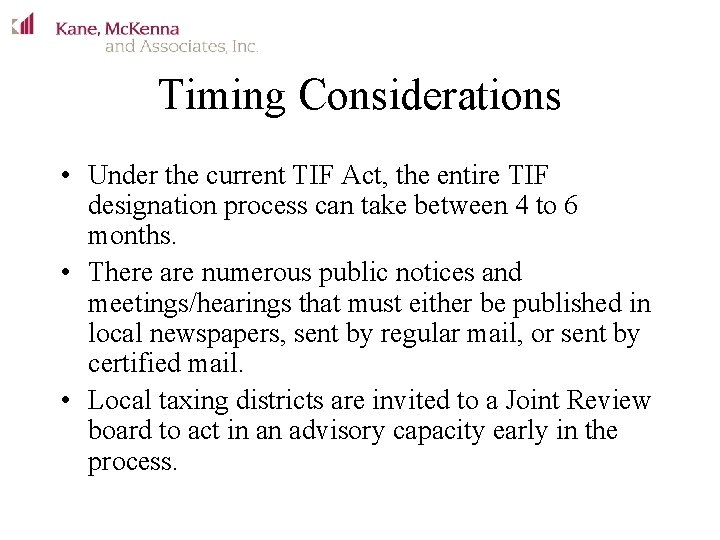
Timing Considerations • Under the current TIF Act, the entire TIF designation process can take between 4 to 6 months. • There are numerous public notices and meetings/hearings that must either be published in local newspapers, sent by regular mail, or sent by certified mail. • Local taxing districts are invited to a Joint Review board to act in an advisory capacity early in the process.
Timing Consideration Cont’d. Typical Steps required as part of the TIF designation process: - Public Meeting to review TIF concept - Public Hearing Ordinance/Resolution Approval to set Public Hearing - Joint Review Board meeting ( taxing districts and village )
Timing Consideration Cont’d. Notice of Public Hearing sent to taxpayers in TIF, and to interested parties; and 2 newspaper notices - Public Hearing to review TIF plan - TIF ordinances may be introduced 14 to 90 days after the Public Hearing - If the TIF ordinances are approved, they are then filed with the County Clerk The timetable occurs over a 120 to 180 day period