
Implementing a Drug Use Indicators Study 1 Implementing


- Slides: 35
Implementing a Drug Use Indicators Study 1
Implementing a Drug Use Indicators Study: Objectives • Identify the importance of drug use indicators • Know steps to implement an indicator study • Understand different methods of sampling and data collection • Understand how to analyze a situation using indicators • Present the results of a drug use study Implementing a Drug Use Indicators Study 2
Types of Drug Use Studies • Descriptive - Cross-sectional (basic) • Comparative - Stratified crosssectional • Monitoring - To assess change over time • Evaluation - To evaluate intervention impact Implementing a Drug Use Indicators Study 3
Types of Indicators • Prescribing • Patient Care • Facility Indicators Implementing a Drug Use Indicators Study 4
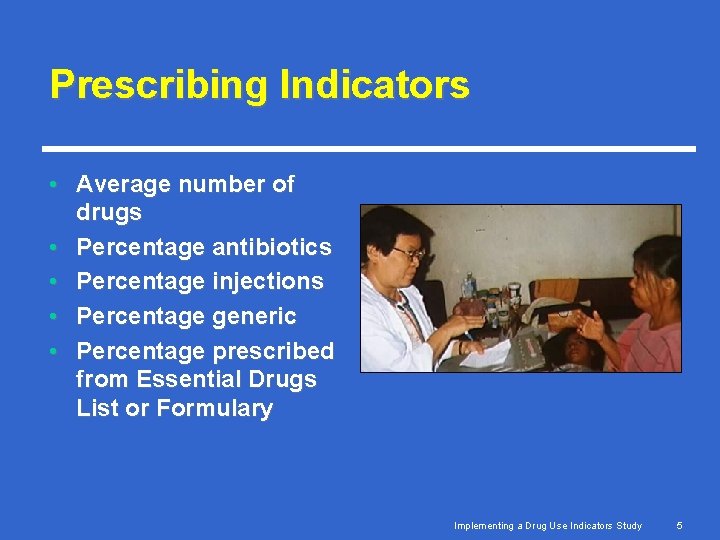
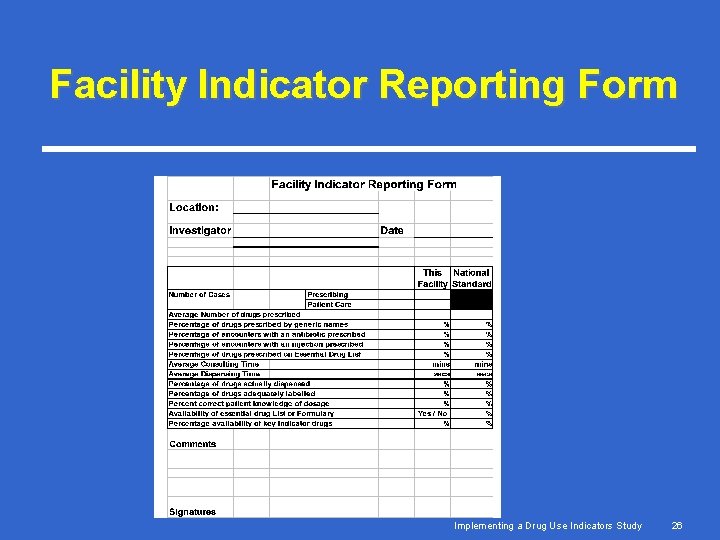
Prescribing Indicators • Average number of drugs • Percentage antibiotics • Percentage injections • Percentage generic • Percentage prescribed from Essential Drugs List or Formulary Implementing a Drug Use Indicators Study 5
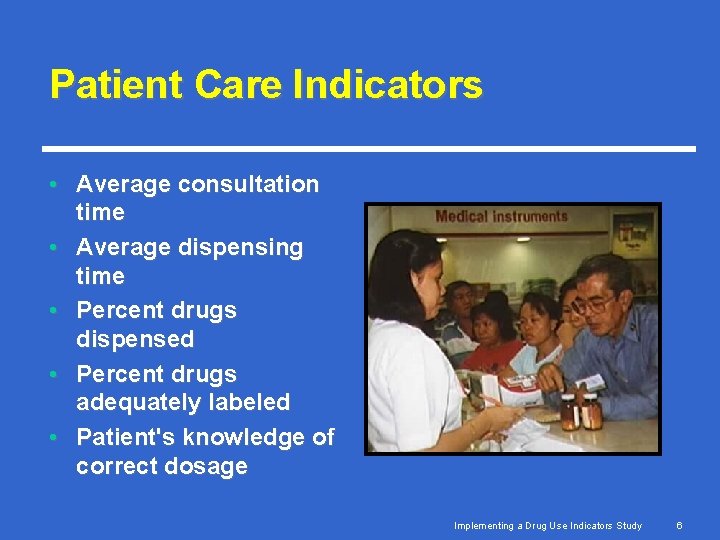
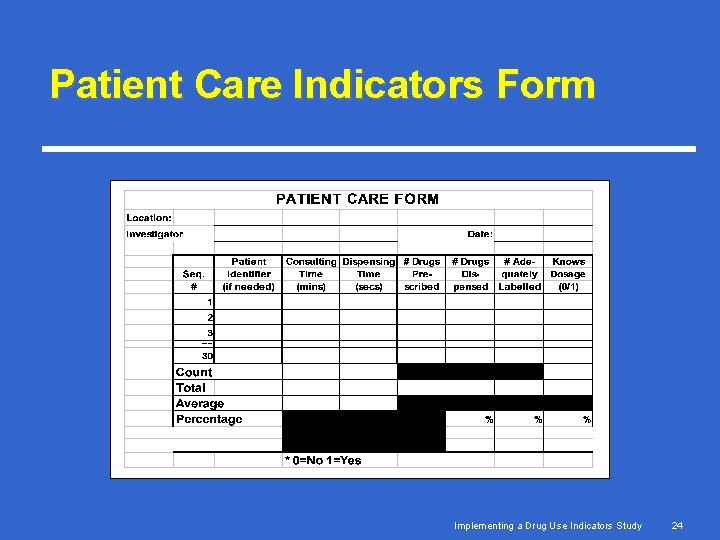
Patient Care Indicators • Average consultation time • Average dispensing time • Percent drugs dispensed • Percent drugs adequately labeled • Patient's knowledge of correct dosage Implementing a Drug Use Indicators Study 6
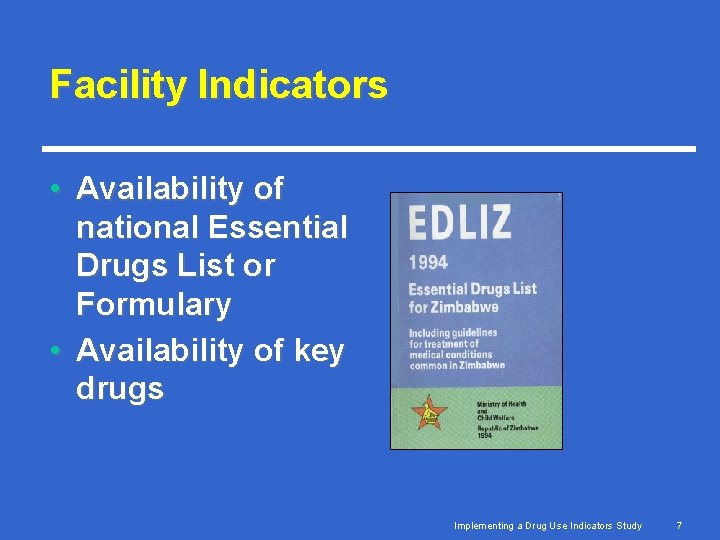
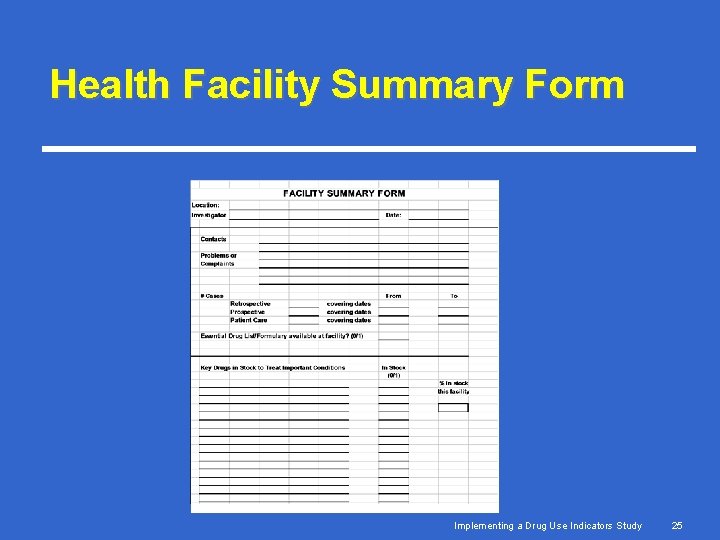
Facility Indicators • Availability of national Essential Drugs List or Formulary • Availability of key drugs Implementing a Drug Use Indicators Study 7
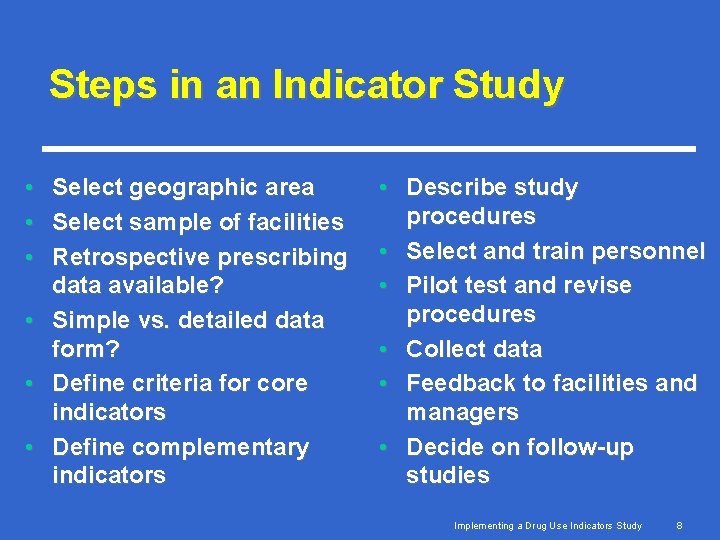
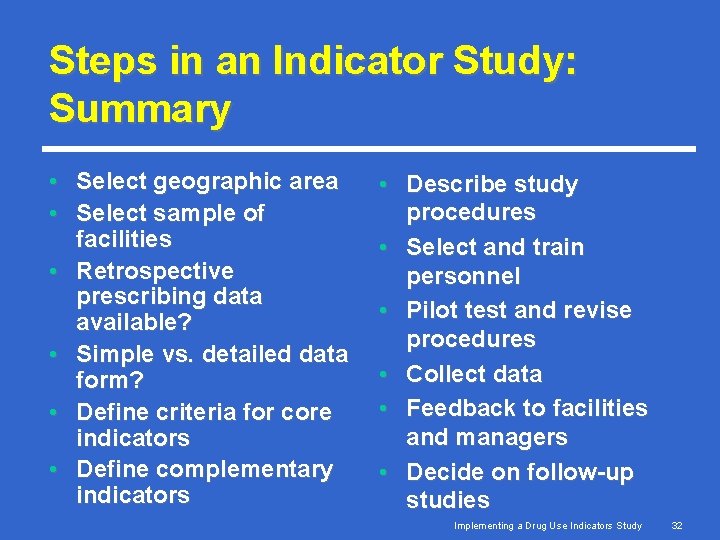
Steps in an Indicator Study • • • Select geographic area Select sample of facilities Retrospective prescribing data available? Simple vs. detailed data form? Define criteria for core indicators Define complementary indicators • Describe study procedures • Select and train personnel • Pilot test and revise procedures • Collect data • Feedback to facilities and managers • Decide on follow-up studies Implementing a Drug Use Indicators Study 8
Scope of the Indicators Study • Depends on: – – information needs of managers capabilities of record system types of providers resources available • Minimum sample – 20 facilities and 30 prescriptions / 30 patients per facility for cross-sectional study – 100 prescriptions per facility if facilities will be compared Implementing a Drug Use Indicators Study 9
Indicator Sampling Methods • Selection of Facilities – Simple Random / Systematic – Useful to Stratify • • Urban / Rural Doctor / Non-doctors Health Center / Dispensary Government / Mission • Retrospective Prescribing Data – Systematic – Stratified by prescriber? • Prospective Patient Encounters – Convenience – Quota by Health Problem? Implementing a Drug Use Indicators Study 10
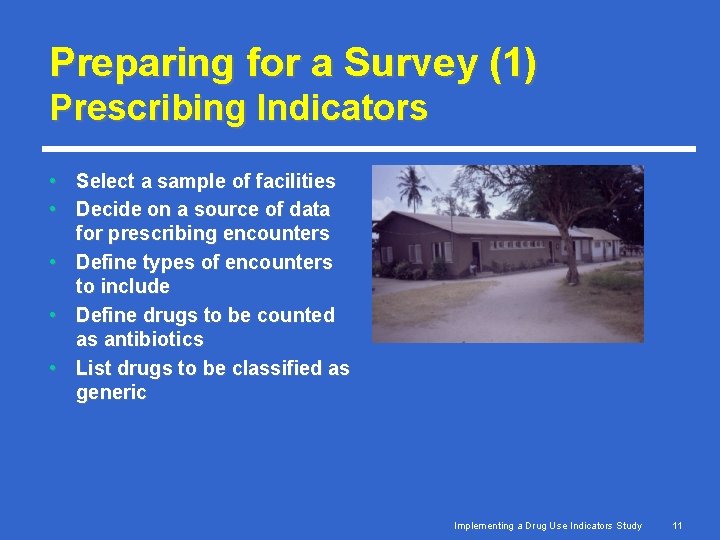
Preparing for a Survey (1) Prescribing Indicators • Select a sample of facilities • Decide on a source of data for prescribing encounters • Define types of encounters to include • Define drugs to be counted as antibiotics • List drugs to be classified as generic Implementing a Drug Use Indicators Study 11
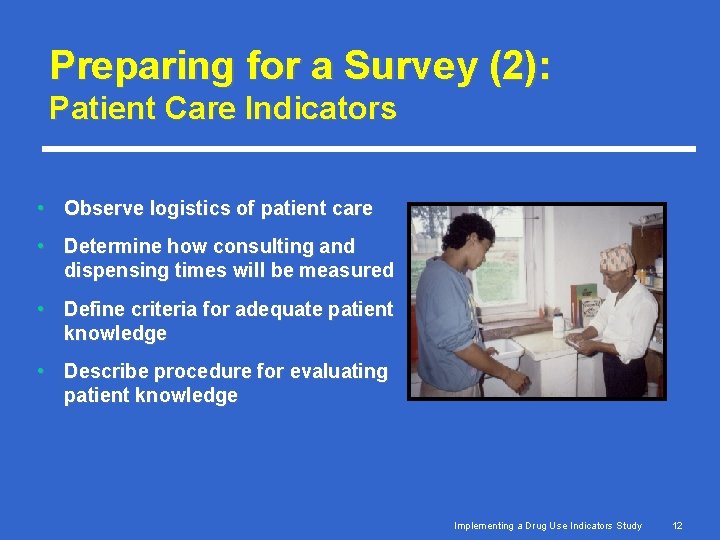
Preparing for a Survey (2): Patient Care Indicators • Observe logistics of patient care • Determine how consulting and dispensing times will be measured • Define criteria for adequate patient knowledge • Describe procedure for evaluating patient knowledge Implementing a Drug Use Indicators Study 12
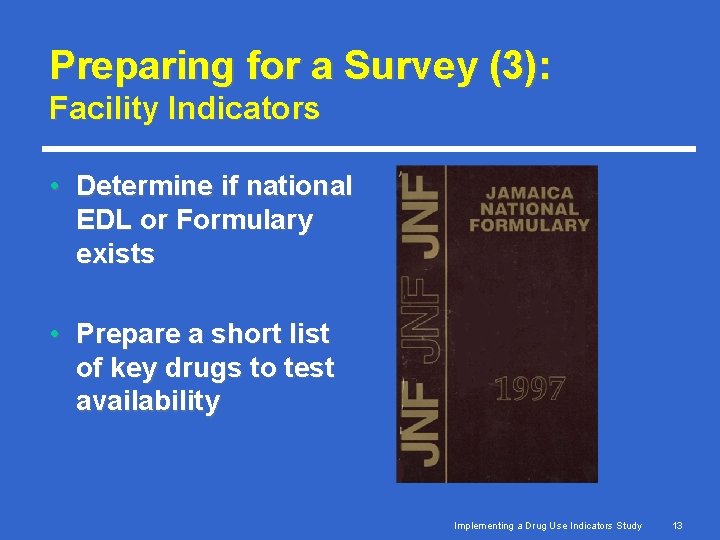
Preparing for a Survey (3): Facility Indicators • Determine if national EDL or Formulary exists • Prepare a short list of key drugs to test availability Implementing a Drug Use Indicators Study 13
Undertaking the Survey: Preparation • • Select and train personnel Conduct pilot tests Select and inform sample sites Plan schedule of data collection visits Implementing a Drug Use Indicators Study 14
Undertaking the Survey: Field Activities • Select a sample of encounters • Fill in encounter forms • Observe consultation and dispensing times • Collect patient knowledge and dispensing information • Fill in facility summary forms • Present results to staff Implementing a Drug Use Indicators Study 15
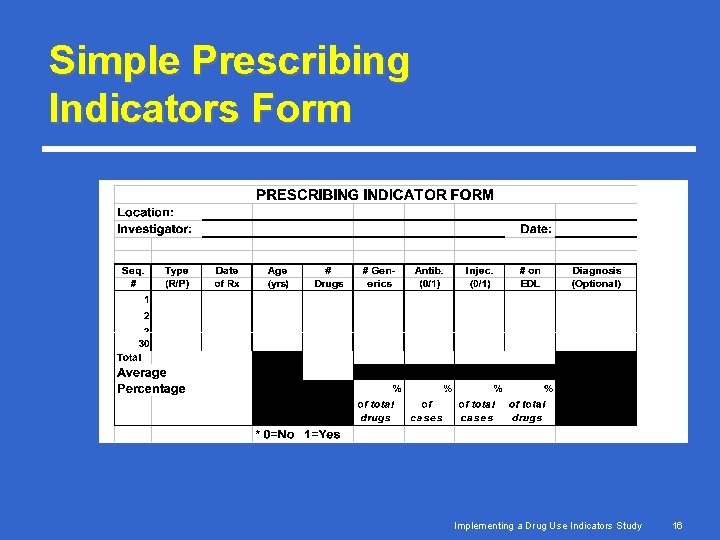
Simple Prescribing Indicators Form Implementing a Drug Use Indicators Study 16
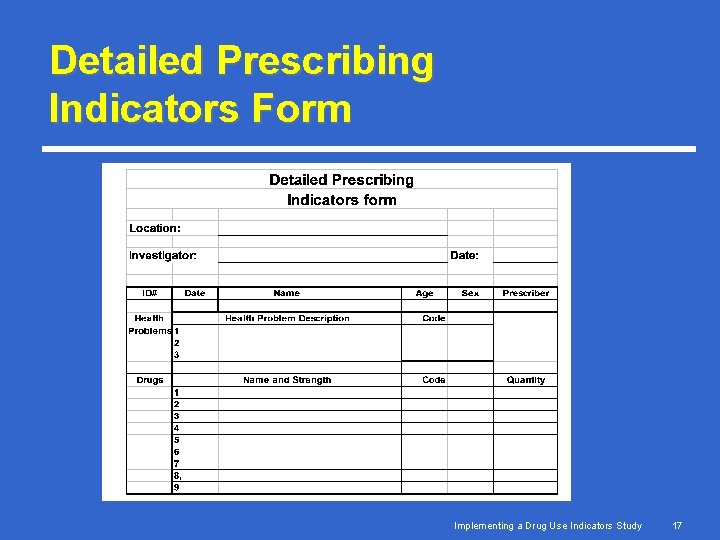
Detailed Prescribing Indicators Form Implementing a Drug Use Indicators Study 17
Prescription 1 Implementing a Drug Use Indicators Study 18
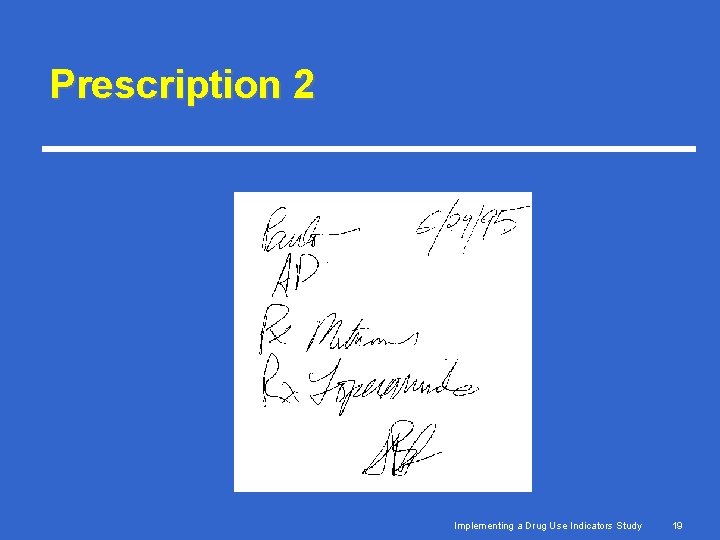
Prescription 2 Implementing a Drug Use Indicators Study 19
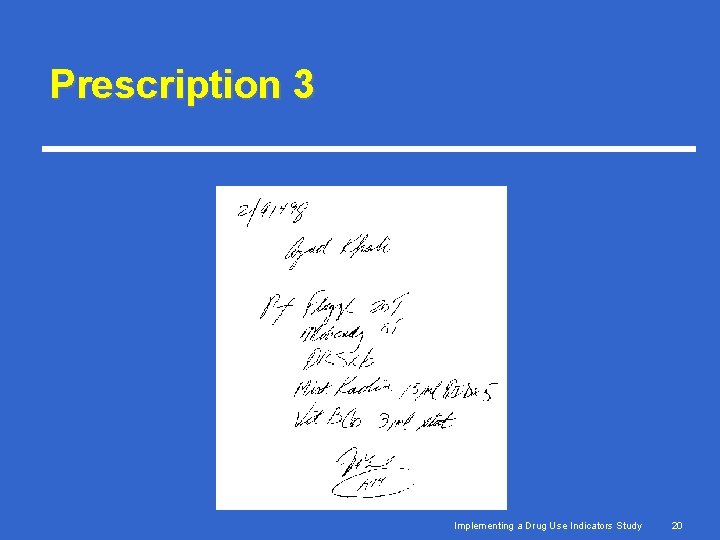
Prescription 3 Implementing a Drug Use Indicators Study 20
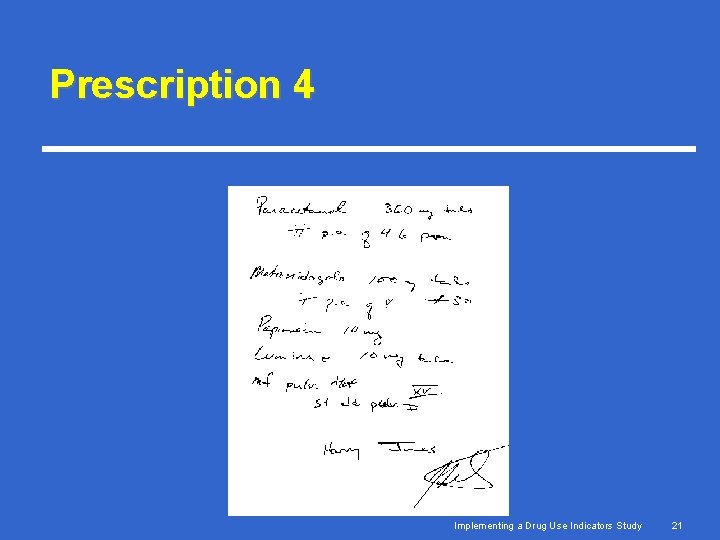
Prescription 4 Implementing a Drug Use Indicators Study 21
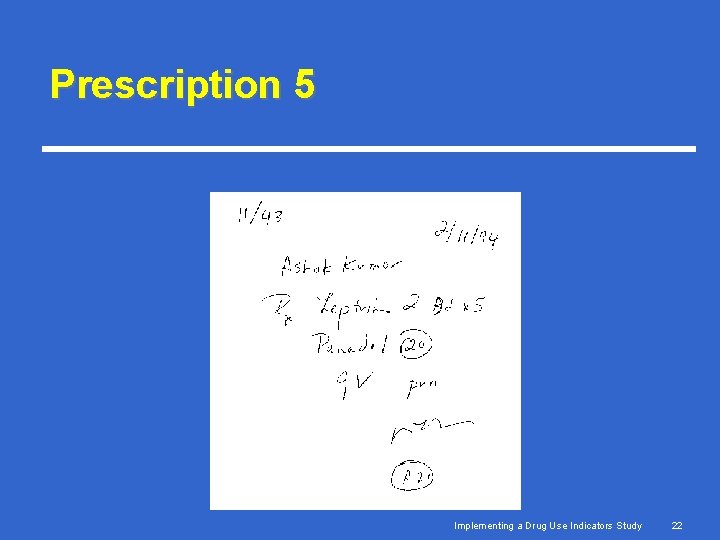
Prescription 5 Implementing a Drug Use Indicators Study 22
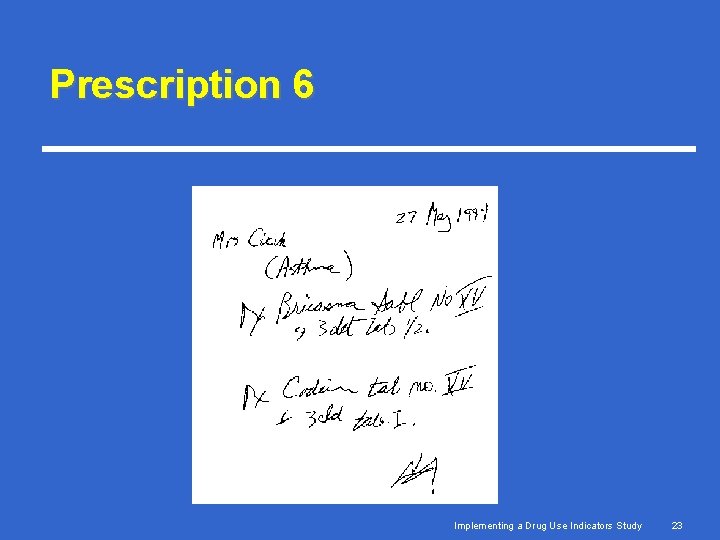
Prescription 6 Implementing a Drug Use Indicators Study 23
Patient Care Indicators Form Implementing a Drug Use Indicators Study 24
Health Facility Summary Form Implementing a Drug Use Indicators Study 25
Facility Indicator Reporting Form Implementing a Drug Use Indicators Study 26
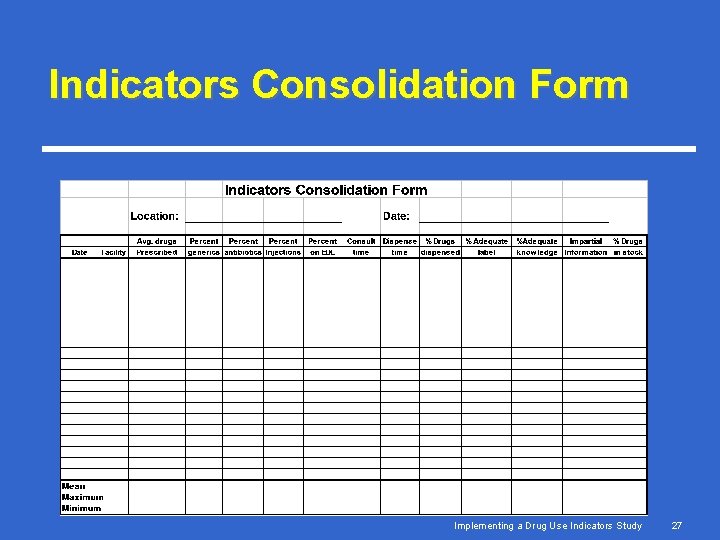
Indicators Consolidation Form Implementing a Drug Use Indicators Study 27
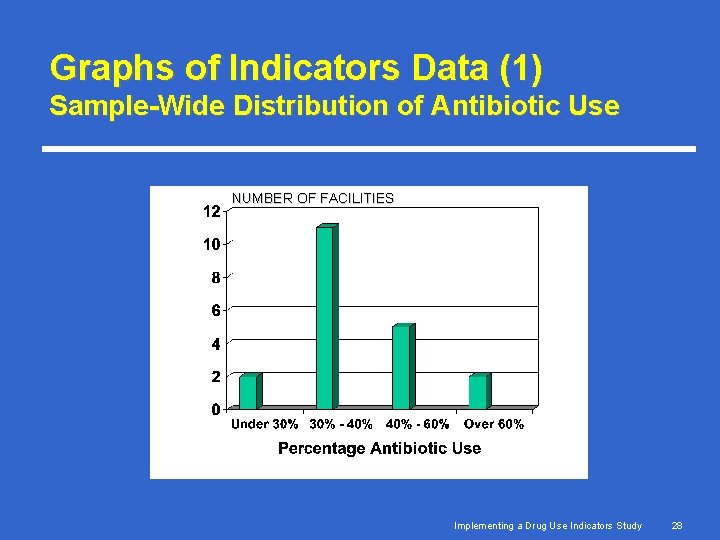
Graphs of Indicators Data (1) Sample-Wide Distribution of Antibiotic Use NUMBER OF FACILITIES Implementing a Drug Use Indicators Study 28
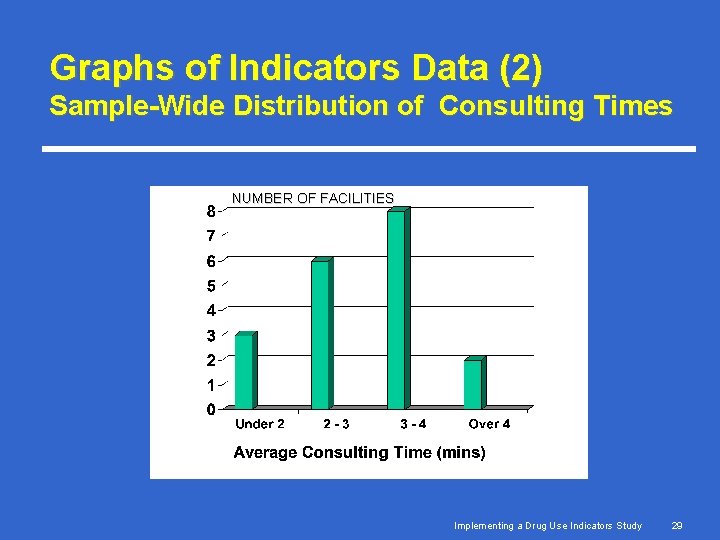
Graphs of Indicators Data (2) Sample-Wide Distribution of Consulting Times NUMBER OF FACILITIES Implementing a Drug Use Indicators Study 29
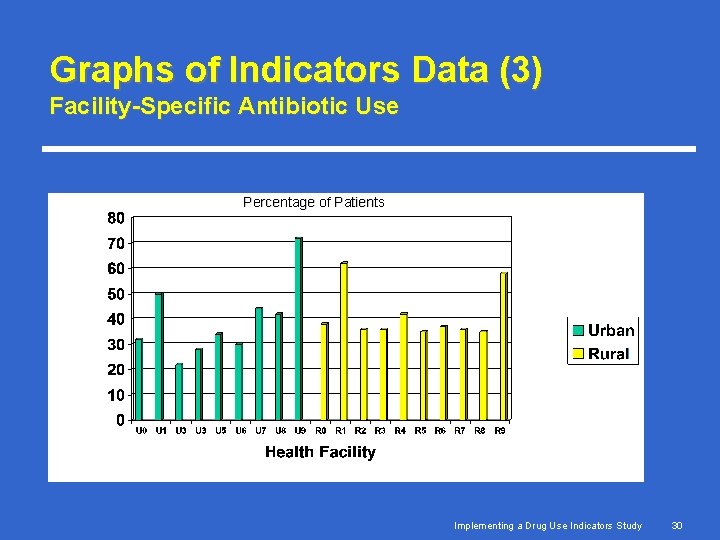
Graphs of Indicators Data (3) Facility-Specific Antibiotic Use Percentage of Patients Implementing a Drug Use Indicators Study 30
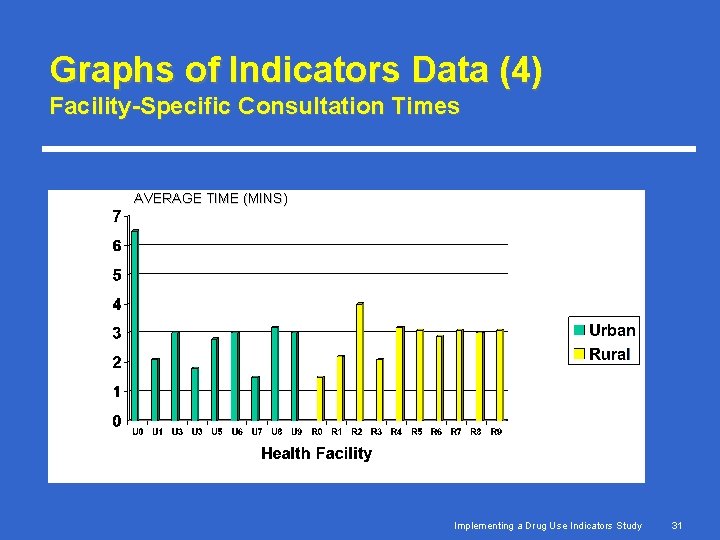
Graphs of Indicators Data (4) Facility-Specific Consultation Times AVERAGE TIME (MINS) Implementing a Drug Use Indicators Study 31
Steps in an Indicator Study: Summary • Select geographic area • Select sample of facilities • Retrospective prescribing data available? • Simple vs. detailed data form? • Define criteria for core indicators • Define complementary indicators • Describe study procedures • Select and train personnel • Pilot test and revise procedures • Collect data • Feedback to facilities and managers • Decide on follow-up studies Implementing a Drug Use Indicators Study 32
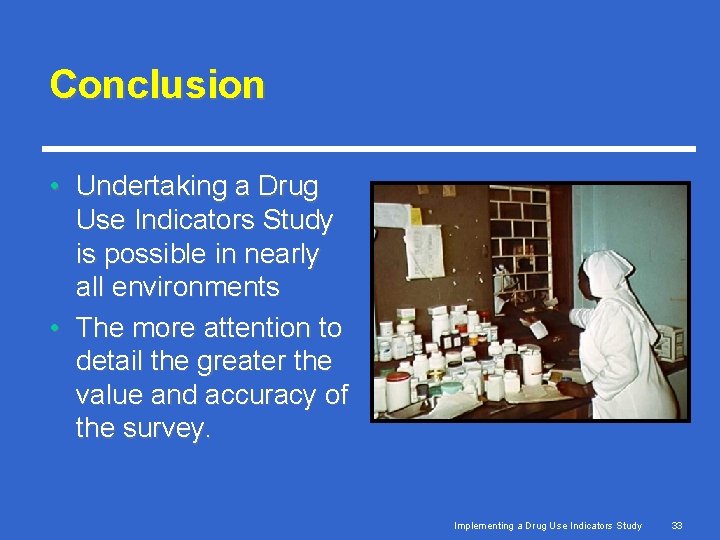
Conclusion • Undertaking a Drug Use Indicators Study is possible in nearly all environments • The more attention to detail the greater the value and accuracy of the survey. Implementing a Drug Use Indicators Study 33
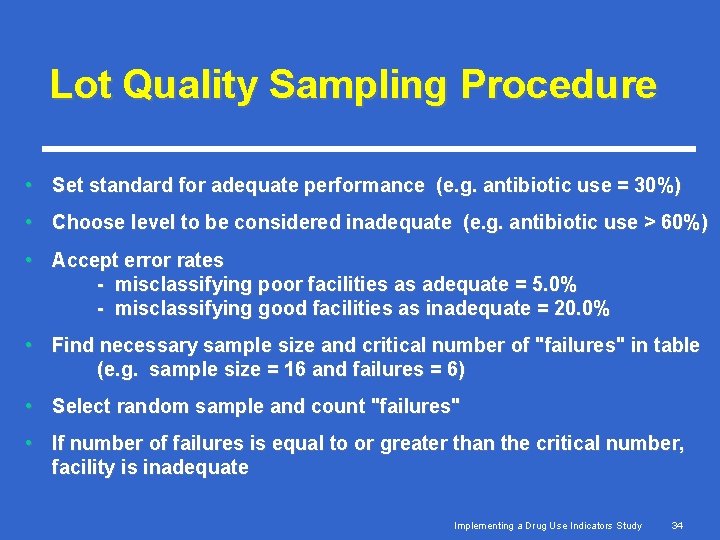
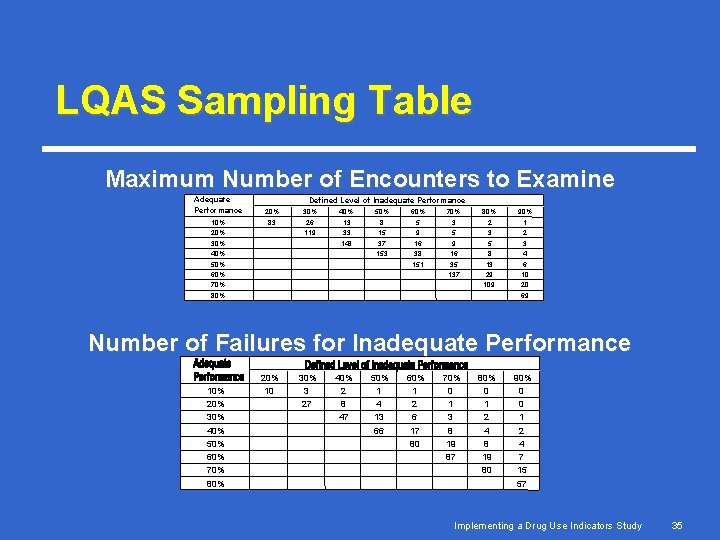
Lot Quality Sampling Procedure • Set standard for adequate performance (e. g. antibiotic use = 30%) • Choose level to be considered inadequate (e. g. antibiotic use > 60%) • Accept error rates - misclassifying poor facilities as adequate = 5. 0% - misclassifying good facilities as inadequate = 20. 0% • Find necessary sample size and critical number of "failures" in table (e. g. sample size = 16 and failures = 6) • Select random sample and count "failures" • If number of failures is equal to or greater than the critical number, facility is inadequate Implementing a Drug Use Indicators Study 34
LQAS Sampling Table Maximum Number of Encounters to Examine Adequate Performance 10% 20% 30% 40% 50% 60% 70% 80% Defined Level of Inadequate Performance 20% 83 30% 26 119 40% 13 33 143 50% 8 15 37 153 60% 5 9 16 38 151 70% 3 5 9 16 35 137 80% 2 3 5 8 13 29 109 90% 1 2 3 4 6 10 20 69 Number of Failures for Inadequate Performance 10% 20% 30% 40% 50% 60% 70% 80% 20% 10 30% 3 27 40% 2 8 47 50% 1 4 13 66 60% 1 2 6 17 80 70% 0 1 3 8 19 87 80% 0 1 2 4 8 19 80 90% 0 0 1 2 4 7 15 57 Implementing a Drug Use Indicators Study 35