
Implementation Science Practical Application to Supporting Quality Improvement

- Slides: 22
Implementation Science: Practical Application to Supporting Quality Improvement Tom Udell, Center Director Ikaika Alapa’i, Project Support Specialist Center on Early Learning and Youth Development
Introductions • Name • Preferred Pronouns • Organization • If you had to choose one thing you would want providers that you work with to improve, what would it be?
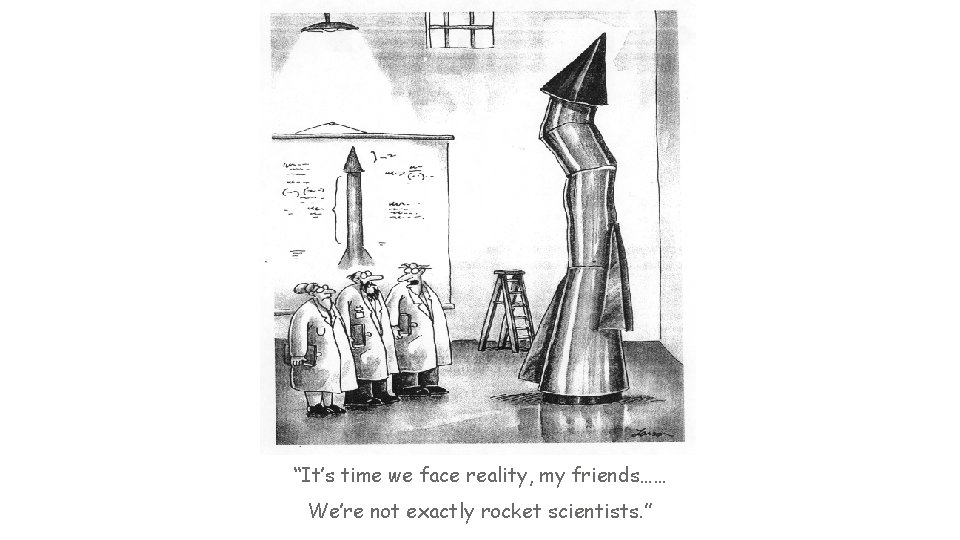
“It’s time we face reality, my friends…… We’re not exactly rocket scientists. ”
Training Objectives Participants will understand: • How to use the “What Now Page” • The Principles of Implementation Science • The Stages of Implementation • How to apply the principles and stages of Implementation Science to their quality improvement work
Definition Implementation science is the study of the process of implementing programs and practices that have some evidence from the research field to suggest they are worth replicating. It is the study of how a practice that is evidence-based or evidence-informed gets translated to different, more diverse contexts in the real world. In this way, effective implementation bridges the gap between science and practice. Metz, A. , S. F. , Halle, T. , & Bartley, L. (2015). p 1
Principles of Implementation Science Overview Implementation occurs in 4 distinct stages, guided by 3 core principles 1. Building and use of Implementation Teams 2. Use Data and Feedback Loops 3. Implementation infrastructure
Implementation Teams ● Groups of individuals who are in charge of intentionally monitoring and supporting implementation. ○ Comprised of: Key Personnel, Stakeholders ● Multiple Teams, guided by the “Core” Implementation Team, comprised of individuals who bring diverse perspectives ● Knowledgeable in: ○ ○ Application of innovation Application of infrastructure Application of improvement cycles Application of systems of change
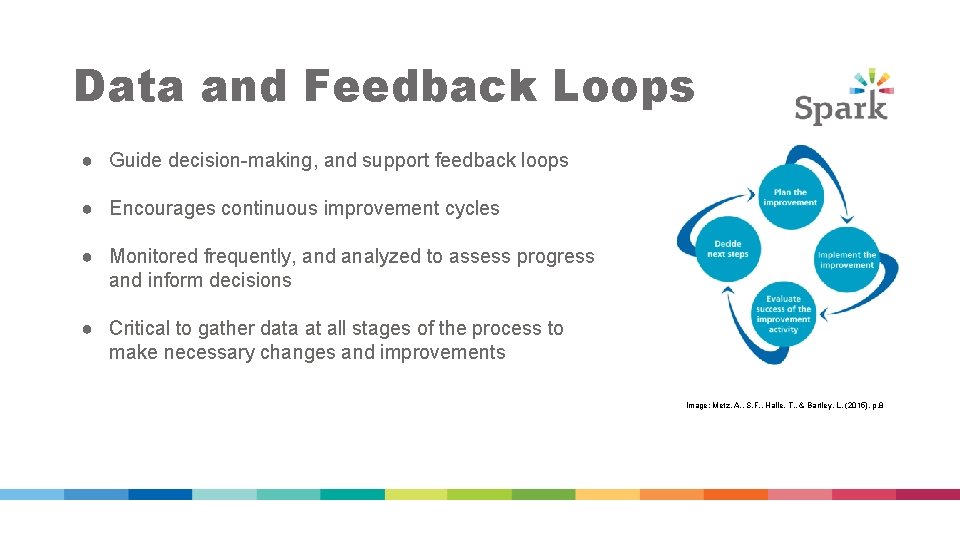
Data and Feedback Loops ● Guide decision-making, and support feedback loops ● Encourages continuous improvement cycles ● Monitored frequently, and analyzed to assess progress and inform decisions ● Critical to gather data at all stages of the process to make necessary changes and improvements Image: Metz, A. , S. F. , Halle, T. , & Bartley, L. (2015), p. 8
Implementation Infrastructure ● Building blocks needed to support practice, organization, and systems changes (Metz & Bartley, 2012) ● General capacity ○ ○ ○ Individual level-trainings, skills, knowledge Organizational level-leadership, mission, goals, climate Community level-leadership opportunities to participate in initiative ● Innovation-Specific Capacity ○ ○ ○ Individual level-skills, motivation, knowledge to use innovation Organizational level-buy in from leadership, willingness to allocate resources and time Community level-buy in and understanding of initiative
Implementation Stages 4 stages of Implementation 1. Exploration-Evaluating current services, and assessing needs of recipients for initiative 2. Installation-Competencies at individual, organizational, and infrastructure for initiative developed 3. Initial Implementation-Initiative becomes available to public, with focus on feedback for improvement 4. Full Implementation-Initiative is incorporated to organizational system and fully practiced and utilized.
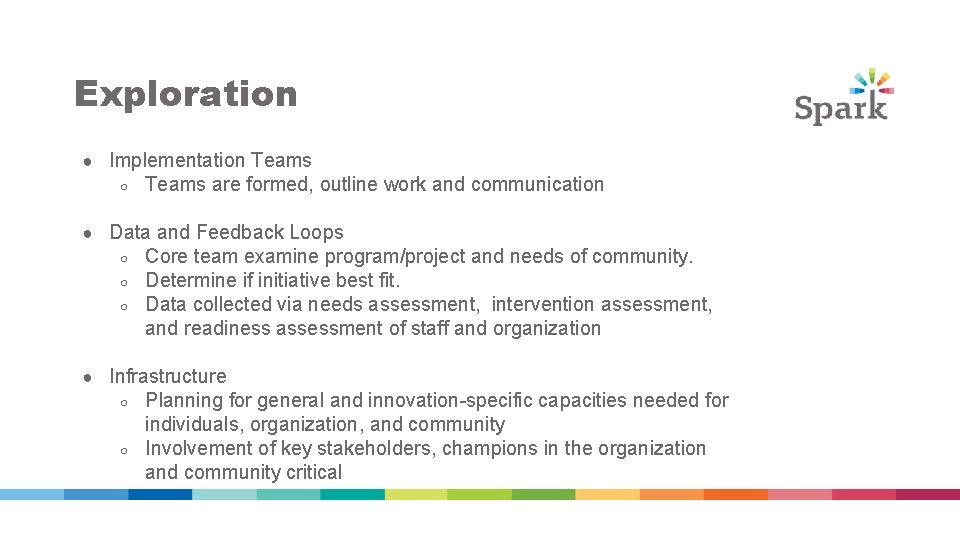
Exploration ● Implementation Teams ○ Teams are formed, outline work and communication ● Data and Feedback Loops ○ ○ ○ Core team examine program/project and needs of community. Determine if initiative best fit. Data collected via needs assessment, intervention assessment, and readiness assessment of staff and organization ● Infrastructure ○ ○ Planning for general and innovation-specific capacities needed for individuals, organization, and community Involvement of key stakeholders, champions in the organization and community critical
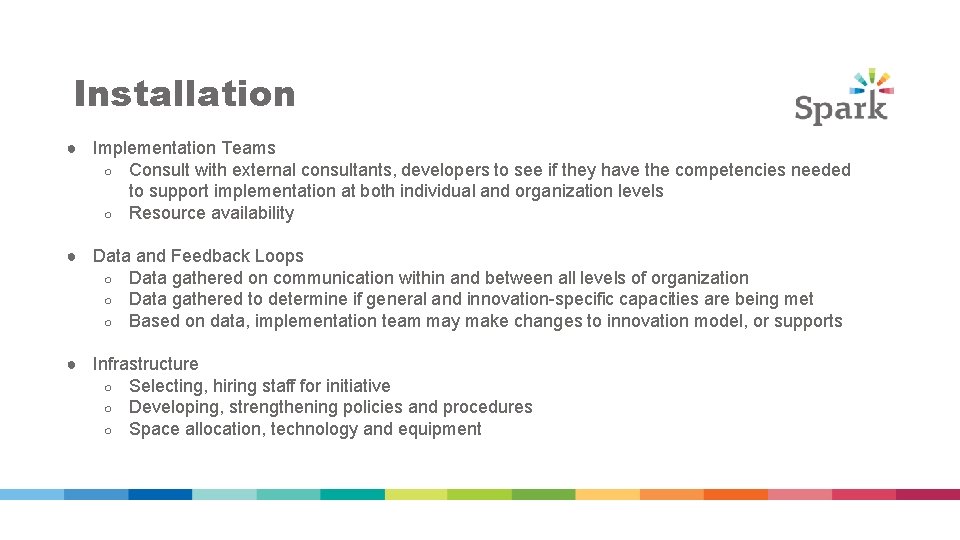
Installation ● Implementation Teams ○ Consult with external consultants, developers to see if they have the competencies needed to support implementation at both individual and organization levels ○ Resource availability ● Data and Feedback Loops ○ Data gathered on communication within and between all levels of organization ○ Data gathered to determine if general and innovation-specific capacities are being met ○ Based on data, implementation team may make changes to innovation model, or supports ● Infrastructure ○ Selecting, hiring staff for initiative ○ Developing, strengthening policies and procedures ○ Space allocation, technology and equipment
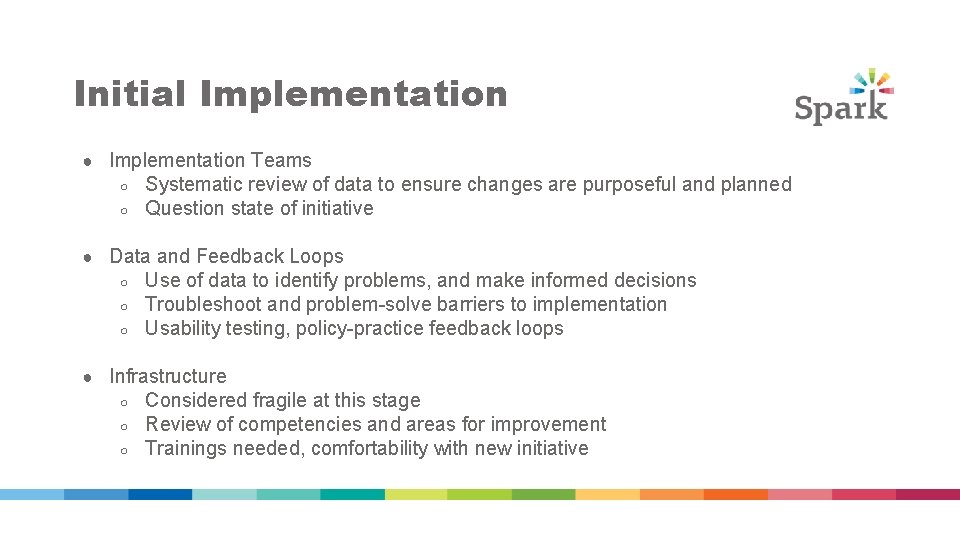
Initial Implementation ● Implementation Teams ○ ○ Systematic review of data to ensure changes are purposeful and planned Question state of initiative ● Data and Feedback Loops ○ ○ ○ Use of data to identify problems, and make informed decisions Troubleshoot and problem-solve barriers to implementation Usability testing, policy-practice feedback loops ● Infrastructure ○ ○ ○ Considered fragile at this stage Review of competencies and areas for improvement Trainings needed, comfortability with new initiative
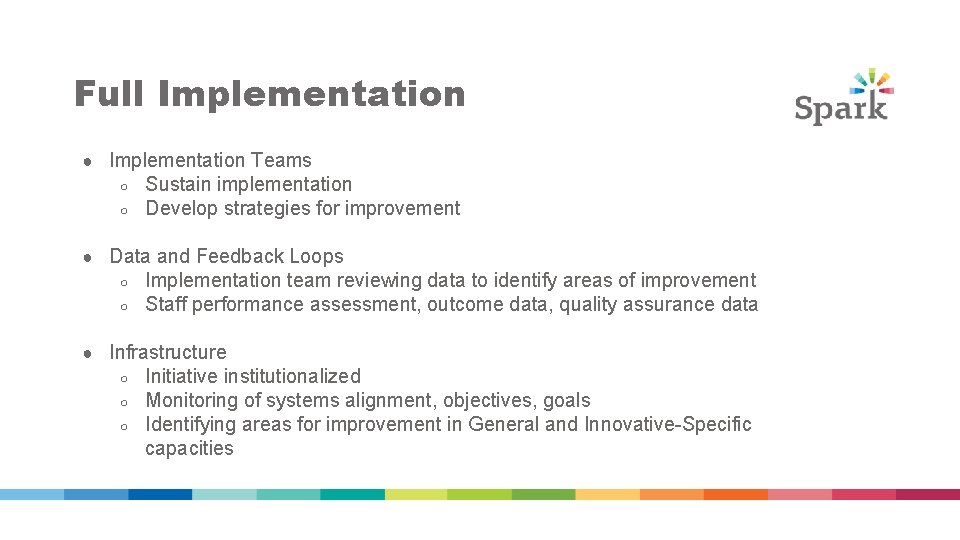
Full Implementation ● Implementation Teams ○ ○ Sustain implementation Develop strategies for improvement ● Data and Feedback Loops ○ ○ Implementation team reviewing data to identify areas of improvement Staff performance assessment, outcome data, quality assurance data ● Infrastructure ○ ○ ○ Initiative institutionalized Monitoring of systems alignment, objectives, goals Identifying areas for improvement in General and Innovative-Specific capacities
Activity
References & Resources Metz, A. , S. F. , Halle, T. , & Bartley, L. (2015). An integrated stage-based framework for implementation of early childhood programs and systems (OPRE Research Brief OPRE 201548). Washing, DC: Office of Planning, Research and Evaluation, Administration for Children and Families, U. S. Department of Health and Human Services. Fixsen, D. L. , Naoom, S. F. , Blase, K. A. , Friedman, R. M. , & Wallace, F. (2005). Implementation research: A synthesis of the literature (FMHI Publication No. 231). Tampa, FL: University of South Florida, Louis de la Parte Florida Mental Health Institute, National
Questions?
Evaluations Please turn in evaluations at front of room