
Implementation Science Introduction DPI Heidi Walter Melissa Passehl


- Slides: 37
Implementation Science Introduction DPI Heidi Walter Melissa Passehl SISEP @ NIRN Kathleen Ryan Jackson Dean Fixsen CESA 2 Gail Anderson Ed O’Connor
Implementation Defined Implement = Use • Implementation Science = The study of factors that influence the full and effective use of innovations in practice • The goal is not to answer factual questions about what is, but to determine what is required (mission driven) • From asking “What can we do with what we have? ” to asking “What will it take to do what needs to be done? ” (William Foege, 2011)
Philosophy and Values Implementation practice and science are dedicated to: 1. Delivering on the promise of science in service • Produce promised outcomes in practice 2. Equity and fairness in the use of science in service • Equal access to effective innovations independent of personal or socio-economic factors not related to the effectiveness of the innovation 3. Using data to assess efforts to impact services and produce population benefits • Objective measures for decision making
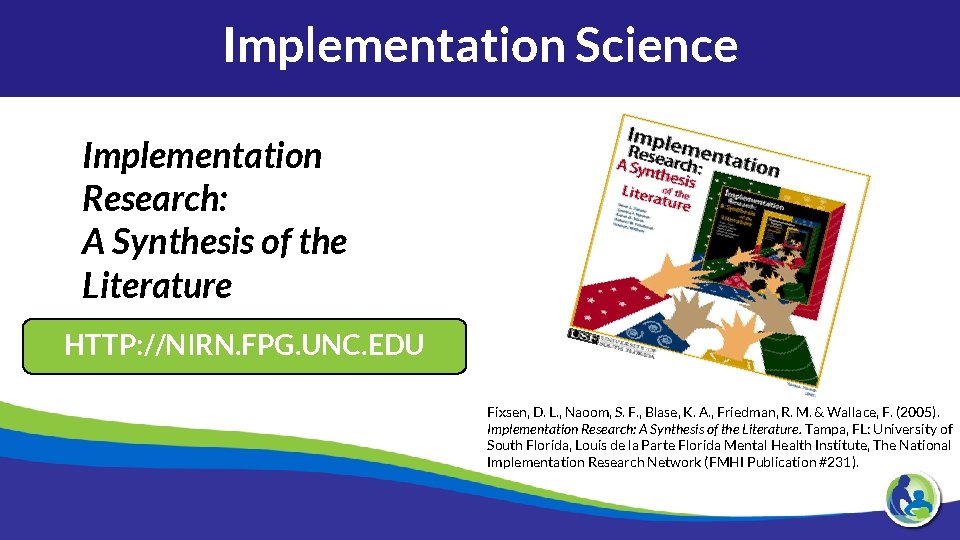
Implementation Science Implementation Research: A Synthesis of the Literature HTTP: //NIRN. FPG. UNC. EDU Fixsen, D. L. , Naoom, S. F. , Blase, K. A. , Friedman, R. M. & Wallace, F. (2005). Implementation Research: A Synthesis of the Literature. Tampa, FL: University of South Florida, Louis de la Parte Florida Mental Health Institute, The National Implementation Research Network (FMHI Publication #231).
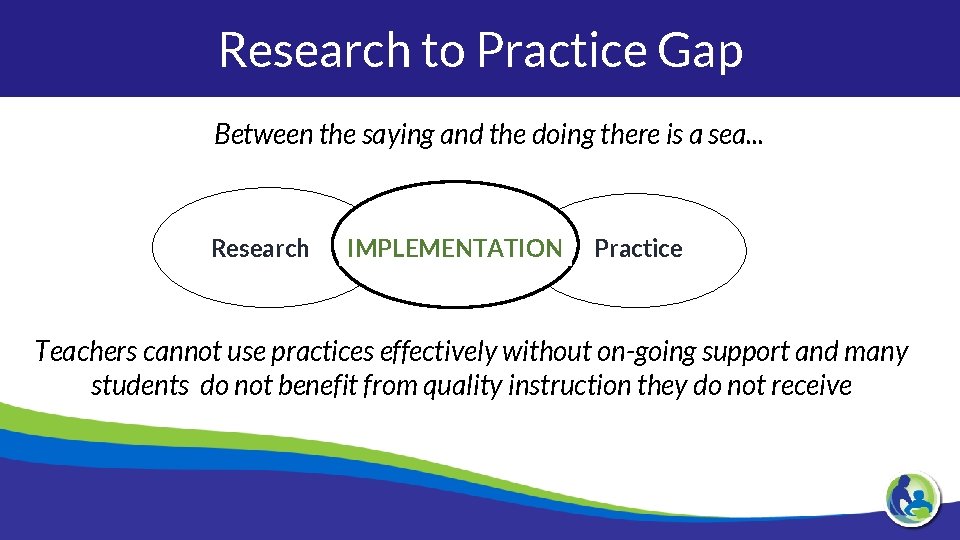
Research to Practice Gap Between the saying and the doing there is a sea. . . Research IMPLEMENTATION TO Practice Teachers cannot use practices effectively without on-going support and many students do not benefit from quality instruction they do not receive
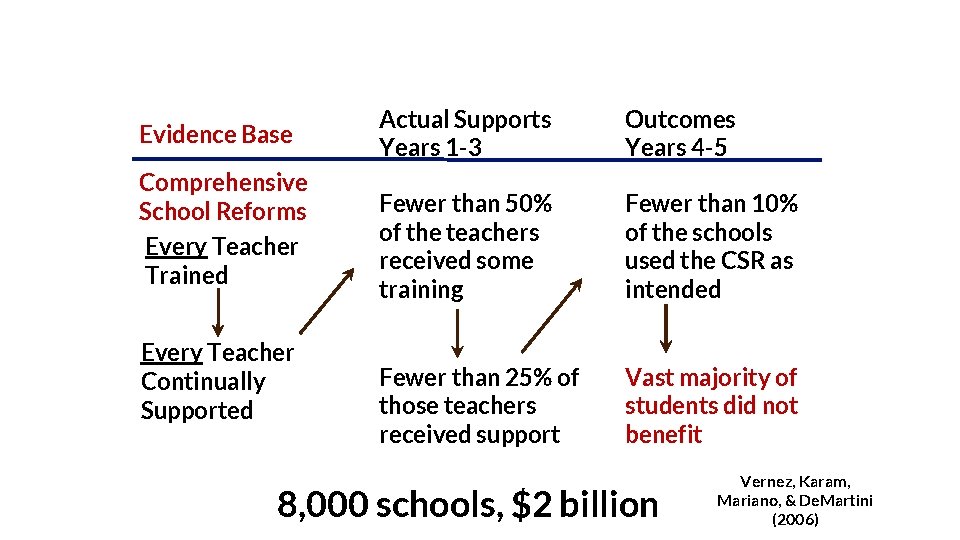
Implementation Gap Evidence Base Comprehensive School Reforms Every Teacher Trained Every Teacher Continually Supported Actual Supports Years 1 -3 Outcomes Years 4 -5 Fewer than 50% of the teachers received some training Fewer than 10% of the schools used the CSR as intended Fewer than 25% of those teachers received support Vast majority of students did not benefit 8, 000 schools, $2 billion Vernez, Karam, Mariano, & De. Martini (2006)
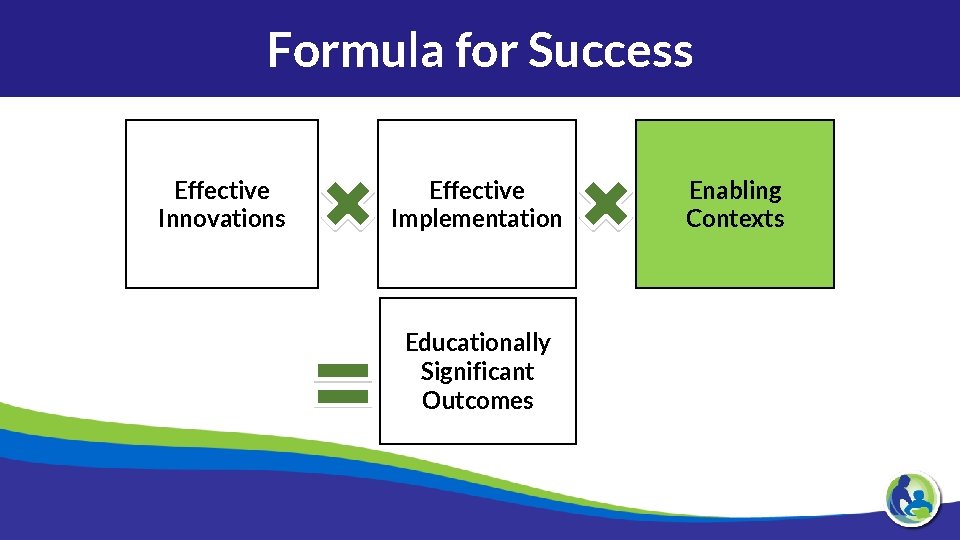
Formula for Success Effective Innovations Effective Implementation Educationally Significant Outcomes Enabling Contexts
Formula for Success: District Example Effective Implementation Effective Innovations • • • Evidence based practices Clearly defined instructional and behavioral practices Fidelity of practice • • • Linked teaming structure; clearly defined purpose, procedures Support systems to use instructional-behavioral practices Data collections rules, decisions, action planning Enabling Contexts • Board policy approved district-wide adoption • Practice Policy Loops: board, district, principal and teacher • Sustainable enabling context since 1997 Educationally Significant Outcomes • Seventy-five percent (341 of 456) of students who met the DIBELS benchmark at the end of first grade (2002) did, in fact, exceed the state reading benchmark at the end of third grade (2004). Sadler and Sugai, 2009
Formula for Success Effective Innovations Effective Implementation Educationally Significant Outcomes Enabling Contexts
Change is great… You go first
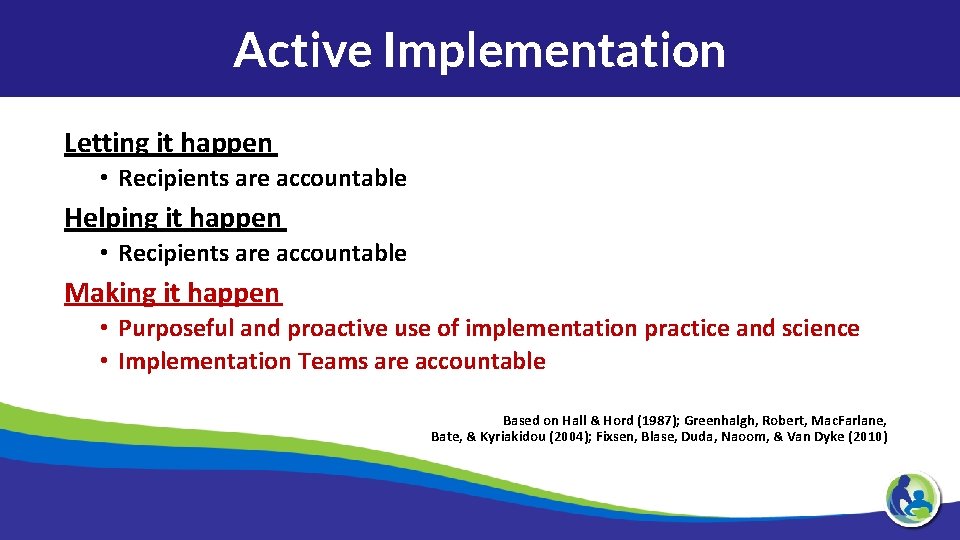
Active Implementation Letting it happen • Recipients are accountable Helping it happen • Recipients are accountable Making it happen • Purposeful and proactive use of implementation practice and science • Implementation Teams are accountable Based on Hall & Hord (1987); Greenhalgh, Robert, Mac. Farlane, Bate, & Kyriakidou (2004); Fixsen, Blase, Duda, Naoom, & Van Dyke (2010)
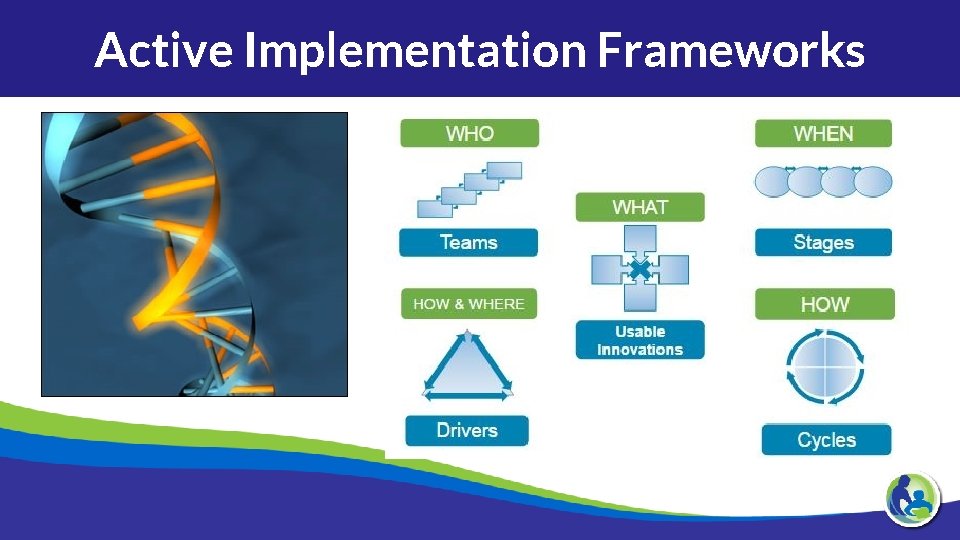
Active Implementation Frameworks
Benefits of Frameworks • Frameworks provide guidance for purposeful and effective action in complex human service environments • Guidance for Planning • Guidance for Problem Solving The National Implementation Research Network
Benefits of Frameworks • Promote the ability to generalize beyond the immediate project or initiative (e. g. smallpox) • Enhance communication among partners (e. g. common language, common metrics, alignment of efforts) • More easily share and apply “lessons learned” among groups
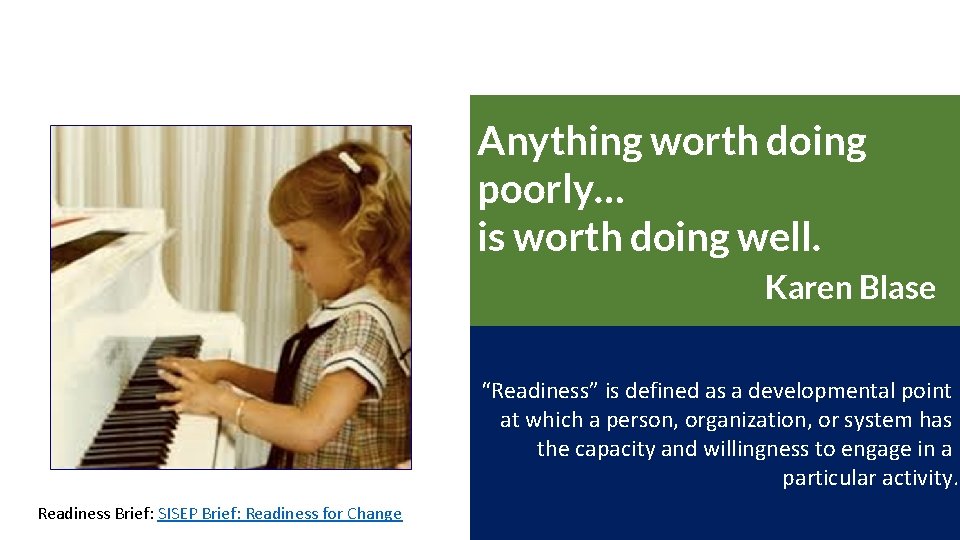
Anything worth doing poorly… is worth doing well. Karen Blase “Readiness” is defined as a developmental point at which a person, organization, or system has the capacity and willingness to engage in a particular activity. Readiness Brief: SISEP Brief: Readiness for Change
Implementation Capacity Development It takes TEAMS It takes SUPPORTS It takes TIME It takes COMMUNICATION
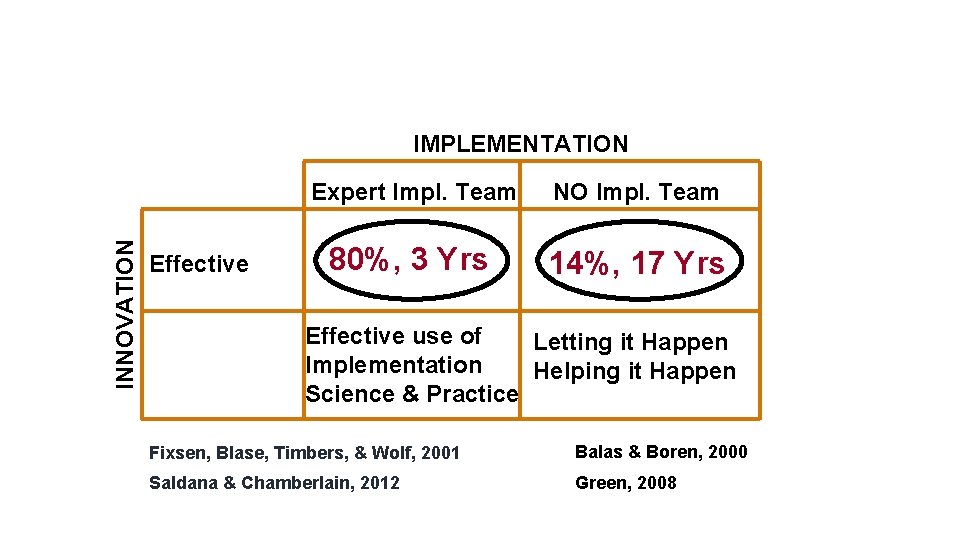
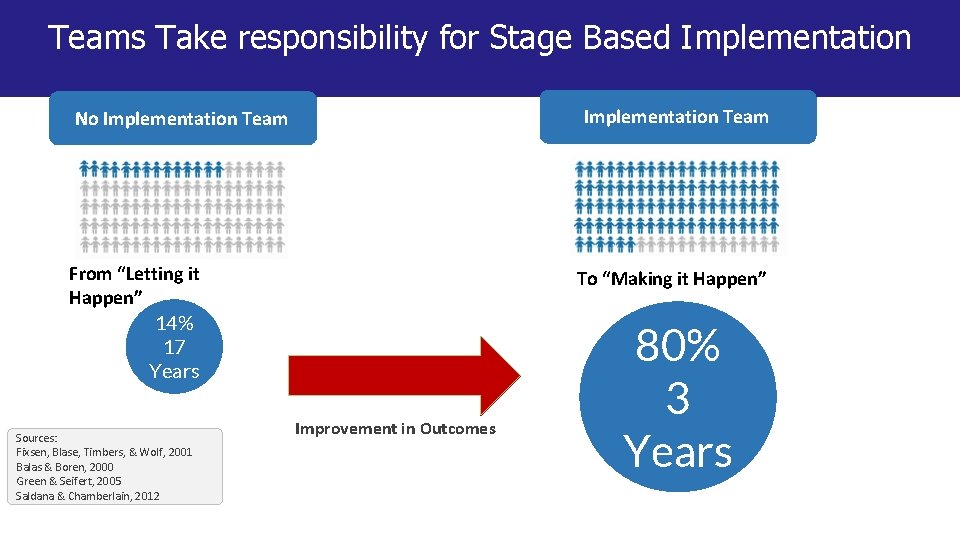
Implementation Teams, Success, and Time INNOVATION IMPLEMENTATION Effective Expert Impl. Team NO Impl. Team 80%, 3 Yrs 14%, 17 Yrs Effective use of Letting it Happen Implementation Helping it Happen Science & Practice Fixsen, Blase, Timbers, & Wolf, 2001 Balas & Boren, 2000 Saldana & Chamberlain, 2012 Green, 2008
Implementation Capacity Development It takes TEAMS It takes SUPPORTS It takes TIME It takes COMMUNICATION
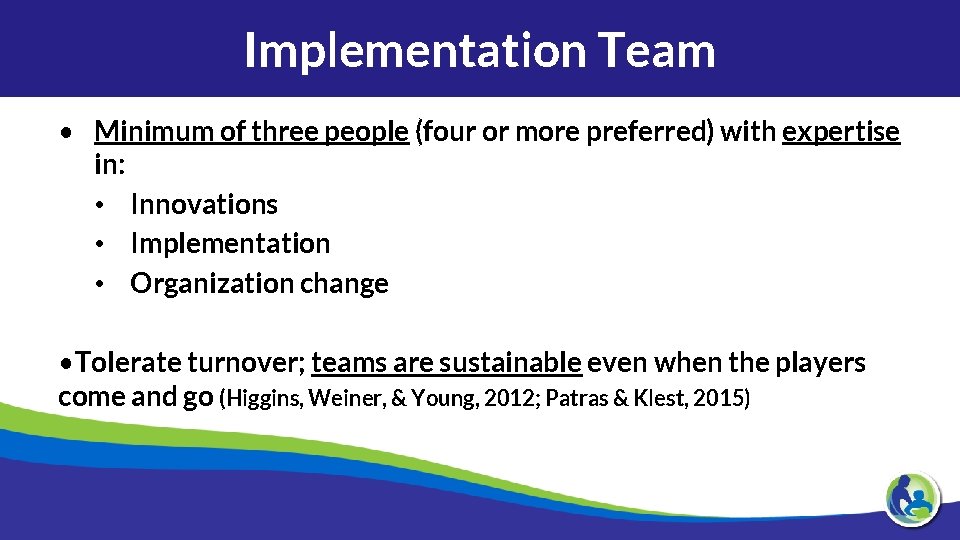
Implementation Team • Minimum of three people (four or more preferred) with expertise in: • Innovations • Implementation • Organization change • Tolerate turnover; teams are sustainable even when the players come and go (Higgins, Weiner, & Young, 2012; Patras & Klest, 2015)
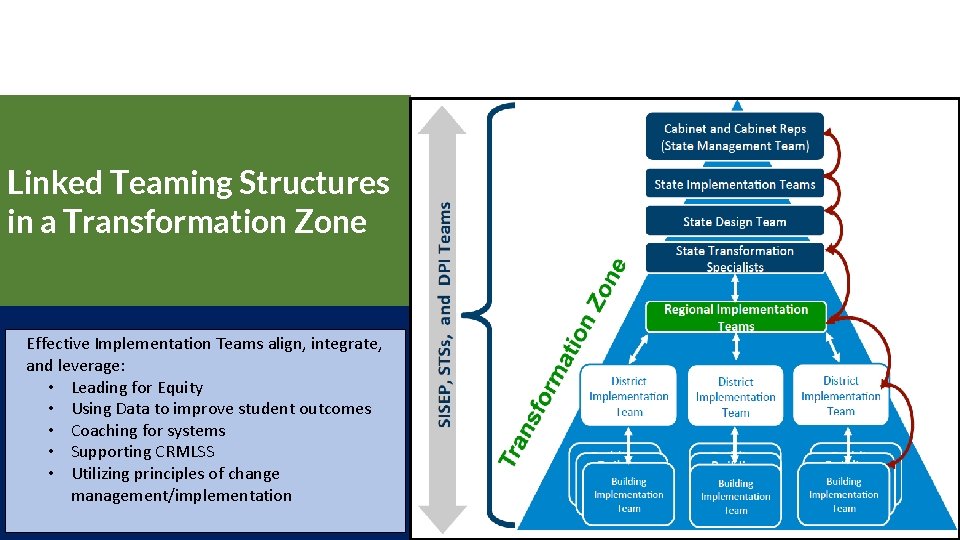
How We Do Our Work Linked Teaming Structures in a Transformation Zone Effective Implementation Teams align, integrate, and leverage: • Leading for Equity • Using Data to improve student outcomes • Coaching for systems • Supporting CRMLSS • Utilizing principles of change management/implementation
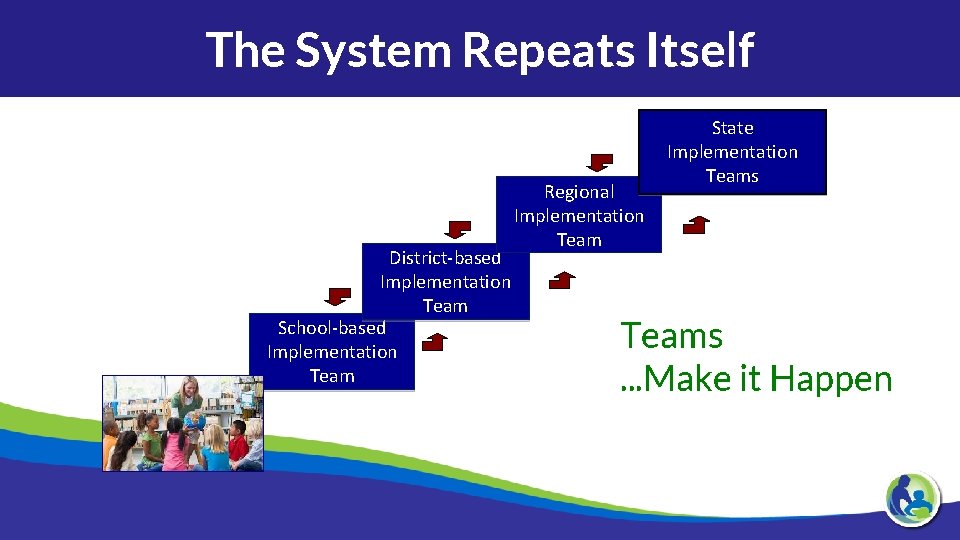
The System Repeats Itself District-based Implementation Team School-based Implementation Team Regional Implementation Team State Implementation Teams. . . Make it Happen
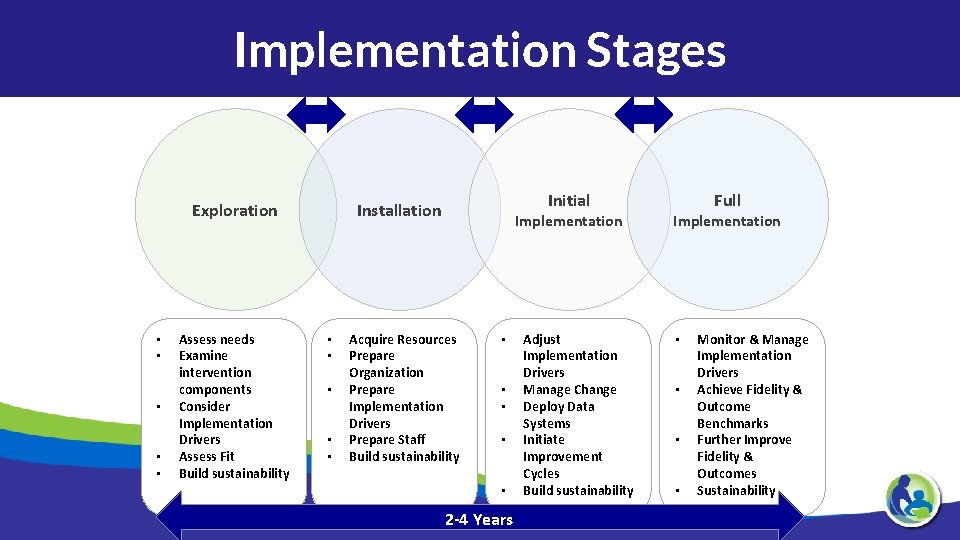
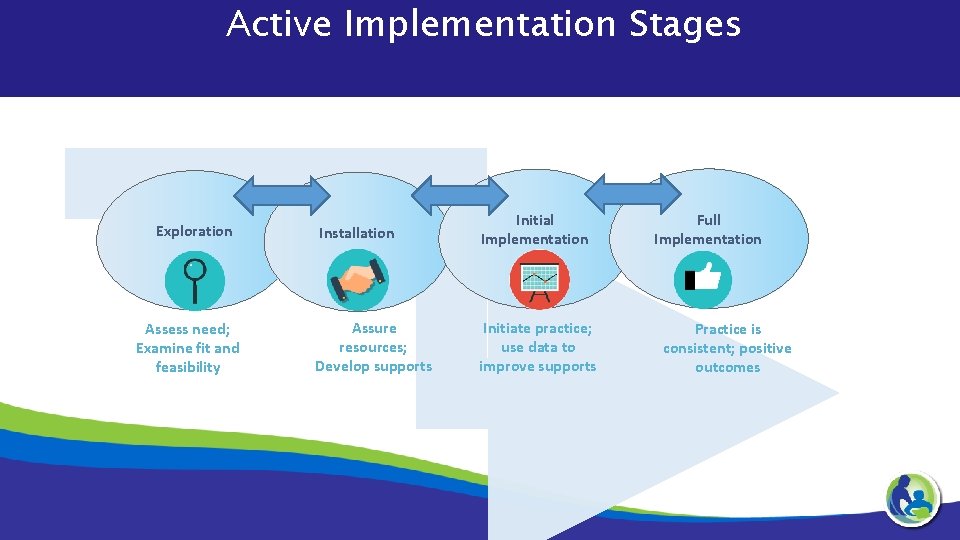
Implementation Stages Exploration • • • Assess needs Examine intervention components Consider Implementation Drivers Assess Fit Build sustainability Initial Installation • • • Implementation Acquire Resources Prepare Organization Prepare Implementation Drivers Prepare Staff Build sustainability • • • 2 -4 Years Adjust Implementation Drivers Manage Change Deploy Data Systems Initiate Improvement Cycles Build sustainability Full Implementation • • Monitor & Manage Implementation Drivers Achieve Fidelity & Outcome Benchmarks Further Improve Fidelity & Outcomes Sustainability
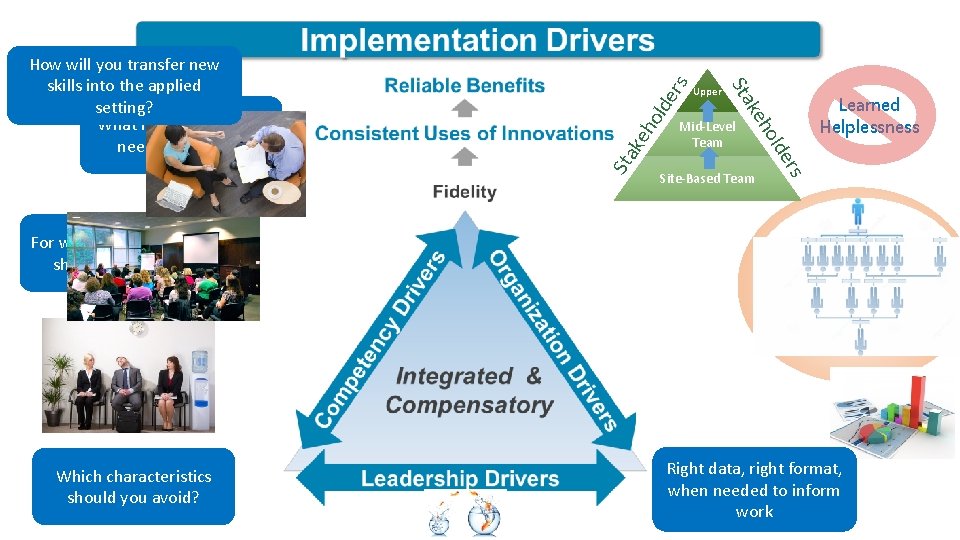
s er old eh ak Learned Helplessness s er Site-Based Team old eh Mid-Level Team ak St Upper St How will you transfer new skills into the applied setting? What new skills do you need to develop? For which characteristics should you select? Which characteristics should you avoid? Right data, right format, when needed to inform work
Active Implementation Stages Exploration Assess need; Examine fit and feasibility Installation Initial Implementation Assure resources; Develop supports Initiate practice; use data to improve supports Full Implementation Practice is consistent; positive outcomes
Teams Take responsibility for Stage Based Implementation Team No Implementation Team From “Letting it Happen” 14% 17 Years Sources: Fixsen, Blase, Timbers, & Wolf, 2001 Balas & Boren, 2000 Green & Seifert, 2005 Saldana & Chamberlain, 2012 To “Making it Happen” Improvement in Outcomes 80% 3 Years
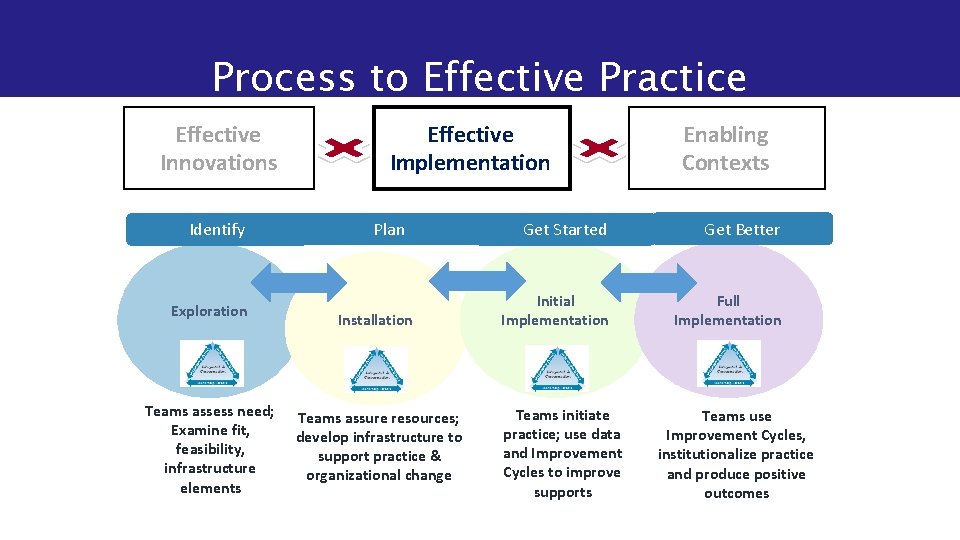
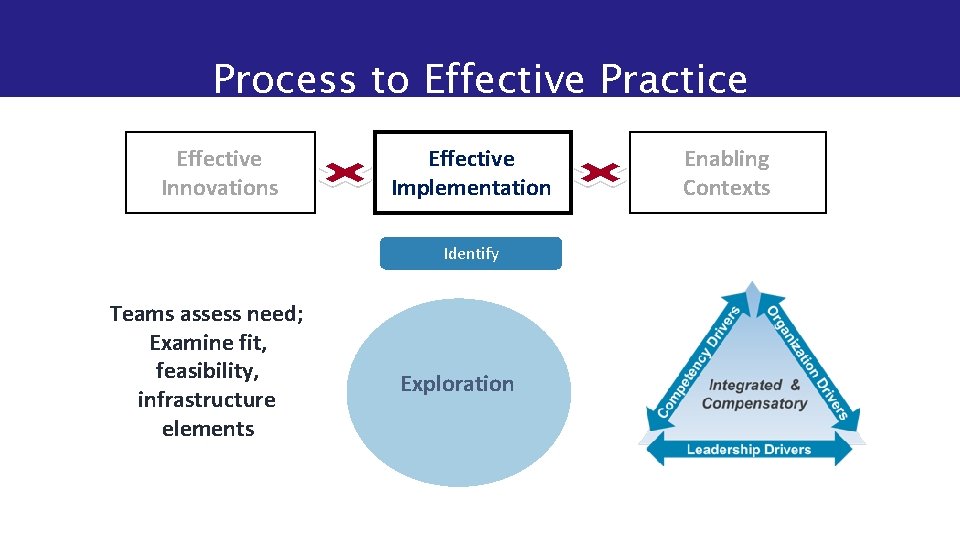
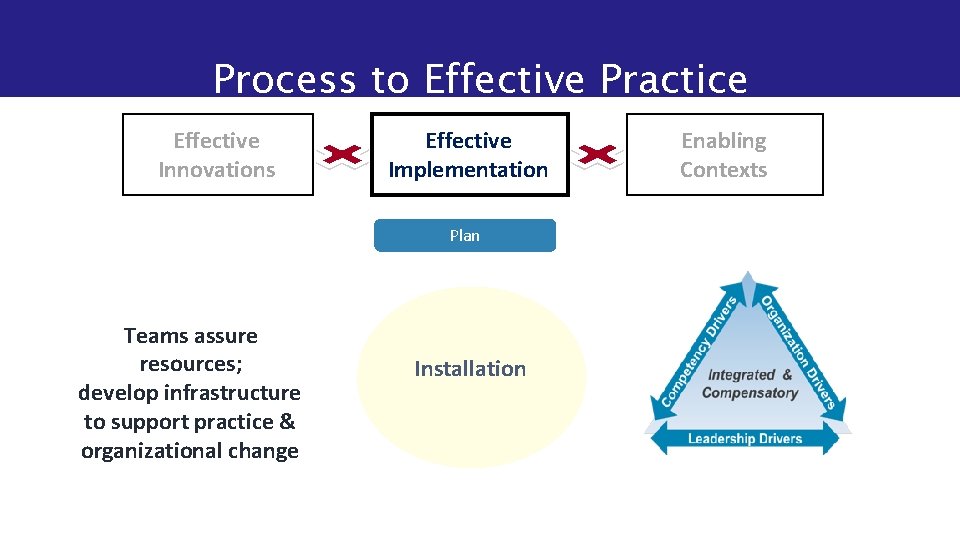
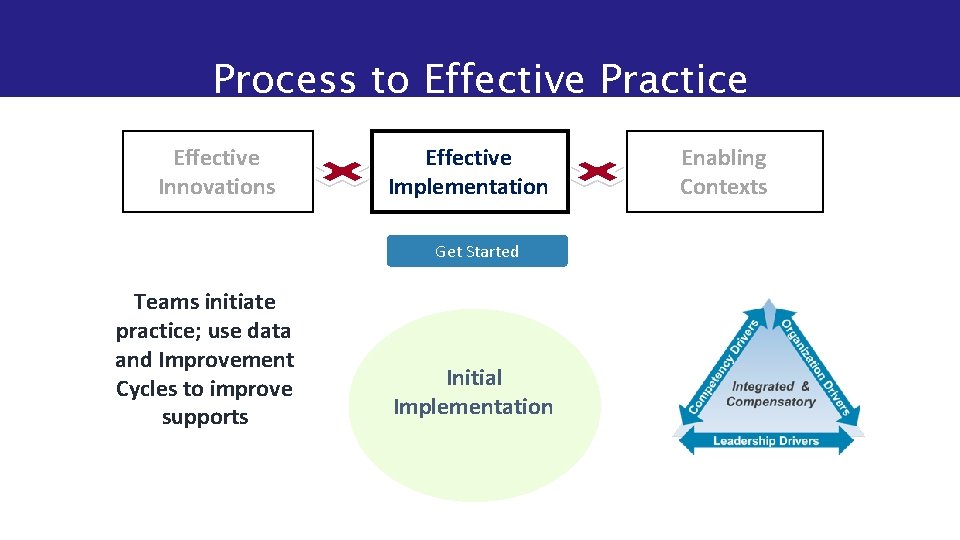
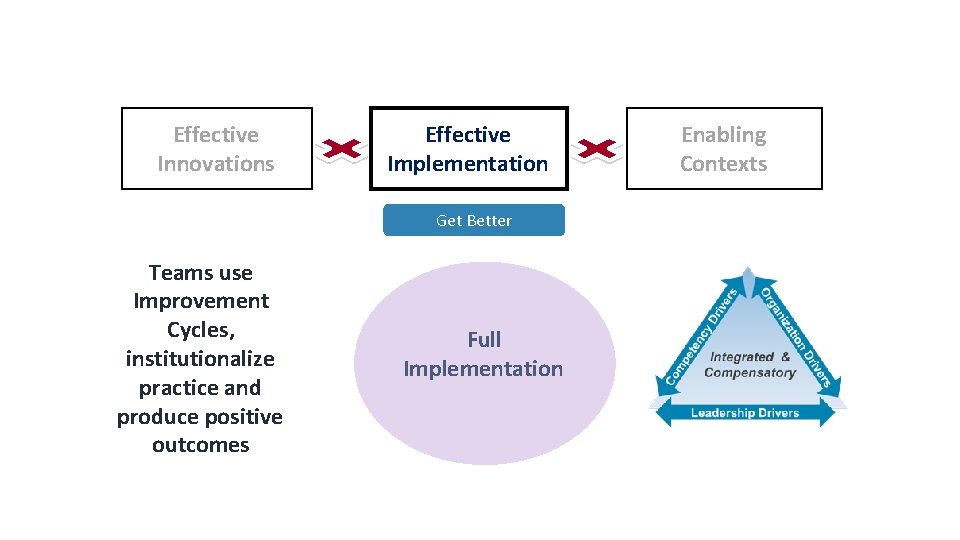
Process to Effective Practice Effective Innovations Identify Exploration Teams assess need; Examine fit, feasibility, infrastructure elements Effective Implementation Plan Installation Teams assure resources; develop infrastructure to support practice & organizational change Enabling Contexts Get Started Get Better Initial Implementation Full Implementation Teams initiate practice; use data and Improvement Cycles to improve supports Teams use Improvement Cycles, institutionalize practice and produce positive outcomes
Process to Effective Practice Effective Innovations Effective Implementation Identify Teams assess need; Examine fit, feasibility, infrastructure elements Exploration Enabling Contexts
Process to Effective Practice Effective Innovations Effective Implementation Plan Teams assure resources; develop infrastructure to support practice & organizational change Installation Enabling Contexts
Process to Effective Practice Effective Innovations Effective Implementation Get Started Teams initiate practice; use data and Improvement Cycles to improve supports Initial Implementation Enabling Contexts
Process to Effective Practice Effective Innovations Effective Implementation Get Better Teams use Improvement Cycles, institutionalize practice and produce positive outcomes Full Implementation Enabling Contexts
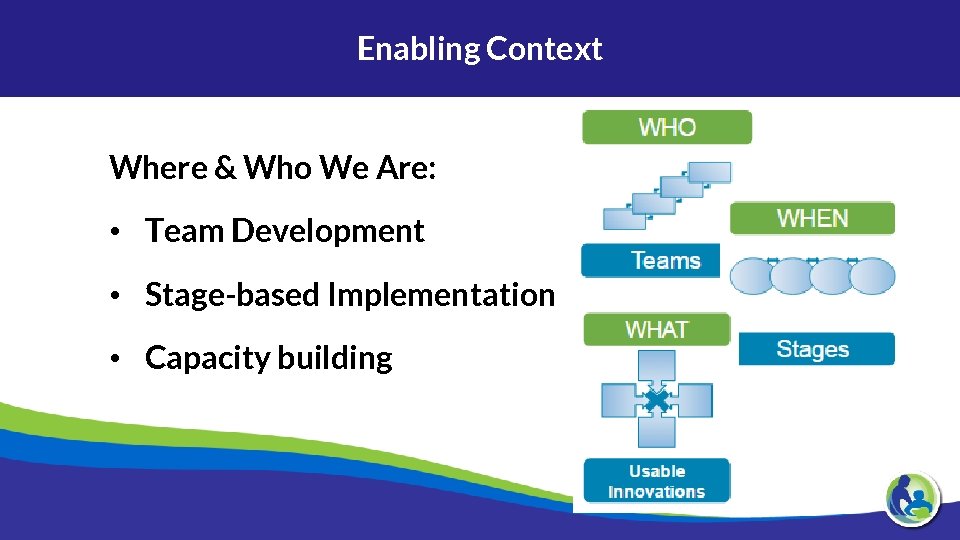
Enabling Context Where & Who We Are: • Team Development • Stage-based Implementation • Capacity building
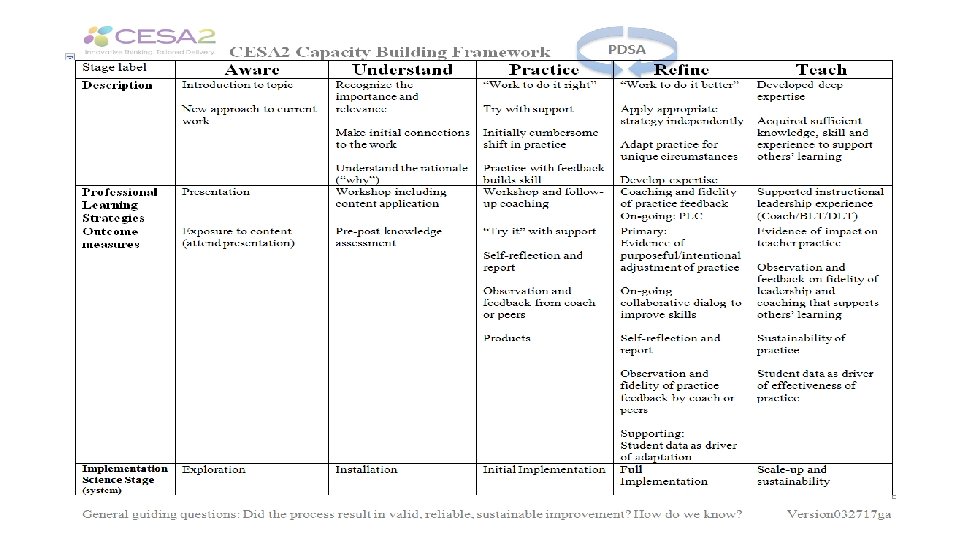
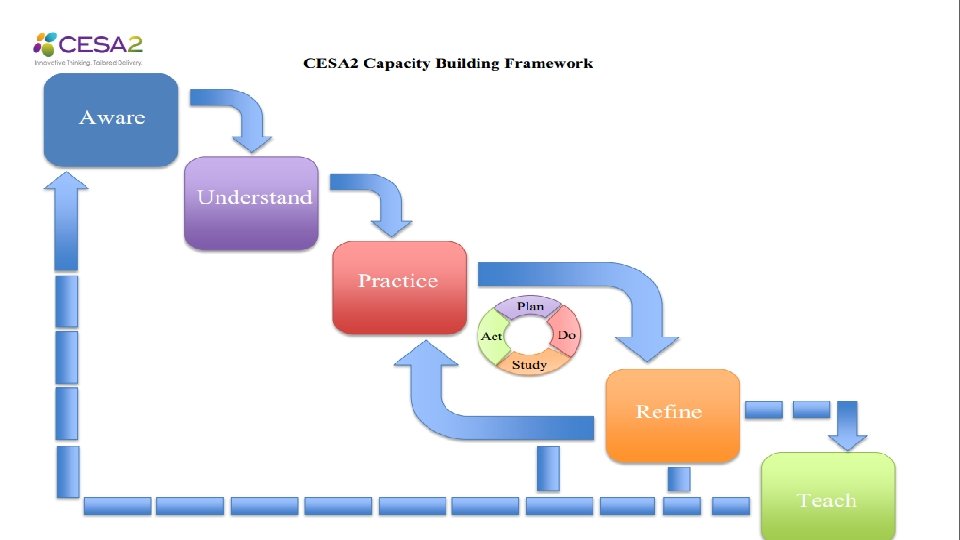
Capacity to Implement and Sustain Evaluating Effective Implementation
Change is great. . . Get started… Get better
Get Connected! http: //implementation. fpg. unc. edu/ @SISEPcenter SISEP For more on Implementation Science http: //nirn. fpg. unc. edu www. globalimplementation. org
This document is based on the work of the National Implementation Research Network (NIRN). © 2013 -2016 Allison Metz and Dean Fixsen This content is licensed under Creative Commons license CC BY-NC-ND, Attribution. Non. Commercial-No. Derivs. You are free to share, copy, distribute and transmit the work under the following conditions: Attribution — You must attribute the work in the manner specified by the author or licensor (but not in any way that suggests that they endorse you or your use of the work); Noncommercial — You may not use this work for commercial purposes; No Derivative Works — You may not alter, transform, or build upon this work. Any of the above conditions can be waived if you get permission from the copyright holder. http: //creativecommons. org/licenses/by-nc-nd/3. 0 email: nirn@unc. edu web: http: //nirn. fpg. unc. edu The mission of the National Implementation Research Network (NIRN) is to contribute to the best practices and science of implementation, organization change, and system reinvention to improve outcomes across the spectrum of human services.