
Implementation of PBIS at all Tiers A WalkThrough
Implementation of PBIS at all Tiers: A Walk-Through of the Development, Initiation, Maintenance, and Ongoing Evaluation of Behavior Focused MTSS from a District Perspective Presenters: Amanda Witting, School Psychologist, Ed. S, NCSP Rio Corbin, School Psychologist, Ed. S, NCSP Jamie Powers, School Psychologist, Ed. S, NCSP
Objectives: ★ Provide an understanding of how PBIS implementation works within a tiered model from a district perspective (NASP Domain 4: Interventions and Mental Health Services to Develop Social and Life Skills) ★ Provide guidance and opportunity for action planning to leave with potential tools and/or next steps for your own district (NASP Domain 5: School-Wide Practices to Promote Learning)
Session Overview: ∙ ∙ ∙ Brief overview of MTSS Brief overview of PBIS Who has supported us along the way ∙ ∙ ∙ How PBIS and MTSS live together How these Initiatives work with other initiatives Building sustainability Time and resources for action planning! 3
Anything else you’re hoping to gain today?
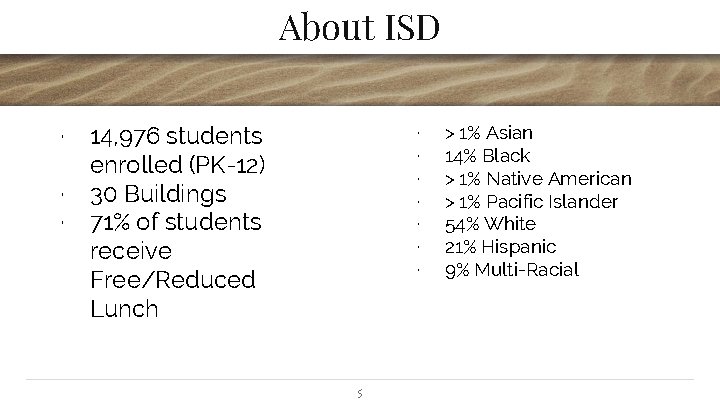
About ISD ∙ ∙ ∙ ∙ ∙ 14, 976 students enrolled (PK-12) 30 Buildings 71% of students receive Free/Reduced Lunch 5 > 1% Asian 14% Black > 1% Native American > 1% Pacific Islander 54% White 21% Hispanic 9% Multi-Racial
MTSS - Multi-Tiered System of Support 6
Drag your dot to your comfort level with MTSS: I know it so well, if I see another TRIANGLE, I’m going to LOSE IT! I know what it is, but would like better info on how to make it work with PBIS. I need an in-depth review before I’m ready to move on
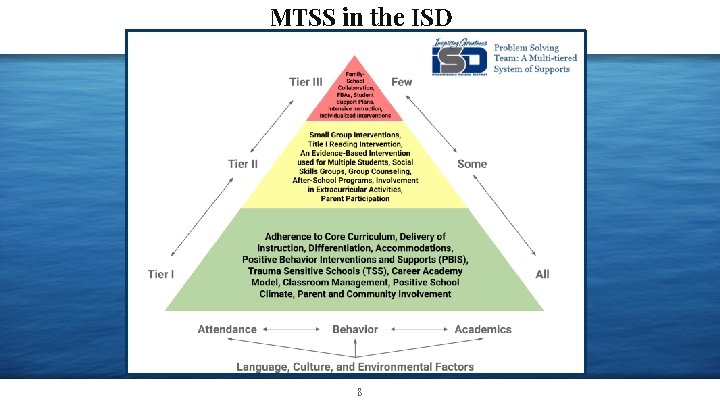
MTSS in the ISD 8
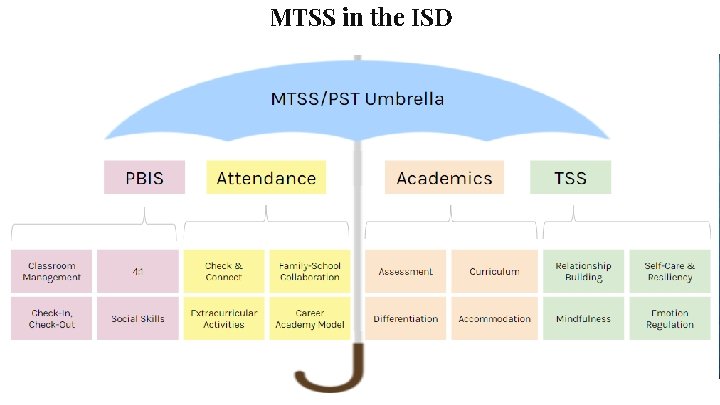
MTSS in the ISD 9
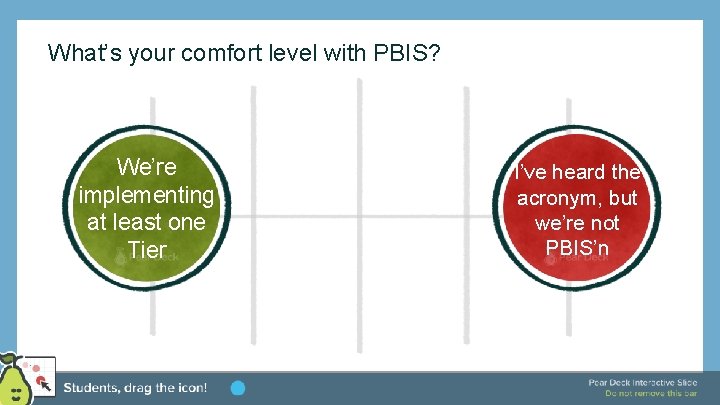
What’s your comfort level with PBIS? We’re implementing at least one Tier I’ve heard the acronym, but we’re not PBIS’n
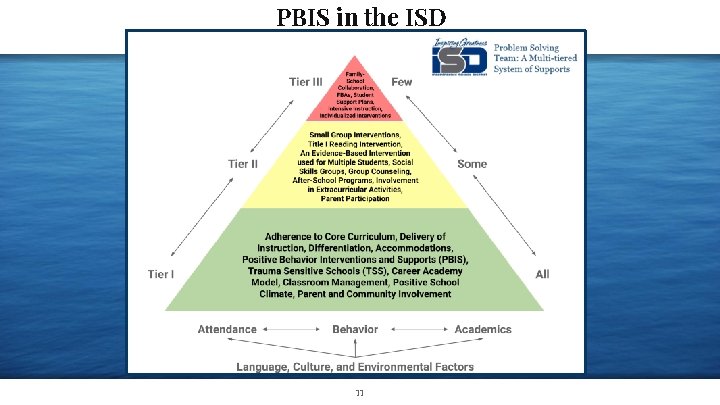
PBIS in the ISD 11
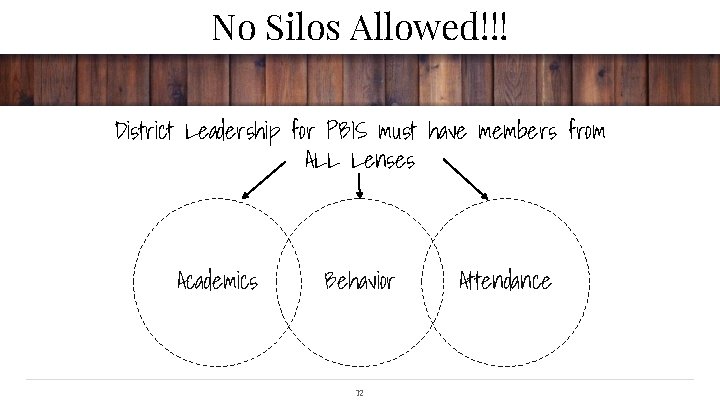
No Silos Allowed!!! District Leadership for PBIS must have members from ALL Lenses Academics Behavior 12 Attendance
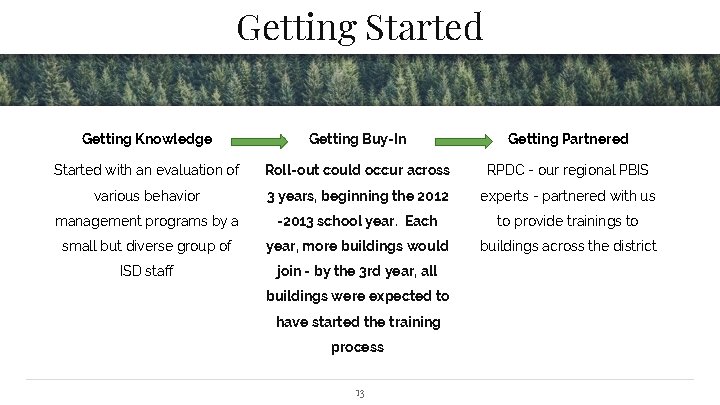
Getting Started Getting Knowledge Getting Buy-In Getting Partnered Started with an evaluation of Roll-out could occur across RPDC - our regional PBIS various behavior 3 years, beginning the 2012 experts - partnered with us management programs by a -2013 school year. Each to provide trainings to small but diverse group of year, more buildings would buildings across the district ISD staff join - by the 3 rd year, all buildings were expected to have started the training process 13
Lessons Learned at This Stage Keeping it ISD Strong Initiative Integration It started out very siloed - our staff were We kicked off an important partnership that receiving scripted presentations and slowly began to evolve into our District PBIS curriculum that often times overlapped with Leadership Team - things we were already doing. This made This partnership initially included PBIS them feel DOUBLE worked! trainers, TSS trainers, Assistant Superintendents, and School Psychologists 14
District PBIS Team ∙ Team meets monthly ∙ Created a Team Drive to ∙ District members house our notes, resources, ∙ KCRPDC consultants and Action Plan ∙ MU consultant ∙ Action Plan (Link) ∙ In 2019 the team started using a specific structured agenda 15

PBIS & Sustainability Tier 1 Walkthroughs Tier 2 Fishbowl Meetings Buildings volunteered to have administrators Buildings volunteered to look at their current as well as district PBIS team members reality of students in our tiered process collect data on their tier 1 practices (Percentage of students at tier 1, 2, & 3 - compared to ideal percentage) Gave buildings data to guide discussion - - Buy in with admin (Top-down!) From there problem-solving focus to support interventions/strategies 16
PBIS & Sustainability - Admin complete a scorecard related to some of our different initiatives (including PBIS) and this helps drive training focus as well as provide data to the district of overall needs 17

“ Tier 1 Walkthroughs 18
Our Goal ➔ Assess where the district is at with implementation of Tier 1 PBIS by: ◆ Buildings volunteered to to have team and other admin come in to observe 8 Effective Classroom Practices ◆ Having admin and members of the District PBIS team observe in classrooms for 5 minutes ● Using the predetermined data collection form (using an electronic device) ● Hard copy as a reference 19

20
21

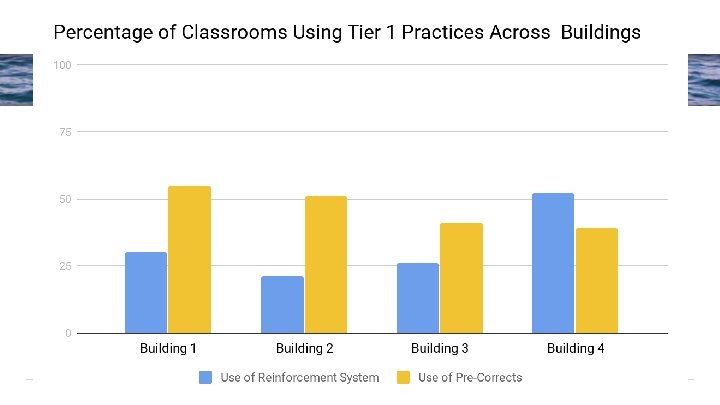
What did buildings do with this information? ➔ Observation data shared with building PBIS team ◆ Building team determined how data could be shared with entire building as well as focus/goals determined by data analysis ➔ Buildings could all increase their use of BSP (reinforcement system blast) ◆ Some buildings focus on specific locations or times of day ➔ District team assembled trainings around the 8 Effective Classroom Practices to send out to buildings based on their data 22

Tier 2 Fishbowl Meetings

Our Goal ➔ Buildings have the opportunity to present their building break down of tiers as well their current reality of interventions/supports ➔ Building admin & district PBIS team members attended to provide suggestions in a non-confrontational/supportive environment ◆ How did we do this? ● Structure agenda ● Data shared ahead of meeting 24
Quick Fishbowl Stats ➔ 45% of elementary buildings participated in these fishbowl meetings (9 out of our 20) ➔ 100% of buildings that participated left the meeting with action items to address their building’s specific questions/needs based on their Big 5 data 25
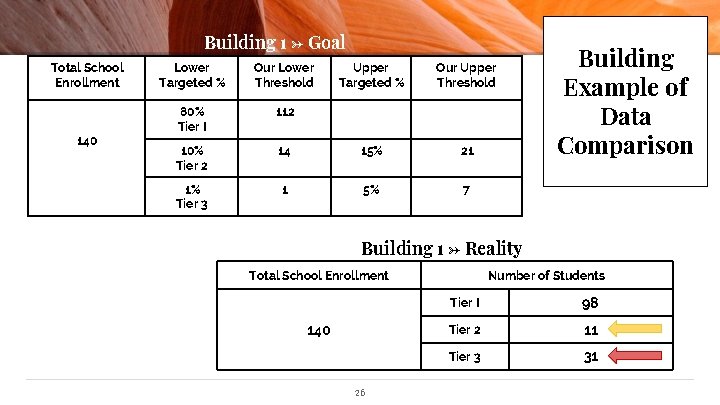
Building 1 → Goal Total School Enrollment 140 Lower Targeted % Our Lower Threshold Upper Targeted % Our Upper Threshold 80% Tier I 112 10% Tier 2 14 15% 21 1% Tier 3 1 5% 7 Building Example of Data Comparison Building 1 → Reality Total School Enrollment 140 26 Number of Students Tier I 98 Tier 2 11 Tier 3 31
What did buildings do with the information? ➔ Buildings could utilize any (or none) of the suggestions provided by attendees ➔ This gave opportunities for buildings to celebrate their successes as well as resource share/network! ◆ Some resources/tools as a result of tier 2 fishbowl meetings: ● Tool to track CICO data for multiple students on one spreadsheet 27

Tier 3 More Intensive Supports 28
Tier 3 ∙ ∙ School psychs supporting Tier 3 driven process is utilized process to help develop plans ∙ If needed, a more in-depth and PBIS ∙ More reflects a typical “Tier 3 Problem- This includes context analysis, Solving” process (missing skill competing pathways, more identified, interventions and supports observations and interviews, more developed, action plan and data tool) specific action planning 29
Our Goal ➔ To build capacity within teams to create specific plans for students ➔ How do with do that? ◆ School Psychs developed a more streamlined process of forms, data collection tools, automated emails, etc. ◆ Utilize screening data (SAEBRS) to identify students for tier ⅔ supports in addition to teacher nomination/big 5 data 30
What are buildings doing with this information? ➔ Buildings are in different places in the process but buildings continue to improve in using the tools created as well as reaching out to their school psych team to support the process ➔ Two building piloting SAEBRS currently -- expanding to whole district next school year ◆ Then we will have another piece of district level data for our district PBIS Team to use 31
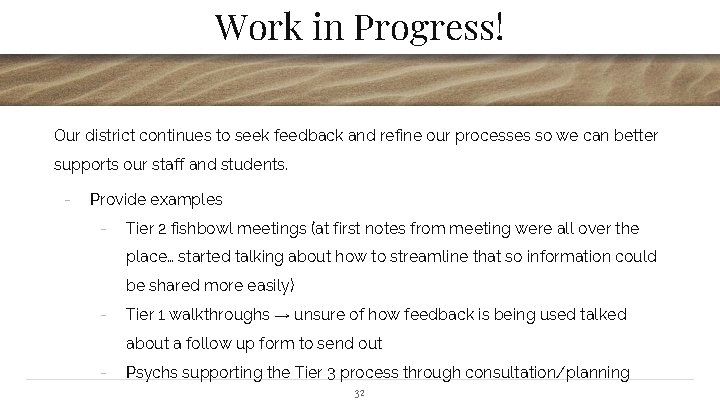
Work in Progress! Our district continues to seek feedback and refine our processes so we can better supports our staff and students. - Provide examples - Tier 2 fishbowl meetings (at first notes from meeting were all over the place… started talking about how to streamline that so information could be shared more easily) - Tier 1 walkthroughs → unsure of how feedback is being used talked about a follow up form to send out - Psychs supporting the Tier 3 process through consultation/planning 32
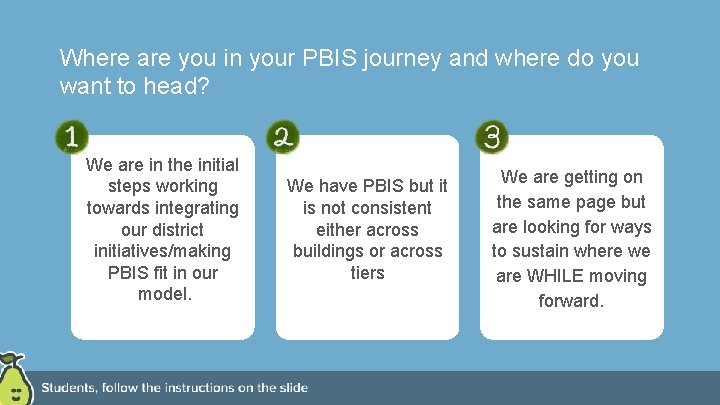
Where are you in your PBIS journey and where do you want to head? We are in the initial steps working towards integrating our district initiatives/making PBIS fit in our model. We have PBIS but it is not consistent either across buildings or across tiers We are getting on the same page but are looking for ways to sustain where we are WHILE moving forward.
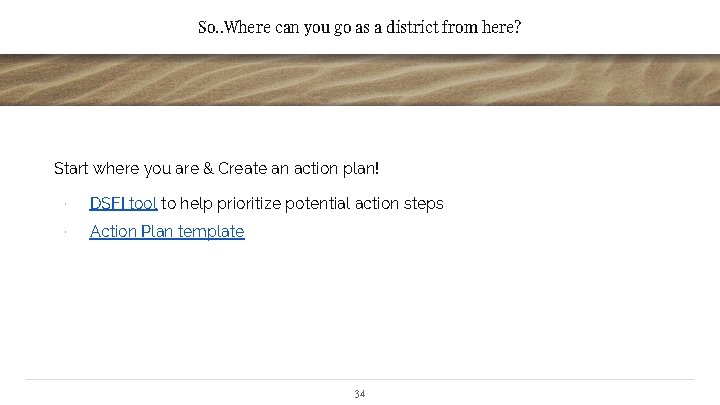
So. . Where can you go as a district from here? Start where you are & Create an action plan! ∙ DSFI tool to help prioritize potential action steps ∙ Action Plan template 34
- Slides: 34